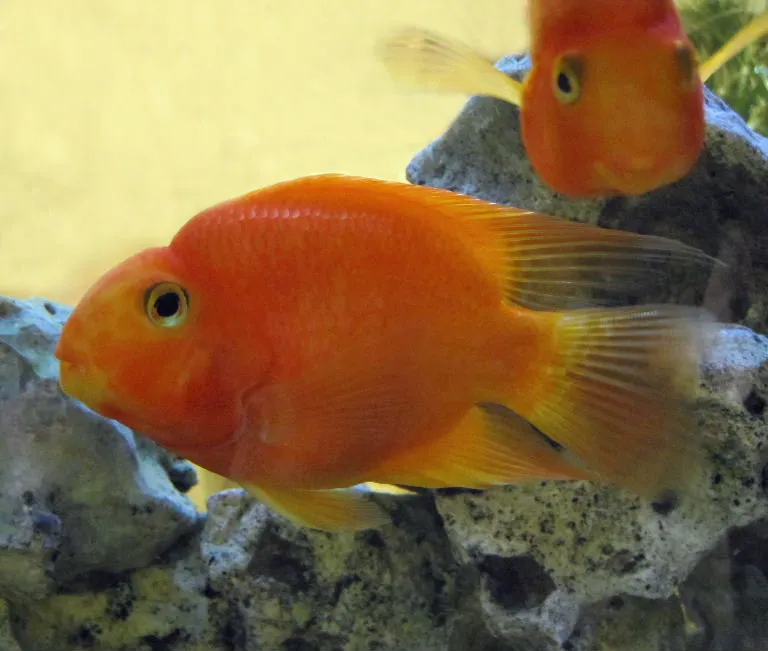
Blood parrot cichlid
A. citrinellus x V. synspilum
FreshwaterFish
Care at a glance
- Temperature
- 72–82°F
- 22–28°C
- pH
- 6.5–7.5
- Adult size
- 7.9 in
- 20 cm
- Minimum tank
- 32 gal
- 120 L
- Temperament
- Mostly peaceful
- Social behavior
- Solitary
- Tankmates
- With caution
- Swim level
- Middle
- Difficulty
- Easy
- Breeding
- No record
- Rarity
- Common
- Family
- Cichlidae
- Origin
- no natural occurrence
Overview
Plan on a tank of at least 120 liters for one fish, more if you keep several. They're mostly peaceful for cichlids but do best kept solo or with calm, similar-sized tankmates. Keep the water warm, in the mid to high 20s C, with a pH around neutral. They take pellets, frozen foods, and sinking foods; color-enhancing food helps hold their orange. Their mouths close poorly, so use feeds they can actually grab.
In the wild
The blood parrot is a man-made hybrid, so it has no wild habitat at all. Its parent species come from Central American rivers and lakes, which points to what it likes: warm, roomy water with caves and hiding spots. Give it a tank with smooth decor and open swimming space, since its body shape makes tight squeezes awkward.
Good to know
This is a cichlid hybrid, generally credited to crossing Amphilophus citrinellus with Vieja synspilum, with no natural occurrence. It grows to around 20 cm. The same crossbreeding that produces its round body and small beak-like mouth often leaves it with a deformed mouth and spine, and most are functionally infertile, so breeding is essentially unrecorded.
Did you know
Avoid the dyed and surgically altered versions. Heart parrots and the so-called jellybean or tattooed parrots are cut, dyed, or injected, all of which harm the fish. A plain blood parrot is already a hybrid, so there's no need to buy one that's been mutilated on top of that.
Common questions
What size tank does a Blood parrot cichlid need?
A Blood parrot cichlid needs at least 32 gal (120 L). It spends most of its time in the middle.
What temperature and pH does a Blood parrot cichlid need?
A Blood parrot cichlid is comfortable at 72–82°F (22–28°C) with a pH of 6.5–7.5.
How big does a Blood parrot cichlid get?
An adult Blood parrot cichlid reaches about 7.9 in (20 cm).
Related species
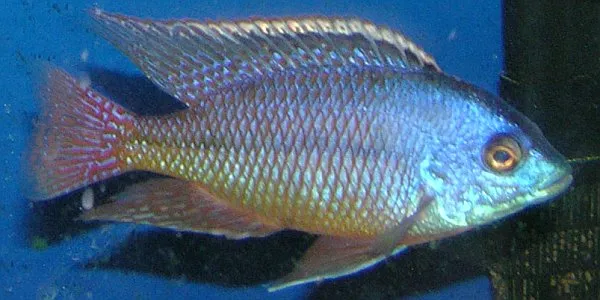 7.9 in (20 cm)53 gal (200 L)75–82°F (24–28°C)
Red empress cichlid
Protomelas taeniolatus
7.9 in (20 cm) · 53 gal (200 L)
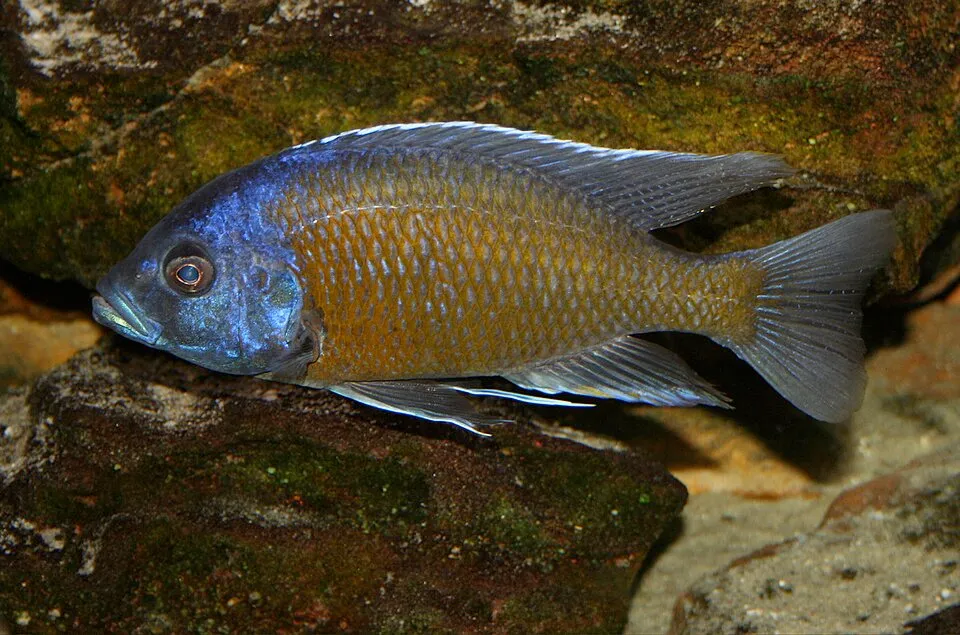 7.9 in (20 cm)79 gal (300 L)77–84°F (25–29°C)
Red fin hap
Copadichromis borleyi
7.9 in (20 cm) · 79 gal (300 L)
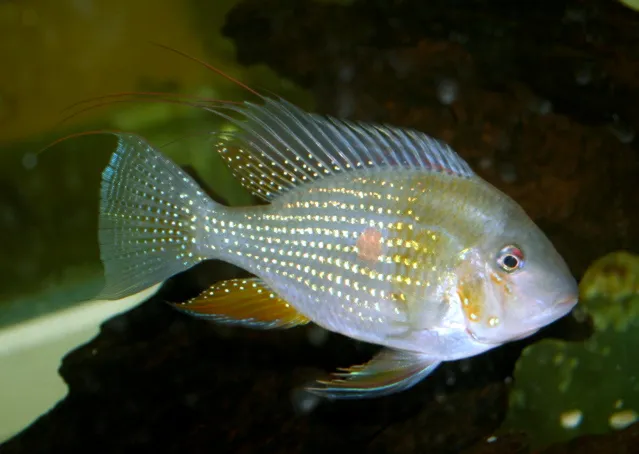 7.9 in (20 cm)53 gal (200 L)75–86°F (24–30°C)
Threadfin acara
Acarichthys heckelii
7.9 in (20 cm) · 53 gal (200 L)
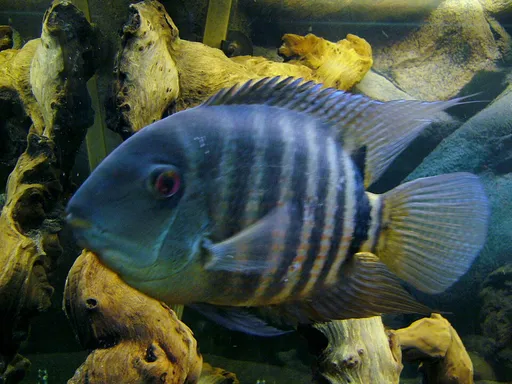 7.9 in (20 cm)75 gal (285 L)79–86°F (26–30°C)
True severum
Heros severus
7.9 in (20 cm) · 75 gal (285 L)
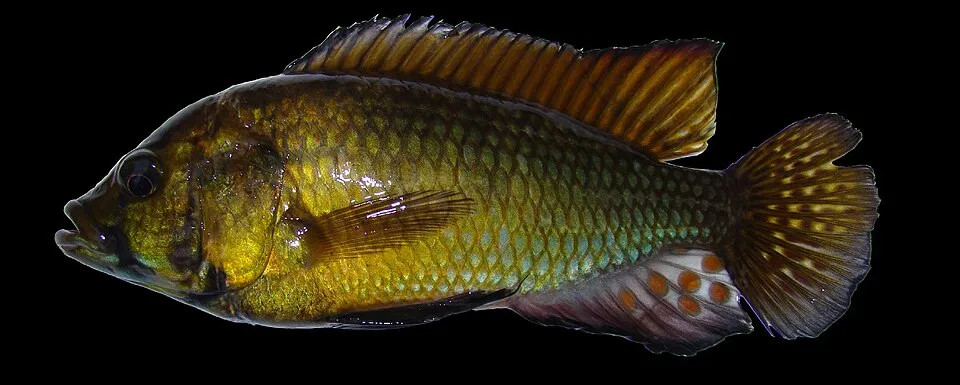 7.5 in (19 cm)55 gal (210 L)73–82°F (23–28°C)
Alluaud's haplo
Astatoreochromis alluaudi
7.5 in (19 cm) · 55 gal (210 L)
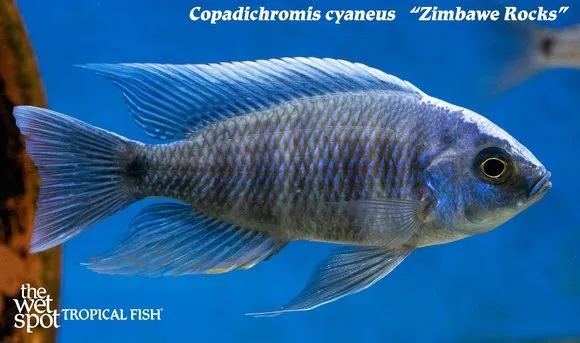 7.5 in (19 cm)79 gal (300 L)75–81°F (24–27°C)
Blue utaka
Copadichromis cyaneus
7.5 in (19 cm) · 79 gal (300 L)