Heckel discus
Symphysodon discus
FreshwaterFish
Care at a glance
- Temperature
- 82–88°F
- 28–31°C
- pH
- 5.0–6.5
- Adult size
- 7.1 in
- 18 cm
- Minimum tank
- 75 gal
- 284 L
- Temperament
- Mostly peaceful
- Social behavior
- Shoaling
- Swim level
- Middle
- Difficulty
- Difficult
- Breeding
- Hard
- Rarity
- Common
- Family
- Cichlidae
- Origin
- Amazon Basin, Brazil (lower Rio Negro blackwater tributaries)
Overview
This is the most demanding discus and not a beginner fish, so go in knowing it needs more than most tropicals. Keep a group of six or more in a tall tank of at least 284 liters, which spreads out the squabbling that comes with their pecking order. They are mostly peaceful and hold in the middle of the water column, but they need warm water at 28 to 31 C, very soft and acidic at pH 5 to 6.5, and frequent large water changes to stay healthy. Feed them a varied diet of frozen bloodworms, beef heart mixes, and quality pellets, several smaller meals a day. Keep tankmates calm and tolerant of the heat, or run them as a species-only group.
In the wild
Heckel discus come from the lower Rio Negro and its blackwater tributaries in the Brazilian Amazon, water that is very soft, acidic, and stained dark with tannins from leaf litter and botanicals. To match that, give them a tall tank running warm at 28 to 31 C with a pH down between 5 and 6.5, which usually means RO water remineralized low and tannins added from dried leaves or alder cones. Use a dim setup with driftwood and some botanicals on the bottom, since open glare stresses them. Keep the water pristine, because they will not tolerate buildup of waste in soft acidic conditions.
Good to know
This is a cichlid in the family Cichlidae, reaching around 18 cm as an adult. They are substrate-spawning egg layers that guard the eggs and let fry graze on a mucus the parents produce on their flanks, though wild Heckel are very hard to breed in the aquarium. Most fish in the trade are wild-caught rather than tank-bred, which is part of why they are so demanding. A healthy discus can live well over a decade with good care.
Did you know
Heckel discus carry a heavy dark vertical bar running down the middle of the body, the fifth bar, which is bolder than on other discus and is how hobbyists tell them apart at a glance. The trade still leans on wild-caught Heckel because they have resisted captive breeding far more stubbornly than the common discus lines, so the fish you buy often started life in a Rio Negro tributary.
Weekly picks
Tank mates
Heckel discus is a mostly peaceful, shoaling species that keeps to the middle. These picks share a community profile with it, are safe together in both directions, and overlap on water type, temperature and pH.
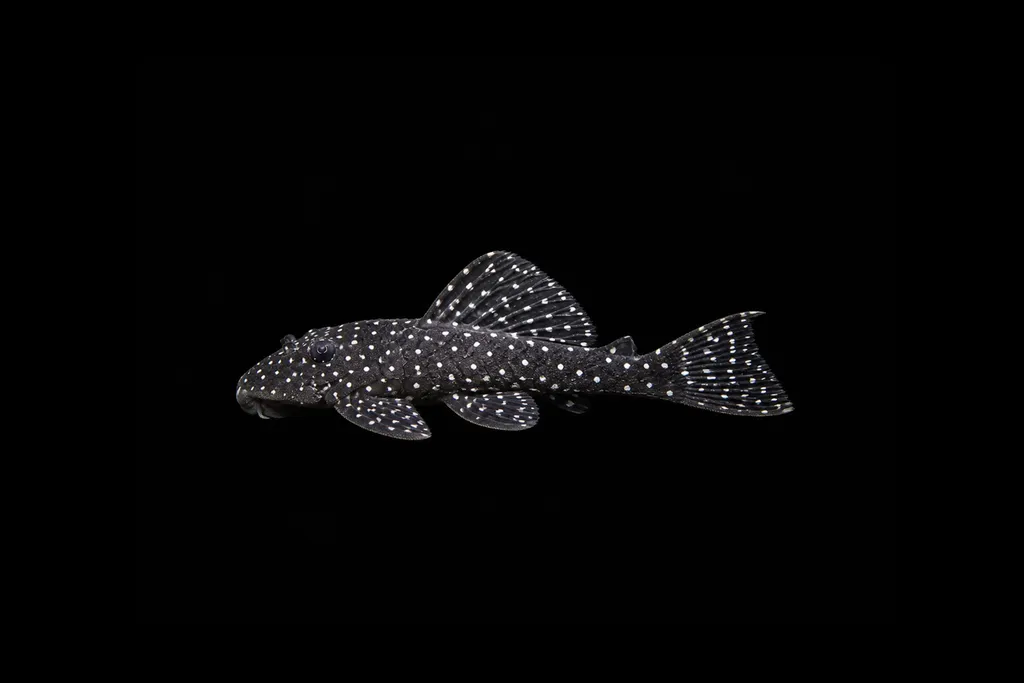
Xingu peppermint pleco
Parancistrus nudiventris
Freshwater8.7 in (22 cm) · 79 gal (300 L)81–88°F (27–31°C)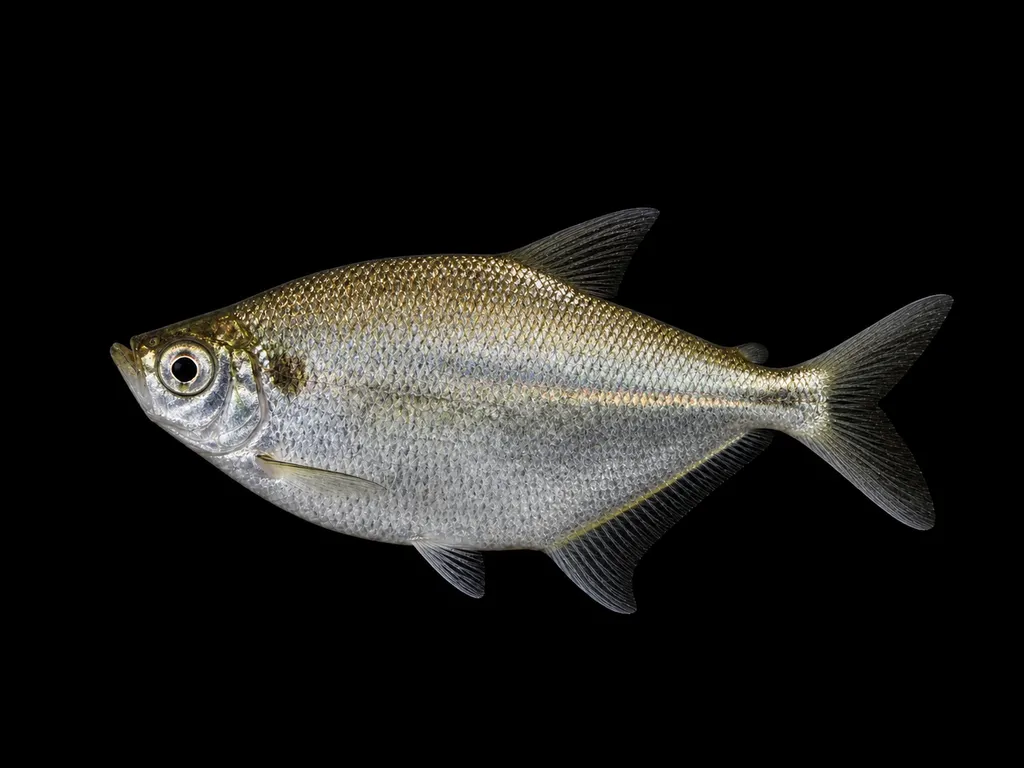
Giant river hatchetfish
Triportheus rotundatus
Freshwater9.8 in (25 cm) · 79 gal (300 L)73–82°F (23–28°C)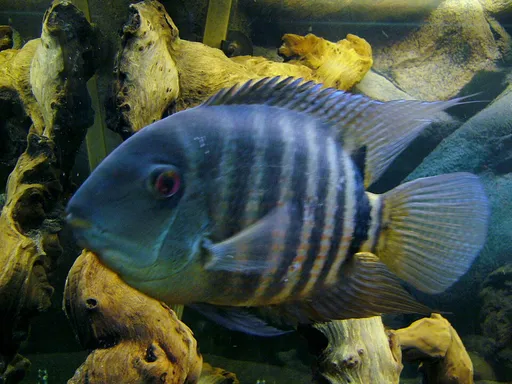
True severum
Heros severus
Freshwater7.9 in (20 cm) · 75 gal (285 L)79–86°F (26–30°C)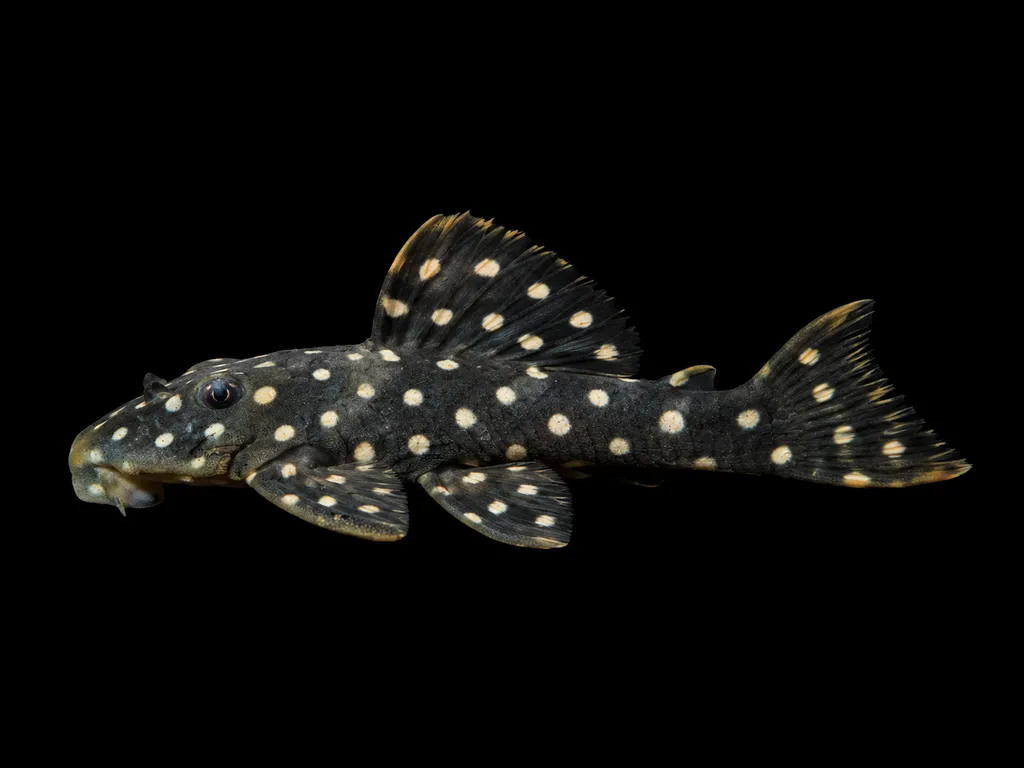
Opal spot pleco
Scobinancistrus raonii
Freshwater6.3 in (16 cm) · 79 gal (300 L)81–88°F (27–31°C)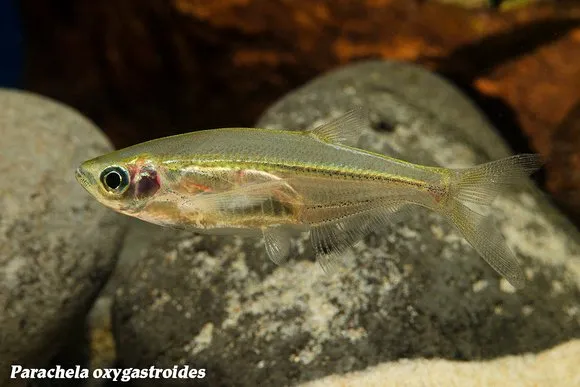
Asian glass hatchetfish
Parachela oxygastroides
Freshwater7.9 in (20 cm) · 79 gal (300 L)73–82°F (23–28°C)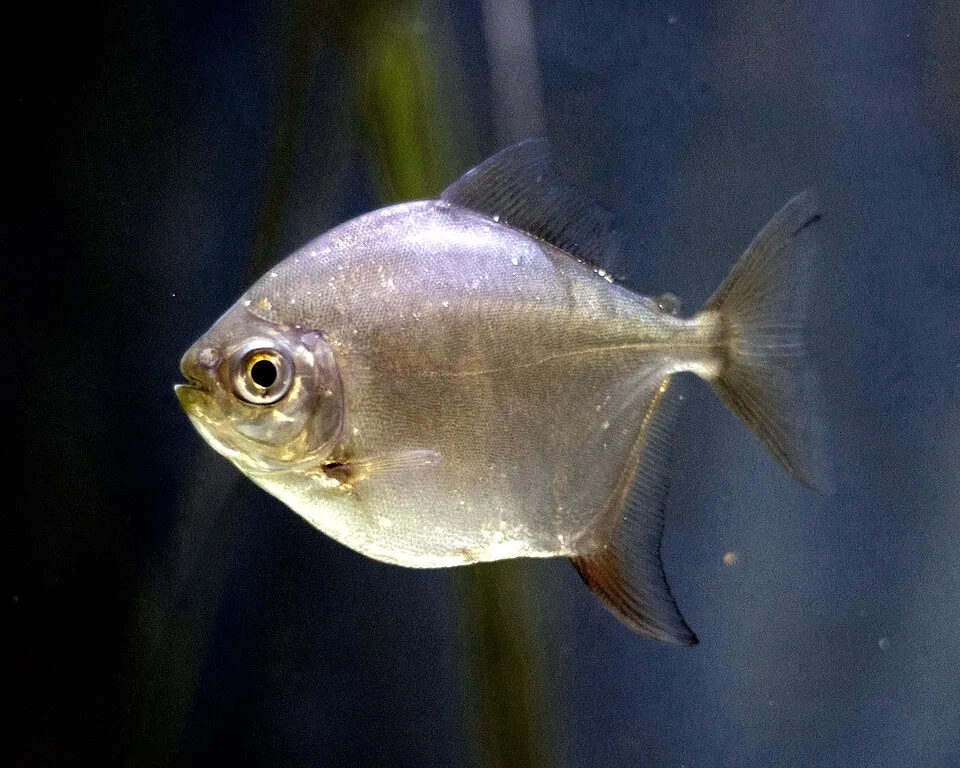
Silver dollar
Metynnis argenteus
Freshwater5.9 in (15 cm) · 70 gal (265 L)75–82°F (24–28°C)
Common questions
What size tank does a Heckel discus need?
A Heckel discus needs at least 75 gal (284 L). It spends most of its time in the middle.
What temperature and pH does a Heckel discus need?
A Heckel discus is comfortable at 82–88°F (28–31°C) with a pH of 5.0–6.5.
How big does a Heckel discus get?
An adult Heckel discus reaches about 7.1 in (18 cm).
Does a Heckel discus need a group?
Yes. A Heckel discus is a shoaling species and should be kept in a group, not singly.
Related species
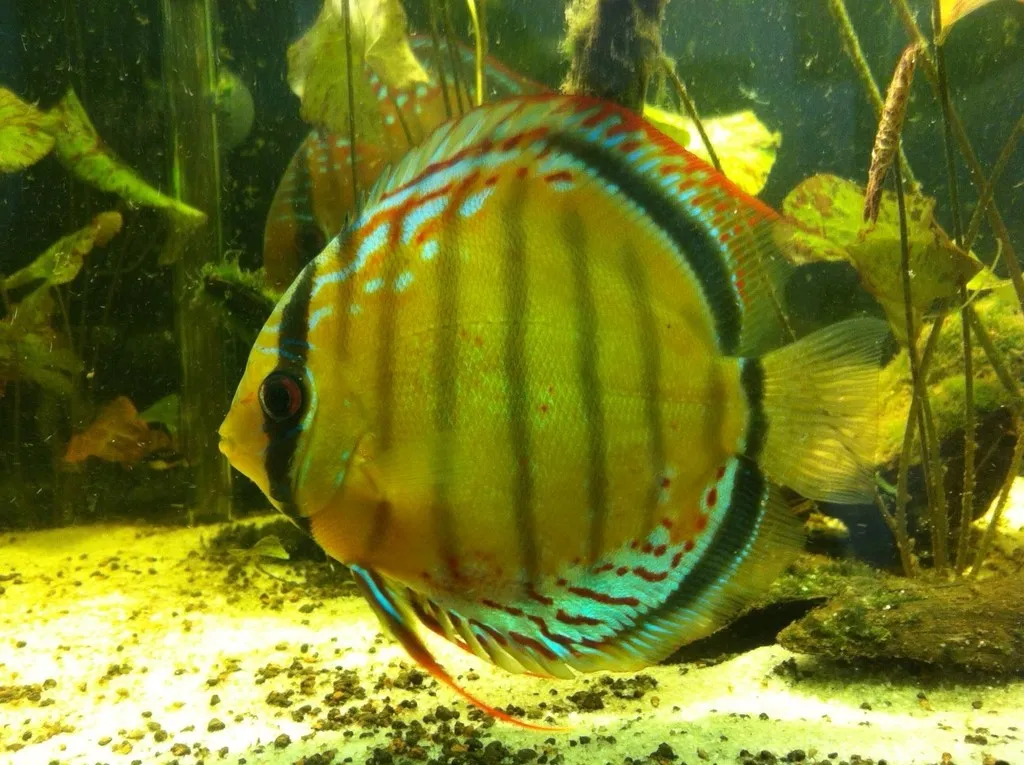 7.9 in (20 cm)65 gal (245 L)81–88°F (27–31°C)
Blue diamond discus
Symphysodon tarzoo
7.9 in (20 cm) · 65 gal (245 L)
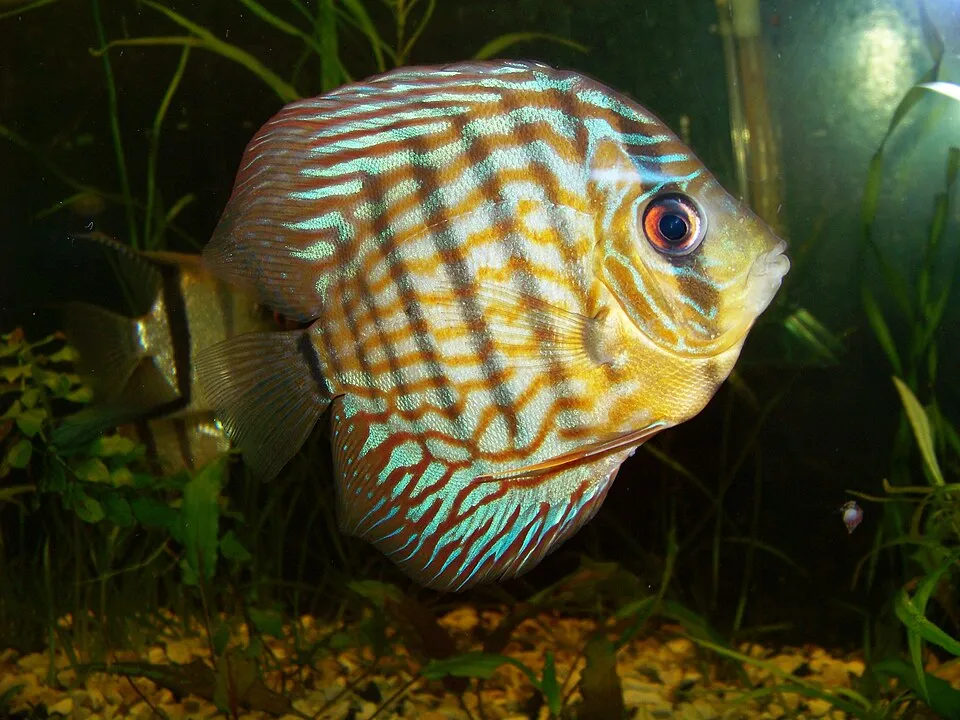 7.9 in (20 cm)65 gal (245 L)79–90°F (26–32°C)
Discus
Symphysodon aequifasciatus
7.9 in (20 cm) · 65 gal (245 L)
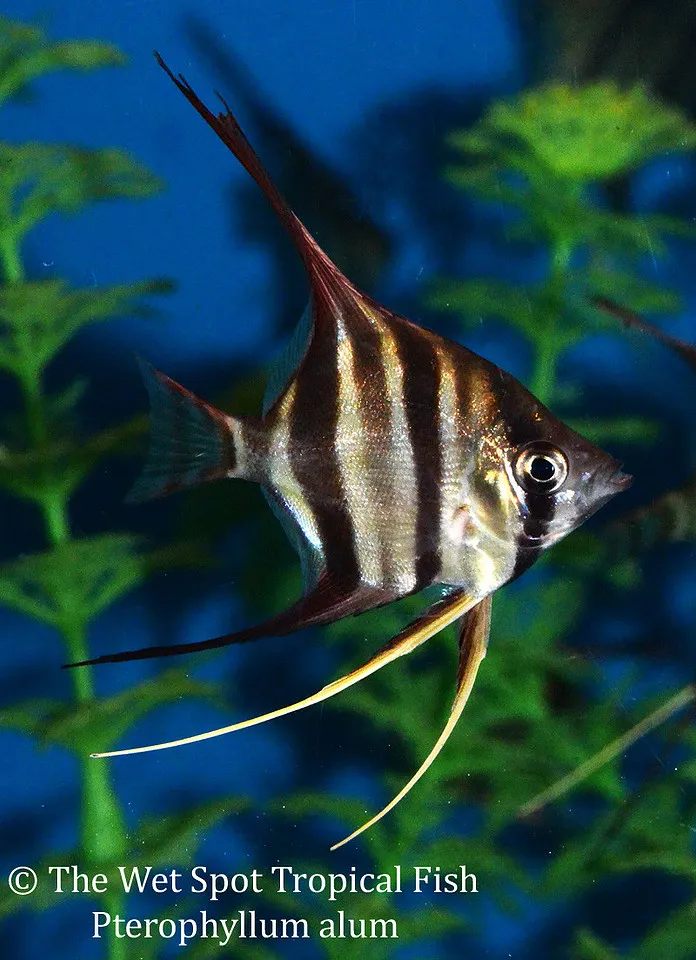 7.1 in (18 cm)45 gal (170 L)79–90°F (26–32°C)
Altum angelfish
Pterophyllum altum
7.1 in (18 cm) · 45 gal (170 L)
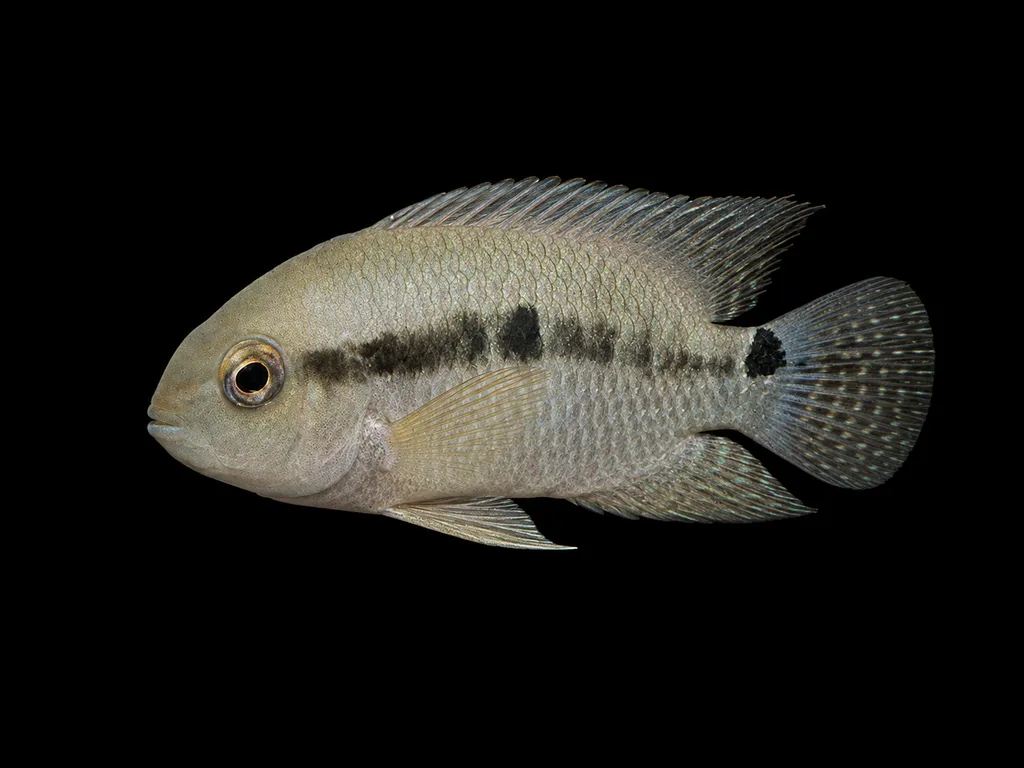 7.1 in (18 cm)40 gal (150 L)68–82°F (20–28°C)
Black acara
Cichlasoma bimaculatum
7.1 in (18 cm) · 40 gal (150 L)
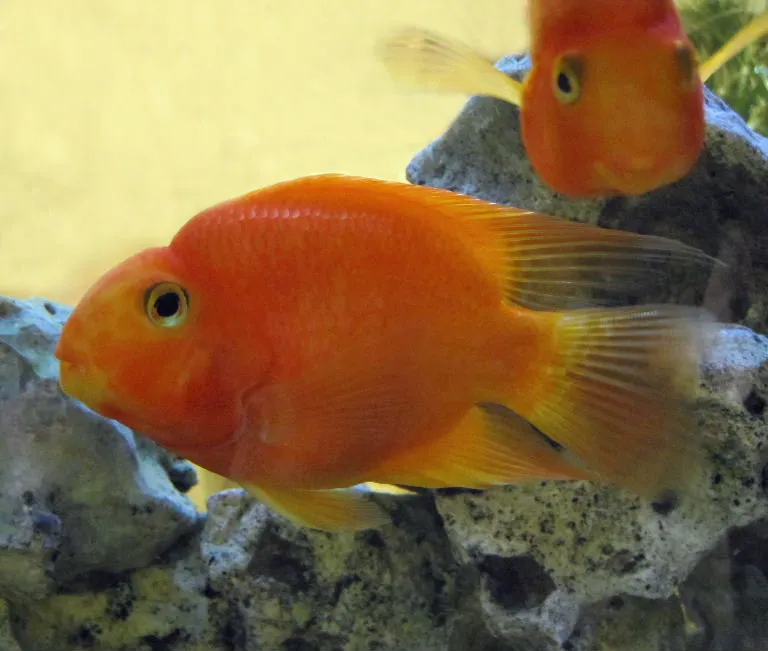 7.9 in (20 cm)32 gal (120 L)72–82°F (22–28°C)
Blood parrot cichlid
A. citrinellus x V. synspilum
7.9 in (20 cm) · 32 gal (120 L)
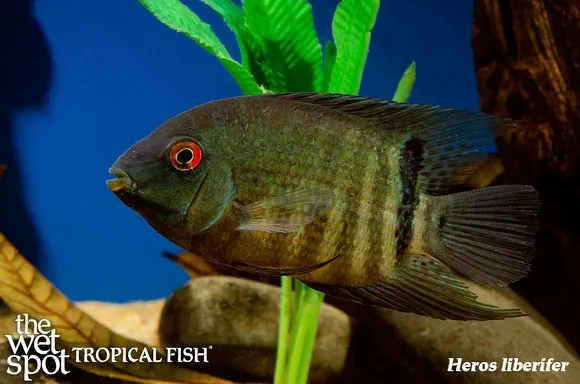 7.9 in (20 cm)106 gal (400 L)75–82°F (24–28°C)
Eyespot severum
Heros liberifer
7.9 in (20 cm) · 106 gal (400 L)