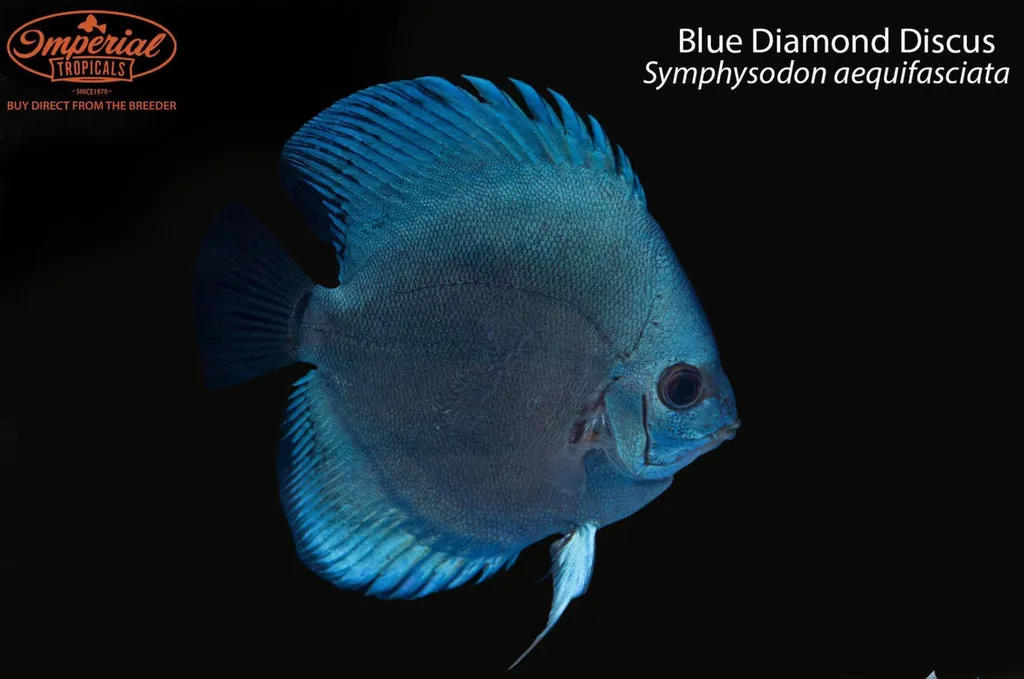
Blue diamond discus
Symphysodon tarzoo
Also known as Green discus, Tarzoo discus, Symphysodon aequifasciatus tarzoo
FreshwaterFish
Care at a glance
- Temperature
- 81–88°F
- 27–31°C
- pH
- 5.5–7.0
- Adult size
- 5.9 in
- 15 cm
- Minimum tank
- 65 gal
- 245 L
- Temperament
- Peaceful
- Social behavior
- Shoaling
- Swim level
- Middle
- Difficulty
- Difficult
- Breeding
- Substrate spawner · Hard
- Rarity
- Rare
- Family
- Cichlidae
- Origin
- Western Amazon basin, Peru, Colombia, and Brazil
Overview
The blue diamond discus is a solid blue aquarium strain of a tall, slow, peaceful shoaling cichlid. It holds in the middle of the water and is a fish for experienced keepers.
Caring for the blue diamond discus
Give a starter group at least 65 gal (245 L), and plan on large, regular water changes. Add tall roots or branches for cover, and run pristine filtration, since discus are sensitive to waste.
Hold the water soft, at 81 to 88°F (27 to 31°C) with a pH of 5.5 to 7.0. Discus prefer calm, spotless conditions. Feed small amounts several times a day. Offer quality flake and pellets, plus frozen bloodworm, brine shrimp and a good frozen beefheart mix.
Discus feel safe in numbers, so keep a group of six or more. Single fish and pairs tend to be bullied and nervous. A group of their own kind works best, or add a few quiet dither fish. Choose gentle tank mates that will not outcompete them for food or foul the water.
A pair spawns on a vertical surface and guards the eggs. Rearing the fry to health demands very warm, immaculate water, and breeding is hard.
Good to know
Symphysodon tarzoo is the western or green discus. It was separated from the eastern discus species in 2006, based on body markings and genetics. It is the source of many blue aquarium lines, including the blue diamond, and it belongs to the cichlid family.
In the wild
The wild fish behind these strains, Symphysodon tarzoo, lives in the western Amazon basin across Peru, Colombia and Brazil. It keeps to warm, slow backwaters among flooded wood and leaf litter. That water is very warm, soft and acidic, stained with tannins.
Weekly picks
Tank mates
The blue diamond discus is a peaceful, shoaling species that keeps to the middle. These picks share a community profile with it, are safe together in both directions, and overlap on water type, temperature and pH.
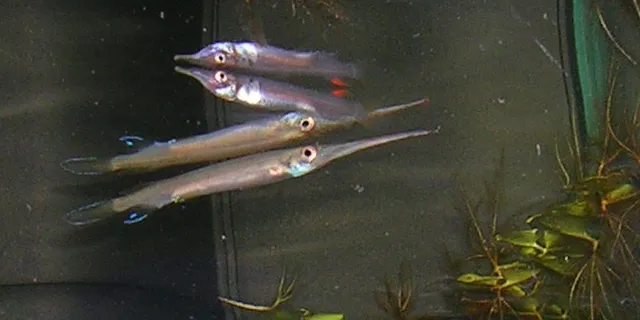
Forest halfbeak
Hemirhamphodon pogonognathus
Freshwater3.5 in (9 cm) · 34 gal (130 L)75–82°F (24–28°C)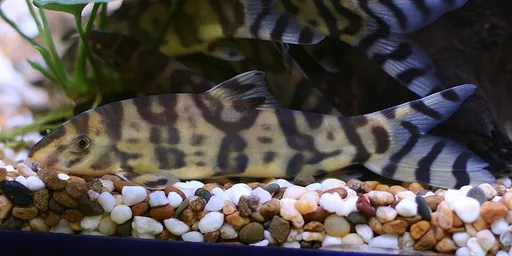
Burmese border loach
Botia histrionica
Freshwater5.1 in (13 cm) · 53 gal (200 L)72–82°F (22–28°C)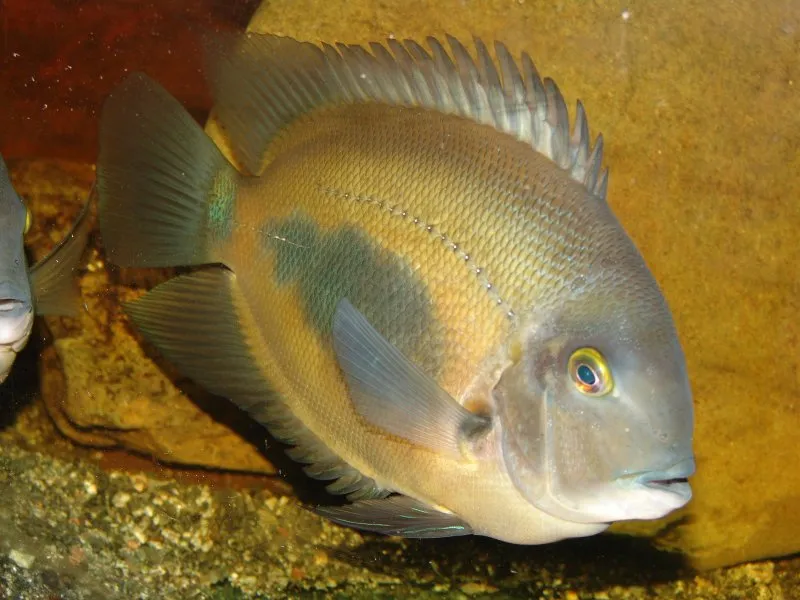
Uaru cichlid
Uaru amphiacanthoides
Freshwater11.8 in (30 cm) · 65 gal (245 L)81–86°F (27–30°C)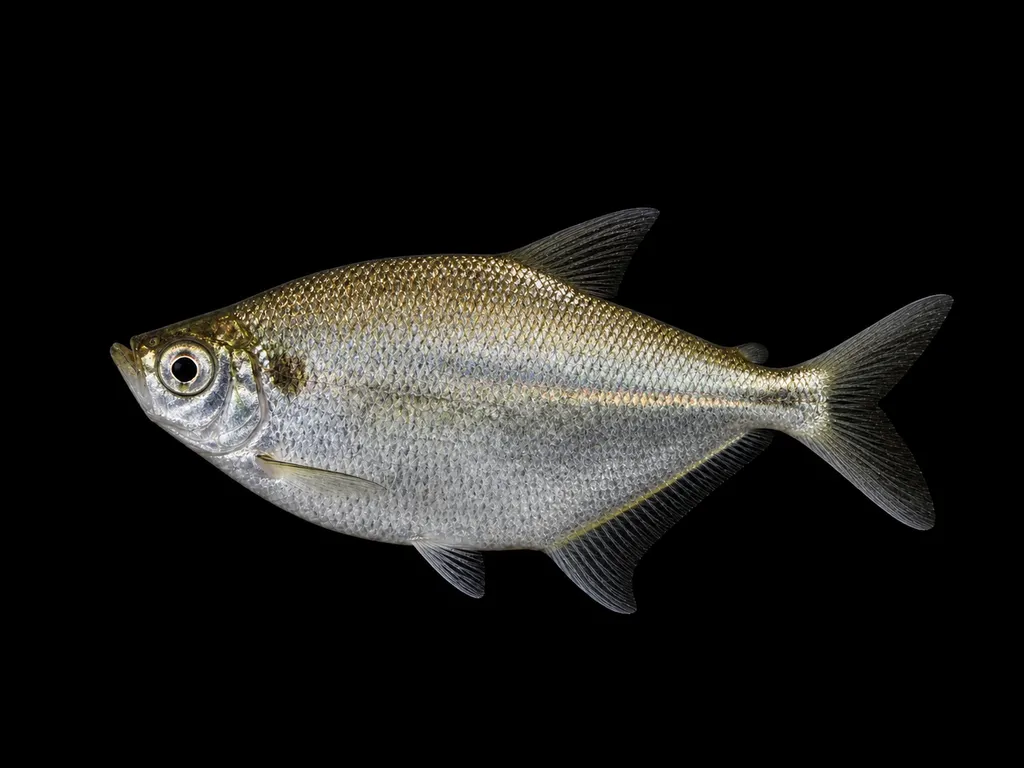
Giant river hatchetfish
Triportheus rotundatus
Freshwater9.8 in (25 cm) · 79 gal (300 L)73–82°F (23–28°C)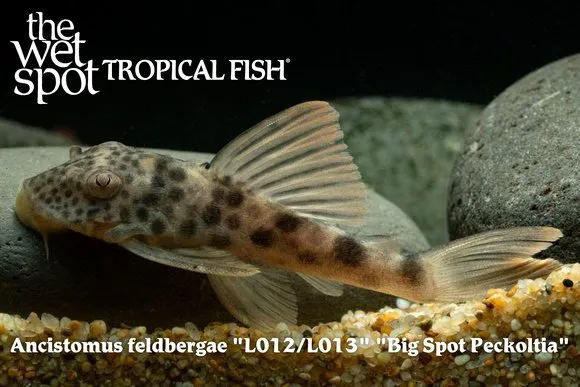
Big spot pleco
Ancistomus feldbergae
Freshwater7.9 in (20 cm) · 66 gal (250 L)79–86°F (26–30°C)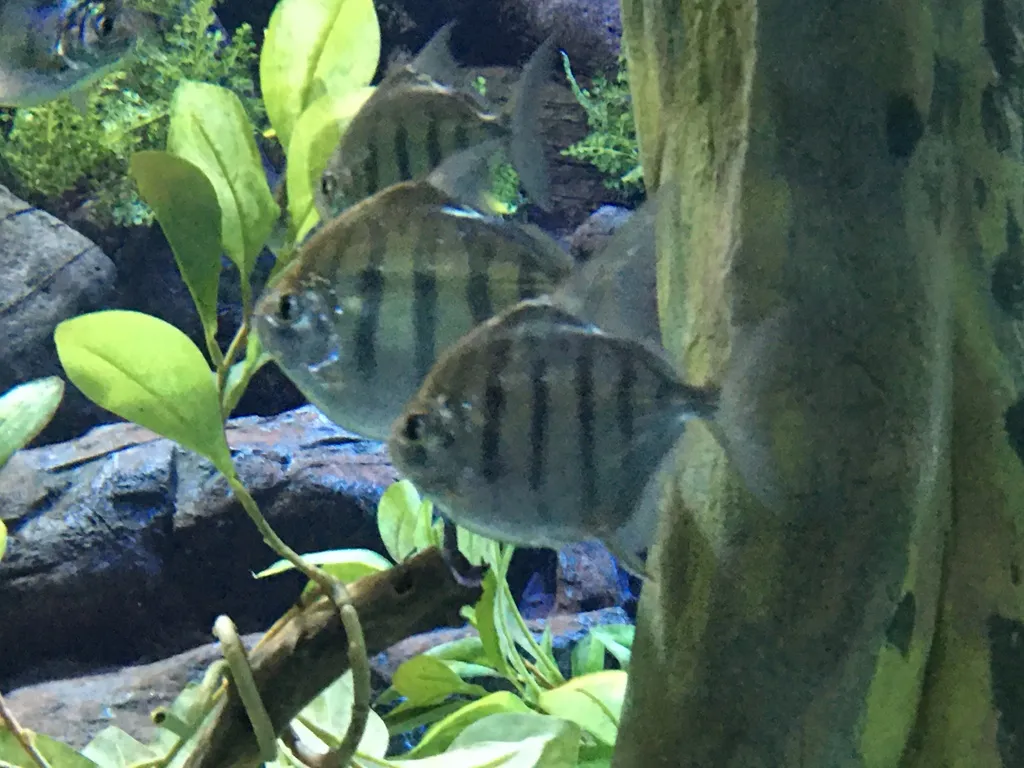
Banded silver dollar
Metynnis fasciatus
Freshwater3.9 in (10 cm) · 70 gal (265 L)75–82°F (24–28°C)
Common questions
What size tank does a blue diamond discus need?
A blue diamond discus needs at least 65 gal (245 L). It spends most of its time in the middle.
What temperature and pH does a blue diamond discus need?
A blue diamond discus is comfortable at 81–88°F (27–31°C) with a pH of 5.5–7.0.
What does a blue diamond discus eat?
A blue diamond discus eats quality flake and pellets, plus frozen bloodworm, brine shrimp and a good frozen beefheart mix. Feed it small amounts several times a day.
How big does a blue diamond discus get?
An adult blue diamond discus reaches about 5.9 in (15 cm).
Does a blue diamond discus need a group?
Yes. A blue diamond discus is a shoaling species and should be kept in a group, not singly.
Related species
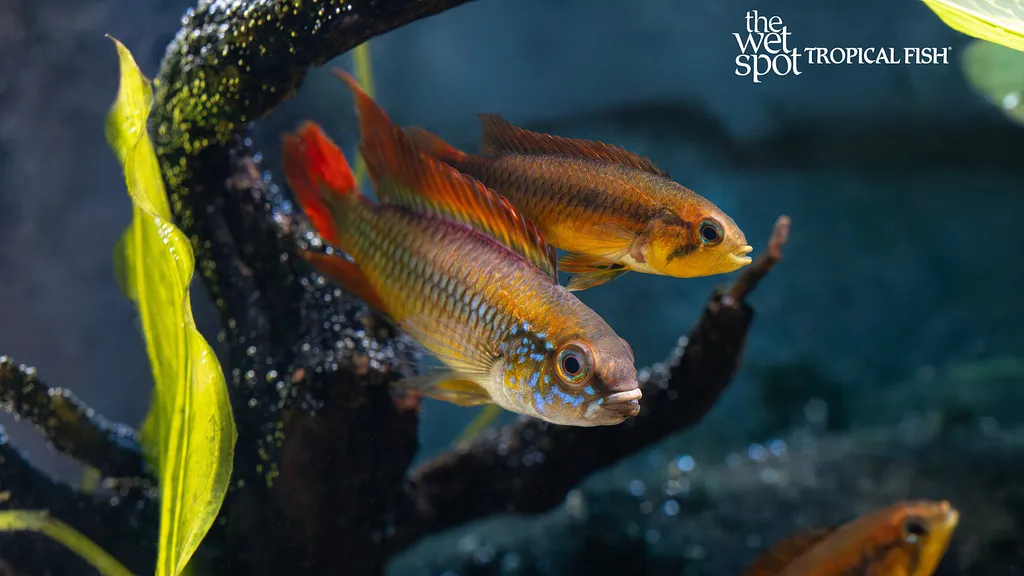
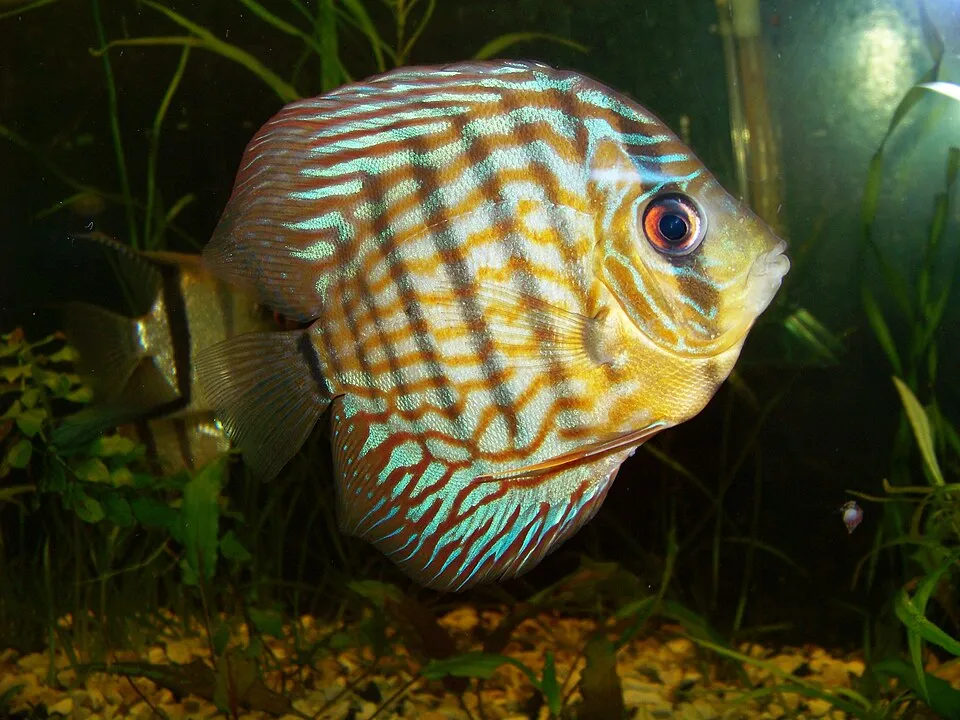 5.9 in (15 cm)65 gal (245 L)79–90°F (26–32°C)
Discus
Symphysodon aequifasciatus
5.9 in (15 cm) · 65 gal (245 L)
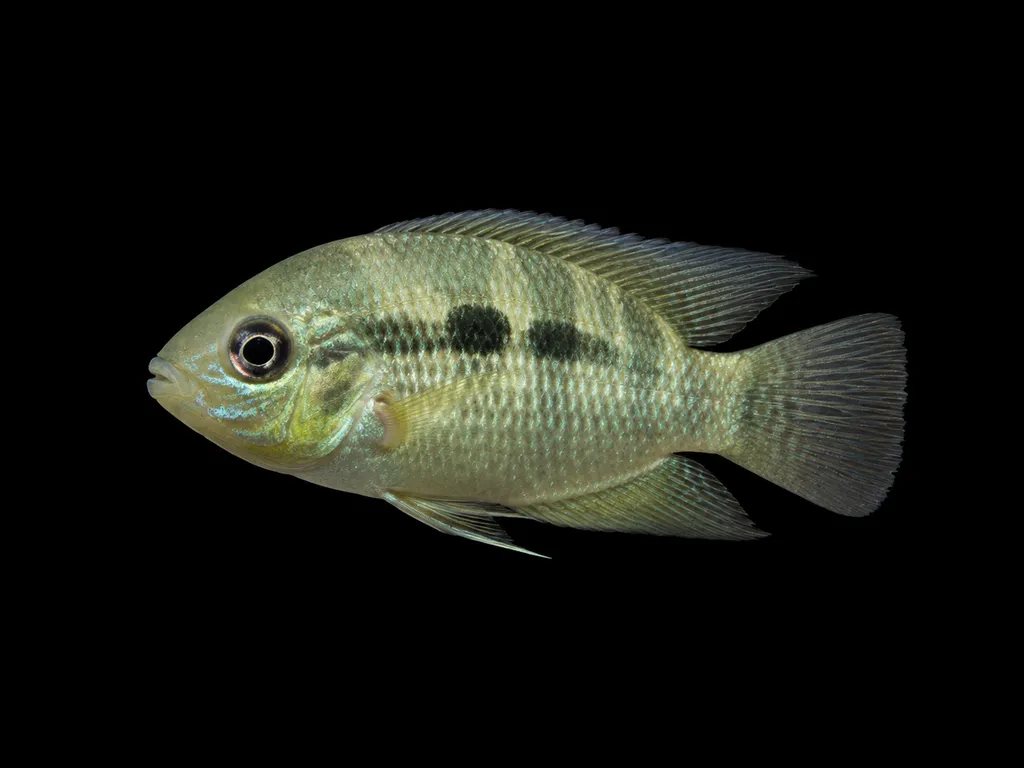
 7.1 in (18 cm)75 gal (284 L)82–88°F (28–31°C)
Heckel discus
Symphysodon discus
7.1 in (18 cm) · 75 gal (284 L)
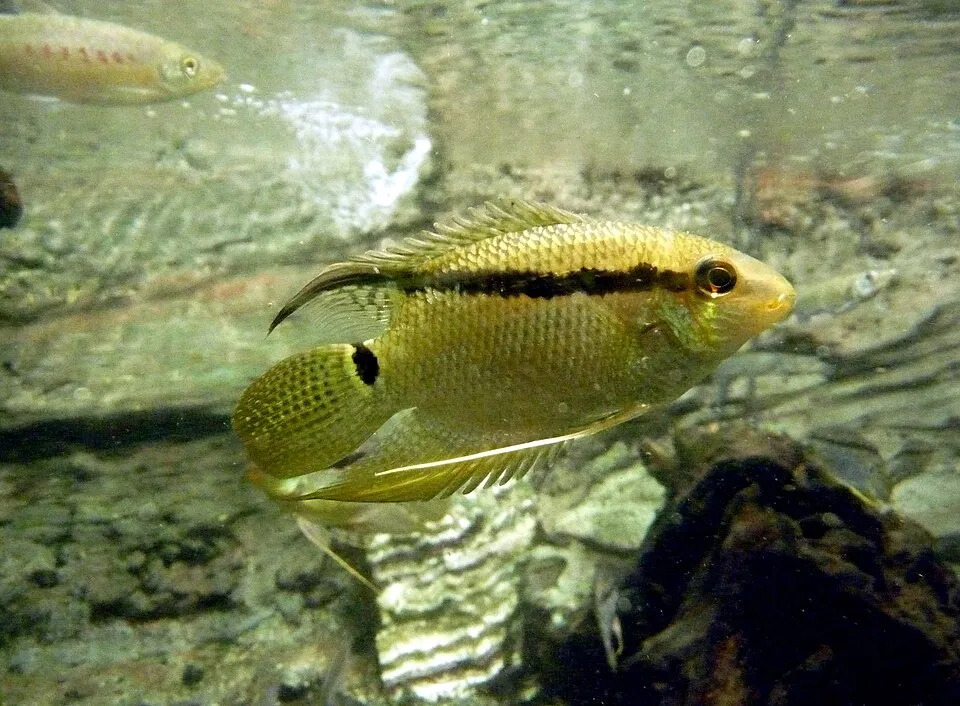
 5.9 in (15 cm)79 gal (300 L)75–82°F (24–28°C)
Filter-feeding cichlid
Chaetobranchopsis orbicularis
5.9 in (15 cm) · 79 gal (300 L)
 5.9 in (15 cm)37 gal (140 L)75–82°F (24–28°C)
Flag cichlid
Mesonauta festivus
5.9 in (15 cm) · 37 gal (140 L)
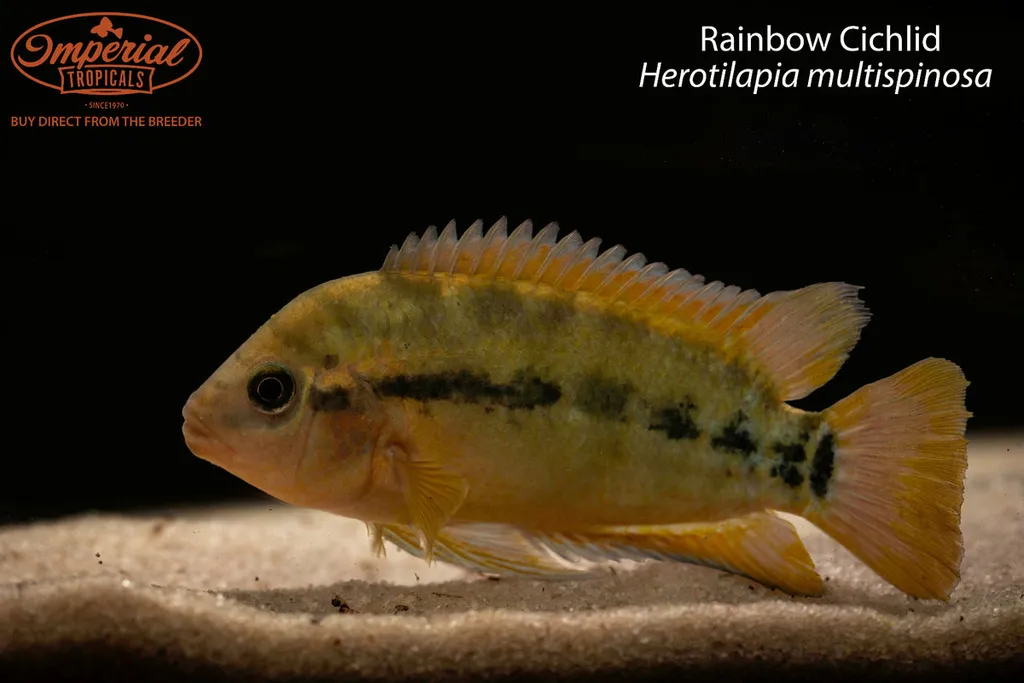 6.3 in (16 cm)26 gal (100 L)72–82°F (22–28°C)
Rainbow cichlid
Herotilapia multispinosa
6.3 in (16 cm) · 26 gal (100 L)
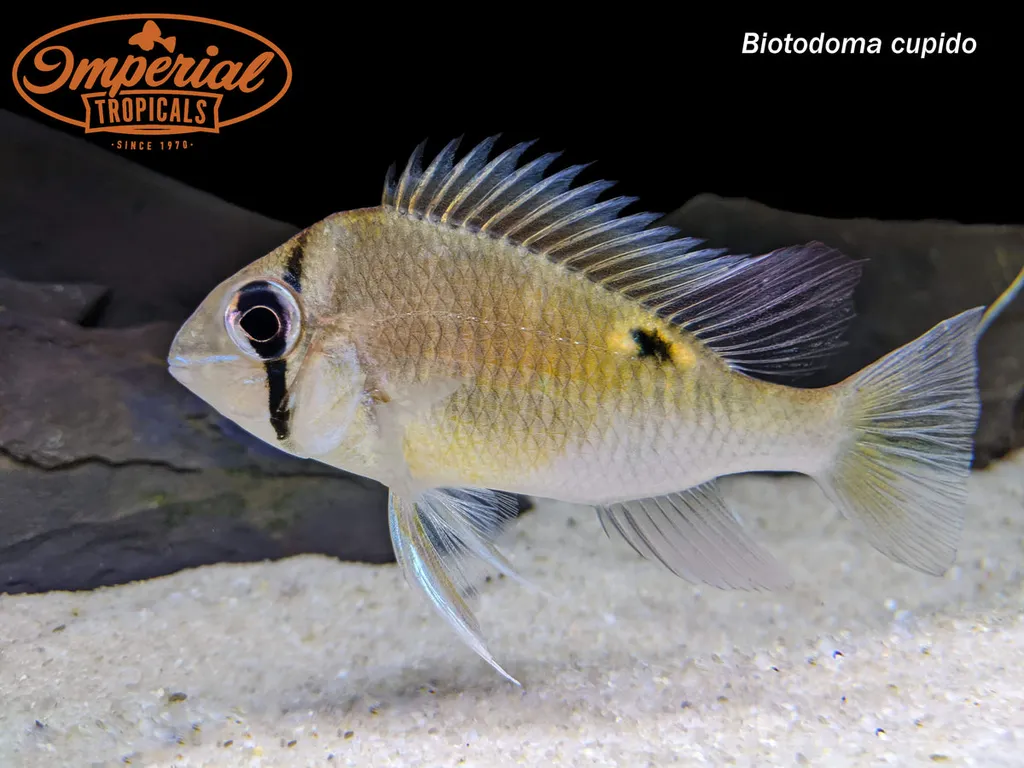 4.7 in (12 cm)53 gal (200 L)68–86°F (20–30°C)
Cupid cichlid
Biotodoma cupido
4.7 in (12 cm) · 53 gal (200 L)