Variety of Angelfish
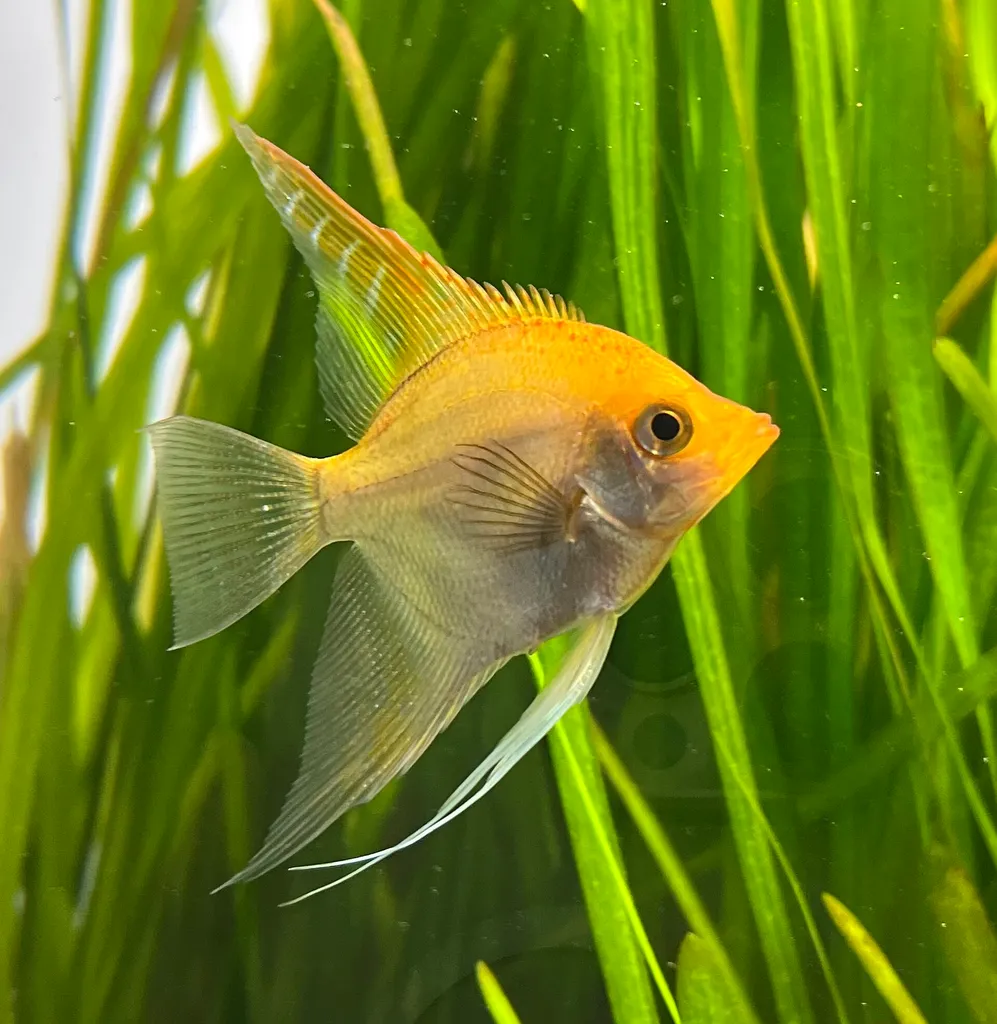
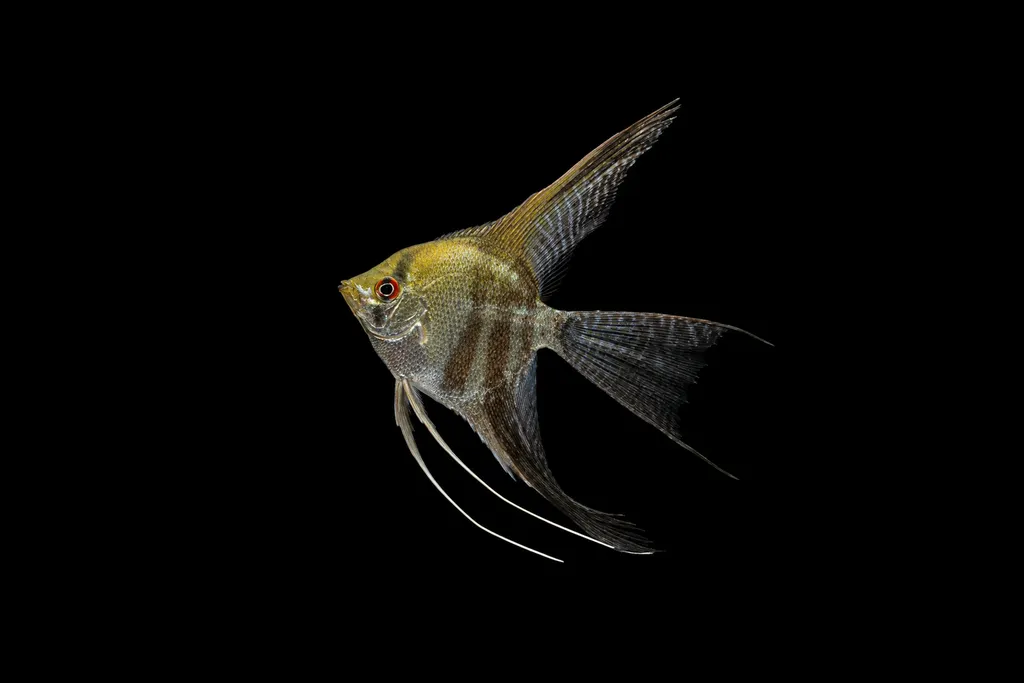
Gold angelfish
Pterophyllum scalare
One of 9 varieties of Pterophyllum scalare · See all varieties →
FreshwaterFish
Varieties · Pterophyllum scalare
See all 9 →
Care at a glance
- Temperature
- 75–86°F
- 24–30°C
- pH
- 6.0–7.5
- Adult size
- 5.9 in
- 15 cm
- Minimum tank
- 30 gal
- 115 L
- Temperament
- Mostly peaceful
- Social behavior
- Social
- Swim level
- Middle
- Difficulty
- Easy
- Breeding
- No record
- Rarity
- Very common
- Family
- Cichlidae
Overview
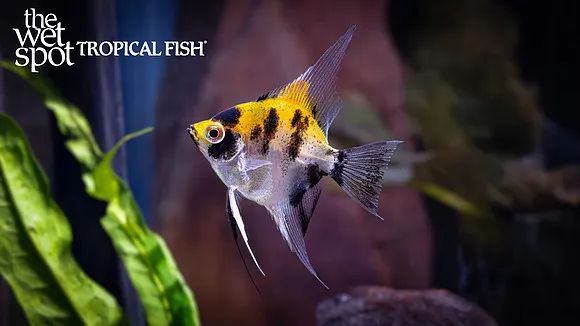
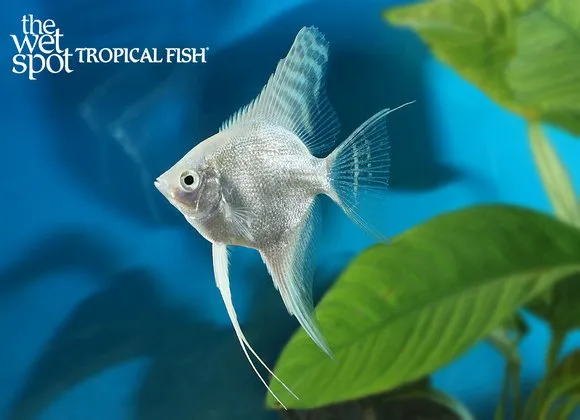
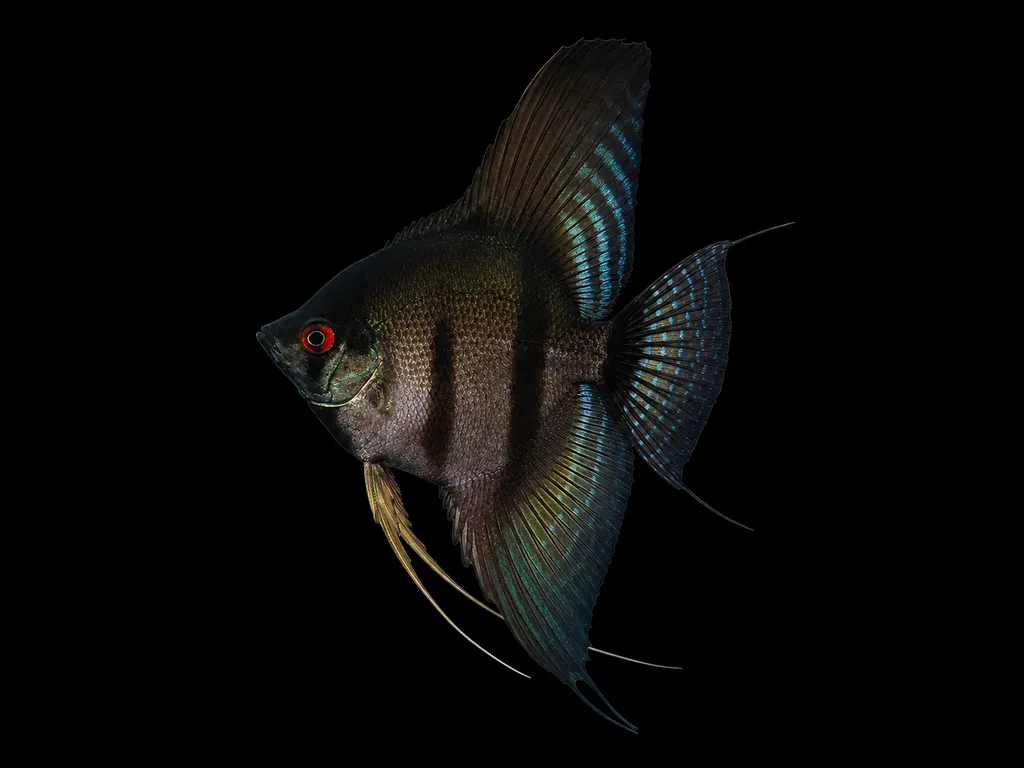
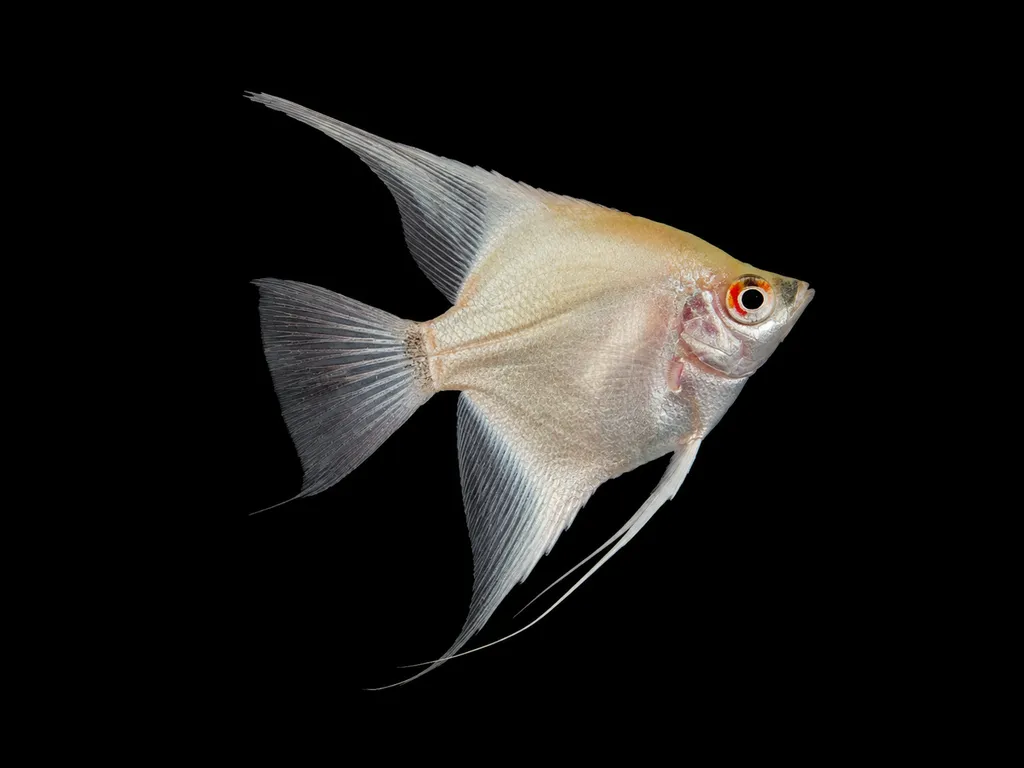
Gold fish are plain, running from pale cream to a strong yellow forehead, with no bars showing at any age. Depth of color varies between suppliers and with condition, so one tank labeled Gold can hold near white fish alongside deep yellow ones. Young fish are often paler than they will finish, so judge a batch by its largest fish.
In the wild
Gold is a hobby mutation and does not occur in wild angelfish. Joanne Norton wrote up three of them in FAMA in 1982: the Naja or Wingate gold, the first on the market in 1970, the Hong Kong gold, and the New Gold imported into the United States from Singapore in 1973. New Gold is the one modern gene lists carry, while Angels Plus lists the Hong Kong gold at a locus of its own and notes it is probably lost to the hobby.
Good to know
New Gold is recessive, so two doses are needed for the look and a plain silver can carry one invisibly. It sits at the dark locus alongside dark, marble and gold marble, and dark is dominant over it. Gold bred to gold comes true, which is why the variety stays consistent from hatchery to hatchery.
Did you know
The gold in shops today is not the gold that started the craze. Norton noted that the older Naja gold was not gold for its whole life, while the New Gold that followed it holds the color from fry to adult, and it is the newer gene that modern angelfish gene lists carry.
Weekly picks
Tank mates
Gold angelfish is a mostly peaceful, social species that keeps to the middle. These picks share a community profile with it, are safe together in both directions, and overlap on water type, temperature and pH.
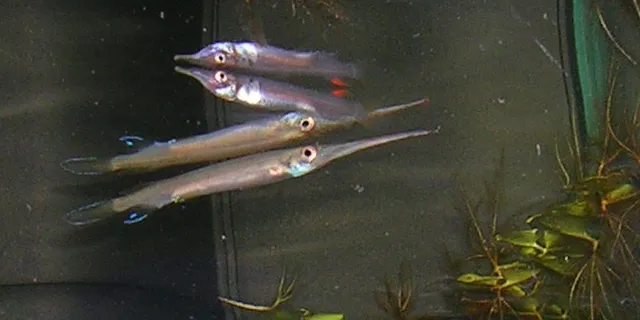
Forest halfbeak
Hemirhamphodon pogonognathus
Freshwater3.5 in (9 cm) · 34 gal (130 L)75–82°F (24–28°C)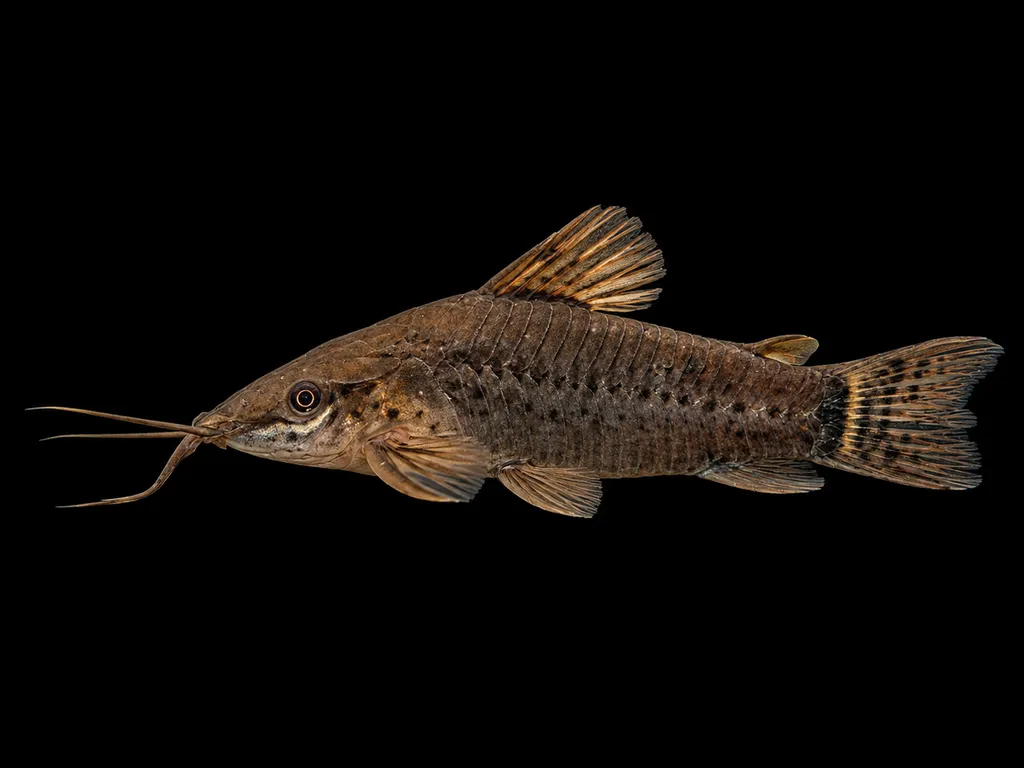
Panama hoplo
Hoplosternum punctatum
Freshwater3.1 in (8 cm) · 30 gal (115 L)72–79°F (22–26°C)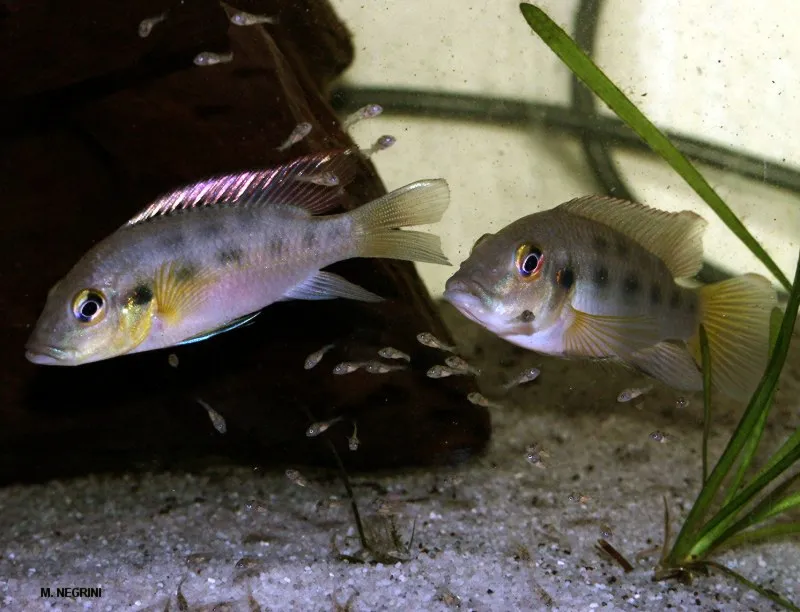
Guenther's mouthbrooder
Chromidotilapia guentheri
Freshwater5.9 in (15 cm) · 30 gal (115 L)75–81°F (24–27°C)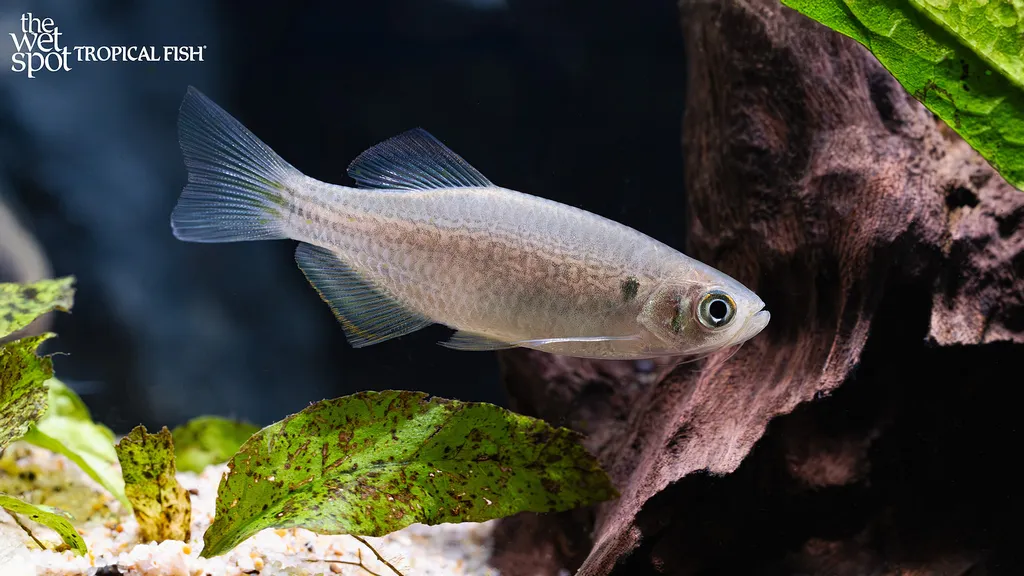
Moustached danio
Danio dangila
Freshwater5.1 in (13 cm) · 32 gal (120 L)68–79°F (20–26°C)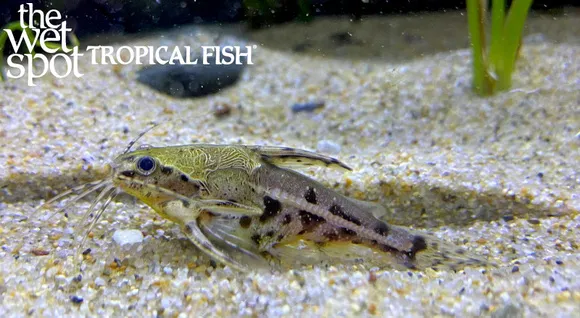
Marbled talking catfish
Amblydoras nauticus
Freshwater4.3 in (11 cm) · 30 gal (112 L)73–82°F (23–28°C)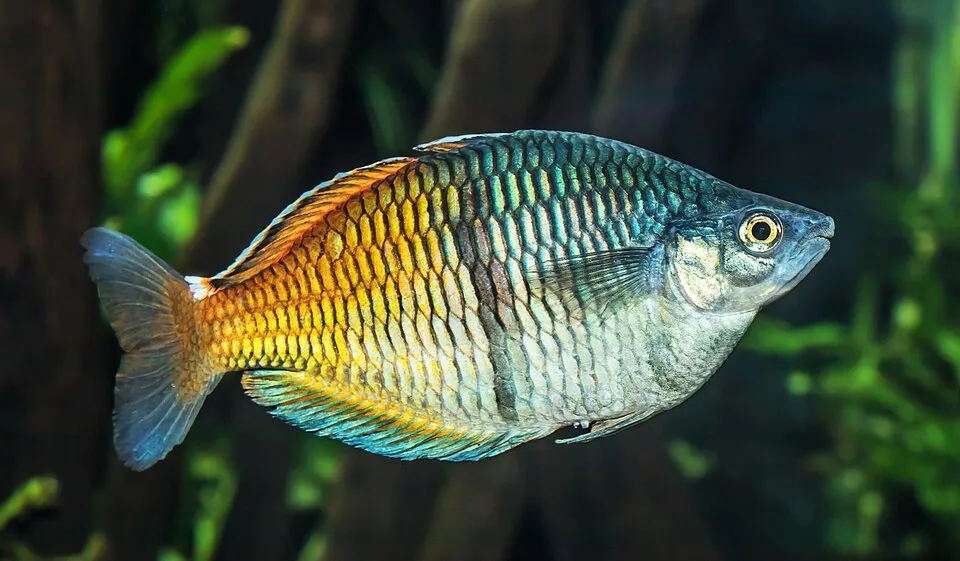
Boeseman's rainbowfish
Melanotaenia boesemani
Freshwater4.3 in (11 cm) · 30 gal (115 L)81–86°F (27–30°C)
Common questions
Is a Gold angelfish a different species from the Angelfish?
No. A Gold angelfish is a variety of the Angelfish, Pterophyllum scalare, and it wants the same tank, water and food as the species.
What size tank does a Gold angelfish need?
A Gold angelfish needs at least 30 gal (115 L). It spends most of its time in the middle.
How big does a Gold angelfish get?
An adult Gold angelfish reaches about 5.9 in (15 cm).
Related species
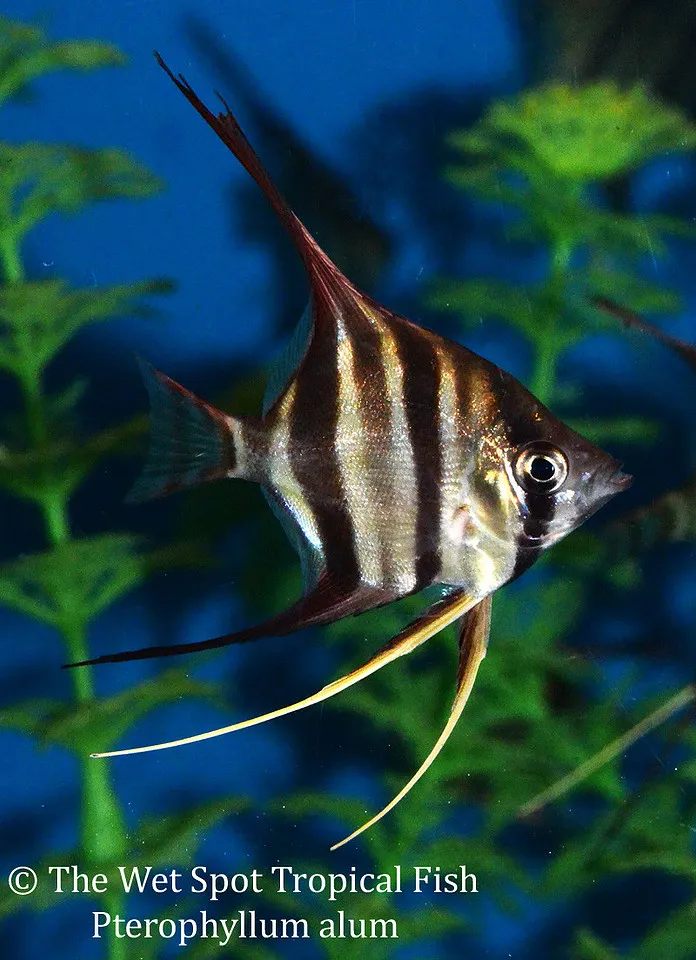 7.1 in (18 cm)45 gal (170 L)79–90°F (26–32°C)
Altum angelfish
Pterophyllum altum
7.1 in (18 cm) · 45 gal (170 L)
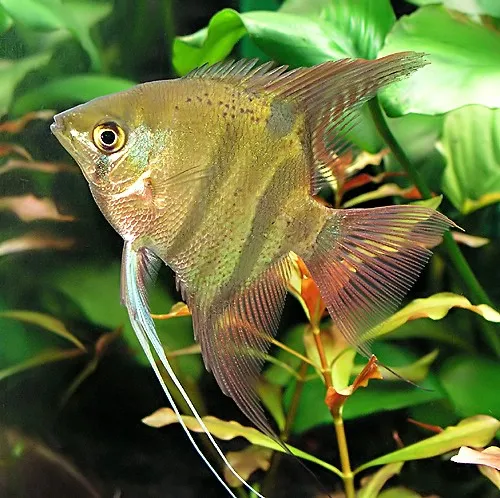 3.9 in (10 cm)30 gal (115 L)72–84°F (22–29°C)
Roman nose angelfish
Pterophyllum leopoldi
3.9 in (10 cm) · 30 gal (115 L)
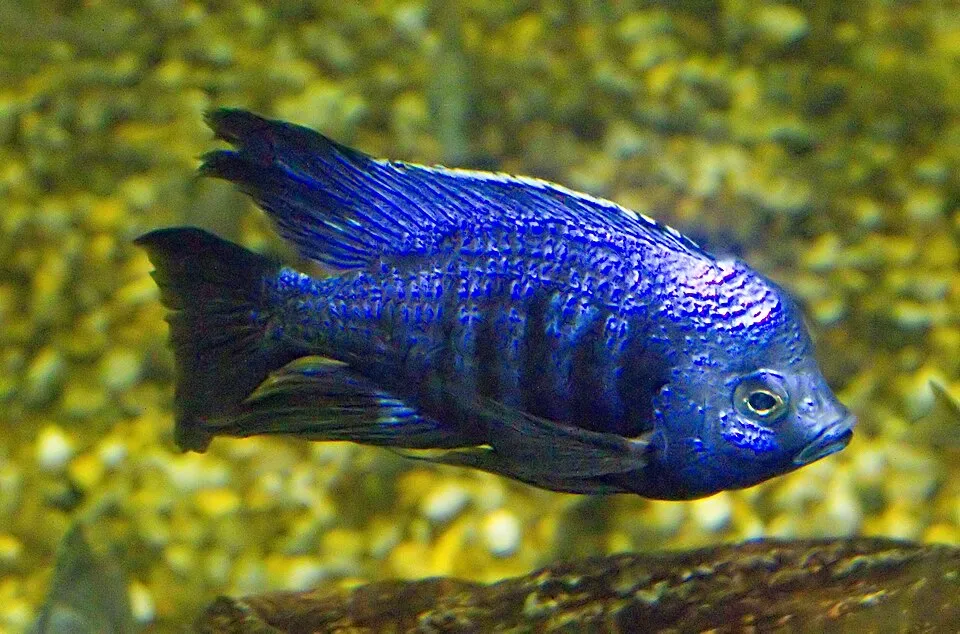 5.9 in (15 cm)79 gal (300 L)77–82°F (25–28°C)
Azureus
Copadichromis azureus
5.9 in (15 cm) · 79 gal (300 L)
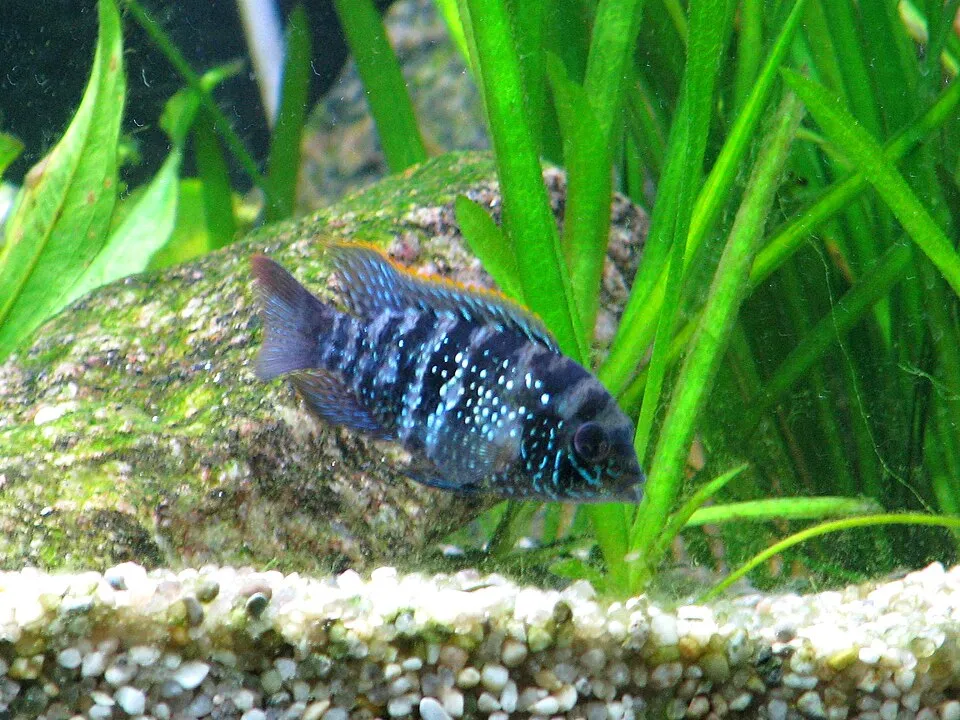 5.9 in (15 cm)42 gal (160 L)72–82°F (22–28°C)
Blue acara
Andinoacara pulcher
5.9 in (15 cm) · 42 gal (160 L)
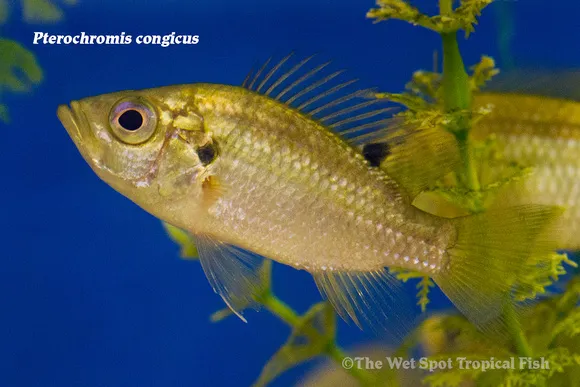 5.9 in (15 cm)79 gal (300 L)73–82°F (23–28°C)
Congicus pterochromis
Pterochromis congicus
5.9 in (15 cm) · 79 gal (300 L)
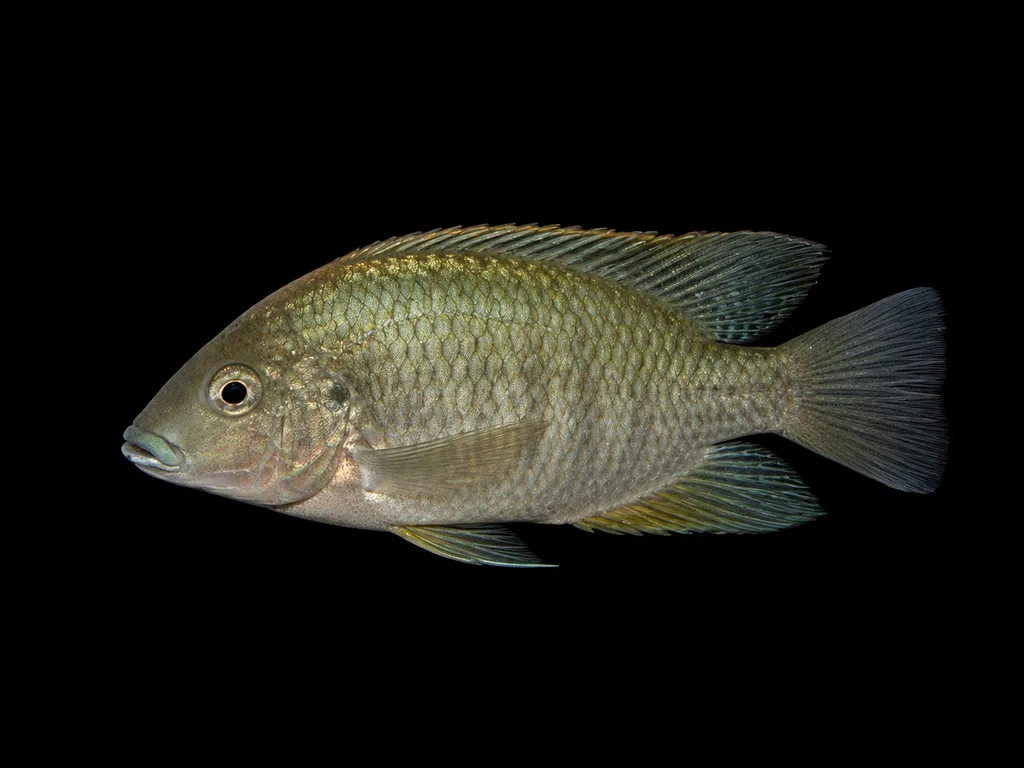 5.9 in (15 cm)66 gal (250 L)73–81°F (23–27°C)
Deepwater coptodon
Coptodon bythobates
5.9 in (15 cm) · 66 gal (250 L)