Parrot doradid
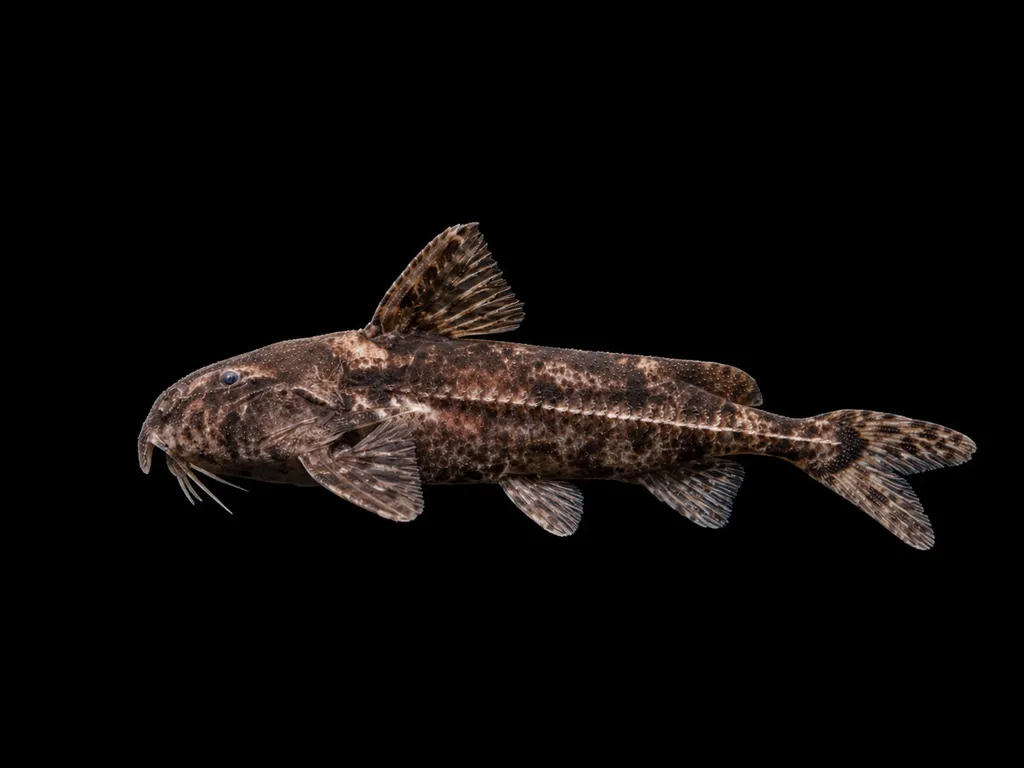
Rhynchodoras woodsi
Also known as Woods' doradid, Parrot catfish
FreshwaterFish
Care at a glance
- Temperature
- 73–82°F
- 23–28°C
- pH
- 6.0–7.5
- Adult size
- 4.1 in
- 10.5 cm
- Minimum tank
- 53 gal
- 200 L
- Temperament
- Peaceful
- Social behavior
- Social
- Swim level
- Bottom
- Difficulty
- Medium
- Breeding
- No record
- Rarity
- Rare
- Family
- Doradidae
- Origin
- Napo and upper Amazon drainages
Overview
The parrot doradid is an unusual, current-loving catfish for a river-style tank with good flow. It is peaceful and suits a keeper with some experience.
Did you know
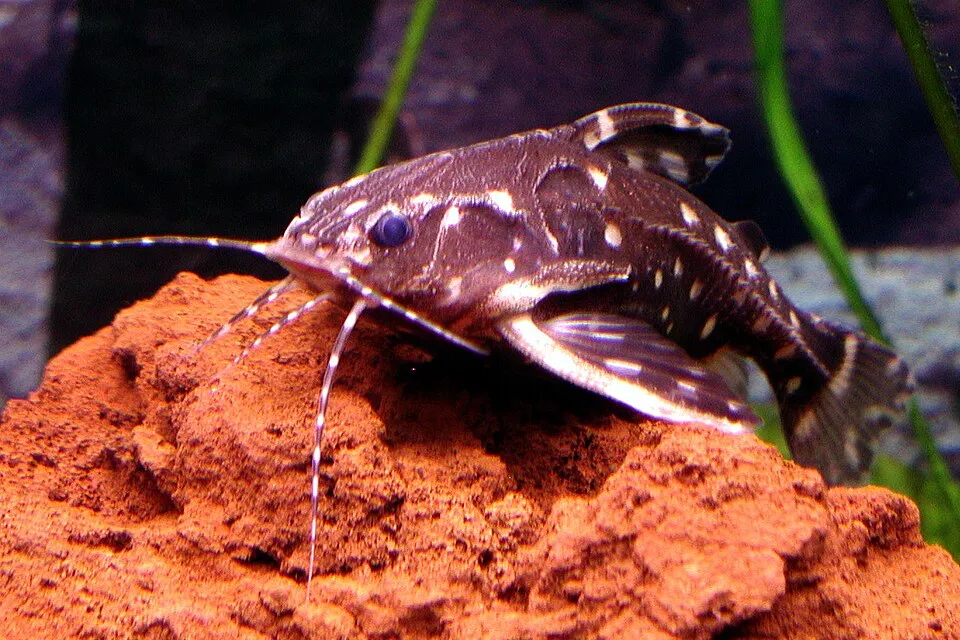
The parrot doradid's beaked jaws are a piece of specialized feeding gear found in almost no other catfish. It probably uses them to pry small invertebrates out of tight crevices in submerged wood and rock.
Caring for the parrot doradid
Set up a tank of at least 53 gal (200 L) for the parrot doradid, with strong circulation and a brisk current. Add plenty of driftwood, root tangles and smooth stone for it to graze over. Use a soft sand or fine gravel bed.
Keep the water soft to neutral, at 73 to 82°F (23 to 28°C) and a pH of 6.0 to 7.5. It must stay very clean and well oxygenated, with good flow and aeration, since river fish are intolerant of poor conditions.
Feed sinking pellets, wafers and small frozen invertebrates, since much of its natural diet is picked from crevices. The parrot doradid is peaceful and gregarious, comfortable alone or in a small group. It is harmless to tank mates it cannot swallow. Its breeding is undocumented in captivity.
Good to know
This small thorny catfish has one of the strangest heads in the family Doradidae, with jaws compressed and drawn out into a downward, forceps-like beak. It was described in 1976. It carries the usual doradid armor and sound-making spines.
In the wild
Rhynchodoras woodsi comes from flowing tributaries of the upper Amazon in Ecuador. It clings among submerged wood in oxygen-rich, moving water.
Weekly picks
Tank mates
The parrot doradid is a peaceful, social species that keeps to the bottom. These picks share a community profile with it, are safe together in both directions, and overlap on water type, temperature and pH.
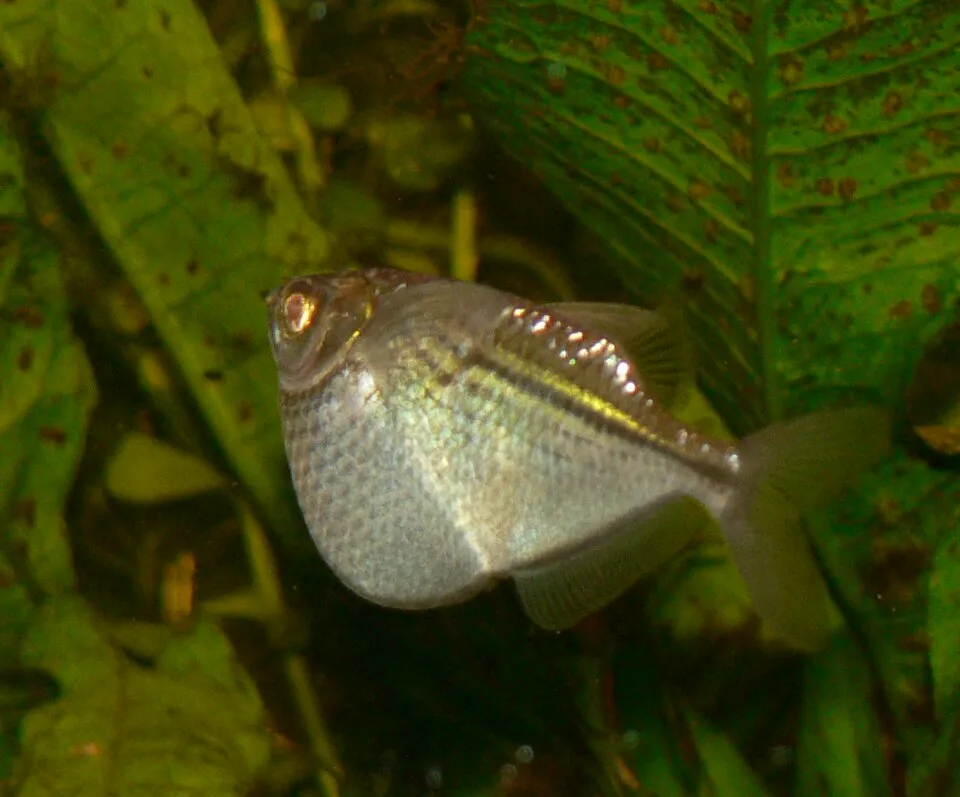
Common hatchetfish
Gasteropelecus sternicla
Freshwater1.6 in (4 cm) · 33 gal (125 L)68–82°F (20–28°C)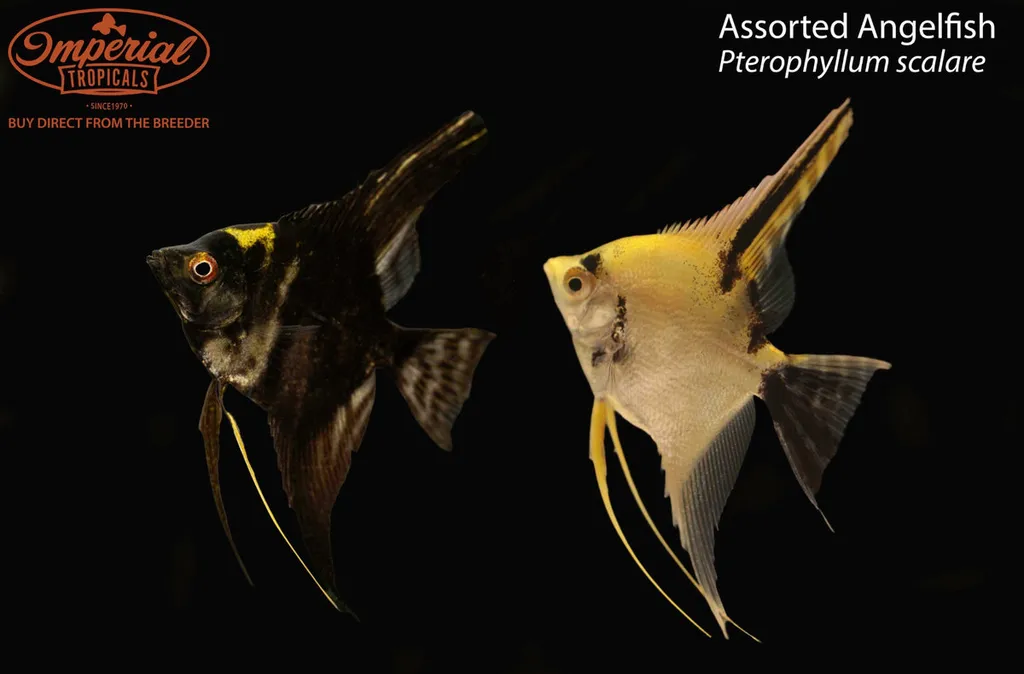
Angelfish
Pterophyllum scalare
Freshwater5.9 in (15 cm) · 53 gal (200 L)75–86°F (24–30°C)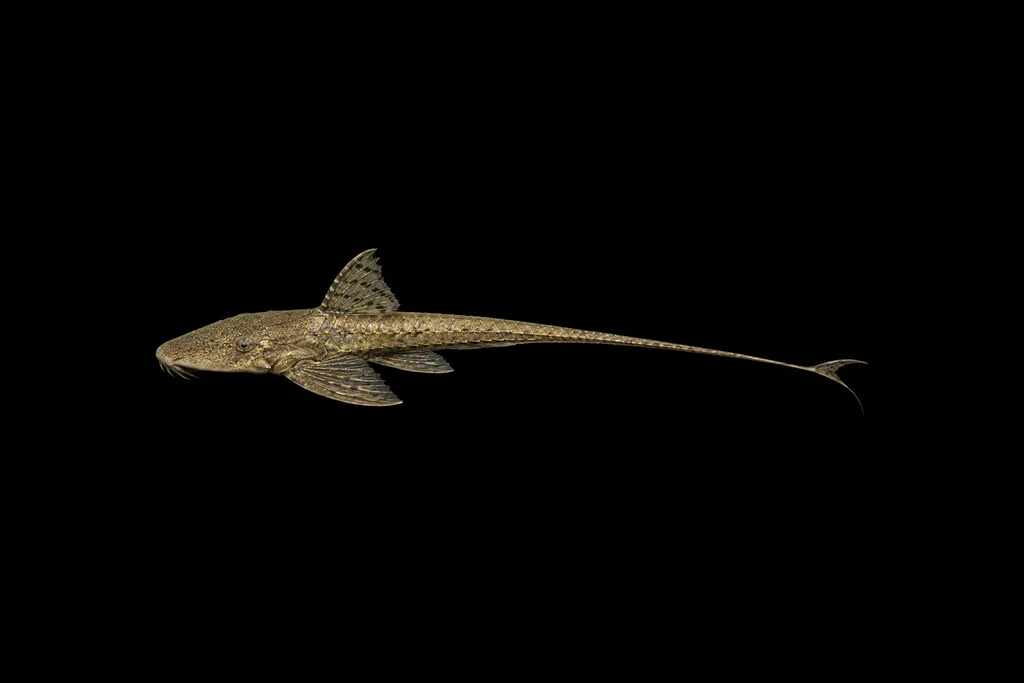
Parnahyba whiptail
Loricaria parnahybae
Freshwater9.8 in (25 cm) · 53 gal (200 L)73–82°F (23–28°C)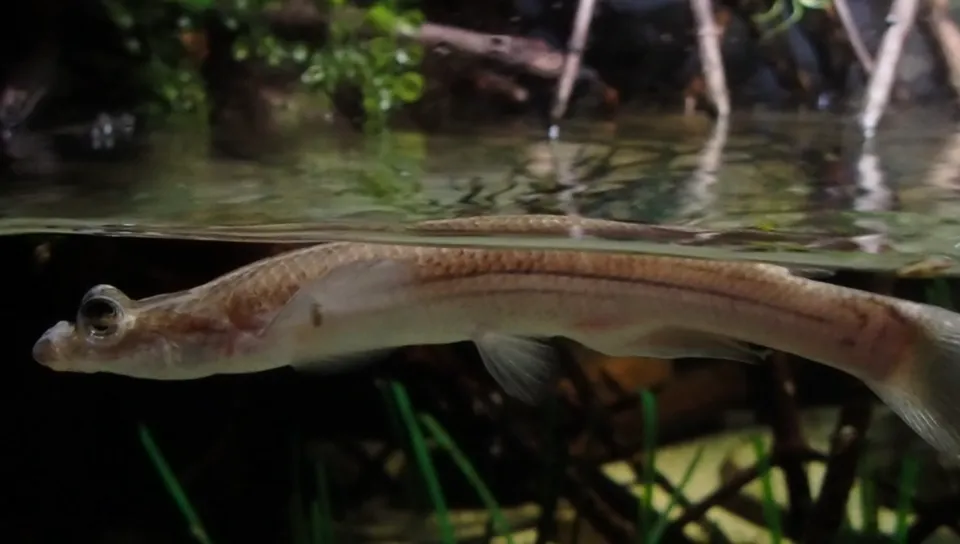
Largescale four-eyed fish
Anableps anableps
FreshwaterBrackish11.8 in (30 cm) · 70 gal (265 L)77–88°F (25–31°C)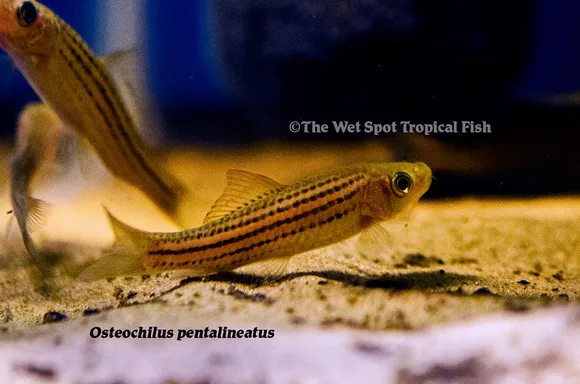
Fiveline bonylip barb
Osteochilus pentalineatus
Freshwater2.2 in (5.6 cm) · 53 gal (200 L)73–82°F (23–28°C)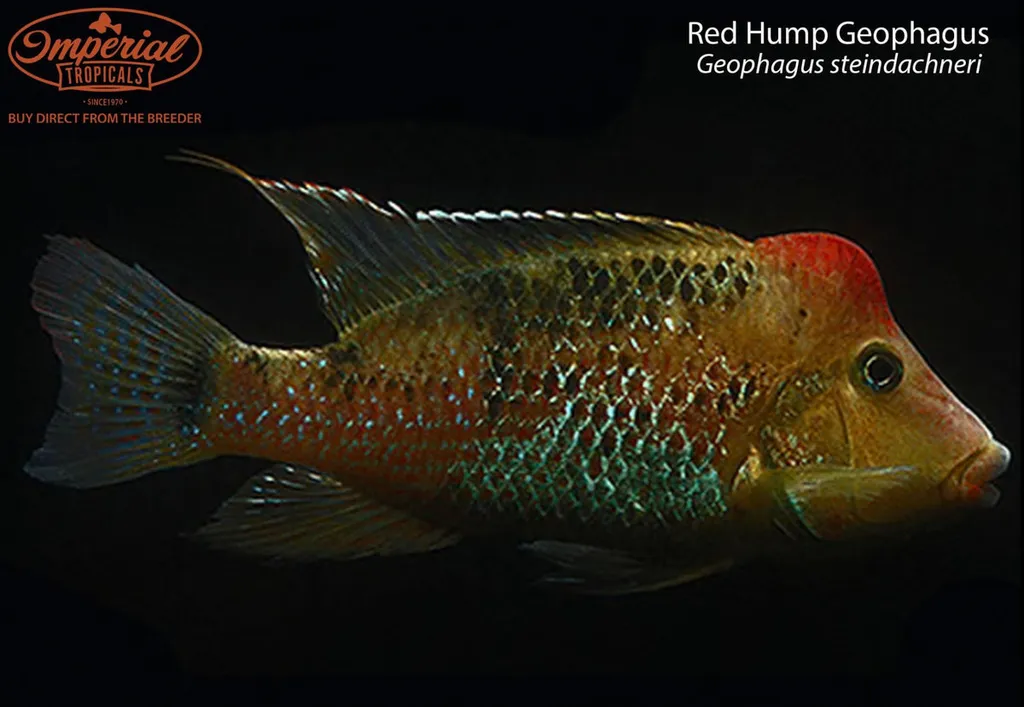
Red hump eartheater
Geophagus steindachneri
Freshwater5.9 in (15 cm) · 53 gal (200 L)72–82°F (22–28°C)
Common questions
What size tank does a parrot doradid need?
A parrot doradid needs at least 53 gal (200 L). It spends most of its time in the bottom.
What temperature and pH does a parrot doradid need?
A parrot doradid is comfortable at 73–82°F (23–28°C) with a pH of 6.0–7.5.
What does a parrot doradid eat?
A parrot doradid eats sinking pellets, wafers and small frozen invertebrates. Much of its natural diet is picked from crevices.
How big does a parrot doradid get?
An adult parrot doradid reaches about 4.1 in (10.5 cm).
Related species
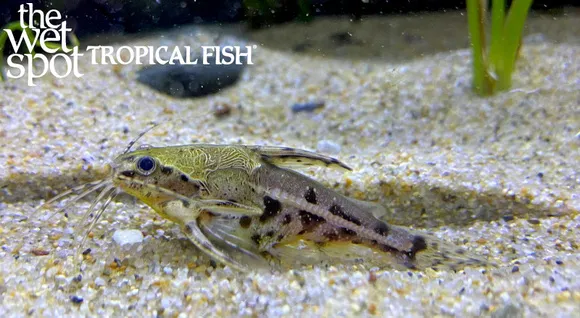 4.3 in (11 cm)30 gal (112 L)73–82°F (23–28°C)
Marbled talking catfish
Amblydoras nauticus
4.3 in (11 cm) · 30 gal (112 L)
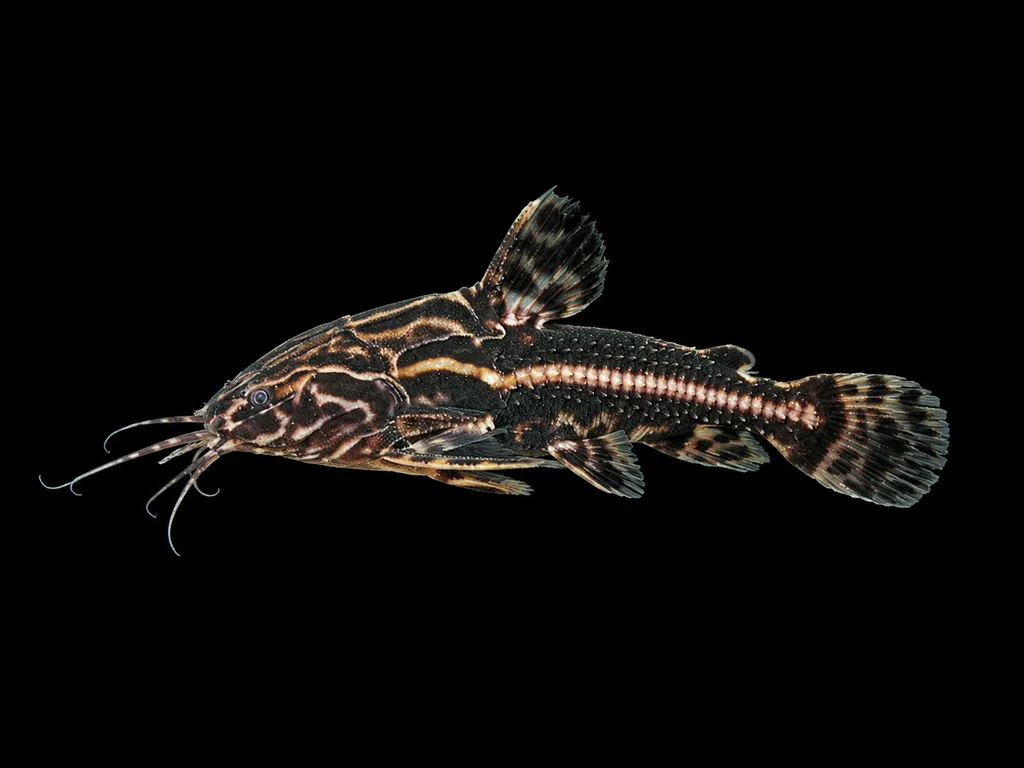 4.5 in (11.5 cm)30 gal (112 L)73–82°F (23–28°C)
Painted talking catfish
Acanthodoras cataphractus
4.5 in (11.5 cm) · 30 gal (112 L)
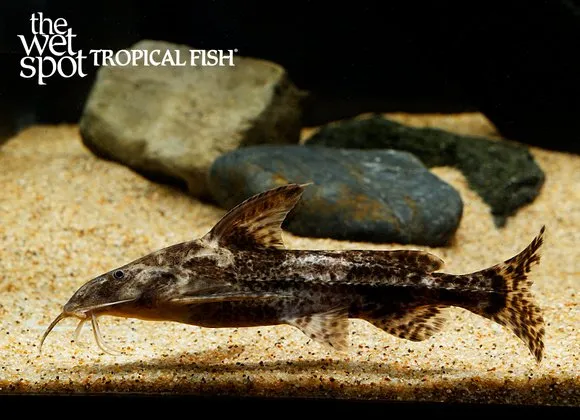 5.9 in (15 cm)70 gal (265 L)73–82°F (23–28°C)
Gallagher's catfish
Rhinodoras gallagheri
5.9 in (15 cm) · 70 gal (265 L)
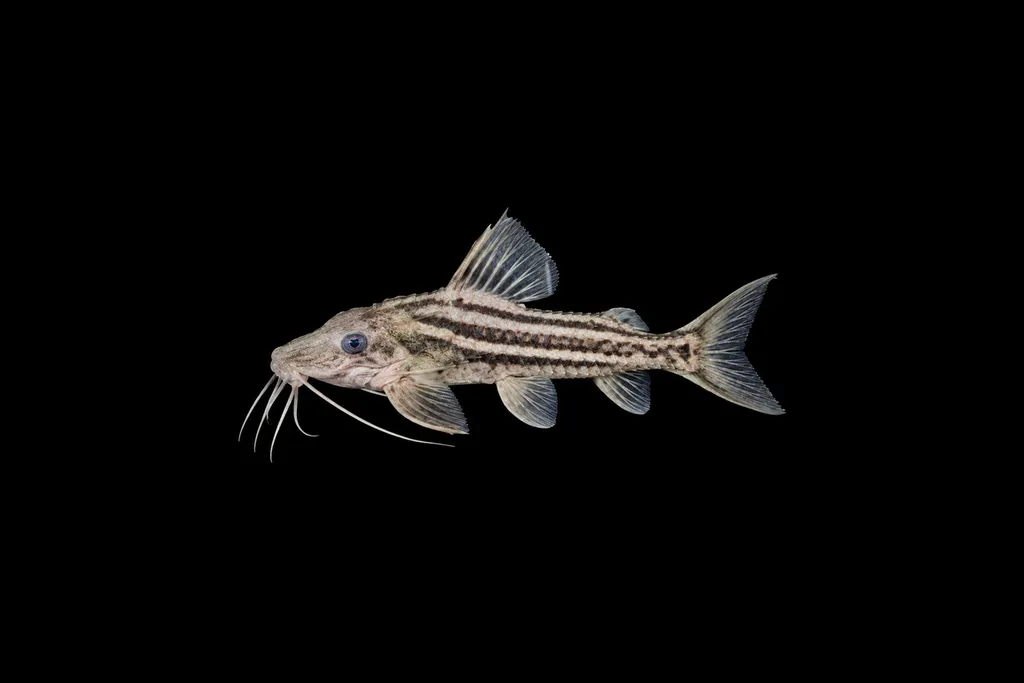 5.9 in (15 cm)53 gal (200 L)73–82°F (23–28°C)
Hancock's talking catfish
Platydoras hancockii
5.9 in (15 cm) · 53 gal (200 L)
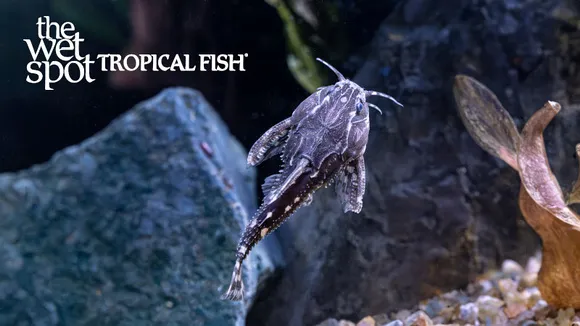 5.9 in (15 cm)40 gal (150 L)73–82°F (23–28°C)
Orinoco spotted raphael
Agamyxis albomaculatus
5.9 in (15 cm) · 40 gal (150 L)
 5.9 in (15 cm)40 gal (150 L)72–79°F (22–26°C)
Spotted raphael catfish
Agamyxis pectinifrons
5.9 in (15 cm) · 40 gal (150 L)