Variety of Angelfish
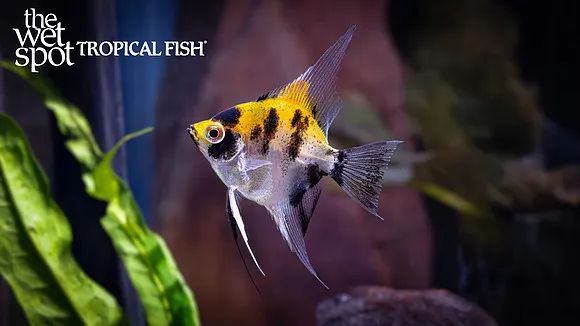
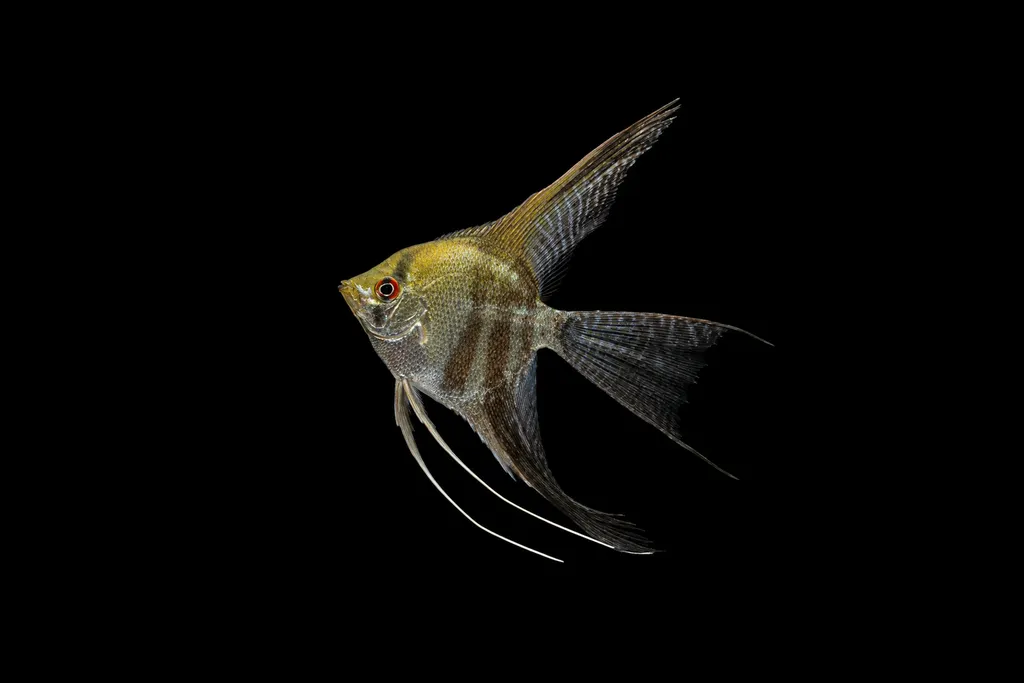
Koi angelfish
Pterophyllum scalare
One of 9 varieties of Pterophyllum scalare · See all varieties →
FreshwaterFish
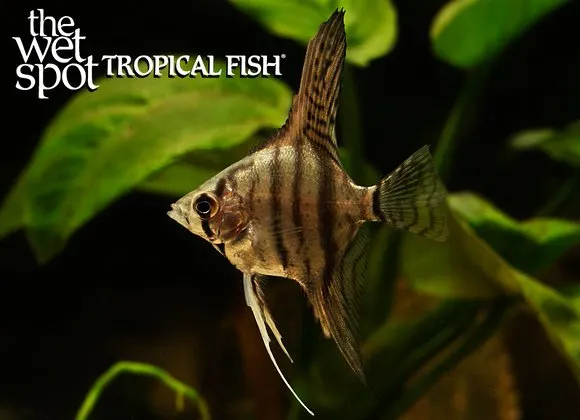
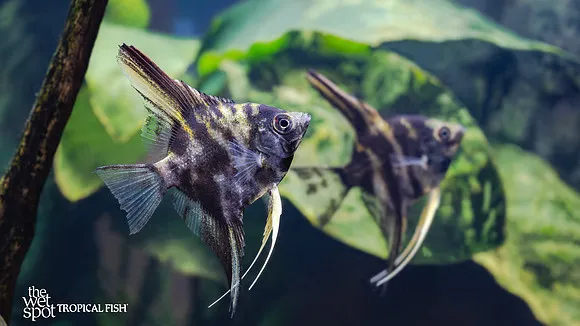
Varieties · Pterophyllum scalare
See all 9 →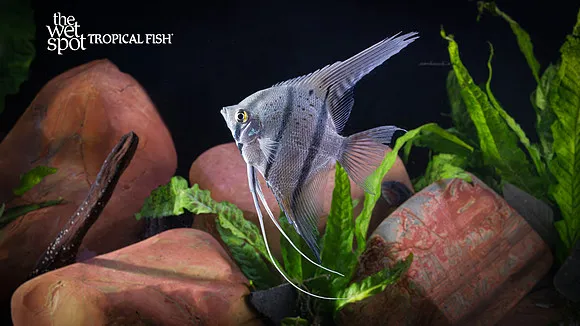
Care at a glance
- Temperature
- 75–86°F
- 24–30°C
- pH
- 6.0–7.5
- Adult size
- 5.9 in
- 15 cm
- Minimum tank
- 30 gal
- 115 L
- Temperament
- Mostly peaceful
- Social behavior
- Social
- Swim level
- Middle
- Difficulty
- Easy
- Breeding
- No record
- Rarity
- Very common
- Family
- Cichlidae
Overview
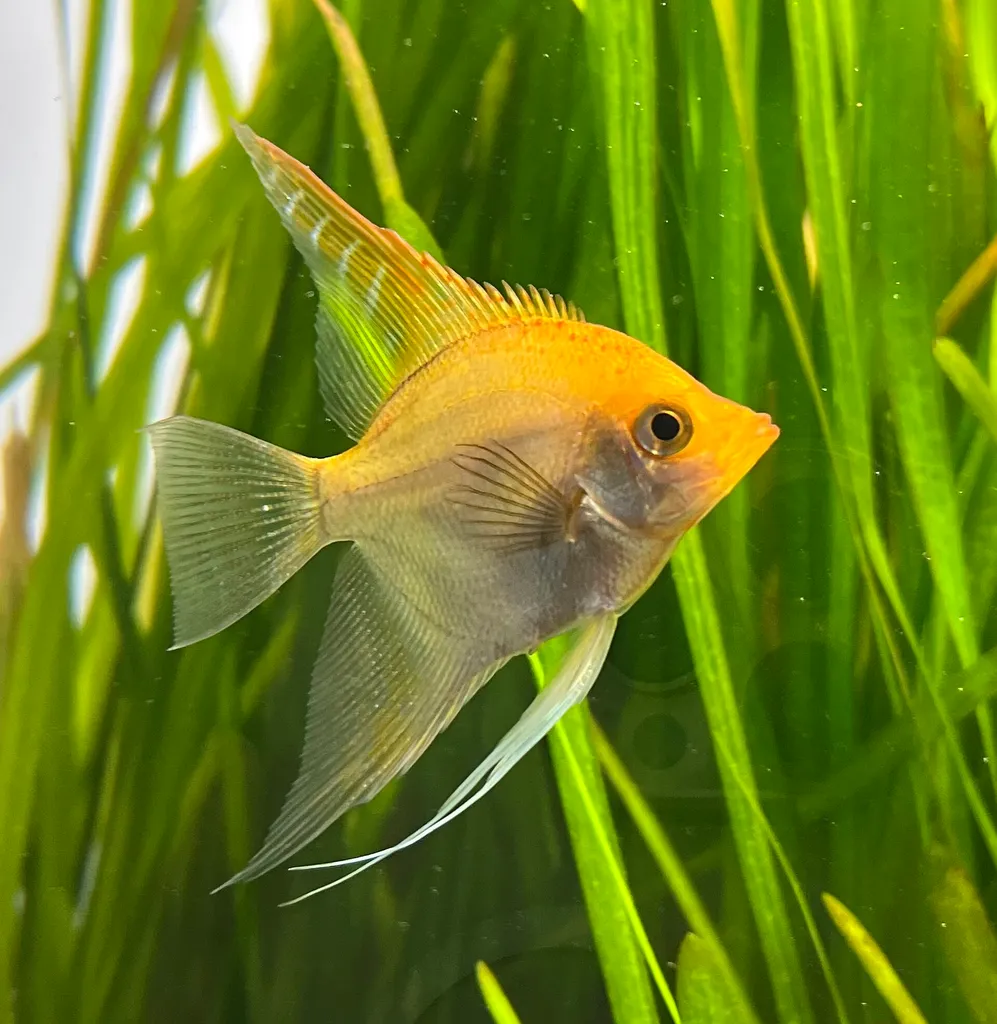
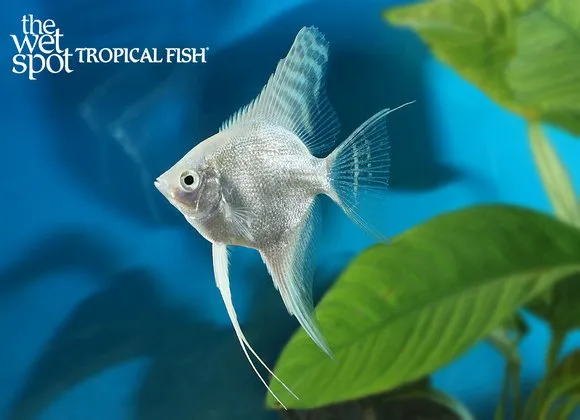
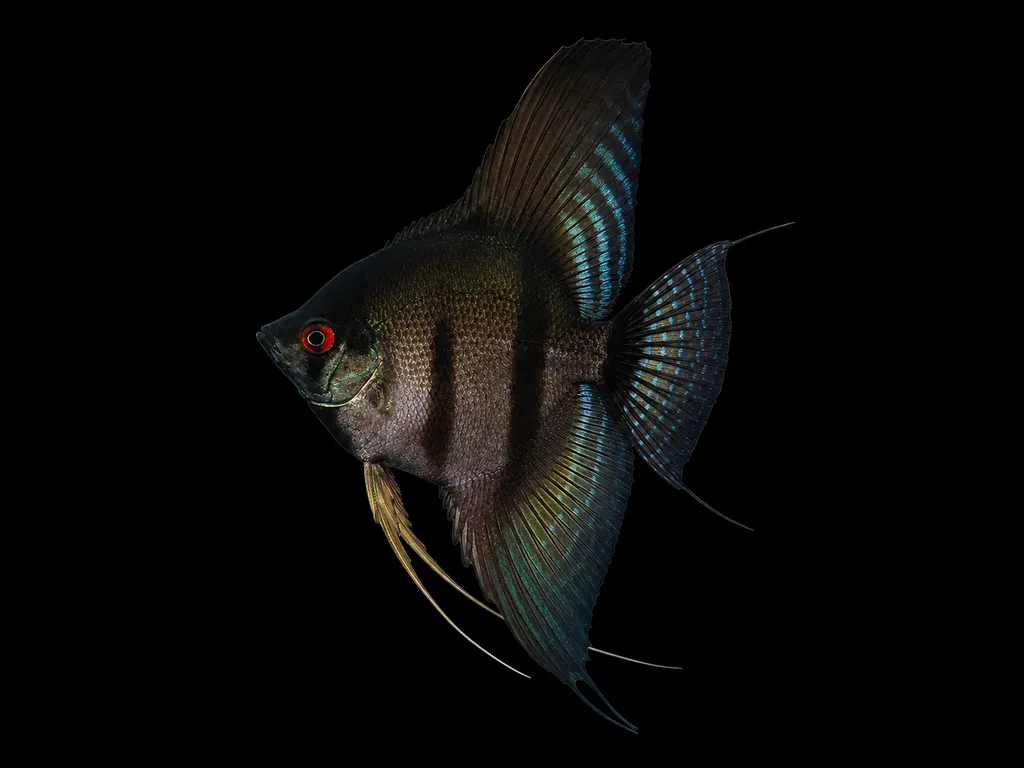
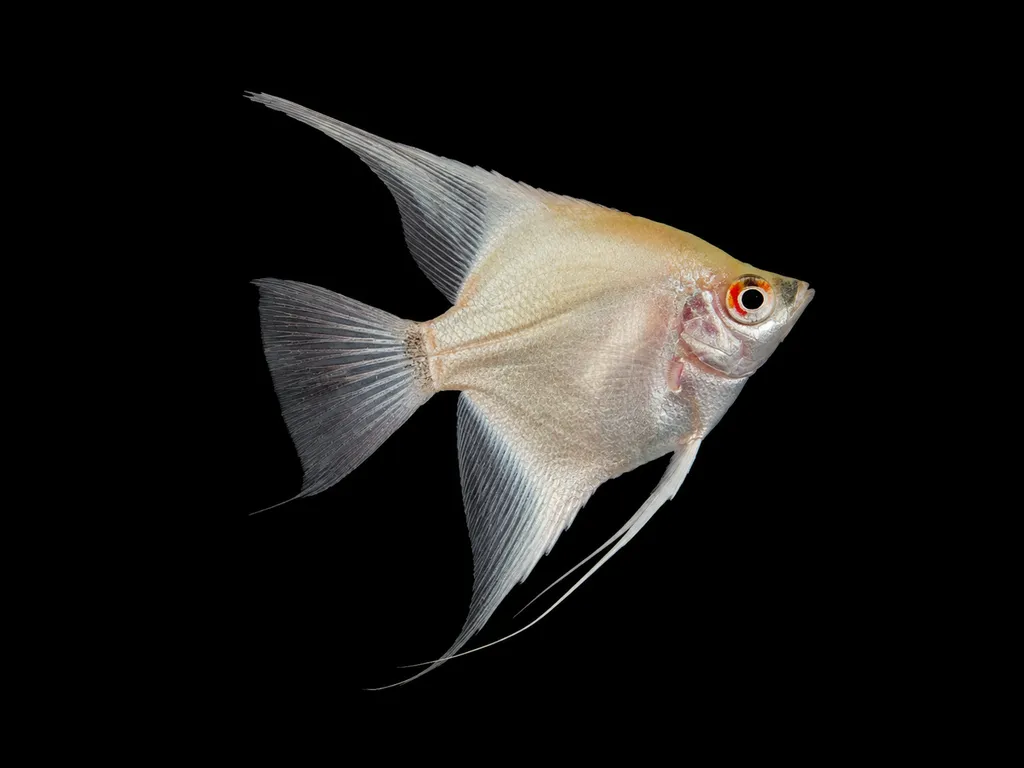
Koi are graded on how much orange sits on the head and how the black is placed, and heavy orange costs more. The orange can deepen or fade over months, so a young fish is a poor preview of the adult. Youngsters also show a pink patch over the gills that usually clouds over as the gill plate turns opaque with age, and its loss is not a fault.
In the wild
Koi is a two gene combination rather than a single mutation, and nothing in the wild looks like it. It pairs gold marble at the dark locus with a double dose of stripeless, written Gm/Gm S/S or Gm/g S/S. Who first put the two together is not recorded, so koi is best treated as a hobby line of uncertain origin.
Good to know
The double dose of stripeless leaves the top pigment layer translucent, which is what lets the orange layer underneath show through at all. Gold marble supplies the black, and because the dose shows, the amount of black tracks how many copies the fish carries. Koi pairs throw mostly koi, though a Gm/g parent can also pass on the plain gold allele, and the placement of black and orange never repeats.
Did you know
Angelfish cannot manufacture the orange pigment. Carotenoids are taken in with food and stored in the skin, so a koi's crown deepens or pales with condition, and two fish carrying identical genes can end up looking nothing alike.
Weekly picks
Tank mates
Koi angelfish is a mostly peaceful, social species that keeps to the middle. These picks share a community profile with it, are safe together in both directions, and overlap on water type, temperature and pH.
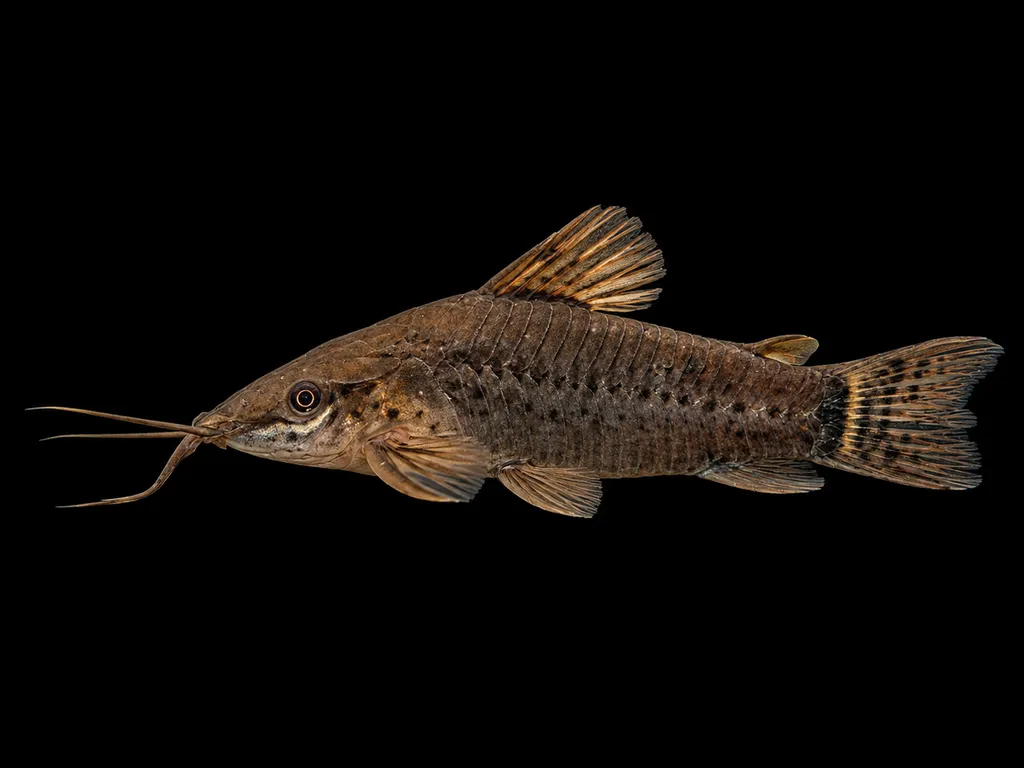
Panama hoplo
Hoplosternum punctatum
Freshwater3.1 in (8 cm) · 30 gal (115 L)72–79°F (22–26°C)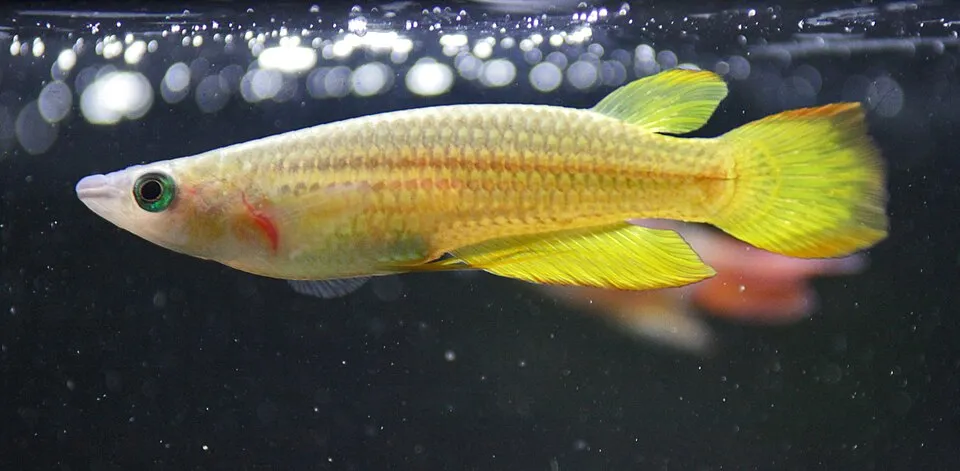
Striped panchax
Aplocheilus lineatus
Freshwater4.3 in (11 cm) · 30 gal (115 L)72–77°F (22–25°C)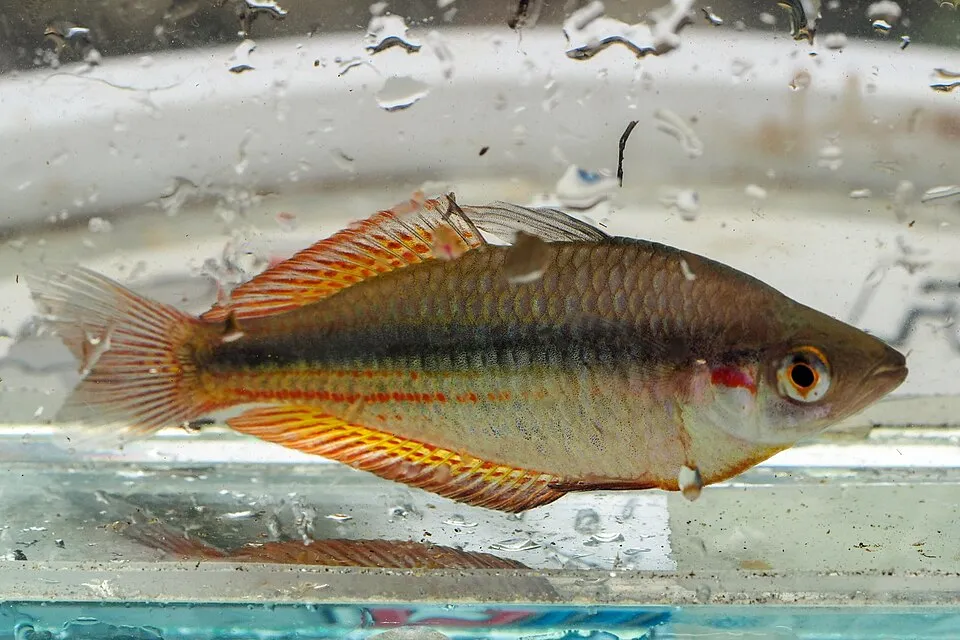
Duboulayi's rainbowfish
Melanotaenia duboulayi
Freshwater4.7 in (12 cm) · 30 gal (115 L)64–82°F (18–28°C)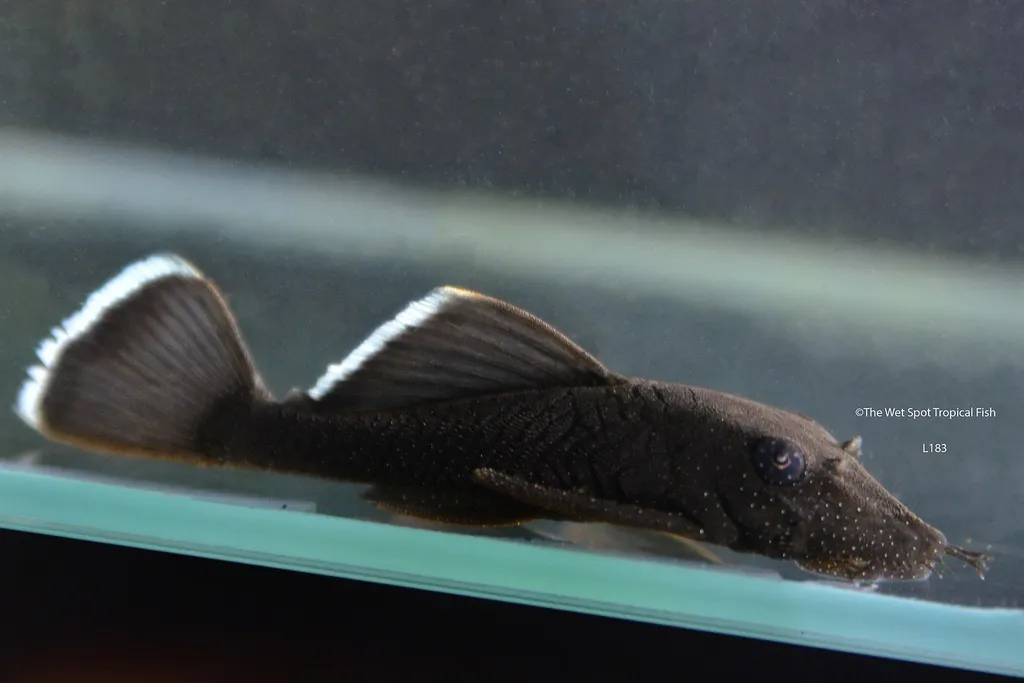
Starlight bristlenose pleco (L183)
Ancistrus dolichopterus
Freshwater5.5 in (14 cm) · 30 gal (115 L)79–84°F (26–29°C)
Redfin halfbeak
Nomorhamphus ebrardtii
Freshwater3.5 in (9 cm) · 29 gal (110 L)75–81°F (24–27°C)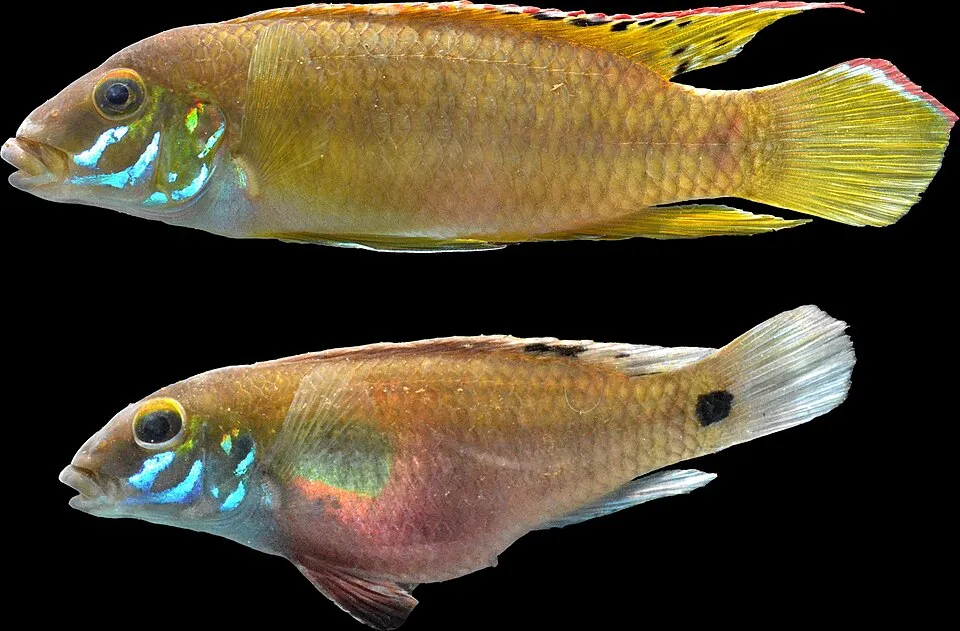
Yellow kribensis
Wallaceochromis humilis
Freshwater4.9 in (12.5 cm) · 30 gal (115 L)75–81°F (24–27°C)
Common questions
Is a Koi angelfish a different species from the Angelfish?
No. A Koi angelfish is a variety of the Angelfish, Pterophyllum scalare, and it wants the same tank, water and food as the species.
What size tank does a Koi angelfish need?
A Koi angelfish needs at least 30 gal (115 L). It spends most of its time in the middle.
How big does a Koi angelfish get?
An adult Koi angelfish reaches about 5.9 in (15 cm).
Related species
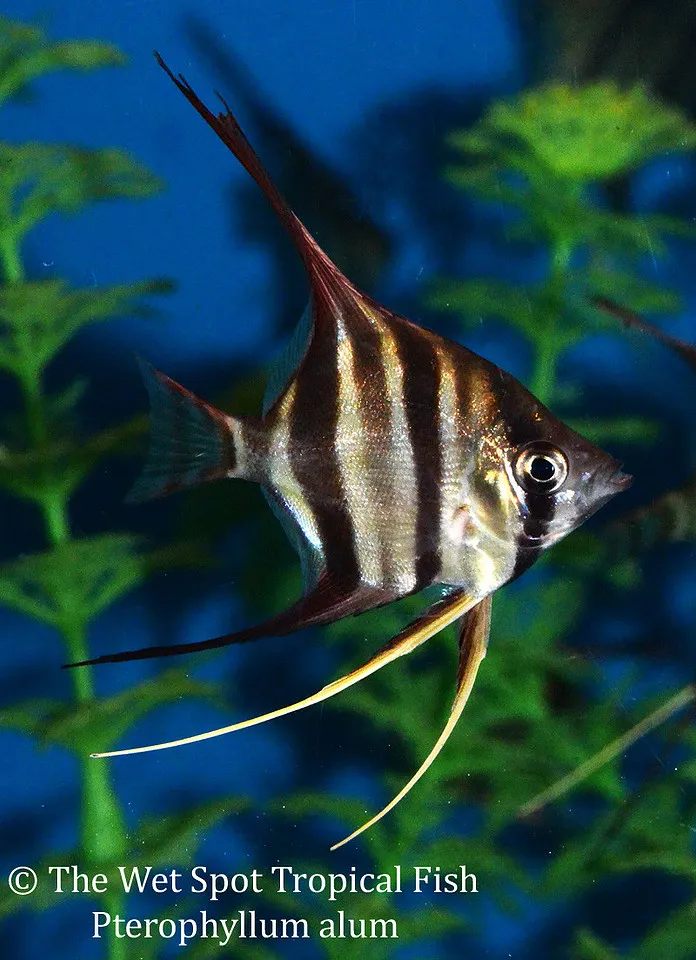 7.1 in (18 cm)45 gal (170 L)79–90°F (26–32°C)
Altum angelfish
Pterophyllum altum
7.1 in (18 cm) · 45 gal (170 L)
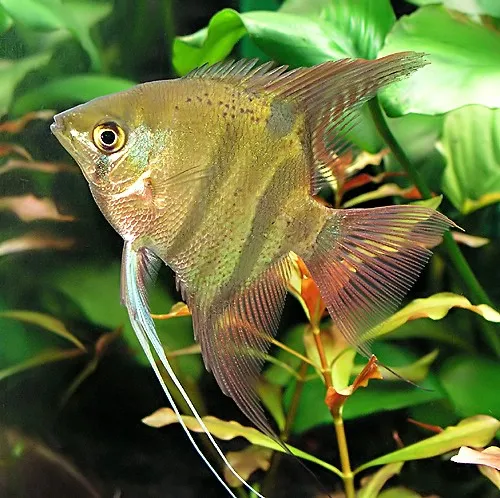 3.9 in (10 cm)30 gal (115 L)72–84°F (22–29°C)
Roman nose angelfish
Pterophyllum leopoldi
3.9 in (10 cm) · 30 gal (115 L)
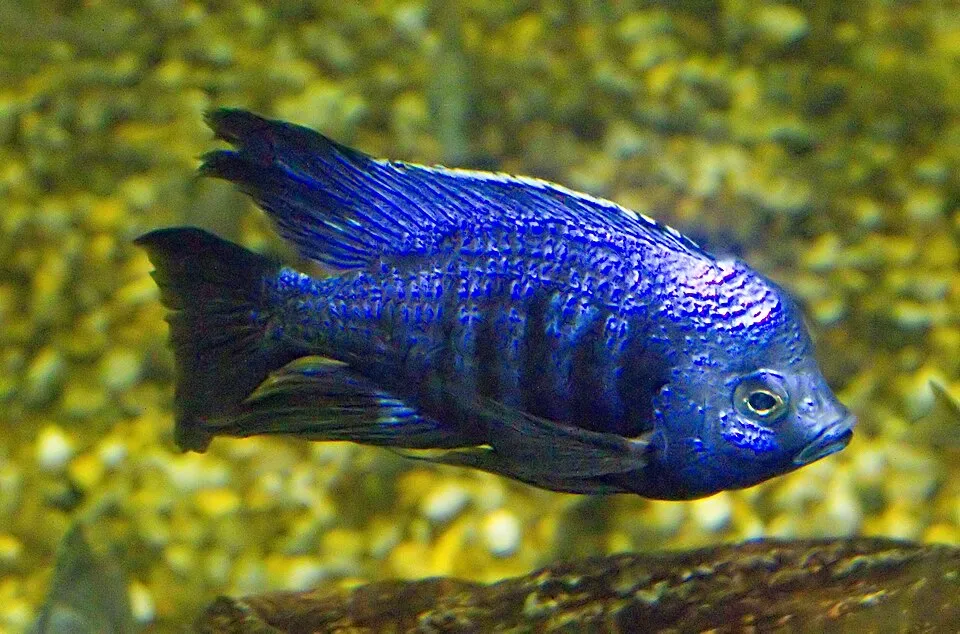 5.9 in (15 cm)79 gal (300 L)77–82°F (25–28°C)
Azureus
Copadichromis azureus
5.9 in (15 cm) · 79 gal (300 L)
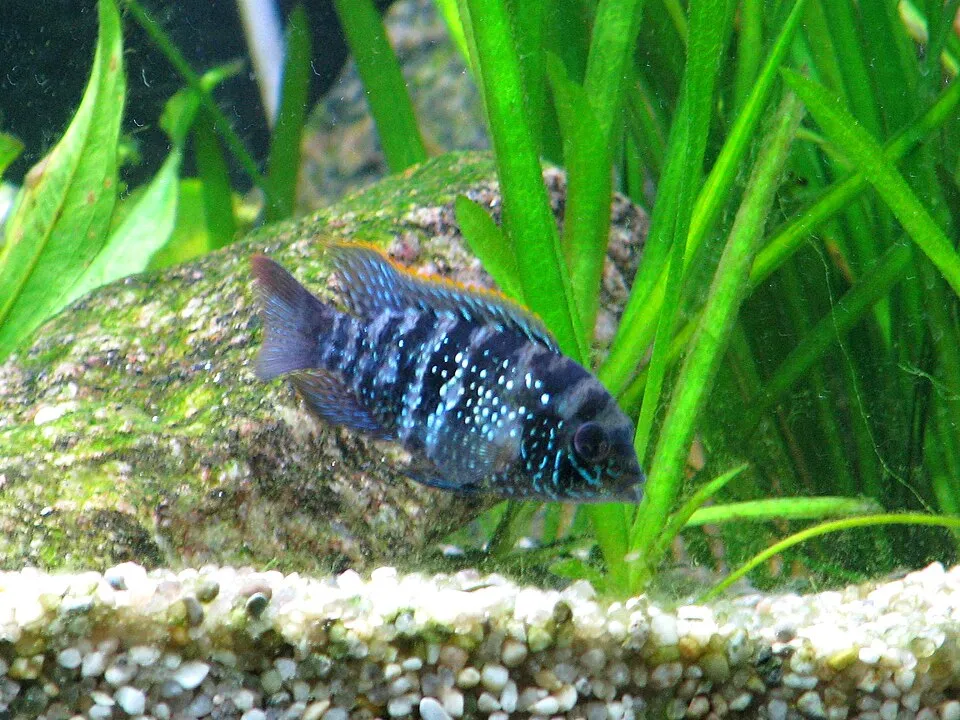 5.9 in (15 cm)42 gal (160 L)72–82°F (22–28°C)
Blue acara
Andinoacara pulcher
5.9 in (15 cm) · 42 gal (160 L)
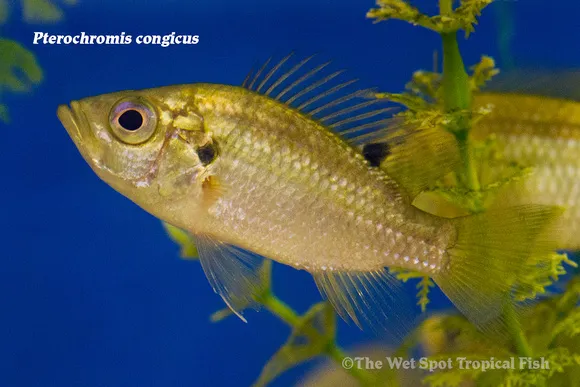 5.9 in (15 cm)79 gal (300 L)73–82°F (23–28°C)
Congicus pterochromis
Pterochromis congicus
5.9 in (15 cm) · 79 gal (300 L)
 5.9 in (15 cm)66 gal (250 L)73–81°F (23–27°C)
Deepwater coptodon
Coptodon bythobates
5.9 in (15 cm) · 66 gal (250 L)