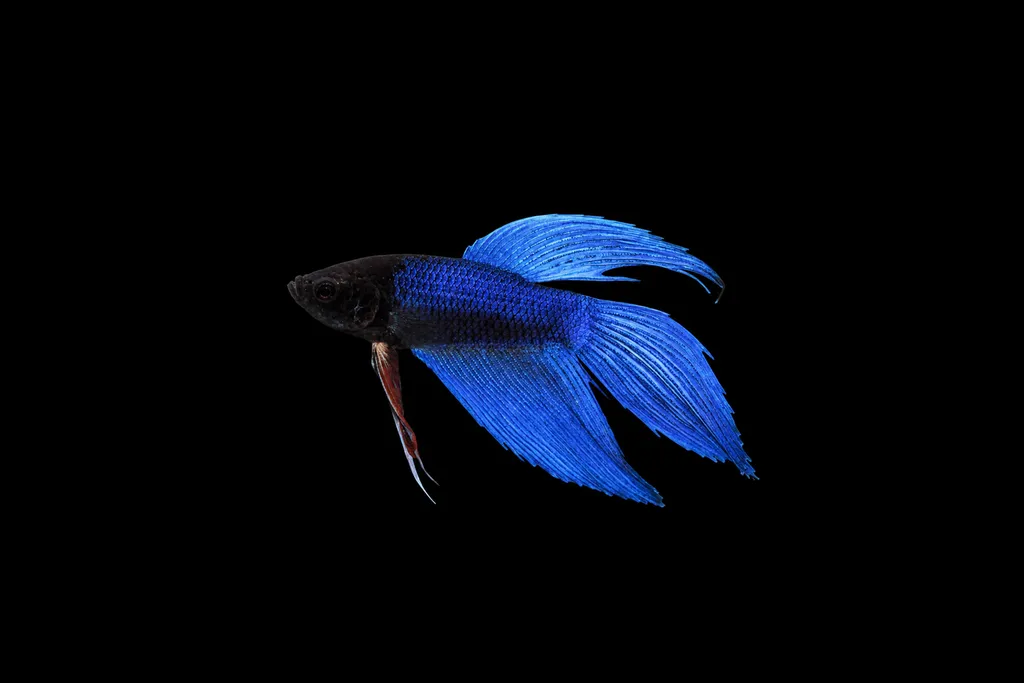
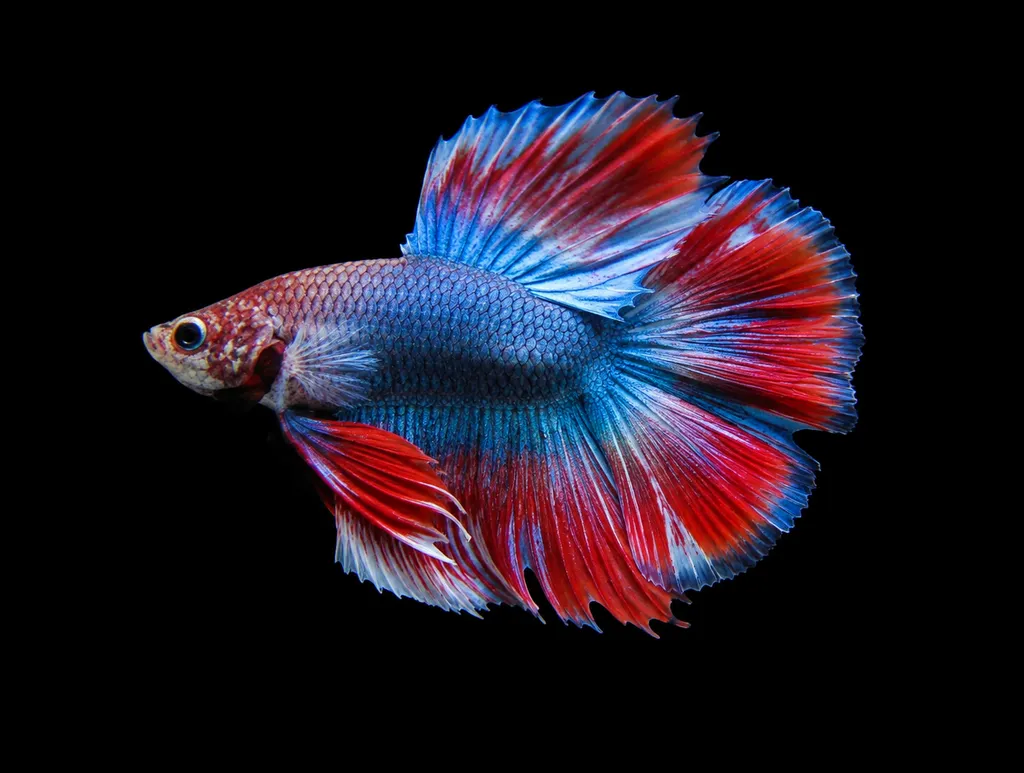
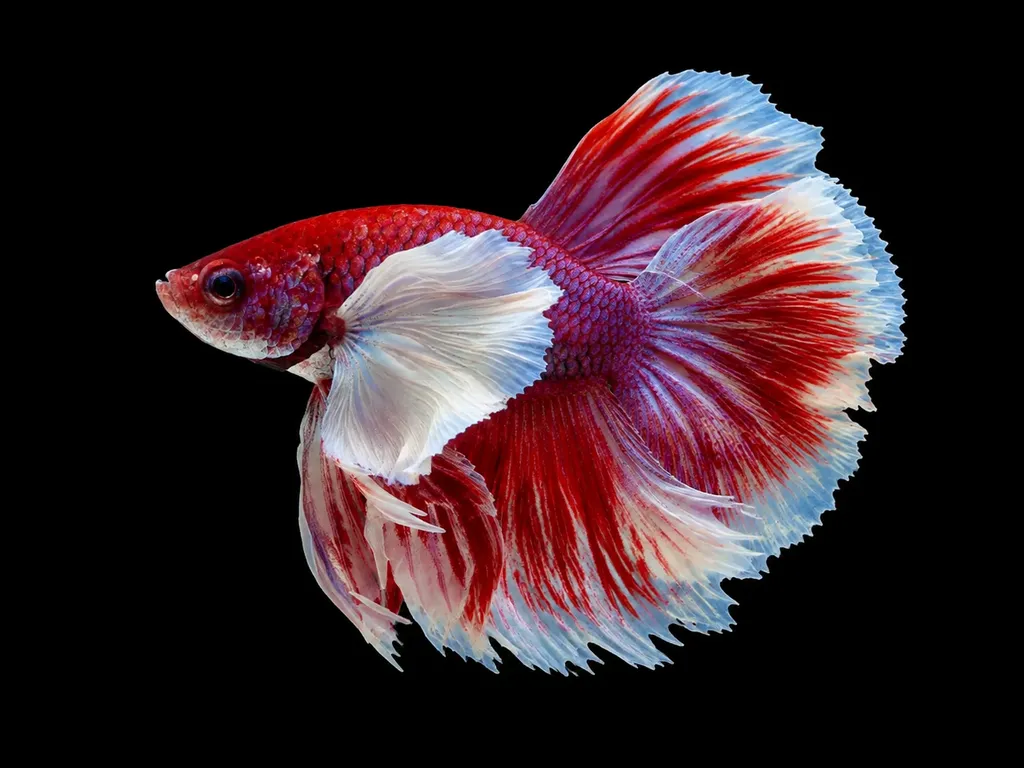
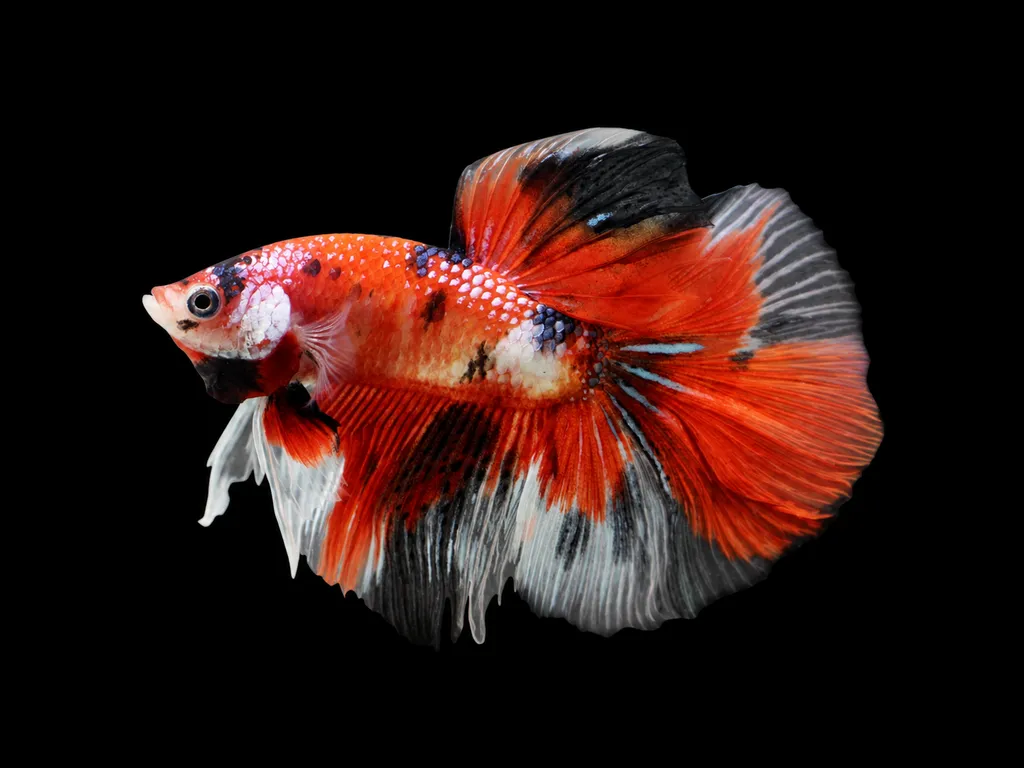
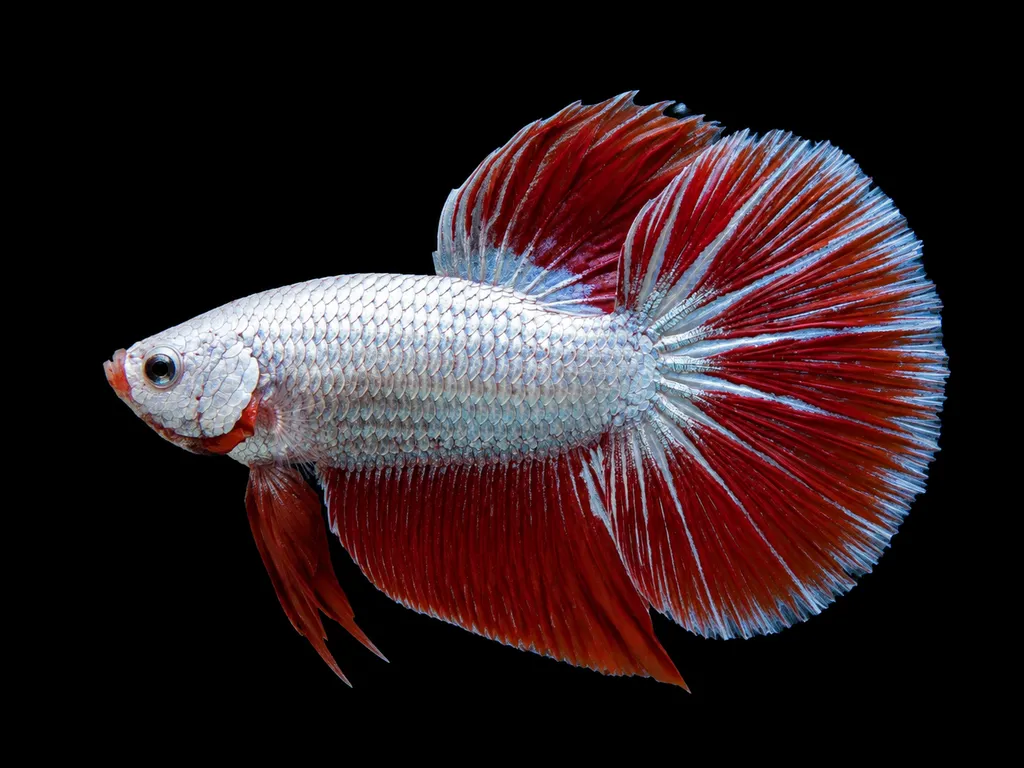
The default betta in most chain stores, usually sold by color instead of by strain name and priced below the fancier tails. The long caudal drags, so a strong filter outflow pushes males around and split fin edges are common. Baffle the flow and give a resting spot near the surface. Males carry the long fins and females stay short finned, which makes shelf sexing easy.
In the wild
Long fins came out of the Thai fighting stock once breeders selected for looks instead of combat, and the veiltail is that first ornamental shape. Wild Betta splendens is short finned, so nothing like this swims in a rice paddy. No single originator is recorded, and the form spread through the trade long before modern show classes existed.
Good to know
Hobby genetics treats the veiltail caudal as dominant over the symmetrical delta and halfmoon tails, so a veiltail crossed into a show line tends to give veiltail fry. Show breeders treat it as a fault and cull for it, since it is hard to remove once it enters a line. The tail itself is asymmetric, sweeping down and back rather than opening evenly above and below.
Did you know
The fish most people picture when they hear betta is the one show clubs spent decades breeding away from. Judging standards reward an even fan, so the pet store shape ended up on the wrong side of the score sheet.
Common questions
Is a Veiltail betta a different species from the Betta?
No. A Veiltail betta is a variety of the Betta, Betta splendens, and it wants the same tank, water and food as the species.
What size tank does a Veiltail betta need?
A Veiltail betta needs at least 7 gal (25 L). It spends most of its time in the middle.
How big does a Veiltail betta get?
An adult Veiltail betta reaches about 3 in (7.5 cm).
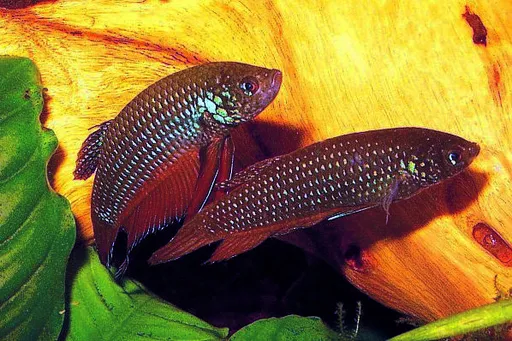 2.4 in (6 cm)11 gal (40 L)72–82°F (22–28°C)
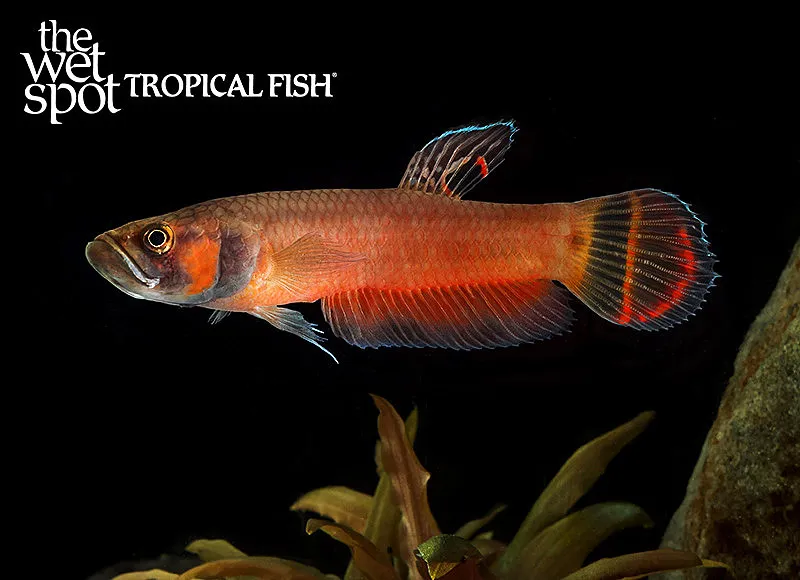 3.9 in (10 cm)20 gal (75 L)72–79°F (22–26°C)
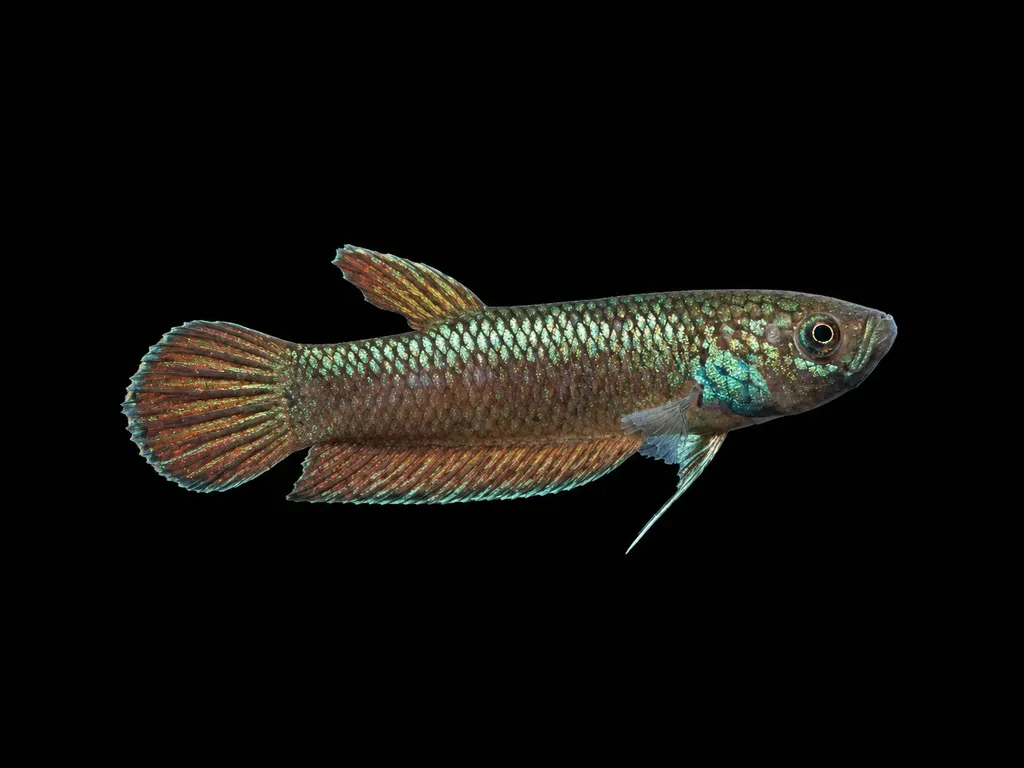 3 in (7.5 cm)20 gal (75 L)72–81°F (22–27°C)