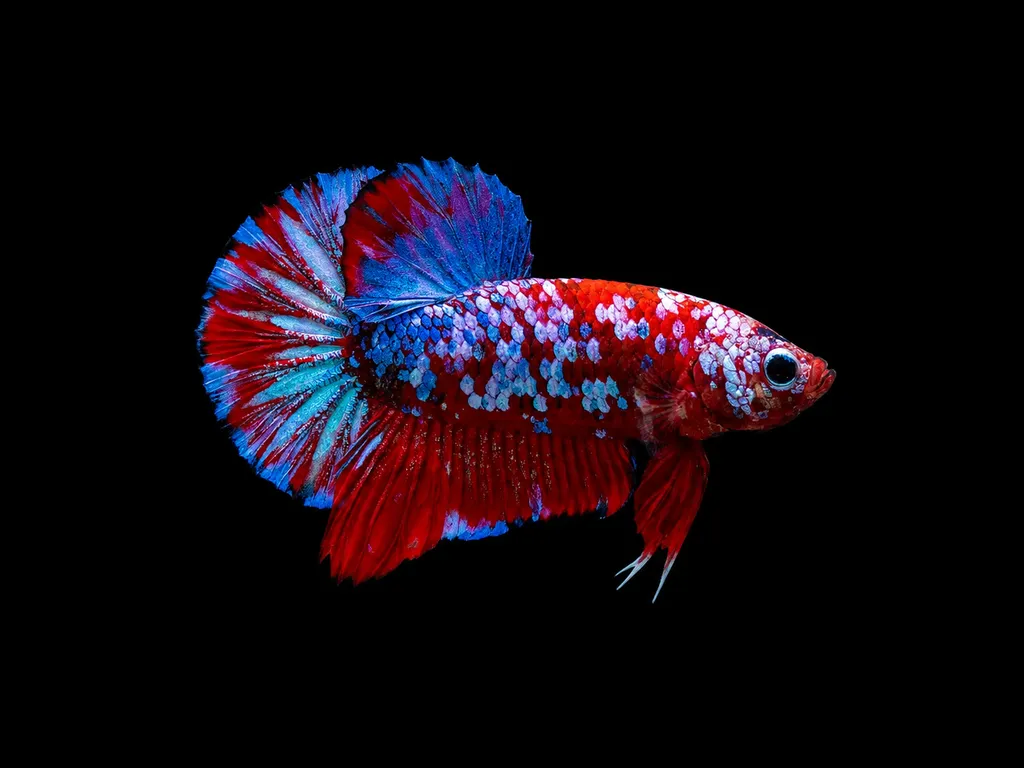
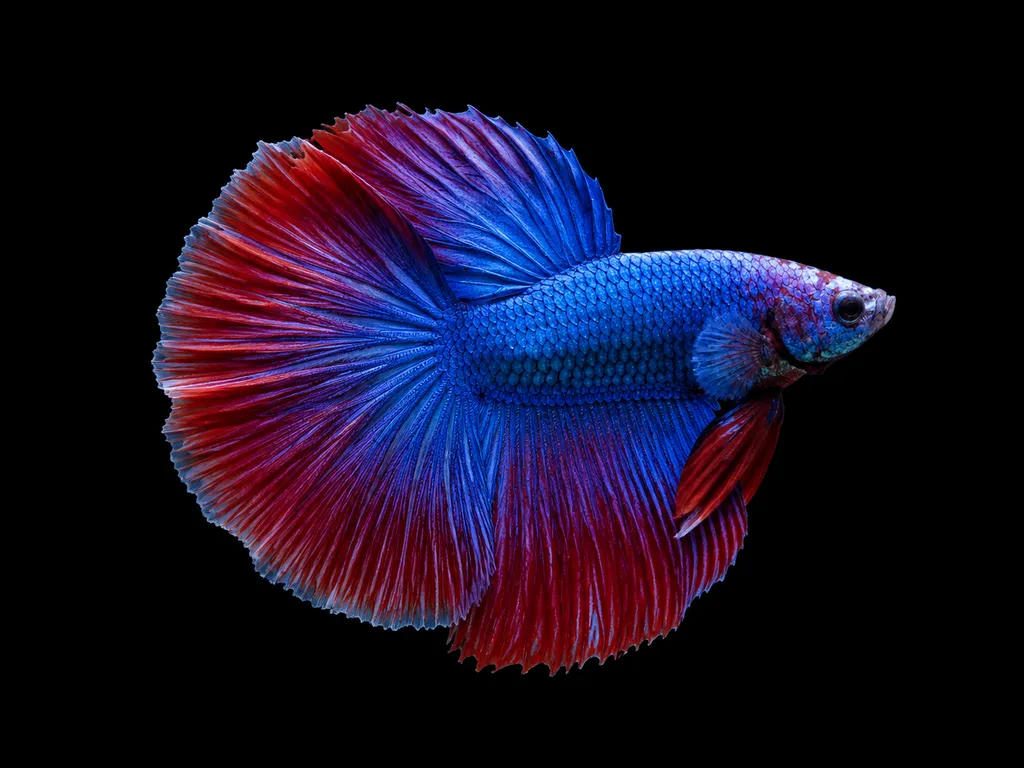
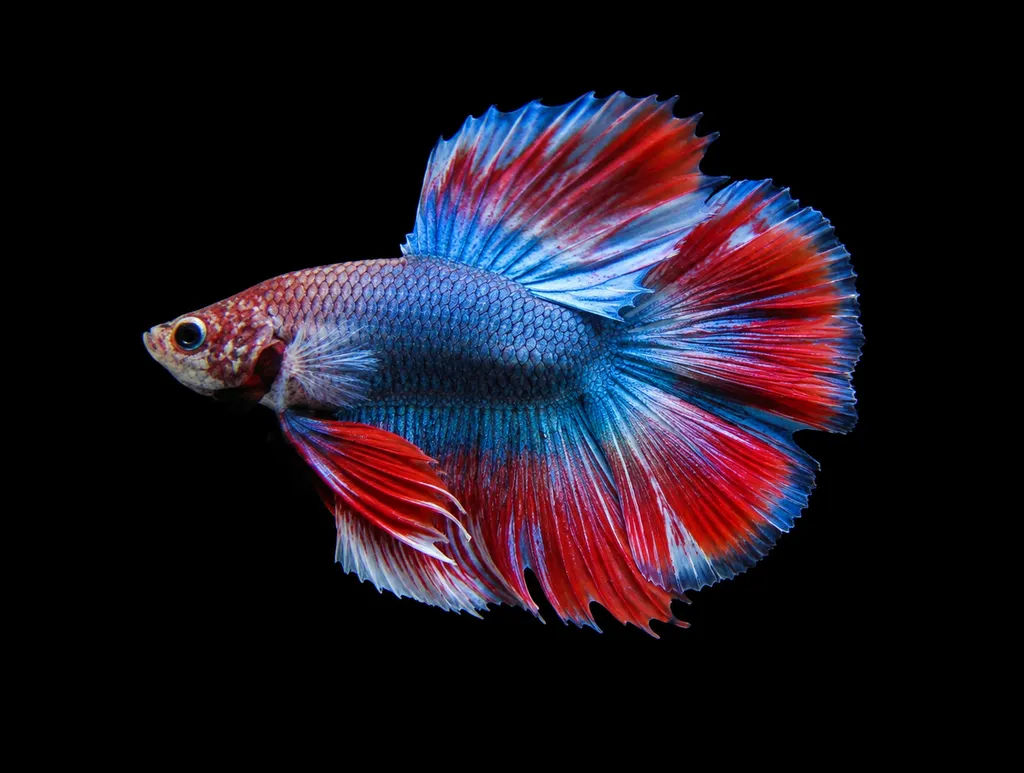
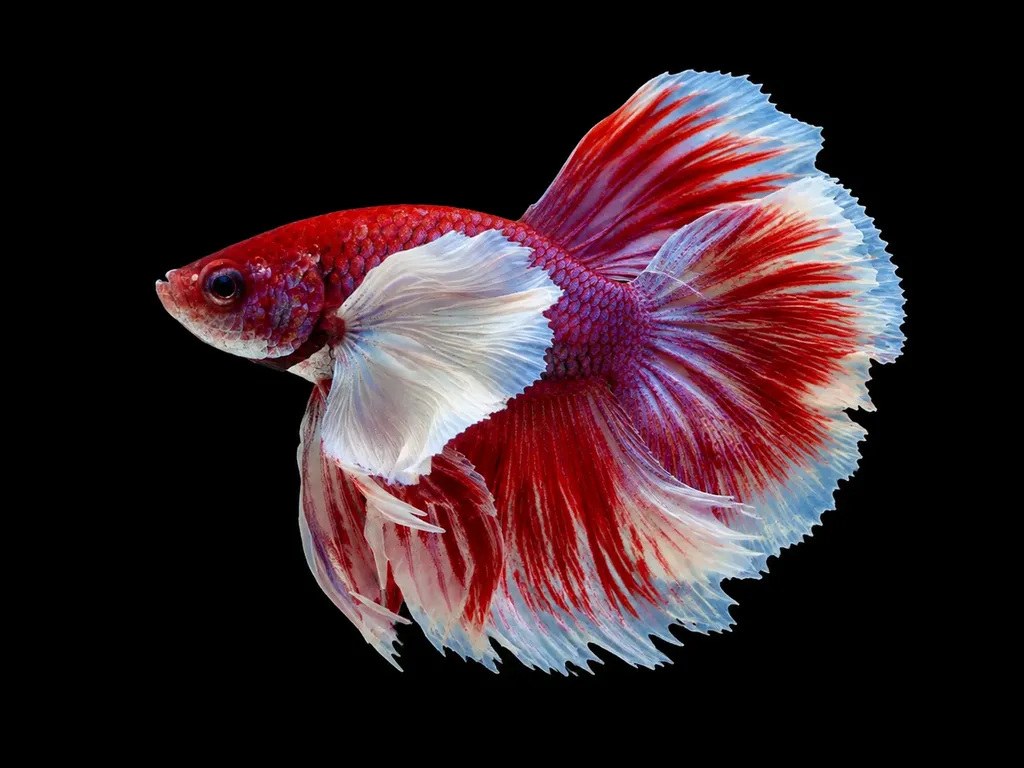
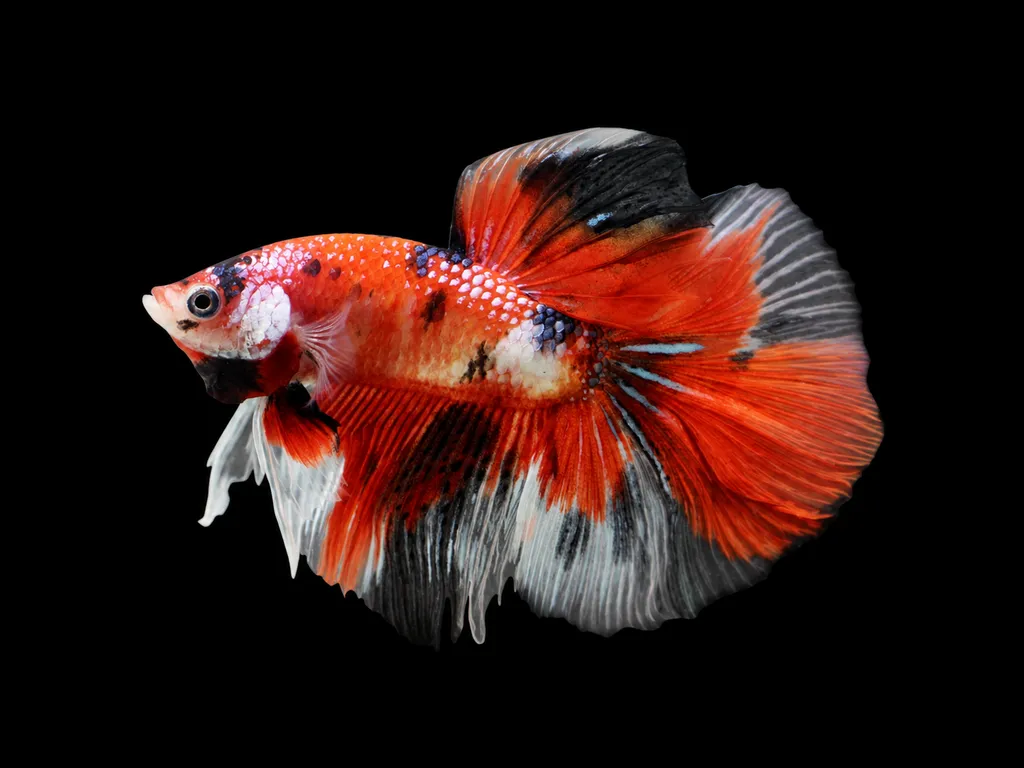
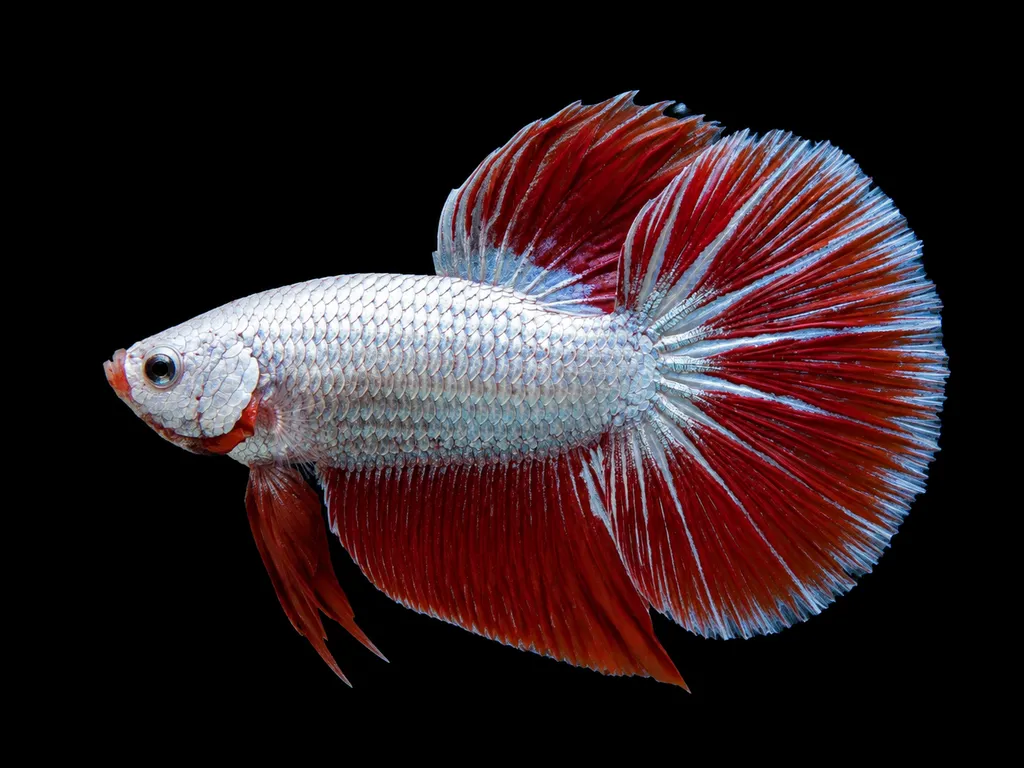
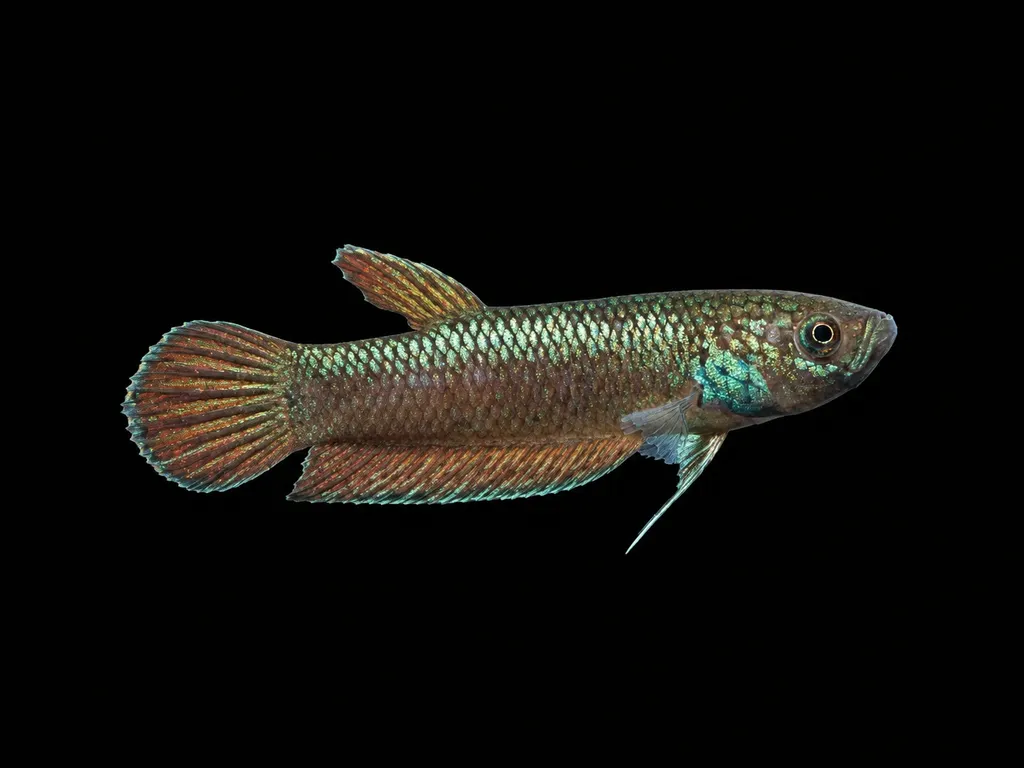
The plakat betta is a short-finned betta that comes in two builds. The traditional plakat has a short tail, and the halfmoon plakat puts the wide fan on a short tail. It is a good first fish.
Did you know
The plakat betta's name has nothing to do with fins. Pla kat means biting fish in Thai, and it was the label for contest stock. The short-finned pet form inherited a word that describes behavior rather than shape.
Caring for the plakat betta
Keep a plakat betta in a planted tank of at least 5 gal (19 L), with some cover at the surface. Its short fins make a faster, more mobile fish that handles normal filter flow. Plakats jump well, so a tight lid matters more here than with the trailing forms.
Heat the tank to 72 to 86°F (22 to 30°C) and keep the pH between 6.0 and 7.5. It is a carnivore, so feed a quality betta pellet and rotate in frozen or live bloodworms and brine shrimp.
Males are aggressive and cannot share a tank with another male. Choose tank mates with caution, or keep one alone.
Bettas are bubble nesters, and a spawning male blows a raft of bubbles at the surface and tends the eggs himself. Young short-finned stock is easy to mis-sex, so shop labels are not always right.
Good to know
Fin length in the plakat betta is inherited separately from color and pattern, so any color offered on a halfmoon can appear on a plakat. Fin length near wild proportions means less drag and less tissue to maintain. The fish swims harder and takes less fin damage as a result. Otherwise it is the same domestic animal, not a wild import.
In the wild
The plakat betta's short-finned build is the traditional Thai form, kept and bred for contests long before ornamental long fins existed. Modern show plakat is newer, putting show finnage and color onto that short-tailed shape. It is the closest of the domestic forms to the wild fish, though wild Betta splendens is far plainer.
From published sources
Tank mates
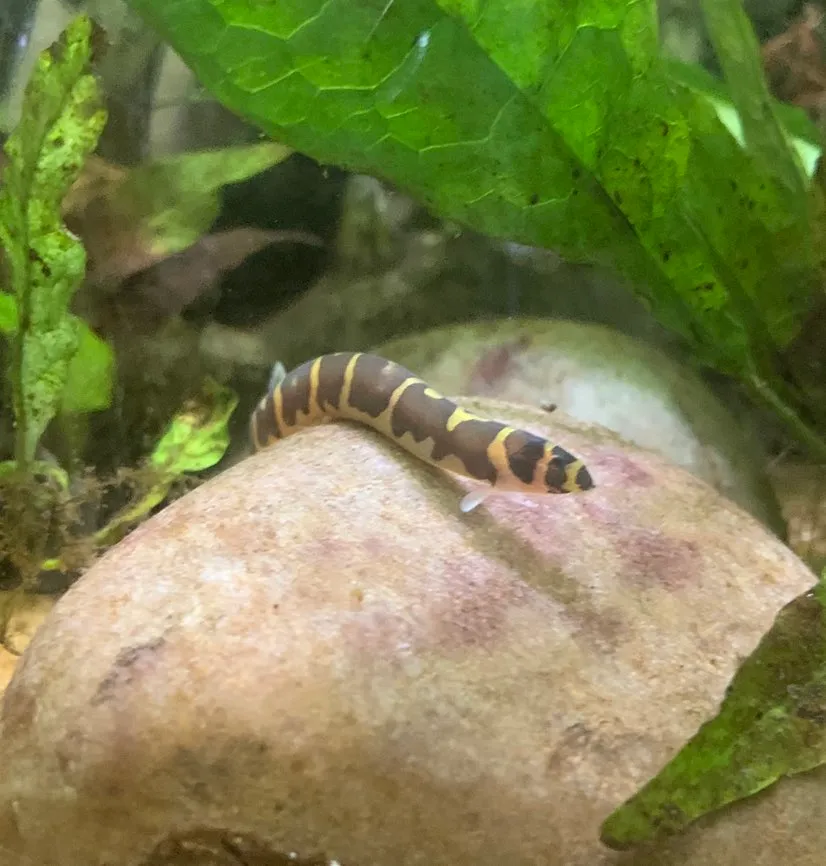
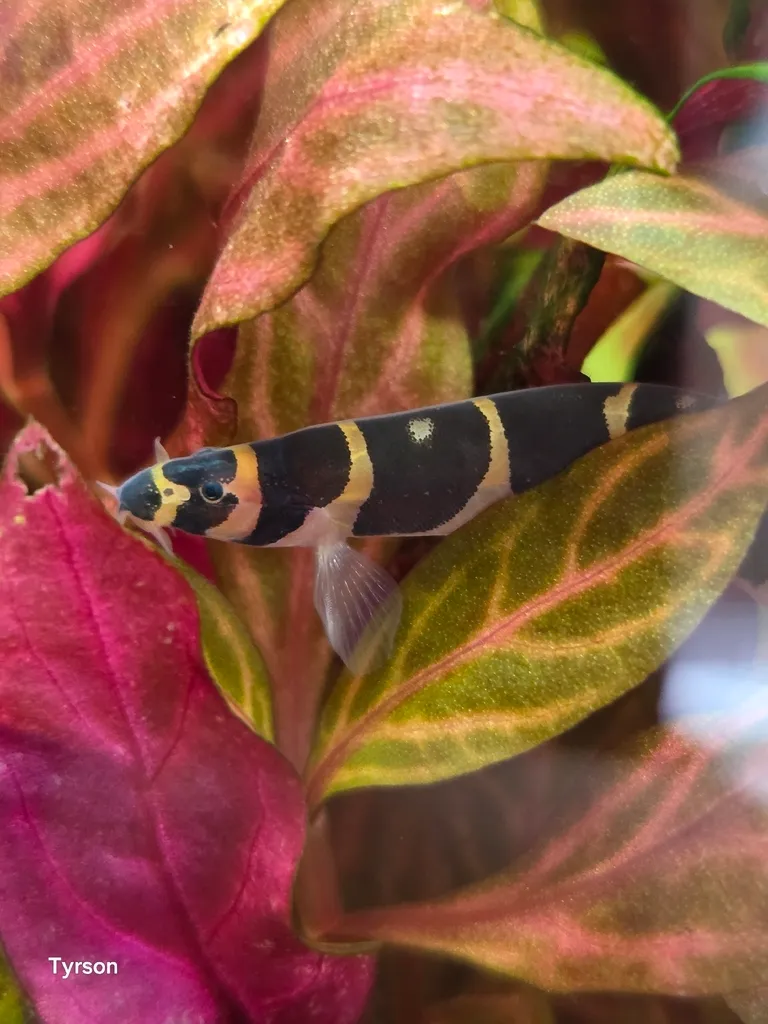
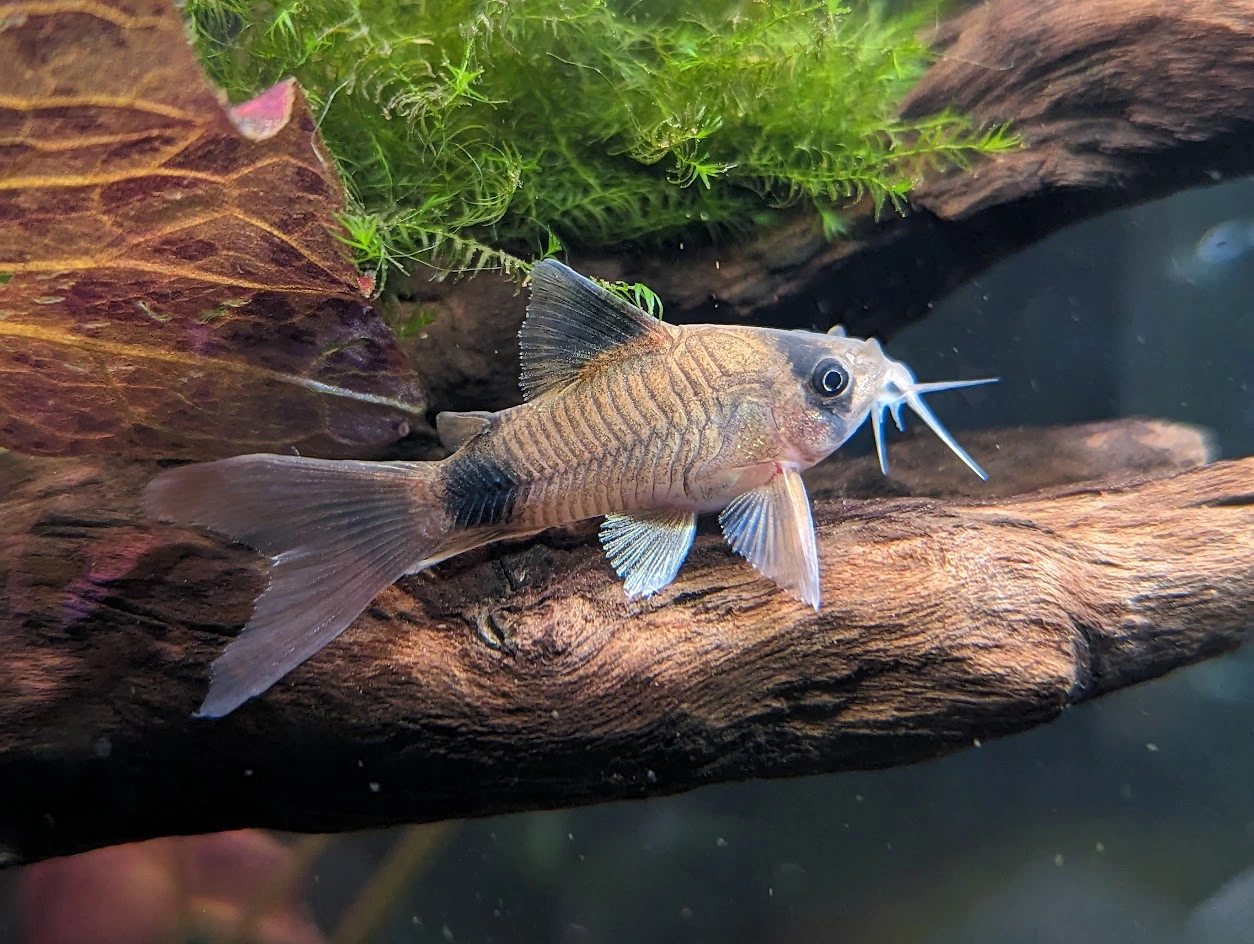
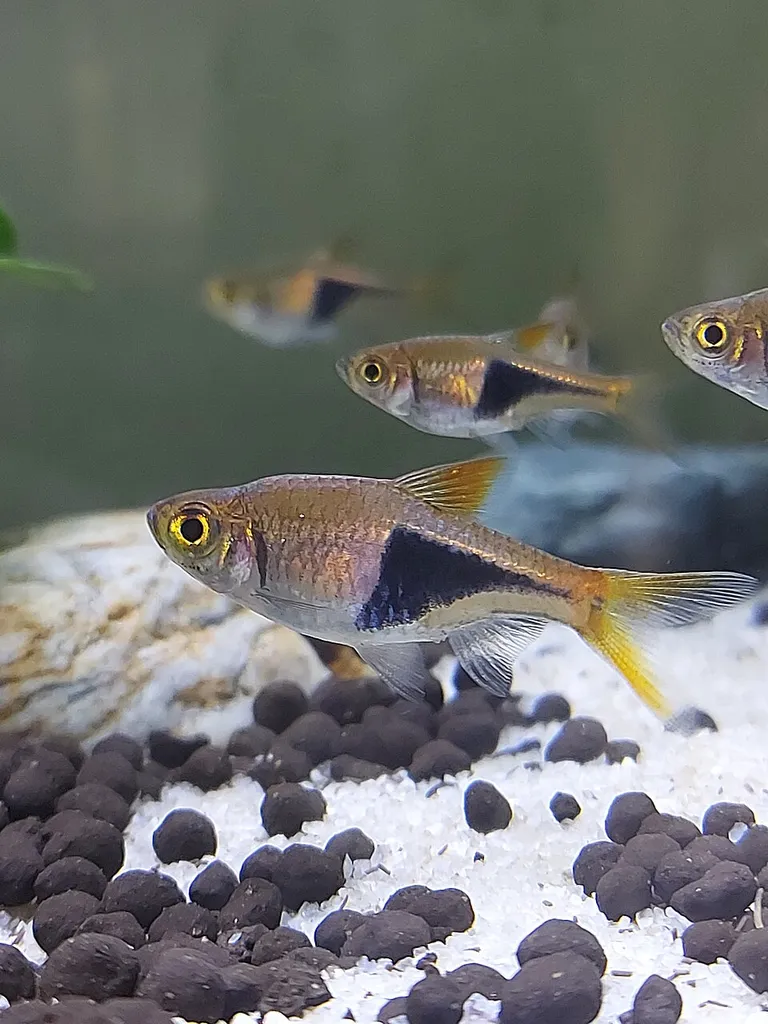
Each fish here is named as a tank mate for the plakat betta by at least two published care guides. Seriously Fish and Practical Fishkeeping recommend keeping it on its own instead. The pairings below assume a planted tank of 10 to 20 gallons (38 to 76 liters) or more, with plenty of cover.
Sources: Aquarium Co-Op, Fishkeeping World, Chewy, Tropical Fish Hobbyist, Aqueon, All Pond Solutions.
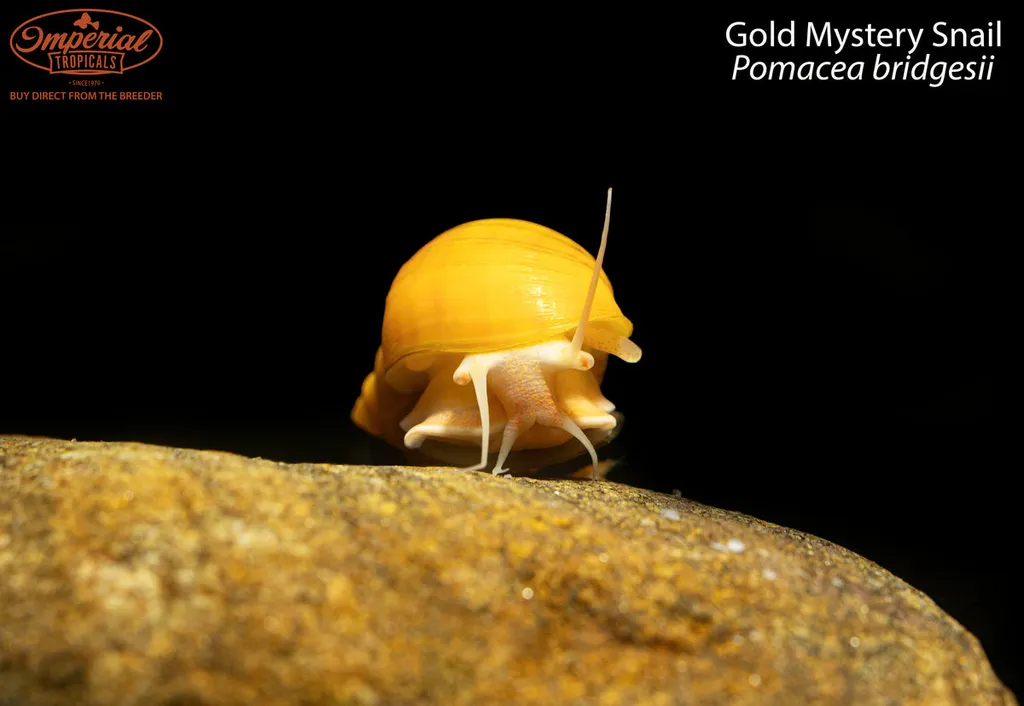
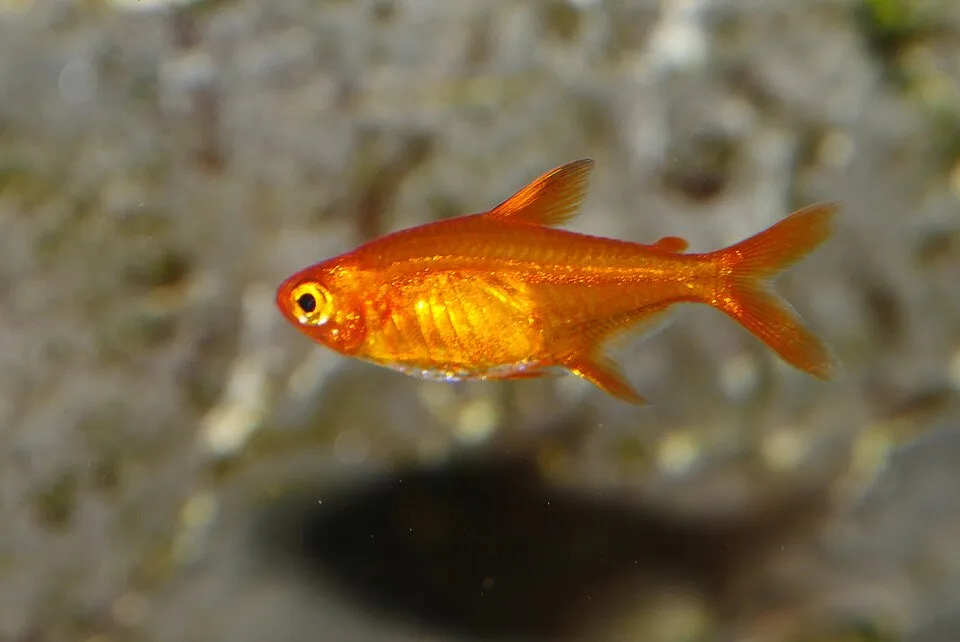
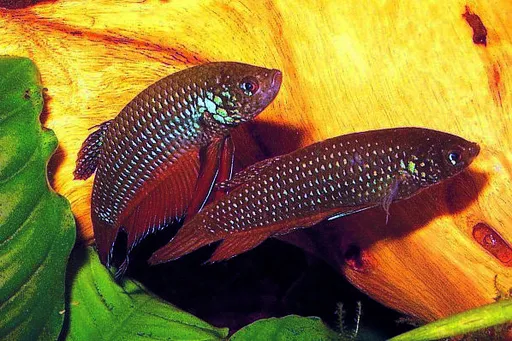 2.4 in (6 cm)11 gal (40 L)72–82°F (22–28°C)
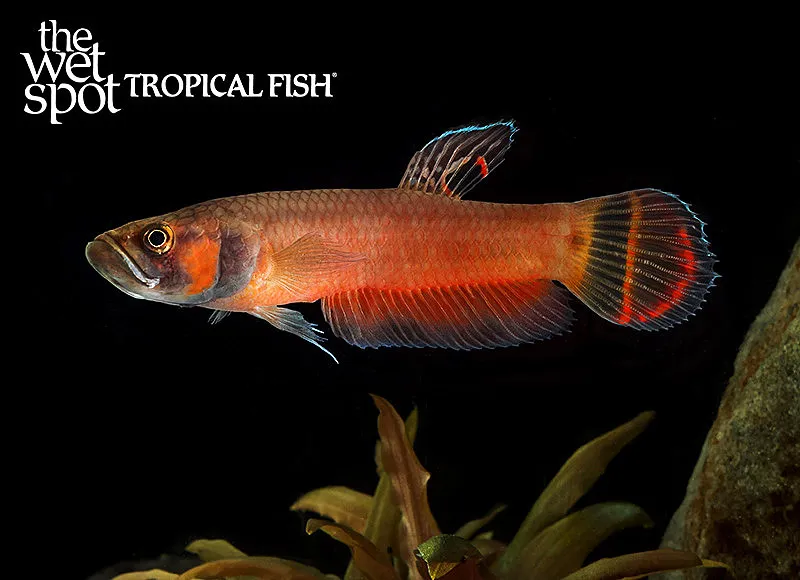 3.9 in (10 cm)20 gal (75 L)72–79°F (22–26°C)
 3 in (7.5 cm)20 gal (75 L)72–81°F (22–27°C)