Brunei beauty betta
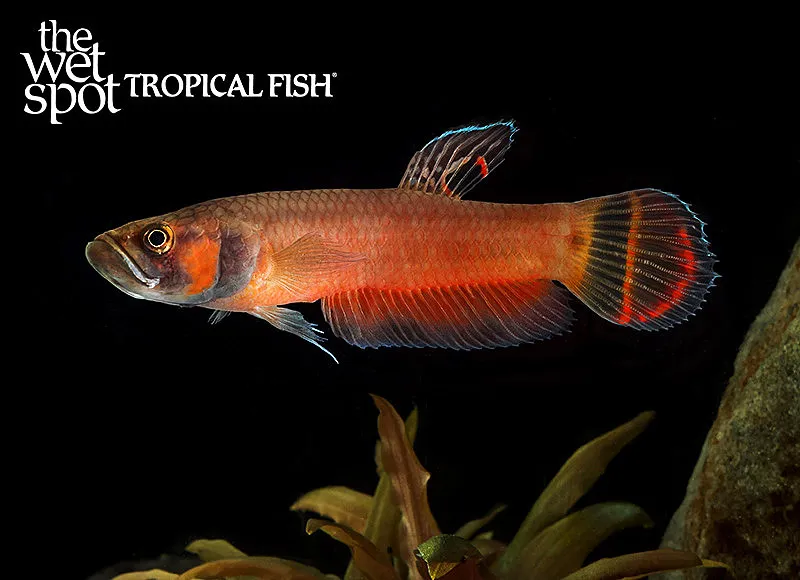
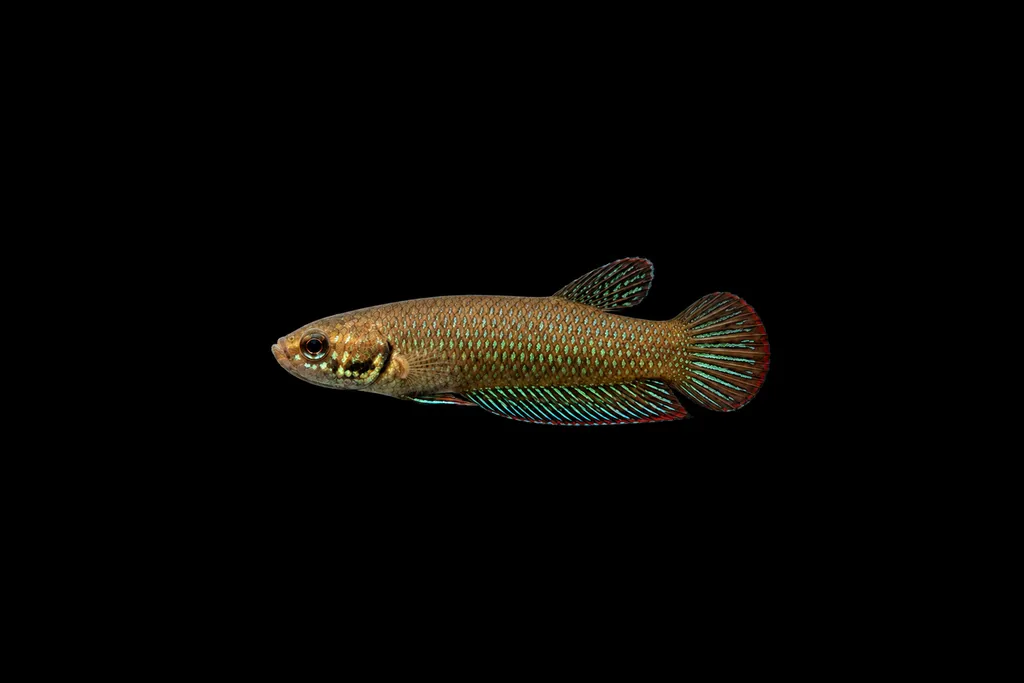
Betta macrostoma
Also known as Brunei beauty, Spotfin betta
FreshwaterFish
Care at a glance
- Temperature
- 72–79°F
- 22–26°C
- pH
- 5.0–6.5
- Adult size
- 3.9 in
- 10 cm
- Minimum tank
- 20 gal
- 75 L
- Temperament
- Aggressive
- Social behavior
- Solitary
- Own kind
- One male per tank
- Tankmates
- With caution
- Swim level
- Middle
- Difficulty
- Difficult
- Breeding
- Hard
- Rarity
- Common
- Family
- Osphronemidae
- Origin
- Endemic to Borneo (Brunei Darussalam and adjacent Sarawak, Malaysia)
Overview
This is an expert, species-only fish best kept as a single pair, one male and one female, or a single fish in a tank of 75 liters or more. Males are aggressive toward each other and most tankmates, so treat it as a species tank rather than a community fish. It swims in the middle and lower levels and comes up to gulp air. Keep the water soft, acidic at pH 5 to 6.5, cool at 22 to 26 C, and pristine, since it is very sensitive to ammonia and nitrate. It is skittish and a strong jumper that can hit the glass when startled, so use a tight-fitting lid. Feed small live and frozen foods. This fish is wild-caught and threatened in its native range, so buy captive-bred stock where you can and never release it into local waters.
In the wild
Brunei beauty bettas are endemic to Borneo, in clear forest streams and pools in Brunei and nearby Sarawak in Malaysia. The water there is soft, acidic, and stained dark by tannins from leaf litter. To match that, set up a dedicated tank of at least 75 liters with leaf litter, driftwood, dim lighting, and gentle flow from an air-driven sponge filter. Keep the water soft and acidic, around pH 5 to 6.5, and cooler than most tropical fish at 22 to 26 C, since high temperatures stress them.
Good to know
This is Betta macrostoma, a mouthbrooding betta in the family Osphronemidae, reaching about 10 cm. Like other labyrinth fish it gulps air at the surface, so it needs a warm, humid air layer above the water. It is a paternal mouthbrooder: the male holds the eggs and fry in his mouth for roughly 12 to 35 days before releasing them.
Did you know
The male broods the young in his mouth, and a stressed or disturbed male may swallow the whole clutch, which is one reason this fish is so hard to breed. Give the pair quiet, stable conditions and resist the urge to check on him, since the calmer he stays the better his chances of carrying the brood to release.
Common questions
What size tank does a Brunei beauty betta need?
A Brunei beauty betta needs at least 20 gal (75 L). It spends most of its time in the middle.
What temperature and pH does a Brunei beauty betta need?
A Brunei beauty betta is comfortable at 72–79°F (22–26°C) with a pH of 5.0–6.5.
How big does a Brunei beauty betta get?
An adult Brunei beauty betta reaches about 3.9 in (10 cm).
Related species
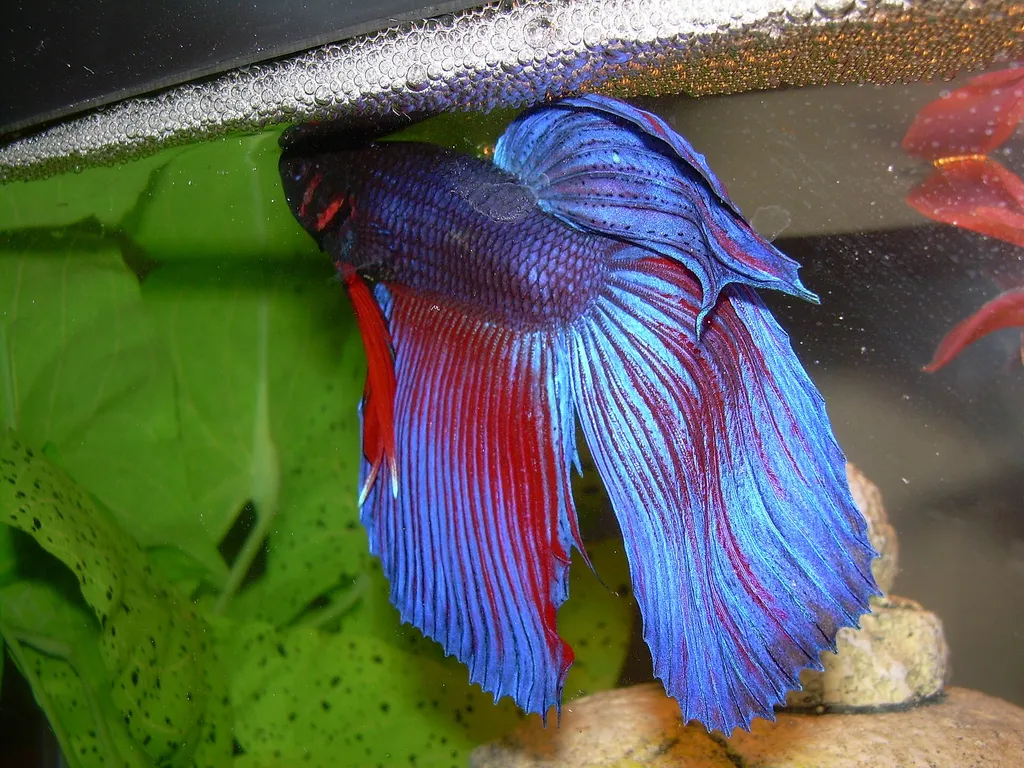 3 in (7.5 cm)7 gal (25 L)72–86°F (22–30°C)
Betta
Betta splendens
3 in (7.5 cm) · 7 gal (25 L)
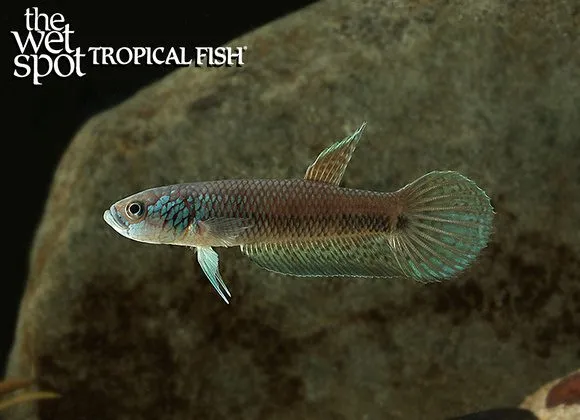 3.9 in (10 cm)26 gal (100 L)70–81°F (21–27°C)
Antuta betta
Betta sp. 'Antuta'
3.9 in (10 cm) · 26 gal (100 L)
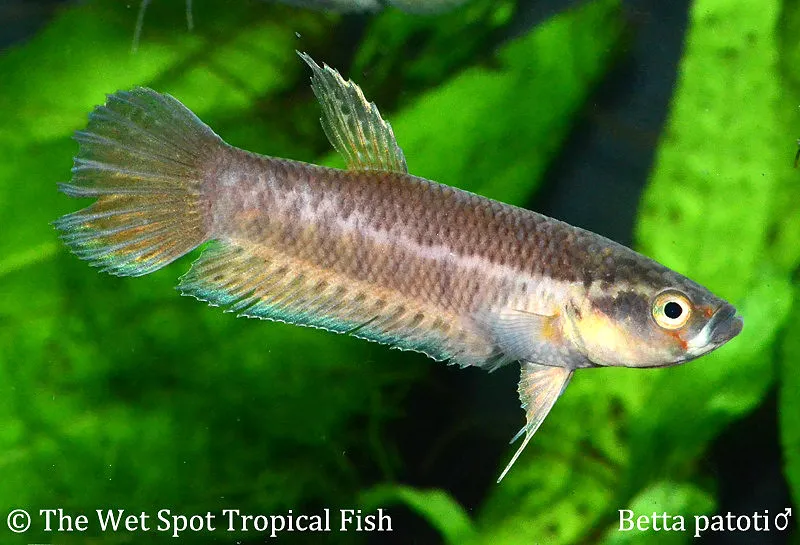 3.9 in (10 cm)29 gal (110 L)72–81°F (22–27°C)
Patoti betta
Betta patoti
3.9 in (10 cm) · 29 gal (110 L)
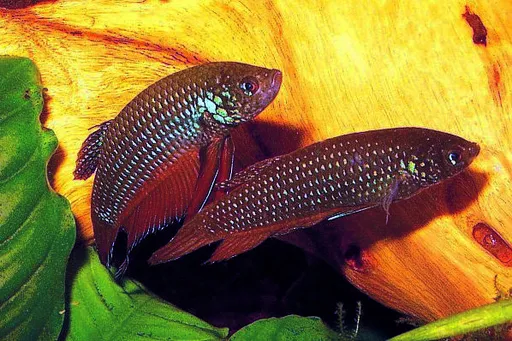
 3.7 in (9.5 cm)20 gal (75 L)73–81°F (23–27°C)
Renata betta
Betta renata
3.7 in (9.5 cm) · 20 gal (75 L)
 2.4 in (6 cm)11 gal (40 L)72–82°F (22–28°C)
Emerald betta
Betta smaragdina
2.4 in (6 cm) · 11 gal (40 L)
- 3.6 in (9.1 cm)26 gal (100 L)72–81°F (22–27°C)
Waseri betta
Betta waseri
3.6 in (9.1 cm) · 26 gal (100 L)