Pardalotos betta
Betta pardalotos
FreshwaterFish
Care at a glance
- Temperature
- 72–81°F
- 22–27°C
- pH
- 4.0–6.5
- Adult size
- 2.8 in
- 7.2 cm
- Minimum tank
- 21 gal
- 80 L
- Temperament
- Mostly peaceful
- Social behavior
- Social
- Own kind
- One male per tank
- Tankmates
- With caution
- Swim level
- Middle
- Difficulty
- Medium
- Breeding
- Mouthbrooder · Medium
- Rarity
- Very rare
- Family
- Osphronemidae
- Origin
- Lower Musi basin near Palembang, South Sumatra
Overview
The Pardalotos betta is a calm wild betta that suits a quiet, well-covered tank. It is a sensible next step for a keeper with some experience.
Did you know
Pardalotos bettas shipped from around Palembang in 2006 were first taken for Betta chloropharynx from Bangka. Once they settled in, they showed their own throat and gill cover pattern, and the species description later separated them.
Caring for the Pardalotos betta
Keep Pardalotos bettas as a pair or a small group in a tank of at least 21 gal (80 L). Give them a base of about 80 by 30 cm and a tight lid. Aquarium fish are reported at up to 9 cm, above the 7.2 cm of the type series, so plan for that size. Add dim light, leaf litter, botanicals and dense cover.
Give them soft, acidic water at 72 to 81°F (22 to 27°C), with a pH of 4.0 to 6.5. They take dried food. They should also get live or frozen daphnia, brine shrimp, bloodworms and small insects such as crickets or fruit flies.
Pardalotos bettas are calm, but keep only one male per tank at this size. Some small, peaceful cyprinids and loaches from similar water can share the tank. Dwarf shrimp will be eaten.
The male is a mouthbrooder and broods the eggs for 10 to 28 days, one of the longest incubations in the genus. The fry take microworms and brine shrimp nauplii from release. Breeding is moderately difficult.
Good to know
Betta pardalotos is in the Betta waseri group of the family Osphronemidae. Heok Hui Tan described it in 2009 and named it for the leopard-like rows of black dots along the edge of the gill cover. Two round white patches on a black throat and black bars across the dorsal and tail fin membranes mark it out from its relatives. The IUCN lists it as Critically Endangered.
In the wild
The Pardalotos betta is known from the Gelam River and other small channels draining into the lower Musi River near Palembang, in South Sumatra. It lives there alongside Belontia hasseltii, Betta edithae, Luciocephalus pulcher and the three spot gourami.
Common questions
What size tank does a Pardalotos betta need?
A Pardalotos betta needs at least 21 gal (80 L). It spends most of its time in the middle.
What temperature and pH does a Pardalotos betta need?
A Pardalotos betta is comfortable at 72–81°F (22–27°C) with a pH of 4.0–6.5.
What does a Pardalotos betta eat?
A Pardalotos betta takes dried food. It should also get live or frozen daphnia, brine shrimp, bloodworms and small insects such as crickets or fruit flies.
How big does a Pardalotos betta get?
An adult Pardalotos betta reaches about 2.8 in (7.2 cm).
How does a Pardalotos betta breed?
Pardalotos betta males are mouthbrooders and brood the eggs for 10 to 28 days, one of the longest incubations in the genus. The fry take microworms and brine shrimp nauplii from release. Breeding is moderately difficult.
Related species
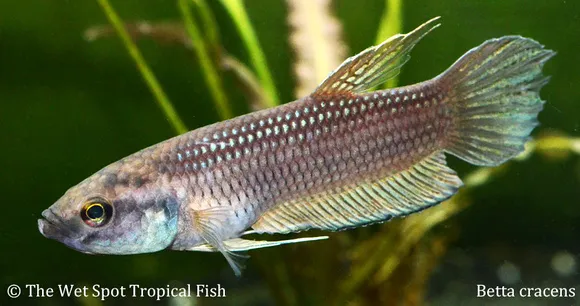 2.8 in (7 cm)20 gal (75 L)73–81°F (23–27°C)
Cracens betta
Betta cracens
2.8 in (7 cm) · 20 gal (75 L)
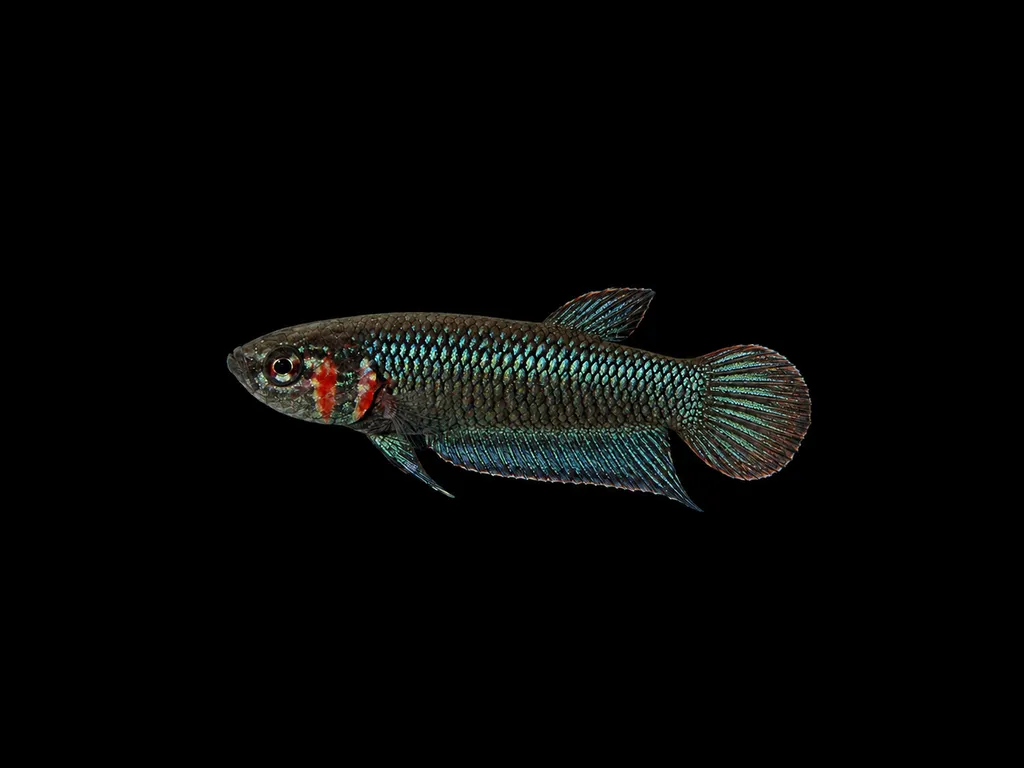 2.8 in (7 cm)14 gal (54 L)72–81°F (22–27°C)
Stroh's betta
Betta strohi
2.8 in (7 cm) · 14 gal (54 L)
- 2.8 in (7 cm)21 gal (80 L)72–79°F (22–26°C)
Dusky betta
Betta fusca
2.8 in (7 cm) · 21 gal (80 L)
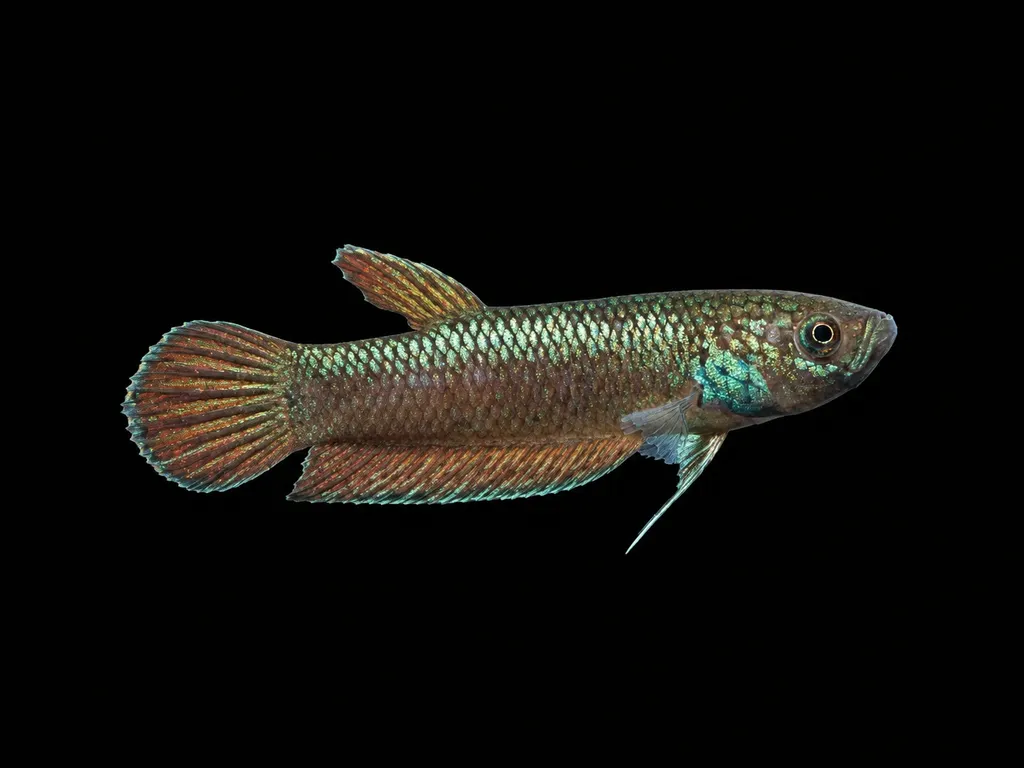 3 in (7.5 cm)20 gal (75 L)72–81°F (22–27°C)
Compuncta betta
Betta compuncta
3 in (7.5 cm) · 20 gal (75 L)
- 3.1 in (7.9 cm)21 gal (80 L)72–81°F (22–27°C)
Pinguis betta
Betta pinguis
3.1 in (7.9 cm) · 21 gal (80 L)
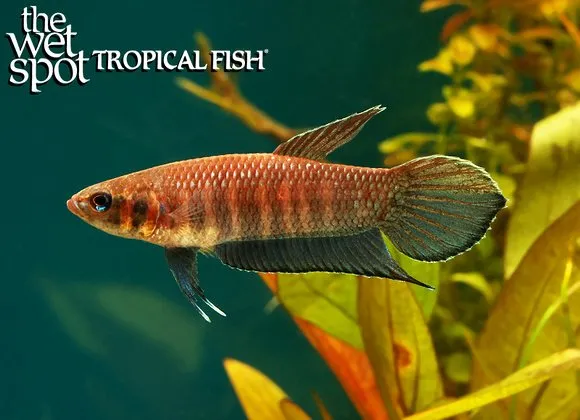 2.6 in (6.5 cm)14 gal (54 L)72–81°F (22–27°C)
Mandor betta
Betta mandor
2.6 in (6.5 cm) · 14 gal (54 L)