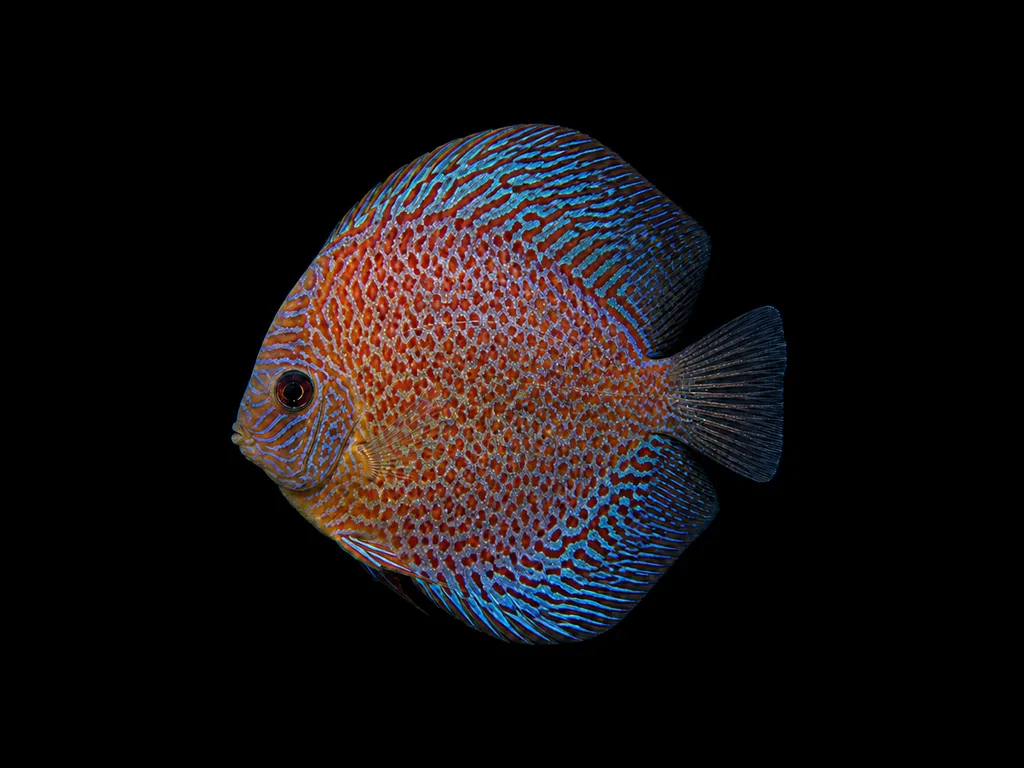
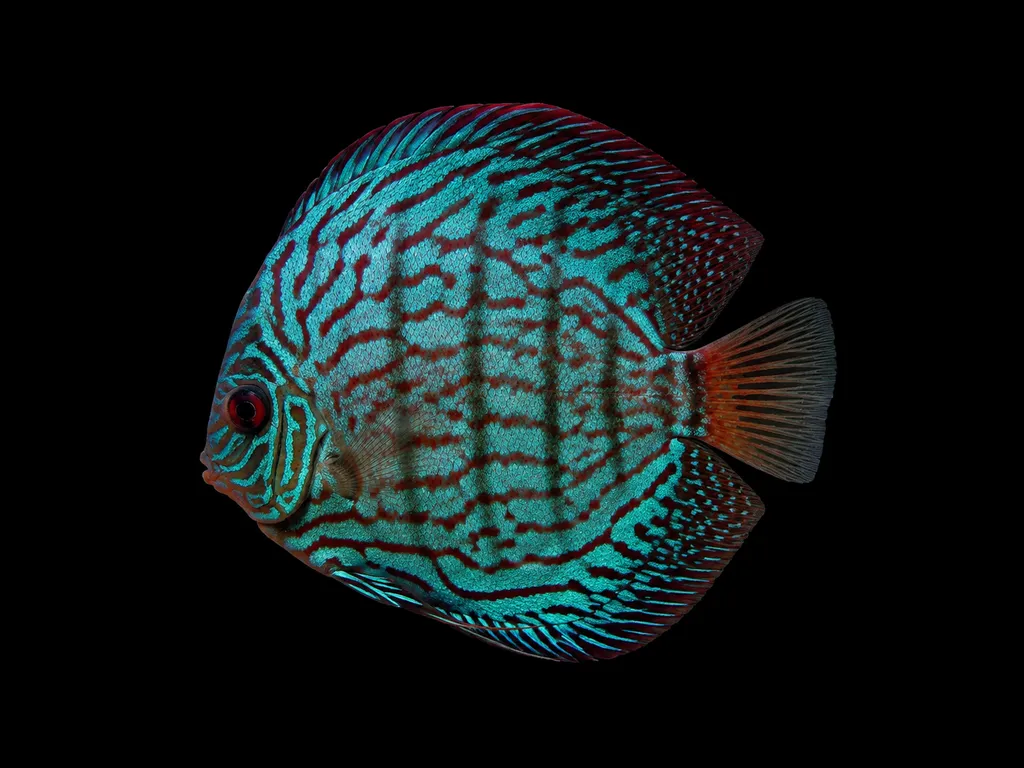
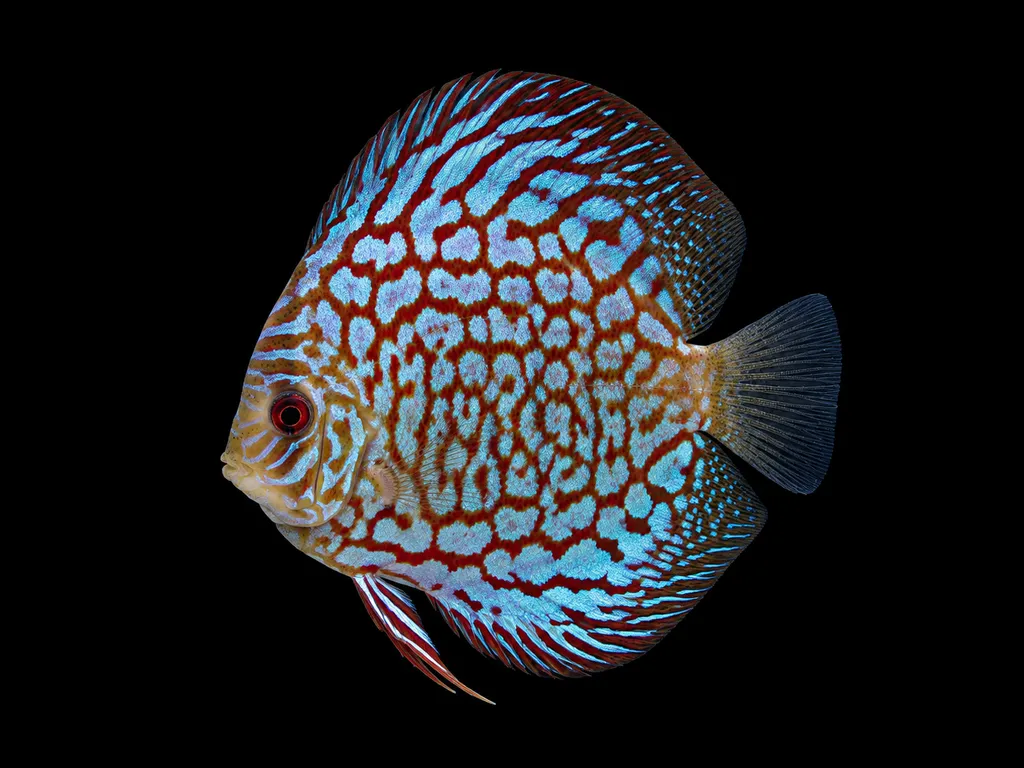
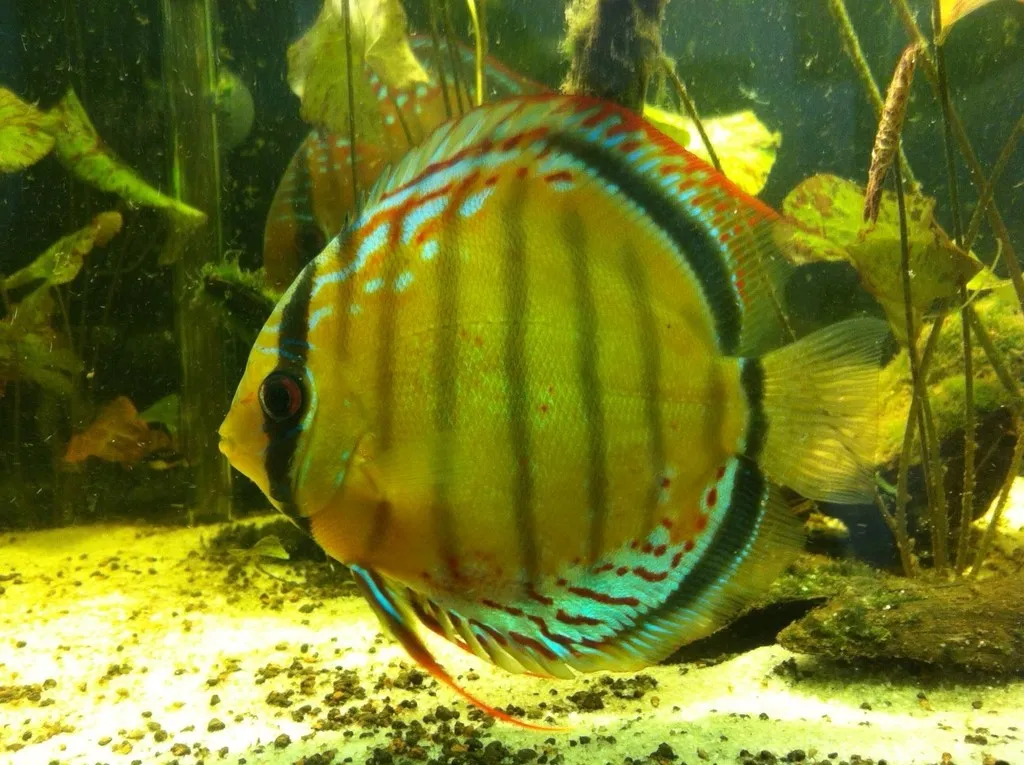
Fine, dense striations run over the whole fish, head and fins included, with narrow bars behind them. The trait is sold across colors: blue snakeskin, red snakeskin, golden, pigeon snakeskin and more. Line quality is judged by how fine and unbroken the striations stay as they run onto the face. Fish ship small, and the pattern tightens as they grow.
In the wild
The line traces to Penang, Malaysia, in the early 1990s, when breeders found discus carrying 14 vertical bars instead of the usual nine, and retail histories date the strain itself to 1994. The extra bars are thought to have been inherited from wild stock. The trait was then crossed into existing color strains, which is why snakeskin now exists in blue, red, golden and pigeon forms. It is a captive line rather than a wild population.
Good to know
The snakeskin look is two things at once: many more vertical bars than a normal discus, and striation broken into a fine net. Bar number is heritable, and snakeskin parents pass the count on. Spawns are still mixed, though, and breeding two snakeskins together can give both 14-bar and 9-bar fry. Sellers often put the count in the name, as in 14-bar snakeskin.
Did you know
Counting the vertical bars separates a real snakeskin from a fish merely sold as one. A normal discus has nine, a snakeskin about fourteen, and it is one of the few discus traits a buyer can verify by counting.
Weekly picks
Tank mates
Snakeskin discus is a peaceful, shoaling species that keeps to the middle. These picks share a community profile with it, are safe together in both directions, and overlap on water type, temperature and pH.
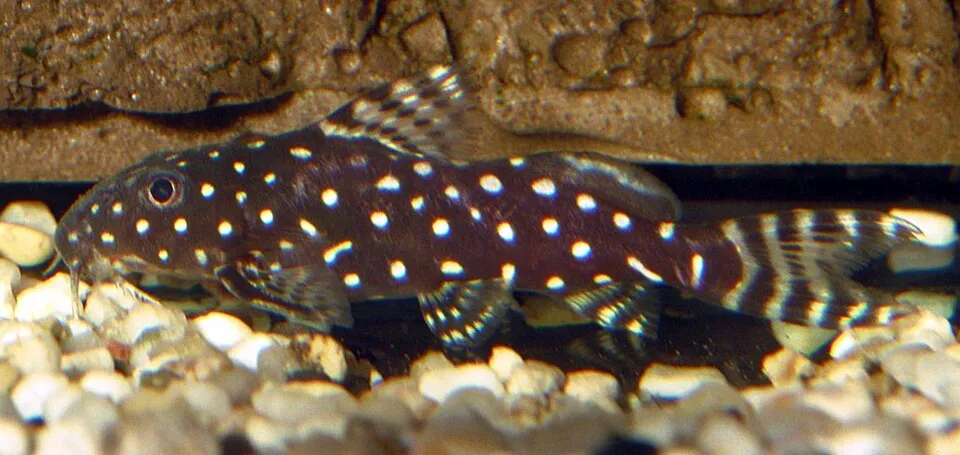
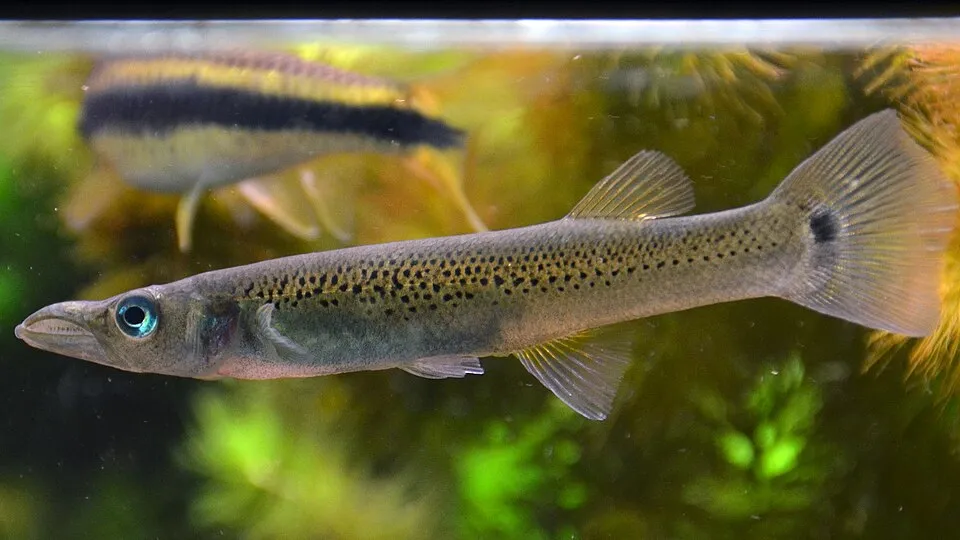
 7.9 in (20 cm)65 gal (245 L)81–88°F (27–31°C)
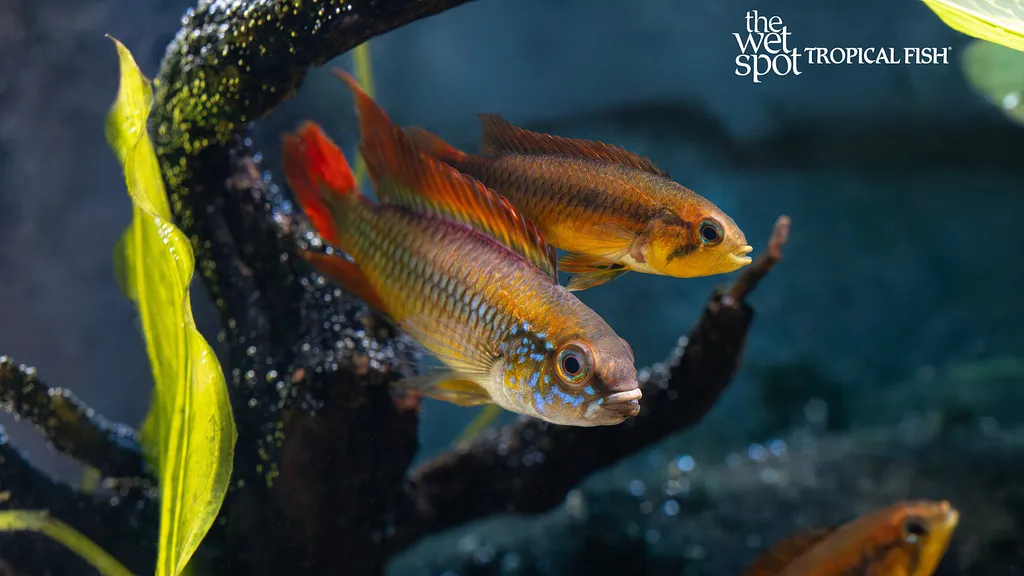 7.1 in (18 cm)75 gal (284 L)82–88°F (28–31°C)
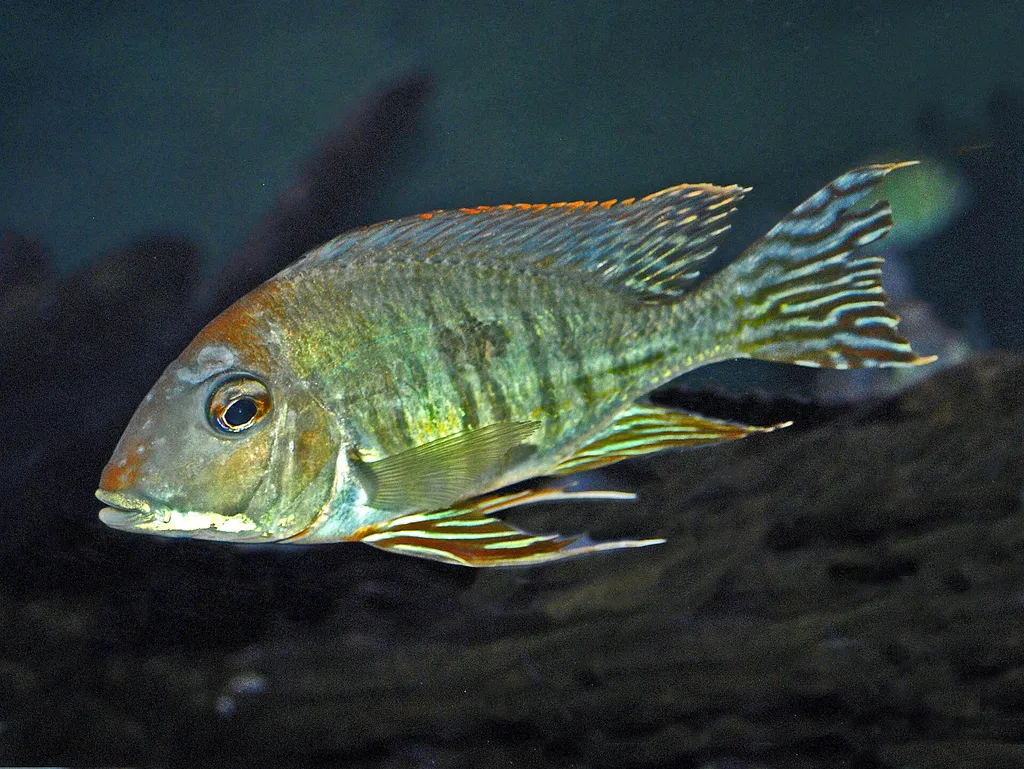 9.8 in (25 cm)115 gal (435 L)79–90°F (26–32°C)
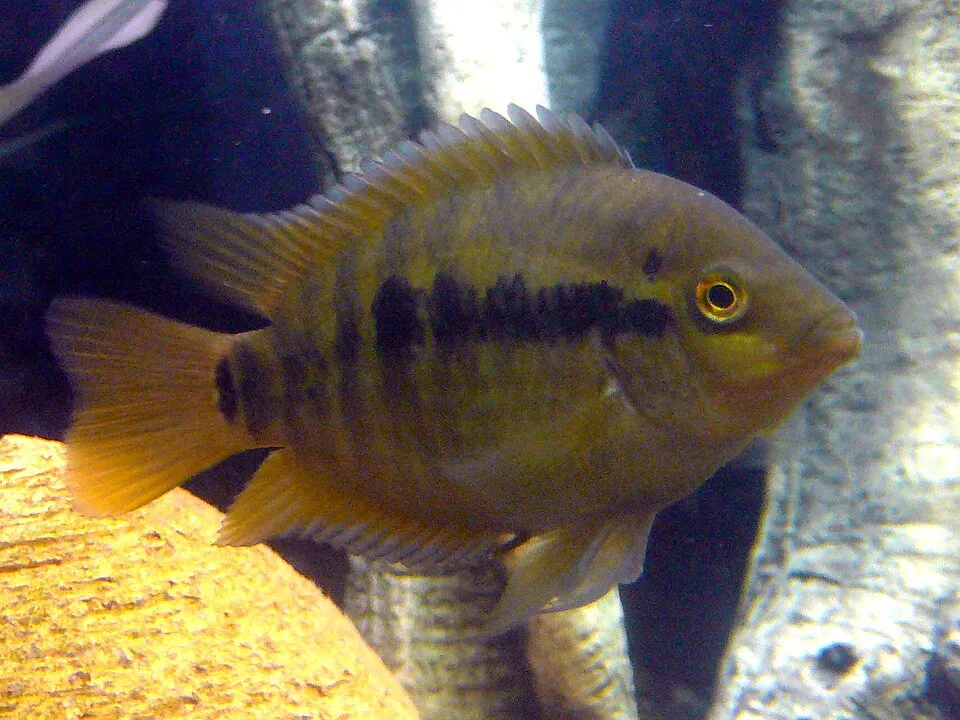 6.3 in (16 cm)26 gal (100 L)72–82°F (22–28°C)
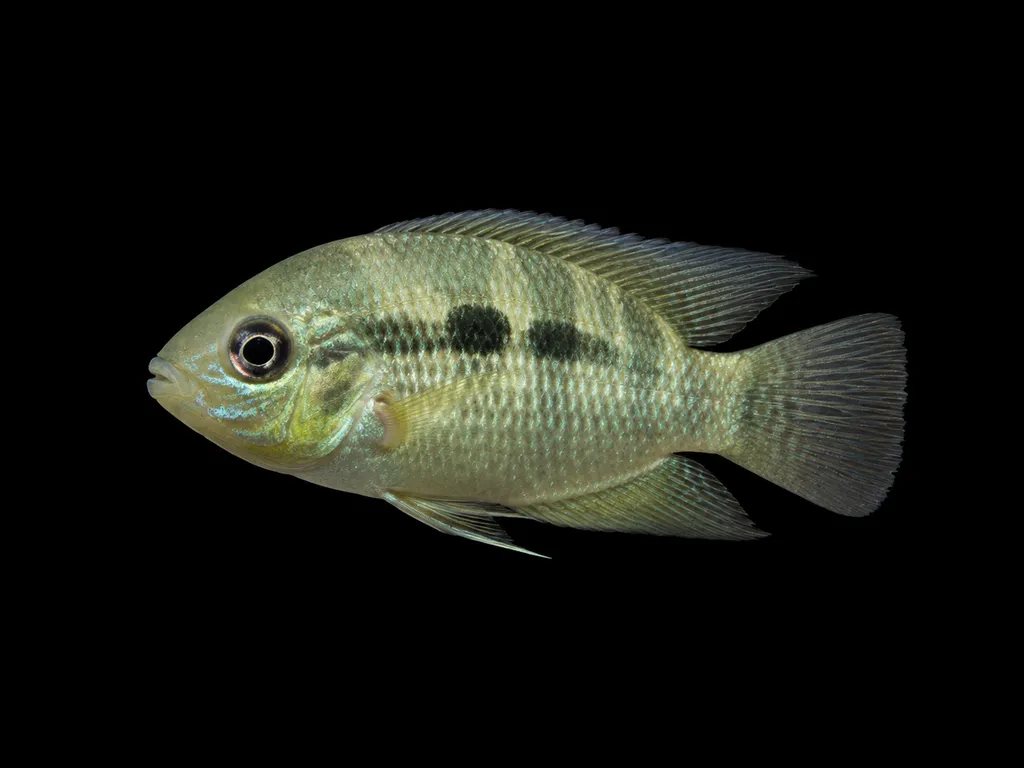 5.9 in (15 cm)79 gal (300 L)75–82°F (24–28°C)
 5.9 in (15 cm)37 gal (140 L)75–82°F (24–28°C)