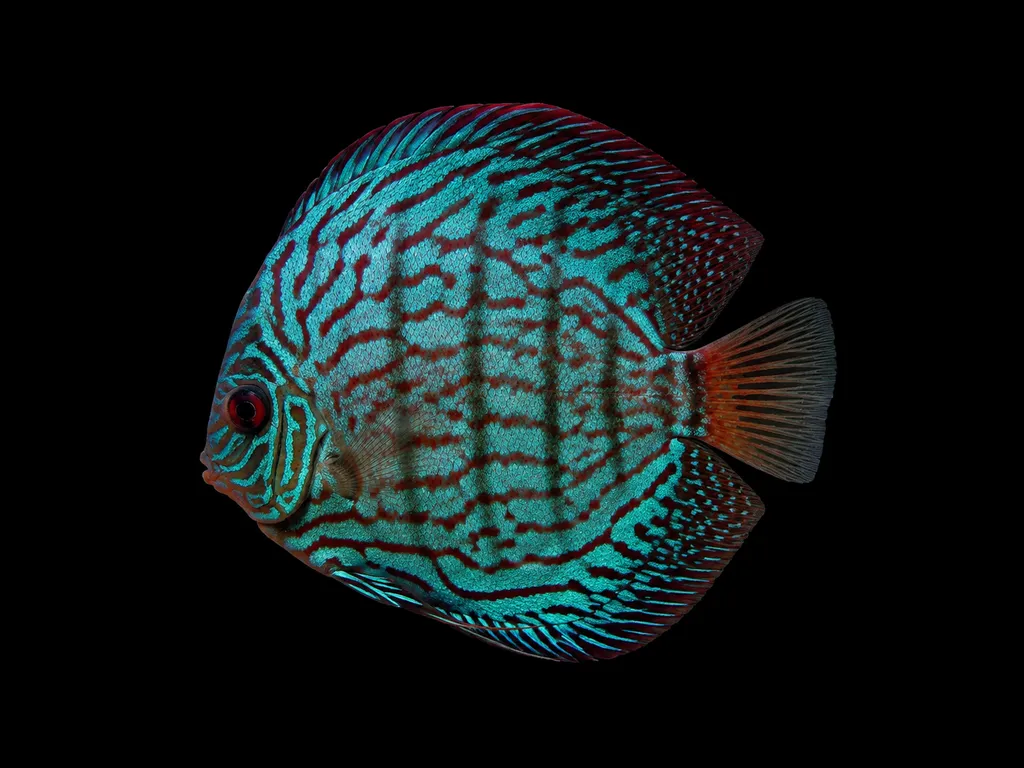
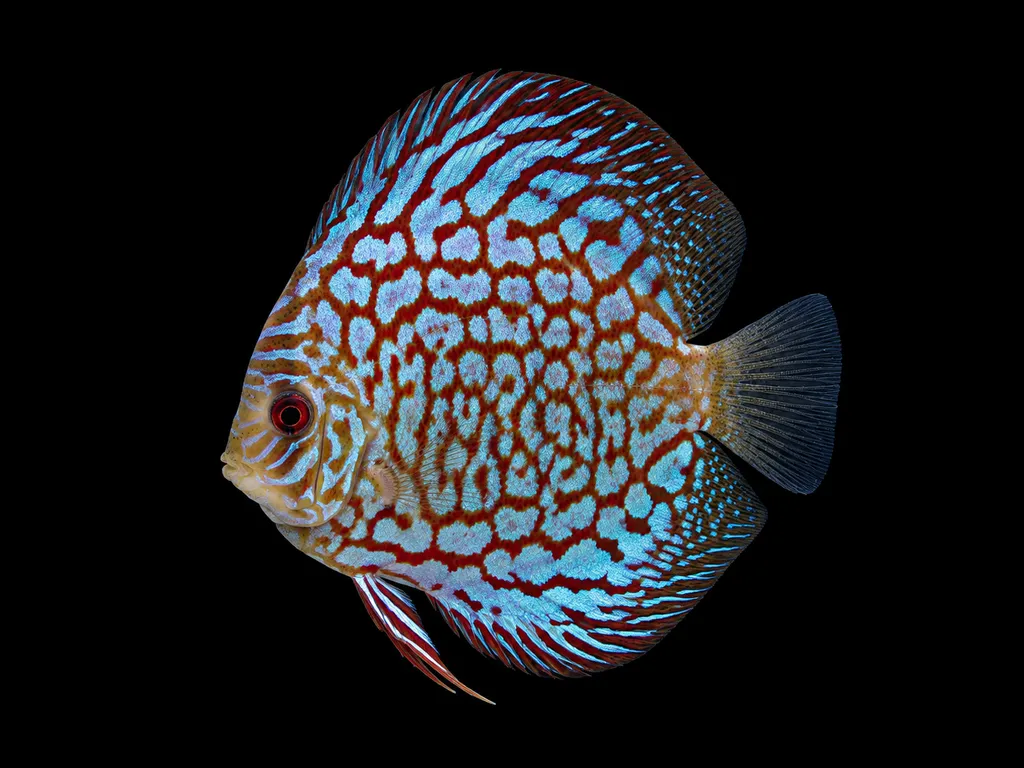
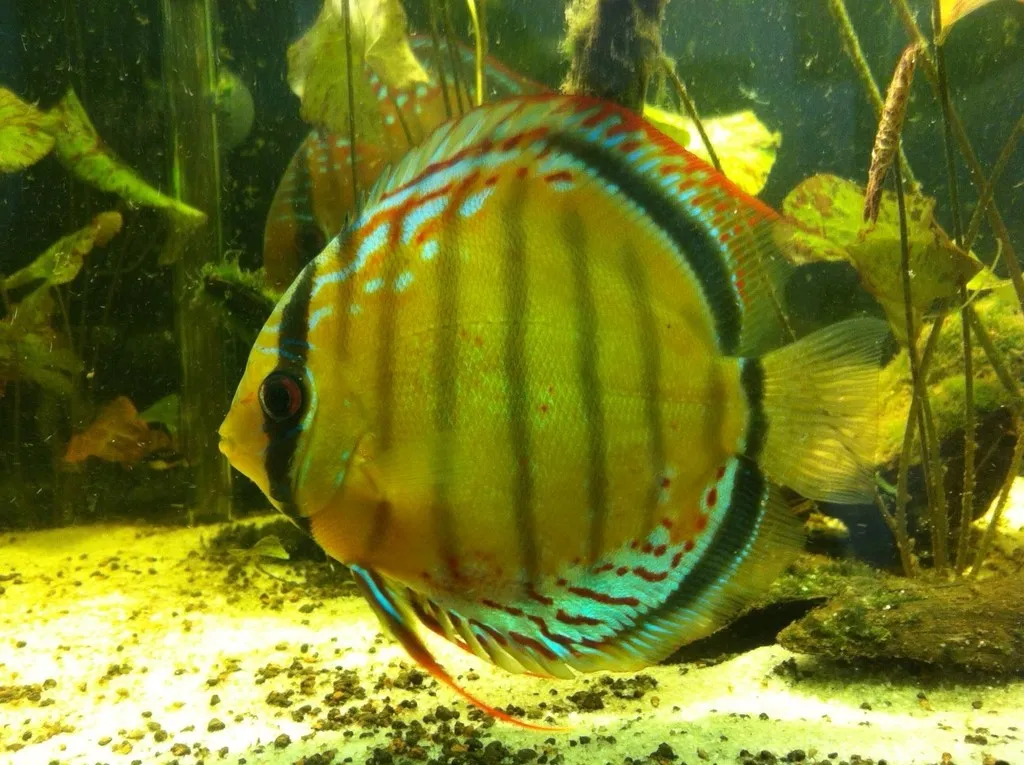
The base blue strain most later domestic discus were built from. Shops sell it as blue turquoise, red turquoise, cobalt or brilliant turquoise, depending on how heavy the striation is and how much red shows through. Coverage is graded by eye, and solid fish cost more than striped ones. Color fills in slowly, so a small juvenile shows little of the adult.
In the wild
Turquoise is a captive line, not a wild population. Wild discus carrying unusually heavy blue striation were selected over generations until the lines covered the whole body. American breeders drove the blue work, with Jack Wattley's turquoise appearing around 1970, while German breeders including Eduard Schmidt-Focke developed the red turquoise. No wild discus looks like a modern turquoise.
Good to know
The blue is structural rather than a blue pigment: iridophores, the reflective pigment cells, throw back blue-green light over a red-brown ground. Striation coverage behaves like a quantitative trait rather than a single gene, so a turquoise pair does not give a uniform batch. Breeders select every generation for wider, straighter lines, and coverage drifts back toward striping once selection stops.
Did you know
Most named domestic discus strains trace back through turquoise stock. The pigeon blood line, which sits behind most modern solid colors, came out of a striped turquoise male crossed to a red turquoise female.
Weekly picks
Tank mates
Turquoise discus is a peaceful, shoaling species that keeps to the middle. These picks share a community profile with it, are safe together in both directions, and overlap on water type, temperature and pH.
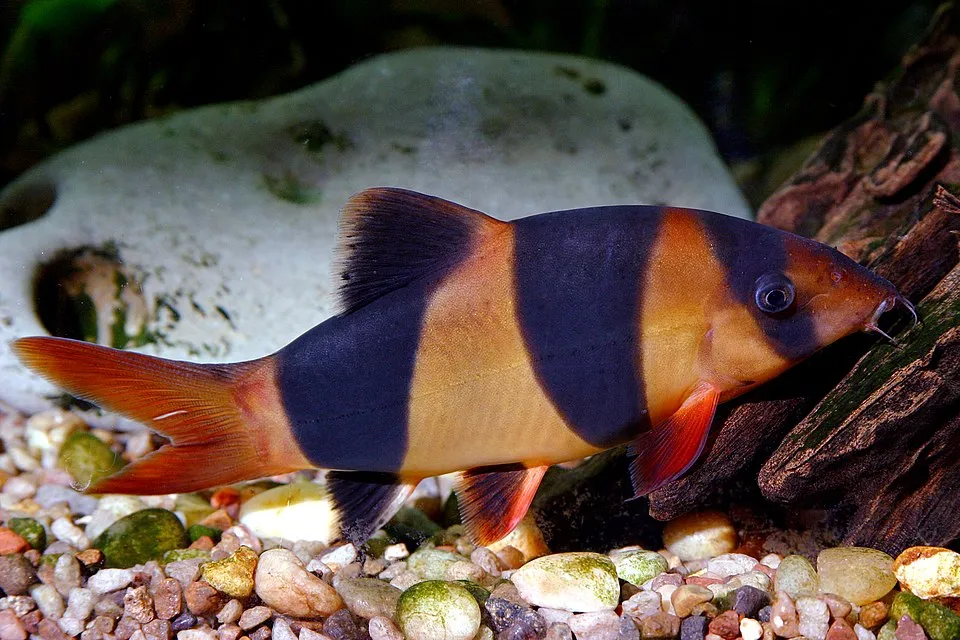
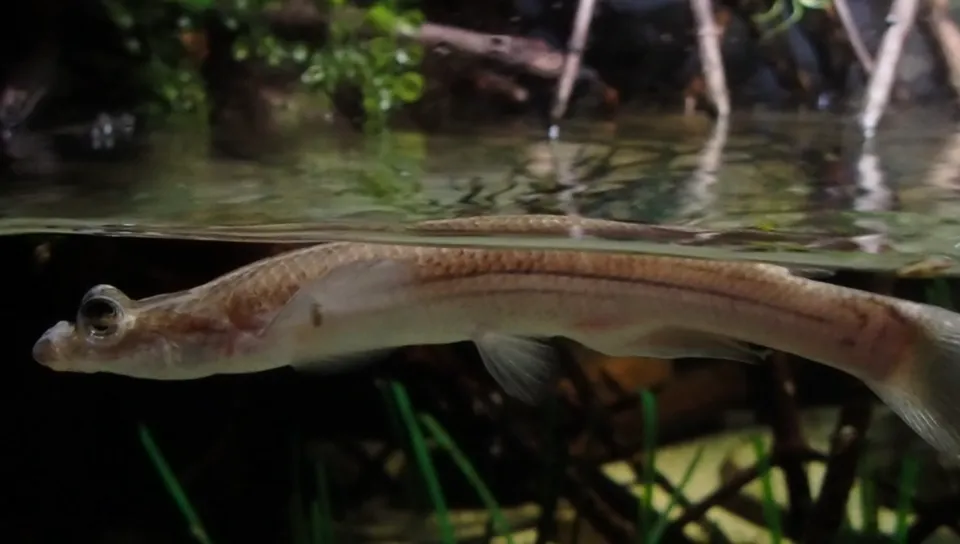
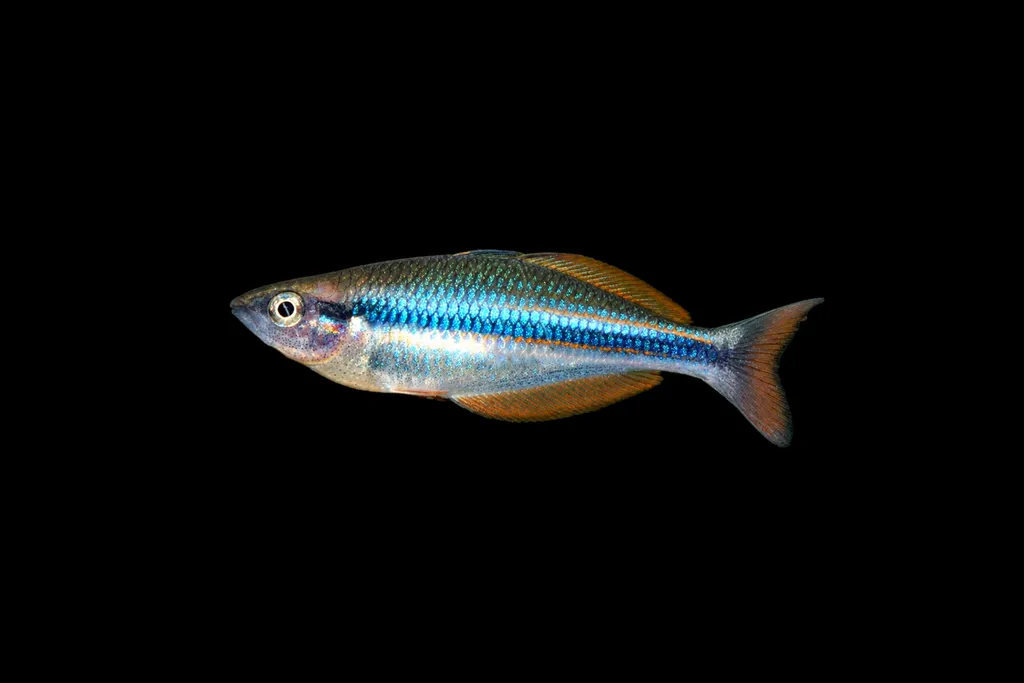
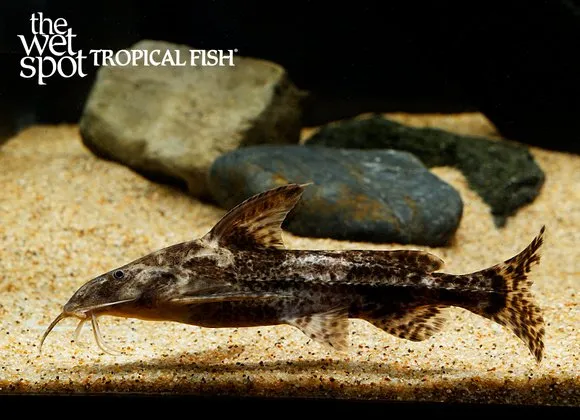
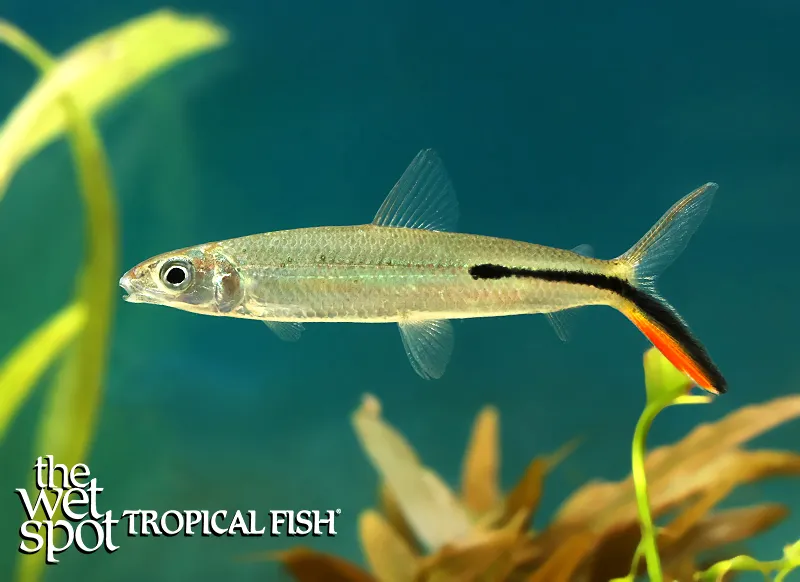
 7.9 in (20 cm)65 gal (245 L)81–88°F (27–31°C)
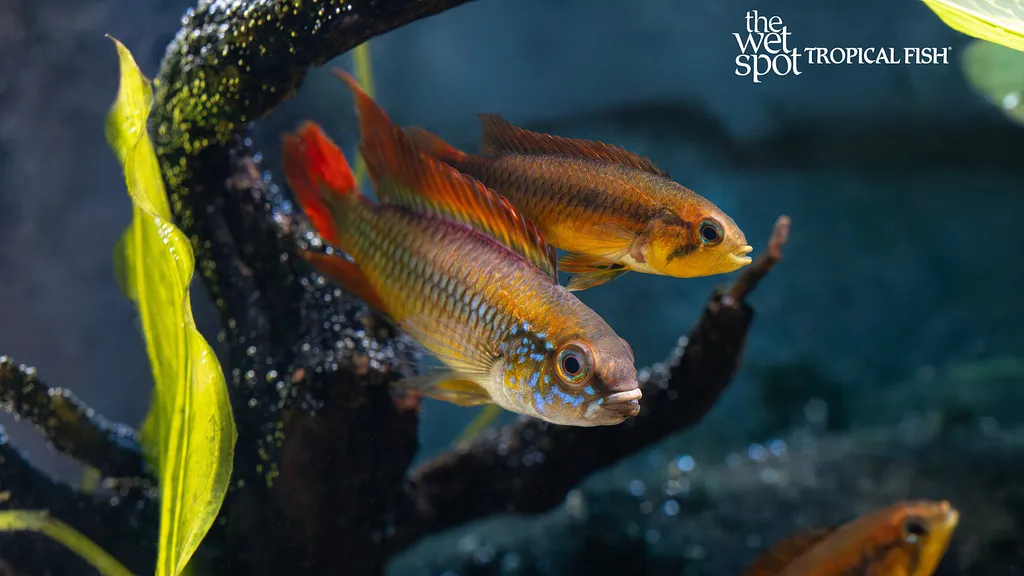 7.1 in (18 cm)75 gal (284 L)82–88°F (28–31°C)
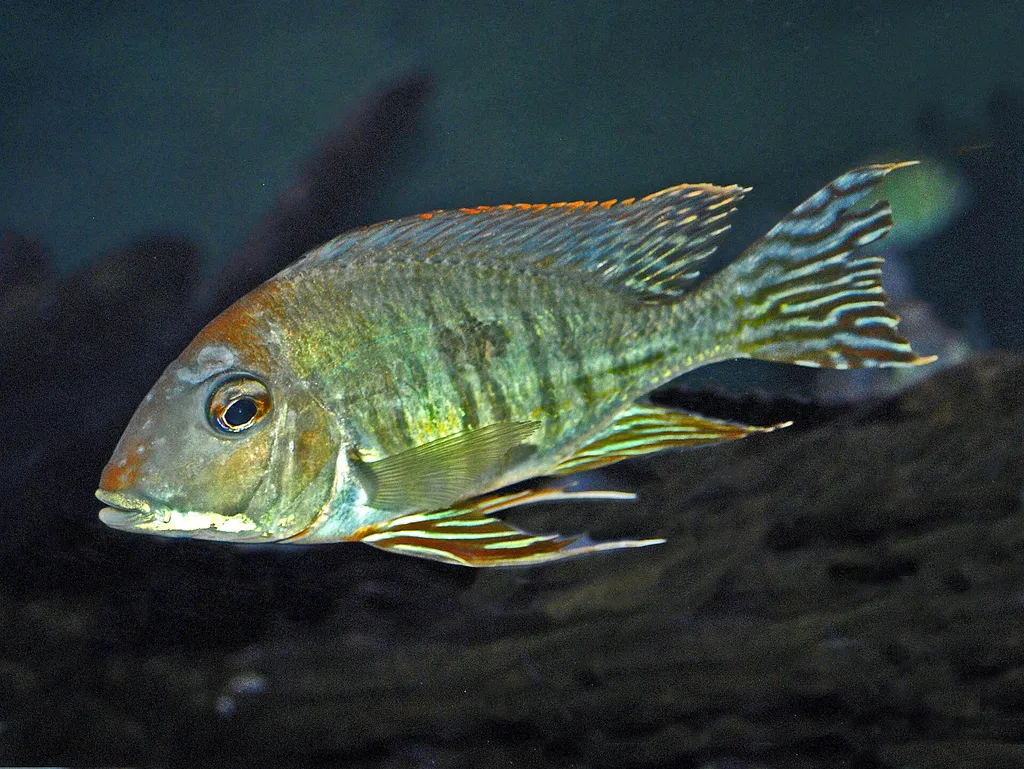 9.8 in (25 cm)115 gal (435 L)79–90°F (26–32°C)
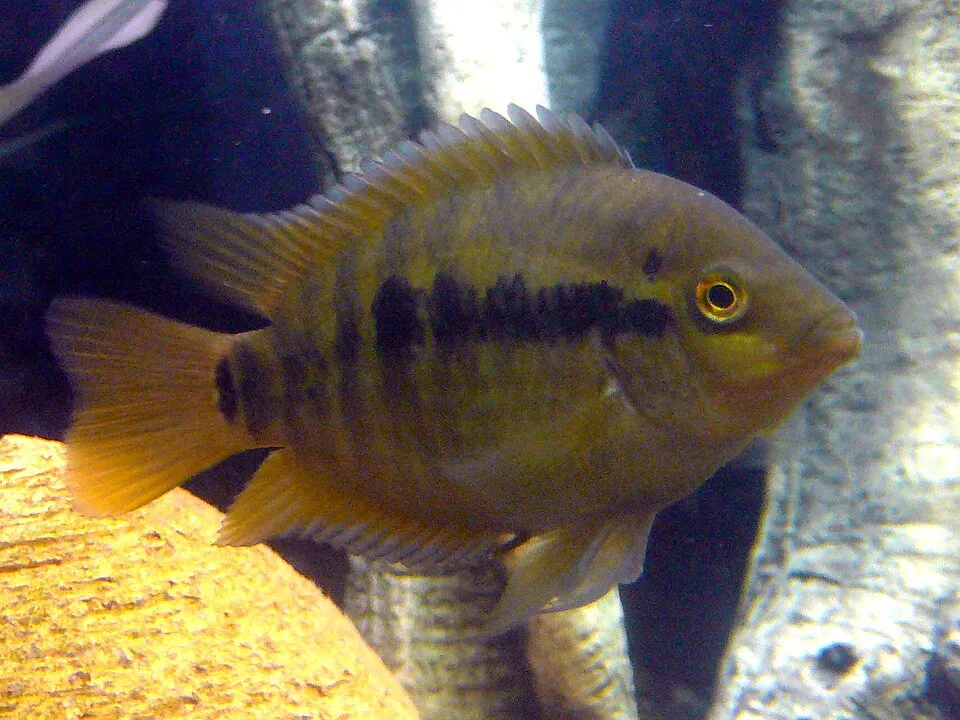 6.3 in (16 cm)26 gal (100 L)72–82°F (22–28°C)
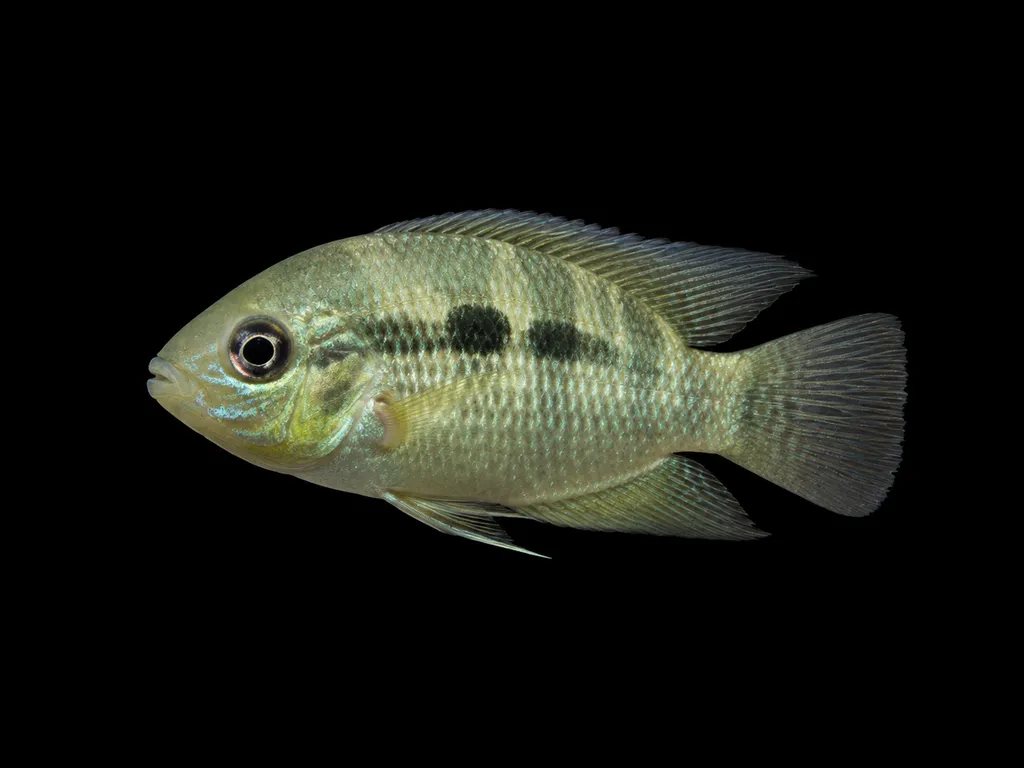 5.9 in (15 cm)79 gal (300 L)75–82°F (24–28°C)
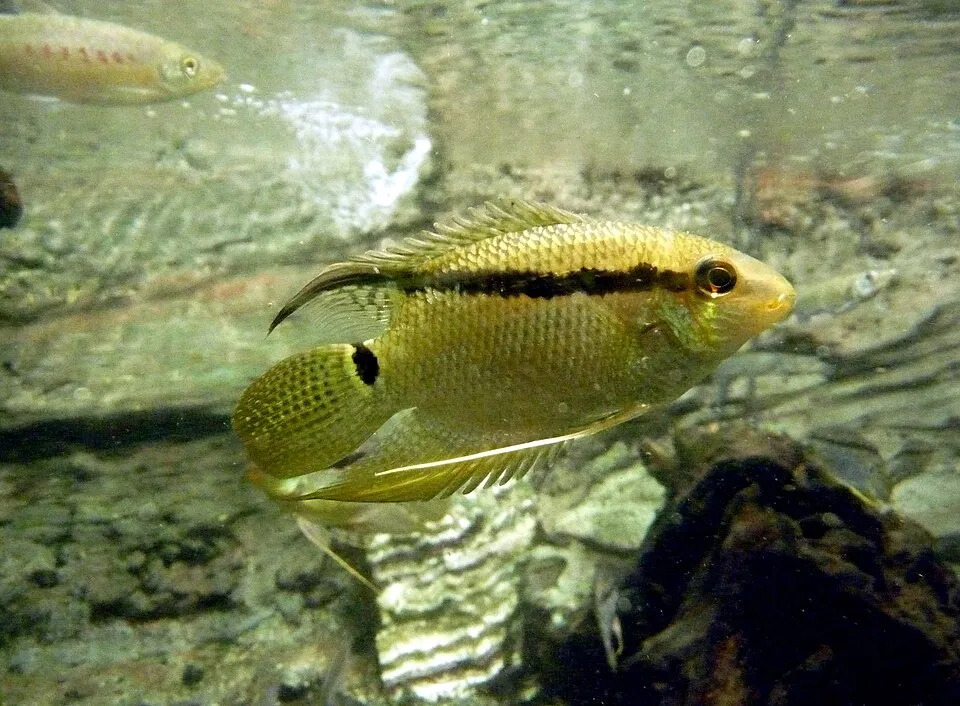 5.9 in (15 cm)37 gal (140 L)75–82°F (24–28°C)