Variety of Black molly
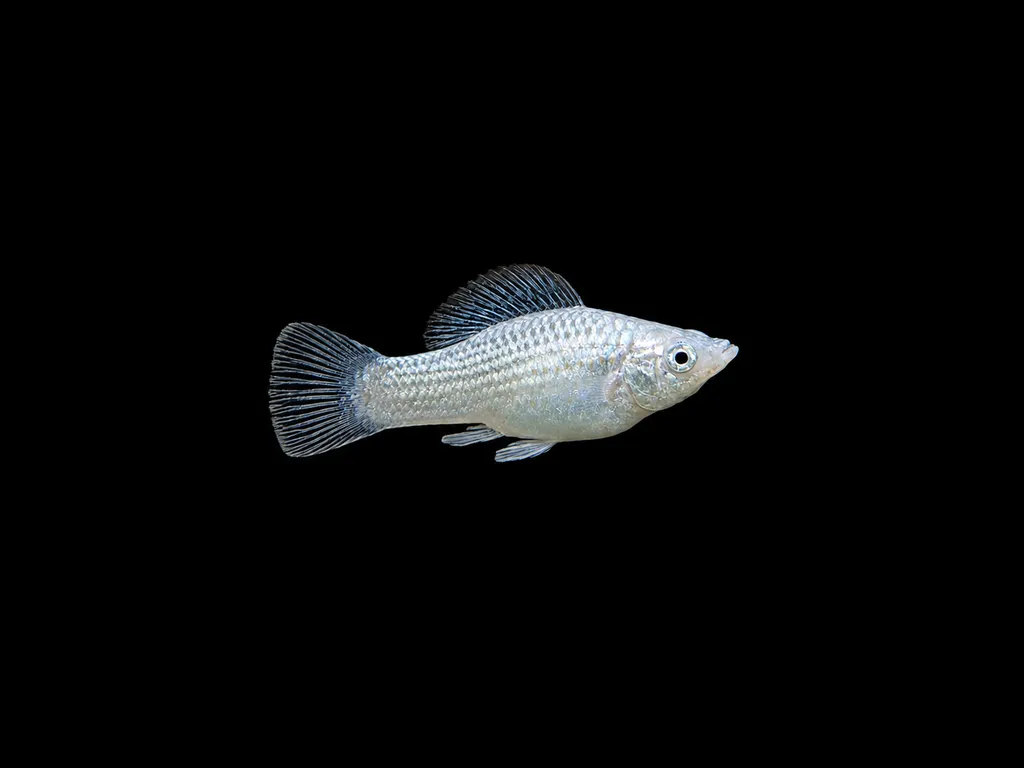
Silver molly
Poecilia sphenops
One of 4 varieties of Poecilia sphenops · See all varieties →
FreshwaterBrackishFish
Varieties · Poecilia sphenops
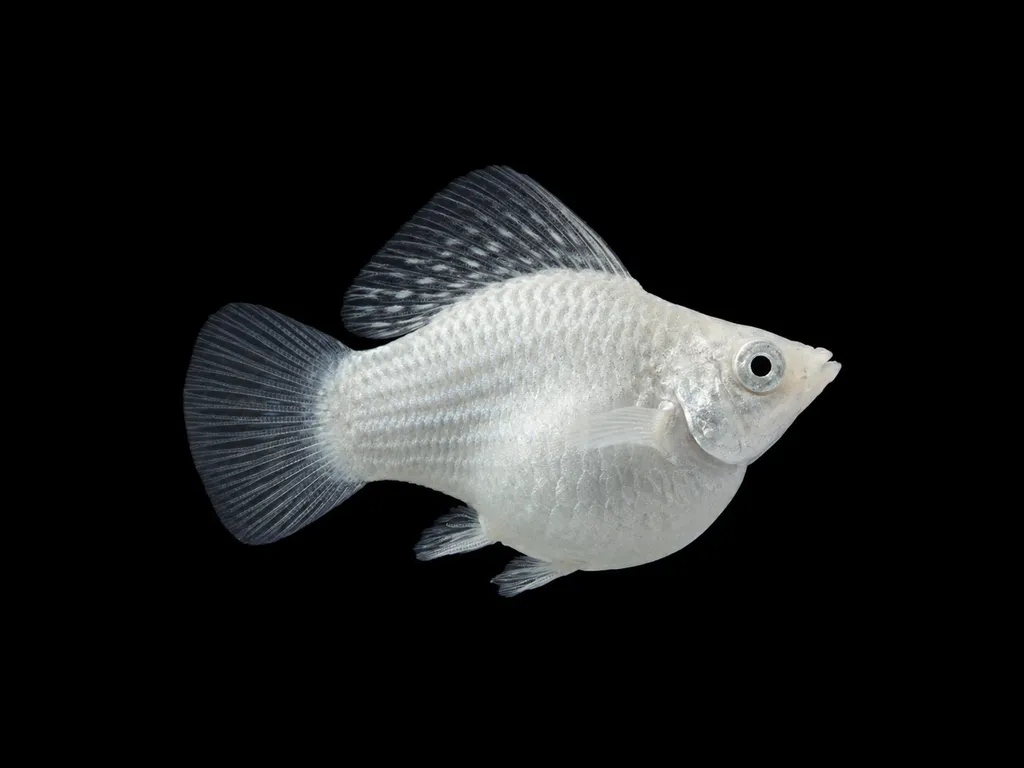
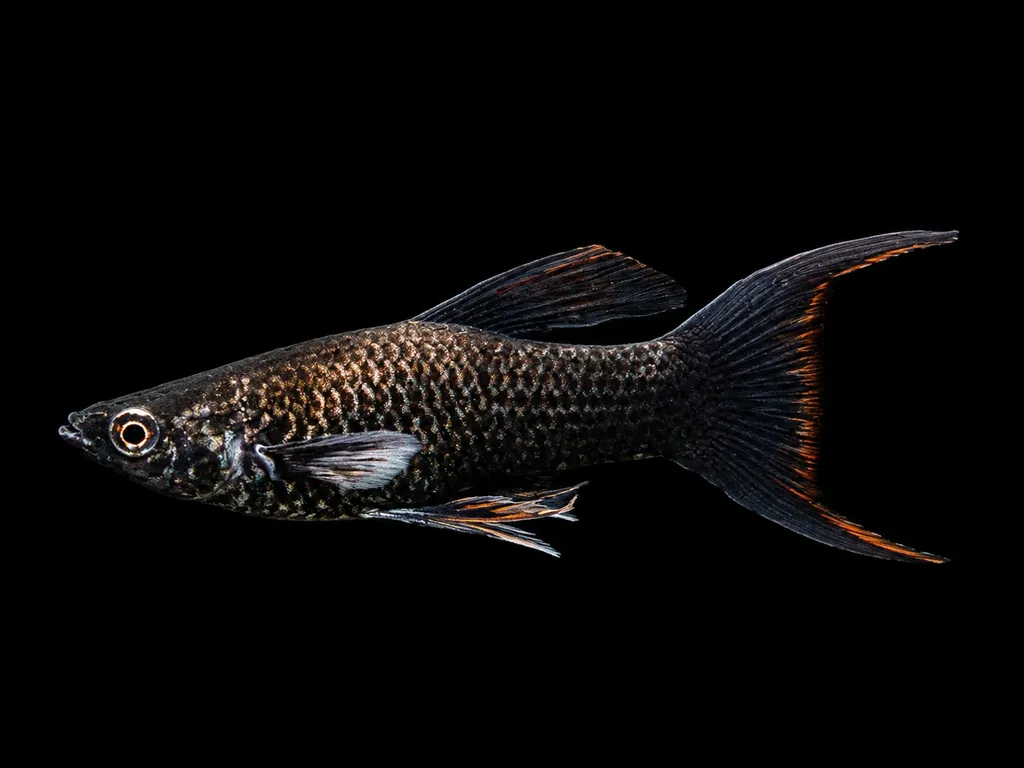
See all 4 →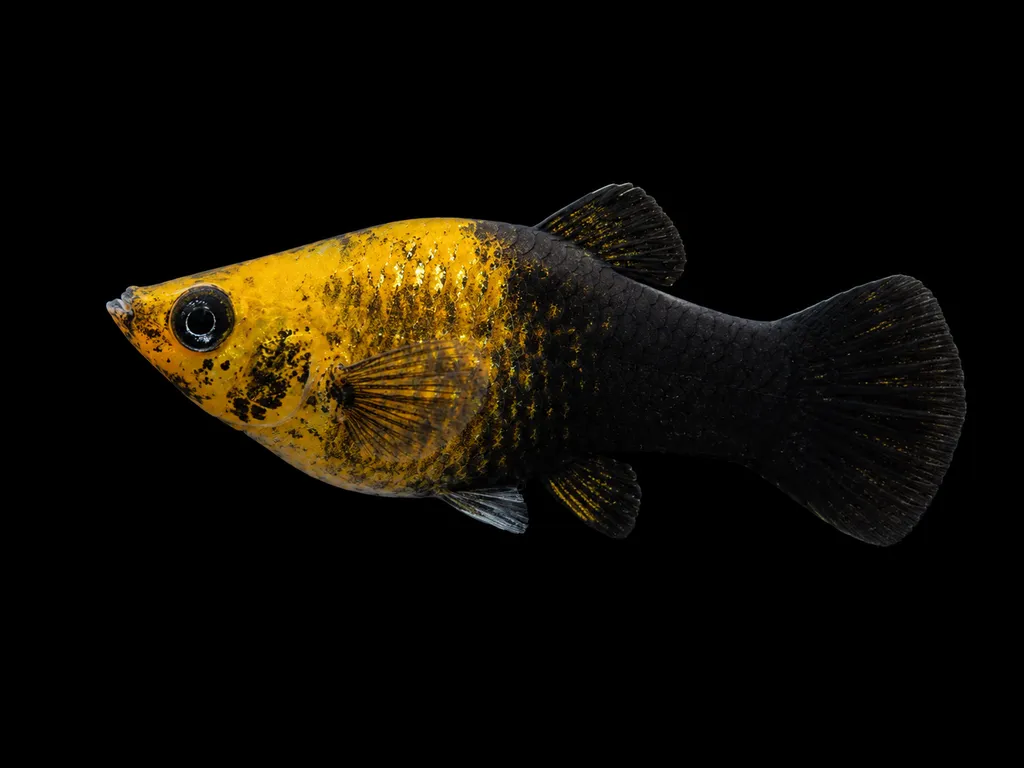
Care at a glance
- Temperature
- 70–82°F
- 21–28°C
- pH
- 7.0–8.0
- Adult size
- 4.7 in
- 12 cm
- Minimum tank
- 24 gal
- 90 L
- Temperament
- Mostly peaceful
- Social behavior
- Social
- Swim level
- Middle
- Difficulty
- Easy
- Breeding
- Easy
- Rarity
- Very common
- Family
- Poeciliidae
Overview
Silver is the quiet option among molly color forms and shows the fish's outline rather than a pattern. It ships plainly as Silver Molly, usually short-finned, and batches differ in how much olive sheen carries over the back. Some shops present silver as the wild-type molly, which is close but not exact. Wild fish carry extra speckling and color over the same silvery ground.
In the wild
Silver is a selection line, made by breeding out every pigment except the silvery ground the wild fish already has. Trade mollies are mixed stock, since the short-finned and sailfin species have been crossed for decades. A shop molly is rarely one clean species. The line has no recorded originator, and unlike most fancy forms it sits close to the wild coloration.
Good to know
Silver here is subtraction, not addition: hobby references describe the form as having every pigment but the silver bred out, leaving the guanine-backed iridophores that already give mollies their shine. That is why the fish looks metallic rather than white. Albino fish also lack pigment, but they lose eye color with it, and a silver molly keeps dark eyes.
Did you know
The shine comes from crystals inside cells, not from the scales themselves. Mollies carry guanine platelets packed into iridophores. That is the same material scraped from fish scales to make the pearl essence used in cosmetics and nail polish.
Weekly picks
Tank mates
Silver molly is a mostly peaceful, social species that keeps to the middle. These picks share a community profile with it, are safe together in both directions, and overlap on water type, temperature and pH.
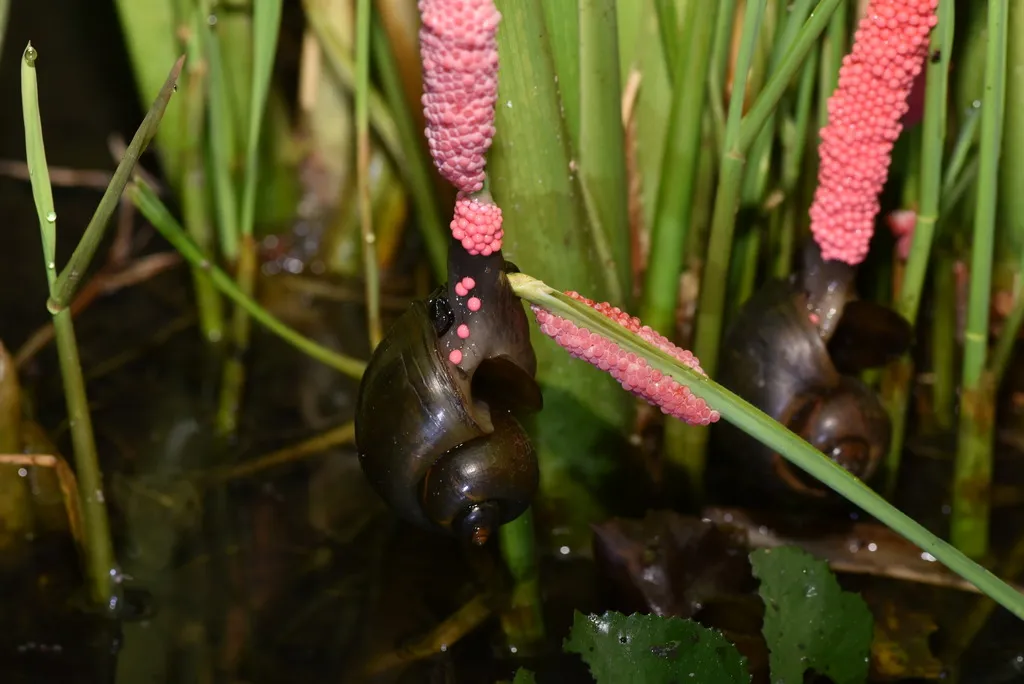
Apple snail
Pomacea canaliculata
Freshwater5.9 in (15 cm) · 21 gal (80 L)64–81°F (18–27°C)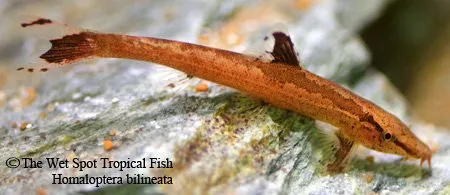
Twin-stripe lizard loach
Homaloptera bilineata
Freshwater3.1 in (8 cm) · 24 gal (90 L)68–79°F (20–26°C)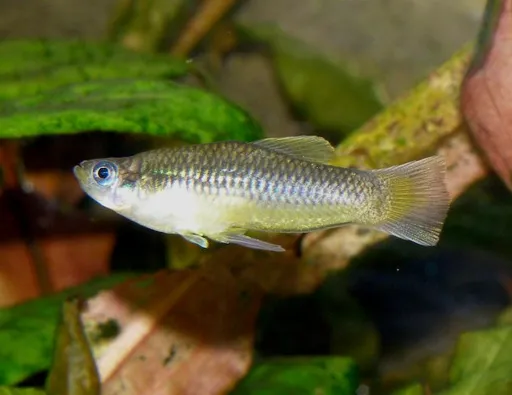
Blue-eyed livebearer
Priapella intermedia
Freshwater2.8 in (7 cm) · 24 gal (90 L)72–82°F (22–28°C)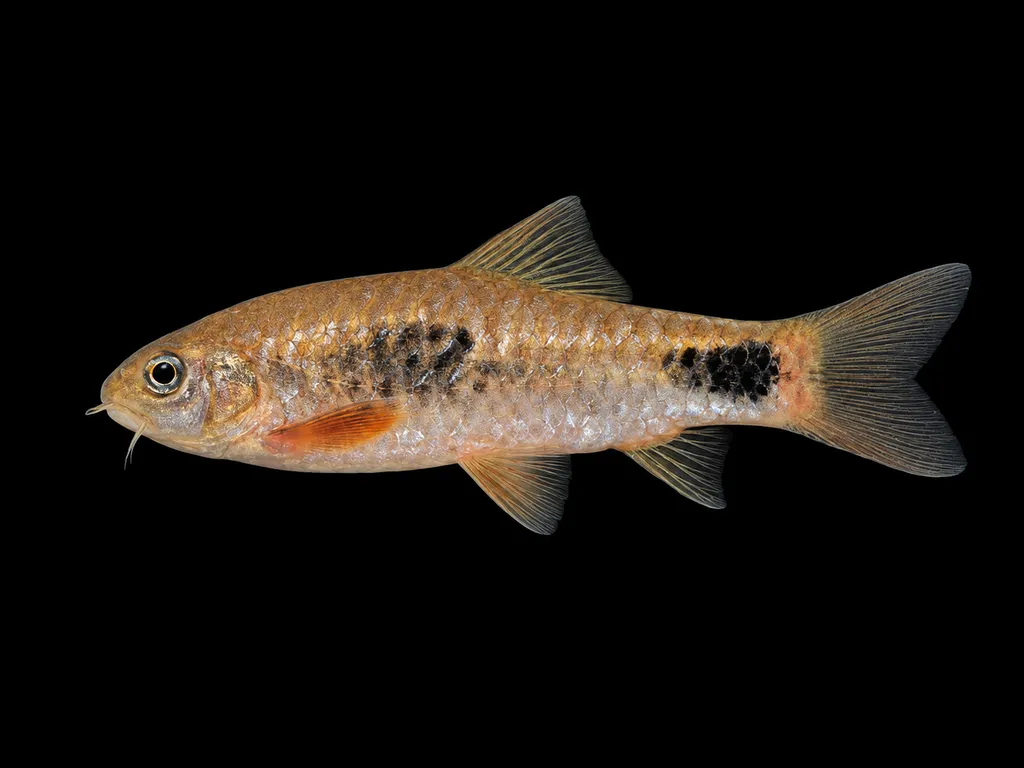
Cameroon barb
Enteromius camptacanthus
Freshwater3.9 in (10 cm) · 24 gal (90 L)72–81°F (22–27°C)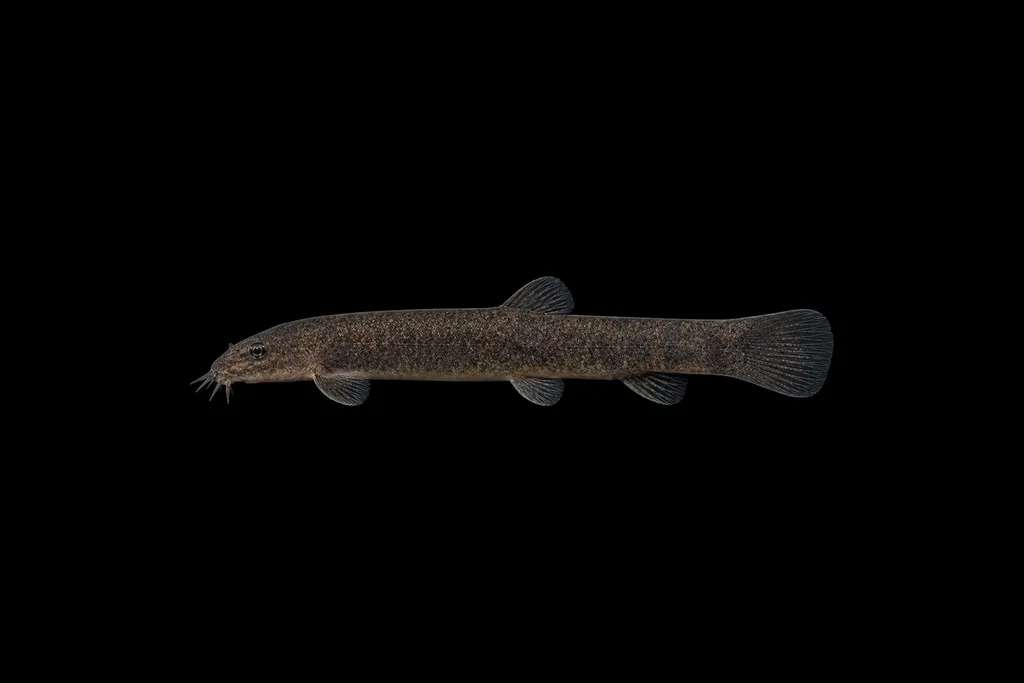
Charcoal loach
Schistura carbonaria
Freshwater3.4 in (8.6 cm) · 24 gal (90 L)70–79°F (21–26°C)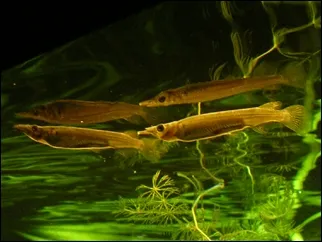
Wrestling halfbeak
Dermogenys pusilla
FreshwaterBrackish2.8 in (7 cm) · 25 gal (95 L)75–82°F (24–28°C)
Common questions
Is a Silver molly a different species from the Black molly?
No. A Silver molly is a variety of the Black molly, Poecilia sphenops, and it wants the same tank, water and food as the species.
What size tank does a Silver molly need?
A Silver molly needs at least 24 gal (90 L). It spends most of its time in the middle.
How big does a Silver molly get?
An adult Silver molly reaches about 4.7 in (12 cm).
Related species
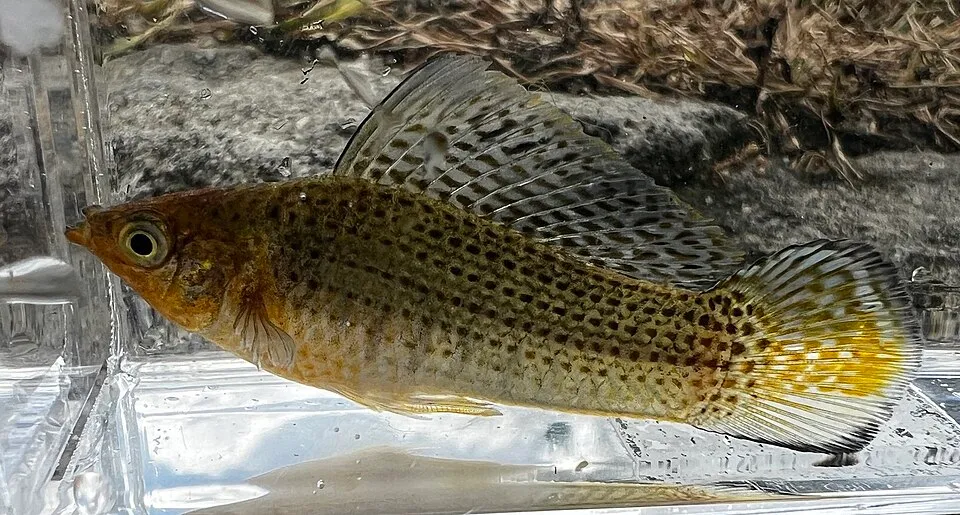 4.7 in (12 cm)24 gal (90 L)70–79°F (21–26°C)
Sailfin molly
Poecilia latipinna
4.7 in (12 cm) · 24 gal (90 L)
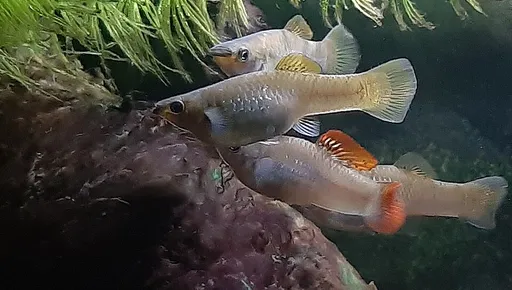 3.9 in (10 cm)24 gal (90 L)72–82°F (22–28°C)
Liberty molly
Poecilia salvatoris
3.9 in (10 cm) · 24 gal (90 L)
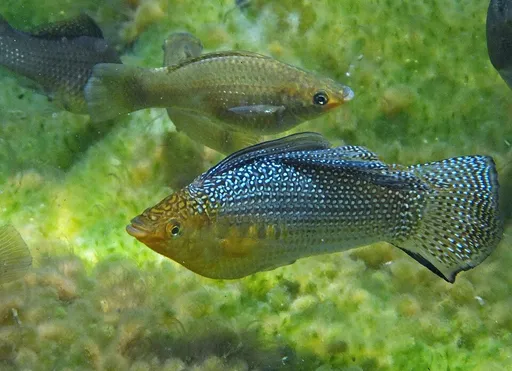 5.9 in (15 cm)30 gal (113 L)75–82°F (24–28°C)
Giant sailfin molly
Poecilia velifera
5.9 in (15 cm) · 30 gal (113 L)
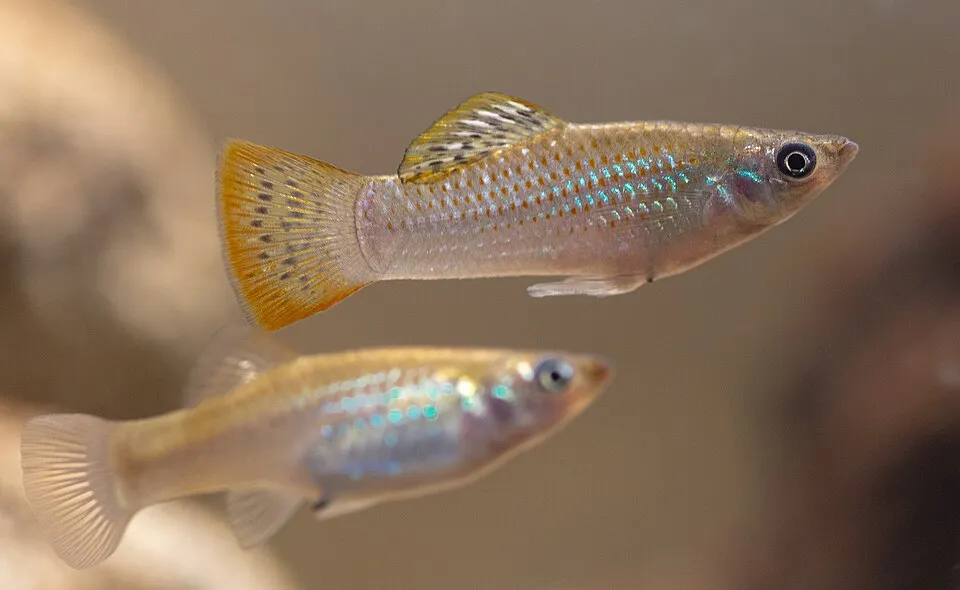 4.3 in (11 cm)32 gal (120 L)72–82°F (22–28°C)
Shortfin molly
Poecilia mexicana
4.3 in (11 cm) · 32 gal (120 L)
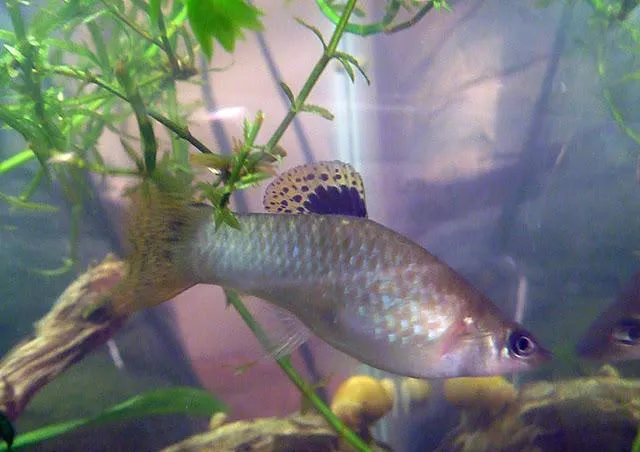 3.9 in (10 cm)26 gal (100 L)72–86°F (22–30°C)
Gill's molly
Poecilia gillii
3.9 in (10 cm) · 26 gal (100 L)
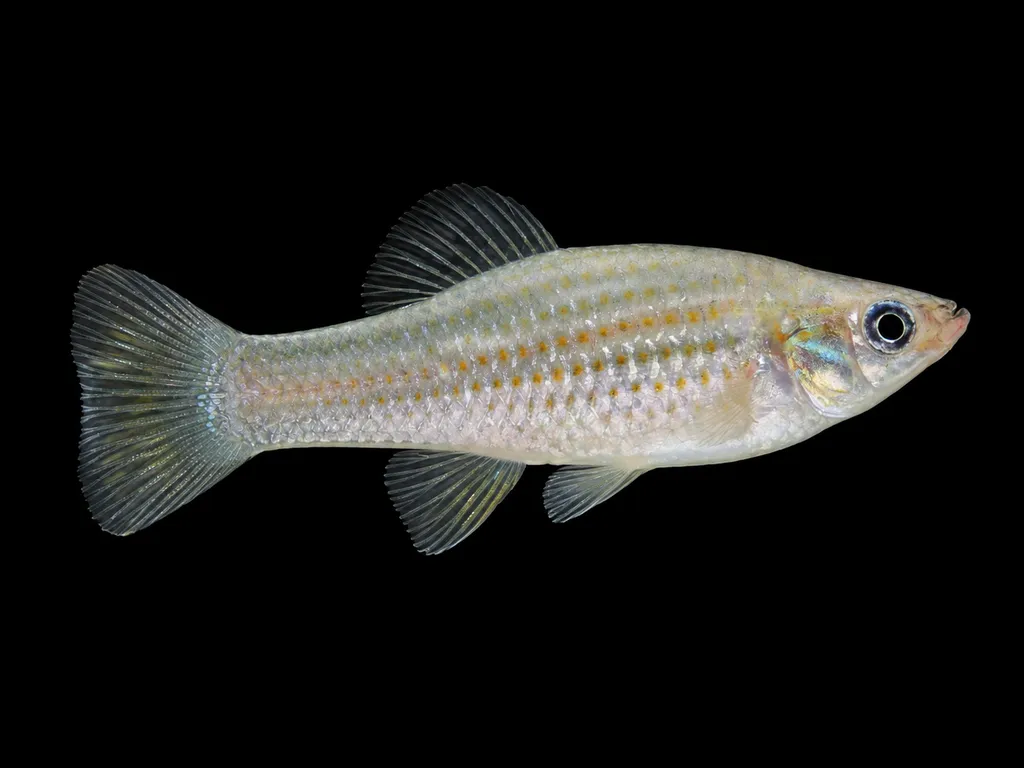 3.5 in (9 cm)20 gal (75 L)68–82°F (20–28°C)
Amazon molly
Poecilia formosa
3.5 in (9 cm) · 20 gal (75 L)