Variety of Ocellaris clownfish
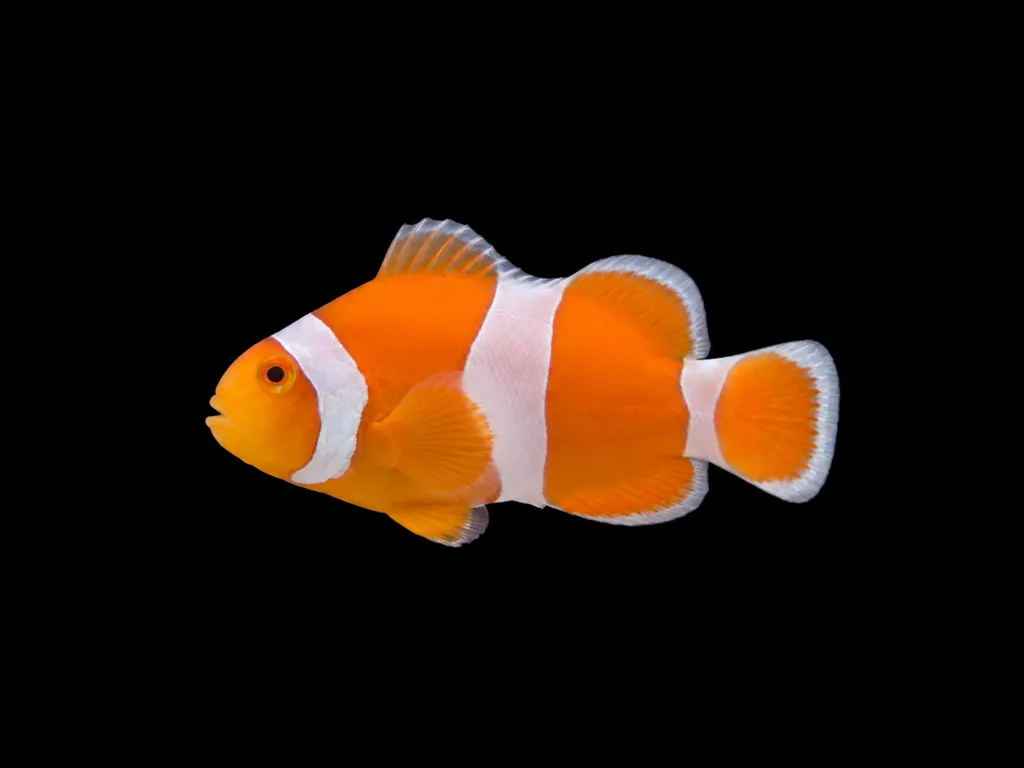
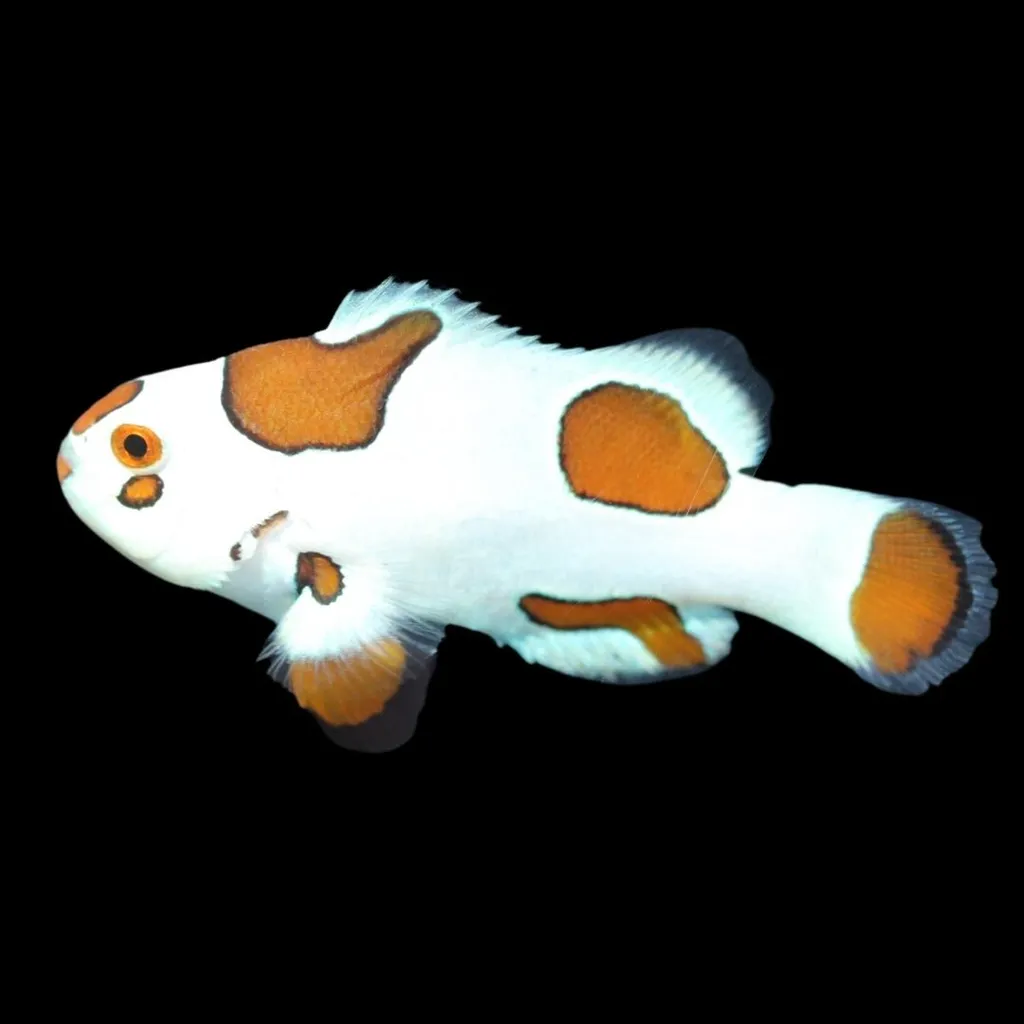
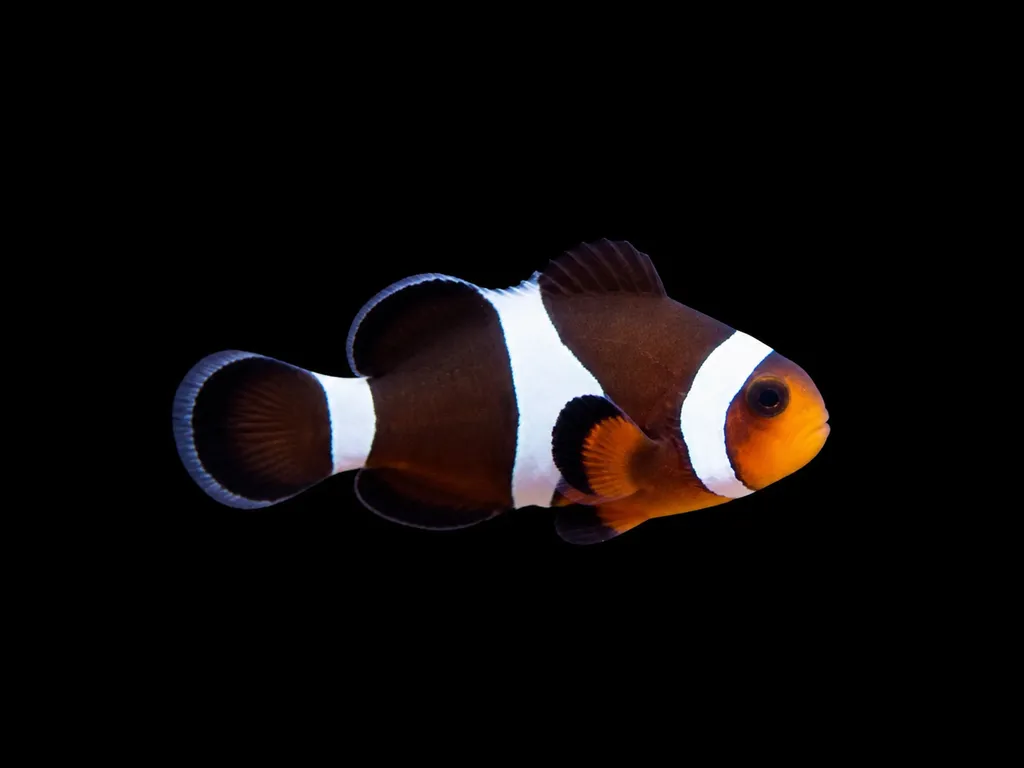
Tangerine Albino clownfish
Amphiprion ocellaris
One of 17 varieties of Amphiprion ocellaris · See all varieties →
SaltwaterFish
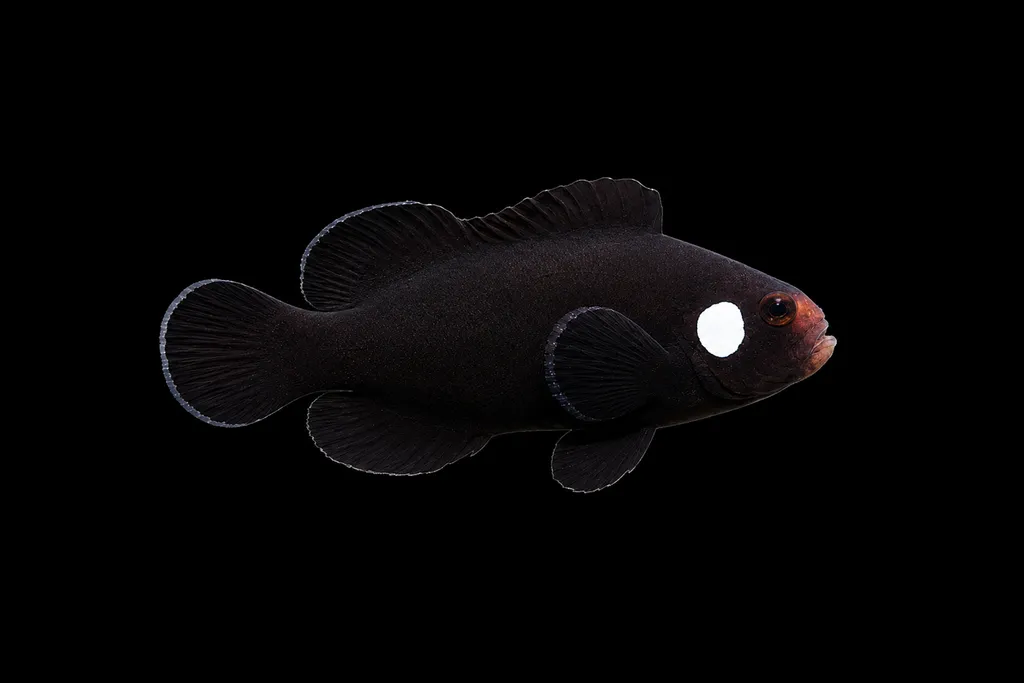
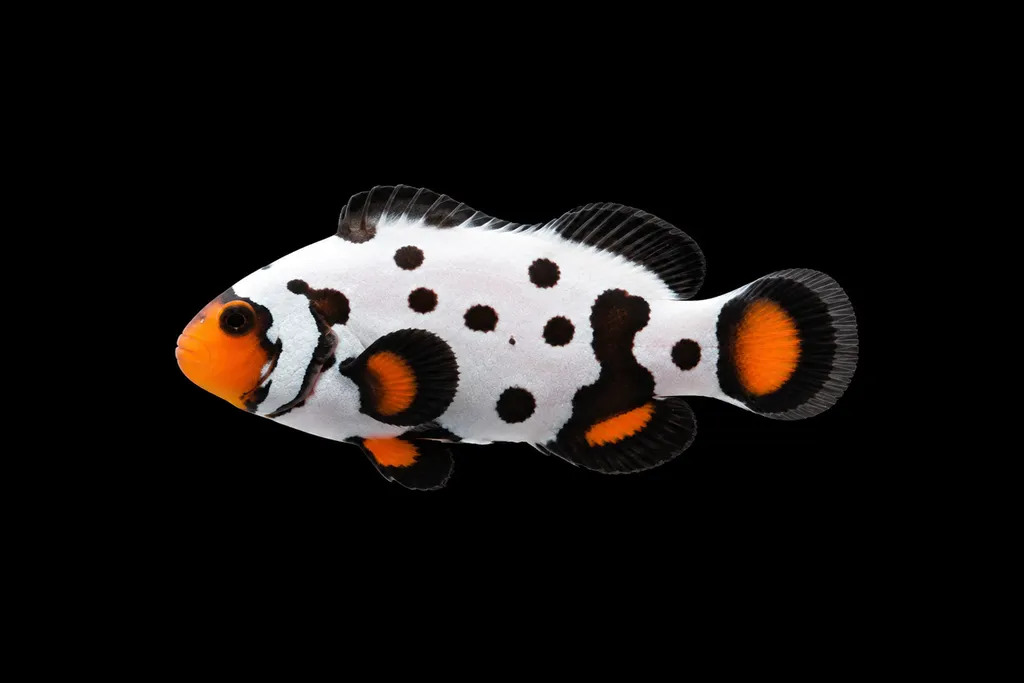
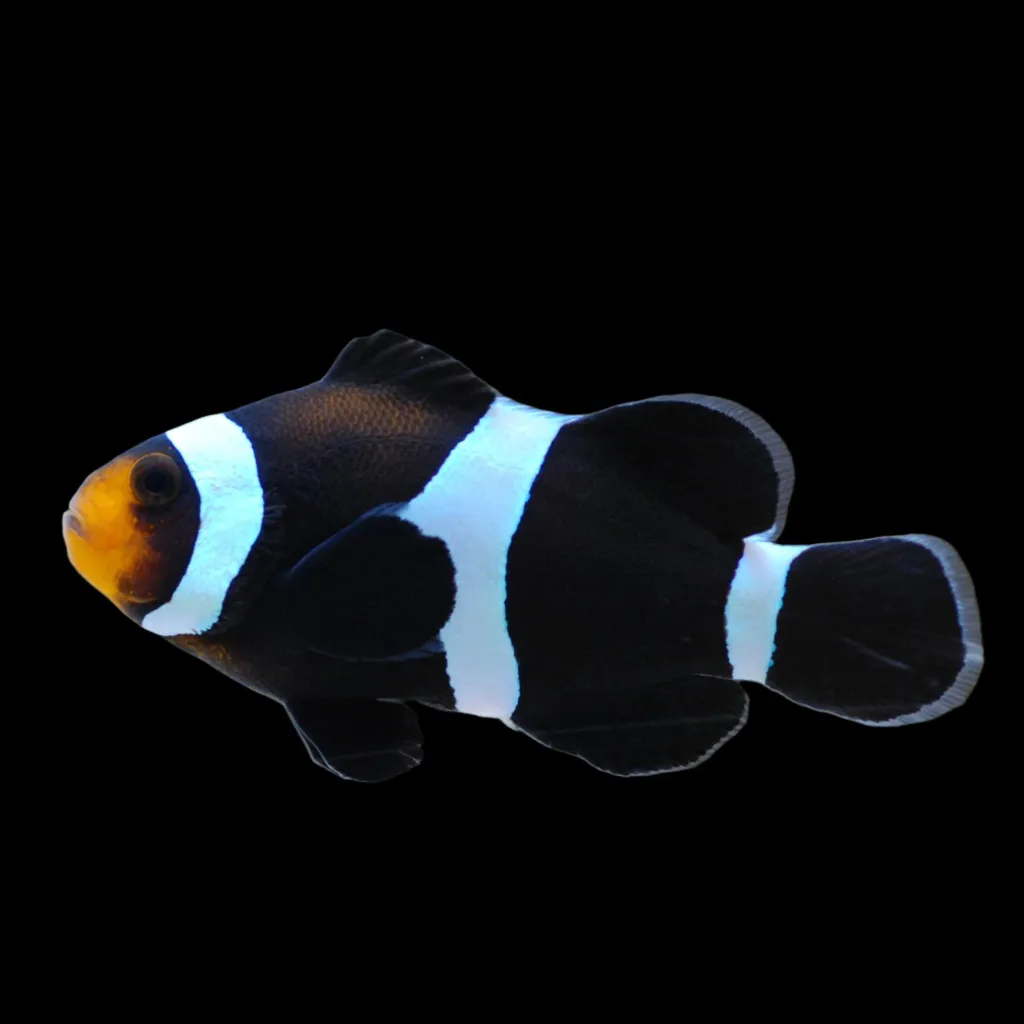
Varieties · Amphiprion ocellaris
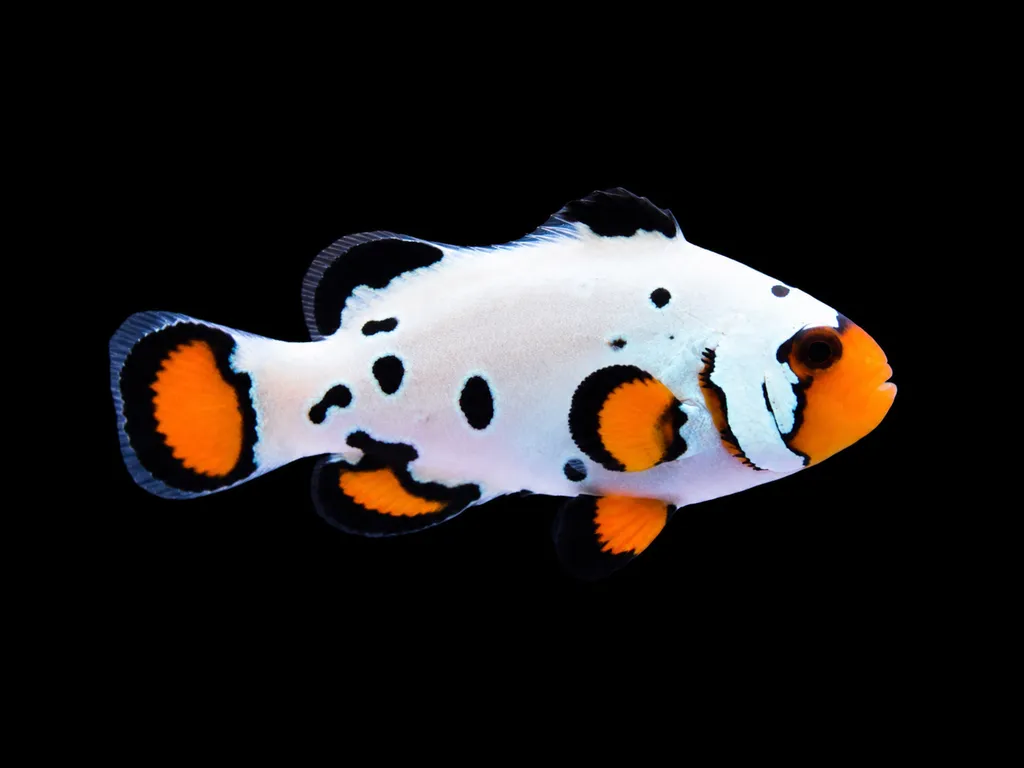
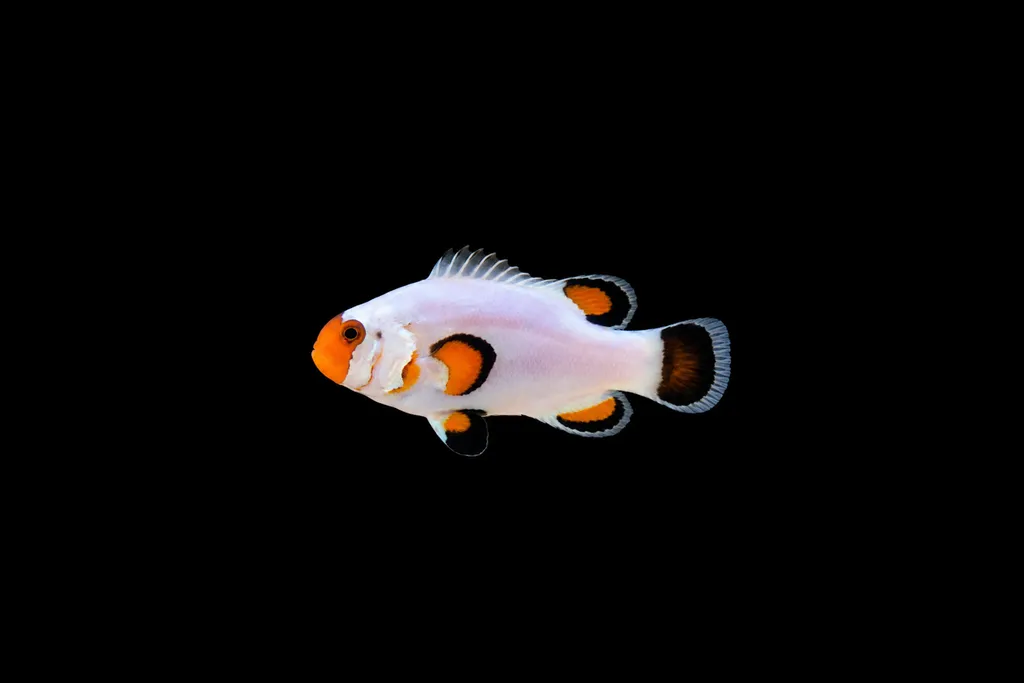
See all 17 →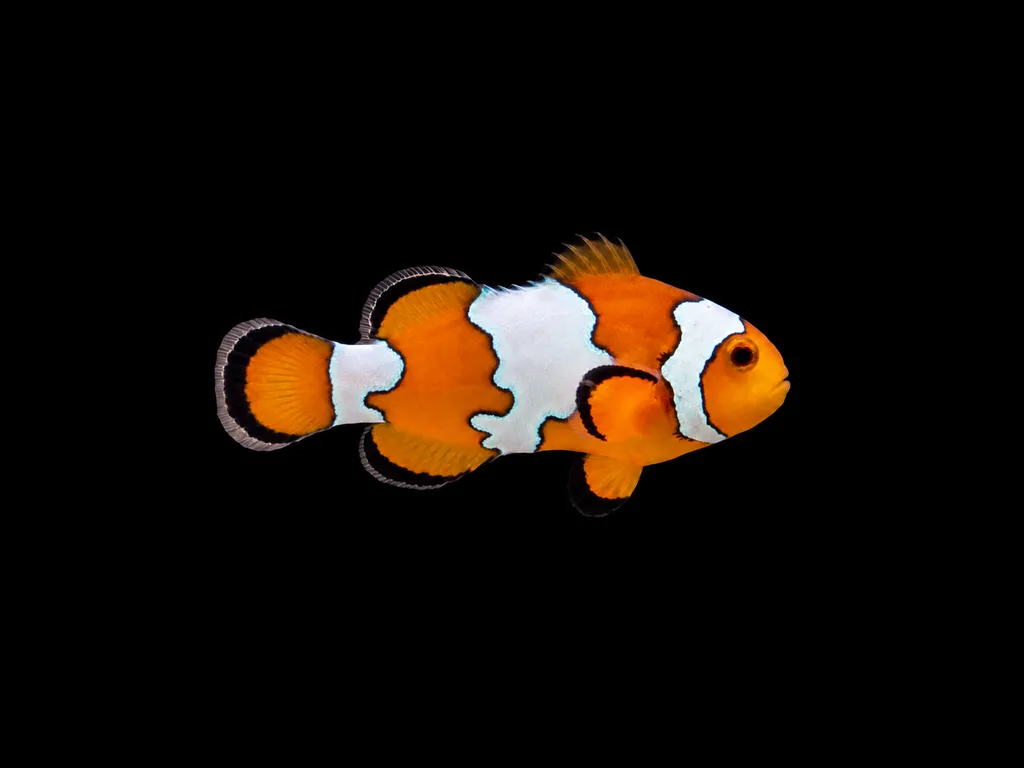
Care at a glance
- Temperature
- 75–82°F
- 24–28°C
- pH
- 8.1–8.4
- Adult size
- 3.1 in
- 8 cm
- Minimum tank
- 20 gal
- 75 L
- Temperament
- Mostly peaceful
- Social behavior
- Social
- Swim level
- Middle
- Difficulty
- Beginner
- Breeding
- Easy
- Rarity
- Very common
- Reef safe
- Reef safe
- Family
- Pomacentridae
Overview
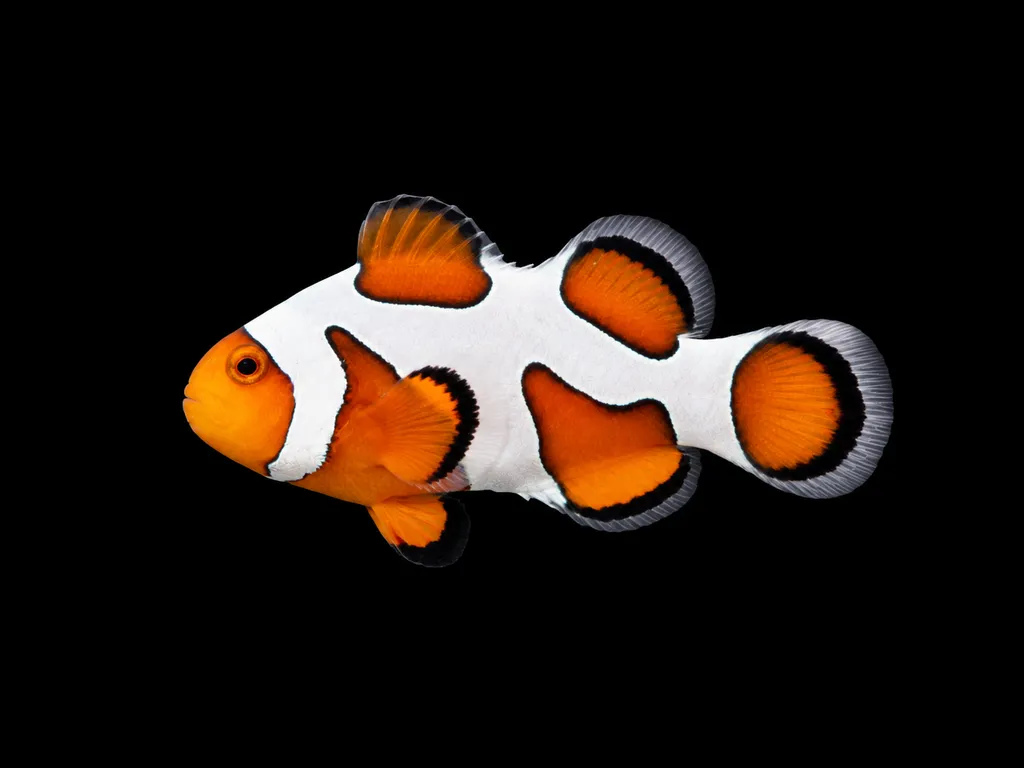
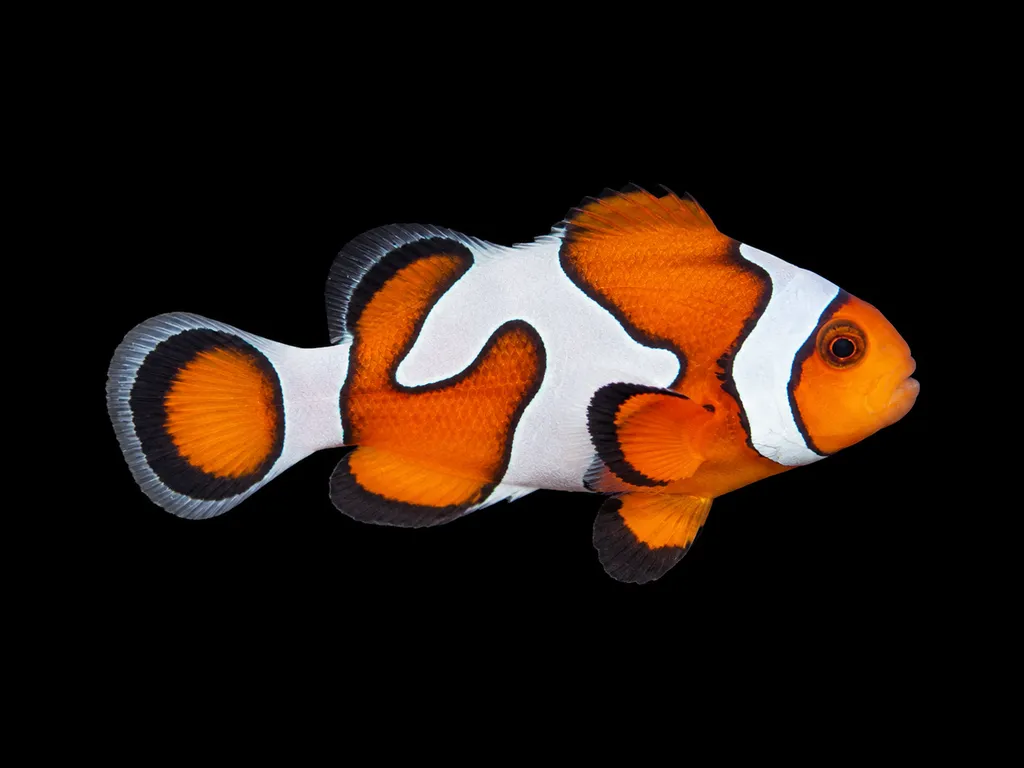
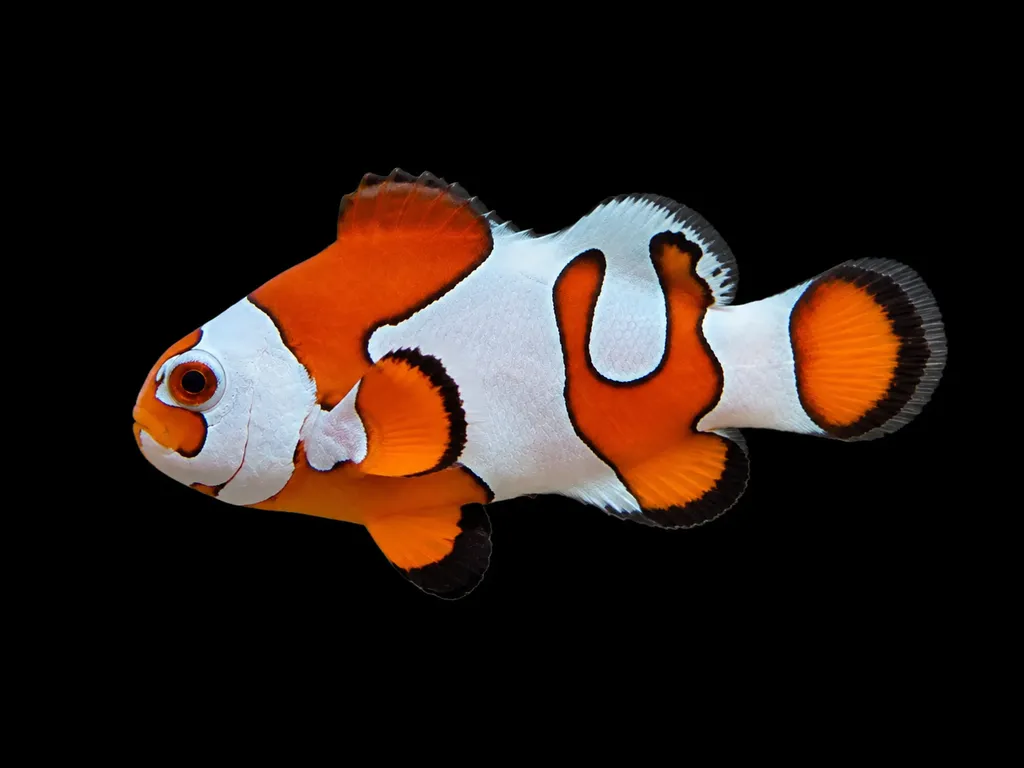
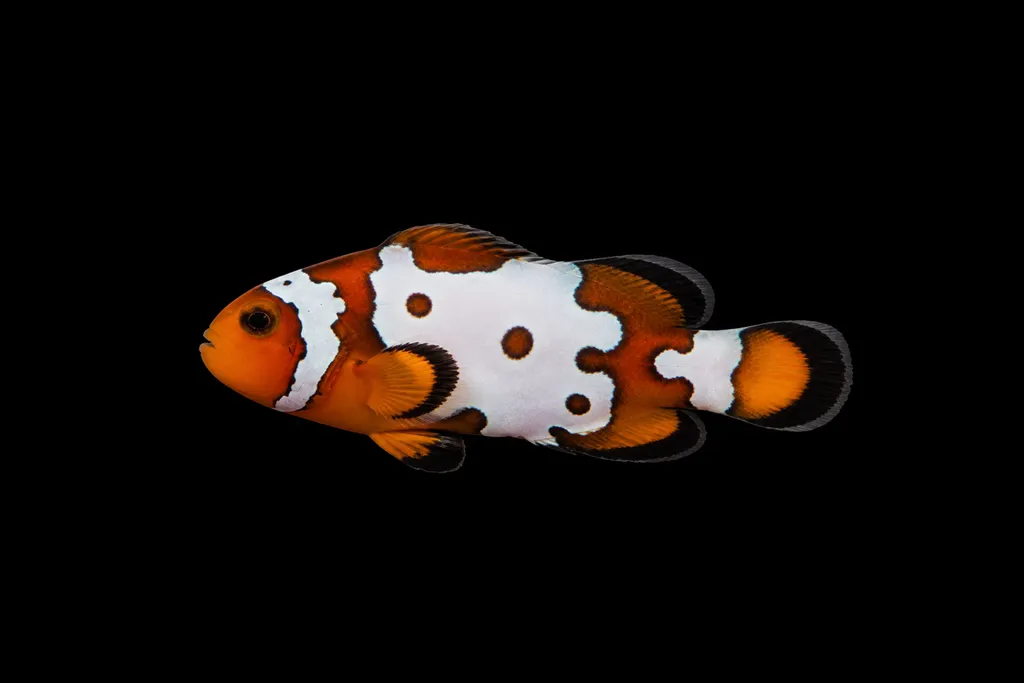
Tangerine Albino is a bright orange fish with solid white bars and no black between them. The missing black outlining is what separates it from a standard ocellaris. Sea & Reef also crosses the trait into other lines, listing a Tangerine Albino Snowflake and a Tangerine Storm.
In the wild
Morgan Lidster at Inland Aquatics in Terre Haute, Indiana marketed an early tangerine ocellaris, and Reef Builders covered a separate Proaquatix strain in September 2011. Matt Pedersen warned in that piece against reusing the Tangerine name for the newer fish, since Lidster's already carried it. Sea & Reef later brought the trait into its own program. It is not a wild form.
Good to know
Despite the name these fish are usually described as hypomelanistic rather than truly albino. Reef Builders reported a uniform reduction of black pigment across the fish, the eyes included, rather than a complete loss, and read the mutation as a codominant melanin-reducing change. Reduced and not absent is the distinction the trade name gets wrong.
Did you know
The name has been contested twice over. Reef Builders argued in 2011 that both albino and Tangerine were wrong labels for the Proaquatix strain, since Morgan Lidster had already sold a Tangerine ocellaris out of Inland Aquatics, and suggested Apricot instead.
Symbiotic relationships
Clownfish and their host anemones
A clownfish lives inside an anemone that stings and eats other fish its size. Its mucus coat keeps the anemone's stinging cells from firing, and a new fish builds that protection up over hours of brief touches. The fish gets a refuge no predator will follow it into and a nest site at the anemone's base. The anemone gets a guard that drives off the butterflyfish that would graze its tentacles, a steady supply of nitrogen from the fish's waste, and water movement at night, when the fish fans its fins among the tentacles and the anemone takes up more oxygen. Only ten anemone species host clownfish in the wild, and each clownfish species uses its own short list of them.
Captive-bred clownfish have never seen an anemone and do not need one; they settle for a coral, a powerhead or a corner of the tank. If you want the pairing, the anemone is the harder animal by far and goes in first, into a mature tank with strong light and stable water, at the tank size its own profile lists. The bubble tip anemone is the hardy host, and the one most clownfish accept in captivity even when it is not a natural host, so a clownfish profile lists it as the usual tank host where that is the case. The sebae, magnificent and carpet anemones are marked difficult, and the carpets eat fish. Expect a paired clownfish to defend its anemone against everything else in the tank.
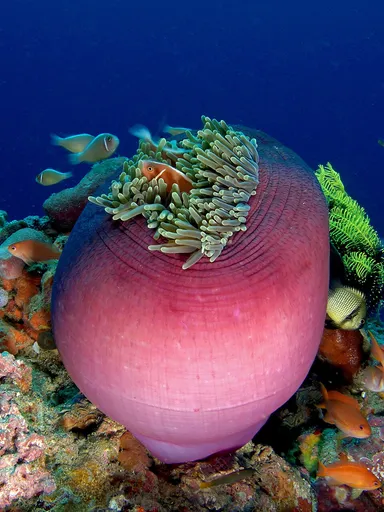
Magnificent anemone
Heteractis magnifica
Saltwater19.7 in (50 cm) · 53 gal (200 L)75–81°F (24–27°C)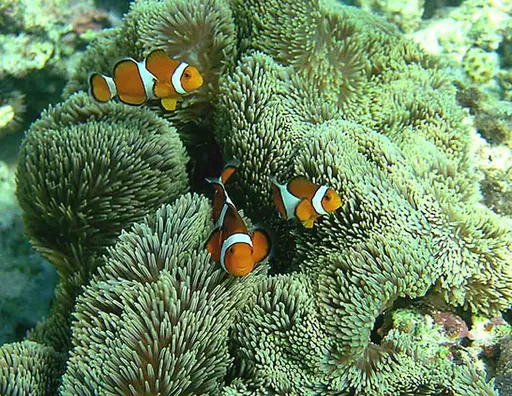
Gigantea carpet anemone
Stichodactyla gigantea
Saltwater19.7 in (50 cm) · 53 gal (200 L)75–81°F (24–27°C)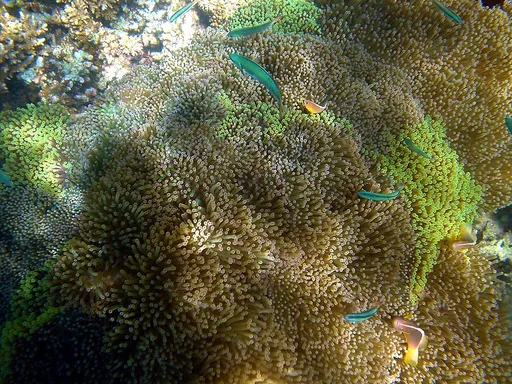
Mertens' carpet anemone
Stichodactyla mertensii
Saltwater35.4 in (90 cm) · 53 gal (200 L)75–81°F (24–27°C)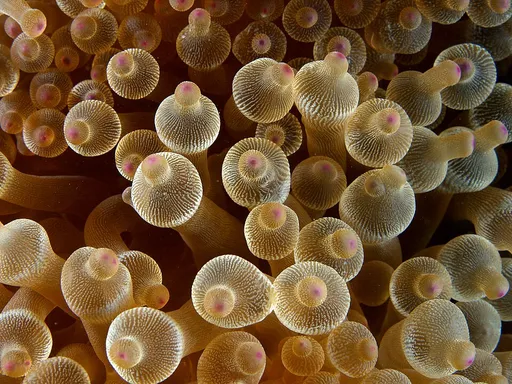
Bubble tip anemone
Entacmaea quadricolor
Saltwater11.8 in (30 cm) · 30 gal (115 L)75–81°F (24–27°C)Usual tank host, not a natural one
Weekly picks
Tank mates
Tangerine Albino clownfish is a mostly peaceful, social species that keeps to the middle. These picks share a community profile with it, are safe together in both directions, and overlap on water type, temperature and pH.
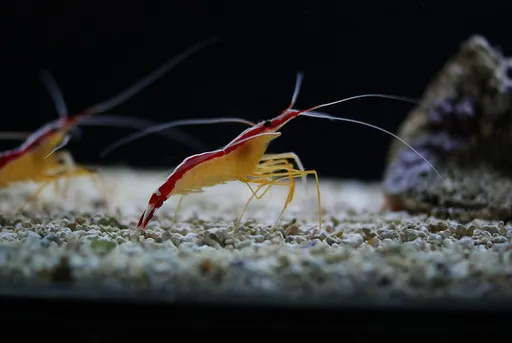
Skunk cleaner shrimp
Lysmata amboinensis
Saltwater2.4 in (6 cm) · 20 gal (75 L)73–81°F (23–27°C)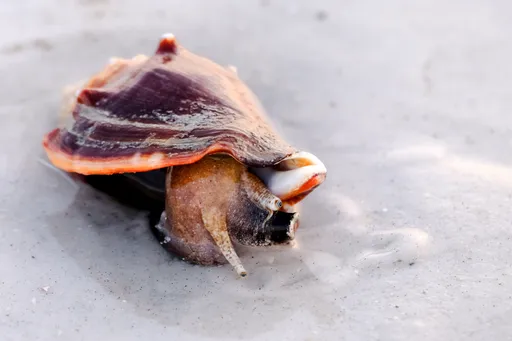
Fighting conch
Strombus alatus
Saltwater3.1 in (8 cm) · 20 gal (75 L)75–81°F (24–27°C)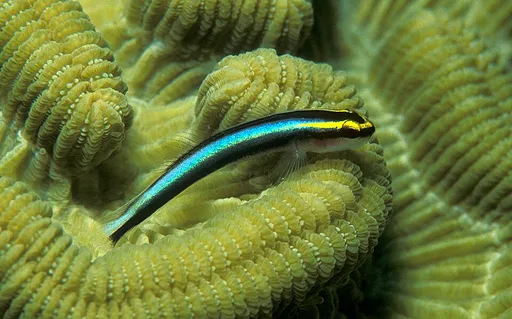
Sharknose goby
Elacatinus evelynae
Saltwater1.6 in (4 cm) · 13 gal (50 L)75–79°F (24–26°C)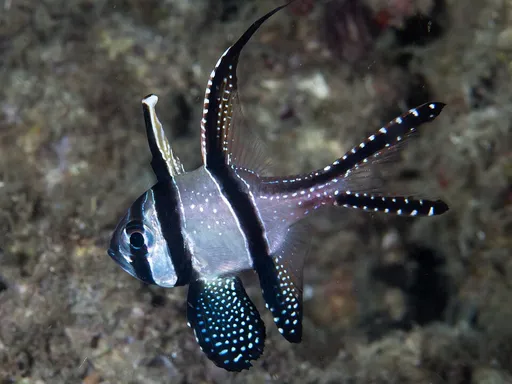
Banggai cardinalfish
Pterapogon kauderni
Saltwater3.1 in (8 cm) · 29 gal (110 L)73–82°F (23–28°C)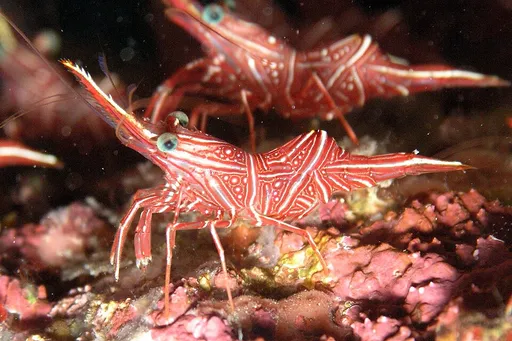
Camel / dancing shrimp
Rhynchocinetes durbanensis
Saltwater2 in (5 cm) · 16 gal (60 L)75–81°F (24–27°C)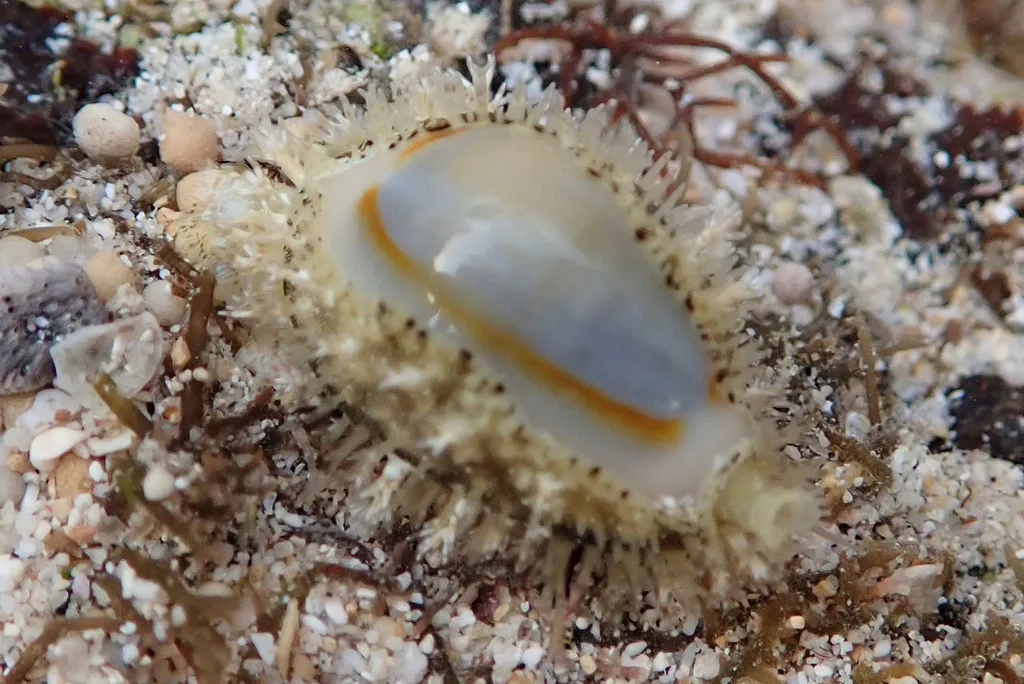
Ring cowrie
Monetaria annulus
Saltwater1.2 in (3 cm) · 20 gal (75 L)75–81°F (24–27°C)
Common questions
Is a Tangerine Albino clownfish a different species from the Ocellaris clownfish?
No. A Tangerine Albino clownfish is a variety of the Ocellaris clownfish, Amphiprion ocellaris, and it wants the same tank, water and food as the species.
Is the Tangerine Albino clownfish a true albino?
It is usually described as hypomelanistic rather than albino. Reef Builders reported a uniform reduction of black pigment across the fish, eyes included, rather than a complete loss. Reduced and not absent is the distinction the trade name gets wrong.
What does a Tangerine Albino clownfish look like?
A bright orange fish with solid white bars and no black between them. The missing black outlining is what separates it from a standard ocellaris. Sea & Reef also crosses the trait into other lines, listing a Tangerine Albino Snowflake and a Tangerine Storm.
What size tank does a Tangerine Albino clownfish need?
A Tangerine Albino clownfish needs at least 20 gal (75 L). It spends most of its time in the middle.
How big does a Tangerine Albino clownfish get?
An adult Tangerine Albino clownfish reaches about 3.1 in (8 cm).
Related species
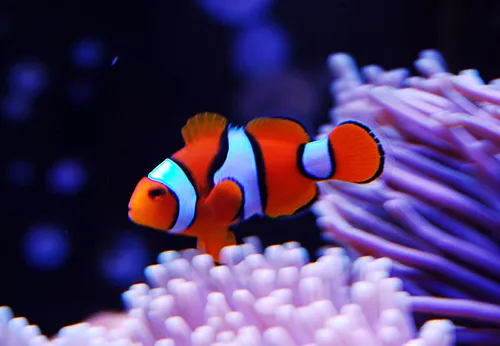 3.1 in (8 cm)20 gal (75 L)75–82°F (24–28°C)
Percula clownfish
Amphiprion percula
3.1 in (8 cm) · 20 gal (75 L)
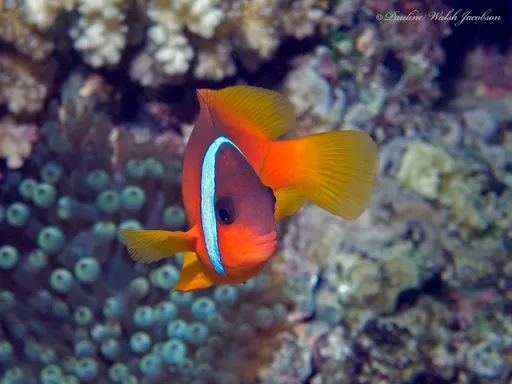 3.5 in (9 cm)30 gal (115 L)75–81°F (24–27°C)
Barberi clownfish
Amphiprion barberi
3.5 in (9 cm) · 30 gal (115 L)
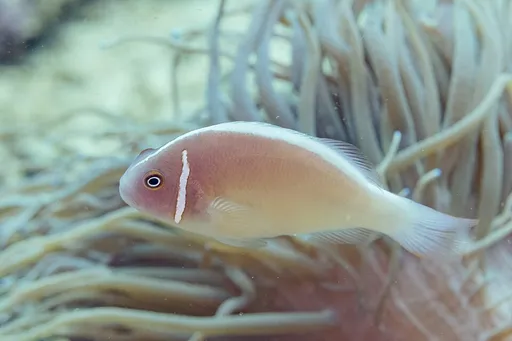 3.9 in (10 cm)30 gal (115 L)75–82°F (24–28°C)
Pink skunk clownfish
Amphiprion perideraion
3.9 in (10 cm) · 30 gal (115 L)
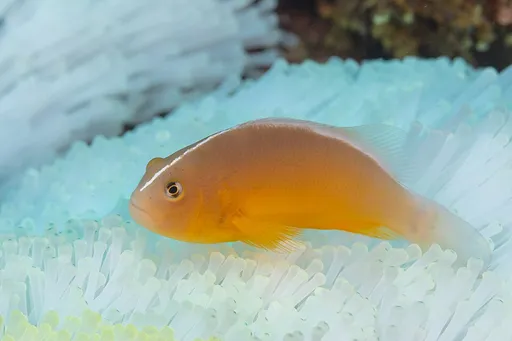 4.3 in (11 cm)26 gal (100 L)75–82°F (24–28°C)
Skunk clownfish
Amphiprion akallopisos
4.3 in (11 cm) · 26 gal (100 L)
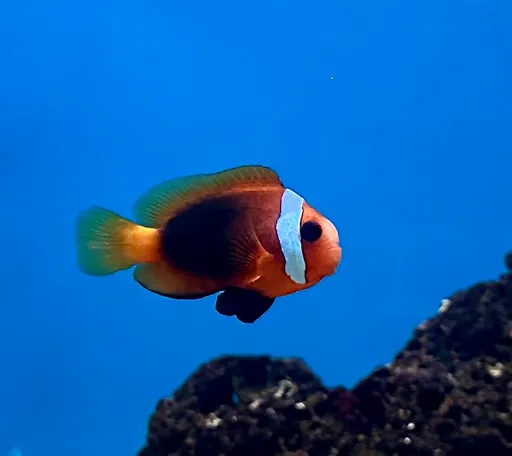 4.7 in (12 cm)30 gal (115 L)75–82°F (24–28°C)
Cinnamon clownfish
Amphiprion melanopus
4.7 in (12 cm) · 30 gal (115 L)
 5.1 in (13 cm)40 gal (150 L)75–82°F (24–28°C)
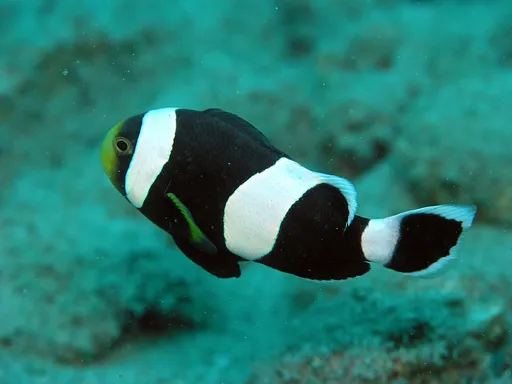
Saddleback clownfish
Amphiprion polymnus
5.1 in (13 cm) · 40 gal (150 L)