Variety of Ocellaris clownfish
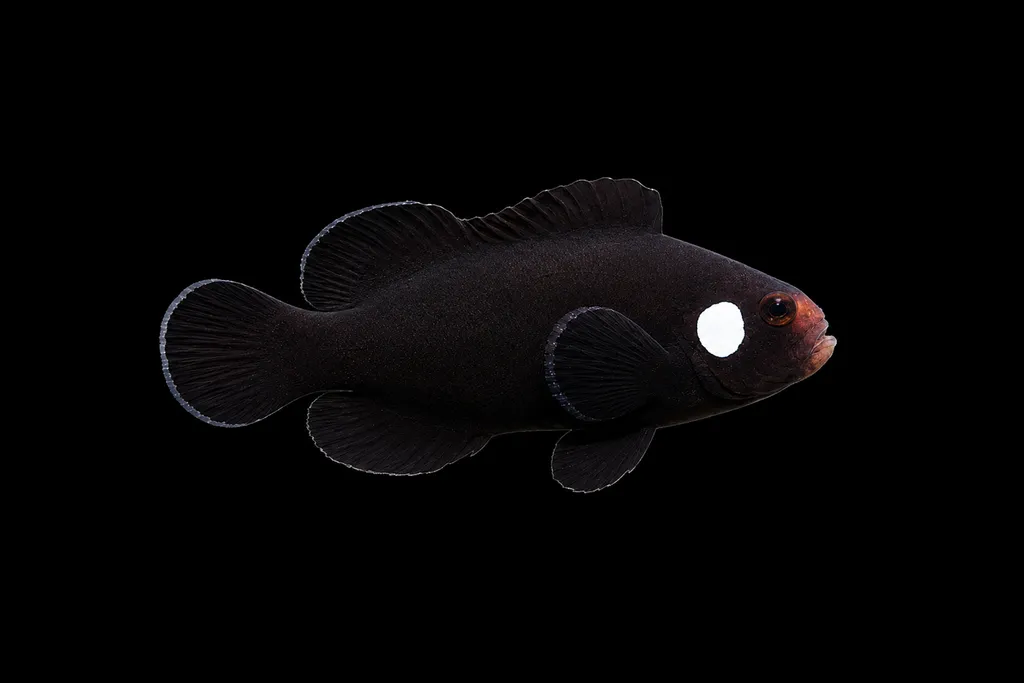
Domino clownfish
Amphiprion ocellaris
One of 17 varieties of Amphiprion ocellaris · See all varieties →
Also known as Domino Ocellaris Clownfish
SaltwaterFish
Varieties · Amphiprion ocellaris
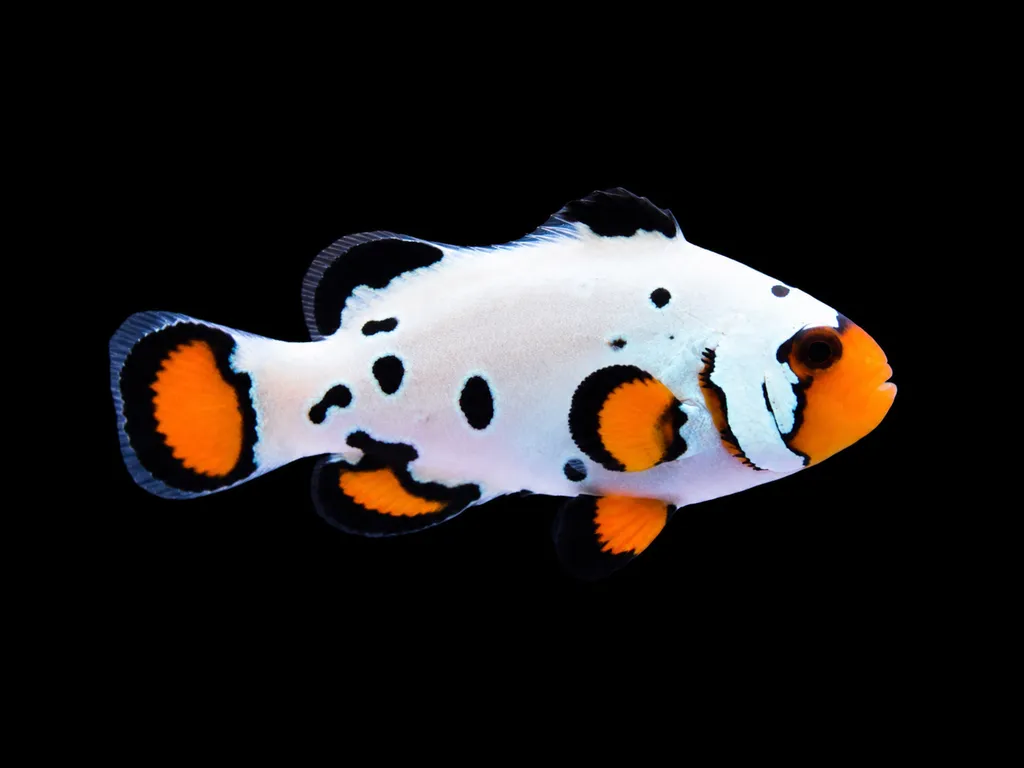
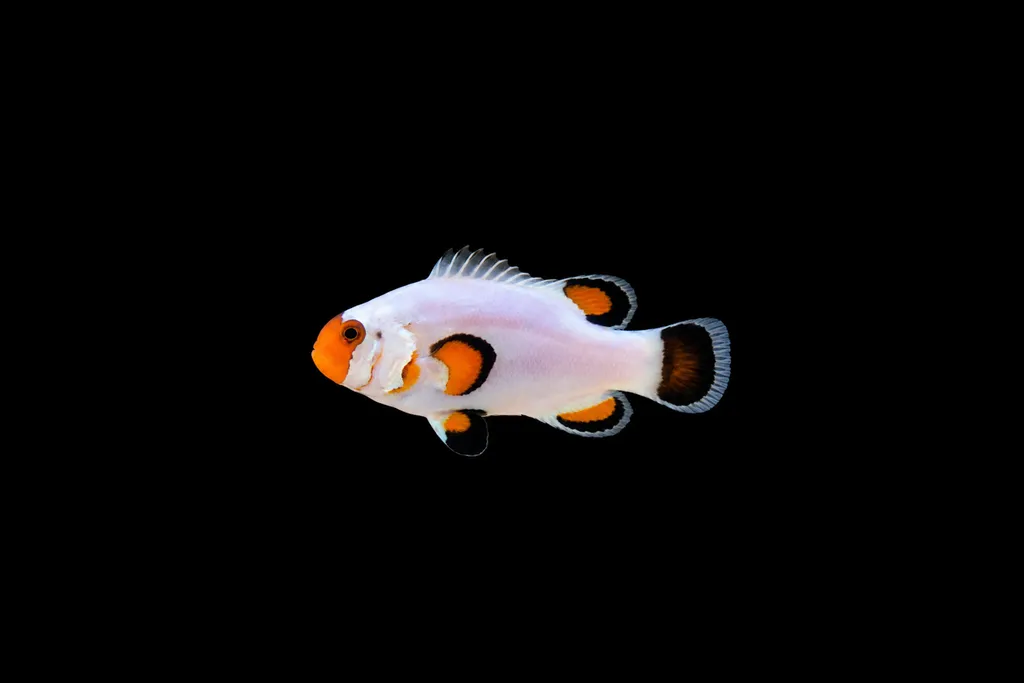
See all 17 →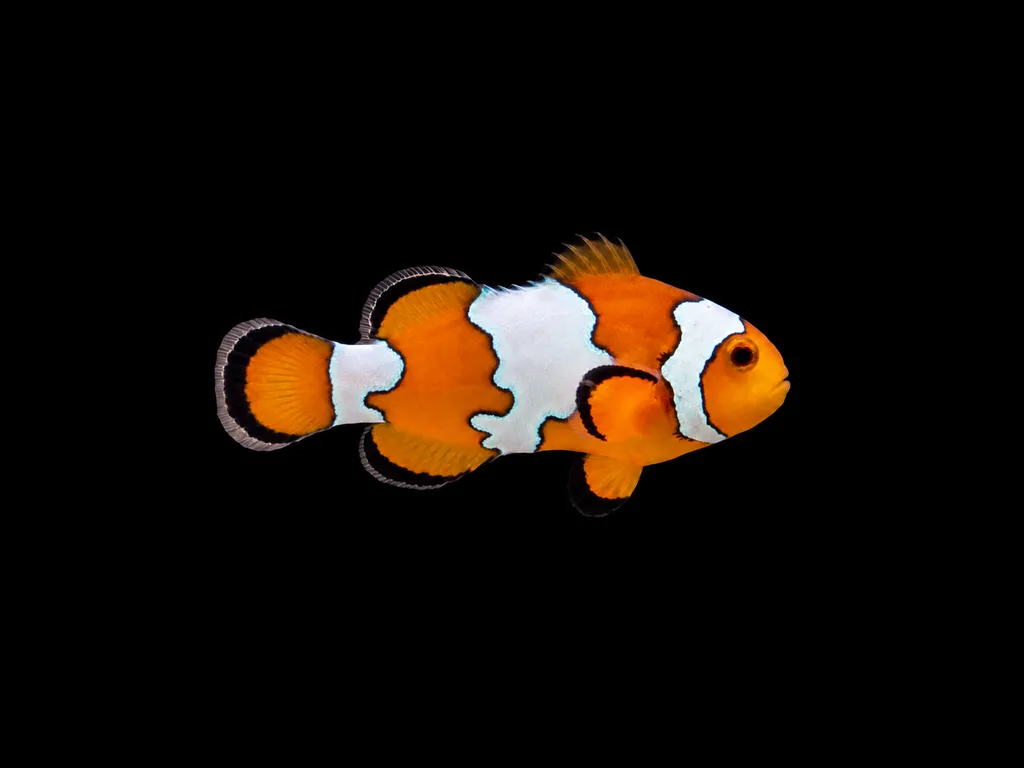
Care at a glance
- Temperature
- 75–82°F
- 24–28°C
- pH
- 8.1–8.4
- Adult size
- 3.1 in
- 8 cm
- Minimum tank
- 20 gal
- 75 L
- Temperament
- Mostly peaceful
- Social behavior
- Social
- Swim level
- Middle
- Difficulty
- Beginner
- Breeding
- Easy
- Rarity
- Very common
- Reef safe
- Reef safe
- Family
- Pomacentridae
Overview
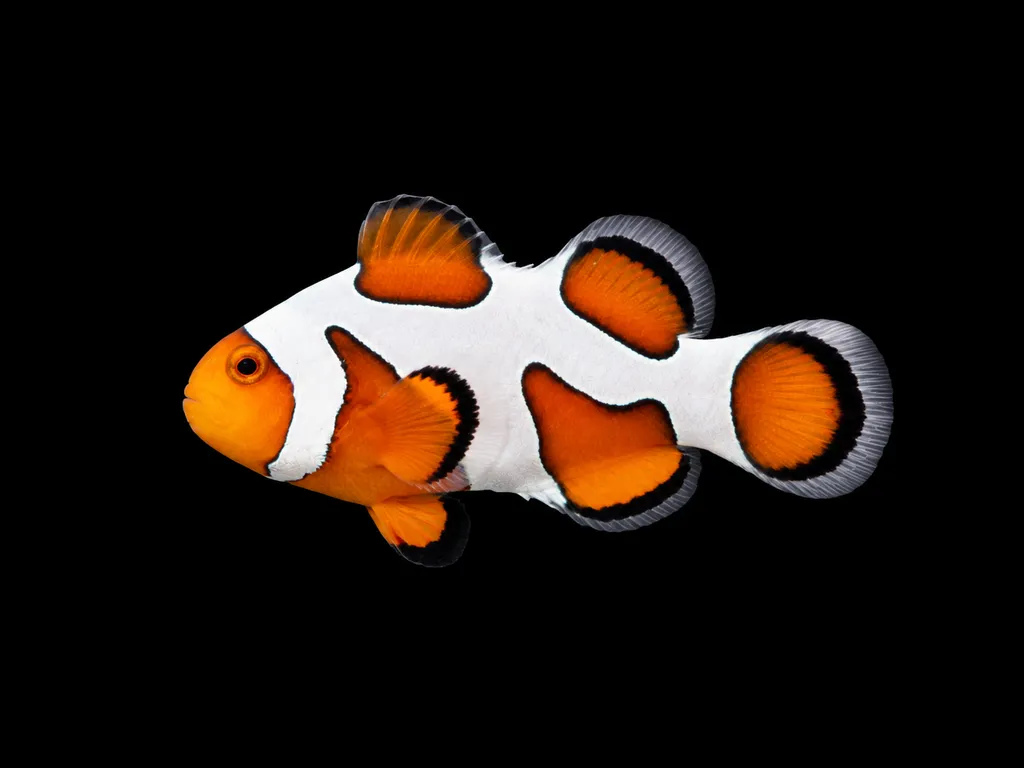
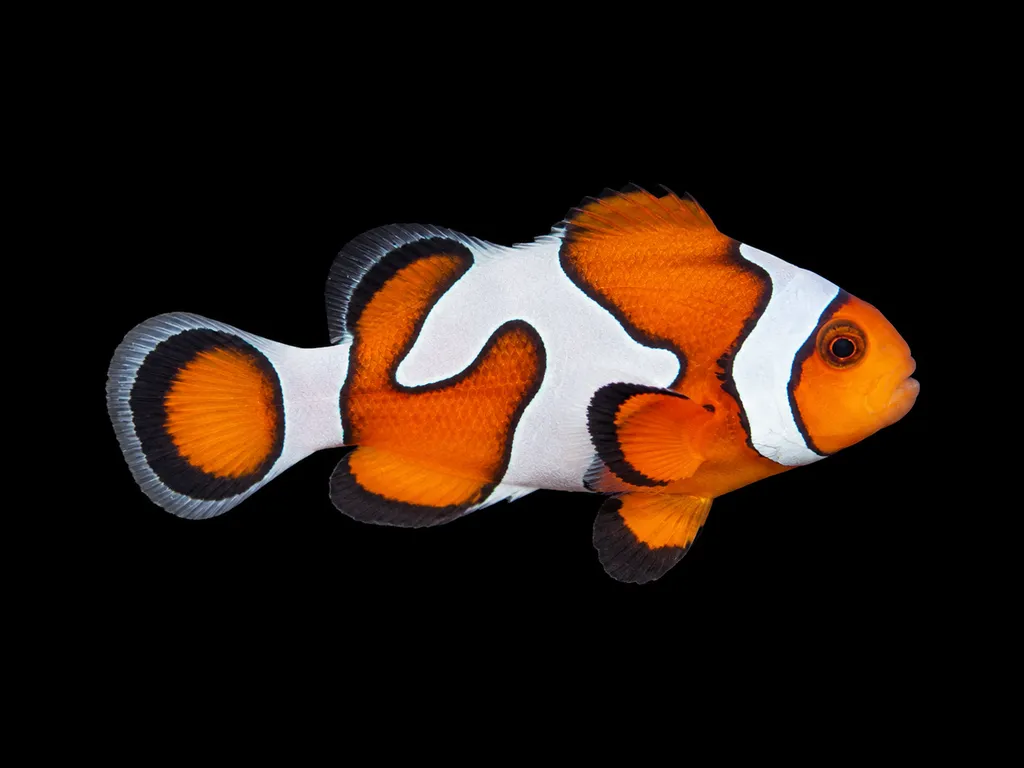
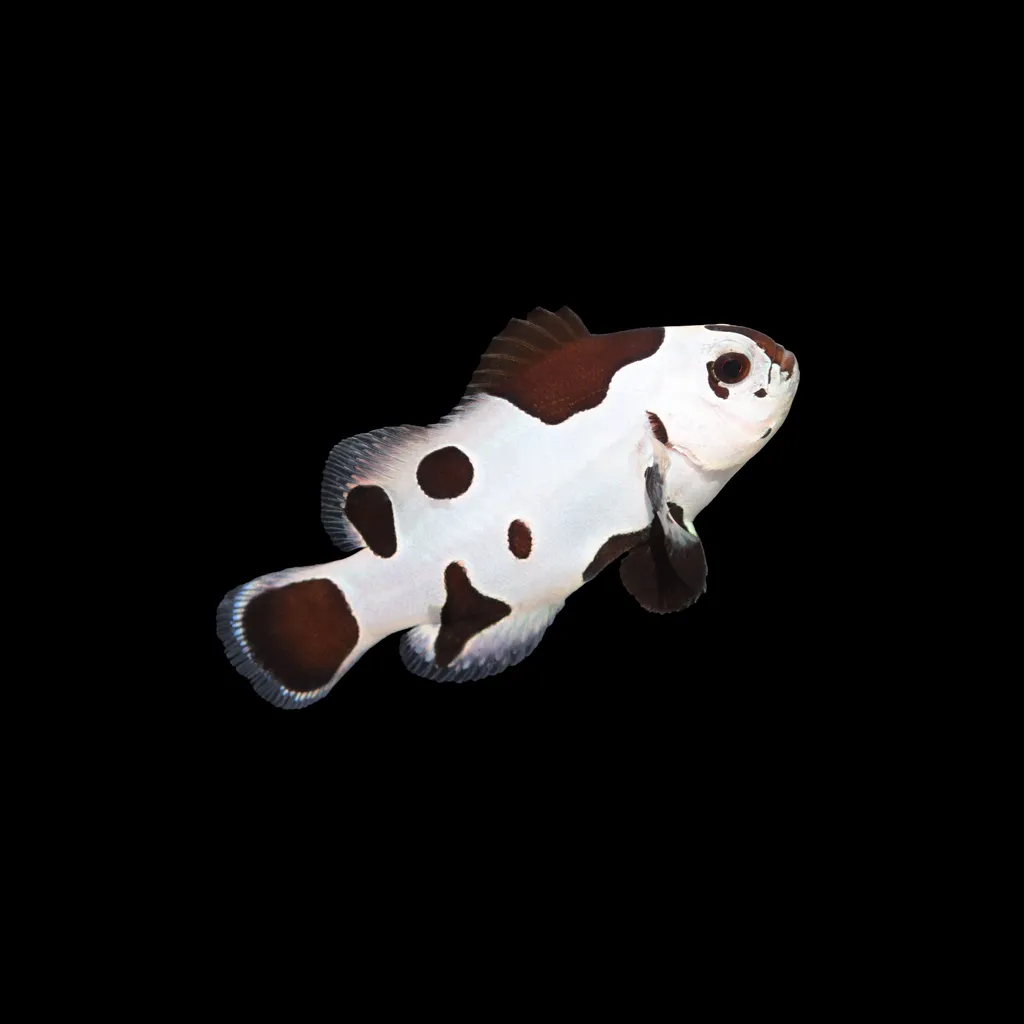
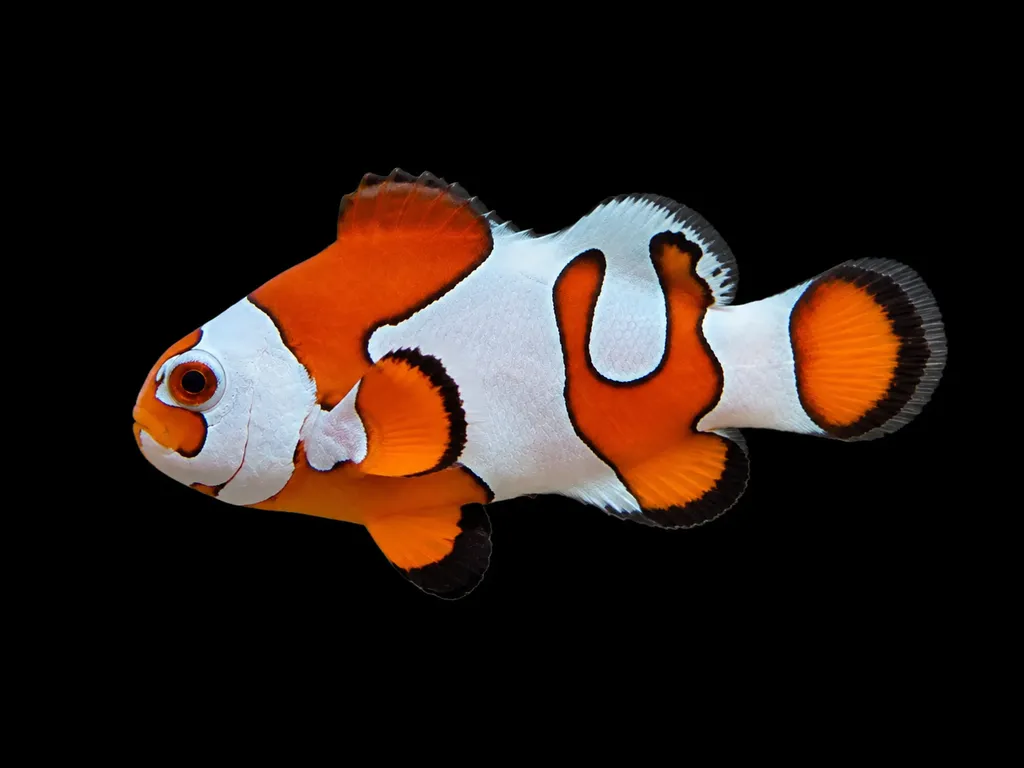
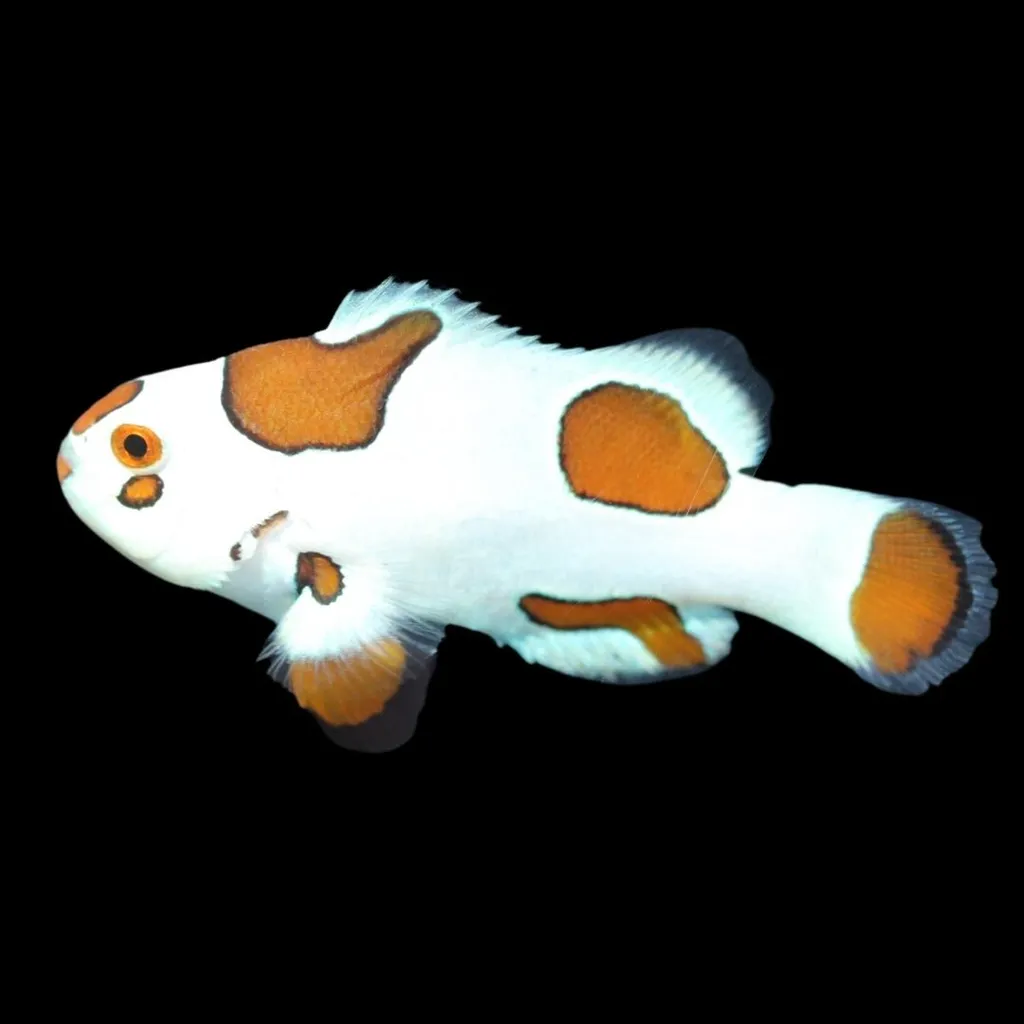
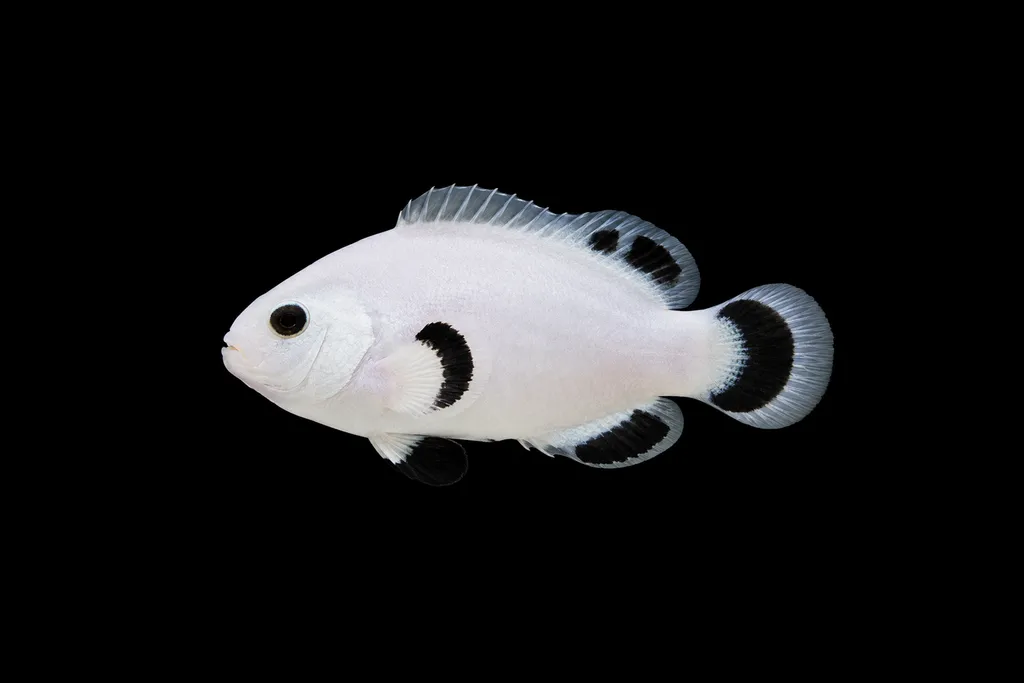
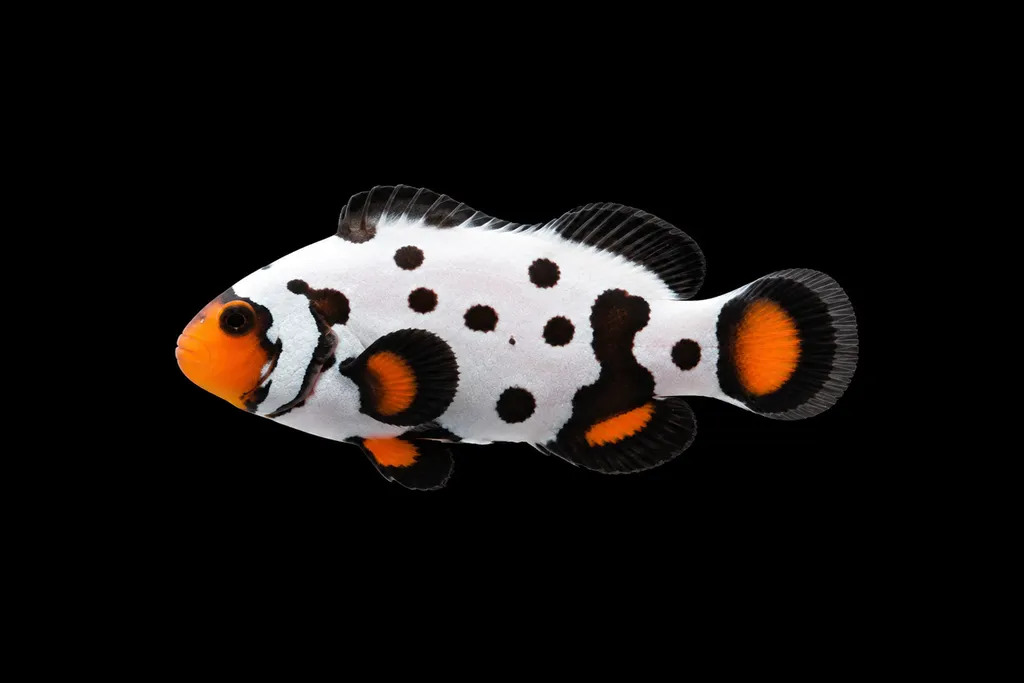
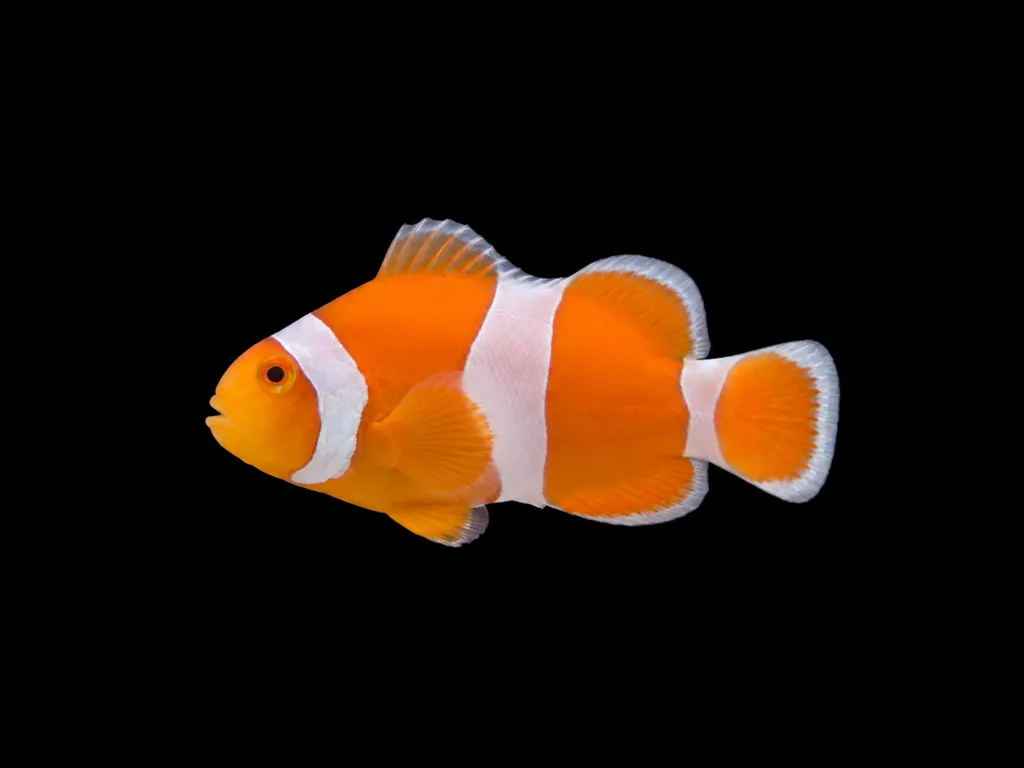
Domino is a dark fish carrying white dots instead of bars, and ORA says the dot can sit on the cheek or on any other area of the body. ORA calls them very precious and rare, so they turn up in ones and twos rather than as a stocked line. Placement is random, so shops list individual fish and no two match.
In the wild
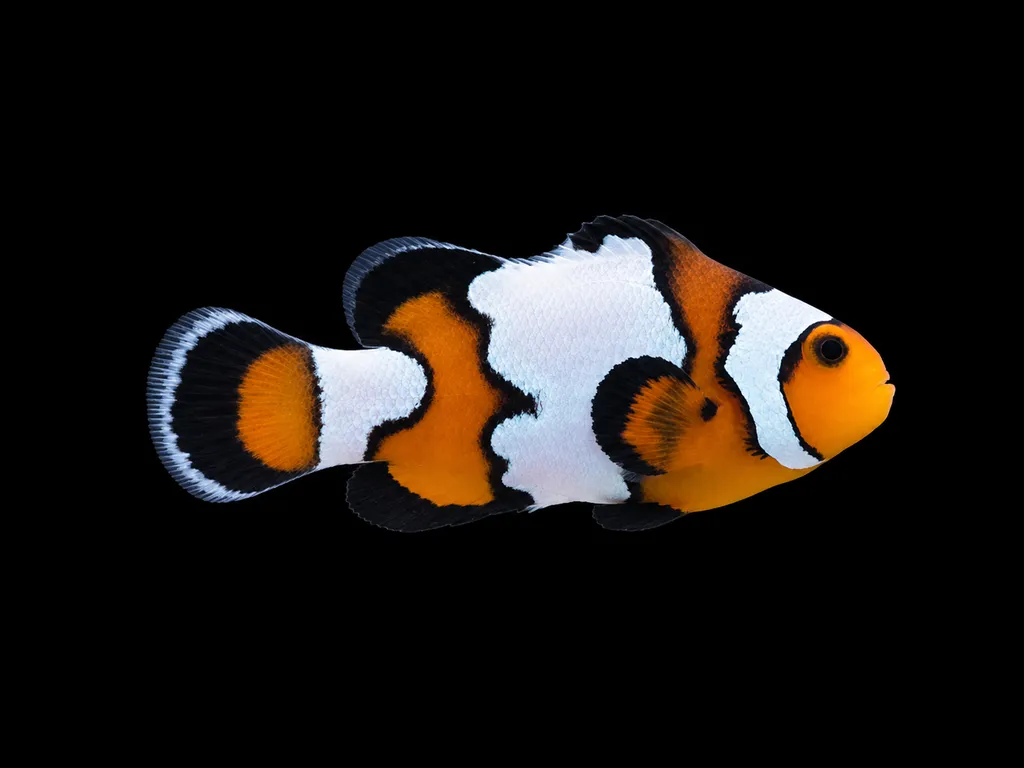
Dominos come out of ORA's Midnight breeding program rather than from a separate cross. ORA says Midnight offspring range from completely stripeless to uniquely patterned extreme misbars. The ones carrying dots get pulled out and named Domino. ORA describes the Midnight line as a natural mutation discovered in its grow-out systems.
Good to know
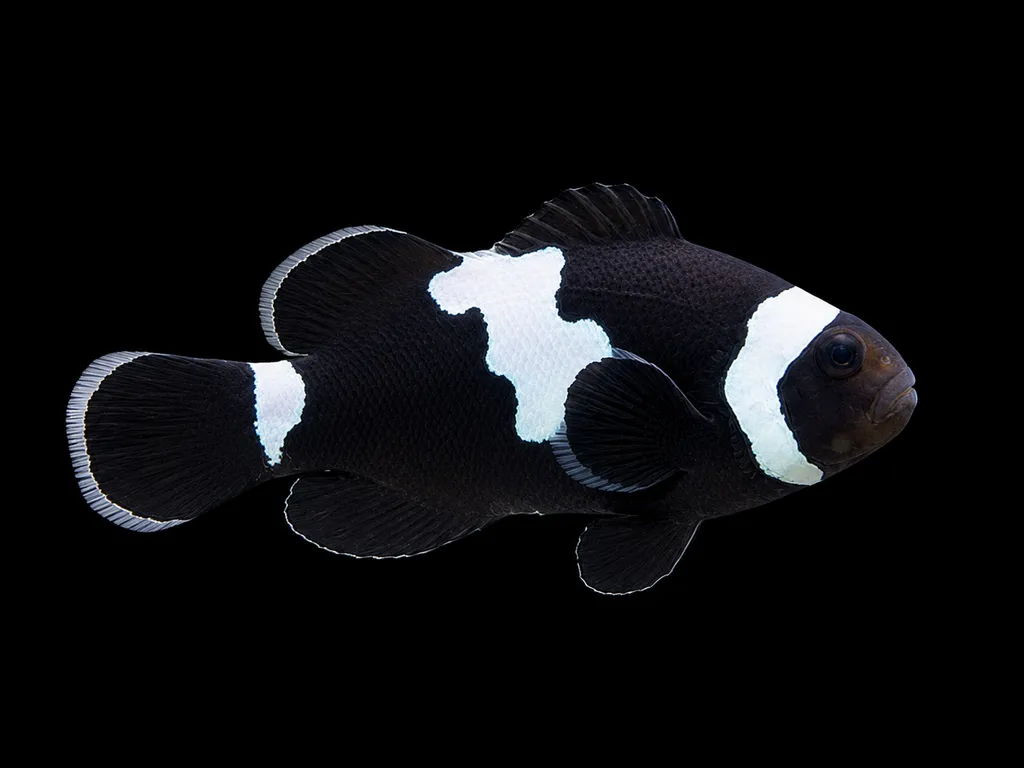
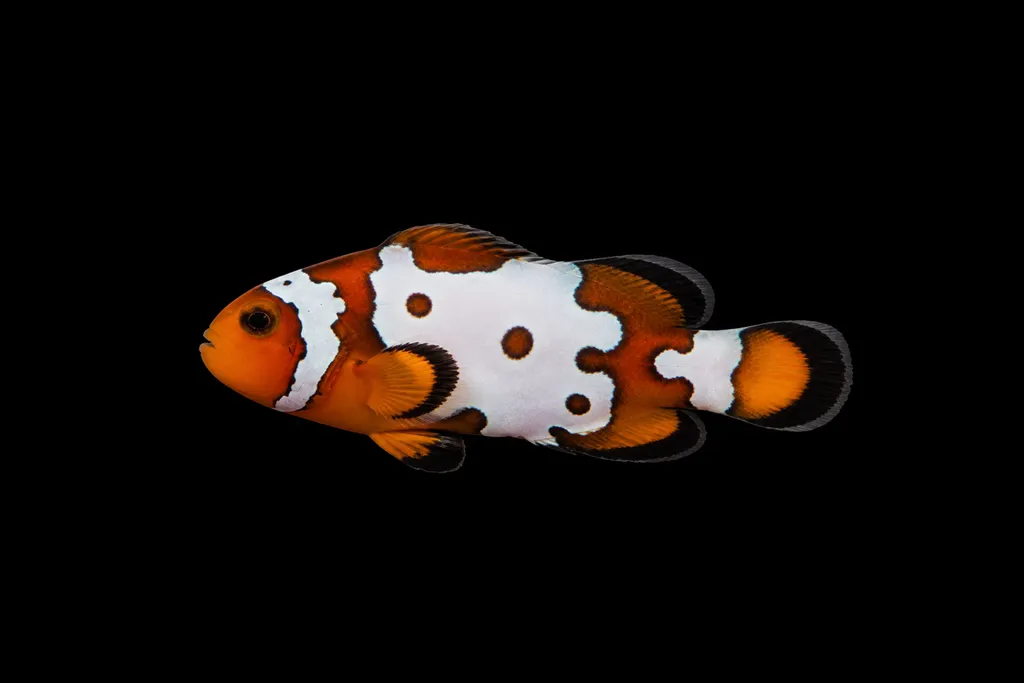
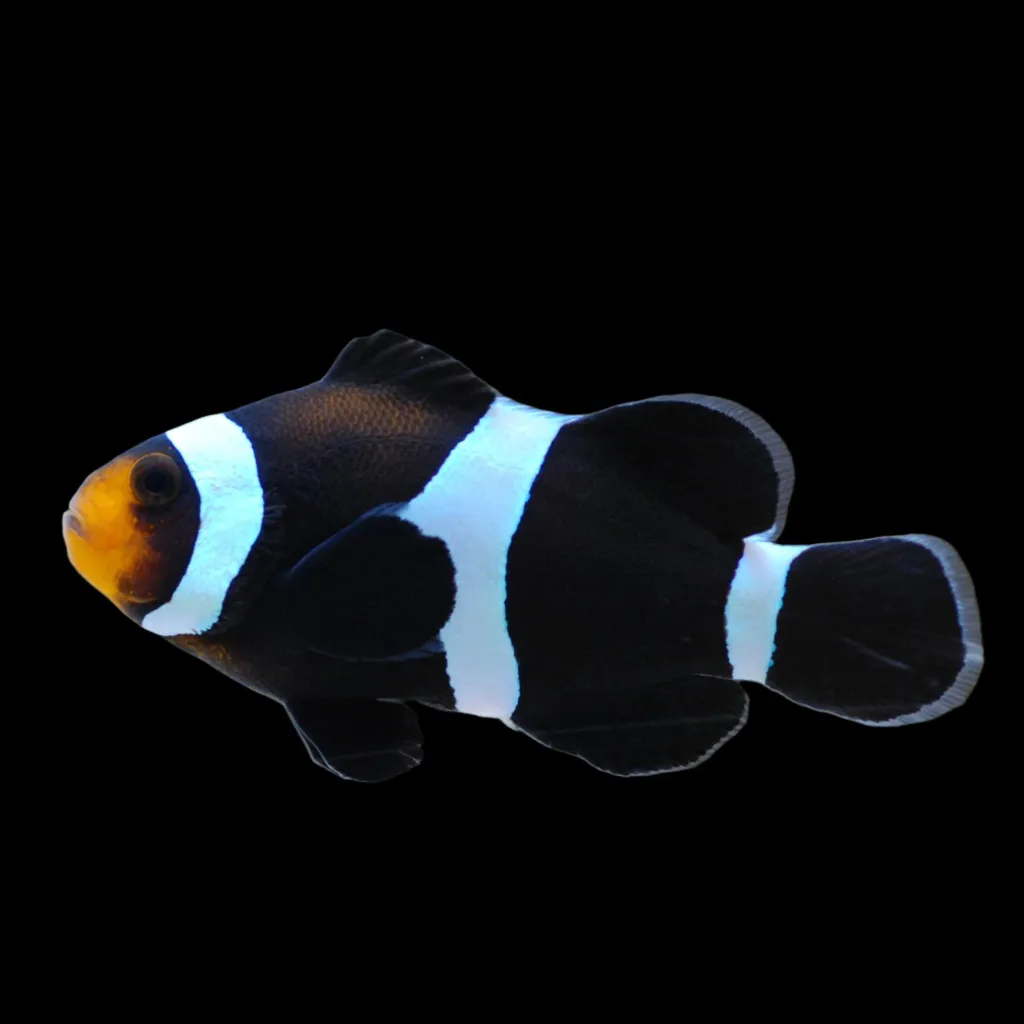
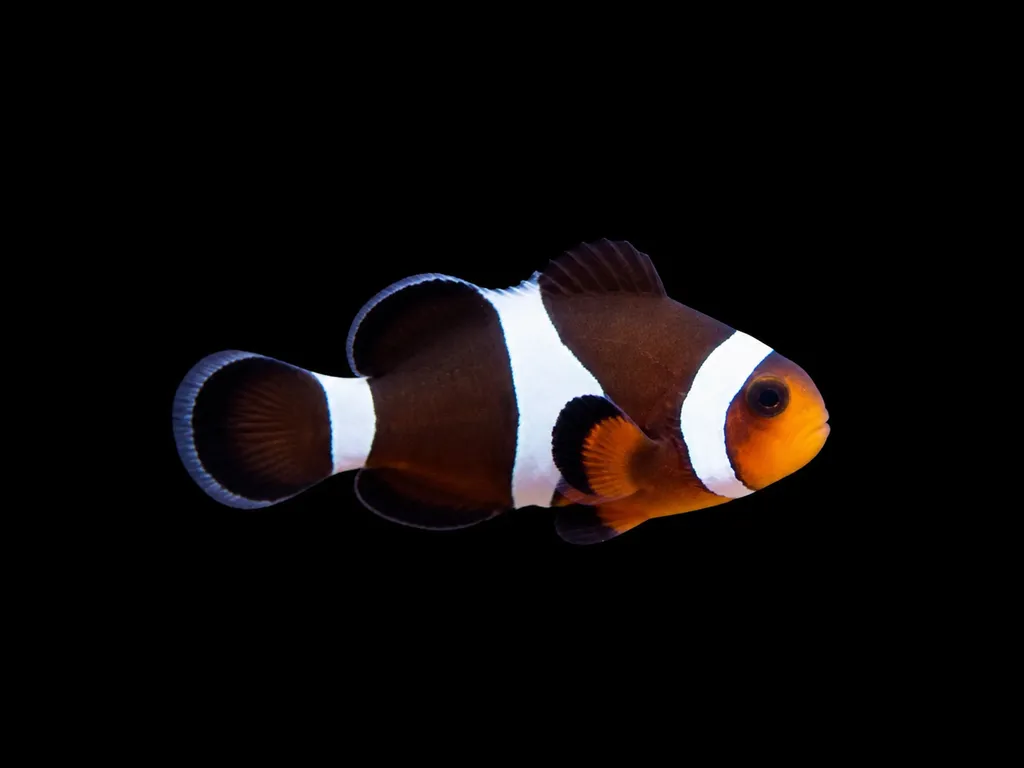
With Midnight offspring running from completely stripeless to extreme misbars, the Domino sits at the point where only an isolated white mark is left. Because it is a leftover from a stripeless line, it gets sorted out of spawns rather than produced to order. Otherwise it is a Midnight, which ORA says starts life orange and turns black with age.
Did you know
ORA says it named these fish Dominos with the help of the aquarium author Julian Sprung. A mostly black clownfish carrying one or two isolated white spots looks a lot like a domino tile, and the name stuck.
Symbiotic relationships
Clownfish and their host anemones
A clownfish lives inside an anemone that stings and eats other fish its size. Its mucus coat keeps the anemone's stinging cells from firing, and a new fish builds that protection up over hours of brief touches. The fish gets a refuge no predator will follow it into and a nest site at the anemone's base. The anemone gets a guard that drives off the butterflyfish that would graze its tentacles, a steady supply of nitrogen from the fish's waste, and water movement at night, when the fish fans its fins among the tentacles and the anemone takes up more oxygen. Only ten anemone species host clownfish in the wild, and each clownfish species uses its own short list of them.
Captive-bred clownfish have never seen an anemone and do not need one; they settle for a coral, a powerhead or a corner of the tank. If you want the pairing, the anemone is the harder animal by far and goes in first, into a mature tank with strong light and stable water, at the tank size its own profile lists. The bubble tip anemone is the hardy host, and the one most clownfish accept in captivity even when it is not a natural host, so a clownfish profile lists it as the usual tank host where that is the case. The sebae, magnificent and carpet anemones are marked difficult, and the carpets eat fish. Expect a paired clownfish to defend its anemone against everything else in the tank.
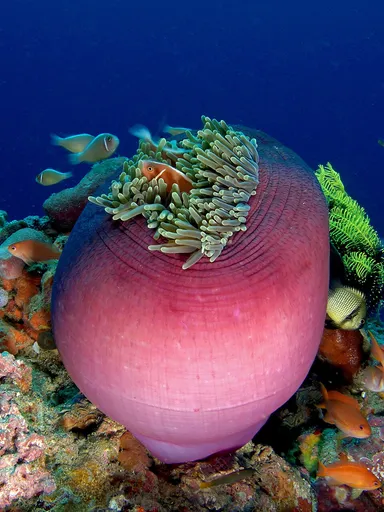
Magnificent anemone
Heteractis magnifica
Saltwater19.7 in (50 cm) · 53 gal (200 L)75–81°F (24–27°C)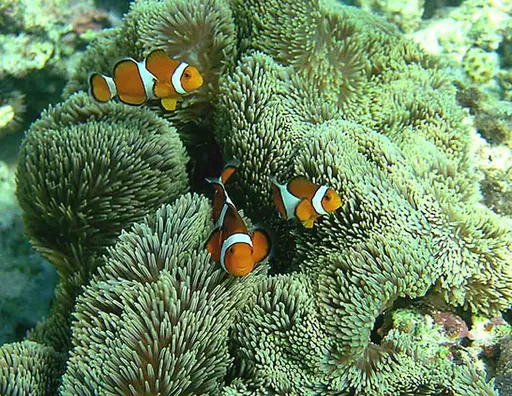
Gigantea carpet anemone
Stichodactyla gigantea
Saltwater19.7 in (50 cm) · 53 gal (200 L)75–81°F (24–27°C)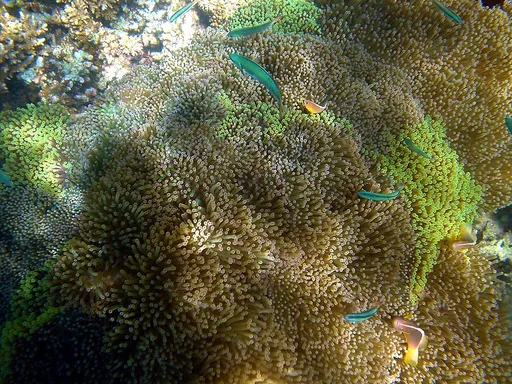
Mertens' carpet anemone
Stichodactyla mertensii
Saltwater35.4 in (90 cm) · 53 gal (200 L)75–81°F (24–27°C)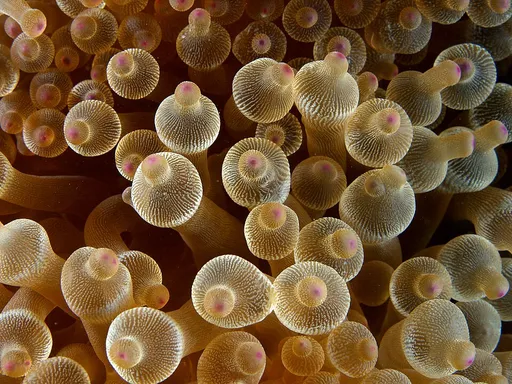
Bubble tip anemone
Entacmaea quadricolor
Saltwater11.8 in (30 cm) · 30 gal (115 L)75–81°F (24–27°C)Usual tank host, not a natural one
Weekly picks
Tank mates
Domino clownfish is a mostly peaceful, social species that keeps to the middle. These picks share a community profile with it, are safe together in both directions, and overlap on water type, temperature and pH.
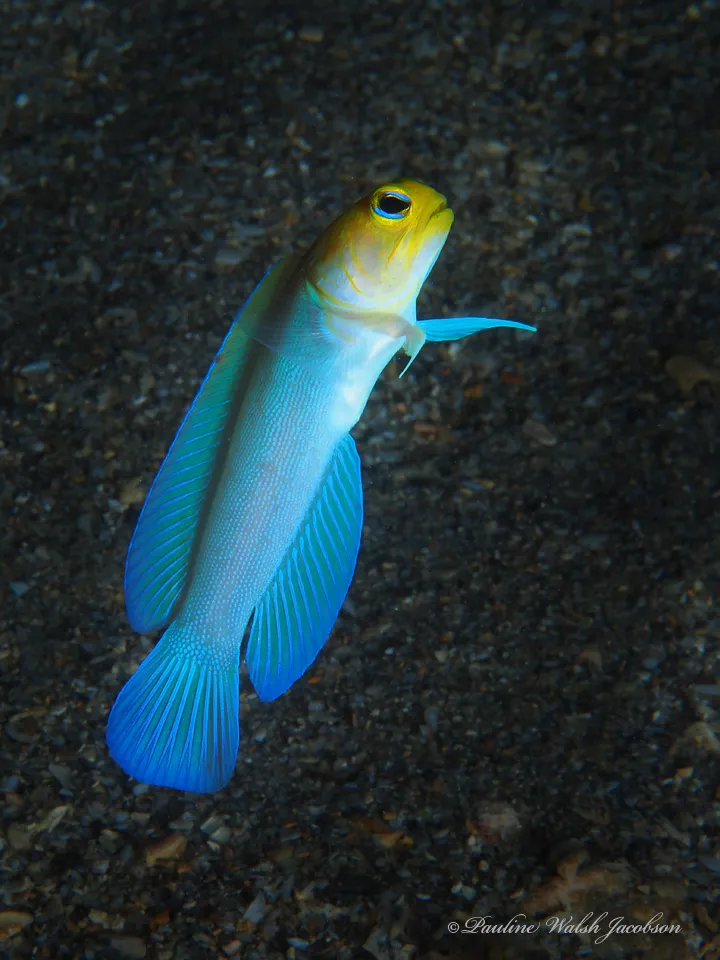
Pearly jawfish
Opistognathus aurifrons
Saltwater3.9 in (10 cm) · 29 gal (110 L)73–81°F (23–27°C)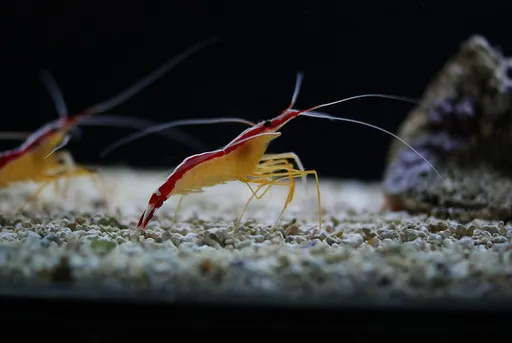
Skunk cleaner shrimp
Lysmata amboinensis
Saltwater2.4 in (6 cm) · 20 gal (75 L)73–81°F (23–27°C)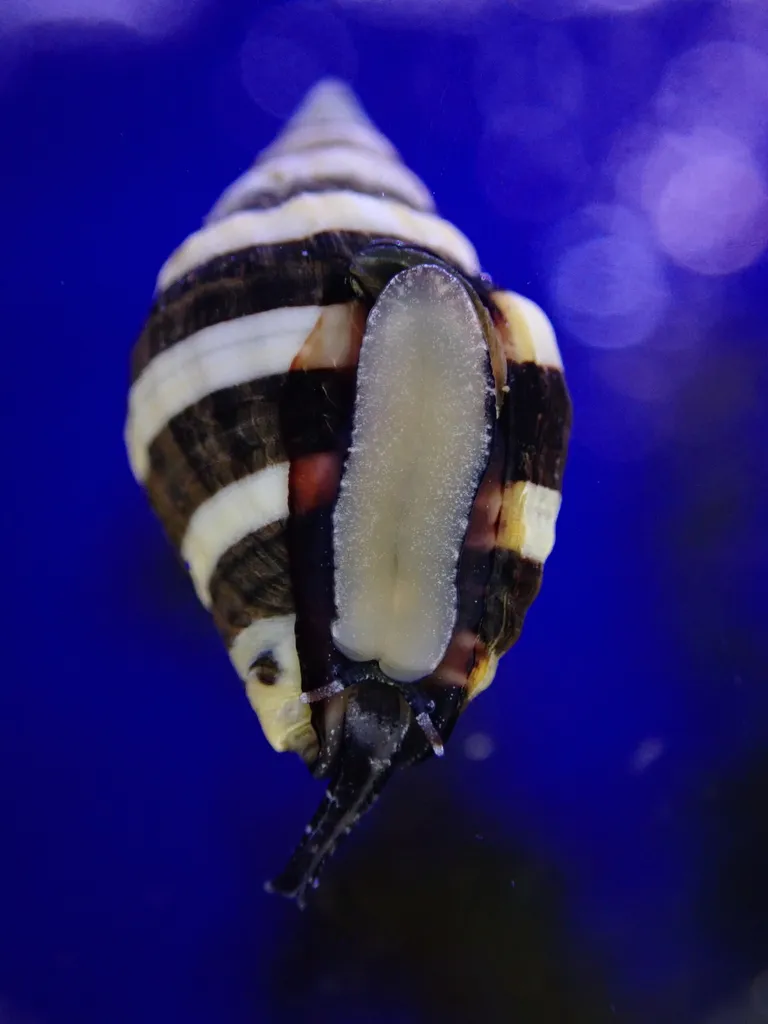
Bumble bee snail
Engina mendicaria
Saltwater0.8 in (2 cm) · 11 gal (40 L)75–81°F (24–27°C)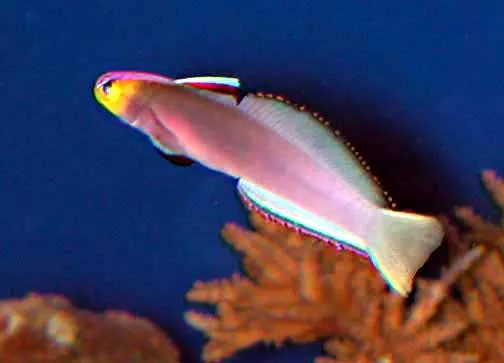
Helfrich's firefish
Nemateleotris helfrichi
Saltwater2.4 in (6 cm) · 20 gal (75 L)73–81°F (23–27°C)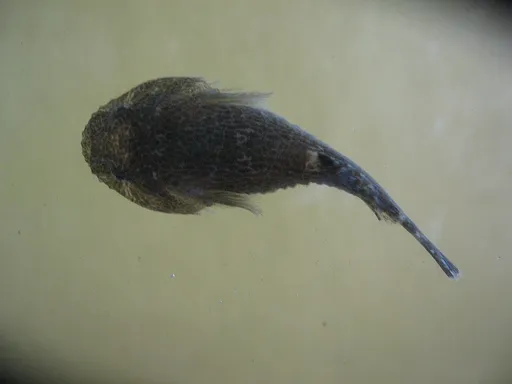
Skilletfish
Gobiesox strumosus
Saltwater3.1 in (8 cm) · 20 gal (76 L)72–79°F (22–26°C)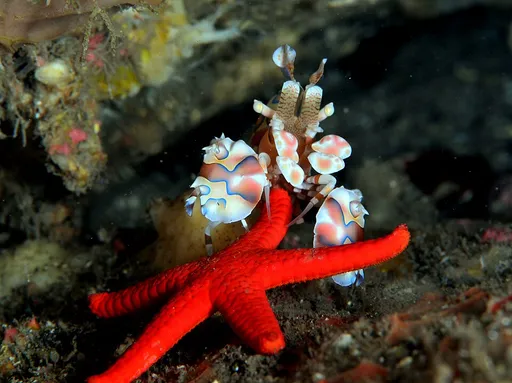
Harlequin shrimp
Hymenocera picta
Saltwater2 in (5 cm) · 11 gal (40 L)75–81°F (24–27°C)
Common questions
Is a Domino clownfish a different species from the Ocellaris clownfish?
No. A Domino clownfish is a variety of the Ocellaris clownfish, Amphiprion ocellaris, and it wants the same tank, water and food as the species.
Why are Domino clownfish so rare?
They are sorted out of ORA's Midnight breeding program rather than bred to order. Midnight offspring range from completely stripeless to extreme misbars, and the ones carrying isolated white dots get pulled out and named Domino. ORA calls them very precious and rare.
Where is the white spot on a Domino clownfish?
Anywhere. ORA says the dot can sit on the cheek or any other area of the body, and placement is random, so shops list individual fish and no two match. The name came with help from the aquarium author Julian Sprung.
What size tank does a Domino clownfish need?
A Domino clownfish needs at least 20 gal (75 L). It spends most of its time in the middle.
How big does a Domino clownfish get?
An adult Domino clownfish reaches about 3.1 in (8 cm).
Related species
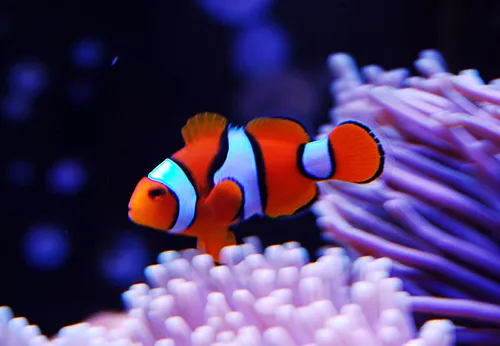 3.1 in (8 cm)20 gal (75 L)75–82°F (24–28°C)
Percula clownfish
Amphiprion percula
3.1 in (8 cm) · 20 gal (75 L)
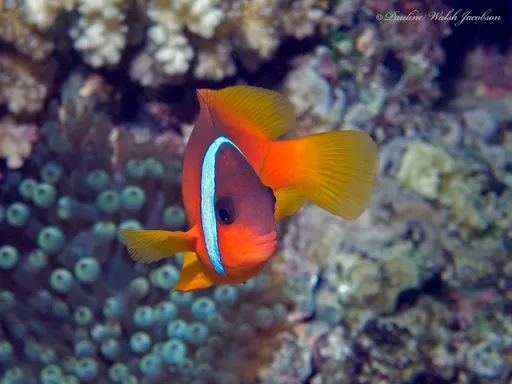 3.5 in (9 cm)30 gal (115 L)75–81°F (24–27°C)
Barberi clownfish
Amphiprion barberi
3.5 in (9 cm) · 30 gal (115 L)
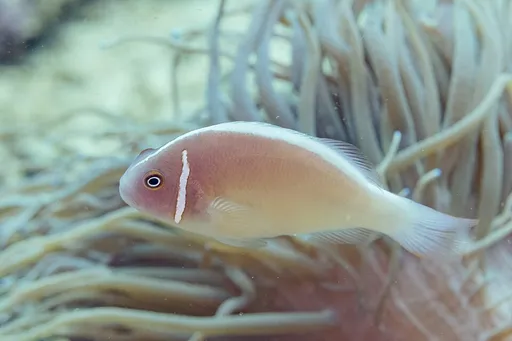 3.9 in (10 cm)30 gal (115 L)75–82°F (24–28°C)
Pink skunk clownfish
Amphiprion perideraion
3.9 in (10 cm) · 30 gal (115 L)
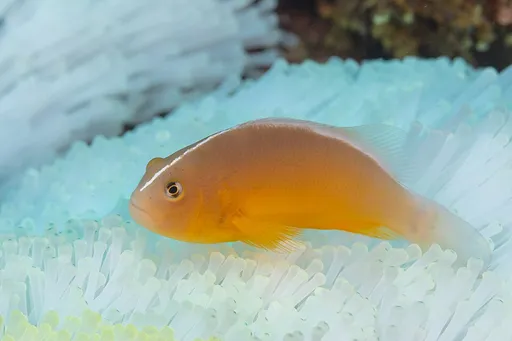 4.3 in (11 cm)26 gal (100 L)75–82°F (24–28°C)
Skunk clownfish
Amphiprion akallopisos
4.3 in (11 cm) · 26 gal (100 L)
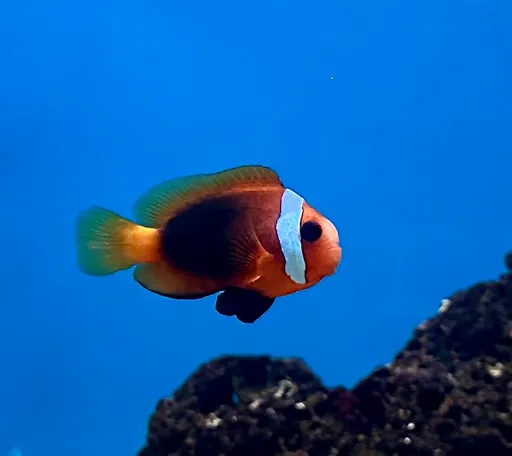 4.7 in (12 cm)30 gal (115 L)75–82°F (24–28°C)
Cinnamon clownfish
Amphiprion melanopus
4.7 in (12 cm) · 30 gal (115 L)
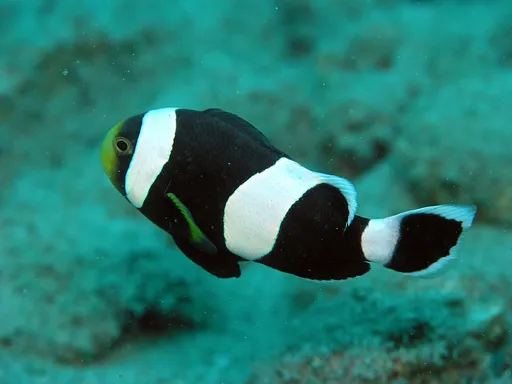 5.1 in (13 cm)40 gal (150 L)75–82°F (24–28°C)
Saddleback clownfish
Amphiprion polymnus
5.1 in (13 cm) · 40 gal (150 L)