Variety of Rosy barb
Longfin rosy barb
Pethia conchonius
The named variety of Pethia conchonius · See the species →
FreshwaterFish
Care at a glance
- Temperature
- 61–75°F
- 16–24°C
- pH
- 6.0–8.0
- Adult size
- 2.8 in
- 7 cm
- Minimum tank
- 24 gal
- 90 L
- Temperament
- Mostly peaceful
- Social behavior
- Schooling
- Swim level
- Middle
- Difficulty
- Beginner
- Breeding
- Easy
- Rarity
- Very common
- Family
- Cyprinidae
Overview
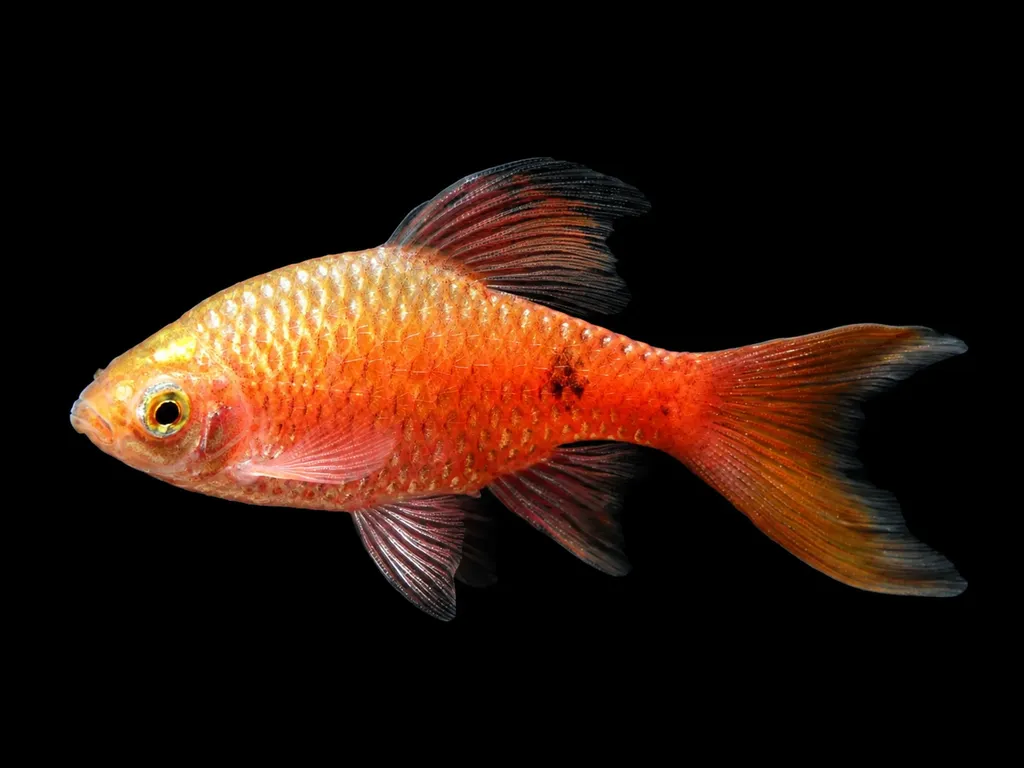
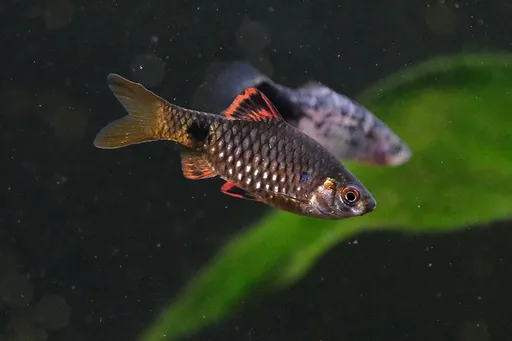
The longfin carries the same red as a standard rosy barb on trailing dorsal, anal and tail fins. That finnage drags in strong flow and is an easy mark for nippy tankmates. Inspect the fins at the counter for splits and cloudy edges. Fin length and symmetry vary between suppliers and even within one batch.
In the wild
Long finned rosy barbs are an aquarium strain, and no wild fish in this species has fins like this. Seriously Fish lists the long finned form among the established ornamental strains, alongside veiltail, super red, neon and golden lines. No breeder, country or decade is documented for when the long fin line was fixed.
Good to know
The mutation lengthens the fin rays and leaves color alone, so the base fish's red is untouched. Longer fins mean more drag, and heavily finned individuals hold position less easily in moving water. Fin growth continues well past sale size, so a shop juvenile understates the finished shape.
Did you know
The trait touches outline only. Put a longfin male beside a standard male in spawning color and the two are the same red. The difference your eye picks up is silhouette, not color.
Weekly picks
Tank mates
Longfin rosy barb is a mostly peaceful, schooling species that keeps to the middle. These picks share a community profile with it, are safe together in both directions, and overlap on water type, temperature and pH.
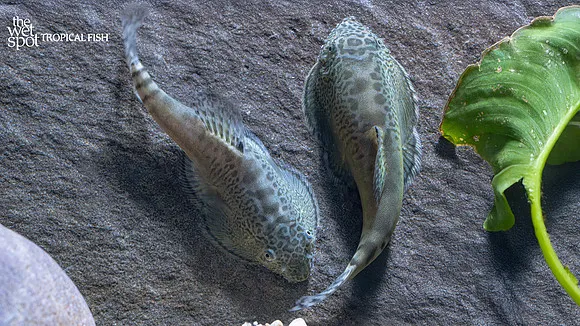
Pearl River hillstream loach
Beaufortia granulopinna
Freshwater3.1 in (8 cm) · 24 gal (90 L)61–75°F (16–24°C)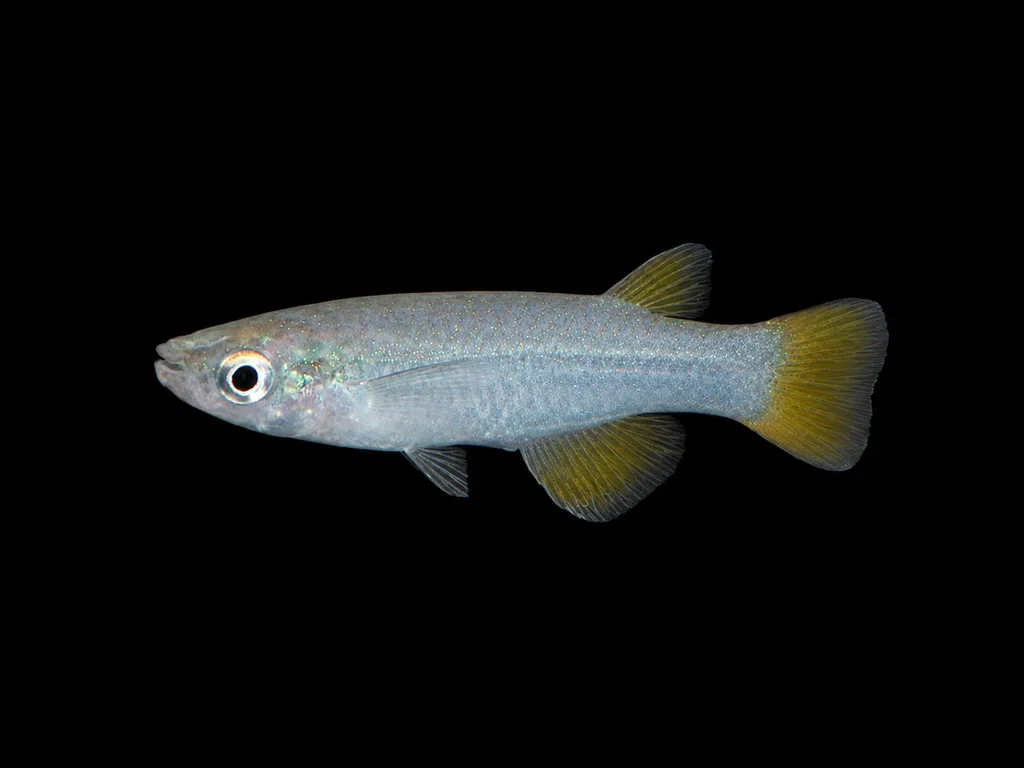
Banded lampeye
Aplocheilichthys spilauchen
FreshwaterBrackish2.8 in (7 cm) · 21 gal (80 L)73–82°F (23–28°C)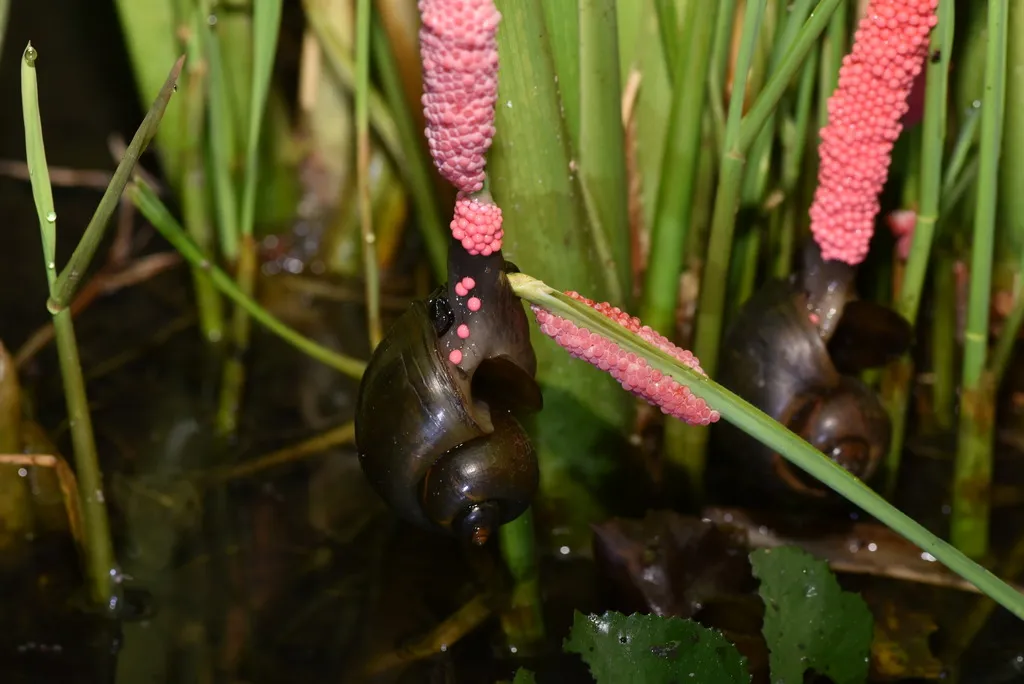
Apple snail
Pomacea canaliculata
Freshwater5.9 in (15 cm) · 21 gal (80 L)64–81°F (18–27°C)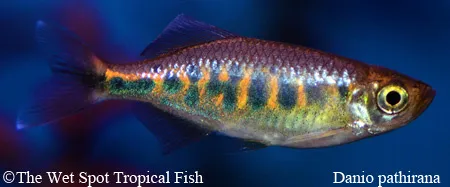
Barred danio
Devario pathirana
Freshwater2.4 in (6 cm) · 24 gal (90 L)70–79°F (21–26°C)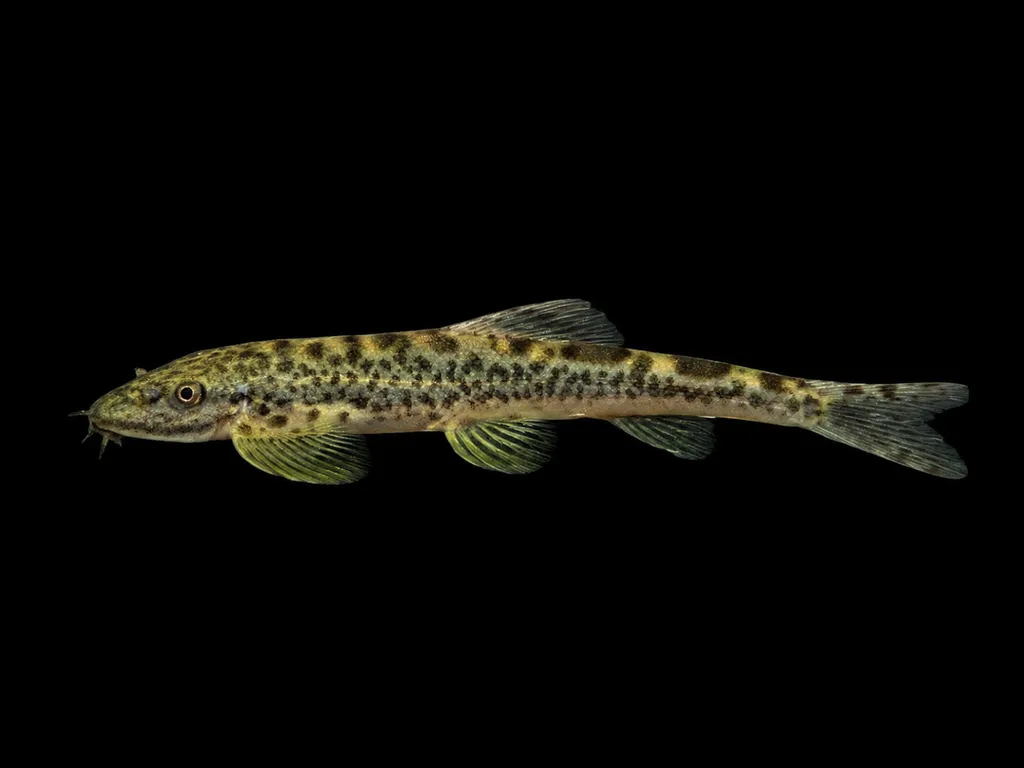
Nan River loach
Hemimyzon nanensis
Freshwater2.8 in (7 cm) · 24 gal (90 L)64–75°F (18–24°C)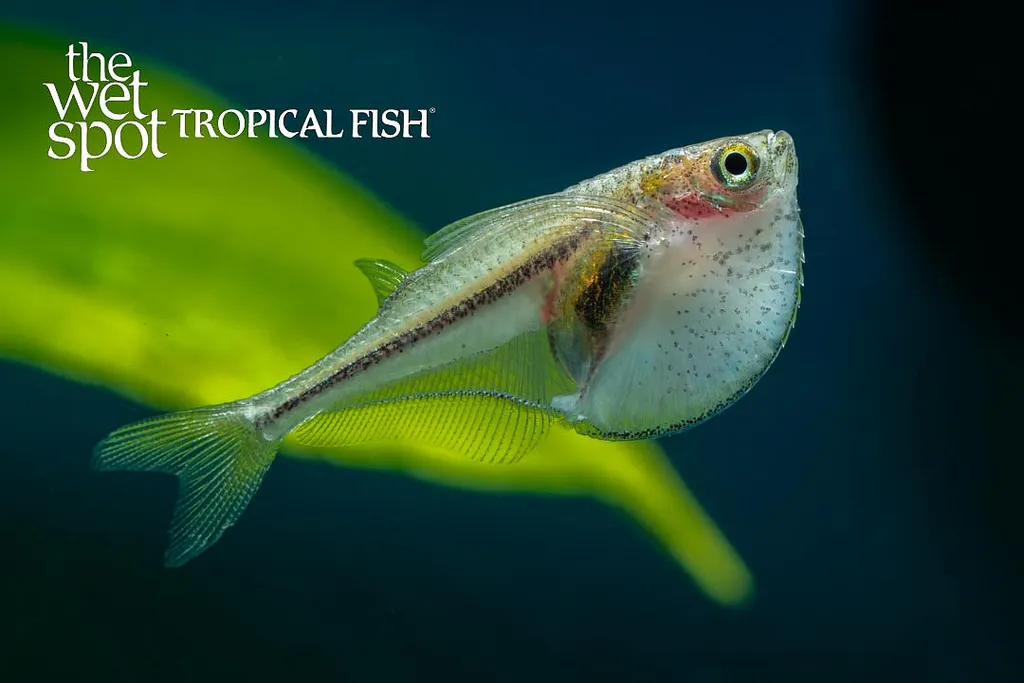
Pygmy hatchetfish
Carnegiella myersi
Freshwater1 in (2.5 cm) · 26 gal (100 L)73–79°F (23–26°C)
Common questions
Is a Longfin rosy barb a different species from the Rosy barb?
No. A Longfin rosy barb is a variety of the Rosy barb, Pethia conchonius, and it wants the same tank, water and food as the species.
What size tank does a Longfin rosy barb need?
A Longfin rosy barb needs at least 24 gal (90 L). It spends most of its time in the middle.
How big does a Longfin rosy barb get?
An adult Longfin rosy barb reaches about 2.8 in (7 cm).
Does a Longfin rosy barb need a group?
Yes. A Longfin rosy barb is a schooling species and should be kept in a group, not singly.
Related species
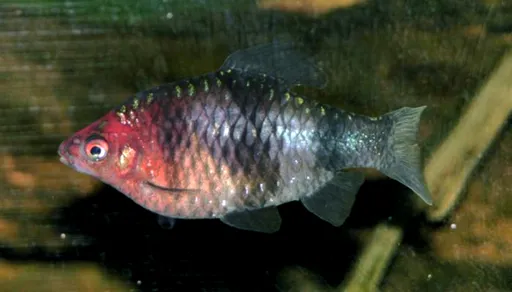 2.4 in (6 cm)20 gal (75 L)72–79°F (22–26°C)
Black ruby barb
Pethia nigrofasciata
2.4 in (6 cm) · 20 gal (75 L)
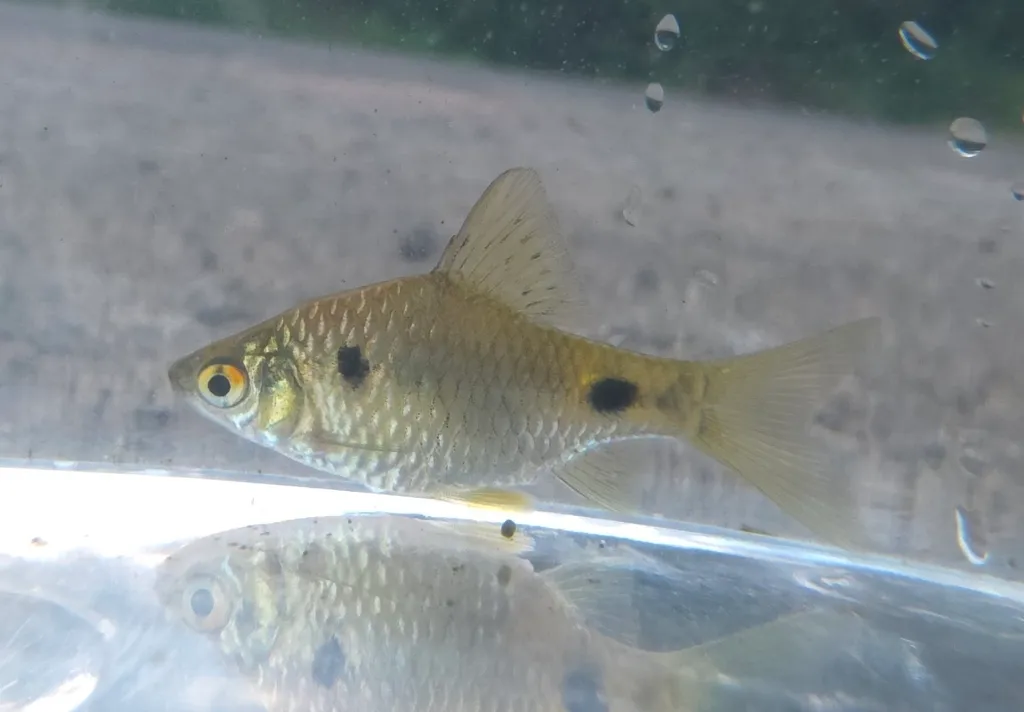 2.4 in (6 cm)20 gal (75 L)64–75°F (18–24°C)
Ticto barb
Pethia ticto
2.4 in (6 cm) · 20 gal (75 L)
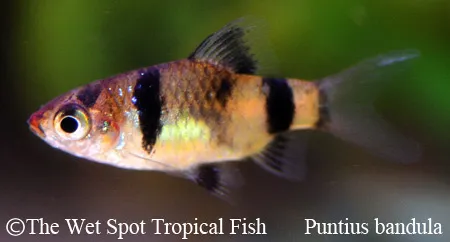 2 in (5 cm)20 gal (75 L)73–81°F (23–27°C)
Bandula barb
Pethia bandula
2 in (5 cm) · 20 gal (75 L)
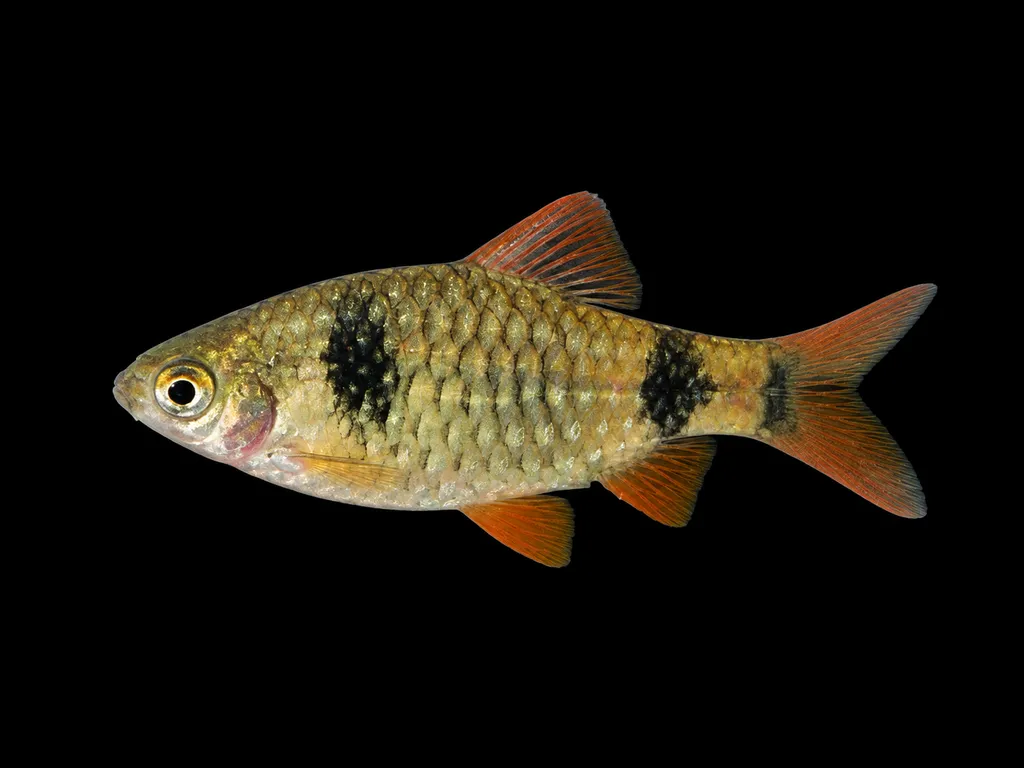 2 in (5 cm)16 gal (60 L)72–81°F (22–27°C)
Cuming's barb
Pethia cumingii
2 in (5 cm) · 16 gal (60 L)
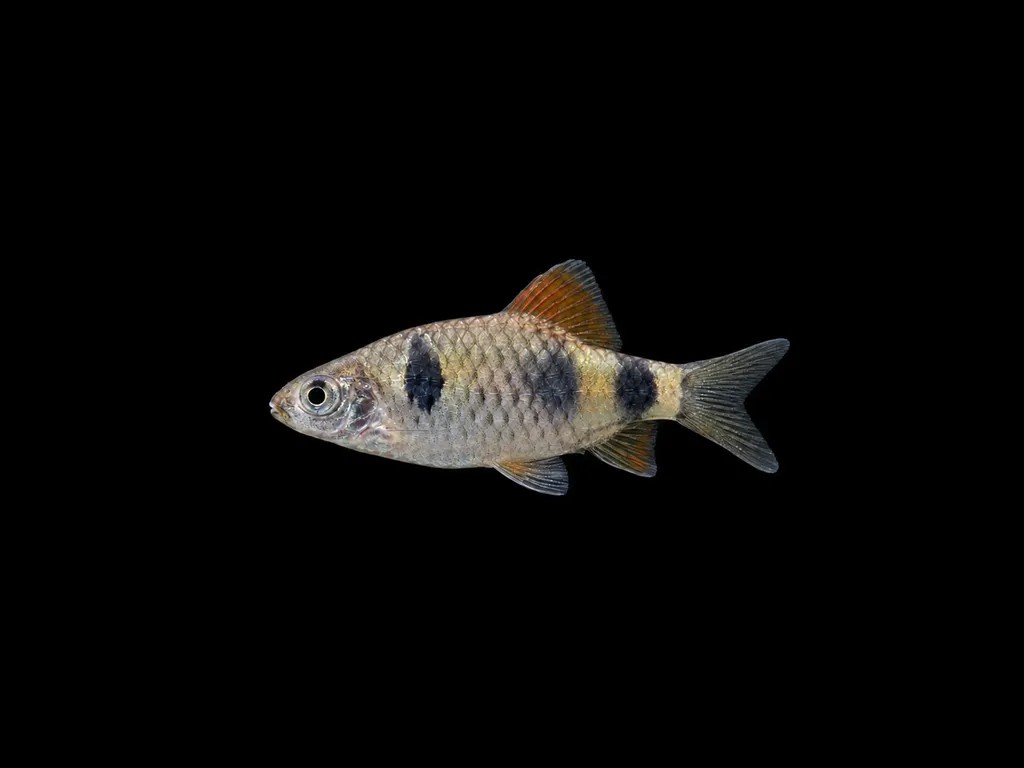 2 in (5 cm)20 gal (75 L)72–81°F (22–27°C)
Setna barb
Pethia setnai
2 in (5 cm) · 20 gal (75 L)
 2 in (5 cm)20 gal (75 L)64–79°F (18–26°C)
Stoliczka's barb
Pethia stoliczkana
2 in (5 cm) · 20 gal (75 L)