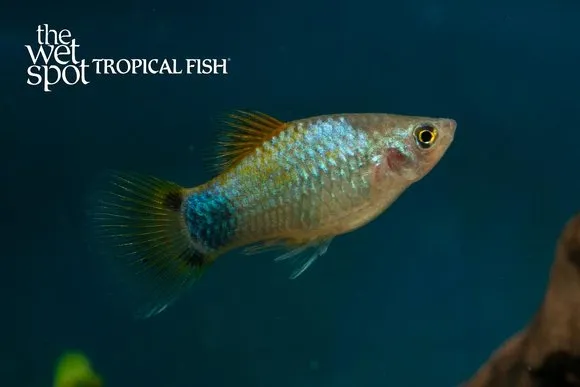
Blue platies read as steel gray-blue in most light and only flash blue at certain angles, so shop photos tend to oversell them. Labels run Blue, Coral Blue and Blue Wag, and the depth of the sheen varies between batches. Because the color is a reflection rather than a pigment, it depends on the lighting far more than a red platy does.
In the wild
Blue is a selected form of domesticated platy stock, which by now mixes more than one Xiphophorus species. The usual hobby account is that breeders thinned the yellow and red pigment until the fish's own reflective layer dominated. Wild platies are drab olive with no sheen of this kind, and no originating breeder or date is recorded.
Good to know
There is no blue pigment in the fish. Fish blues come from iridophores, cells stacked with guanine crystals whose spacing reflects a narrow band of light back at the viewer. In a blue platy that layer does the work while selection holds back the yellow and red pigment cells. Lines differ in how gray or how violet the result looks.
Did you know
The color is a physics trick rather than a paint job. Guanine crystals stacked inside iridophores reflect light, and the spacing between the layers decides which wavelength comes back. Change that spacing and the same cells throw a different color, which is why a blue platy slides toward gray or violet as it turns.
Weekly picks
Tank mates
Blue platy is a peaceful, social species that keeps to the middle. These picks share a community profile with it, are safe together in both directions, and overlap on water type, temperature and pH.
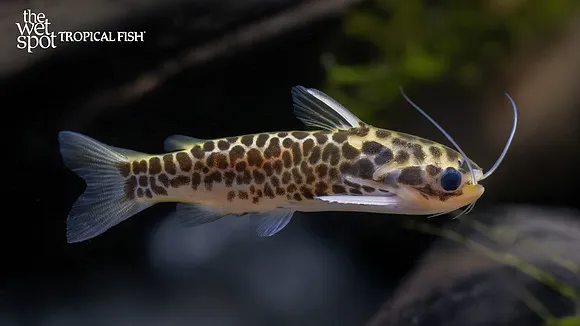
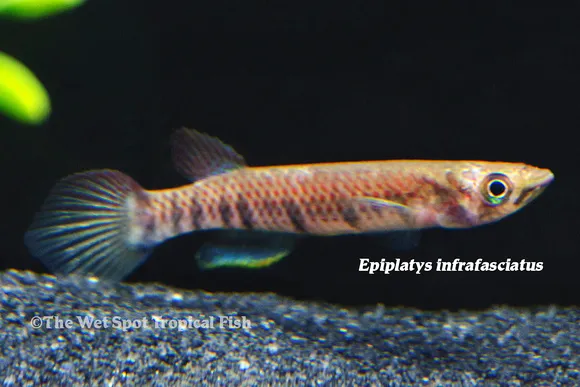
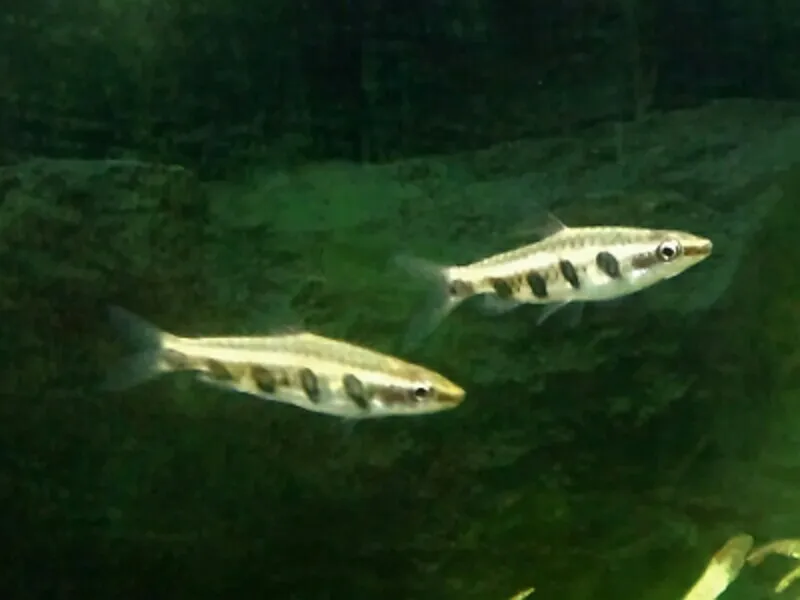
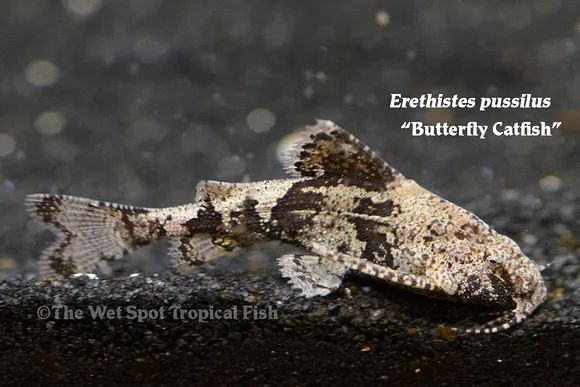
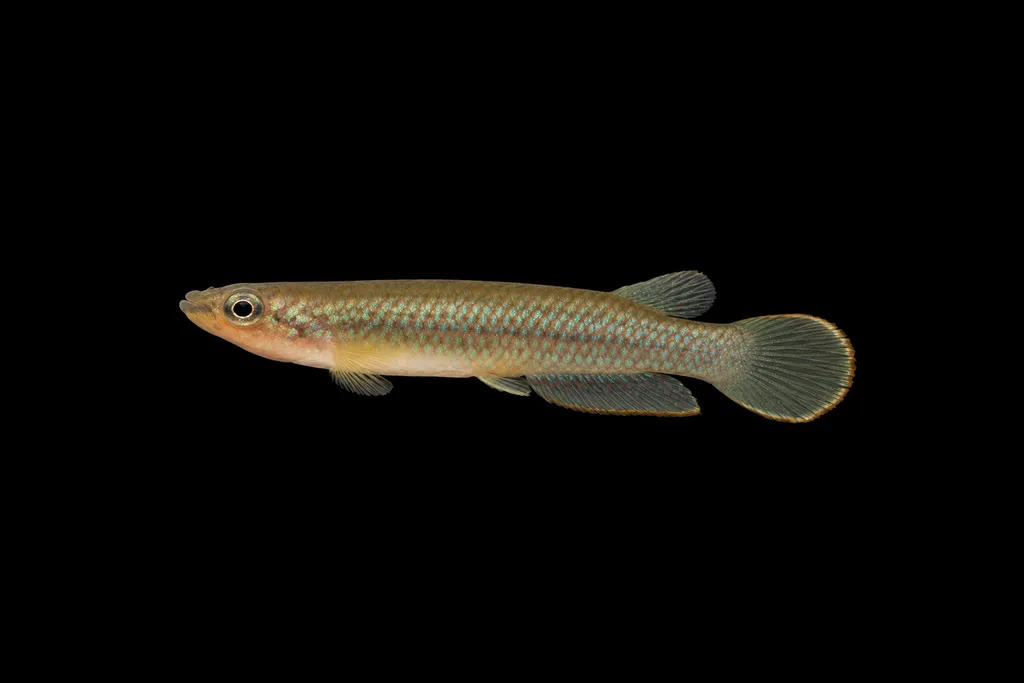
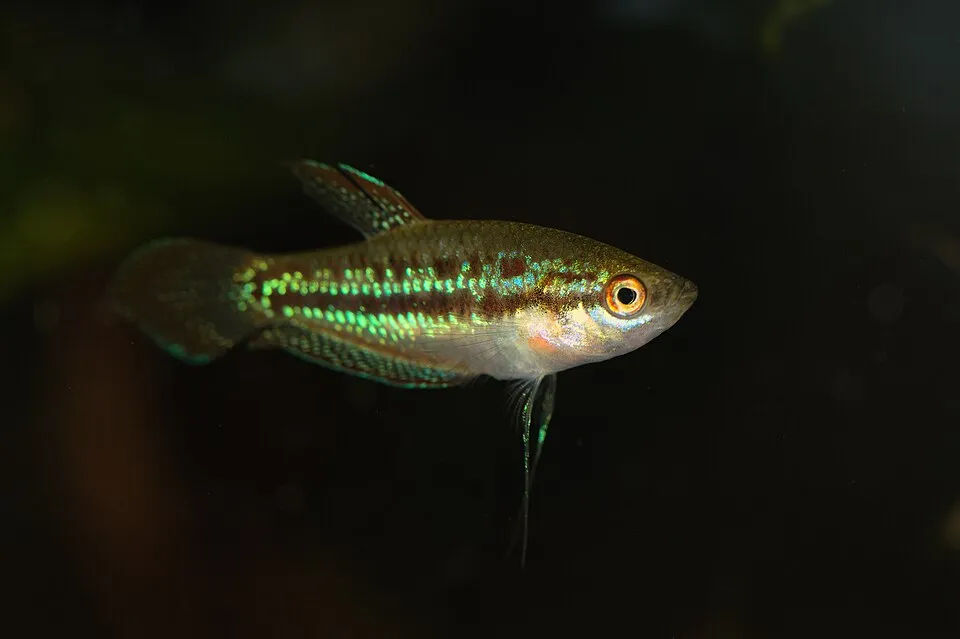
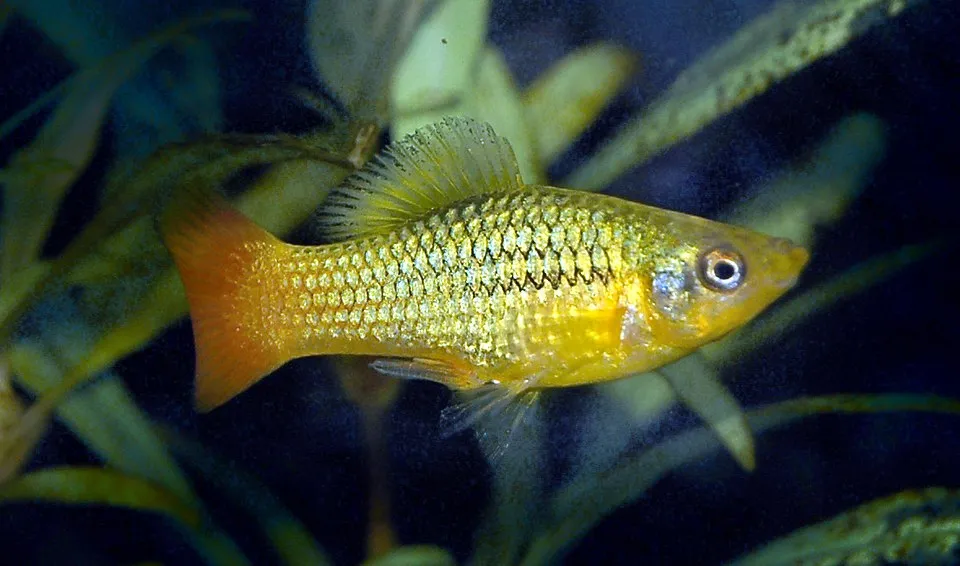 2.8 in (7 cm)15 gal (55 L)68–79°F (20–26°C)
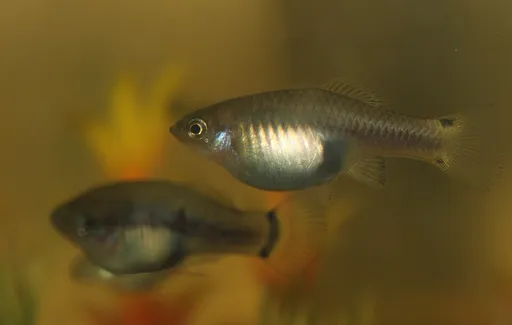 2 in (5 cm)16 gal (60 L)68–79°F (20–26°C)
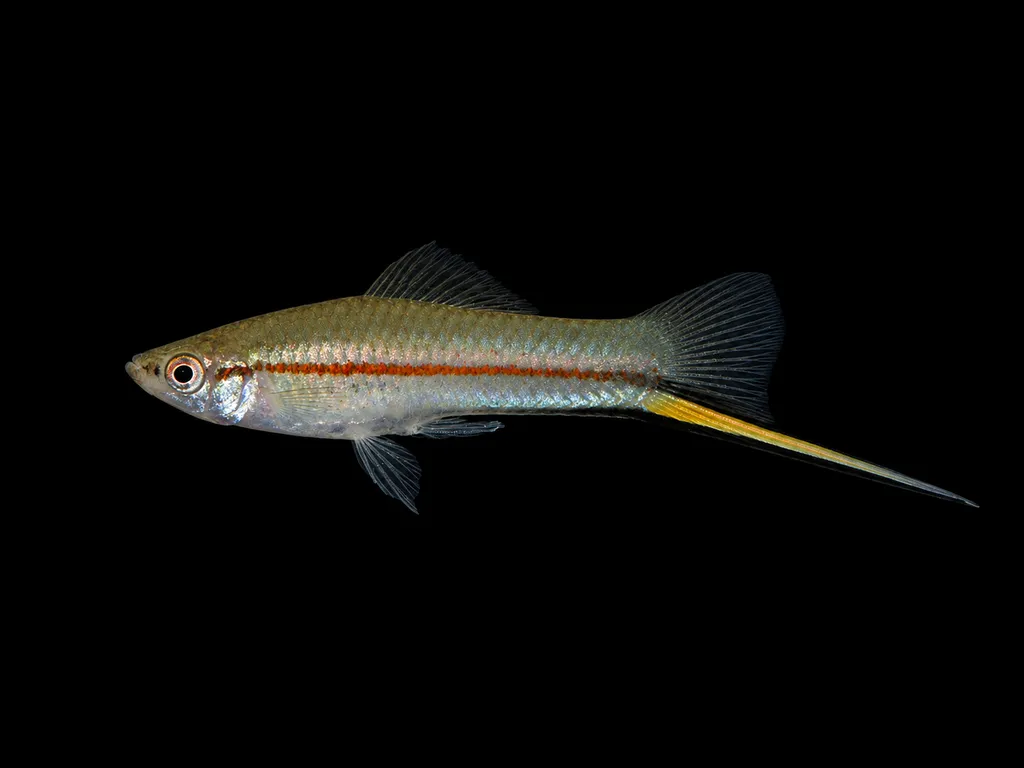 4.1 in (10.5 cm)29 gal (110 L)73–82°F (23–28°C)
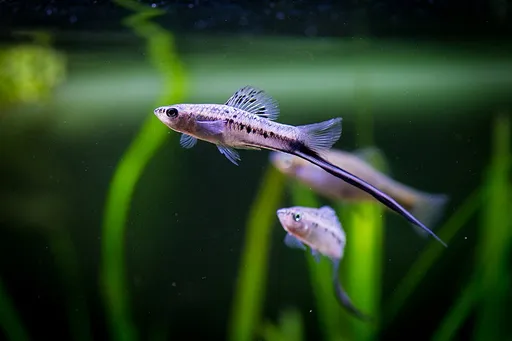 2.8 in (7 cm)24 gal (90 L)68–81°F (20–27°C)
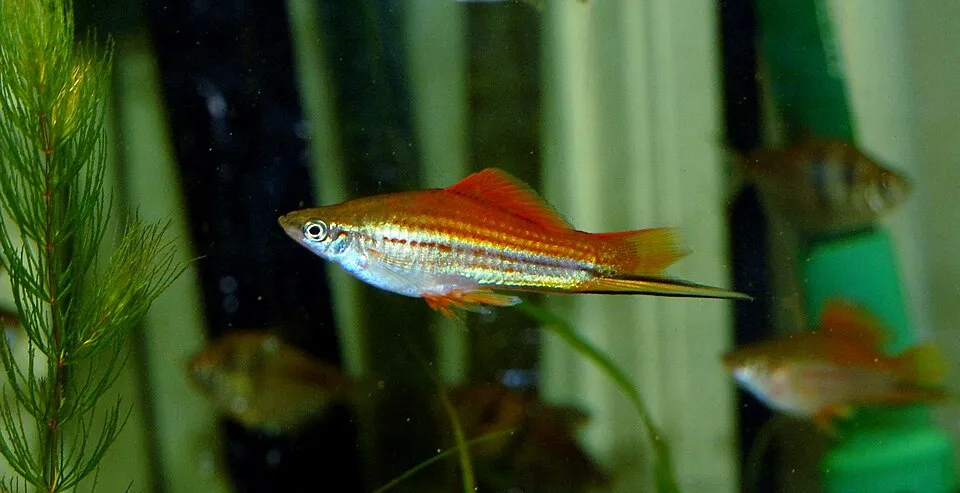 5.9 in (15 cm)24 gal (90 L)68–82°F (20–28°C)
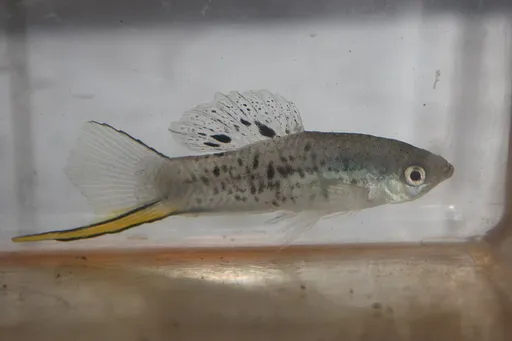 3.5 in (9 cm)29 gal (110 L)68–79°F (20–26°C)