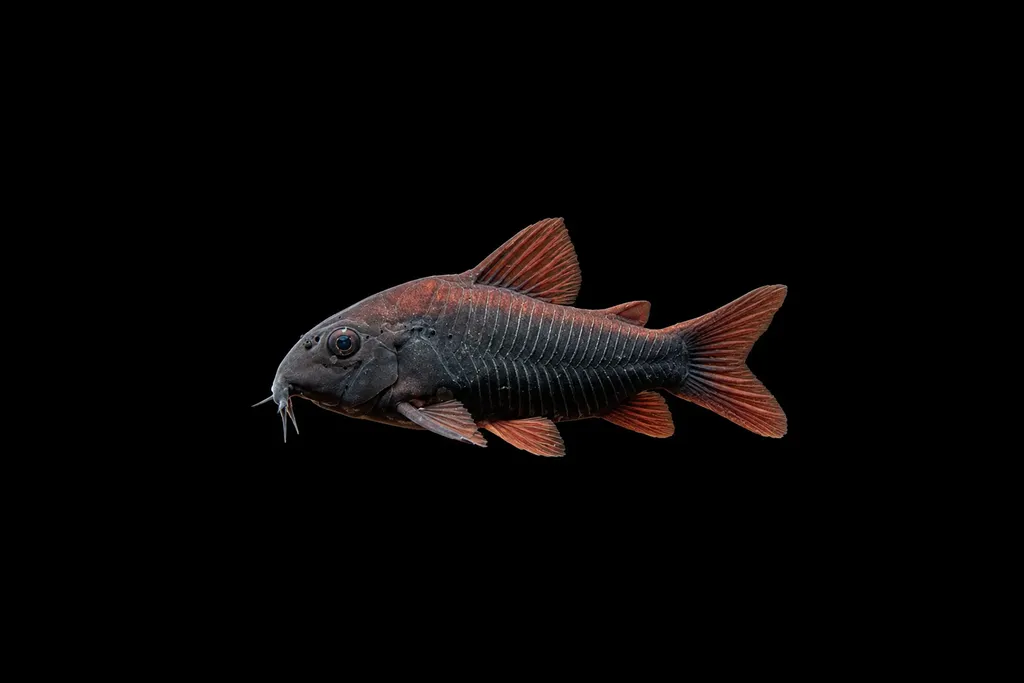
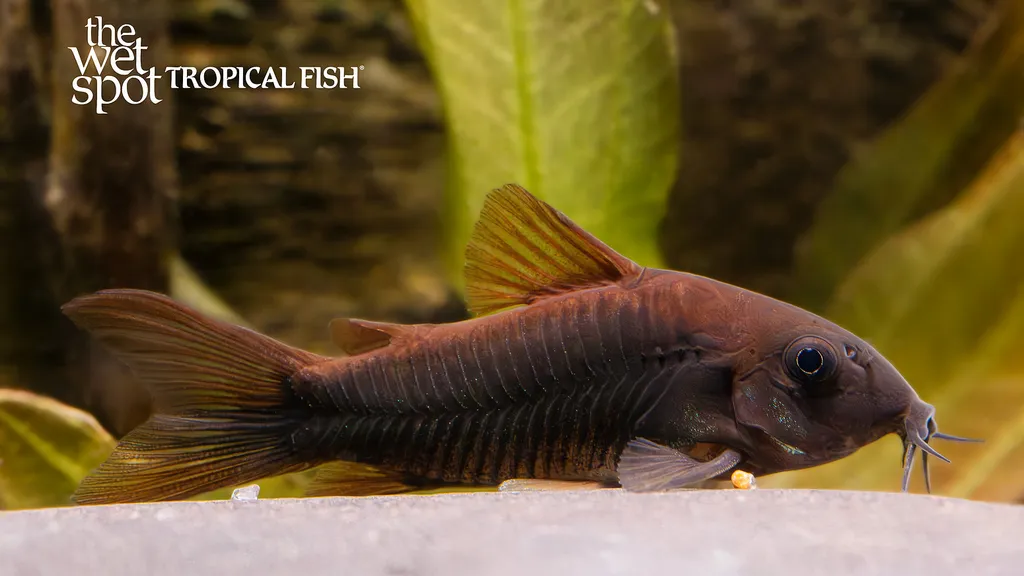
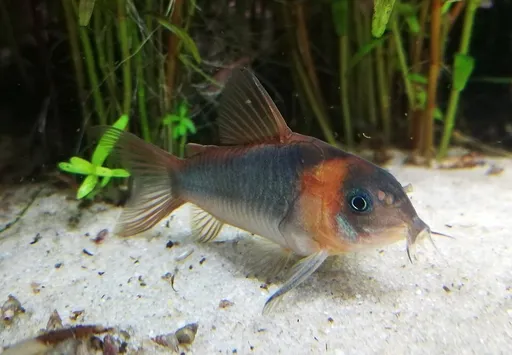
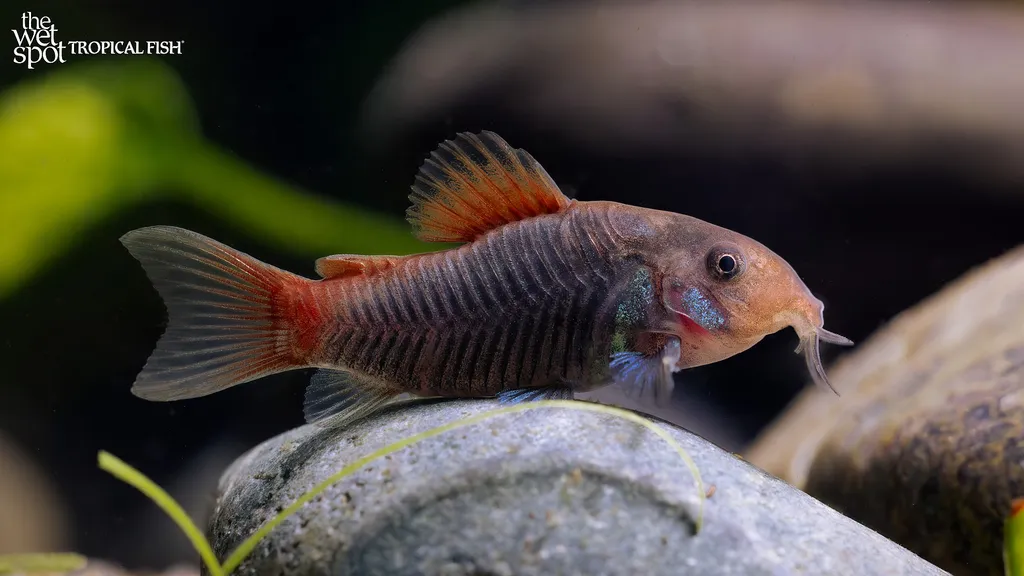
The Venezuela black cory is a line-bred black form with a near-black body and a dark maroon cast. It is sold as Black Venezuela or Venezuelan Black, usually under the name Corydoras schultzei. It is easy to keep but runs pricier than common corys, and Aquatic Arts notes it is not bred at anything like their volume.
Did you know
The Venezuela black cory's name is wrong twice over. The fish has no Venezuelan origins, and it is not a form of the actual Venezuelan cory either. Fishkeeper points out that many suppliers still list it as Corydoras venezuelanus black, which it is not.
Caring for the Venezuela black cory
Keep Venezuela black cories in a group of six or more. They are social bottom dwellers and get stressed and listless when kept alone or in pairs. A group does well in a community tank of 17 gal (63 L) or larger.
Like other corys, this fish pales over a bright bare bottom and holds its color over dark substrate. Choose dark, soft sand or smooth, rounded gravel, so it can sift without wearing down its barbels, and avoid anything sharp. Keep the water at 70 to 81°F (21 to 27°C) and a pH of 6.0 to 7.5.
Feed sinking pellets and wafers, plus frozen bloodworms and brine shrimp. They forage along the bottom, so make sure the sinking food reaches them rather than getting eaten up top.
Venezuela black cories are peaceful and safe with other community fish. They are easy to breed. The female carries each sticky egg between her pelvic fins and sticks it to surfaces around the tank.
Good to know
The Venezuela black cory's color is dense dark pigment over the whole body, in place of the gold and bronze of the parent form. It is the product of line breeding rather than a documented single mutation. Its parent species is the bronze cory, Osteogaster aenea, from a group recently split out of Corydoras. Aquatic Arts describes it as a color variant of the gold flash cory, that same species under its trade name.
In the wild
The Venezuela black cory is a line-bred form rather than a wild fish, despite the country in its trade name. Fishkeeper records that a German aquarist first produced the black strain in the early 1990s and sent it on to breeders in the Czech Republic. It has been bred commercially there in large numbers ever since. Aquatic Arts tells the same story and adds that the fish is indigenous to Peru, not Venezuela.
Weekly picks
Tank mates
The Venezuela black cory is a peaceful, shoaling species that keeps to the bottom. These picks share a community profile with it, are safe together in both directions, and overlap on water type, temperature and pH.
Is a Venezuela black cory a different species from the bronze cory?
No. A Venezuela black cory is a variety of the bronze cory, Osteogaster aenea, and it wants the same tank, water and food as the species.
What size tank does a Venezuela black cory need?
A Venezuela black cory needs at least 17 gal (63 L). It spends most of its time in the bottom.
What does a Venezuela black cory eat?
A Venezuela black cory eats sinking pellets and wafers, plus frozen bloodworms and brine shrimp. Make sure the food sinks all the way to it on the bottom.
How big does a Venezuela black cory get?
An adult Venezuela black cory reaches about 3 in (7.5 cm).
Does a Venezuela black cory need a group?
Yes. A Venezuela black cory is a shoaling species and should be kept in a group, not singly.
How does a Venezuela black cory breed?
Venezuela black cories are easy to breed. The female holds each sticky egg between her pelvic fins, then sticks it to a surface somewhere in the tank.
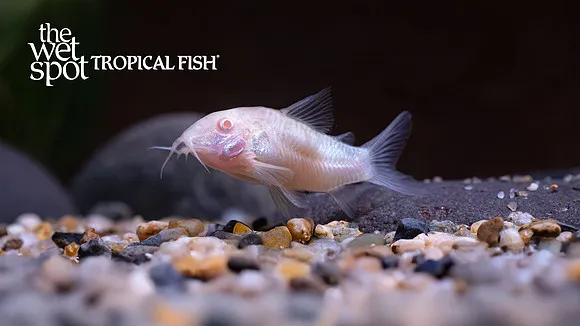
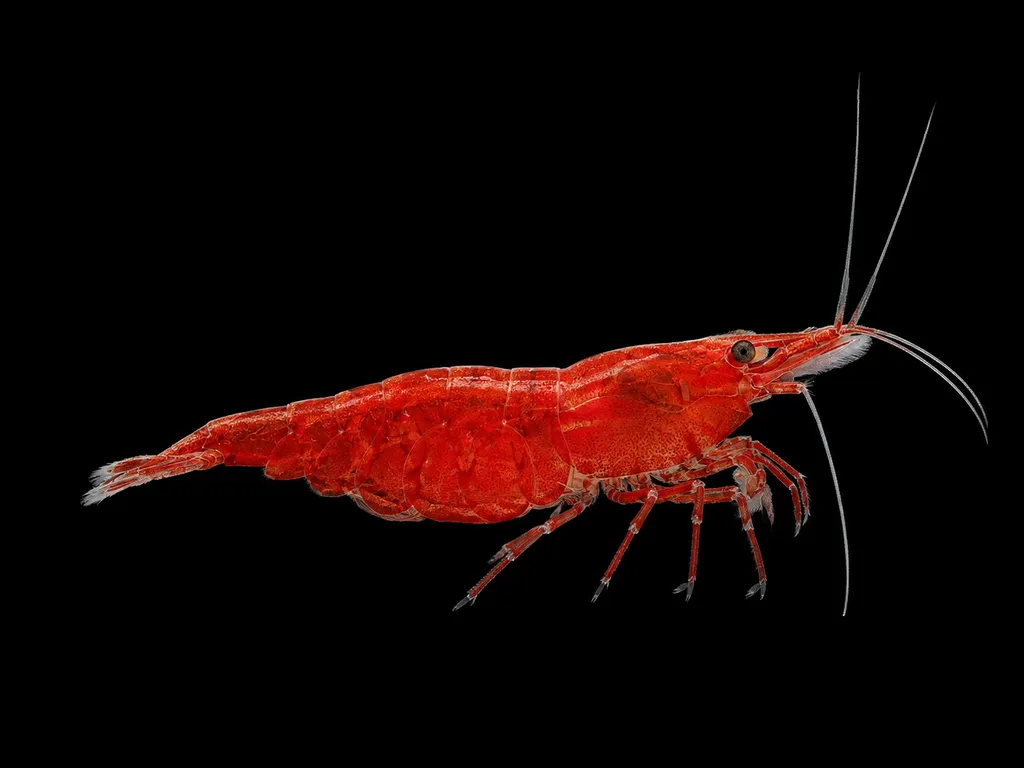
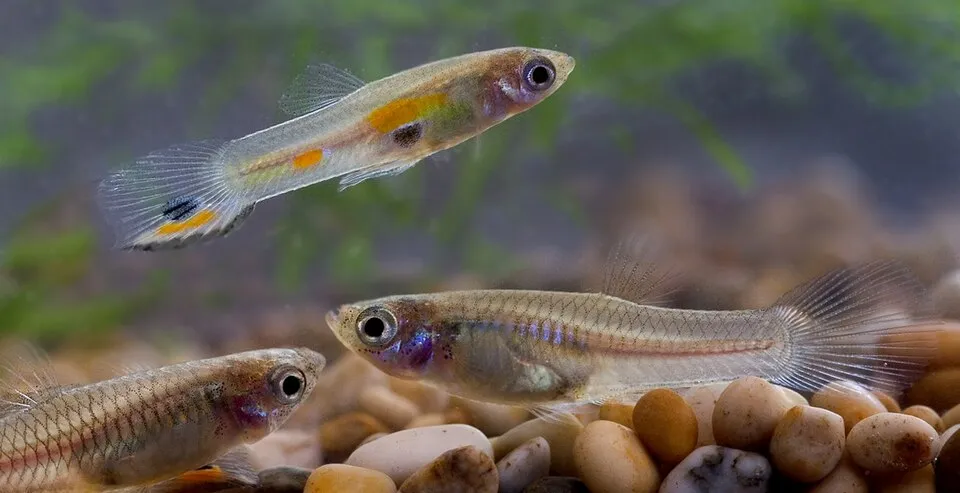
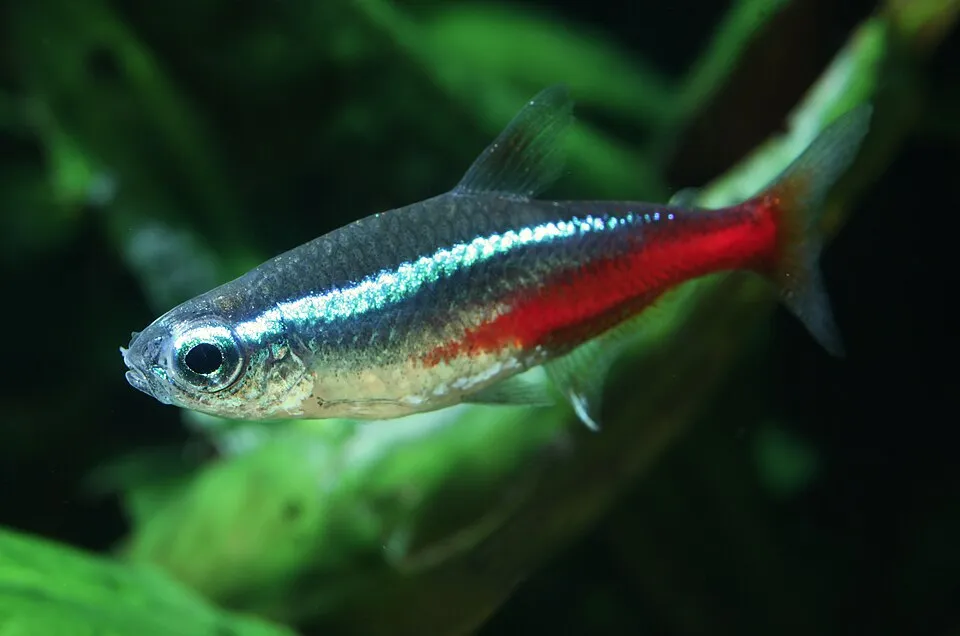
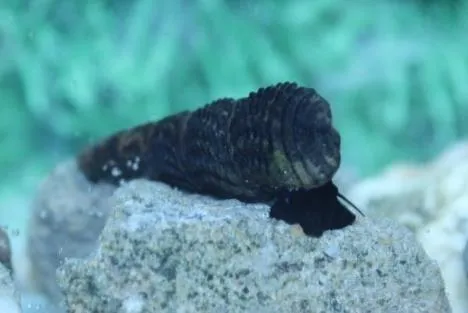
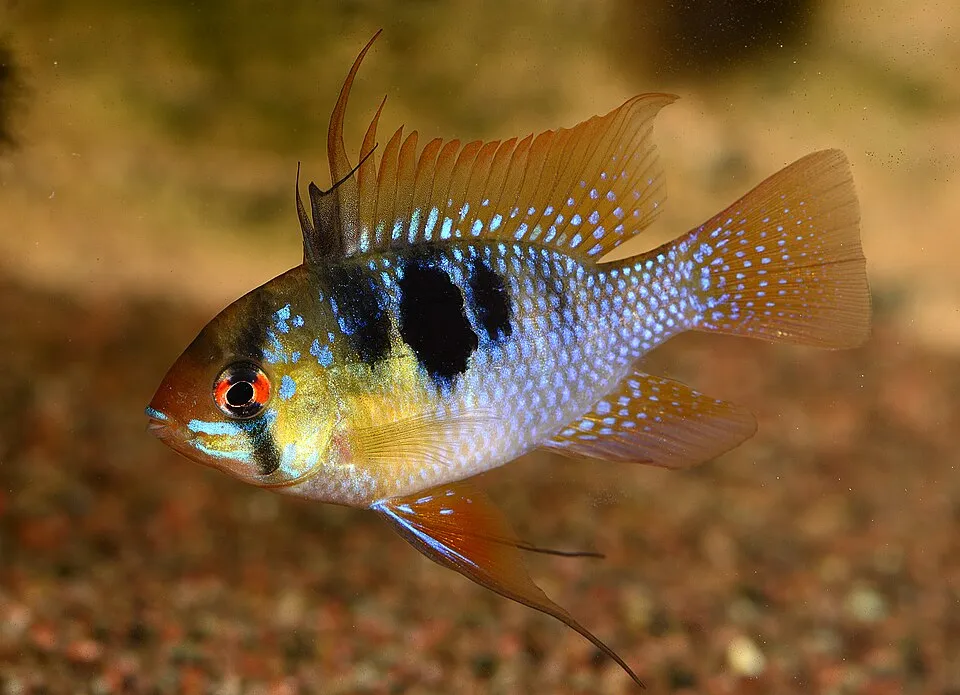
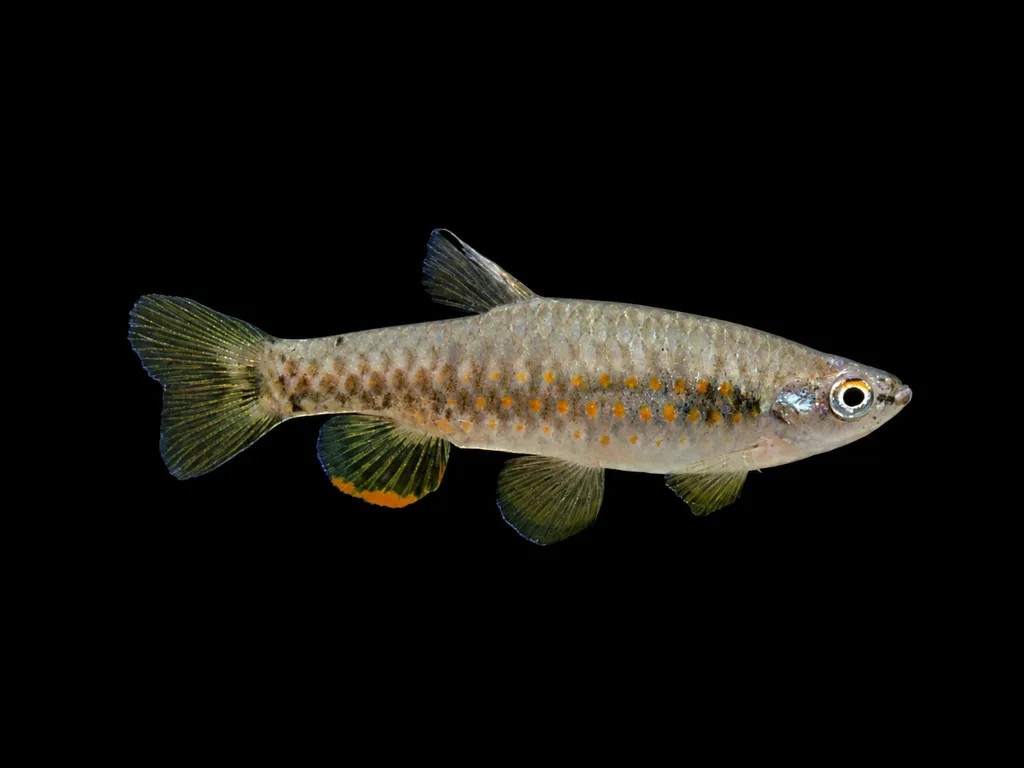
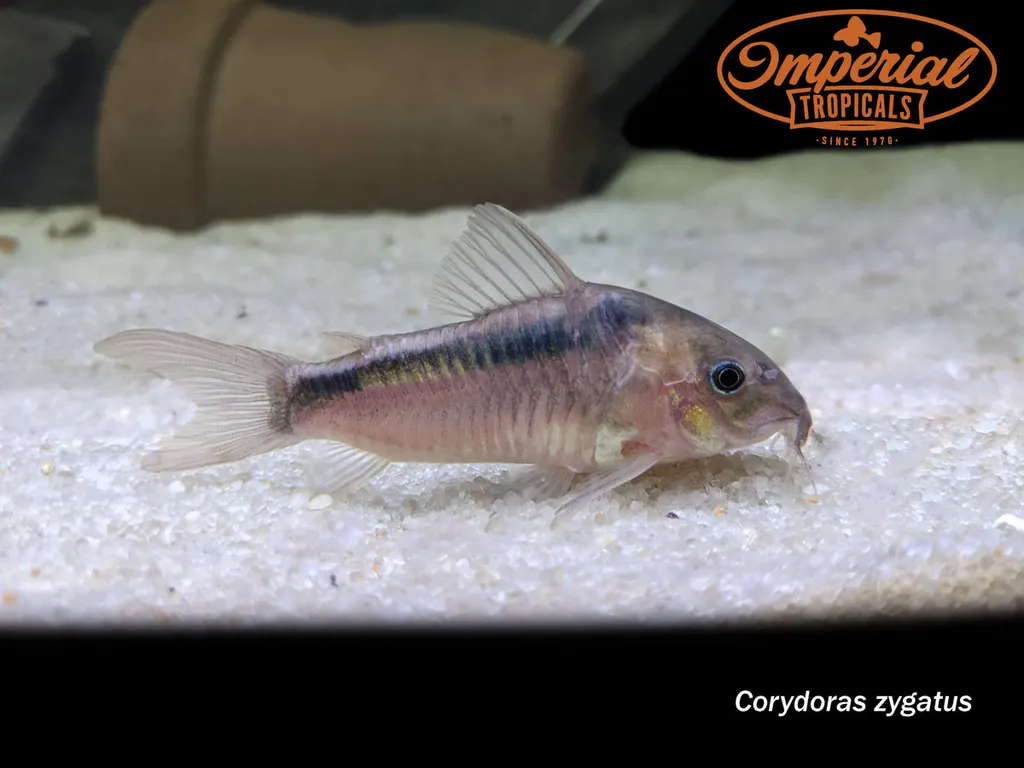 2.6 in (6.5 cm)21 gal (80 L)72–79°F (22–26°C)
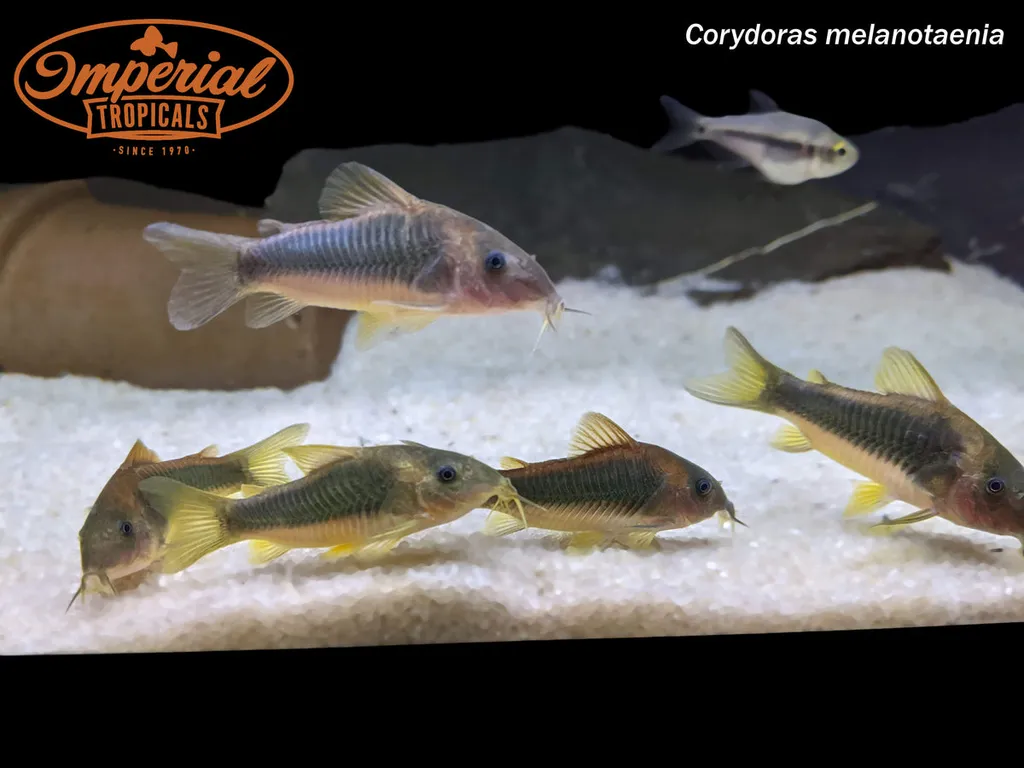 2.4 in (6 cm)17 gal (65 L)68–73°F (20–23°C)
 2.4 in (6 cm)20 gal (75 L)72–79°F (22–26°C)
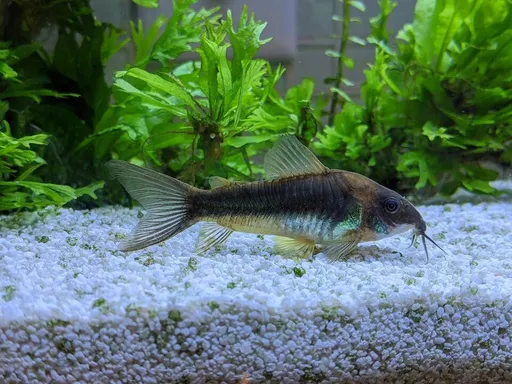 2.4 in (6 cm)20 gal (75 L)68–79°F (20–26°C)
 2 in (5 cm)16 gal (60 L)72–79°F (22–26°C)
 1.6 in (4 cm)15 gal (55 L)75–82°F (24–28°C)