Gold laser cory
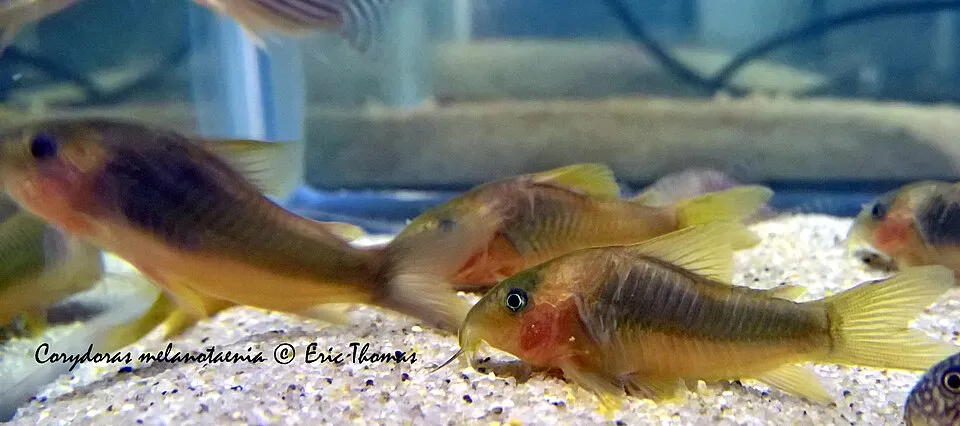
Osteogaster melanotaenia
Also known as Corydoras melanotaenia, Elongate Bronze Cory, Gold Green Cory
FreshwaterFish
Care at a glance
- Temperature
- 68–73°F
- 20–23°C
- pH
- 6.0–7.5
- Adult size
- 2.4 in
- 6 cm
- Minimum tank
- 17 gal
- 65 L
- Temperament
- Peaceful
- Social behavior
- Shoaling
- Swim level
- Bottom
- Difficulty
- Medium
- Breeding
- Hard
- Rarity
- Rare
- Family
- Callichthyidae
- Origin
- Colombia
Overview
The gold laser cory is a peaceful shoaling catfish that should be kept in a group of at least six to stay confident and active. It forages across the bottom, sifting sand with its barbels, and suits a calm community of small fish that prefer slightly cooler water. Feed sinking pellets, frozen bloodworm and daphnia, and a little algae wafer, checking that the food reaches the floor. A group is comfortable in a tank of around 65 liters or larger.
In the wild
Corydoras melanotaenia comes from the Meta and upper Orinoco drainages of Colombia, over sand in soft, gently flowing water. It prefers cooler temperatures, around 20 to 23 C, so keep it out of a hot tank. Provide a soft sand bed, driftwood, and shaded planting, with pH about 6.0 to 7.5 and clean, well oxygenated water kept moving gently.
Good to know
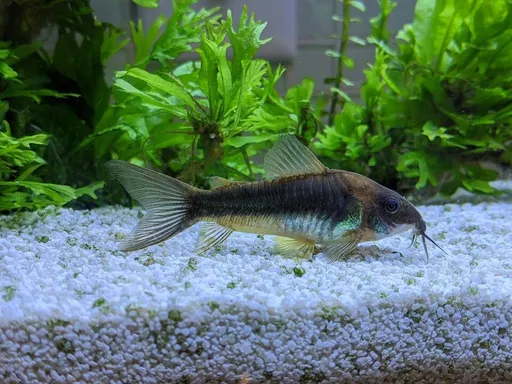
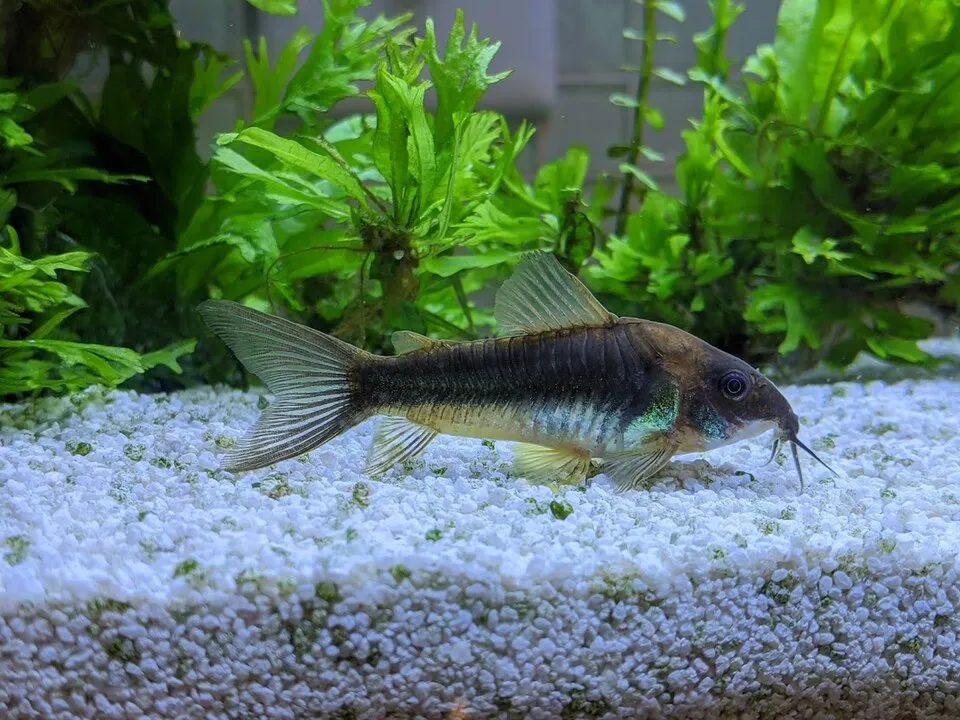
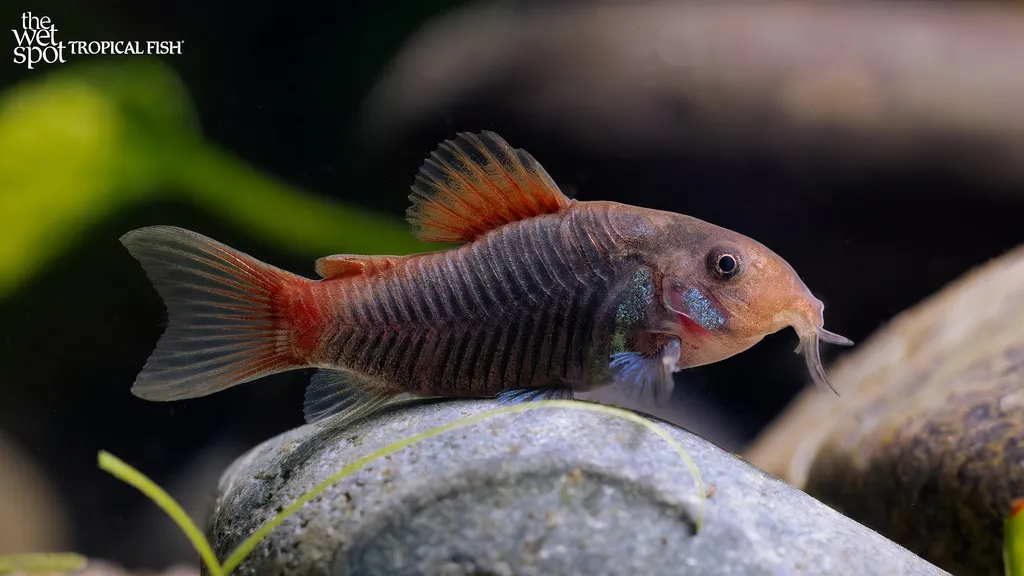
This armored catfish of the family Callichthyidae reaches about 6 cm and shows a green gold sheen along the body with a darker band toward the back. Its name melanotaenia comes from the Greek for black band. The elongated, bronze toned form gives rise to its alternate name, the elongate bronze cory. It has been bred in aquaria but is considered difficult, responding to cool, clean water and conditioning on live foods.
Did you know
The name melanotaenia means black band in Greek, for the dark stripe along the body, while the trade name gold laser points to the bright metallic green gold line that can light up the flank of a well kept fish.
Weekly picks
Tank mates
Gold laser cory is a peaceful, shoaling species that keeps to the bottom. These picks share a community profile with it, are safe together in both directions, and overlap on water type, temperature and pH.
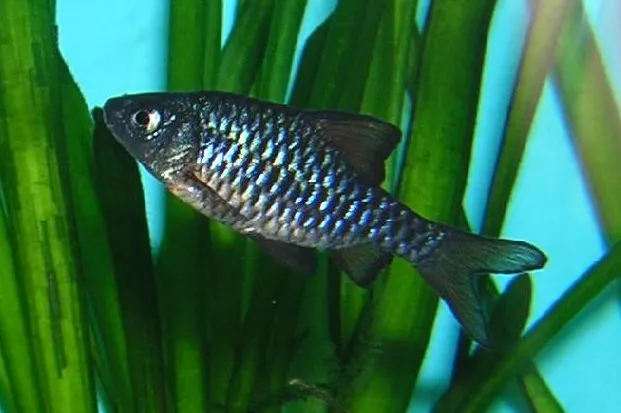
Checkered barb
Oliotius oligolepis
Freshwater1.8 in (4.5 cm) · 16 gal (60 L)68–79°F (20–26°C)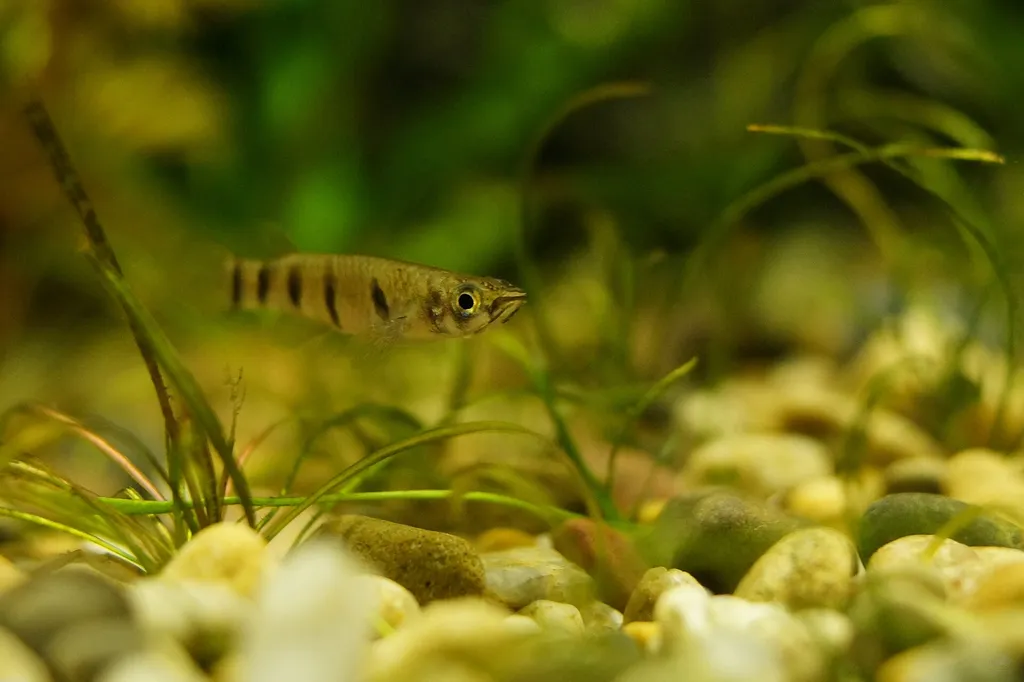
Red-chinned panchax
Epiplatys dageti
Freshwater1.8 in (4.5 cm) · 20 gal (75 L)70–75°F (21–24°C)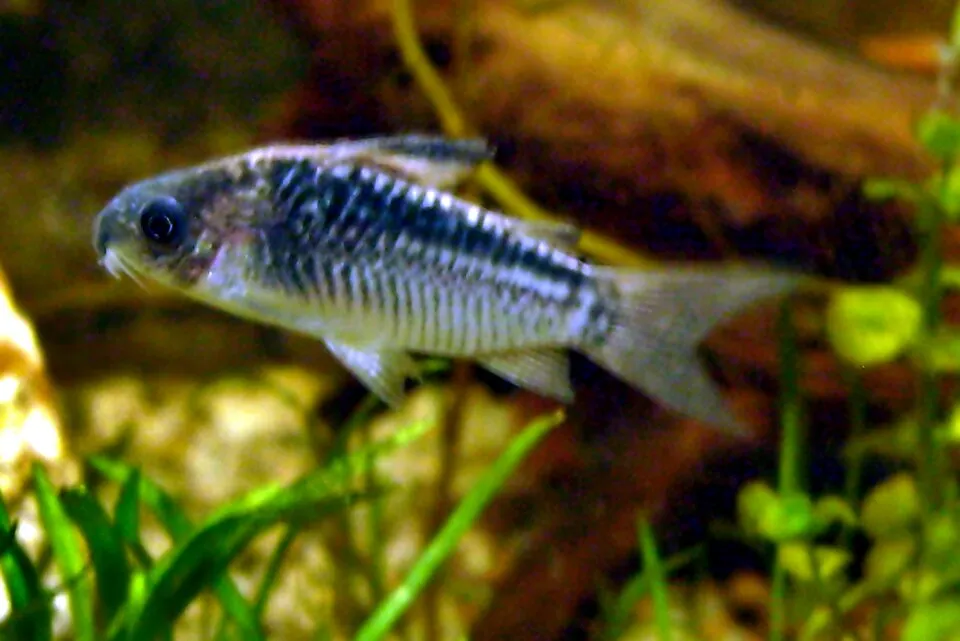
Elegant cory
Gastrodermus elegans
Freshwater2.1 in (5.4 cm) · 16 gal (60 L)68–79°F (20–26°C)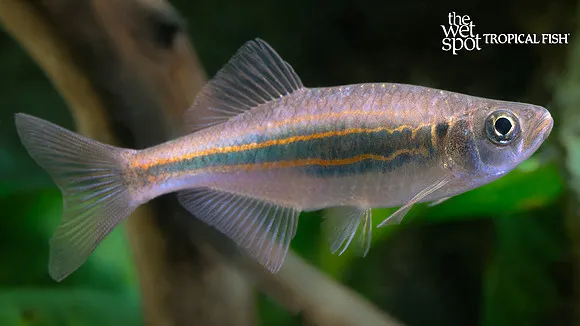
Brittan's rasbora
Kottelatia brittani
Freshwater2.4 in (6 cm) · 16 gal (60 L)68–79°F (20–26°C)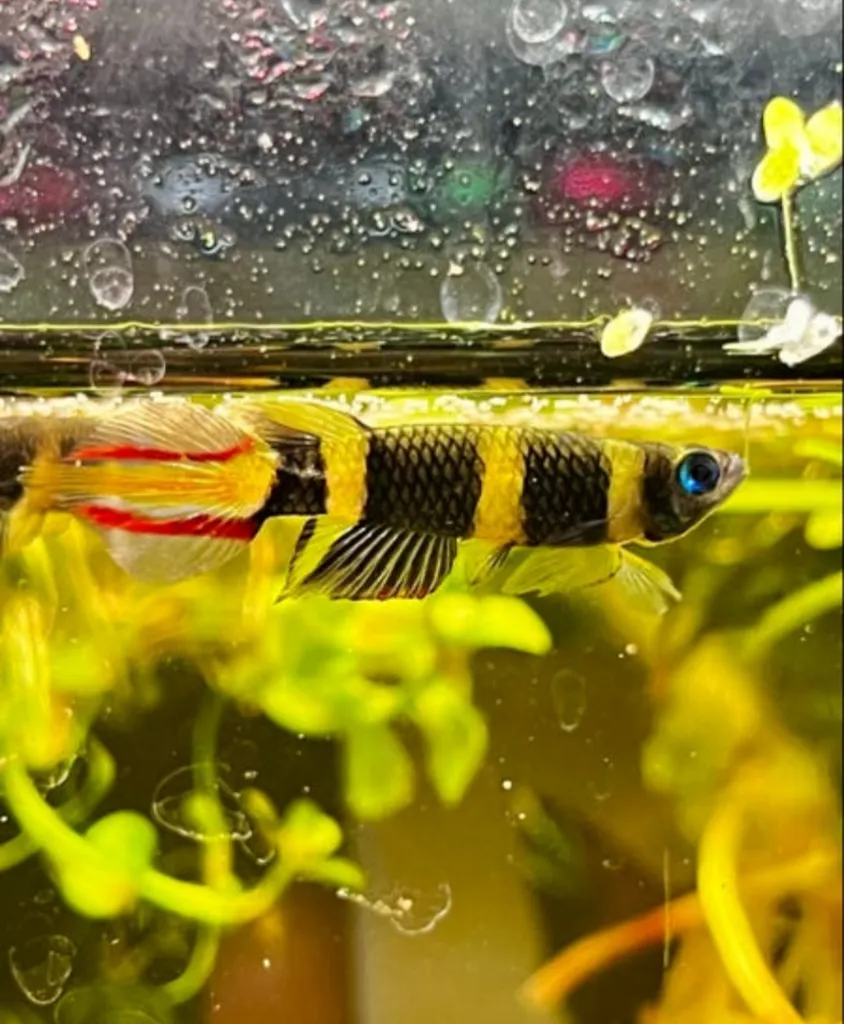
Clown killifish
Epiplatys annulatus
Freshwater1.4 in (3.5 cm) · 15 gal (55 L)68–79°F (20–26°C)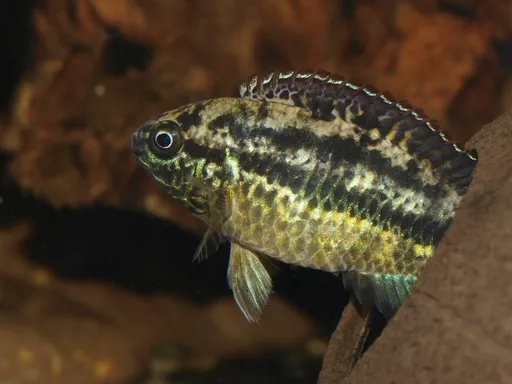
Golden dwarf cichlid
Nannacara anomala
Freshwater3.1 in (8 cm) · 16 gal (60 L)72–82°F (22–28°C)
Common questions
What size tank does a Gold laser cory need?
A Gold laser cory needs at least 17 gal (65 L). It spends most of its time in the bottom.
What temperature and pH does a Gold laser cory need?
A Gold laser cory is comfortable at 68–73°F (20–23°C) with a pH of 6.0–7.5.
How big does a Gold laser cory get?
An adult Gold laser cory reaches about 2.4 in (6 cm).
Does a Gold laser cory need a group?
Yes. A Gold laser cory is a shoaling species and should be kept in a group, not singly.
Related species
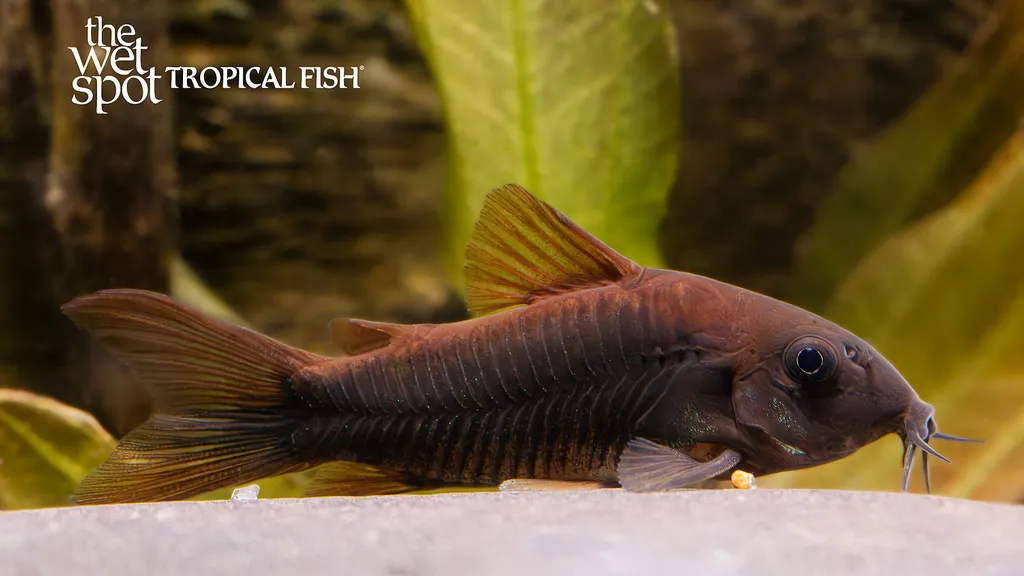 2.4 in (6 cm)20 gal (75 L)72–79°F (22–26°C)
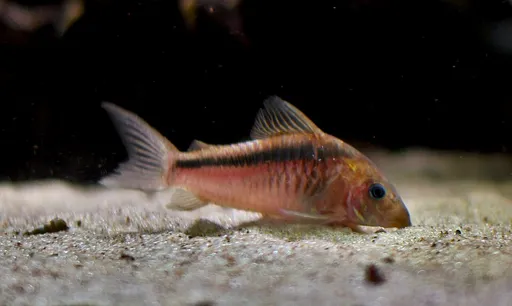
Rust cory
Osteogaster rabauti
2.4 in (6 cm) · 20 gal (75 L)
 2.4 in (6 cm)20 gal (75 L)68–79°F (20–26°C)
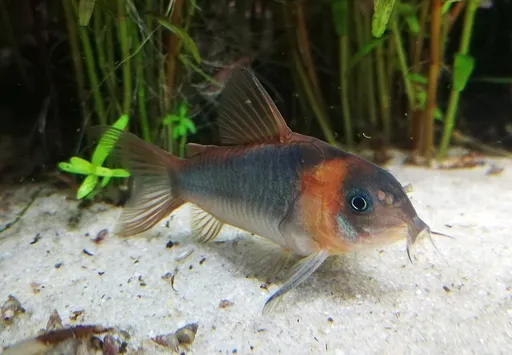
Venezuelan orange cory
Osteogaster aenea
2.4 in (6 cm) · 20 gal (75 L)
 2.6 in (6.5 cm)21 gal (80 L)72–79°F (22–26°C)
Black band cory
Osteogaster zygata
2.6 in (6.5 cm) · 21 gal (80 L)
 2 in (5 cm)16 gal (60 L)72–79°F (22–26°C)
Horseman cory
Osteogaster eques
2 in (5 cm) · 16 gal (60 L)
 3 in (7.5 cm)20 gal (75 L)70–81°F (21–27°C)
Bronze cory
Osteogaster aenea
3 in (7.5 cm) · 20 gal (75 L)
 1.6 in (4 cm)15 gal (55 L)75–82°F (24–28°C)
Volcano cory
Osteogaster hephaestus
1.6 in (4 cm) · 15 gal (55 L)