Variety of Neon tetra
Diamond neon tetra
Paracheirodon innesi
One of 3 varieties of Paracheirodon innesi · See all varieties →
Also known as Diamond Head Neon Tetra
FreshwaterFish
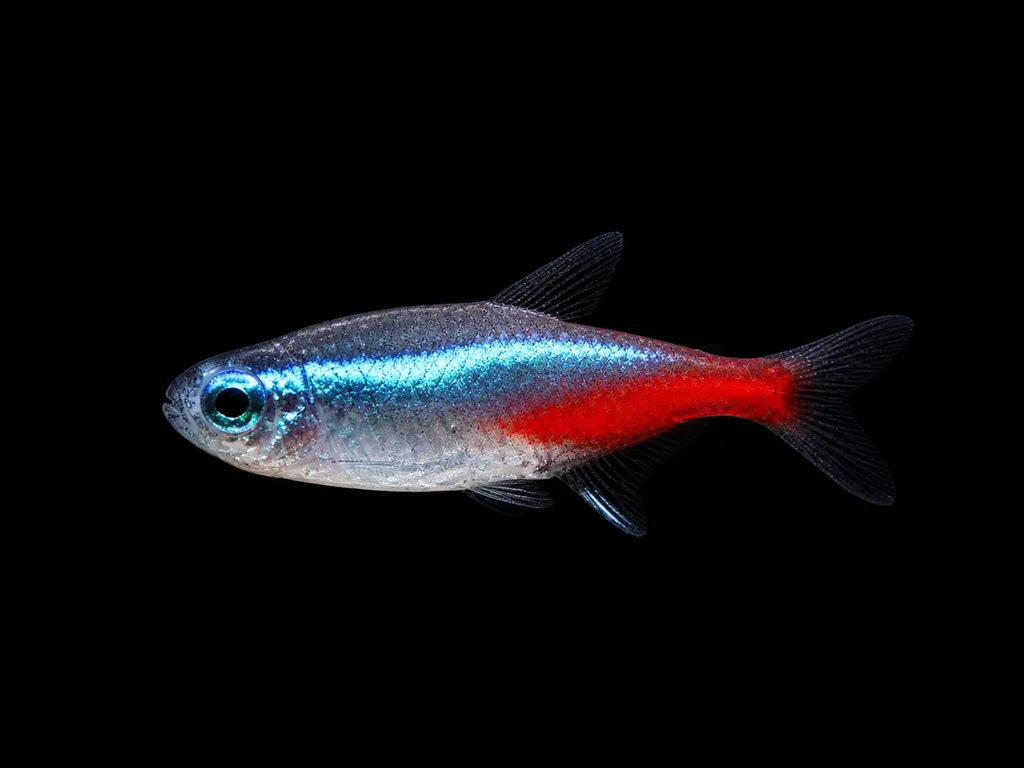
Varieties · Paracheirodon innesi
See all 3 →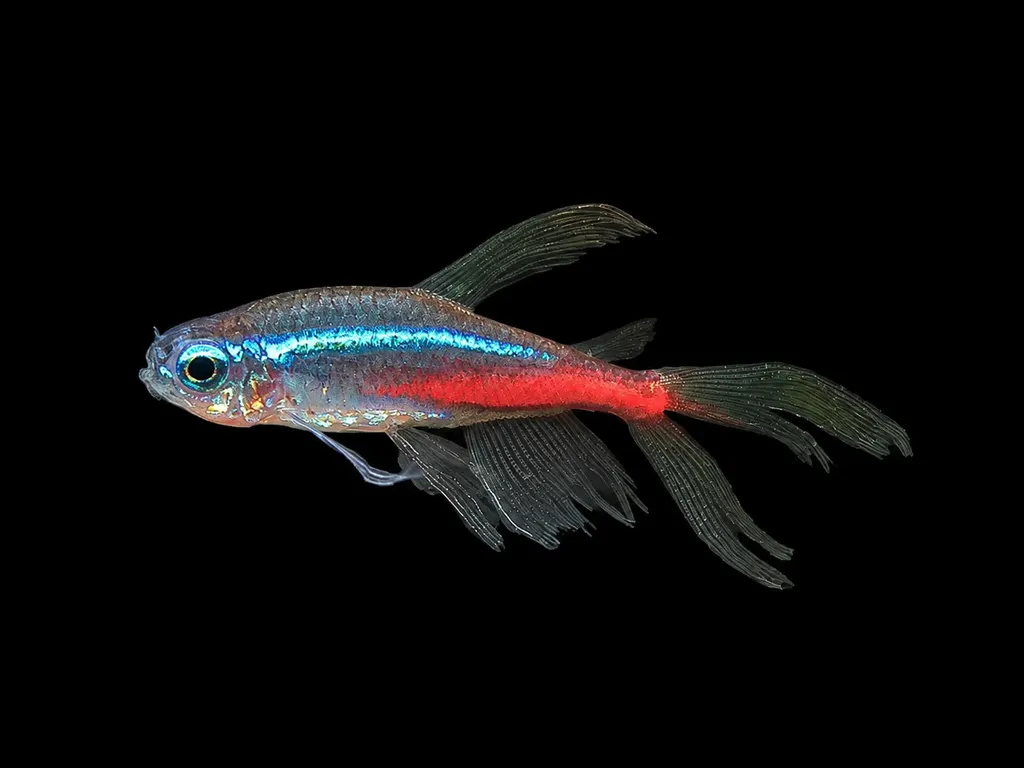
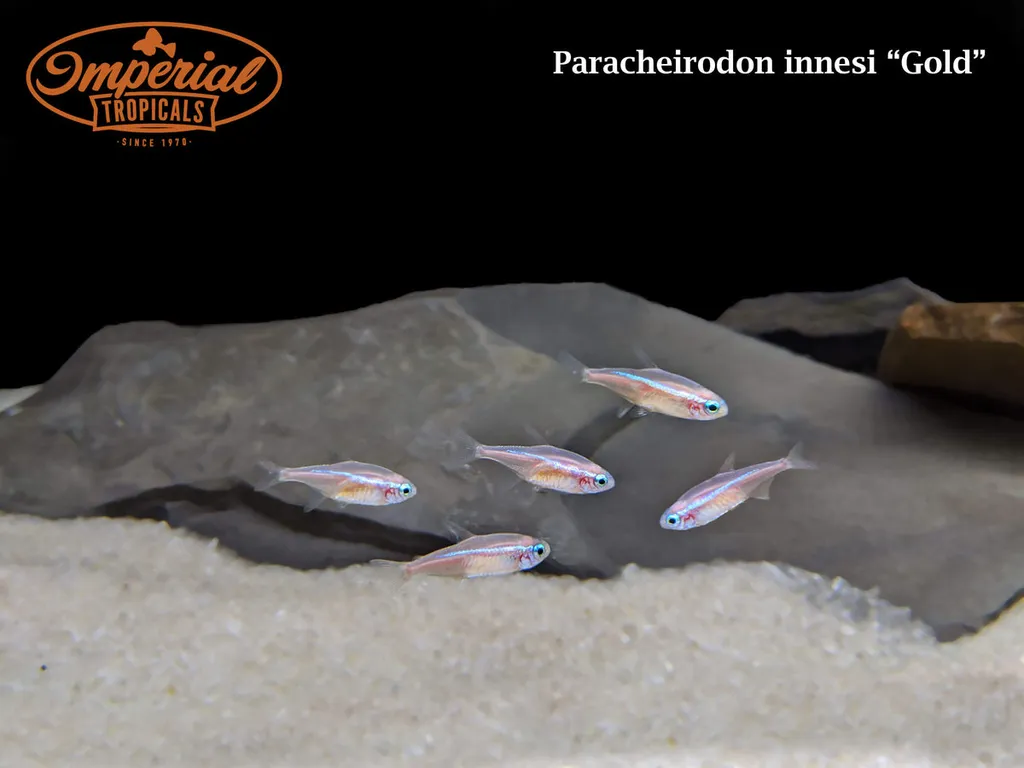
Care at a glance
- Temperature
- 70–77°F
- 21–25°C
- pH
- 5.0–7.5
- Adult size
- 1.5 in
- 3.8 cm
- Minimum tank
- 11 gal
- 40 L
- Temperament
- Peaceful
- Social behavior
- Schooling
- Swim level
- Middle
- Difficulty
- Beginner
- Breeding
- Egg scatterer · Hard
- Rarity
- Very common
- Family
- Characidae
Overview
The diamond neon tetra is a selected strain of the neon tetra, with a reflective patch over the head and nape. It is a peaceful schooling fish for a community tank, and a good first fish.
Did you know
The diamond neon tetra's patch is structural color, made by light bouncing off stacked platelets inside cells rather than by pigment. A neon's blue stripe works the same way. This strain spreads that trick over the head and back, which is why the patch flashes rather than glowing steadily.
Caring for the diamond neon tetra
Keep diamond neon tetras in a group of six or more, in 11 gal (40 L) or larger. They suit a planted tank with some floating cover and a dark substrate. They swim in the middle of the tank and school tightly when something spooks them.
Give them soft water on the acidic side, at 70 to 77°F (21 to 25°C) and a pH of 5.0 to 7.5. Feed small flakes and micro pellets, and add the odd frozen treat such as daphnia or baby brine shrimp.
Diamond neons are peaceful, so pick small, gentle tank mates. They scatter their eggs and give them no care, and breeding them is hard.
Good to know
The diamond neon tetra is listed in shops as Diamond Head or Blue Diamond. Its patch sits between the eyes and the dorsal fin, while the blue stripe and red rear half stay put. The shine comes from iridophores spread across the top of the body. Selection in this strain is for coverage rather than for a new color. Coverage varies between batches, and the effect depends on viewing angle, so a fish that looks plain in a shop tank often is not.
In the wild
The diamond neon tetra does not occur in the wild. Seriously Fish counts diamond, in which the dorsal surface is covered in reflective scales, among the established neon strains. No breeder, country or decade is on record for the line, and sellers such as Aquatic Arts describe it only as tank-bred.
Weekly picks
Tank mates
The diamond neon tetra is a peaceful, schooling species that keeps to the middle. These picks share a community profile with it, are safe together in both directions, and overlap on water type, temperature and pH.
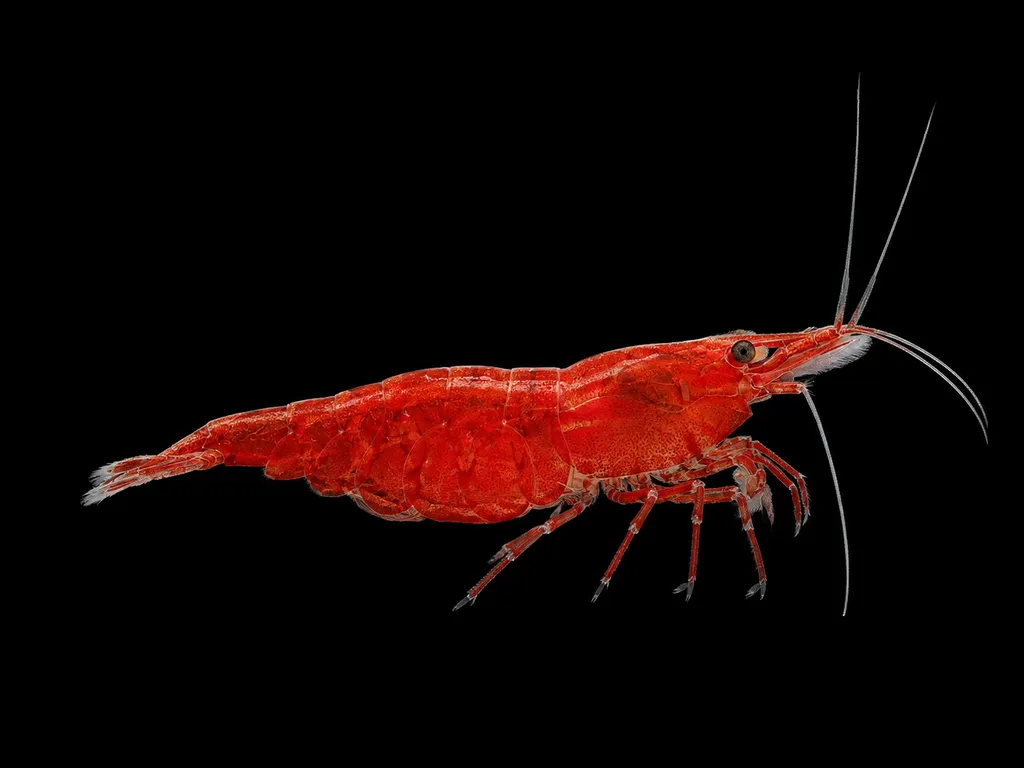
Neocaridina shrimp
Neocaridina davidi
Freshwater1.6 in (4 cm) · 5 gal (19 L)59–84°F (15–29°C)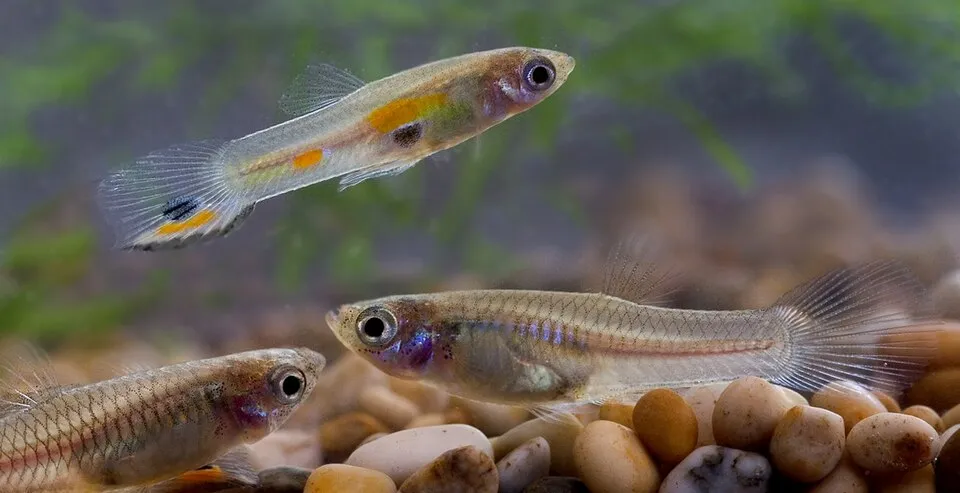
Guppy
Poecilia reticulata
FreshwaterBrackish2.4 in (6 cm) · 10 gal (38 L)64–82°F (18–28°C)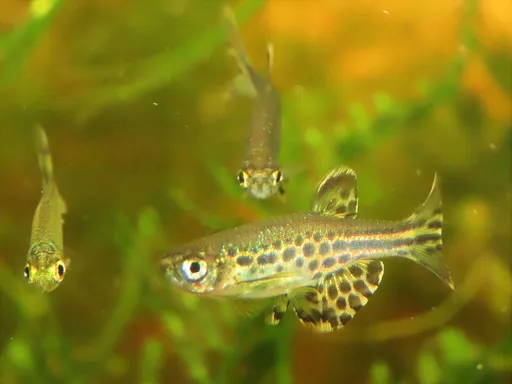
Gold ring danio
Danio tinwini
Freshwater1.2 in (3 cm) · 11 gal (40 L)64–79°F (18–26°C)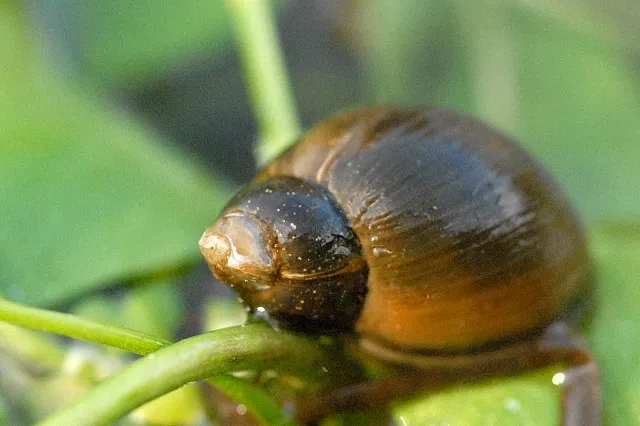
Wandering snail
Ampullaceana balthica
Freshwater0.8 in (2 cm) · 11 gal (40 L)50–84°F (10–29°C)
Fire-eyed loach
Barbucca diabolica
Freshwater1.2 in (3 cm) · 11 gal (40 L)72–79°F (22–26°C)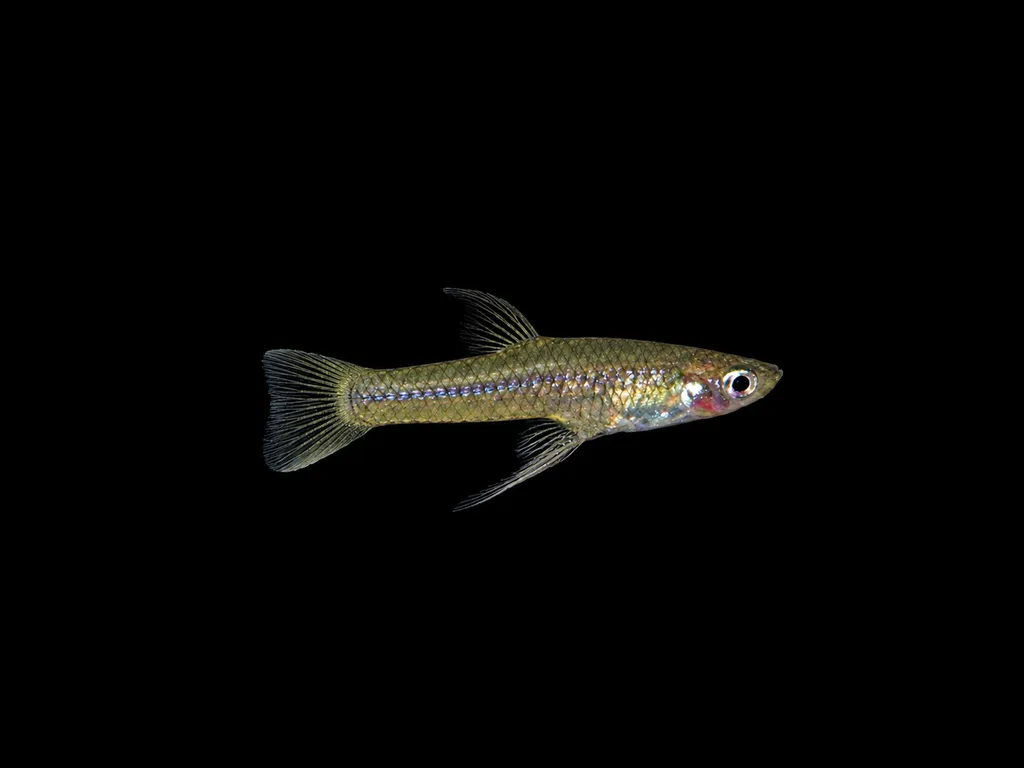
Sicklefin livebearer
Girardinus falcatus
Freshwater2.6 in (6.5 cm) · 11 gal (40 L)68–82°F (20–28°C)
Common questions
Is a diamond neon tetra a different species from the neon tetra?
No. A diamond neon tetra is a variety of the neon tetra, Paracheirodon innesi, and it wants the same tank, water and food as the species.
What size tank does a diamond neon tetra need?
A diamond neon tetra needs at least 11 gal (40 L). It spends most of its time in the middle.
What does a diamond neon tetra eat?
A diamond neon tetra takes small flakes and micro pellets, plus the odd frozen treat such as daphnia or baby brine shrimp.
How big does a diamond neon tetra get?
An adult diamond neon tetra reaches about 1.5 in (3.8 cm).
Does a diamond neon tetra need a group?
Yes. A diamond neon tetra is a schooling species and should be kept in a group, not singly.
How does a diamond neon tetra breed?
Diamond neon tetras scatter their eggs and give them no care. Breeding them is hard.
Related species
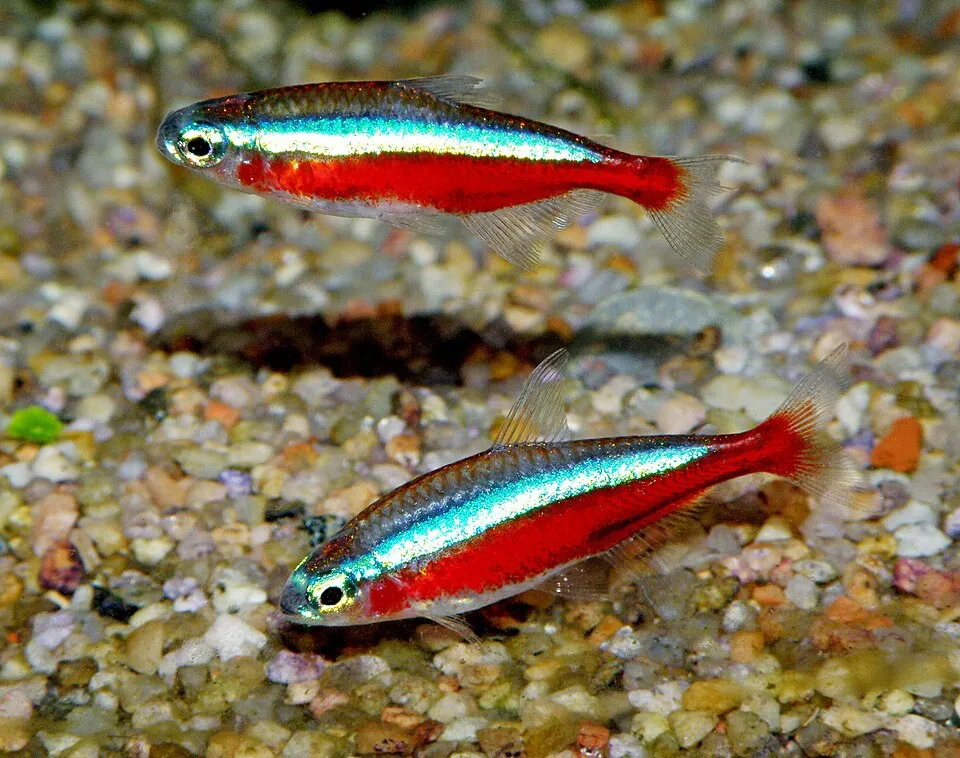 1.8 in (4.5 cm)16 gal (60 L)73–84°F (23–29°C)
Cardinal tetra
Paracheirodon axelrodi
1.8 in (4.5 cm) · 16 gal (60 L)
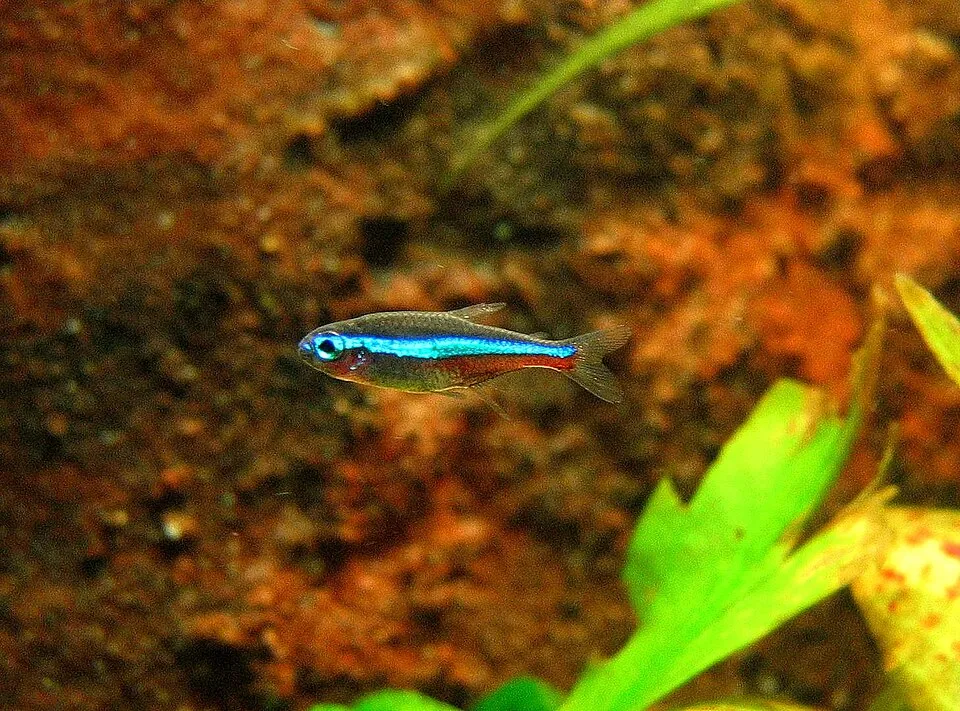 1 in (2.5 cm)11 gal (41 L)72–86°F (22–30°C)
Green neon tetra
Paracheirodon simulans
1 in (2.5 cm) · 11 gal (41 L)
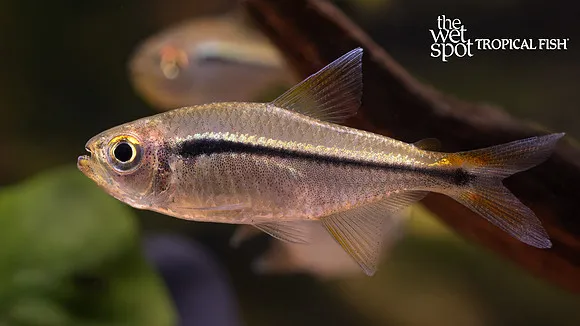 1.5 in (3.8 cm)15 gal (55 L)72–81°F (22–27°C)
Eschwartzae tetra
Hyphessobrycon eschwartzae
1.5 in (3.8 cm) · 15 gal (55 L)
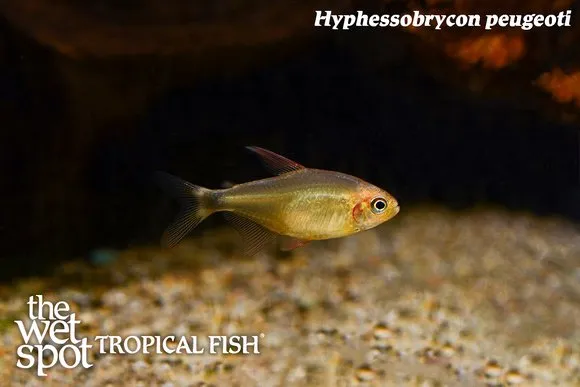 1.5 in (3.8 cm)15 gal (55 L)72–81°F (22–27°C)
Peugeot's tetra
Hyphessobrycon peugeoti
1.5 in (3.8 cm) · 15 gal (55 L)
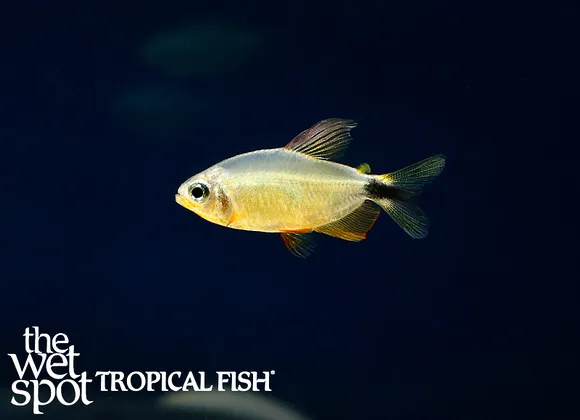 1.5 in (3.8 cm)15 gal (55 L)72–81°F (22–27°C)
Procyon tetra
Hyphessobrycon procyon
1.5 in (3.8 cm) · 15 gal (55 L)
- 1.5 in (3.8 cm)15 gal (55 L)73–82°F (23–28°C)
Piabinhas tetra
Hyphessobrycon piabinhas
1.5 in (3.8 cm) · 15 gal (55 L)