Betta fish tank setup: tank size, heater and plants
By Curtis W. · Updated Oct 20, 2026 · 7 min read

Betta splendens comes from still, sluggish water such as rice paddies, swamps and roadside ditches, where oxygen can run low. It copes because its labyrinth organ lets it breathe air gulped at the surface. A betta fish tank is built around that surface. The water stays warm and barely moving, plants reach the top and a close lid holds in the humid air the fish breathes.
Feeding, fish tank mates and the wild Betta species have their own page, the betta fish hub. Here the tank holds one show betta, with two mystery snails as an optional cleanup crew.
A long, low tank
Pick a long, low tank over a tall one of the same volume. A base of about 18 by 12 inches (45 by 30 cm) suits a single male. Tall column and hexagon tanks put the same water under a smaller surface.
The cultivated forms can be weak swimmers. They still have to reach the surface for air, and a shallow tank keeps that trip short. A long tank also has more surface for its volume, and the surface is where a betta breathes and floating plants grow.
The betta's profile lists a minimum of 5 gallons (19 liters) for a fish that grows to 3 inches (7.5 cm). A bigger tank stays clean longer between water changes. A half-gallon bowl may need a water change every day, while a 5 gallon tank can usually go one to two weeks.
Heat to 78°F
Bettas are tropical fish, listed in the catalog at 72–86°F (22–30°C). Hold the tank in that band with an adjustable heater that has a built-in thermostat. Use one even in a warm home, since swings in temperature stress fish.
Set the thermostat to 78°F (26°C). Care sheets put a betta between 76 and 82°F (24 and 28°C), and 78°F sits well inside that span. It also suits the mystery snails in the plan further down, whose profile tops out at 79°F (26°C).
Size the heater by how far it has to lift the water above room temperature. Allow about 5 watts per gallon for a rise of 10°F (5.6°C), with a lid on the tank. A 10 gallon (38 liter) tank in a 68°F (20°C) room needs about 50 watts to hold 78°F. A 5 gallon tank needs about 25 watts.
A colder room needs more heat. Add a second heater once the water has to sit 15°F (8.3°C) above room temperature. Two smaller heaters cover for each other if one shuts off.
Put the heater beside the filter's outflow so the warmth spreads, and a thermometer in the far corner to confirm the heat reaches it. Most heaters need to sit in the water for 30 minutes before you switch them on.
Gentle flow for long fins
Strong currents whip a betta around the tank and tire out the long-finned forms. The paddies and ditches it comes from have almost no flow.
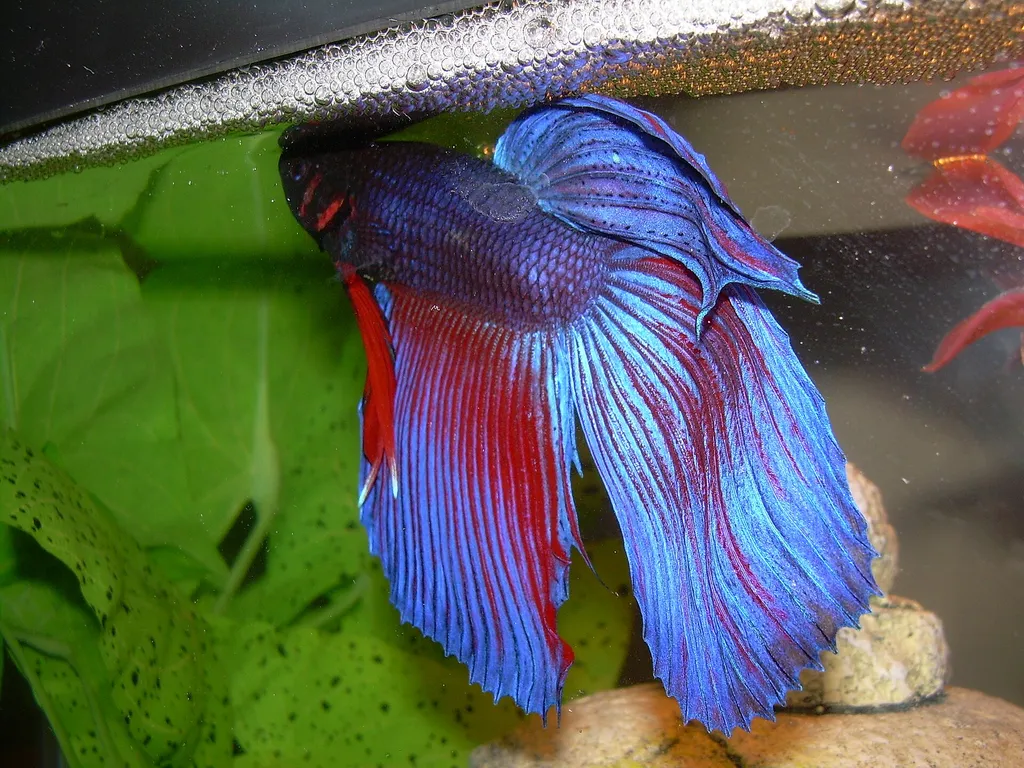
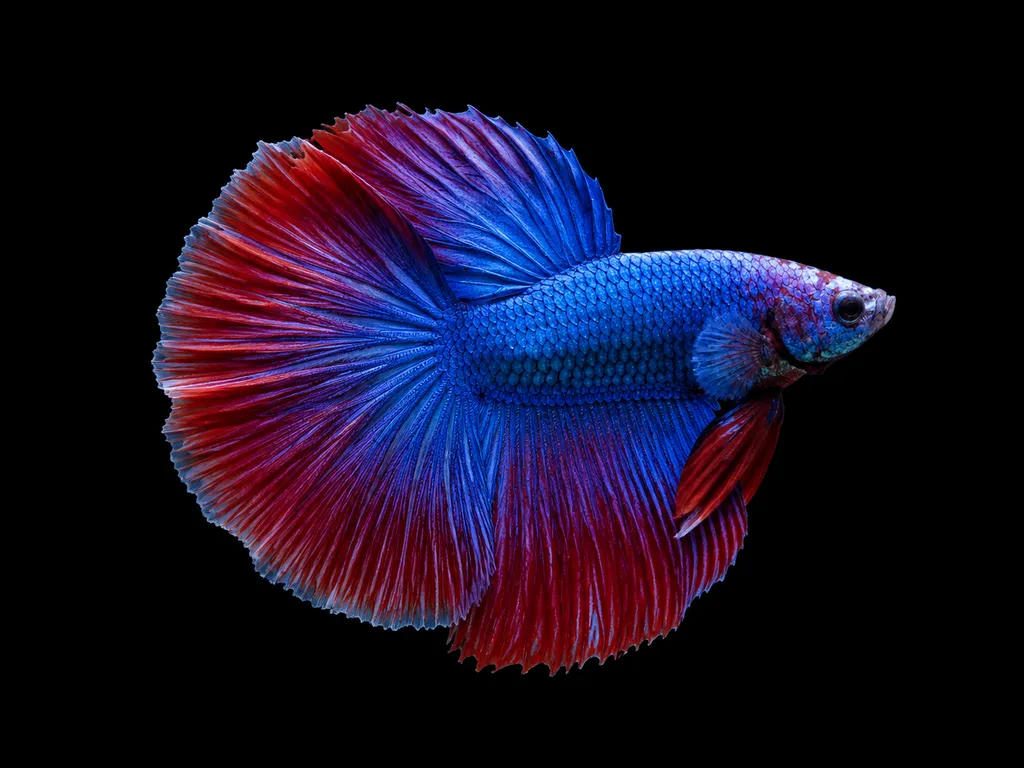
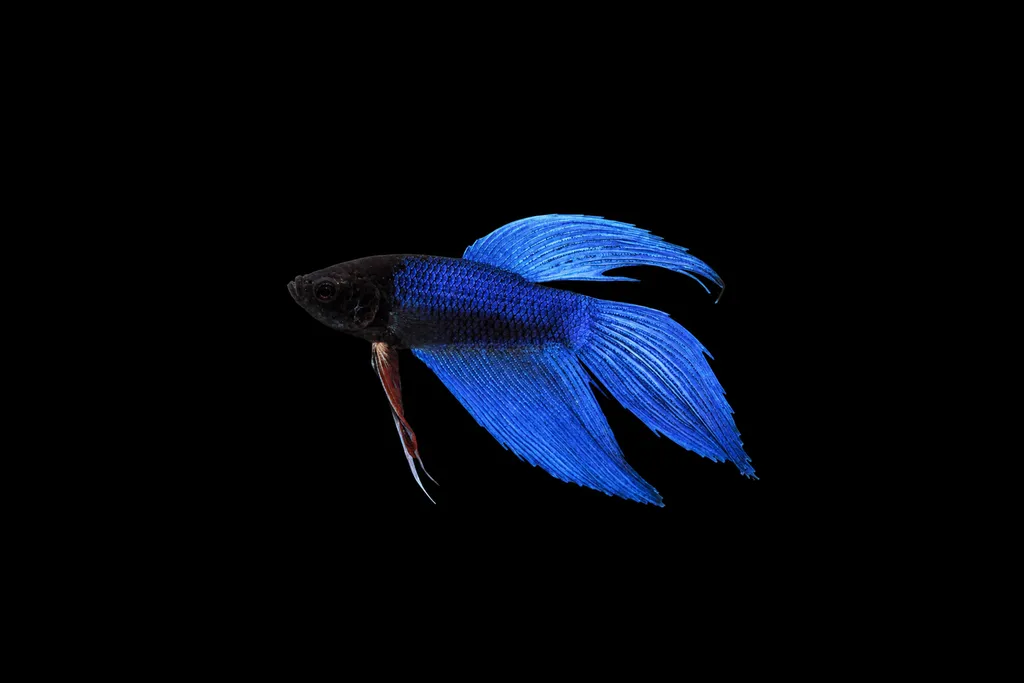
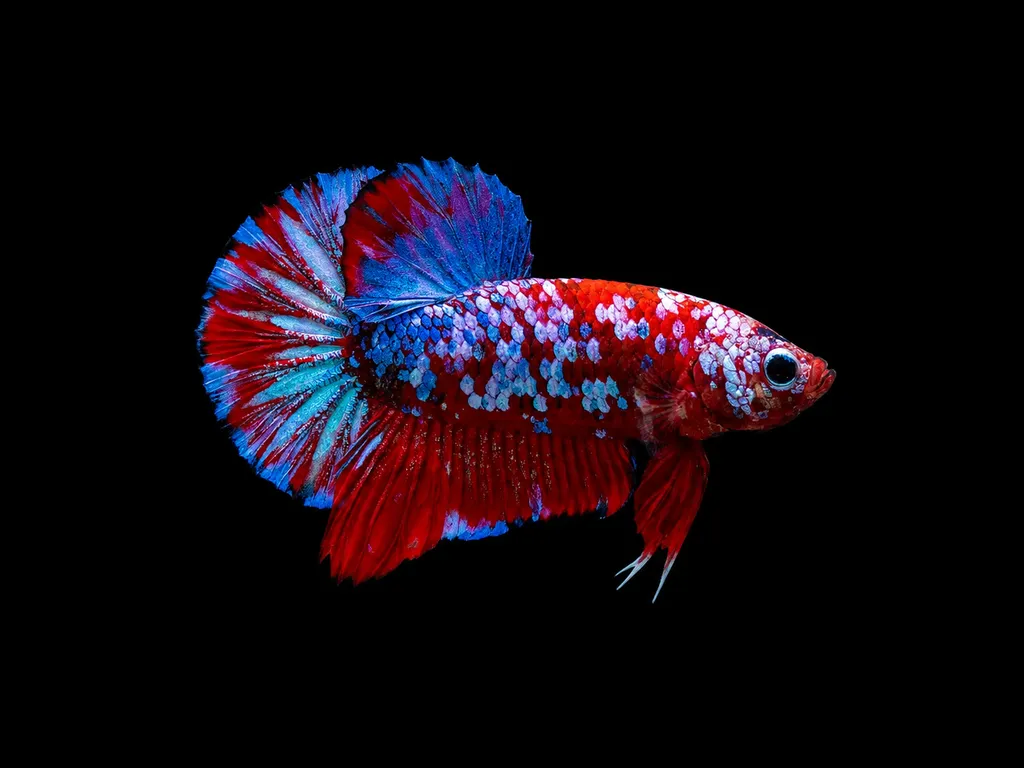
A halfmoon betta's tail spreads a full half circle, and a veiltail trails a long, downward-sweeping one. Both need the gentlest flow you can give them. The plakat is short-finned, closest to the wild build and the strongest swimmer of the forms.
An air-driven sponge filter suits all of them. Rising bubbles draw water through the foam, and the foam gives the filter's bacteria a place to grow. Turn the air down until the water moves gently and the betta can hover near the outflow without being pushed. If the air pump sits below the top of the tank, a check valve on the airline stops water from running back down it.
If you already own a hang-on-back filter, baffle it. A plant or ornament in front of the outflow breaks up the current. Keep the outflow from churning the surface too.
A lid with air under it
A betta tank needs a close lid with a layer of air between it and the water. Never fill the tank to the brim, because a betta needs the humid air that forms above the surface. The lid keeps that air warm and cuts evaporation, which saves the heater work.
Mystery snails lay their eggs above the waterline, sometimes on the lid itself. Keep the water within 1.5 inches (4 cm) of the top so they find no room to lay eggs. That gap still leaves the betta its layer of air. Scrape off any clutch you find before it hatches, and keep the lid tight, since the snails climb out too.
Plants at the surface
Floating plants shade the tank, and a betta likes to hang just under them. They also give a male somewhere to anchor a bubble nest. Leave part of the surface open for the fish to breathe at.
Amazon frogbit and Salvinia natans are rated beginner and need no CO₂. Both are marked invasive, so put the trimmings in the trash and never release them outdoors. Floating water sprite, a fern rated easy, needs no CO₂ either.
Floating plants →26 plants
Broad leaves near the top give the fish a place to rest, and a large anubias leaf makes a good hammock. Anubias grows on wood or rock rather than in the substrate. Tie an Anubias barteri to wood that reaches toward the surface. Java fern attaches the same way and suits a betta tank too.
Indian almond leaves
Dried Indian almond leaves come from Terminalia catappa, and a new one usually floats for its first three to seven days. Bettas sometimes build a bubble nest beneath a floating leaf. A leaf lasts one to two months before it breaks down, and it stains the water yellow-brown with tannins as it goes.
Keepers credit the leaves with fighting disease, but their antibacterial and antifungal effects are slight. In one lab study, bettas bathed in a measured leaf extract for three days survived better than untreated fish. The authors reported better resistance to an injected bacterium, Aeromonas hydrophila, as well. A dried leaf is not that extract, so do not count on one to cure a sick fish.
Start with one leaf of 4 to 7 inches (10 to 18 cm) for every 5 to 20 gallons. The tannins lower the pH slowly, and the mystery snail lists a pH of 6.5–8.0 against the betta's 6.0–7.5. In a tank with snails, test the pH after adding leaves and keep it at 6.5 or above.
Decor without sharp edges
Long fins tear on rough edges, and a torn fin can open the way to fin rot. Feel every ornament before it goes in, and leave out anything with a sharp point, a rough seam or flaking paint. Artificial plants need the same check.
Skip metal ornaments that can rust. Any cave or hole should be wide enough for the betta to swim through without getting stuck. Live plants, driftwood and smooth, inert rock are the safest things to build with.
Light on a timer
A light shows off the fish, grows the plants and gives the tank a day and a night. Put it on an outlet timer so it switches on and off at the same time every day. Start a newly planted tank on a photoperiod of 6 to 8 hours, and never leave the light on overnight.
A mat of floaters softens the light, and a shady tank suits a betta. If algae starts to spread, cut the hours back.
Four to six weeks with no fish
Fish waste breaks down into ammonia, and a new filter has none of the bacteria that clear it. Growing them is the nitrogen cycle, and it takes four to six weeks in most tanks. Cycle the tank empty, because a cycle run with fish in it can kill them.
Feed the empty tank bottled ammonia and test the water daily. The tank is ready once it clears a full dose to 0 ppm ammonia and 0 ppm nitrite within 24 hours. Bottled bacteria can shorten the wait, but they cannot be relied on to finish a cycle quickly. The cycling guide gives the dose for each tank size and the rest of the fishless routine.
Mystery snails for cleanup
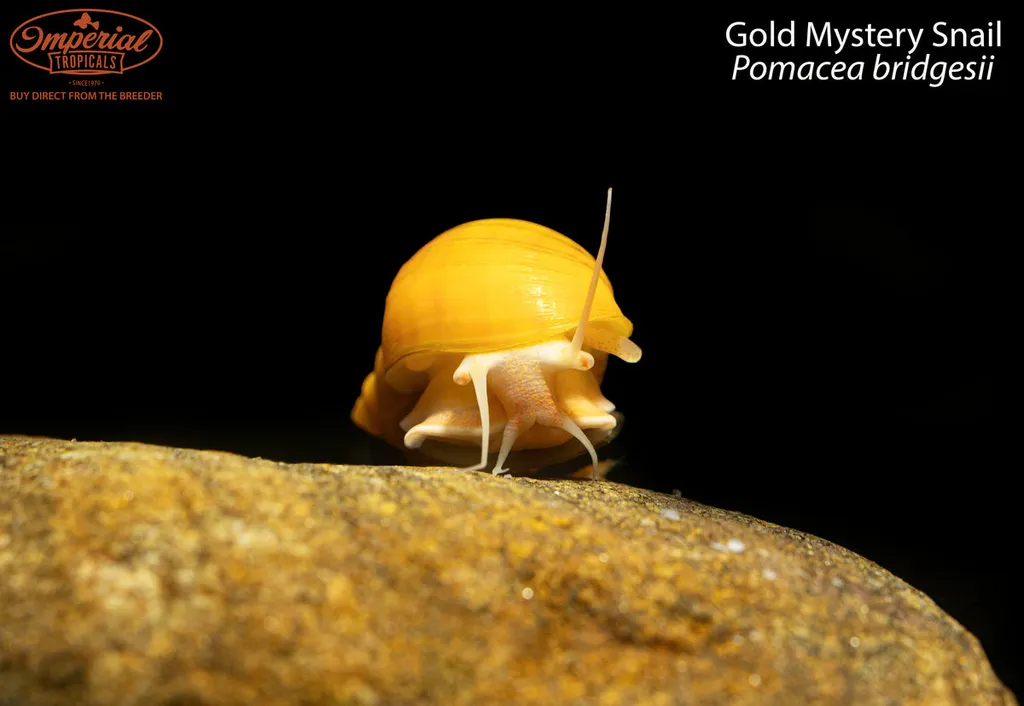
Mystery snails eat the pellets a betta misses, along with algae, biofilm and dead leaves. The 10 gallon freshwater tank page pairs a betta with two of them, and the plan below works it through the stocking calculator.
A betta with mystery snails
These species overlap at 72–79°F (22–26°C), pH 6.5–7.5.
Watch the first few days. A mystery snail feeds in daylight, and a betta may take its long feelers for worms. If the betta keeps picking at the snails, move them to another tank.

Fish tank mates need at least 10 to 20 gallons, with plenty of cover and live plants. The betta fish hub covers which fish can share the tank.
Betta fish →78 species
Changing the water
Change 15 to 25 percent of the water each week. Test before each change, and do an extra one whenever ammonia or nitrite reads above 0 ppm.
- Unplug the heater and filter before the water level drops, since neither is made to run in air.
- Siphon waste and uneaten food from the substrate as you drain.
- Treat the new water with dechlorinator.
- Match its temperature to the tank by feel, since a hand can sense a difference of one or two degrees.
- Refill the tank, then plug the heater and filter back in.
Once a month, squeeze the sponge out in a bucket of the old tank water, never under the tap. Write each test and change into a maintenance log, so you can see what changed when the betta looks off.
FAQ
Common questions
What temperature should a betta tank be?
Set the thermostat to 78°F (26°C). Care sheets put a betta between 76 and 82°F (24 and 28°C), and 78°F also suits mystery snails, which list up to 79°F (26°C).
What size heater does a betta tank need?
Allow about 5 watts per gallon to hold the water 10°F (5.6°C) above room temperature. That works out to 25 watts for a 5 gallon tank and 50 watts for a 10 gallon. A colder room needs a bigger heater or a second one.
Do betta tanks need a filter?
Yes. An air-driven sponge filter keeps the water clean and holds the tank's bacteria without pushing long fins around.
How full should a betta tank be?
Leave a layer of air under the lid, but keep the water within 1.5 inches (4 cm) of the top. A betta breathes from that humid air, and the narrow gap leaves mystery snails no room to lay eggs.
Are Indian almond leaves good for bettas?
They give a betta cover while they float, and they stain the water with tannins as they break down. The disease claims rest mostly on lab work with a leaf extract, so do not rely on a leaf to treat a sick fish.
Should a betta tank light be off at night?
Yes. Put the light on an outlet timer for 6 to 8 hours a day, and leave the tank dark overnight.
Sources
The claims the catalog does not hold come from these pages.
- Betta Fish Care Sheet, PetMD
- Setting Up a Freshwater Aquarium: Step-by-Step Guide, PetMD
- Betta Fish Care Guide: Habitat, Feeding, and Health, Chewy
- Betta splendens (Siamese Fighting Fish), Seriously Fish
- Frequently asked questions on Siamese fighters, Practical Fishkeeping
- Guidelines released for keeping Fighters, Practical Fishkeeping
- How to Cycle a Fish Tank: The Complete Guide, Practical Fishkeeping
- How to Choose the Right Aquarium Heater, Aquarium Co-Op
- How to Set up a Beautiful Betta Fish Tank, Aquarium Co-Op
- Care Guide for Betta Fish, Aquarium Co-Op
- How to Make Your Betta Fish Happy with 5 Enrichment Ideas, Aquarium Co-Op
- Sponge Filters: The Easiest Fish Tank Filter Ever, Aquarium Co-Op
- How to Balance Aquarium Lighting to Grow Healthy Plants (and Avoid Algae), Aquarium Co-Op
- Are Indian Almond Leaves Good for Aquarium Fish?, Aquarium Co-Op
- Care Guide for Mystery Snails, Aquarium Co-Op
- 5 Best Tank Mates for Betta Fish in a Community Aquarium, Aquarium Co-Op
- How to Properly Clean Your Fish Tank, Aquarium Co-Op
- Terminalia catappa L. extract improves survival, hematological profile and resistance to Aeromonas hydrophila in Betta sp., Fisheries & Aquatic Life (Nugroho et al., 2017)
Keep a record of your own tank
TankBud tracks water tests, reminders and how full your tank reads, free for up to 4 tanks.
More guides
Tank setups
Shrimp tank setup: water, tank size and equipment
Cherry shrimp take dechlorinated tap water while crystal reds need soft RO water, and the rest of a shrimp tank follows from that choice.
By Curtis W. · Updated Oct 20, 2026 · 8 min read
Tank setups
Goldfish tank setup: tank size, filter and water
A goldfish tank is sized for the adult fish, and a single fantail already lists 20 gallons.
By Curtis W. · Updated Oct 20, 2026 · 7 min read
Tank setups
Community tank: which fish go together, and how many
Plan a freshwater community tank from the water up, then choose peaceful fish by adult size, swim level and school size.
By Curtis W. · Updated Oct 20, 2026 · 8 min read


