Community tank: which fish go together, and how many
By Curtis W. · Updated Oct 20, 2026 · 8 min read

A community tank holds several peaceful species that share the same water and leave each other alone. Take a 29 gallon tank with ten neon tetras, an angelfish, two tiger barbs and a common pleco for the algae. The angelfish grows big enough to swallow a neon, and the barbs go after its long fins. The pleco and the angelfish both outgrow the tank.
Every one of those problems shows on the species pages before you buy. Plan the tank on paper first, starting with the water. Buy the fish in stages once the plan holds together.
Pick fish for the water you have
A tank has one heater and one water supply, so every fish in it lives at the same temperature and pH. Each species page lists a range for both. A community works only inside the band where all of those ranges overlap. The four fish in the 29 gallon plan further down share the band in the table's last row.
| Fish | Temperature | pH |
|---|---|---|
| Neon tetra | 70 to 77°F (21 to 25°C) | 5 to 7.5 |
| Harlequin rasbora | 72 to 82°F (22 to 28°C) | 6 to 7 |
| Panda cory | 72 to 77°F (22 to 25°C) | 6 to 7.5 |
| Bristlenose pleco | 70 to 79°F (21 to 26°C) | 6.5 to 7.5 |
| Shared band | 72 to 77°F (22 to 25°C) | 6.5 to 7 |
The bristlenose sets the low end of that pH band and the harlequins set the high end. The neons and the cories cap the temperature at 77°F (25°C).
Set the heater inside that band, and check every later addition against it too. Some fish never share a band at all. White Cloud Mountain minnows list 57 to 72°F (14 to 22°C), and discus list 79 to 90°F (26 to 32°C). The fish compatibility chart marks that pair as a conflict on temperature alone.
Blue rams list 81 to 86°F (27 to 30°C), which never meets a panda cory's 72 to 77°F (22 to 25°C). The warm-water plan on the 29 gallon page gives its rams Sterba's cories instead, at 75 to 82°F (24 to 28°C).
Test your tap water for pH and hardness, then choose fish whose ranges include it. Most freshwater fish do well between pH 6.5 and 8, and a steady pH matters more than an exact one. Livebearers such as platies and mollies prefer harder water with a higher pH. Soft-water fish such as cardinal tetras struggle in hard water.
Fish that only look peaceful
Tiger barbs are marked beginner for care and aggressive for temperament. They are fin nippers, so keep them away from long-finned fish such as bettas and angelfish. The compatibility chart reads an angelfish with tiger barbs as a conflict. It draws that square as an open shape, which marks a risk from temperament or size rather than a recorded fact.
Group size changes how much of that nipping lands on other fish. Keep at least seven tiger barbs, and more than 12 if the tank allows. A big group spreads the aggression around. Two or three barbs have no school to absorb it.
Bottom fish can hold territory too. The red-tailed black shark is marked mostly peaceful but grows more territorial with age. It picks on other bottom-dwelling fish, and the chart reads it with panda cories as a caution.
Mostly peaceful sits between peaceful and aggressive in the catalog's temperament marks. A fish with that mark suits most communities but may chase, nip or hold a territory, most often when breeding or crowded. The community fish hub lists only fish with the top mark, peaceful. The beginner fish hub keeps to fish that stay small and forgive a new keeper's mistakes.
Community fish →986 species
Beginner freshwater fish →250 species
Adult size, and what fits in a mouth
Plan every fish at its adult size. A tank stocked with young fish all at once ends up badly overstocked once they grow.
A neon tetra grows to 1.5 inches (3.8 cm), and an angelfish to 5.9 inches (15 cm). An angelfish suits most communities but may still eat small tetras. That pair reads as a size risk on the chart.
The chart checks length only for fish recorded as eating smaller fish, such as angelfish and gouramis. A tank mate under about a third of that fish's length reads as a size risk. A bristlenose pleco is over three times a neon's length. The chart still recommends a pleco with neons, because plecos are not recorded as fish eaters.
The 55 gallon plan gives an angelfish pair congo tetras instead. Congo tetras grow to 3.1 inches (8 cm), long enough to clear the size check.
An angelfish pair with congo tetras
These species overlap at 75–79°F (24–26°C), pH 6.5–7.5.
Top, middle and bottom
Every species page rates a swim level of bottom, middle or top. Corydoras and plecos work the bottom, most tetras and rasboras school in open water and hatchetfish hang just under the surface. A classic 10 gallon community has one centerpiece, one mid-water group, one bottom group and an algae eater.

Hatchetfish are timid and jump when startled, so they need calm tank mates and a tight-fitting lid. Gouramis breathe air at the surface and need a gap between the water and the lid. Cories need their own sinking food, since more aggressive eaters can leave them short at feeding time.
A plan spread across all three levels uses more of the tank than one that stacks every species in open water. The stocking calculator counts that difference. Fish at the same level crowd each other in its math. A group at another depth adds only a small share of the room it would claim alone.
Six cories under a school of tetras cost less room than a second mid-water school. Their waste still counts in full. The six fish below cover all three levels between them.
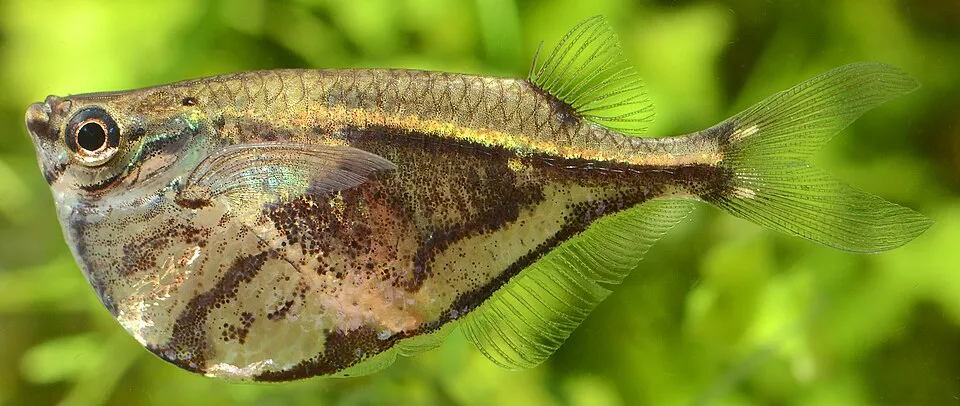
Marbled hatchetfish
Carnegiella strigata
Freshwater1.6 in (4 cm) · 32 gal (120 L)68–82°F (20–28°C)
Neon tetra
Paracheirodon innesi
Freshwater1.5 in (3.8 cm) · 11 gal (40 L)70–77°F (21–25°C)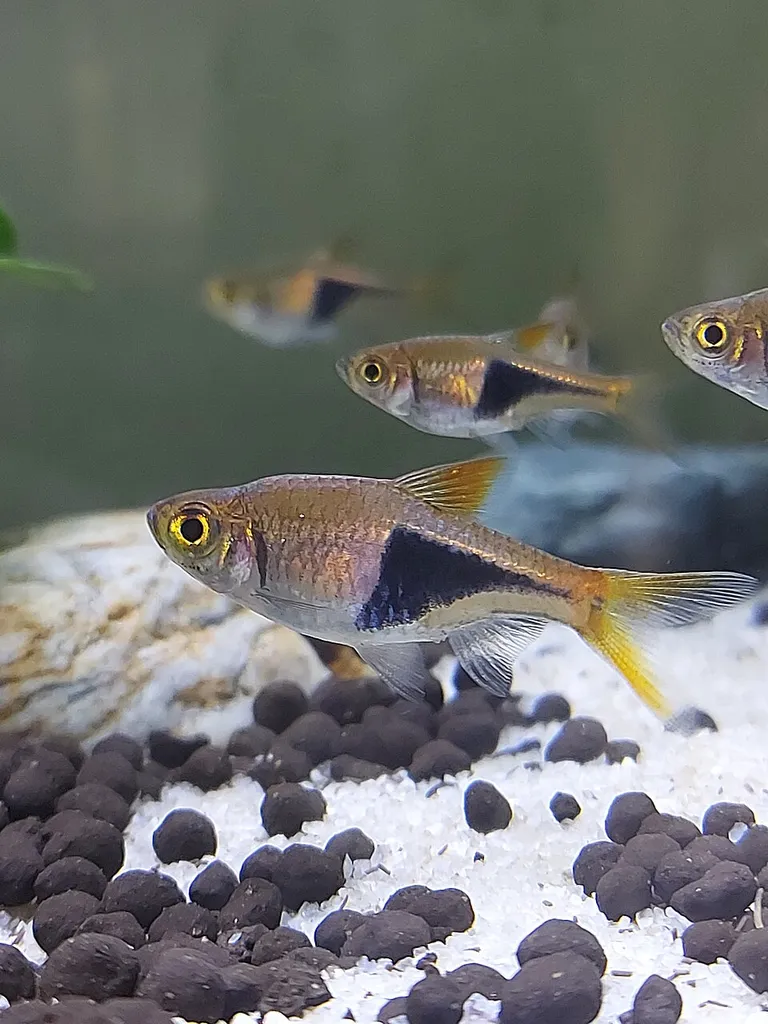
Harlequin rasbora
Trigonostigma heteromorpha
Freshwater2 in (5 cm) · 15 gal (55 L)72–82°F (22–28°C)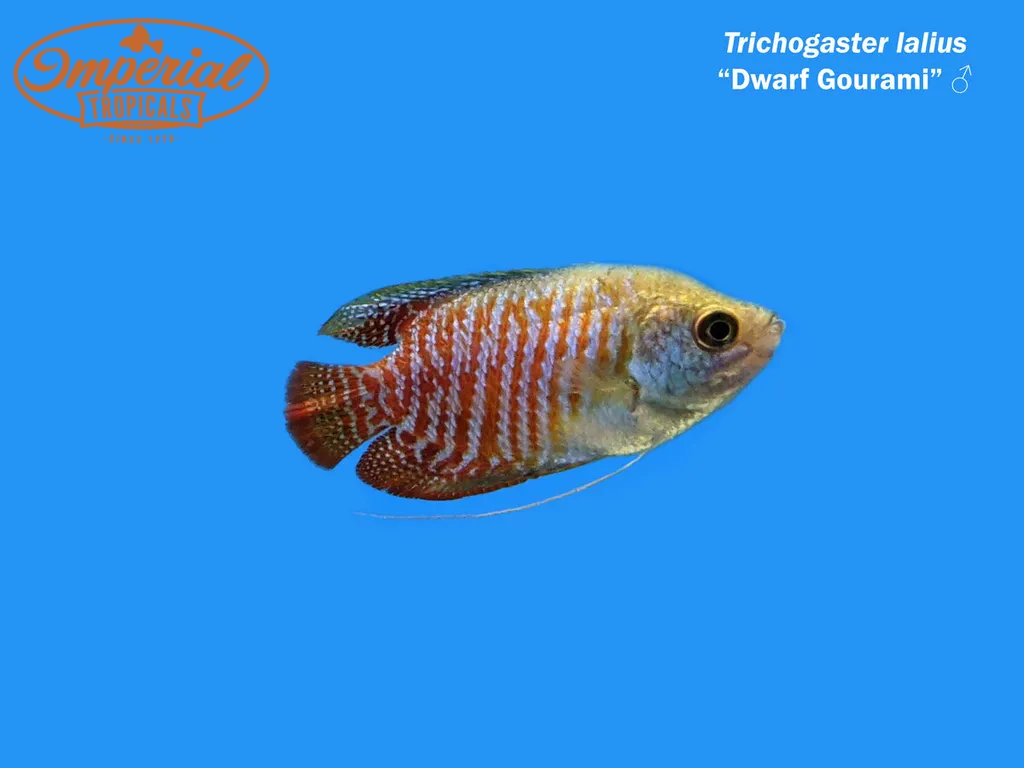
Dwarf gourami
Trichogaster lalius
Freshwater3 in (7.5 cm) · 10 gal (38 L)72–81°F (22–27°C)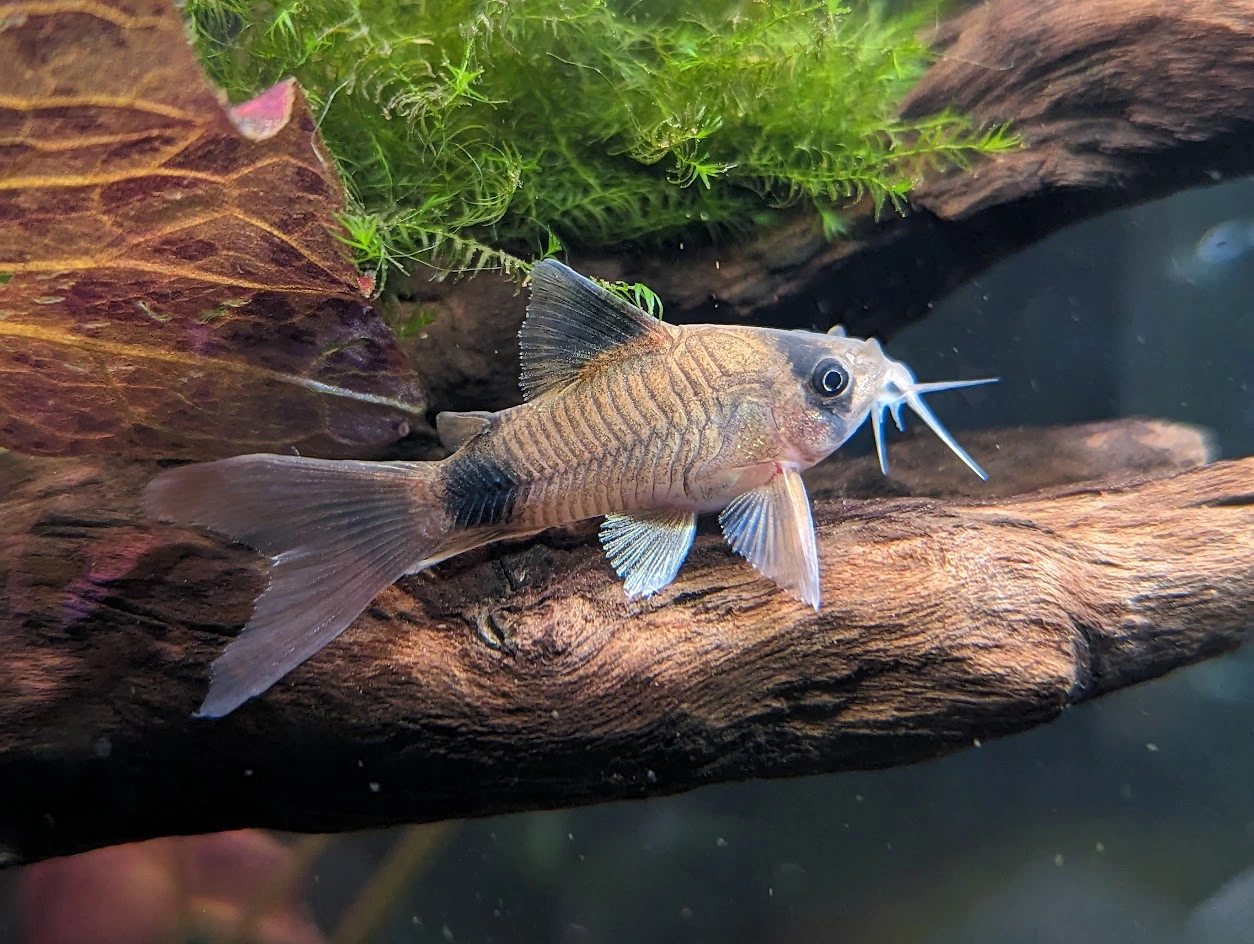
Panda cory
Hoplisoma panda
Freshwater2 in (5 cm) · 11 gal (41 L)72–77°F (22–25°C)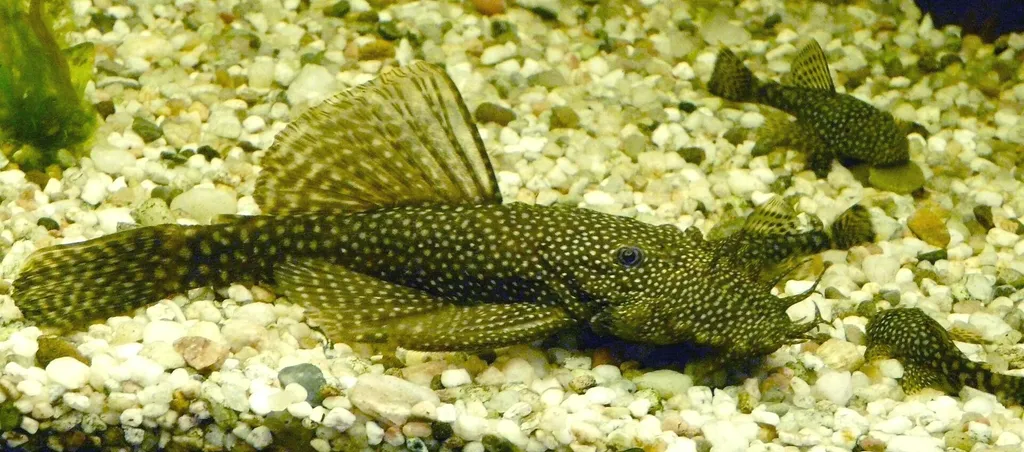
Bristlenose pleco
Ancistrus sp.
Freshwater4.9 in (12.5 cm) · 20 gal (75 L)70–79°F (21–26°C)
How many of each
Six fish is the smallest group of a schooling species the stocking calculator accepts without a warning. The same goes for shoaling fish such as corydoras, and a cory group should be one species. A few species list their own group size, and the calculator uses that number instead.
Treat six as the floor for a school. Neon tetras settle best in groups of 8 to 10 or more. Shoaling fish turn more nervous in small numbers, and some keepers argue that six fish hardly make a shoal at all.
Spend spare room on bigger groups before you add another species. A schooling fish's listed minimum tank covers its first six in the calculator, and each fish past that adds only a little room. A new species brings its own minimum and its own starting group. The 29 gallon plan below runs two schools of eight over a panda cory group and one bristlenose pleco.
Two schools over panda cories
These species overlap at 72–77°F (22–25°C), pH 6.5–7.0.
One centerpiece
A centerpiece is the one bigger or brighter fish that the rest of the tank frames. Size it to the tank first. The dwarf gourami lists 10 gallons (38 liters), the pearl gourami 29 gallons (111 liters) and the angelfish 53 gallons (200 liters).
Keep one unless the species tolerates its own kind. A dwarf gourami works as the main fish in a small tank, but two males fight in anything short of a very large one.
Angelfish can live alone, in a pair or in a small group. They grow taller than they are long, so adults need a tank at least 20 inches (50 cm) tall. A bonded pair also defends the spot where it spawns.
Gouramis carry the same size check as angelfish. A pearl gourami reads as a size risk beside neon tetras. The 40 gallon plan pairs one with rummy-nose tetras at 2 inches (5 cm) instead. One dwarf gourami sits over ten neon tetras and six panda cories in the 20 gallon plan.
Neon school with a dwarf gourami
These species overlap at 72–77°F (22–25°C), pH 6.0–7.5.
Stock the tank in stages
Filter bacteria grow to match the waste they are fed, and every new group of fish adds to that load. Ammonia and nitrite rise a little each time fish go in. New tank syndrome comes from adding fish faster than the bacteria can keep up.
The first fish wait until the tank has finished its cycle. After that, add one species at a time and test the water before each new group.
- A hardy school goes in first, such as harlequin rasboras or cherry barbs. Hardy species cope with the slightly high waste of a young filter.
- More schools and the bottom group follow, each once the tests hold steady after the last addition.
- The centerpiece and any territorial fish go in last. Arriving last sometimes helps a territorial fish accept the others, though not reliably.
Quarantine each new group in a separate tank before it joins the others. A bare tank with a sponge filter, a heater and a hiding spot is enough. Hold most new fish there for four to six weeks after the last sign of disease. Farmed dwarf gouramis can carry an untreatable virus that passes to other species sharing the water.
How the stocking calculator reads a plan
The stocking calculator takes a tank size and each species with a count. It rates two loads, the waste the fish make and the room each species claims. The heavier of the two sets the band. Waste scales with adult body mass, and room comes from each species' listed minimum tank.
The bands run Light, Comfortable, Full, Heavy and Overstocked. A tank smaller than any one species' minimum never reads better than Heavy. The calculator also warns about short schools, water ranges that miss and any fish recorded as eating another in the plan.
Fish that need careful company, such as tiger barbs, get a note that they are not reliably peaceful. The calculator does not grade every pair, so check the same species on the compatibility chart as well.
Plants and filters stay outside the band, so neither one earns room for extra fish in its math. Once the tank runs, the weekly nitrate reading shows whether the stocking holds up.
The inch-per-gallon rule counts length and nothing else. It works passably for small fish of 1 to 3 inches and falls apart once big fish come in. The rule fits one 13.8 inch (35 cm) oscar into a 14 gallon tank and counts it as about nine neon tetras.
The catalog lists 75 gallons (284 liters) for one oscar. The calculator's waste math counts that oscar as more than two hundred neon tetras. Each freshwater tank-size page below carries three checked plans, and any of them opens in the calculator for you to change.
FAQ
Common questions
How many species should go in a community tank?
The checked freshwater plans on the tank-size pages hold two to five species, most of them three or four. Shoals in home tanks usually run smaller than the fish want, so grow each group before you add another species.
How long should I wait between new groups of fish?
Wait at least a week, and test the water before each new group. Add the next one once ammonia and nitrite read zero and nitrate holds below 40 ppm.
Why are my tetras hiding instead of schooling?
Check the group size first. Shoaling fish turn more nervous in small numbers, and neon tetras settle best in groups of 8 to 10 or more. Plenty of plant cover also helps a new group settle.
What does Full mean in the stocking calculator?
Full means the tank is stocked to its limit without crossing it. Light and Comfortable leave room, while Heavy and Overstocked are warnings. A tank below any species' listed minimum reads Heavy at best.
Can I add new fish to an established community tank?
Yes, one species at a time. Check the newcomers against the tank's water band and the compatibility chart, then run the full stock through the stocking calculator. Quarantine them first. A clear divider for the first few days lets the residents see a newcomer before they can reach it.
Sources
The claims the catalog does not hold come from these pages.
- The Fish Keeper's Guide to pH, GH, and KH, Aquarium Co-Op
- What fish can I keep in this hard water?, Practical Fishkeeping
- Care Guide for Tiger Barbs, Aquarium Co-Op
- Epalzeorhynchos bicolor (Red-Tailed Black Shark), Seriously Fish
- Frequently asked questions on stocking densities, Practical Fishkeeping
- The Common plec: A big problem, Practical Fishkeeping
- Pterophyllum scalare (Angelfish), Seriously Fish
- Cookie Cutter Setups for 10-Gallon Freshwater Aquariums, Aquarium Co-Op
- Carnegiella strigata (Marbled Hatchetfish), Seriously Fish
- Care Guide for Cory Catfish, Aquarium Co-Op
- Paracheirodon innesi (Neon Tetra), Seriously Fish
- Are your shoals big enough?, Practical Fishkeeping
- Trichogaster lalius (Dwarf Gourami), Seriously Fish
- Problem solver: New Tank Syndrome, Practical Fishkeeping
- The beginners guide: picking your first tropical aquarium fish, Practical Fishkeeping
- Time to up your social skills in the aquarium, Practical Fishkeeping
- How to Quarantine New or Sick Aquarium Fish the Easy Way, Aquarium Co-Op
- How Many Fish Can I Put in a Fish Tank?, Aquarium Co-Op
Keep a record of your own tank
TankBud tracks water tests, reminders and how full your tank reads, free for up to 4 tanks.
More guides
Tank setups
Shrimp tank setup: water, tank size and equipment
Cherry shrimp take dechlorinated tap water while crystal reds need soft RO water, and the rest of a shrimp tank follows from that choice.
By Curtis W. · Updated Oct 20, 2026 · 8 min read
Tank setups
Goldfish tank setup: tank size, filter and water
A goldfish tank is sized for the adult fish, and a single fantail already lists 20 gallons.
By Curtis W. · Updated Oct 20, 2026 · 7 min read
Tank setups
Betta fish tank setup: tank size, heater and plants
A betta tank is built around the surface the fish breathes from, with steady heat, gentle flow, floating plants and a close lid.
By Curtis W. · Updated Oct 20, 2026 · 7 min read


