Shrimp tank setup: water, tank size and equipment
By Curtis W. · Updated Oct 20, 2026 · 8 min read

Cherry shrimp and crystal red shrimp want opposite water. The cherry shrimp is a Neocaridina and usually does well in dechlorinated tap water. The crystal red, a Caridina, needs soft, acidic water that tap water rarely matches. Pick the shrimp before anything else, since the substrate and the water you fill the tank with both depend on it.
Both kinds want a mature, cycled tank, a filter that cannot swallow babies and no copper anywhere near them. They handle a slightly wrong number far better than a sudden change.
Hard water for cherries, soft water for crystals
Neocaridina: cherry, blue dream and the other colors
Every cherry, blue dream, yellow and orange shrimp sold in stores is one species, Neocaridina davidi, bred into different colors. The colors interbreed freely, so a mixed tank drifts toward brown or gray within a few generations. The species is native to streams in Taiwan. It grows to 1.6 inches (4 cm) and takes a pH from 6.5 to 8.0.
Many keepers run these shrimp on dechlorinated tap water with some KH in it. KH is the carbonate in the water that holds the pH steady between water changes. GH measures calcium and magnesium, the minerals a shrimp builds its new shell from after each molt. Very soft tap water needs a remineralizer even for cherry shrimp, since they want some of both.
- pH
- 6.5 to 8.0
- Ammonia
- up to 0.02 ppm
- Nitrite
- up to 0.02 ppm
- Nitrate
- up to 20 ppm
- Temperature
- 64 to 78°F (17.8 to 25.6°C)
- GH
- 6 to 14 dGH
- KH
- 2 to 10 dKH
- Phosphate
- up to 1 ppm
- TDS
- 120 to 450 ppm
Cherry, blue and other Neocaridina color strains. TankBud reads every water test against these targets when a tank uses this profile.
Caridina: crystal reds and the other bee shrimp
The crystal red and the crystal black are color lines of the bee shrimp, Caridina logemanni. At 1.2 inches (3 cm) they stay a little smaller than cherry shrimp and want a pH from 5.8 to 6.8. The Taiwan bee lines, such as the blue bolt and the panda, list an even lower range of 5.2 to 6.2.

Bee shrimp and their wild relatives live in cool hill streams in southern China and Hong Kong. Measurements in those streams found almost no dissolved minerals, no detectable KH and a pH from 5.8 to 6.4. A Caridina tank copies that water.
The usual way to build it starts with reverse osmosis, or RO, which strips nearly everything out of tap water. A remineralizer then adds calcium and magnesium back, dosed until a TDS pen reads the target. Active soil holds the pH low and steady, since water with no KH has no buffer of its own.
- pH
- 5.5 to 6.8
- Ammonia
- up to 0.02 ppm
- Nitrite
- up to 0.02 ppm
- Nitrate
- up to 20 ppm
- Temperature
- 66 to 75°F (18.9 to 23.9°C)
- GH
- 4 to 7 dGH
- KH
- up to 2 dKH
- Phosphate
- up to 1 ppm
- TDS
- 90 to 200 ppm
Bee, crystal and Taiwan bee shrimp. TankBud reads every water test against these targets when a tank uses this profile.
The Amano shrimp is a Caridina as well, but it does not need bee shrimp water. It reaches 2 inches (5 cm) and needs an 8 gallon (30 liter) tank. Its pH range of 6.0 to 7.5 overlaps the cherry shrimp's.
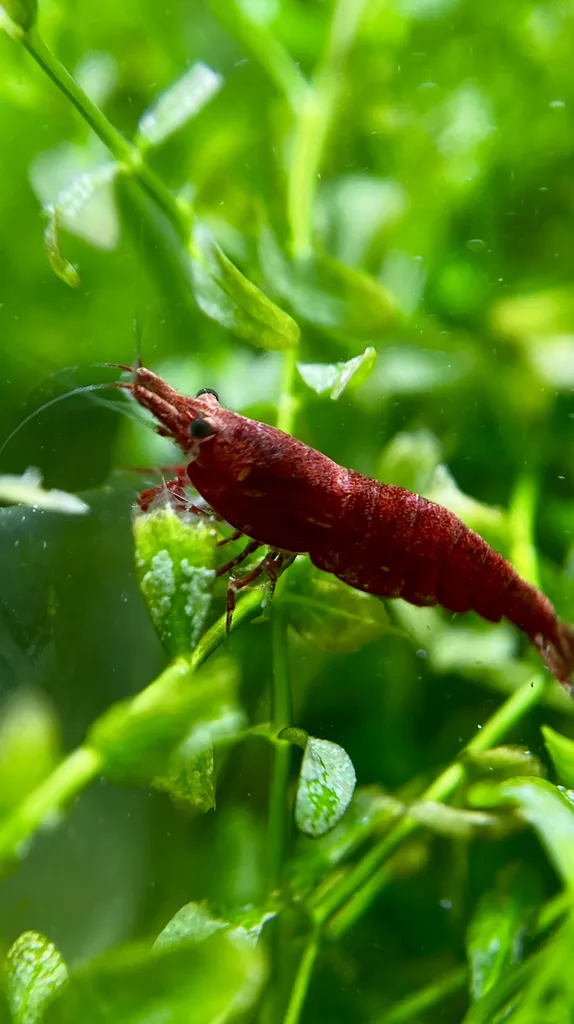
Cherry shrimp
Neocaridina davidi
Freshwater1.6 in (4 cm) · 5 gal (19 L)59–84°F (15–29°C)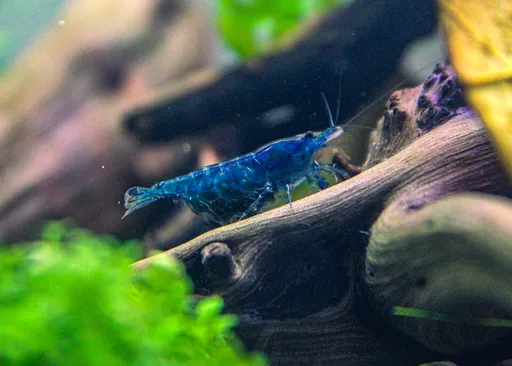
Blue dream shrimp
Neocaridina davidi
Freshwater1.6 in (4 cm) · 5 gal (19 L)59–84°F (15–29°C)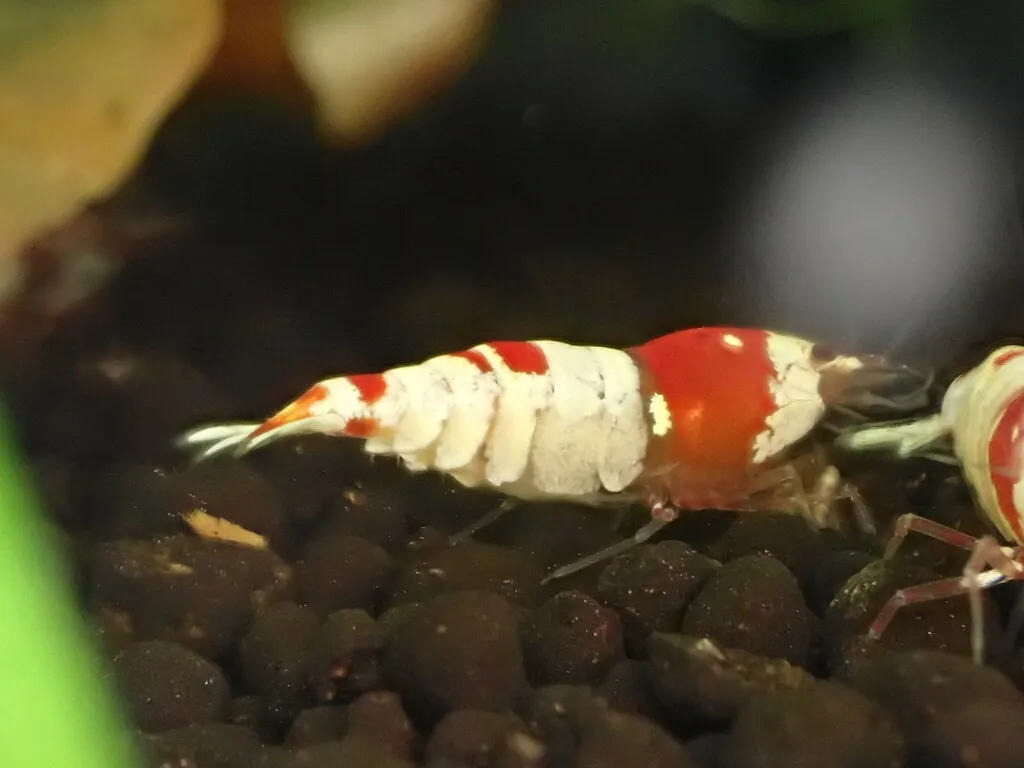
Crystal red shrimp
Caridina logemanni
Freshwater1.2 in (3 cm) · 5 gal (19 L)64–75°F (18–24°C)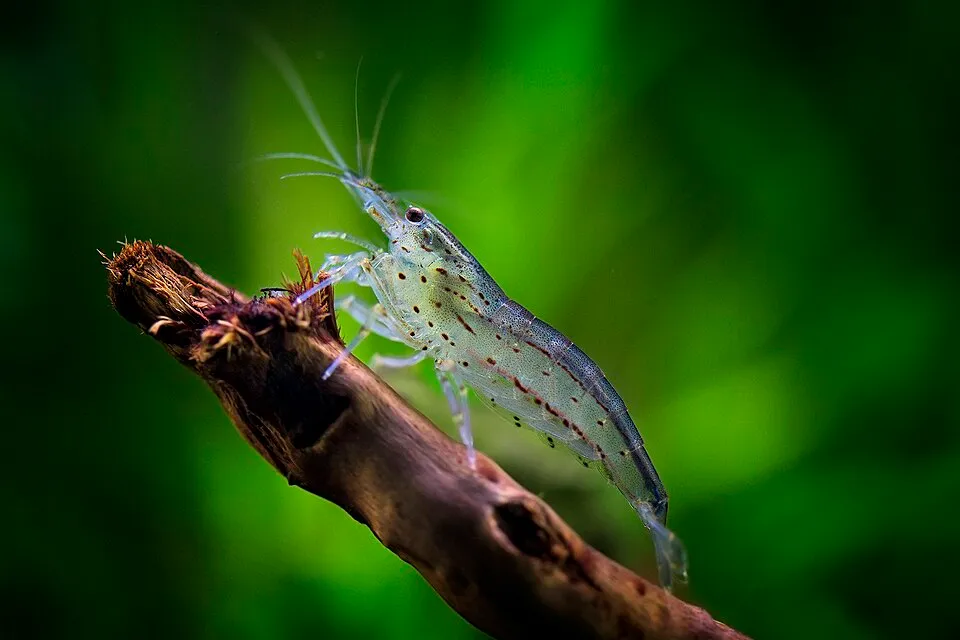
Amano shrimp
Caridina multidentata
FreshwaterBrackish2 in (5 cm) · 8 gal (30 L)59–81°F (15–27°C)
A bigger tank holds steadier water
A colony of cherry shrimp or bee shrimp can live in 5 gallons (19 liters), the minimum both list. A 10 gallon tank is still the usual recommendation for a breeding colony, because a larger volume changes more slowly. A shrimp jar of 1 to 3 gallons falls below the minimum altogether.
An uneaten pellet in 5 gallons leaves four times the ammonia concentration it would leave in 20. Small tanks warm up faster on a hot afternoon, while evaporation concentrates their minerals sooner. Swings like these cause failed molts. More water makes every one of them smaller.
Shrimp →41 species
Substrate, filter and heater
Plain gravel or active soil
Neocaridina need no special substrate. Plain sand or gravel works and leaves the water's pH and KH where the tap set them.
Bee shrimp tanks run on active soil, a substrate that pulls the pH down and holds it there. Some soils leach ammonia for their first few weeks, so the tank sits without shrimp for those weeks. The buffering wears out after about 18 months. A pH that starts to swing means the soil is due for replacement.
A sponge on every intake
Most shrimp keepers use a sponge filter, an air-driven block of foam that babies cannot be pulled into. A hang-on-back or canister filter works too, once a foam prefilter covers its intake. A bare intake pulls shrimplets in and leaves them trapped or injured.
How warm to keep it
Cherry shrimp survive a wide range of room temperatures, but they breed less in cool water. A small heater set to 72–76°F (22–24°C) keeps a colony growing through the winter.
Heat is the bigger risk for bee shrimp, since warm water holds less oxygen and a hot spell can kill them. Cold mostly slows them down. Keep their tank in the coolest room of the house.
Cycle first, then wait a few weeks
Cycle the tank the way you would for fish, until ammonia and nitrite both read zero. Shrimp need both at a true zero, because even very low ammonia or nitrite can make a molt fail.
Then give the tank a few more weeks. Biofilm, the film of bacteria, algae and fungi that shrimp graze, starts within days but takes weeks to build up. A tank that has run for several months feeds a new colony far better than one cycled last week. Test the water again on the day the shrimp arrive, since plenty of biofilm is no proof of a finished cycle.
Bringing shrimp home
Store water can differ from yours in pH, hardness and temperature. A fast switch stresses shrimp and can cause molting trouble or an early death, so new shrimp go in by drip.
- Pour the shrimp and their bag water into a clean bowl or bucket.
- Start a siphon through airline tubing from the tank into the bowl.
- Tie a loose knot in the tubing, or fit a valve, to slow it to one to three drops a second.
- Stop when about three quarters of the water in the bowl came from your tank. That takes one to two and a half hours.
- Net the shrimp into the tank and pour the store water away.
- Leave the tank light off for the first 24 hours.
Feeding a colony that grazes all day
Shrimp graze biofilm and algae throughout the day, so a mature tank does much of the feeding. Feed only what the colony clears in two or three hours, once a day at most. Food left longer rots into ammonia, so lift out whatever remains.
Shrimp pellets and blanched vegetables cover the rest of the diet, with some calcium-rich food to help each molt. Babies stay in one small patch for their first few weeks, so a pinch of powdered food near them helps. Overfeeding powder fouls the water.
Plants, leaf litter and driftwood all grow more of the film shrimp live on. Babies hide in moss and graze the algae and biofilm it collects. Java moss attaches to wood or rock and grows in very little light.
Mosses →25 plants
Floating plants pull nitrate out of the water and slow algae down. Their roots hang into the tank and grow biofilm of their own.
Floating plants →26 plants
How a shrimp molts
Shrimp grow by shedding their shell. Adults molt every three to four weeks, and young shrimp molt much more often. The new shell draws on minerals from both the water and the food.
A freshly molted shrimp is soft and hides for a day or two while the new shell hardens. Water that suddenly turns much softer or harder can send it into osmotic shock at that stage.
A failed molt often shows as a white band behind the head. The shell has split all the way around the body instead of opening at the top. Few shrimp survive it.
Check GH and KH first after a failed molt, since water out of range for the species is the usual cause. A large or mismatched water change can trigger one too, as can a diet short on minerals.
From ten shrimp to a colony
A female ready to breed shows a yellow-green patch behind her head, called the saddle, which holds her developing eggs. Once mated, she carries the eggs under her tail for three to four weeks, cleaning them with her swimming legs. Each clutch gives 20 to 30 babies, in bee shrimp as well as cherries.
Cherry shrimp hatch as miniature adults about 1/16 inch (2 mm) long, with no larval stage. Both kinds reach breeding age at about four to six months. A new colony grows slowly at first, because only the founders breed until then. After that the numbers climb quickly.
Growth levels off at what the tank can feed. A settled colony that stops breeding may have hit that limit. The fix is more food, a bigger tank or fewer shrimp.
Both kinds breed more readily in slightly warm water, around 73°F (23°C). A stressed female can drop her eggs before they hatch.
What kills shrimp
Copper treats fish parasites and algae at doses most invertebrates do not survive. It turns up in some fish medicines, algae removers and plant fertilizers.
Water with little KH makes copper more toxic. In tests on an Australian freshwater shrimp, copper grew less toxic as alkalinity rose. A bee shrimp tank runs at a KH near zero, the risky end of that scale.
If your house has copper pipes, fill buckets from the cold side, since hot water pulls more copper out of pipes. Run the tap for 30 to 60 seconds first when the water has sat unused for six hours.
The limit for ammonia and nitrite is 0.02 ppm in both water profiles above. Ammonia comes from rotting food and, in a new bee shrimp tank, from fresh active soil.
Large water changes can upset molting even when the new water is clean. Change about 10 percent a week and match the new water to the tank's temperature and hardness. Drip it in slowly instead of pouring it.
Top off evaporation with RO or distilled water, since evaporation leaves minerals behind and tap water adds more. Skip pH up and pH down products, which force a number and start a new swing.
Fish and other tank mates
Almost all fish eat baby shrimp, so a breeding colony grows fastest in a tank of its own. Snails make easy company and help with algae.
Small, peaceful fish and adult shrimp can share a tank. Dense moss gives the babies a place to hide, but expect to lose some anyway. The two plans below come from the 10 gallon and 20 gallon tank pages. The bigger tank leaves the colony more room to grow.
Ember tetras with cherry shrimp
These species overlap at 72–82°F (22–28°C), pH 6.5–7.0.
Nano fish with a shrimp colony
These species overlap at 72–79°F (22–26°C), pH 6.5–7.0.
A plan that passes the calculator still loses some babies to its fish. To try other fish, build the tank in the stocking calculator, which checks stocking level, group sizes and water ranges.
FAQ
Common questions
Do shrimp tanks need a filter?
Yes. A sponge filter is the usual choice, since shrimplets cannot be pulled into the foam. A hang-on-back or canister filter also works once a foam prefilter covers its intake.
How many shrimp can live in a 10 gallon tank?
A 10 gallon tank can support about 75 to 150 cherry shrimp. A starting group of ten grows into that on its own, leveling off at what the tank can feed.
Can shrimp live in tap water?
Cherry shrimp and the other Neocaridina usually can, once the water is dechlorinated and its pH, GH and KH fall within their range. Bee shrimp need softer water than most taps supply, so their keepers start from RO water and add a remineralizer.
How do you tell a dead shrimp from a molt?
A molt is a clear, empty shell with a split along the back, while a dead shrimp is fully opaque. Leave molts in the tank, since shrimp eat them to recover calcium. Take them out only during a disease outbreak.
Is plant fertilizer safe for shrimp?
Most fertilizers contain some copper, so use one confirmed safe for shrimp. Start at half the label dose and never double up after a missed one.
Why do shrimp stop breeding?
Shrimp only breed from about four to six months old, so young stock can take a while to start. In a settled colony, cool water, too little food and unstable water are the usual reasons.
Sources
The claims the catalog does not hold come from these pages.
- Neocaridina Shrimp: Care, Water Parameters, Color, & More, The Shrimp Farm
- Cherry Shrimp, Neocaridina davidi (Bouvier 1904), UF/IFAS Extension
- Neocaridina Water Parameters: GH, KH, pH, TDS and Temperature, Razz Aquatics
- Care Guide for Cherry Shrimp: Tank Setup, Food, and Breeding, Aquarium Co-Op
- Crystal Red Shrimp, Shrimp Science
- Caridina Shrimp Water Parameters, Shrimp Mania
- Shrimp Shangri-la, Practical Fishkeeping
- How To Change Substrate In Your Shrimp Tank, Shrimp Science
- Growing Biofilm in Shrimp Tanks, Shrimp Science
- Acclimating Shrimp: The Drip Acclimation Method, The Shrimp Farm
- How To Drip Acclimate Shrimp, Shrimp Science
- What Do Freshwater Shrimp Eat? The Essential Feeding Guide, Shrimp Science
- Care Guide for Java Moss, Aquarium Co-Op
- Floating Plants for Shrimp Tanks, Shrimp Science
- Molting and Common Problems, Shrimp Science
- Failed Molting in Shrimp: Why It Happens, Warning Signs & How to Prevent It, The Shrimp Farm
- How To Breed Dwarf Shrimp, Shrimp Science
- Breeding Red Cherry Shrimp, The Shrimp Farm
- Use of Copper in Marine Aquaculture and Aquarium Systems, UF/IFAS Extension
- Use of Copper in Freshwater Aquaculture and Farm Ponds, UF/IFAS Extension
- Copper toxicity to Paratya australiensis, II. Influence of bicarbonate and ionic strength, Environmental Toxicology and Chemistry
- Fertilizers for Planted Shrimp Tanks, Shrimp Science
- Copper in Drinking Water, Minnesota Department of Health
Keep a record of your own tank
TankBud tracks water tests, reminders and how full your tank reads, free for up to 4 tanks.
More guides
Tank setups
Goldfish tank setup: tank size, filter and water
A goldfish tank is sized for the adult fish, and a single fantail already lists 20 gallons.
By Curtis W. · Updated Oct 20, 2026 · 7 min read
Tank setups
Betta fish tank setup: tank size, heater and plants
A betta tank is built around the surface the fish breathes from, with steady heat, gentle flow, floating plants and a close lid.
By Curtis W. · Updated Oct 20, 2026 · 7 min read
Tank setups
Community tank: which fish go together, and how many
Plan a freshwater community tank from the water up, then choose peaceful fish by adult size, swim level and school size.
By Curtis W. · Updated Oct 20, 2026 · 8 min read


