Variety of Oscar
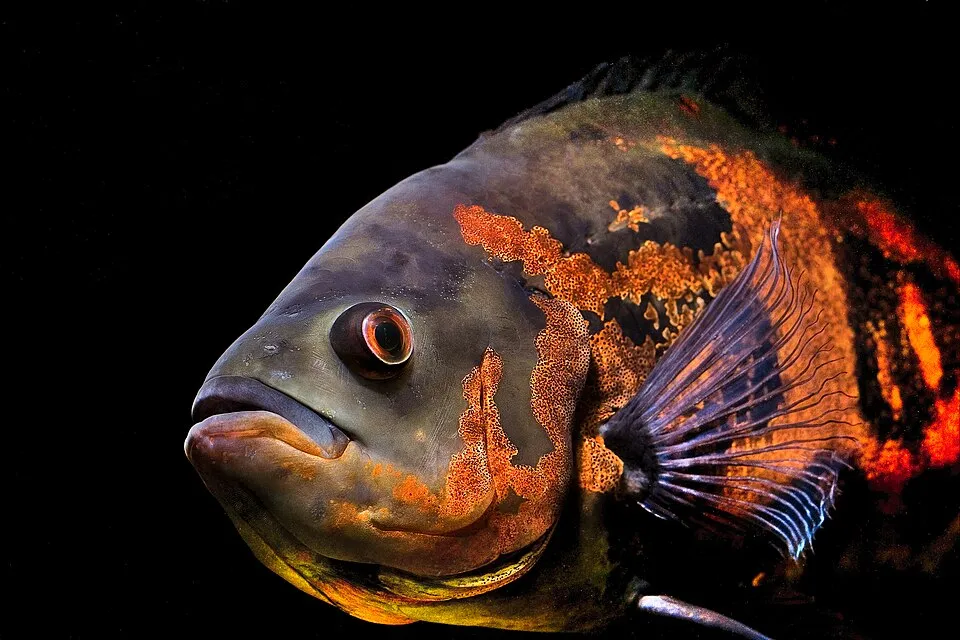
Tiger oscar
Astronotus ocellatus
One of 4 varieties of Astronotus ocellatus · See all varieties →
FreshwaterFish
Varieties · Astronotus ocellatus
See all 4 →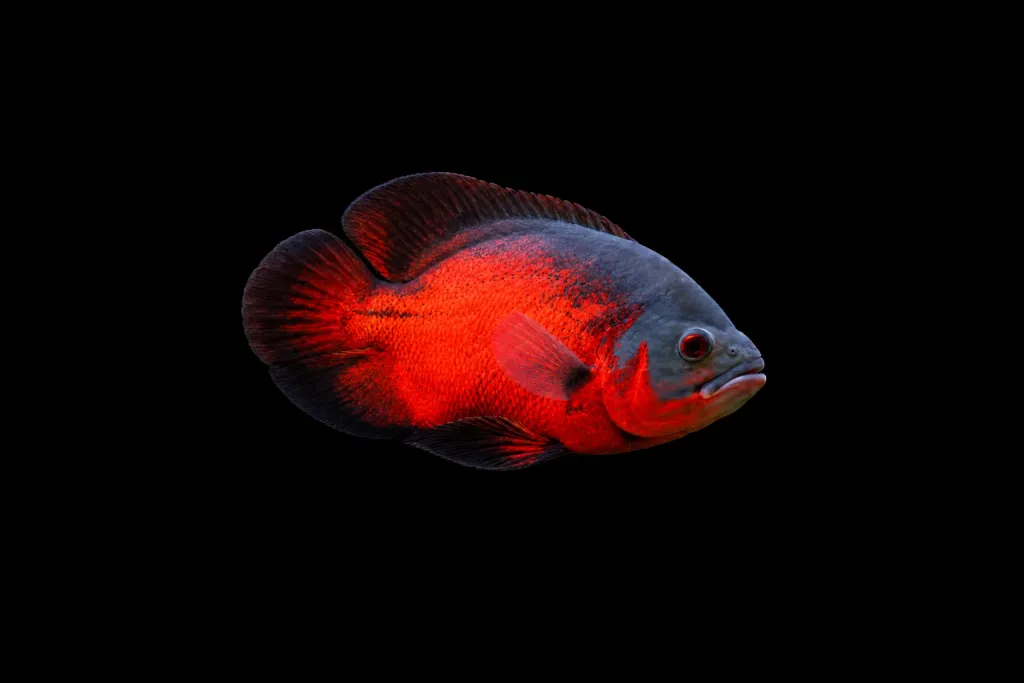
Care at a glance
- Temperature
- 68–82°F
- 20–28°C
- pH
- 6.0–7.5
- Adult size
- 13.8 in
- 35 cm
- Minimum tank
- 75 gal
- 284 L
- Temperament
- Aggressive
- Social behavior
- Solitary
- Tankmates
- With caution
- Swim level
- Middle
- Diet
- Carnivore
- Difficulty
- Medium
- Breeding
- Substrate spawner · Hard
- Rarity
- Rare
- Family
- Cichlidae
Overview
The tiger oscar is what most shops call a plain oscar, a dark fish with orange-red marbling laid over it. Stores sort stock by how much orange a fish shows. It is a moderate challenge to keep.
Did you know
No two tiger oscars from one spawn end up marked the same way. Keepers use the blotching to tell individuals apart in a tank of several, something a solid red fish does not allow.
Caring for the tiger oscar
A single adult tiger oscar needs at least 75 gal (284 L). Lay a sandy floor and secure the decor, since it rearranges its tank. Add a few large pieces of driftwood and rounded rocks for cover. It usually uproots plants, so keep any potted and sturdy.
Keep it in soft to neutral water, at 68 to 82°F (20 to 28°C) and a pH of 6.0 to 7.5. It eats heavily and makes a mess, so it needs strong filtration and regular large water changes. Feed a quality cichlid pellet as the staple, with occasional prawn, mussel and earthworm. Do not base its diet on feeder fish or plain mammal meat.
Keep it singly or as a bonded pair, on its own or with big, sturdy tank mates. It is predatory and territorial, and it will swallow any fish that fits in its mouth. Anything kept with it must be too large to eat and able to hold its own.
The tiger oscar shows no reliable external sex differences, so its markings do not tell males from females. It is a substrate spawner, and a pair cleans a flat rock and guards the eggs and fry. No color mutation sits behind the tiger pattern, so tank-bred tiger stock throws tiger young without special pairings. Breeding is hard, mostly because of the fish's size and the difficulty of pairing.
Good to know
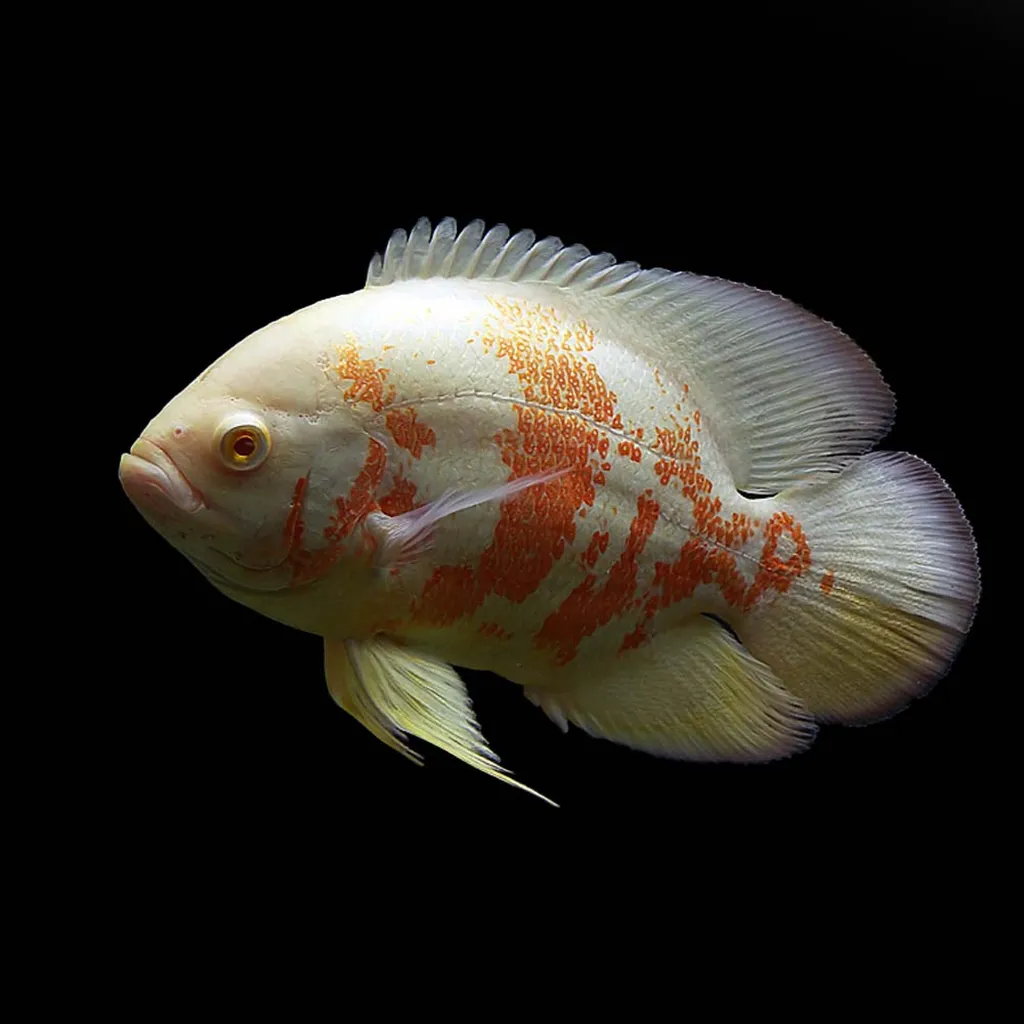
The tiger name mainly exists to separate plain stock from the solid red and albino lines on the next shelf. Fish with unusually heavy red marbling get sold as red tiger, a selection layered on the same look. Juveniles are darkly marked with wavy white to orange banding and fill in the adult blotching as they grow. The pattern you pick is not the pattern you keep. It is also not a line marker the way solid red or albino is.
In the wild
The tiger oscar is the trade form closest to the wild pattern. Wild oscars carry the same cryptic arrangement of irregular blotches and stripes. Hobby sources disagree over how much the orange has been pushed by selection along the way.
From published sources
Tank mates
Each fish here is named as a tank mate for the tiger oscar by at least two published care guides. Fishkeeping World and Imperial Tropicals recommend keeping it on its own instead. Add tank mates at adult size, since an oscar eats any fish that fits its mouth. The tank needs more than the oscar's own 75 gallons (284 liters).
Sources: Aquarium Co-Op, Fishkeeping World, Aquarium Source, Practical Fishkeeping, Seriously Fish, FishLab.
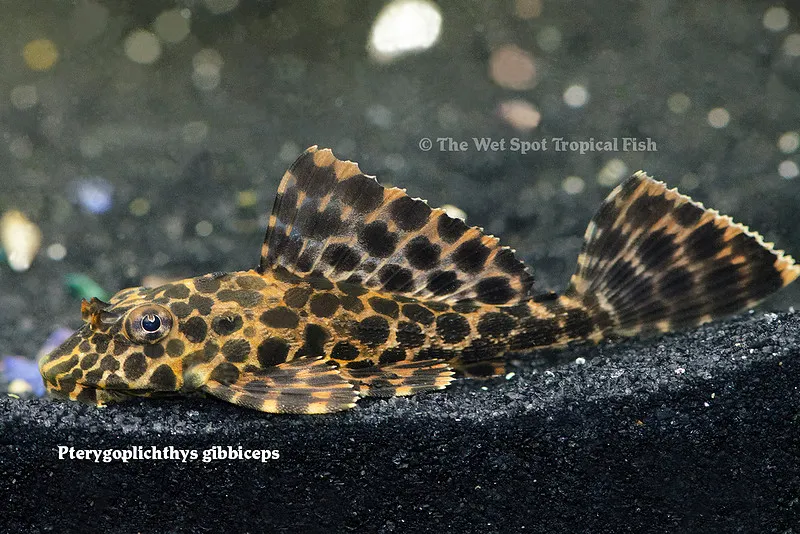
Leopard sailfin pleco
Pterygoplichthys gibbiceps
Freshwater18.9 in (48 cm) · 100 gal (380 L)72–86°F (22–30°C)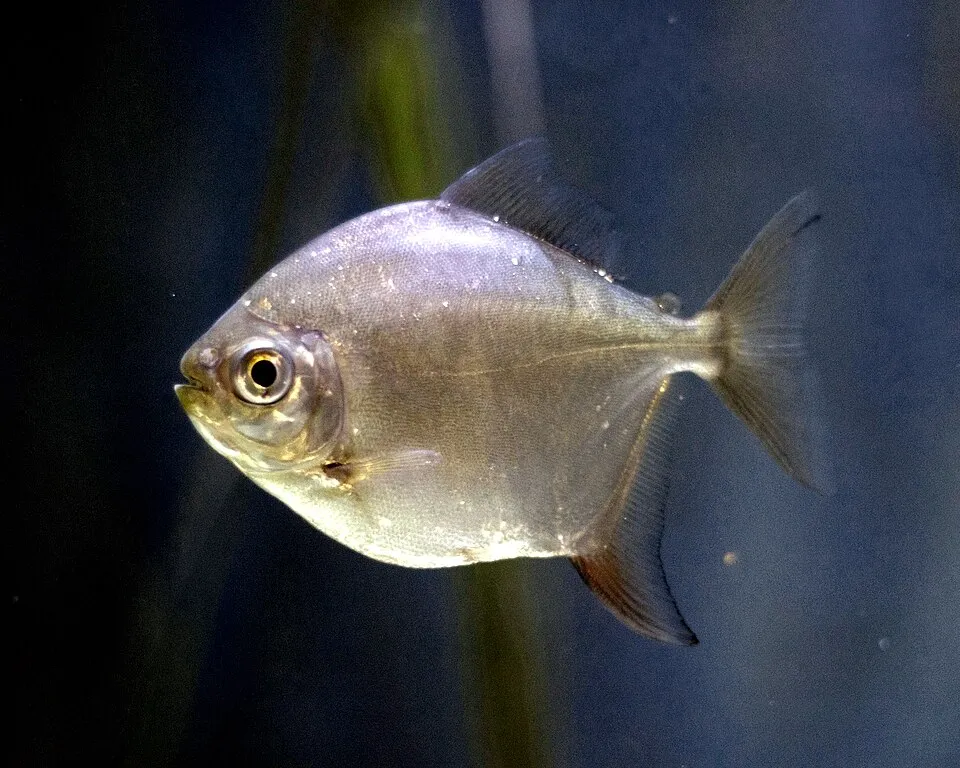
Silver dollar
Metynnis argenteus
Freshwater5.9 in (15 cm) · 70 gal (265 L)75–82°F (24–28°C)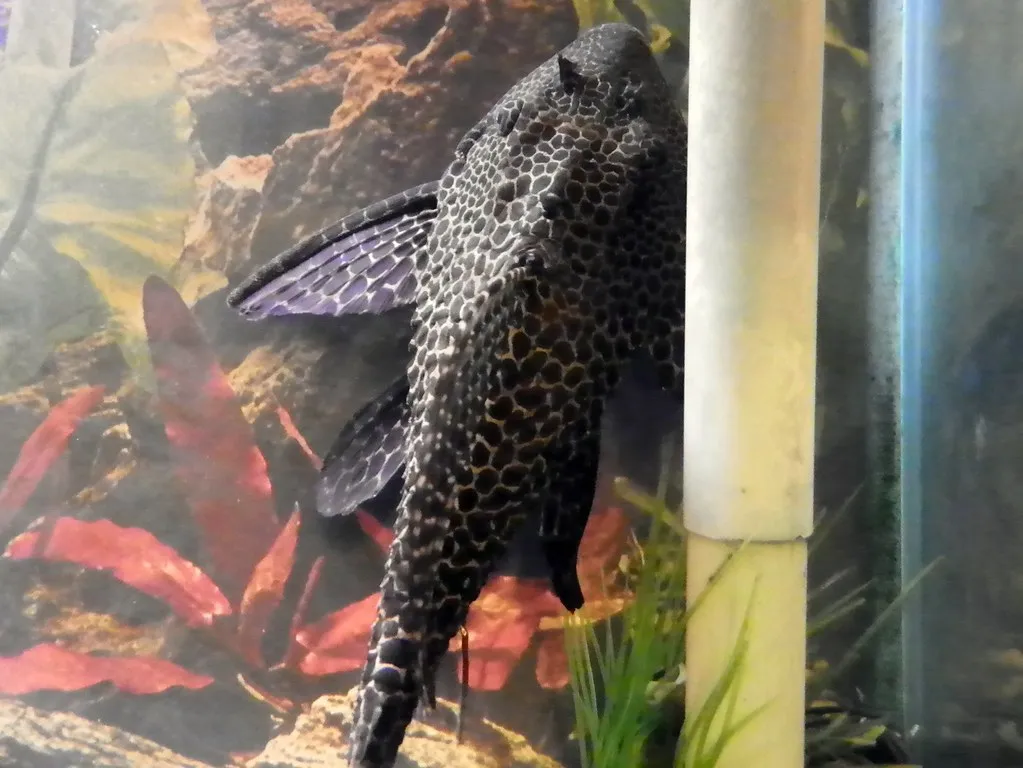
Common pleco
Hypostomus plecostomus
Freshwater15.7 in (40 cm) · 85 gal (320 L)72–86°F (22–30°C)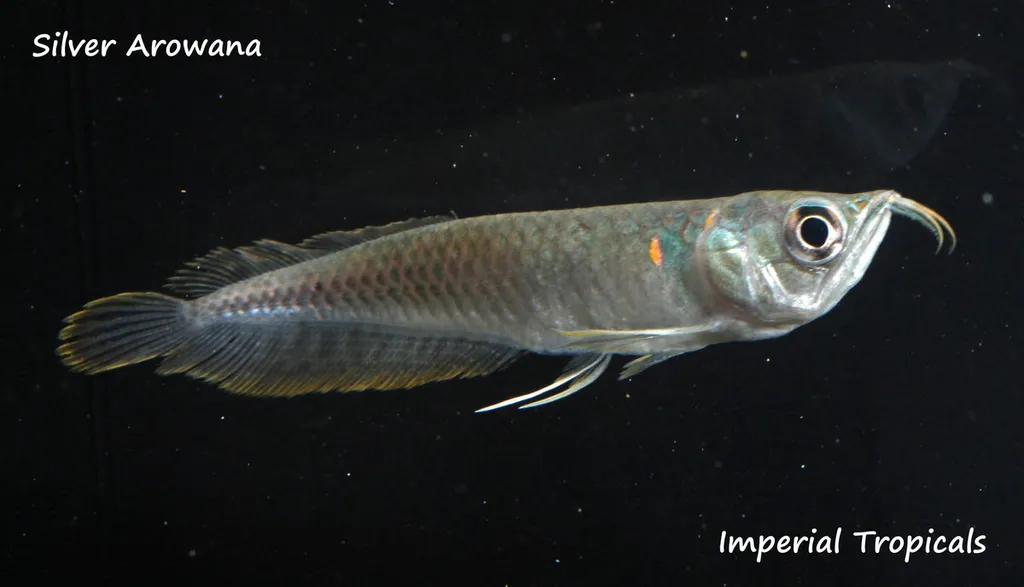
Silver arowana
Osteoglossum bicirrhosum
Freshwater39.4 in (100 cm) · 396 gal (1,500 L)75–82°F (24–28°C)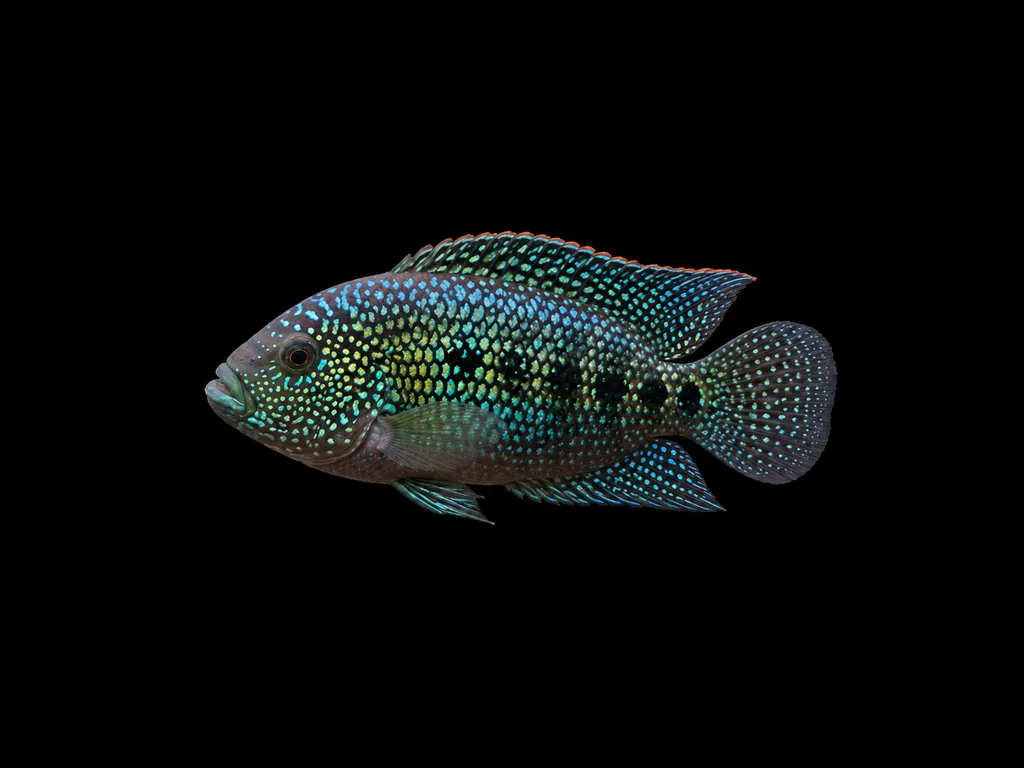
Jack Dempsey
Rocio octofasciata
Freshwater9.8 in (25 cm) · 55 gal (208 L)72–82°F (22–28°C)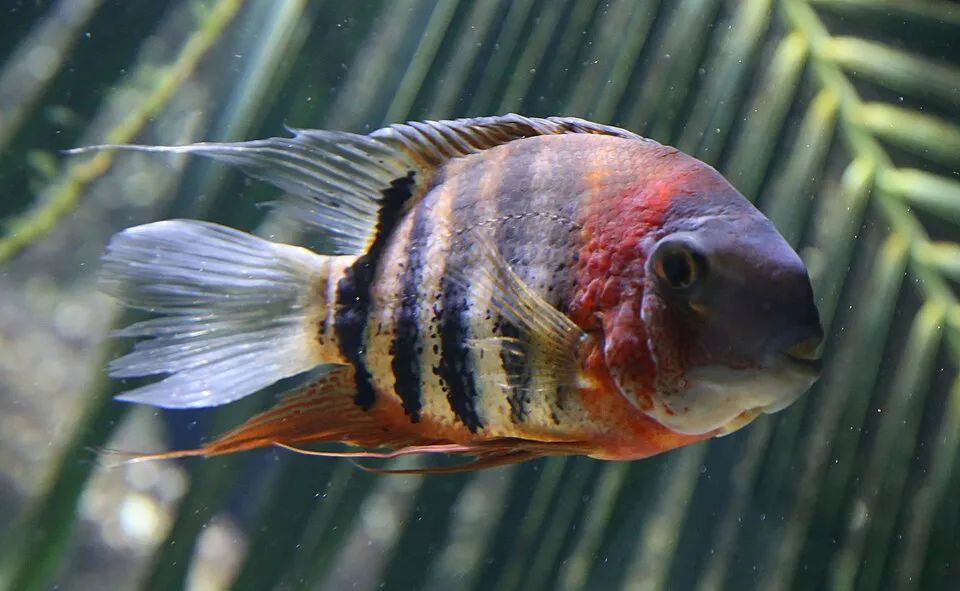
Severum
Heros efasciatus
Freshwater11.8 in (30 cm) · 65 gal (245 L)72–84°F (22–29°C)
Common questions
Is a tiger oscar a different species from the oscar?
No. A tiger oscar is a variety of the oscar, Astronotus ocellatus, and it wants the same tank, water and food as the species.
What size tank does a tiger oscar need?
A tiger oscar needs at least 75 gal (284 L). It spends most of its time in the middle.
What does a tiger oscar eat?
A tiger oscar eats a quality cichlid pellet as its staple, with prawn, mussel and earthworm now and then. Do not make feeder fish or plain mammal meat its diet.
How big does a tiger oscar get?
An adult tiger oscar reaches about 13.8 in (35 cm).
How does a tiger oscar breed?
Tiger oscars are substrate spawners, and a pair cleans a flat rock and guards its eggs and fry. Tank-bred tiger stock throws tiger young without special pairings. Breeding them is hard, since adults are big and hard to pair.
What fish can live with the tiger oscar?
Published care guides name leopard sailfin pleco, silver dollar, common pleco and silver arowana, among others. Add tank mates at adult size, since an oscar eats any fish that fits its mouth. The tank needs more than the oscar's own 75 gallons (284 liters).
Related species
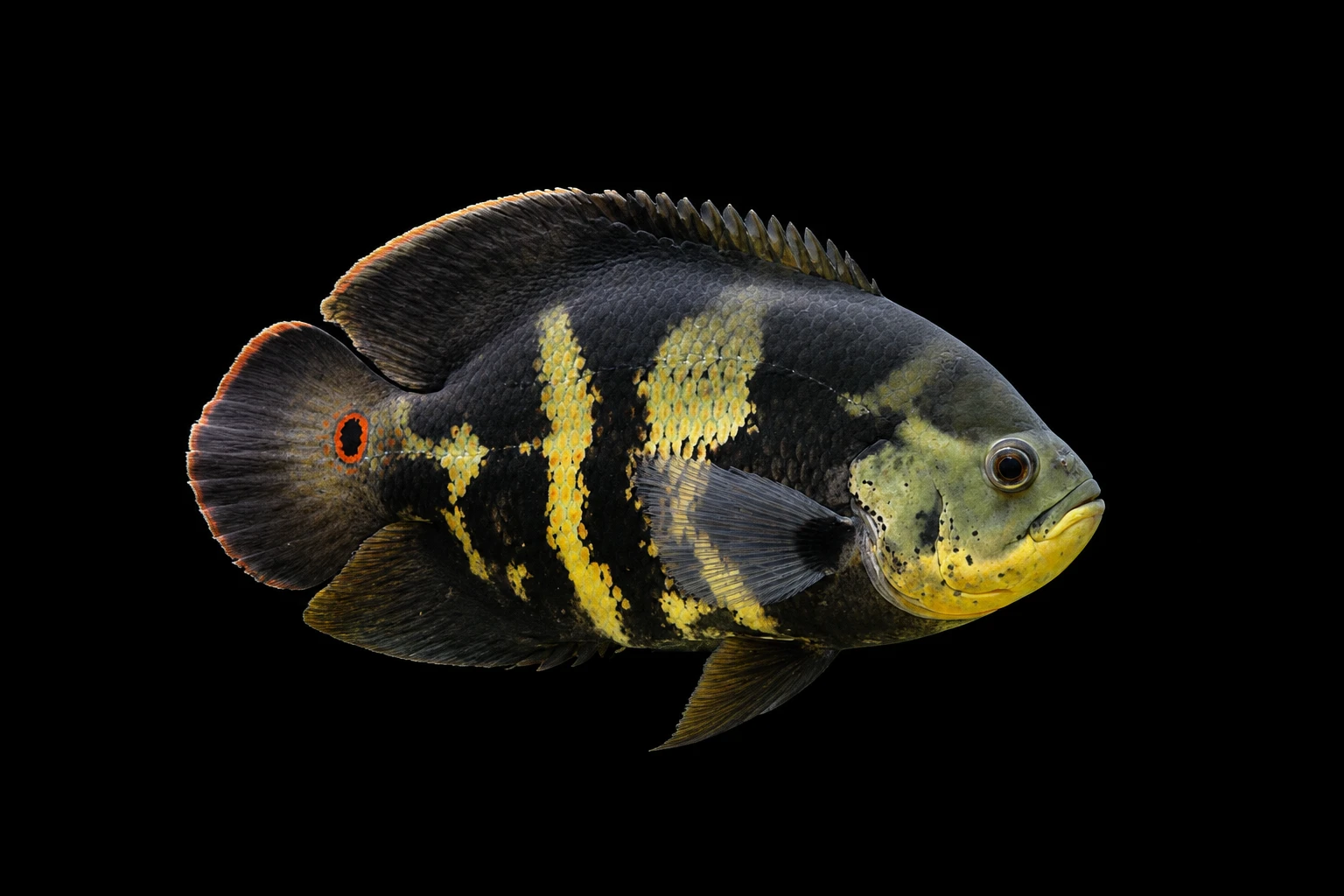 11.4 in (29 cm)132 gal (500 L)73–82°F (23–28°C)
Fat oscar
Astronotus crassipinnis
11.4 in (29 cm) · 132 gal (500 L)
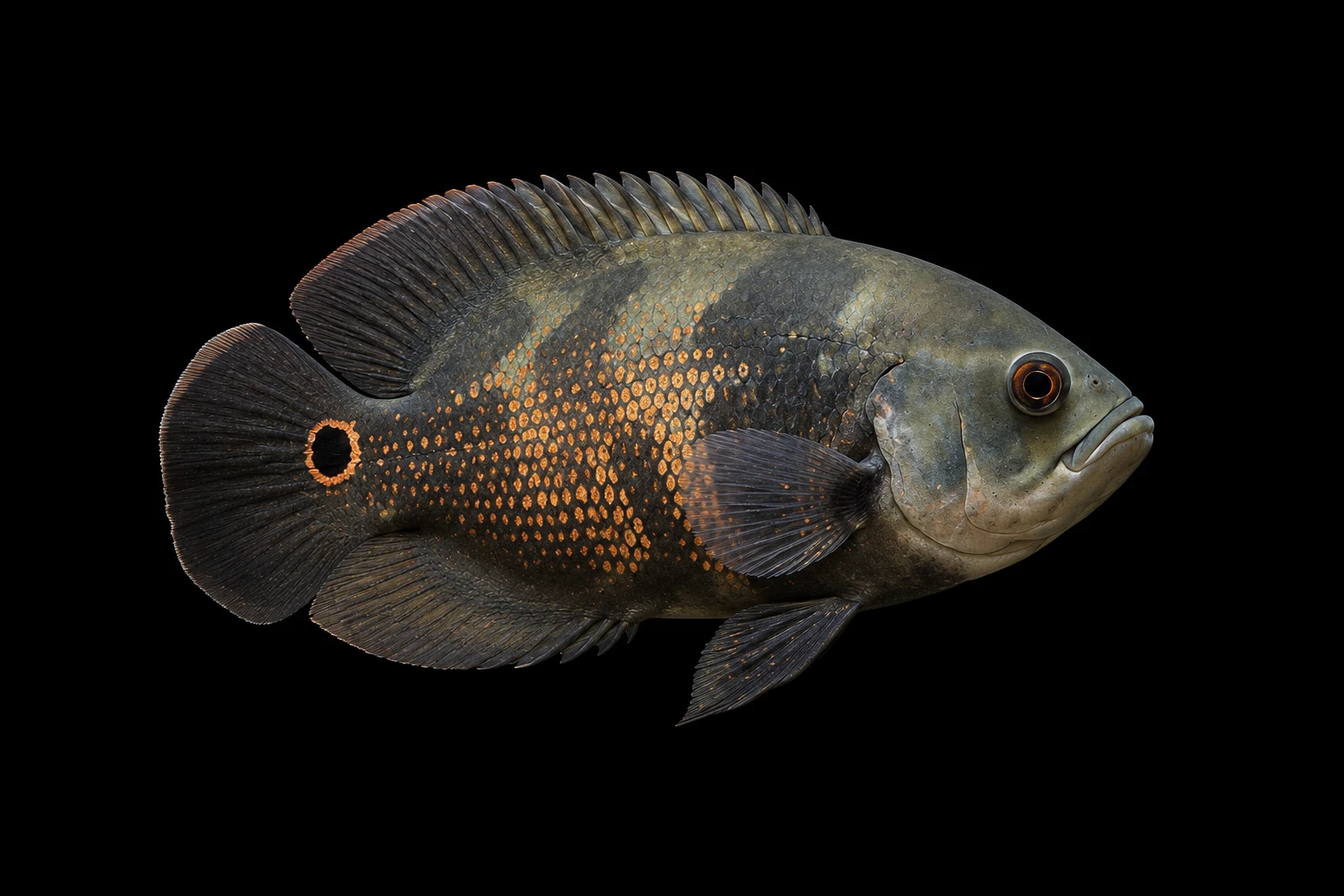 11.4 in (29 cm)132 gal (500 L)77–86°F (25–30°C)
Mikolji's oscar
Astronotus mikoljii
11.4 in (29 cm) · 132 gal (500 L)
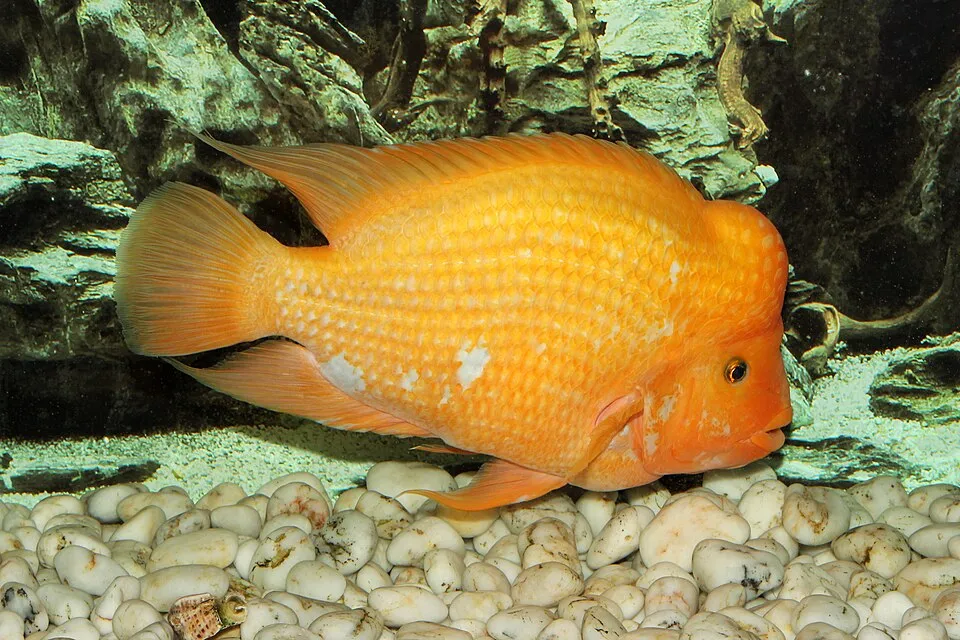 13.8 in (35 cm)79 gal (300 L)70–79°F (21–26°C)
Midas cichlid
Amphilophus citrinellus
13.8 in (35 cm) · 79 gal (300 L)
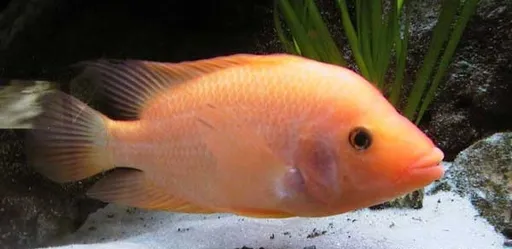 13.8 in (35 cm)75 gal (284 L)75–79°F (24–26°C)
Red devil cichlid
Amphilophus labiatus
13.8 in (35 cm) · 75 gal (284 L)
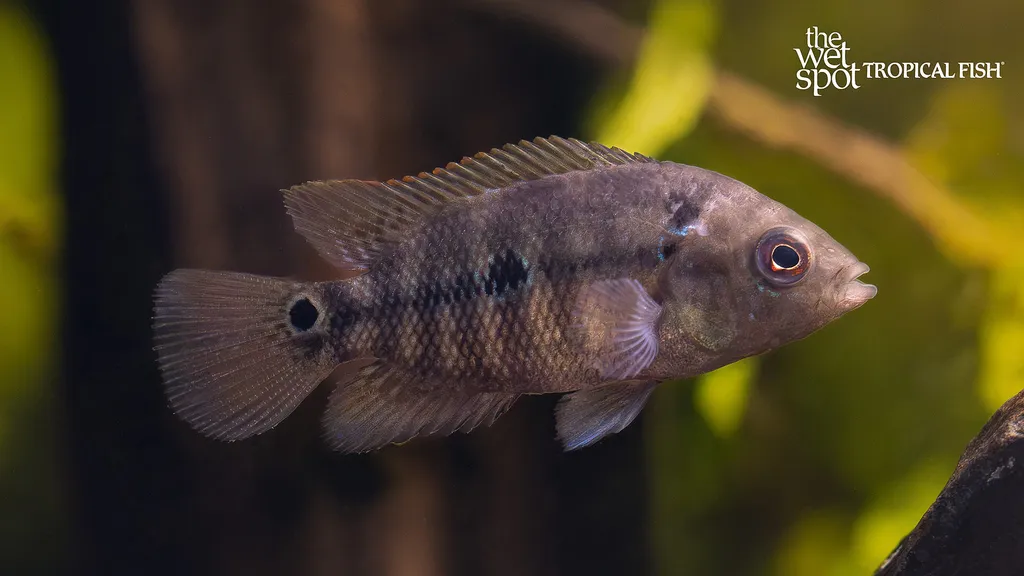 13.8 in (35 cm)90 gal (340 L)75–82°F (24–28°C)
Trimac cichlid
Amphilophus trimaculatus
13.8 in (35 cm) · 90 gal (340 L)
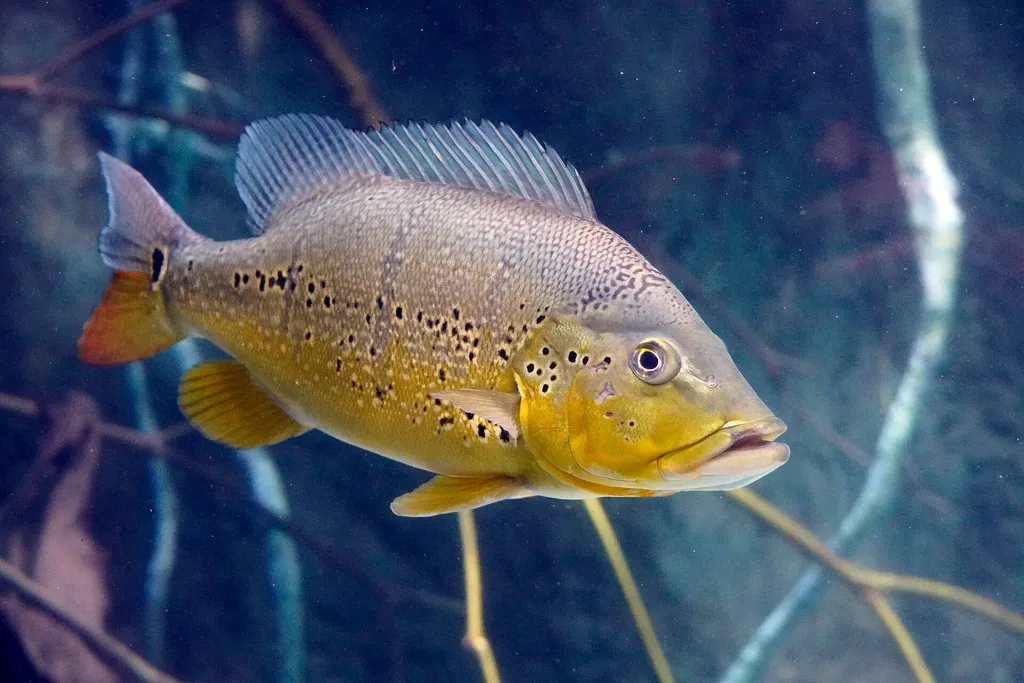 14.2 in (36 cm)317 gal (1,200 L)77–86°F (25–30°C)
Xingu peacock bass
Cichla melaniae
14.2 in (36 cm) · 317 gal (1,200 L)