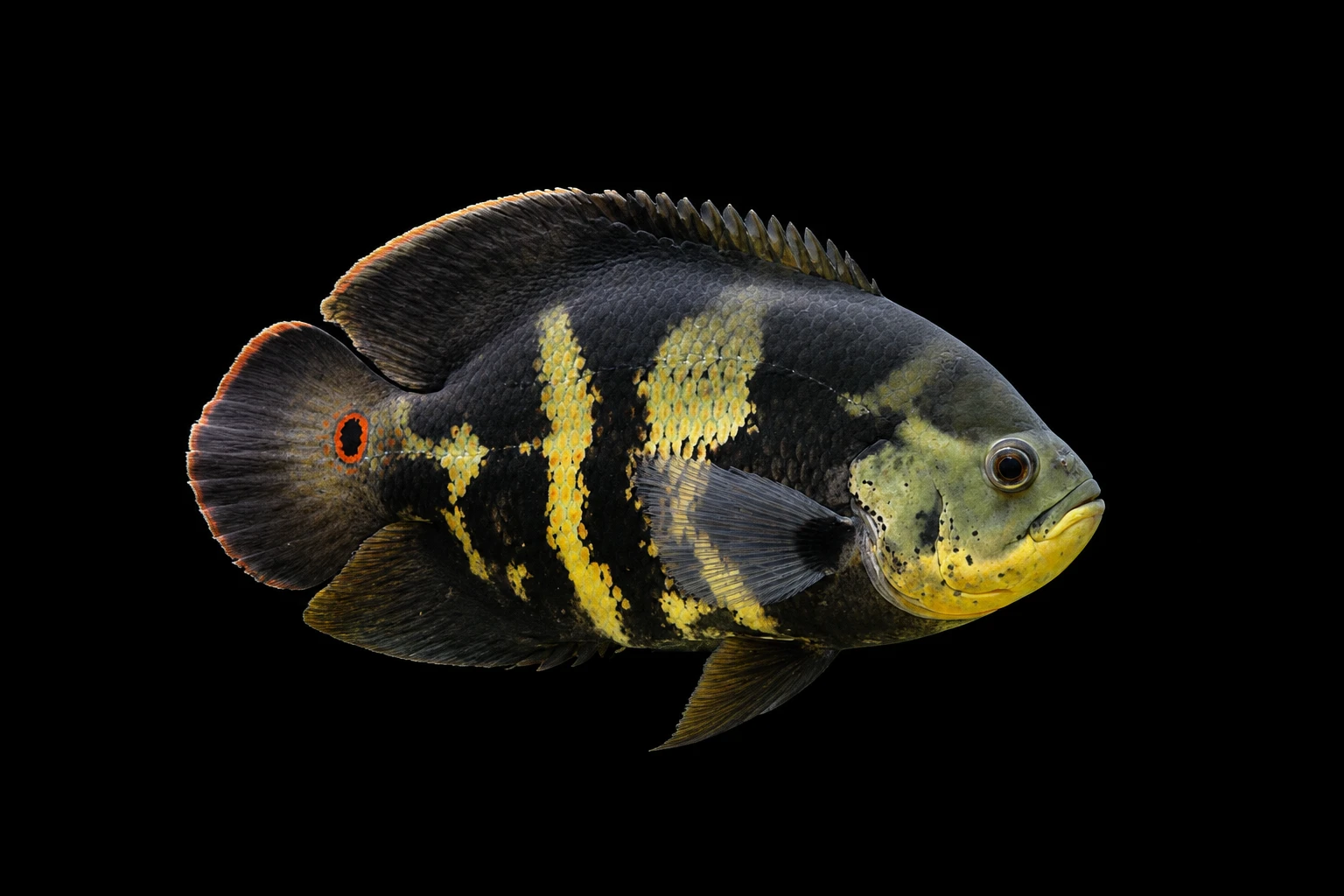
Fat oscar
Astronotus crassipinnis
Also known as Bolivian oscar, Crassipinnis oscar, Big eye oscar, Bumblebee oscar
FreshwaterFish
Care at a glance
- Temperature
- 73–82°F
- 23–28°C
- pH
- 6.0–7.5
- Adult size
- 11.4 in
- 29 cm
- Minimum tank
- 132 gal
- 500 L
- Temperament
- Aggressive
- Social behavior
- Solitary
- Tankmates
- With caution
- Swim level
- Middle
- Diet
- Carnivore
- Difficulty
- Difficult
- Breeding
- Substrate spawner · Hard
- Rarity
- Rare
- Family
- Cichlidae
- Origin
- Paraguay and Guaporé basins
Overview
The fat oscar is the southern cousin of the common oscar, with the same big personality. It fills the middle and lower water of a large tank and is for experienced keepers.
Did you know
The fat oscar's range reaches well south into the Paraguay basin. That is subtropical country, which cools far more in winter than the warm equatorial waters the common oscar calls home.
Caring for the fat oscar
Keep the fat oscar as a single fish or a bonded pair rather than a group. A single oscar needs at least 132 gal (500 L), with a soft substrate, big pieces of driftwood and open swimming space. Like all oscars, it rearranges the tank to suit itself, so use few breakable furnishings and skip delicate plants it would only uproot.
Keep the water soft to neutral, at 73 to 82°F (23 to 28°C) and a pH of 6.0 to 7.5. Run strong filtration for a big, messy fish. Feed a varied diet of large sinking pellets, mussel, prawn, earthworm and other meaty foods, but avoid a steady diet of feeder fish.
The fat oscar is large and aggressive, so pick tank mates with real care. Keep only big, robust fish that can hold their own, and expect it to eat anything small.
It is a biparental substrate spawner that lays eggs on a cleaned surface and guards them. Getting a compatible pair and a successful spawn from these headstrong fish is hard.
Good to know
The fat oscar belongs to the family Cichlidae. It is darker and thicker-finned than the common Astronotus ocellatus, with a moodier coloration. Its name, crassipinnis, means thick-finned.
In the wild
Astronotus crassipinnis comes from the southern reaches of the Amazon and the Paraguay and Guaporé basins. It lives in warm, slow backwaters over sand, mud and sunken wood.
Common questions
What size tank does a fat oscar need?
A fat oscar needs at least 132 gal (500 L). It spends most of its time in the middle.
What temperature and pH does a fat oscar need?
A fat oscar is comfortable at 73–82°F (23–28°C) with a pH of 6.0–7.5.
What does a fat oscar eat?
A fat oscar eats a varied diet of large sinking pellets, mussel, prawn, earthworm and other meaty foods. Avoid a steady diet of feeder fish.
How big does a fat oscar get?
An adult fat oscar reaches about 11.4 in (29 cm).
How does a fat oscar breed?
Fat oscars are biparental substrate spawners that lay their eggs on a cleaned surface and guard them. Getting a compatible pair and a successful spawn from these headstrong fish is hard.
Related species
 11.4 in (29 cm)132 gal (500 L)77–86°F (25–30°C)
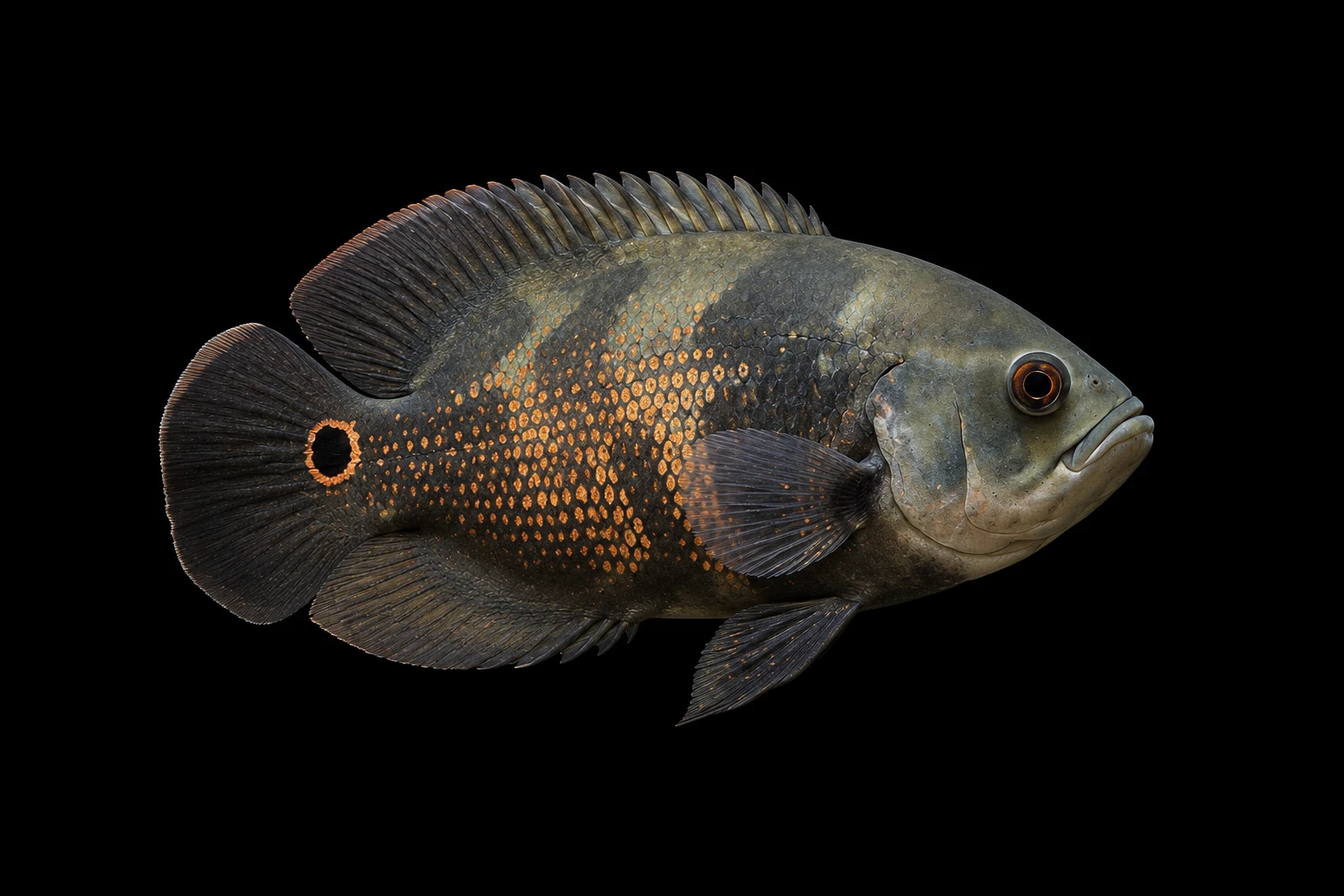
Mikolji's oscar
Astronotus mikoljii
11.4 in (29 cm) · 132 gal (500 L)
 13.8 in (35 cm)75 gal (284 L)68–82°F (20–28°C)
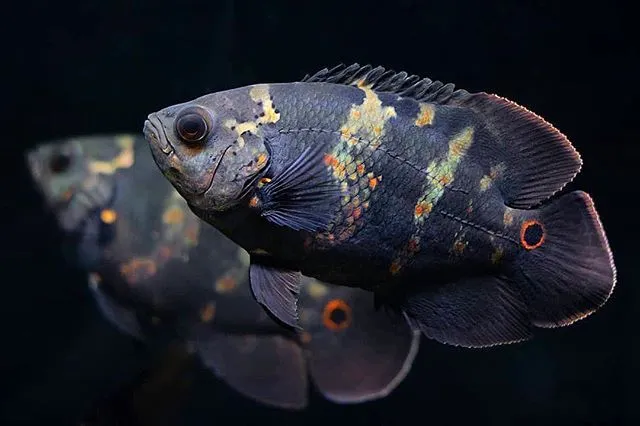
Oscar
Astronotus ocellatus
13.8 in (35 cm) · 75 gal (284 L)
 11.8 in (30 cm)79 gal (300 L)79–86°F (26–30°C)
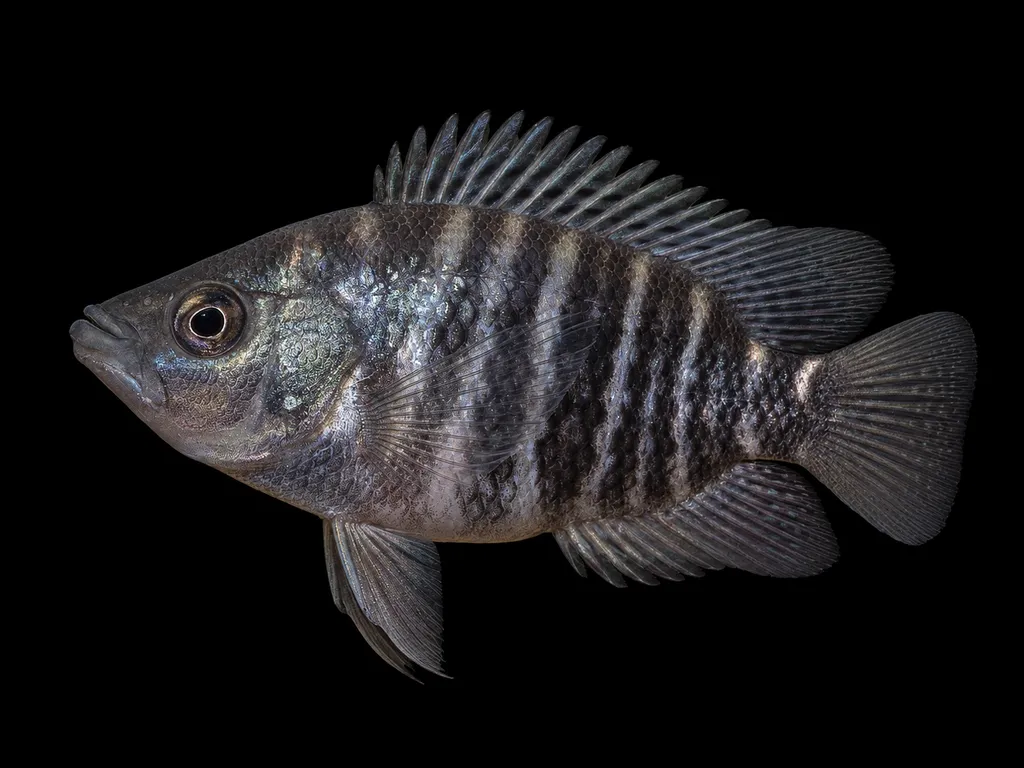
Basketmouth cichlid
Caquetaia kraussii
11.8 in (30 cm) · 79 gal (300 L)
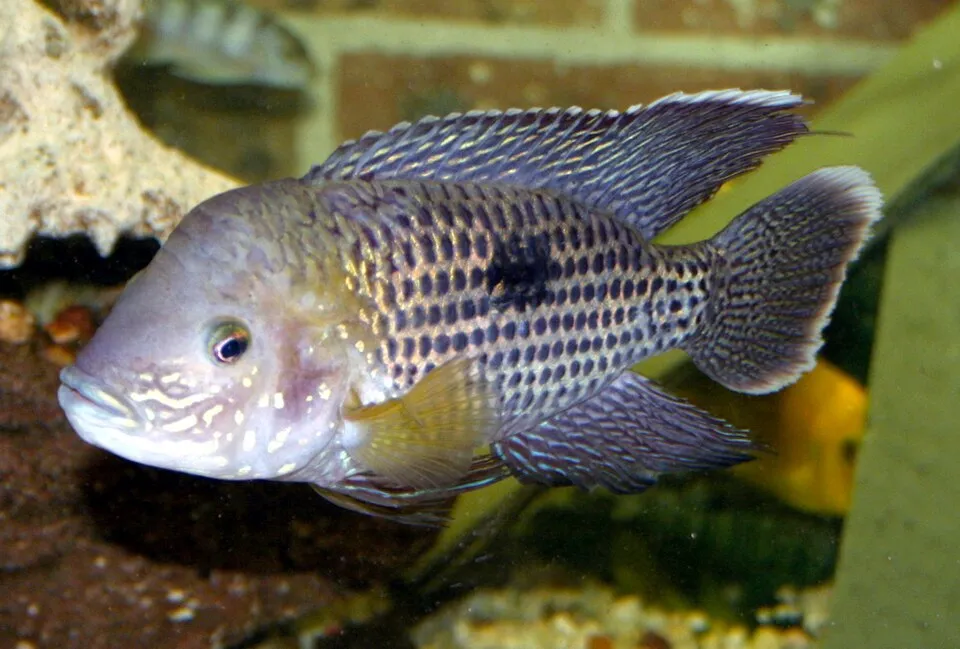 11.8 in (30 cm)75 gal (285 L)68–75°F (20–24°C)
Gold saum
Andinoacara rivulatus
11.8 in (30 cm) · 75 gal (285 L)
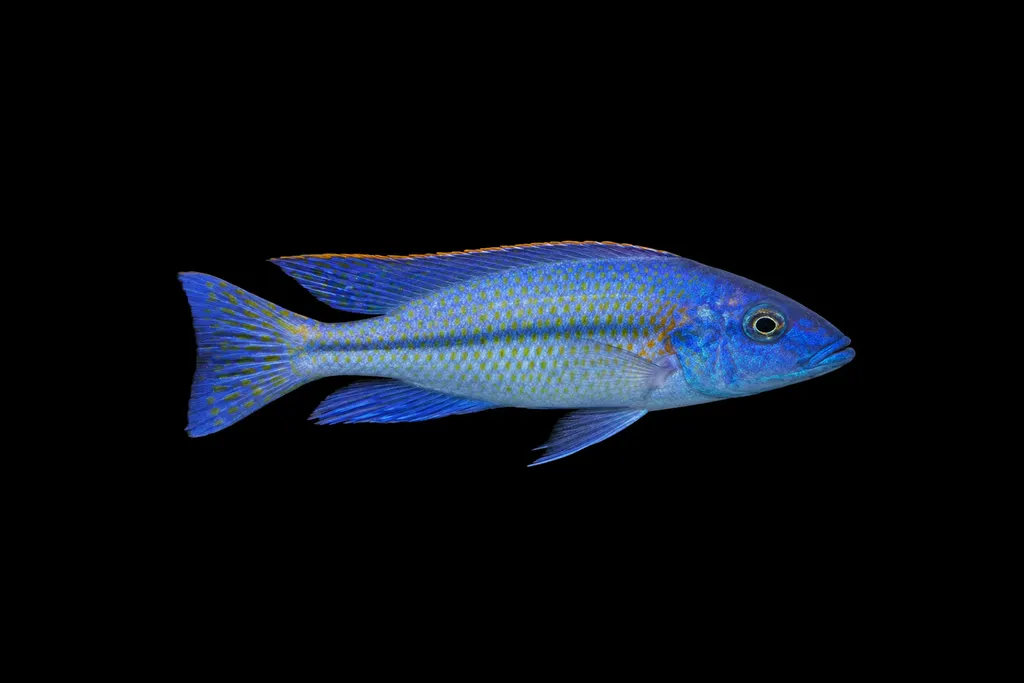 11.8 in (30 cm)159 gal (600 L)75–81°F (24–27°C)
Kiwinge hap
Dimidiochromis kiwinge
11.8 in (30 cm) · 159 gal (600 L)
 11.8 in (30 cm)159 gal (600 L)75–81°F (24–27°C)
Malawi hawk cichlid
Aristochromis christyi
11.8 in (30 cm) · 159 gal (600 L)