Midas cichlid
Amphilophus citrinellus
FreshwaterFish
Care at a glance
- Temperature
- 70–79°F
- 21–26°C
- pH
- 7.0–8.0
- Adult size
- 13.8 in
- 35 cm
- Minimum tank
- 79 gal
- 300 L
- Temperament
- Aggressive
- Social behavior
- Solitary
- Tankmates
- With caution
- Swim level
- Middle
- Difficulty
- Difficult
- Breeding
- Hard
- Rarity
- Very rare
- Family
- Cichlidae
- Origin
- Nicaragua, Costa Rica
Overview
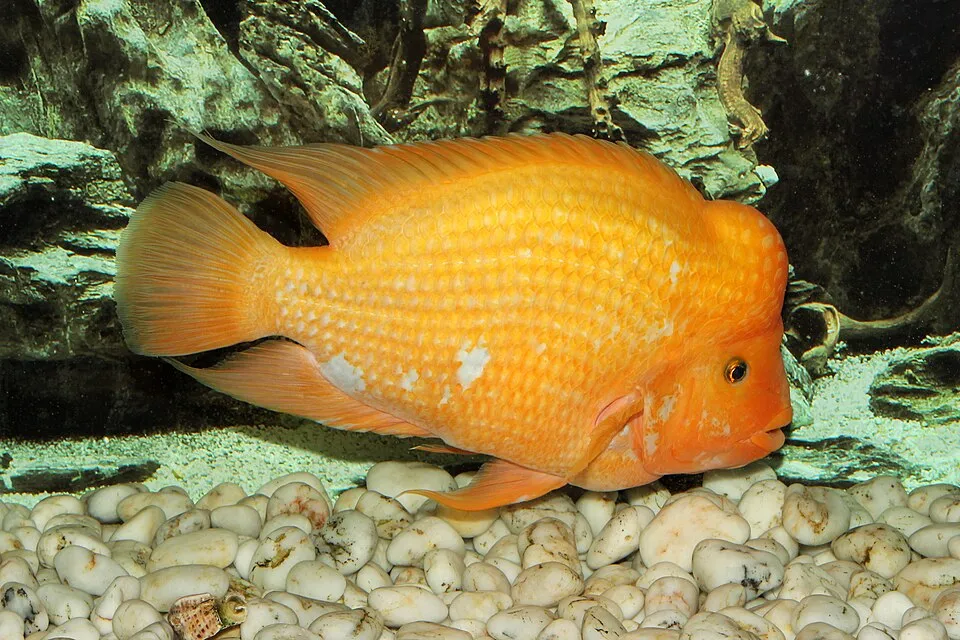
The Midas cichlid is a big, powerful and very territorial fish that is usually kept alone or as a single committed pair in a large tank of its own. A mature fish claims the whole aquarium and will attack tankmates, so mixing it with others only works in very large systems with equally tough companions. It rearranges sand, moves rocks and can uproot anything not fixed down, so keep the layout simple and secure with a sandy floor and a few heavy stones or logs. Use a strong filter and a heater guard, since these fish are hard on their surroundings. Feed a good cichlid pellet as the base, with occasional frozen and fresh foods, and avoid excess fatty foods that can cause problems in such a heavy-bodied fish. Give one adult at least 300 liters.
In the wild
The Midas cichlid comes from the lakes and rivers of Nicaragua and Costa Rica, including the large Central American lakes and their crater lakes. The water there is hard and alkaline, so aim for a pH of 7.0 to 8.0 and a temperature of 21 to 26 C in the aquarium. It does not need plants, which it tends to dig up anyway, so a durable scape of sand and large rounded rocks with a few sturdy pieces of wood suits it best. Leave plenty of open swimming space and make sure any rockwork is stable and resting on the glass rather than the substrate.
Good to know
Amphilophus citrinellus is a member of the cichlid family, Cichlidae, and reaches around 35 cm, growing into a deep, muscular adult. Mature fish, especially males, develop a large nuchal hump on the forehead, and many individuals turn bright golden orange as they age, which is the source of the Midas name. It is a substrate spawner and a devoted parent, laying eggs on cleaned rock and guarding the fry fiercely. Breeding is difficult mainly because of the space needed and the risk of one partner attacking the other if the pair is not well matched.
Did you know
Many Midas cichlids start life dark and gray, then lose the dark pigment and turn brilliant golden orange as they mature, a transformation that inspired the name after the mythical king whose touch turned things to gold.
Common questions
What size tank does a Midas cichlid need?
A Midas cichlid needs at least 79 gal (300 L). It spends most of its time in the middle.
What temperature and pH does a Midas cichlid need?
A Midas cichlid is comfortable at 70–79°F (21–26°C) with a pH of 7.0–8.0.
How big does a Midas cichlid get?
An adult Midas cichlid reaches about 13.8 in (35 cm).
Related species
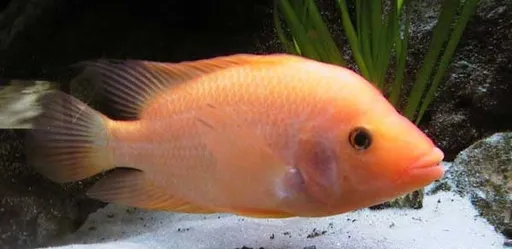 13.8 in (35 cm)75 gal (284 L)75–79°F (24–26°C)
Red devil cichlid
Amphilophus labiatus
13.8 in (35 cm) · 75 gal (284 L)
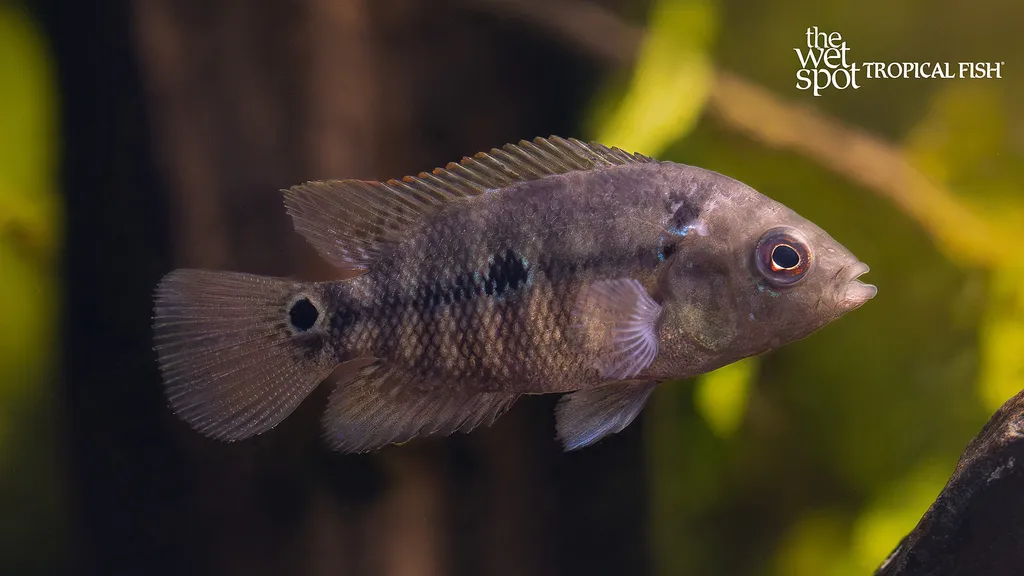 13.8 in (35 cm)90 gal (340 L)75–82°F (24–28°C)
Trimac cichlid
Amphilophus trimaculatus
13.8 in (35 cm) · 90 gal (340 L)
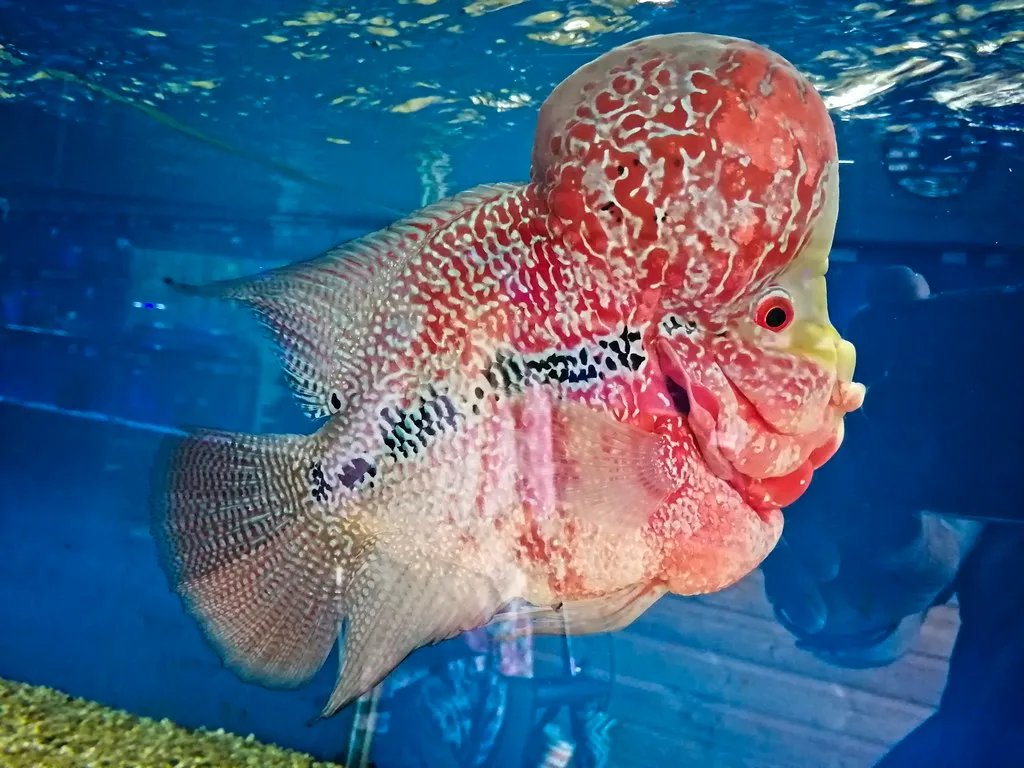 15.7 in (40 cm)90 gal (340 L)77–88°F (25–31°C)
Flowerhorn cichlid
Amphilophus hybrid
15.7 in (40 cm) · 90 gal (340 L)
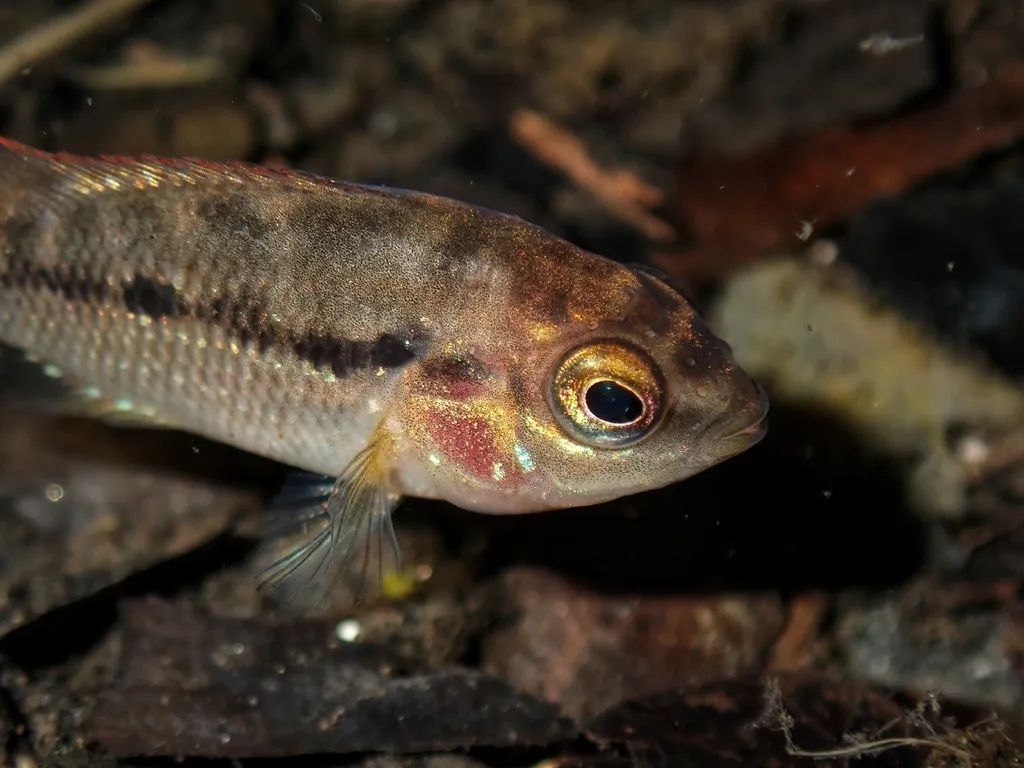 11.8 in (30 cm)119 gal (450 L)75–84°F (24–29°C)
Istlanus cichlid
Amphilophus istlanus
11.8 in (30 cm) · 119 gal (450 L)
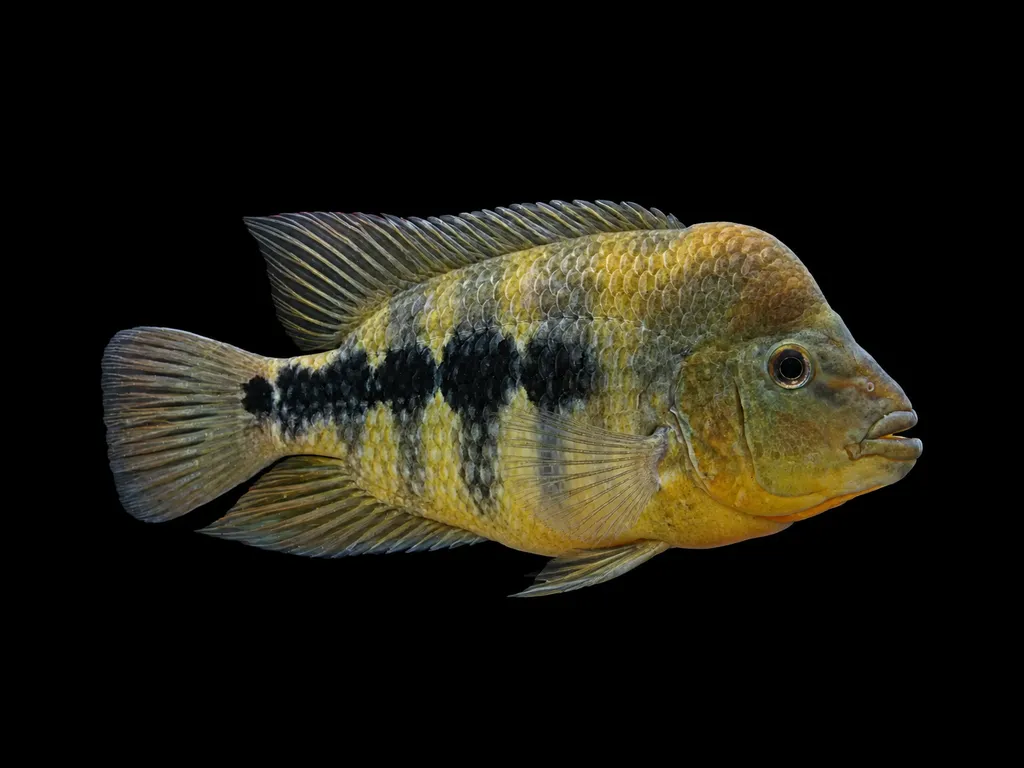 11.4 in (29 cm)132 gal (500 L)75–84°F (24–29°C)
Chancho midas cichlid
Amphilophus chancho
11.4 in (29 cm) · 132 gal (500 L)
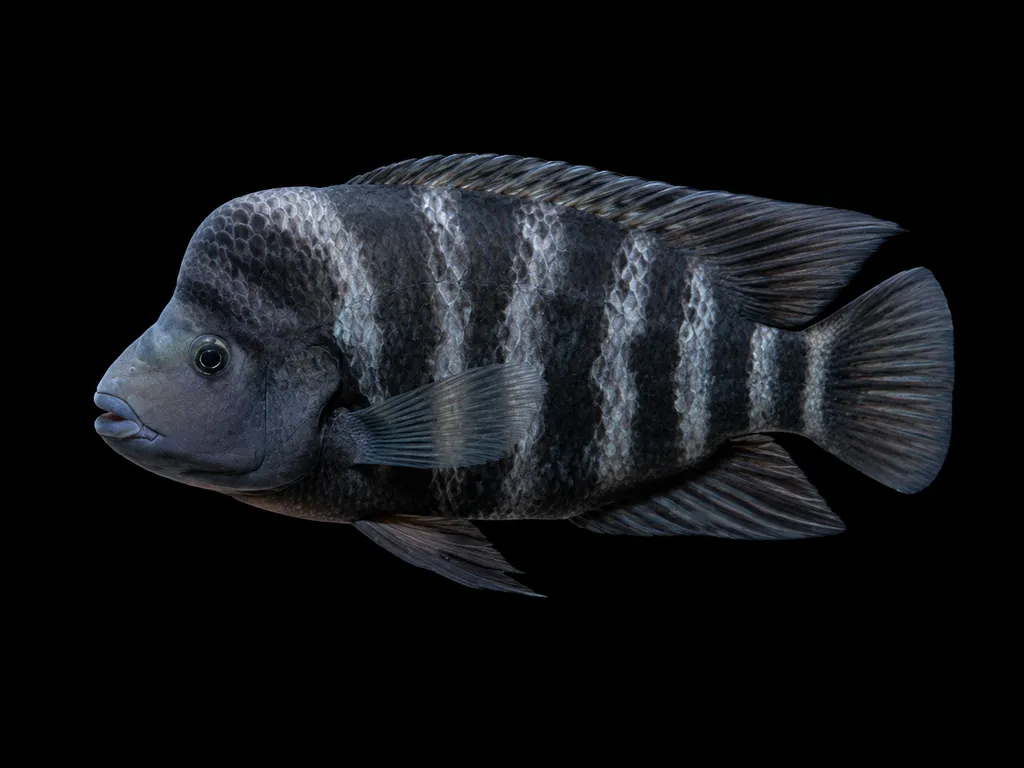 7.5 in (19 cm)119 gal (450 L)75–84°F (24–29°C)
Arrow midas cichlid
Amphilophus sagittae
7.5 in (19 cm) · 119 gal (450 L)