Variety of Oscar
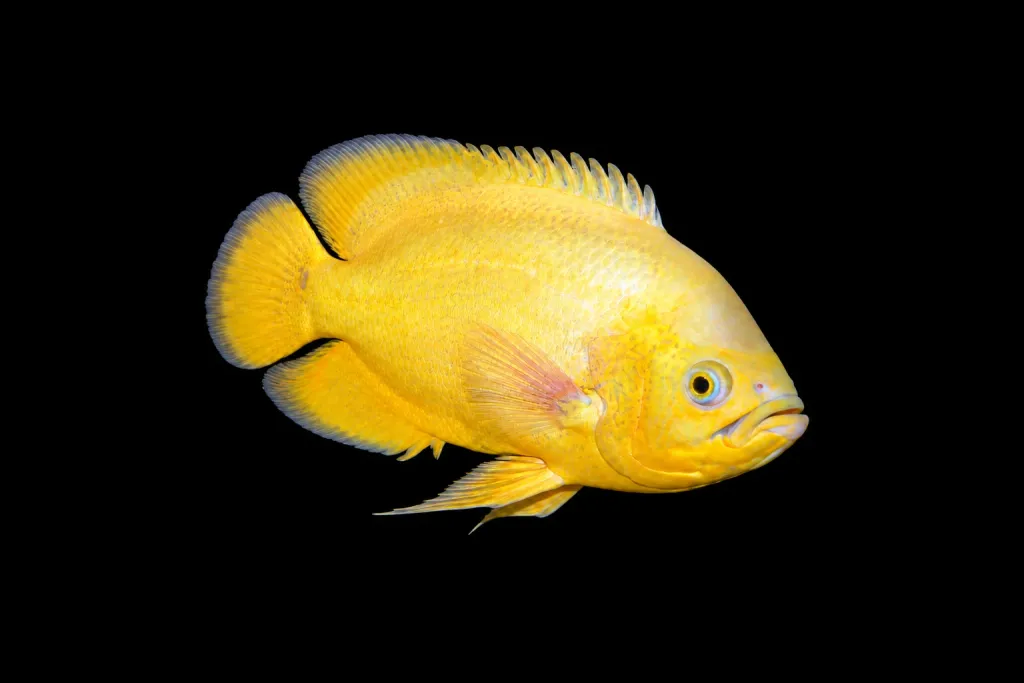
Lemon oscar
Astronotus ocellatus
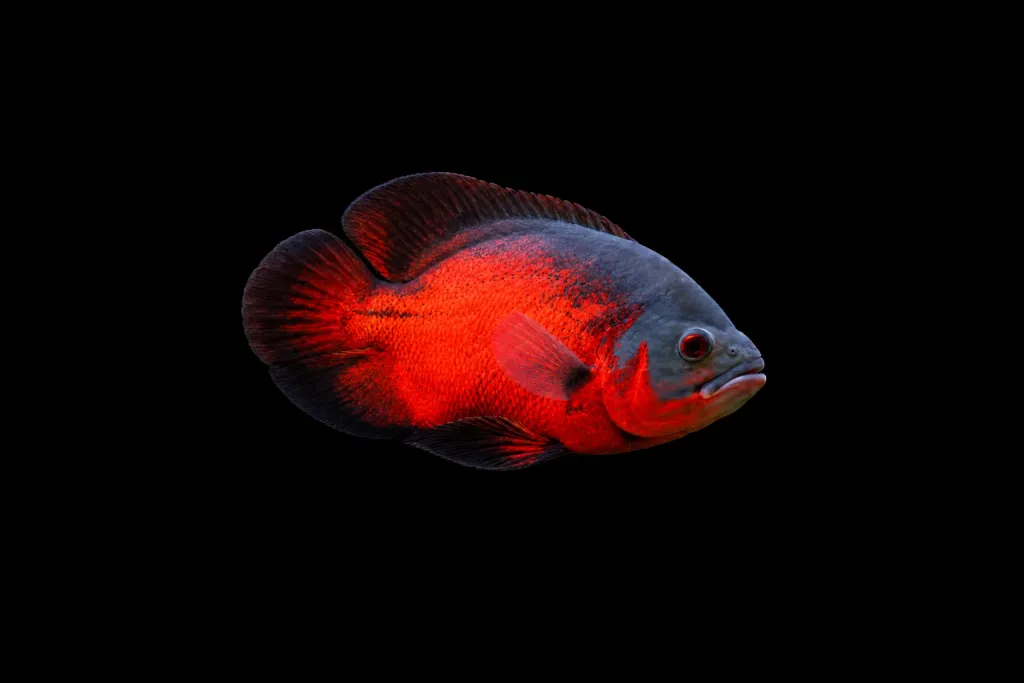
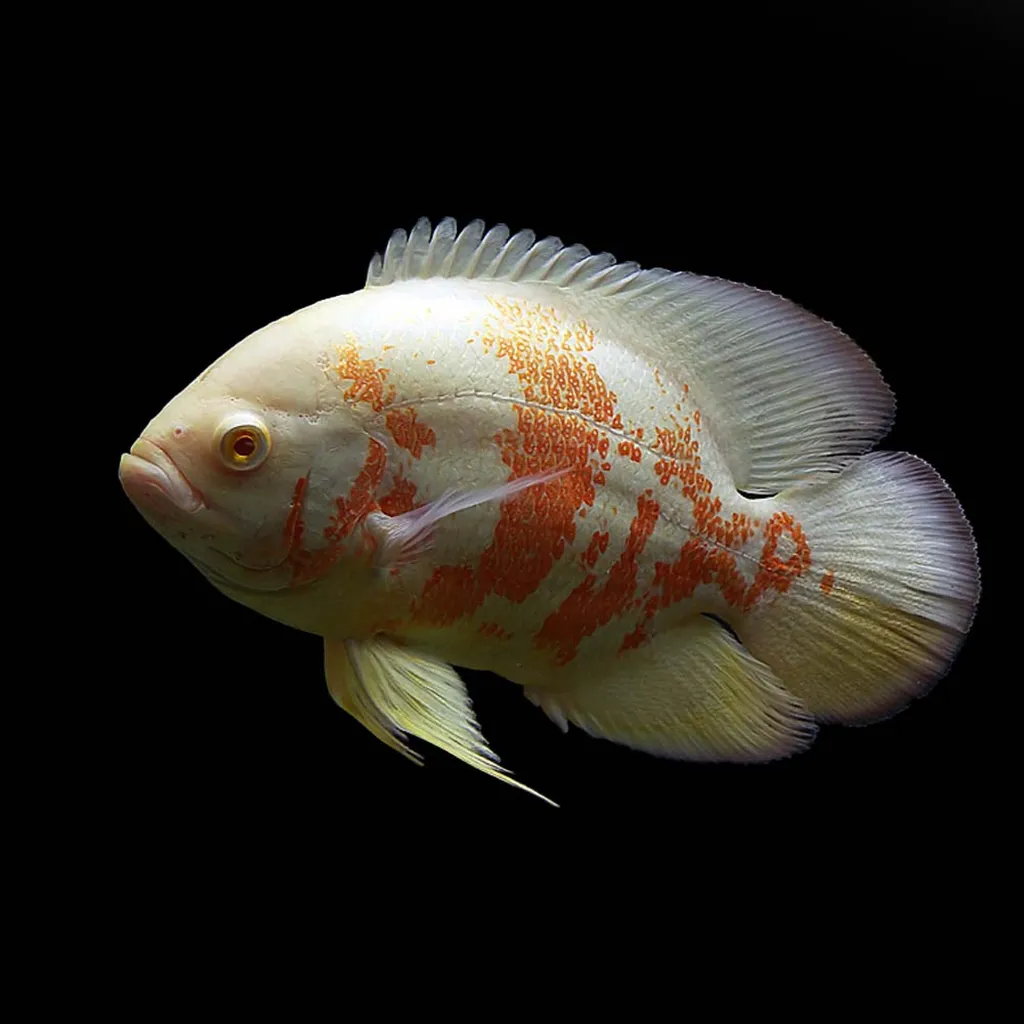
One of 4 varieties of Astronotus ocellatus · See all varieties →
Also known as Yellow oscar
FreshwaterFish
Varieties · Astronotus ocellatus
See all 4 →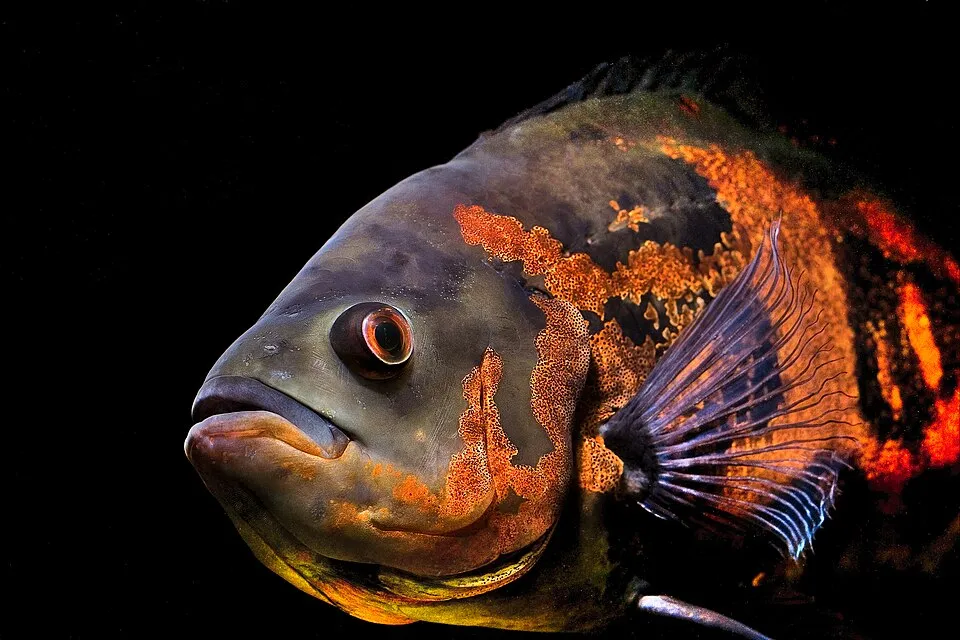
Care at a glance
- Temperature
- 68–82°F
- 20–28°C
- pH
- 6.0–7.5
- Adult size
- 13.8 in
- 35 cm
- Minimum tank
- 75 gal
- 284 L
- Temperament
- Aggressive
- Social behavior
- Solitary
- Tankmates
- With caution
- Swim level
- Middle
- Diet
- Carnivore
- Difficulty
- Medium
- Breeding
- Substrate spawner · Hard
- Rarity
- Rare
- Family
- Cichlidae
Overview
The lemon oscar is a yellow form of the oscar, with lemon to mustard coloring over a cream-white body. It shows much less of the orange-red pattern than a standard albino and turns up in fewer stores. It is best with a little experience behind you.
Did you know
A lemon oscar in one store can be an albino in the next, because neither name has a standard behind it. Shops that stock both tend to keep lemon for the palest, most evenly yellow fish in the batch.
Caring for the lemon oscar
Plan on at least 75 gal (284 L) for one adult lemon oscar. It rearranges its tank, so lay a sandy floor and secure the decor. A few large pieces of driftwood and rounded rocks give it cover. Leave plants out, or keep them potted and sturdy, since it usually uproots them.
It does best in soft to neutral water, at 68 to 82°F (20 to 28°C) and a pH of 6.0 to 7.5. As a heavy eater and a messy fish, it needs strong filtration and regular large water changes. Feed a quality cichlid pellet as the staple, plus occasional prawn, mussel and earthworm. Skip a diet of feeder fish or plain mammal meat.
Keep it singly or as a bonded pair. It is predatory and territorial, and it swallows any fish small enough to fit in its mouth. Tank mates must be big and sturdy, too large to eat and able to hold their own.
It is a substrate spawner, and a pair cleans a flat rock and guards the eggs and fry. Breeding is hard, because pairing is difficult and mismatched adults can fight fiercely. Pattern intensity is a graded trait, so lemon spawns come out uneven and get sorted by eye.
Good to know
The lemon oscar's yellow look comes from dark pigment being cut back, leaving the yellow layer to carry the fish. Its orange-red pattern is reduced too, so the yellow ground does most of the work. Tone varies between suppliers. Retailer and hobby pages split the name between a dark-eyed xanthic fish and a red-eyed albino one. Check the eye color against the label.
In the wild
Lemon oscars are a pale selection out of albino stock held by ornamental farms, and nothing in the wild looks like one. No source names the breeder, the country or the decade, so this is a hobby line of uncertain origin. Retailers list it as tank-bred alongside the other pale forms.
From published sources
Tank mates
Each fish here is named as a tank mate for the lemon oscar by at least two published care guides. Fishkeeping World and Imperial Tropicals recommend keeping it on its own instead. Add tank mates at adult size, since an oscar eats any fish that fits its mouth. The tank needs more than the oscar's own 75 gallons (284 liters).
Sources: Aquarium Co-Op, Fishkeeping World, Aquarium Source, Practical Fishkeeping, Seriously Fish, FishLab.
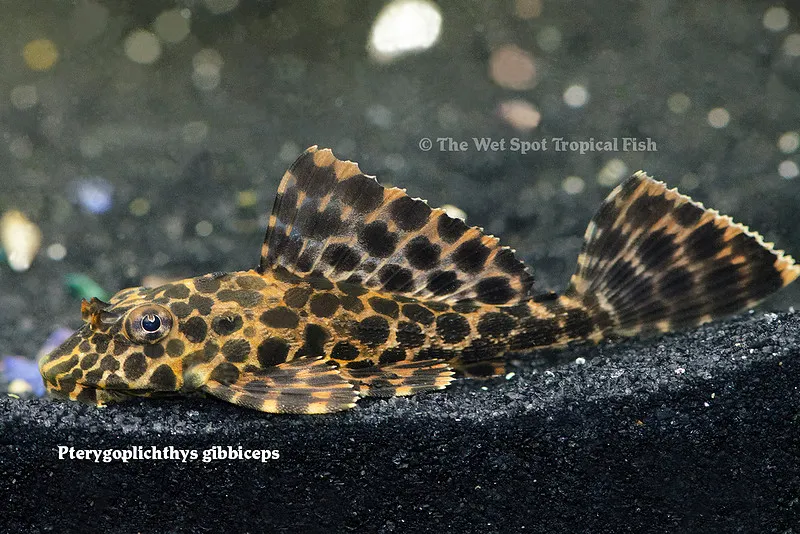
Leopard sailfin pleco
Pterygoplichthys gibbiceps
Freshwater18.9 in (48 cm) · 100 gal (380 L)72–86°F (22–30°C)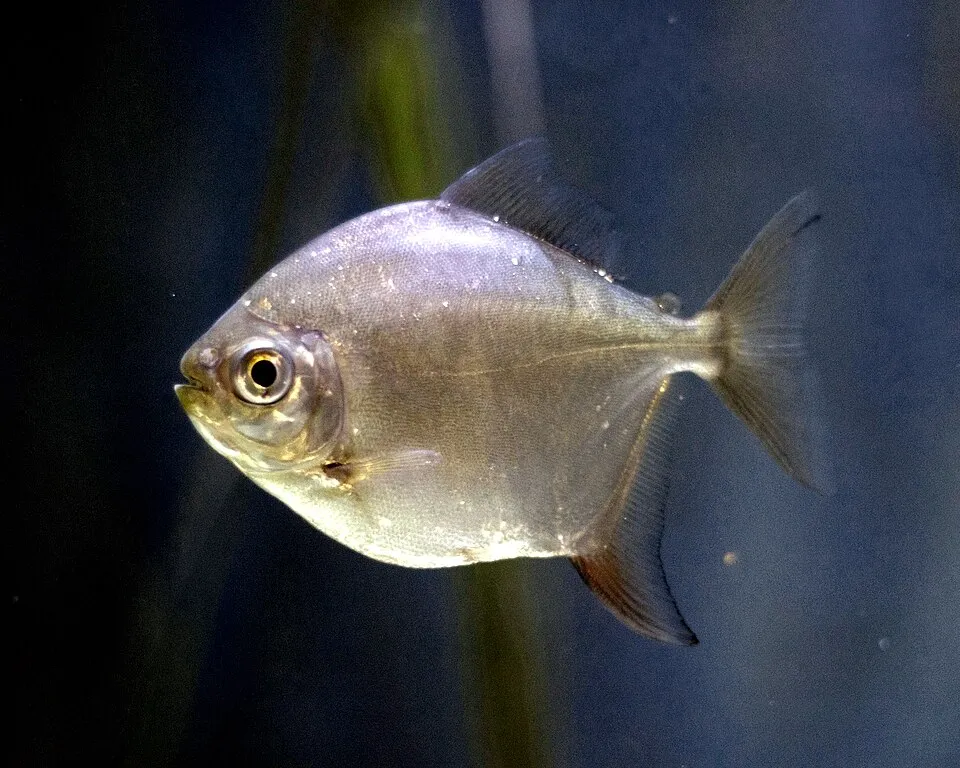
Silver dollar
Metynnis argenteus
Freshwater5.9 in (15 cm) · 70 gal (265 L)75–82°F (24–28°C)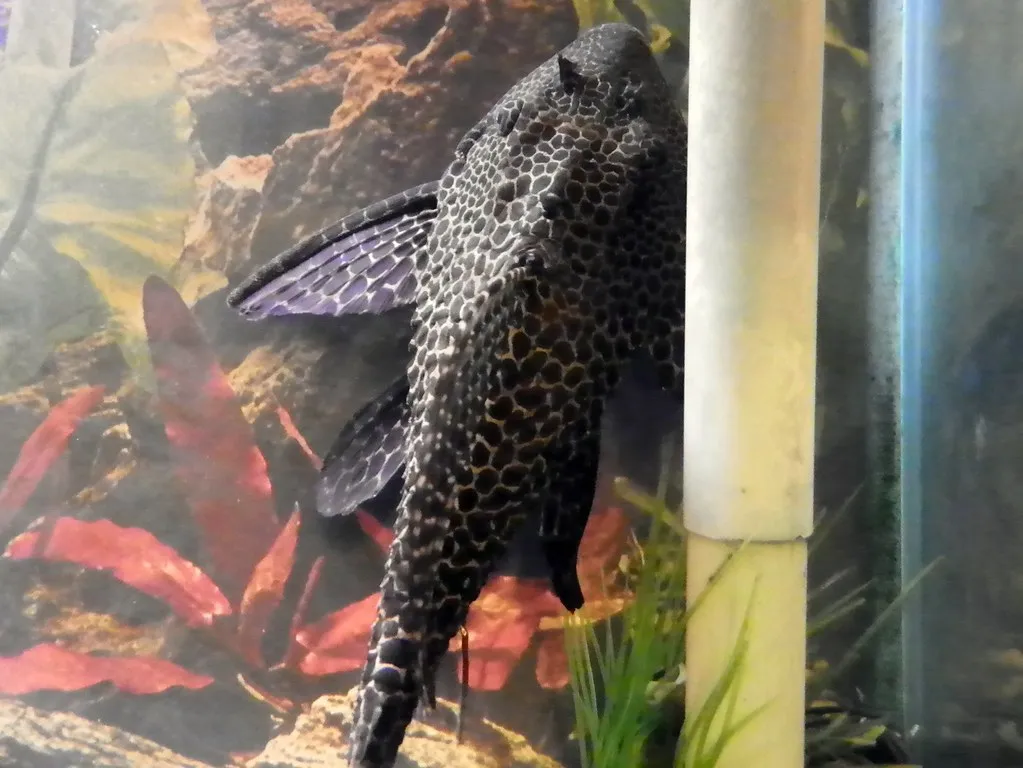
Common pleco
Hypostomus plecostomus
Freshwater15.7 in (40 cm) · 85 gal (320 L)72–86°F (22–30°C)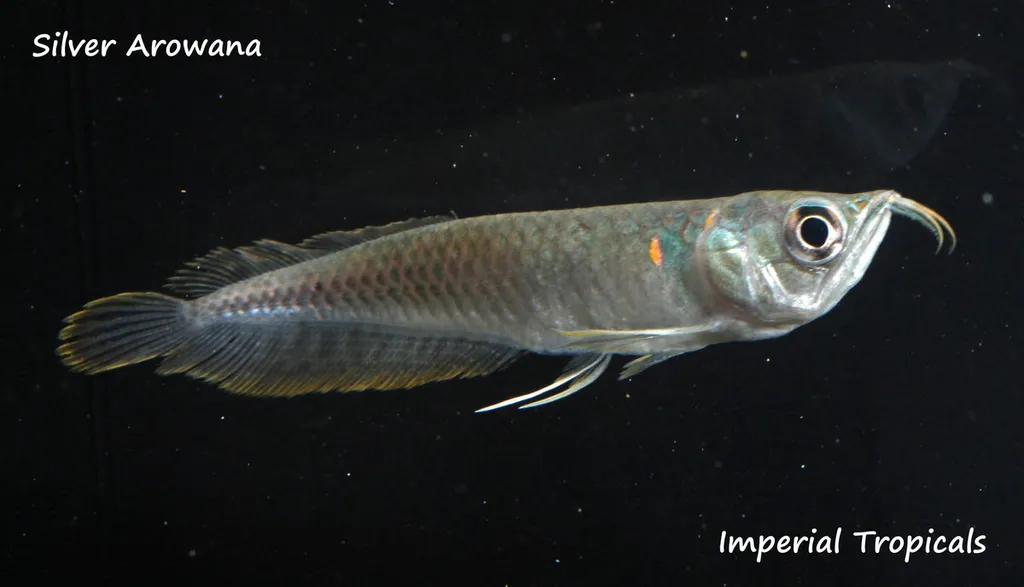
Silver arowana
Osteoglossum bicirrhosum
Freshwater39.4 in (100 cm) · 396 gal (1,500 L)75–82°F (24–28°C)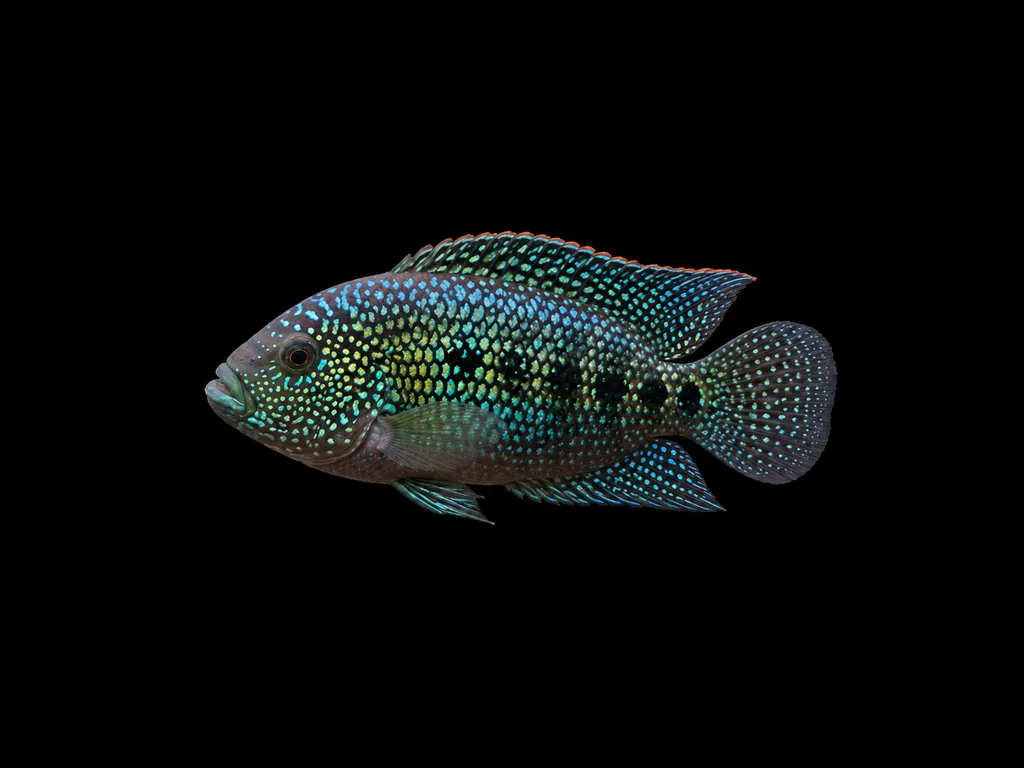
Jack Dempsey
Rocio octofasciata
Freshwater9.8 in (25 cm) · 55 gal (208 L)72–82°F (22–28°C)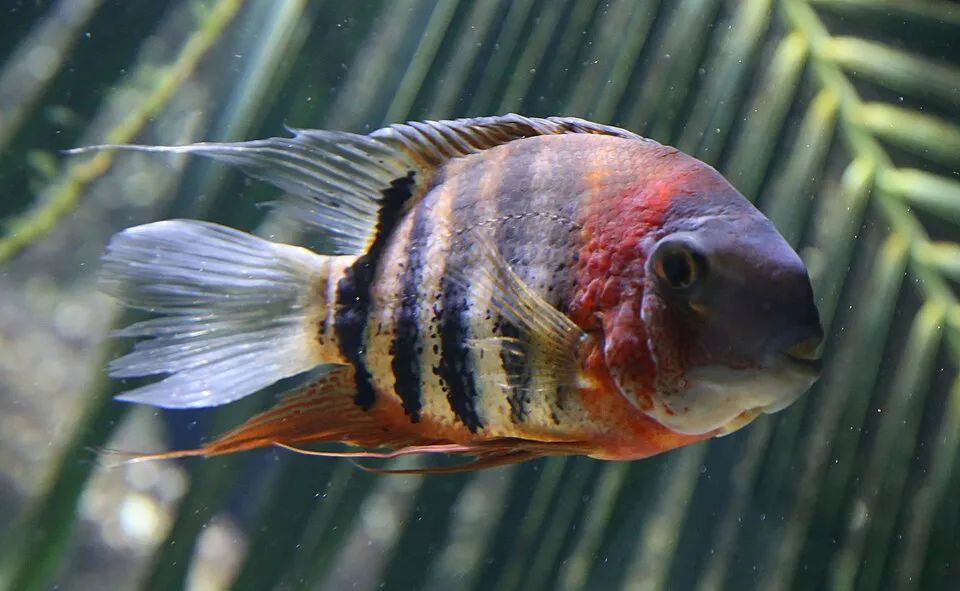
Severum
Heros efasciatus
Freshwater11.8 in (30 cm) · 65 gal (245 L)72–84°F (22–29°C)
Common questions
Is a lemon oscar a different species from the oscar?
No. A lemon oscar is a variety of the oscar, Astronotus ocellatus, and it wants the same tank, water and food as the species.
What size tank does a lemon oscar need?
A lemon oscar needs at least 75 gal (284 L). It spends most of its time in the middle.
What does a lemon oscar eat?
A lemon oscar takes a quality cichlid pellet as its staple, with prawn, mussel and earthworm now and then. Keep feeder fish and plain mammal meat out of its regular diet.
How big does a lemon oscar get?
An adult lemon oscar reaches about 13.8 in (35 cm).
How does a lemon oscar breed?
Lemon oscars are substrate spawners, and a pair cleans a flat rock and guards its eggs and fry. Pairing them is hard, and spawns come out uneven, so the young get sorted by eye.
What fish can live with the lemon oscar?
Published care guides name leopard sailfin pleco, silver dollar, common pleco and silver arowana, among others. Add tank mates at adult size, since an oscar eats any fish that fits its mouth. The tank needs more than the oscar's own 75 gallons (284 liters).
Related species
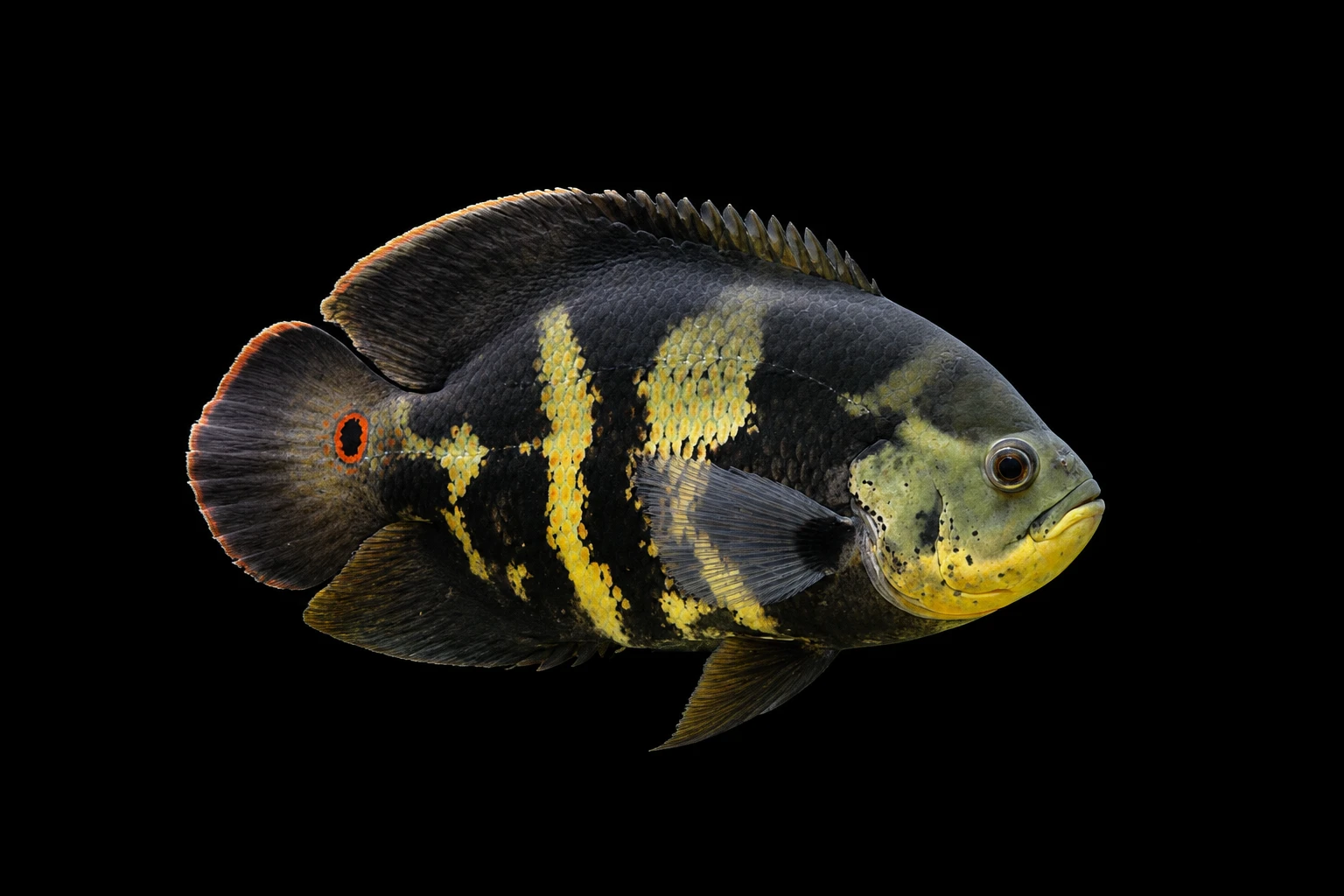 11.4 in (29 cm)132 gal (500 L)73–82°F (23–28°C)
Fat oscar
Astronotus crassipinnis
11.4 in (29 cm) · 132 gal (500 L)
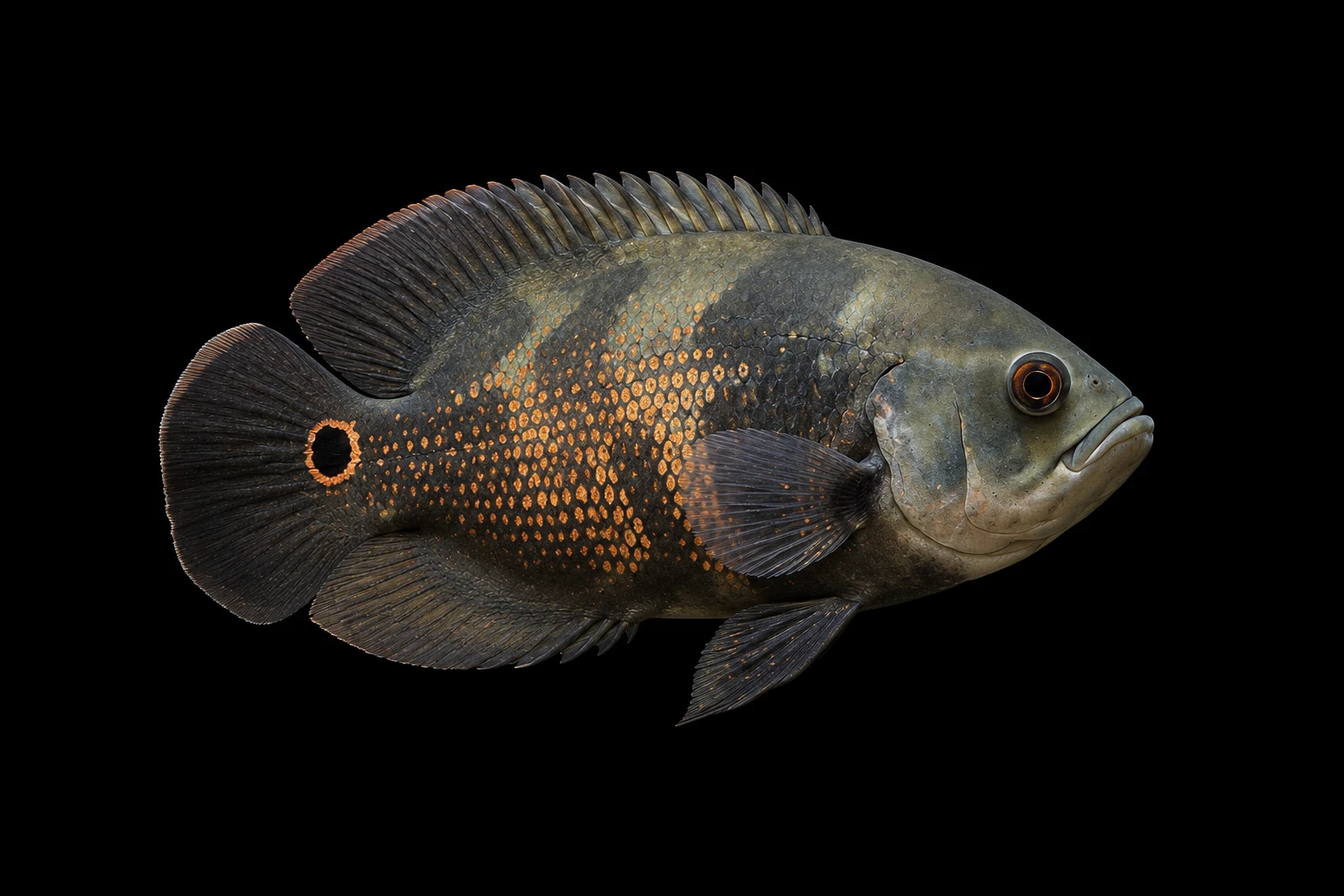 11.4 in (29 cm)132 gal (500 L)77–86°F (25–30°C)
Mikolji's oscar
Astronotus mikoljii
11.4 in (29 cm) · 132 gal (500 L)
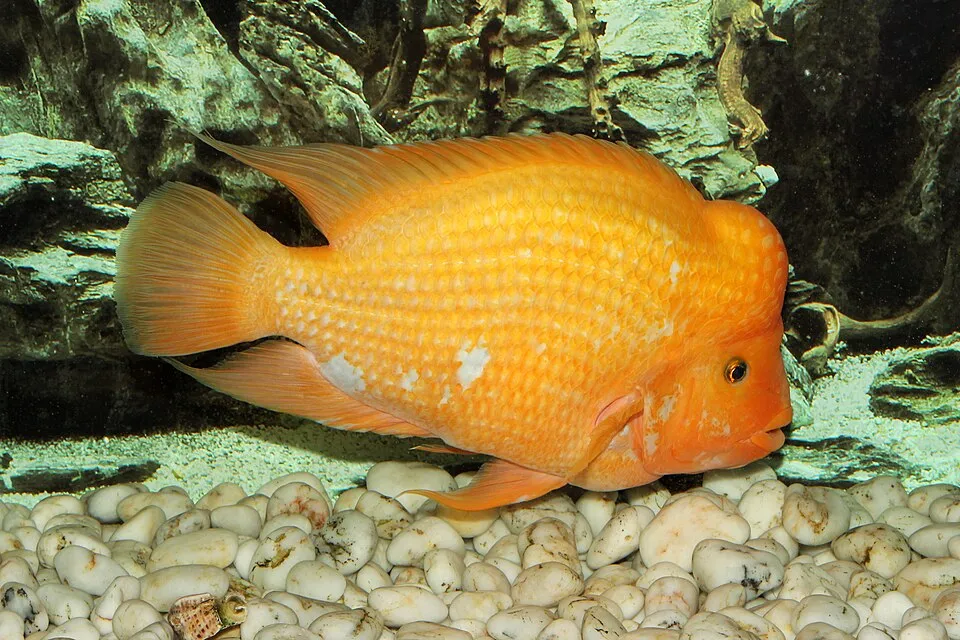 13.8 in (35 cm)79 gal (300 L)70–79°F (21–26°C)
Midas cichlid
Amphilophus citrinellus
13.8 in (35 cm) · 79 gal (300 L)
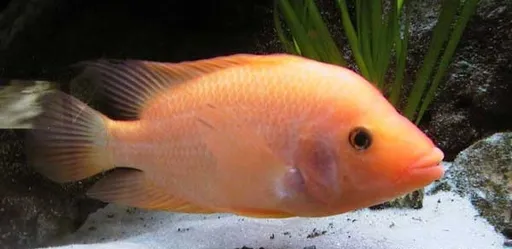 13.8 in (35 cm)75 gal (284 L)75–79°F (24–26°C)
Red devil cichlid
Amphilophus labiatus
13.8 in (35 cm) · 75 gal (284 L)
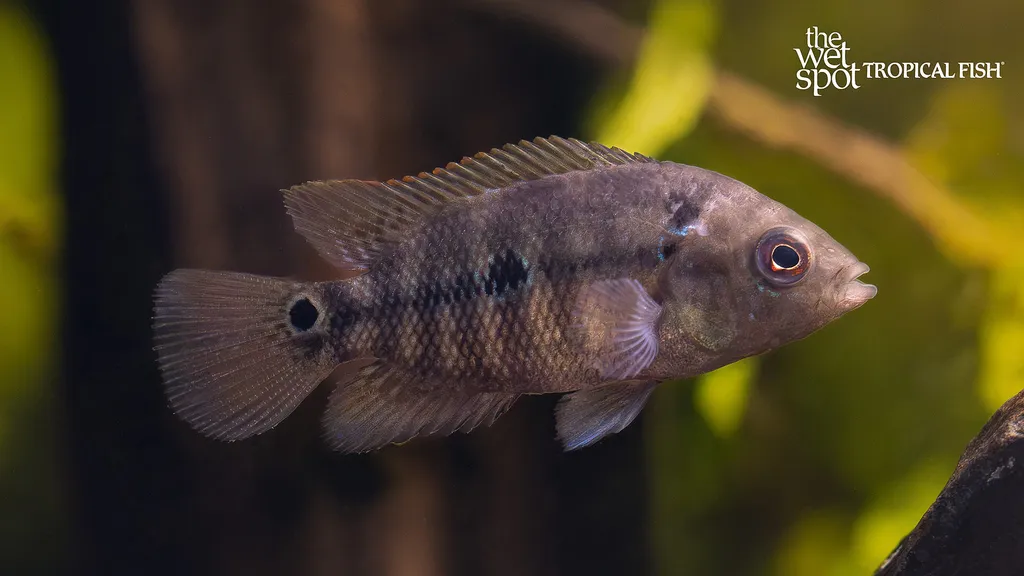 13.8 in (35 cm)90 gal (340 L)75–82°F (24–28°C)
Trimac cichlid
Amphilophus trimaculatus
13.8 in (35 cm) · 90 gal (340 L)
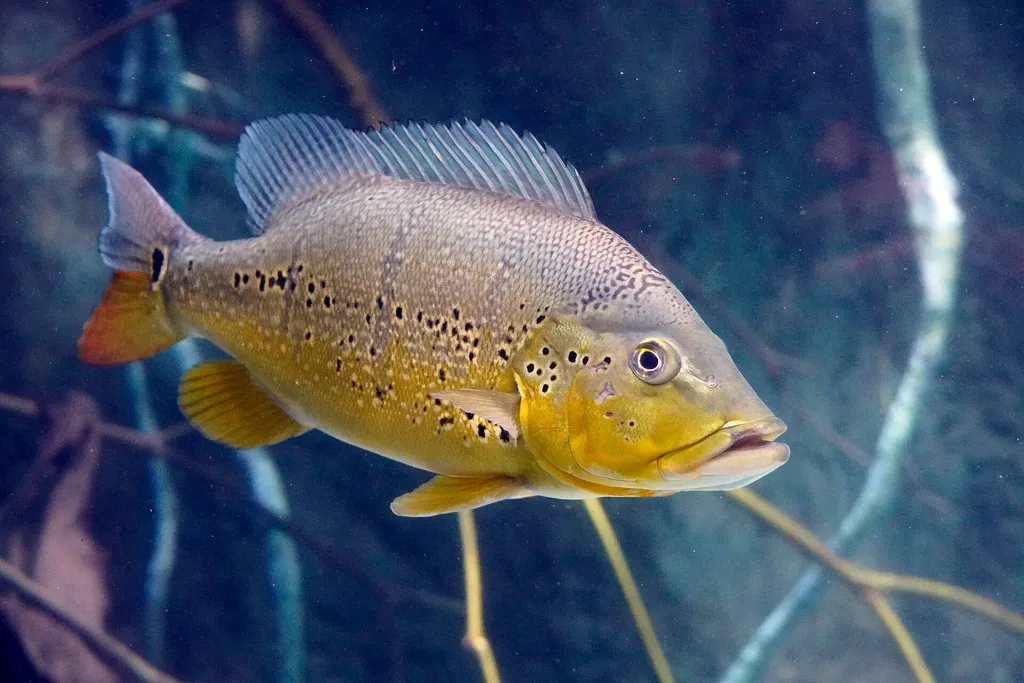 14.2 in (36 cm)317 gal (1,200 L)77–86°F (25–30°C)
Xingu peacock bass
Cichla melaniae
14.2 in (36 cm) · 317 gal (1,200 L)