Spotted headstander
Chilodus punctatus
FreshwaterFish
Care at a glance
- Temperature
- 68–82°F
- 20–28°C
- pH
- 6.0–7.5
- Adult size
- 3.1 in
- 8 cm
- Minimum tank
- 22 gal
- 85 L
- Temperament
- Peaceful
- Social behavior
- Shoaling
- Swim level
- Middle
- Difficulty
- Medium
- Breeding
- No record
- Rarity
- Rare
- Family
- Chilodontidae
- Origin
- South America
Overview
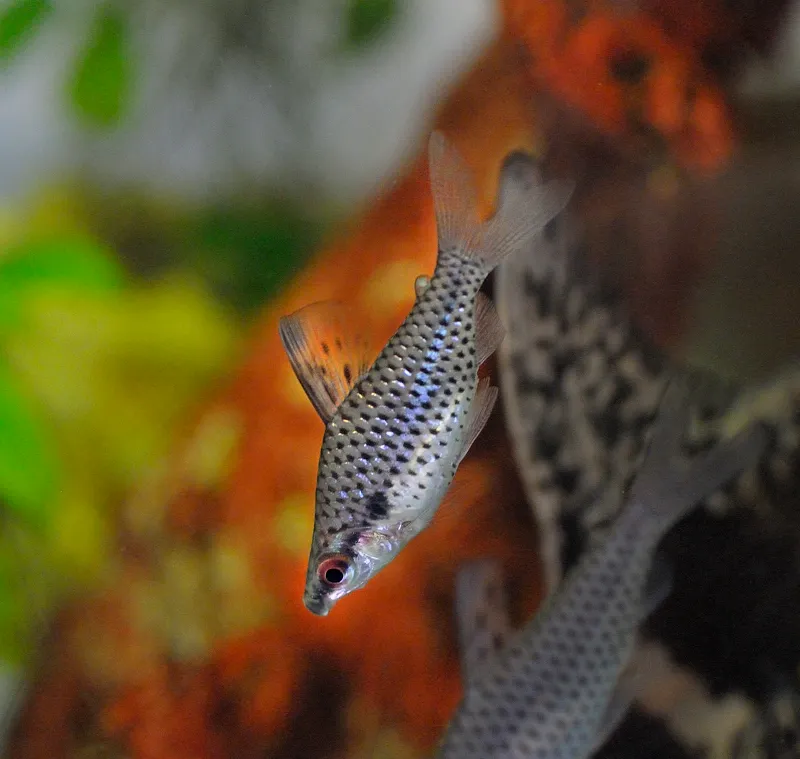
This is a peaceful, social fish best kept in a group of five or more, in a tank of around 85 liters. It holds itself at a head-down angle and grazes biofilm and algae off surfaces during the day. Feed a mostly plant-based diet of flakes and vegetable foods, with occasional brine shrimp or bloodworms for protein. It does best in soft, slightly acidic, warm water and can be shy without enough cover.
In the wild
The spotted headstander lives in slow streams and tributaries of the Amazon and Orinoco basins in South America, in shady, densely planted water with submerged roots and decaying leaves. The water is soft and slightly acidic. Recreate that with a dim, well-planted tank, soft acidic to neutral water, and a temperature in the low to high 20s C. Driftwood and leaf litter make it feel at home.
Good to know
Chilodus punctatus is the type species of the small family Chilodontidae, the headstanders. It grows to about 8 cm and is easy to spot from its head-down posture and the rows of dark spots along its body. It is an omnivore in the wild, eating plant matter and small invertebrates. Wild numbers are considered stable, and there is no reliable record of it breeding at home.
Did you know
The constant head-down tilt is not just a quirk. It points the mouth right at submerged surfaces so the fish can scrape algae and biofilm efficiently while other fish feed in the usual horizontal position.
Weekly picks
Tank mates
Spotted headstander is a peaceful, shoaling species that keeps to the middle. These picks share a community profile with it, are safe together in both directions, and overlap on water type, temperature and pH.
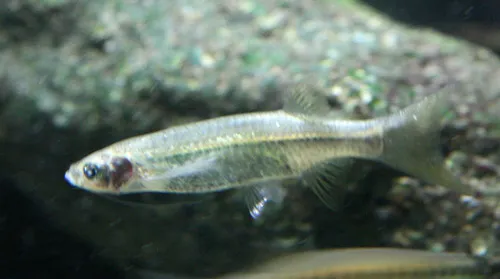
Striped flying barb
Esomus metallicus
Freshwater3 in (7.5 cm) · 24 gal (90 L)72–79°F (22–26°C)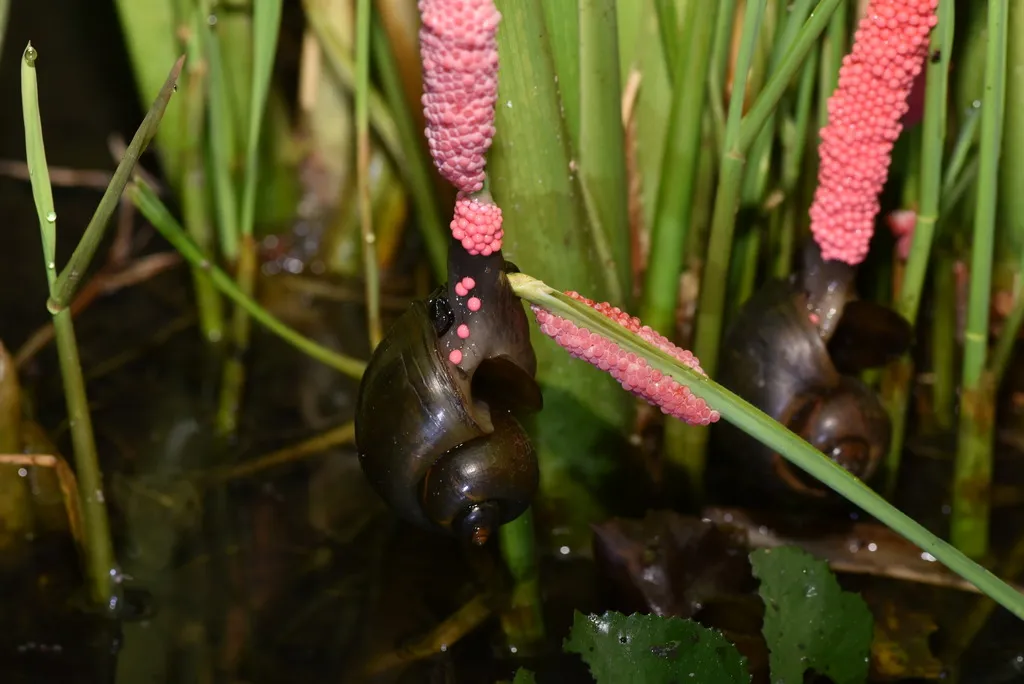
Apple snail
Pomacea canaliculata
Freshwater5.9 in (15 cm) · 21 gal (80 L)64–81°F (18–27°C)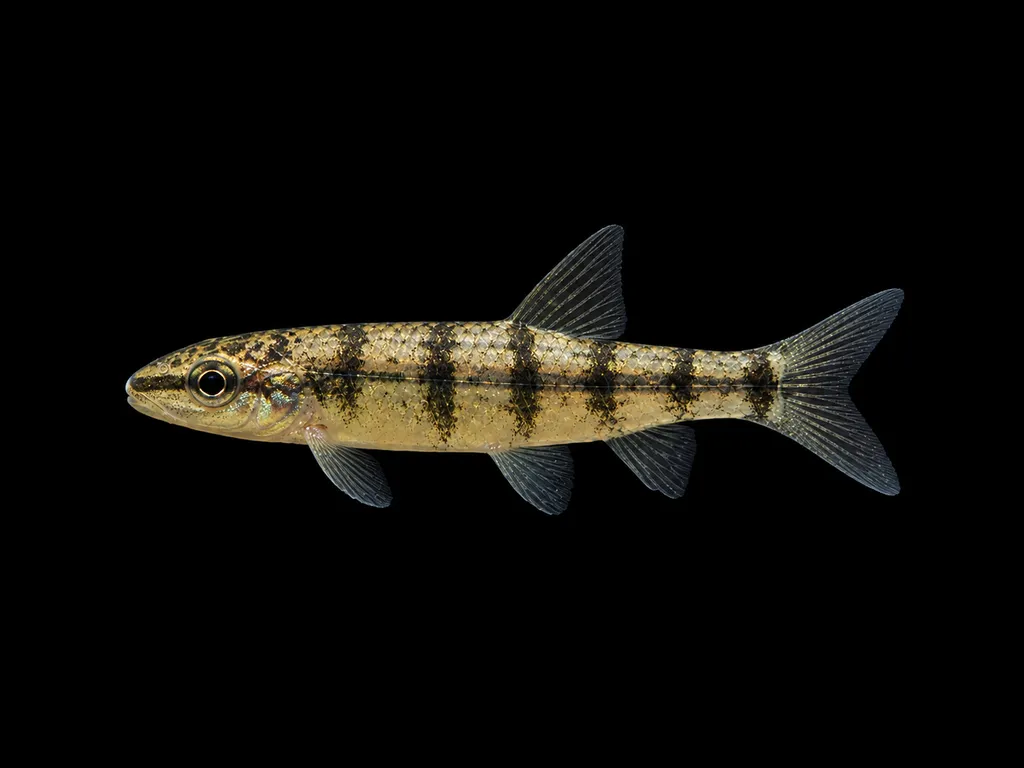
Banded darter tetra
Nannocharax fasciatus
Freshwater2.6 in (6.5 cm) · 21 gal (80 L)73–82°F (23–28°C)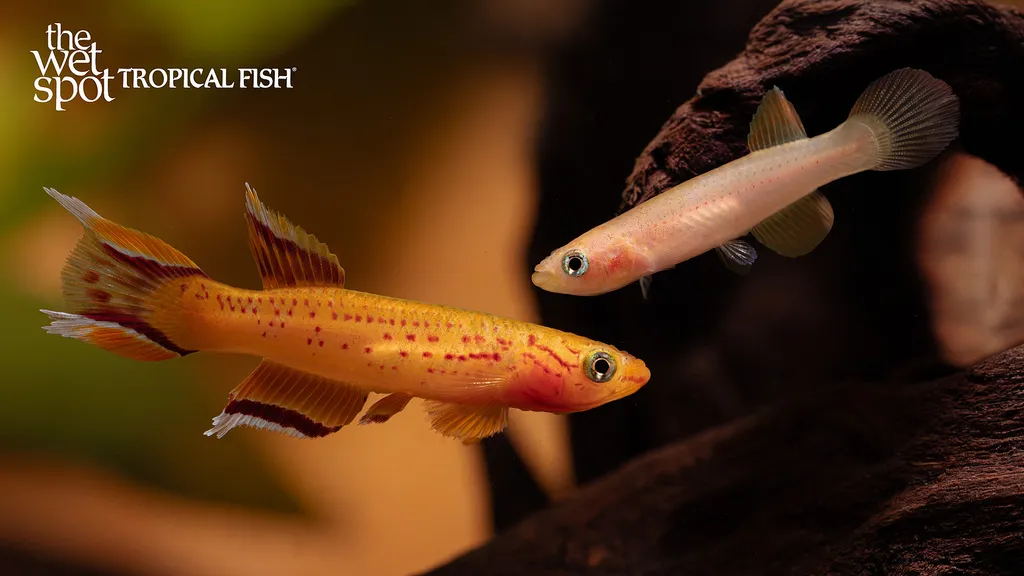
Forktail blue-eye
Pseudomugil furcatus
Freshwater2.2 in (5.5 cm) · 22 gal (85 L)75–82°F (24–28°C)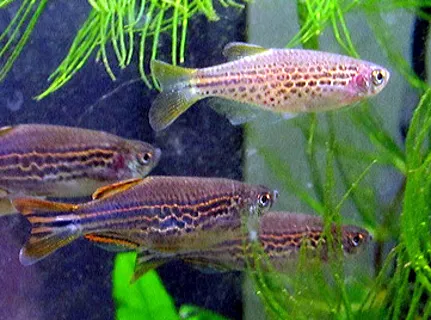
Orange-finned danio
Danio kyathit
Freshwater2 in (5 cm) · 20 gal (75 L)68–79°F (20–26°C)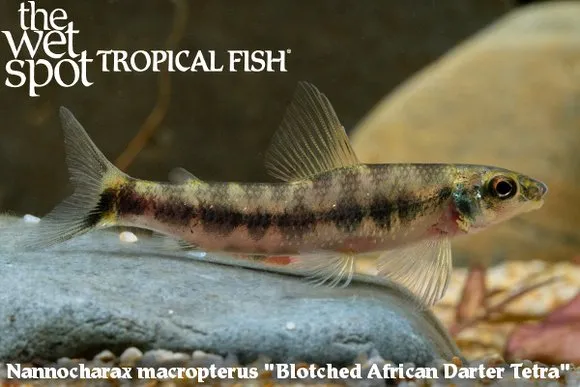
Blotched darter tetra
Nannocharax macropterus
Freshwater2.4 in (6 cm) · 21 gal (80 L)73–82°F (23–28°C)
Common questions
What size tank does a Spotted headstander need?
A Spotted headstander needs at least 22 gal (85 L). It spends most of its time in the middle.
What temperature and pH does a Spotted headstander need?
A Spotted headstander is comfortable at 68–82°F (20–28°C) with a pH of 6.0–7.5.
How big does a Spotted headstander get?
An adult Spotted headstander reaches about 3.1 in (8 cm).
Does a Spotted headstander need a group?
Yes. A Spotted headstander is a shoaling species and should be kept in a group, not singly.
Related species
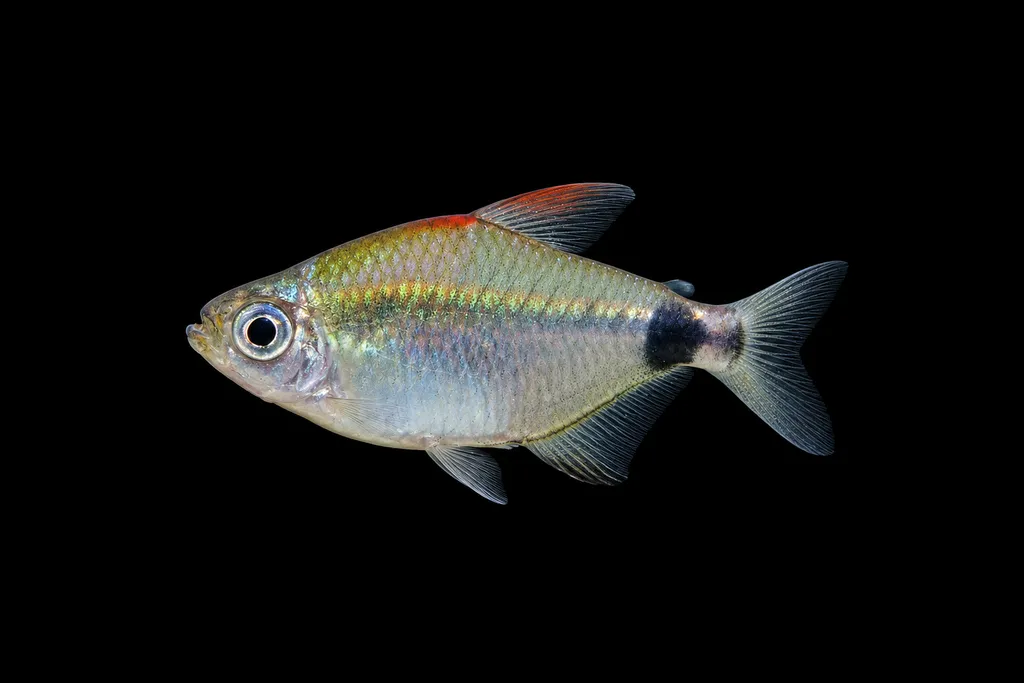 3.1 in (8 cm)22 gal (85 L)72–77°F (22–25°C)
African moon tetra
Bathyaethiops caudomaculatus
3.1 in (8 cm) · 22 gal (85 L)
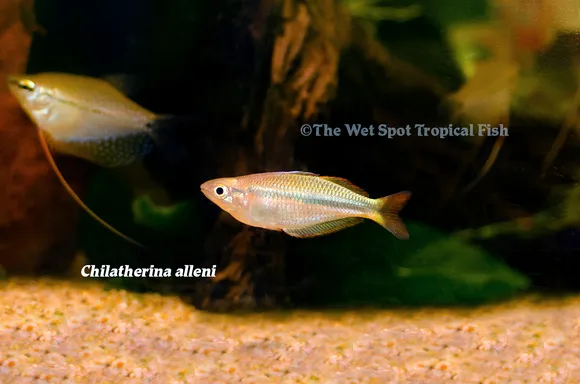 3 in (7.6 cm)29 gal (110 L)75–84°F (24–29°C)
Allen's rainbowfish
Chilatherina alleni
3 in (7.6 cm) · 29 gal (110 L)
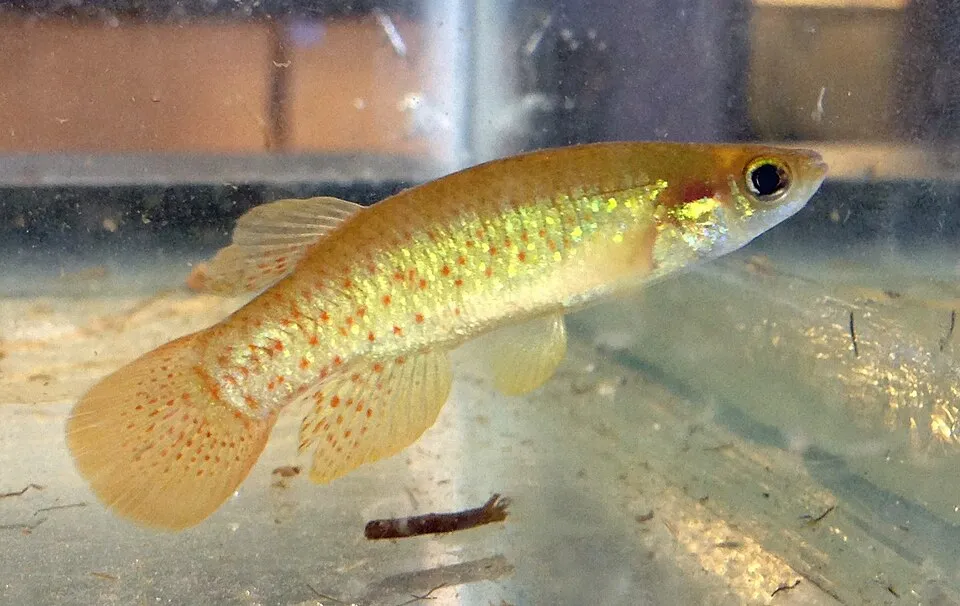 3 in (7.5 cm)22 gal (85 L)59–75°F (15–24°C)
Golden topminnow
Fundulus chrysotus
3 in (7.5 cm) · 22 gal (85 L)
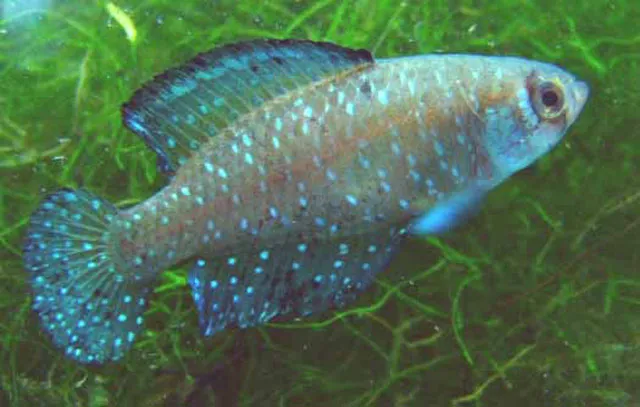 2.8 in (7 cm)18 gal (70 L)64–75°F (18–24°C)
Argentine pearl killifish
Austrolebias nigripinnis
2.8 in (7 cm) · 18 gal (70 L)
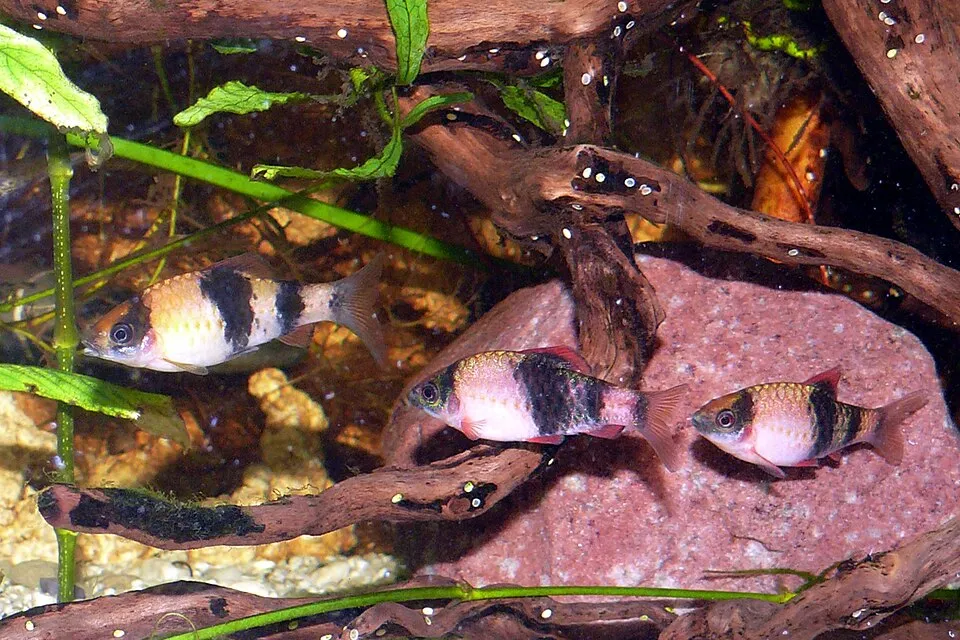 2.8 in (7 cm)40 gal (150 L)72–79°F (22–26°C)
Melon barb
Haludaria fasciata
2.8 in (7 cm) · 40 gal (150 L)
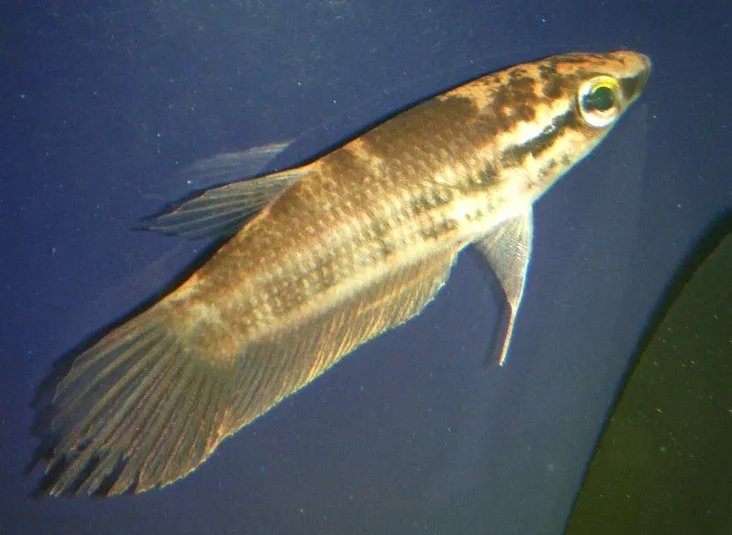 2.8 in (7 cm)16 gal (60 L)72–82°F (22–28°C)
Pugnax betta
Betta pugnax
2.8 in (7 cm) · 16 gal (60 L)