Rainbow shiner
Notropis chrosomus
FreshwaterFish

Care at a glance
- Temperature
- 50–72°F
- 10–22°C
- pH
- 6.0–7.5
- Adult size
- 3.1 in
- 8 cm
- Minimum tank
- 20 gal
- 75 L
- Temperament
- Peaceful
- Social behavior
- Schooling
- Swim level
- Middle
- Difficulty
- Medium
- Breeding
- Egg scatterer · Hard
- Rarity
- Rare
- Family
- Cyprinidae
- Origin
- United States
Overview
The rainbow shiner is an active, peaceful shoaling minnow for a cool, unheated tank. It takes a little more care than the easiest community fish.
Did you know
The rainbow shiner often lays its eggs over the nests of other fish.
Caring for the rainbow shiner
Give a shoal of rainbow shiners at least 20 gal (75 L), with brisk current and a substrate of gravel and rounded pebbles. Some rock, driftwood and hardy planting round out the setup, but flow, oxygen and cool temperatures come first.
Keep the water cool, clean and well oxygenated, at 50 to 72°F (10 to 22°C) and a pH of 6.0 to 7.5. That keeps them healthy and colorful, so an unheated or lightly cooled tank suits them better than a tropical one. They are undemanding feeders that take flake, small pellets, and frozen or live foods such as daphnia and bloodworm.
Keep a group of at least eight, since good numbers bring out their color and their lively, coordinated swimming. They are peaceful and occupy the middle water. They do well in a coolwater community with other temperate, gentle species.
In the breeding season, males glow with pink, blue and violet iridescence and grow small white tubercles on the head. Rainbow shiners are egg-scattering spawners, and breeding them deliberately in an aquarium is difficult.
Good to know
Notropis chrosomus is a North American member of the family Cyprinidae, one of the true minnows. For most of the year it is a plain silver fish, but its breeding colors rival many tropical fish.
In the wild
The rainbow shiner is native to the clear, cool streams of the Mobile River basin in the southeastern United States. Its range covers parts of Alabama, Georgia and Tennessee, where it lives over gravel and stone in flowing water.
Weekly picks
Tank mates
The rainbow shiner is a peaceful, schooling species that keeps to the middle. These picks share a community profile with it, are safe together in both directions, and overlap on water type, temperature and pH.
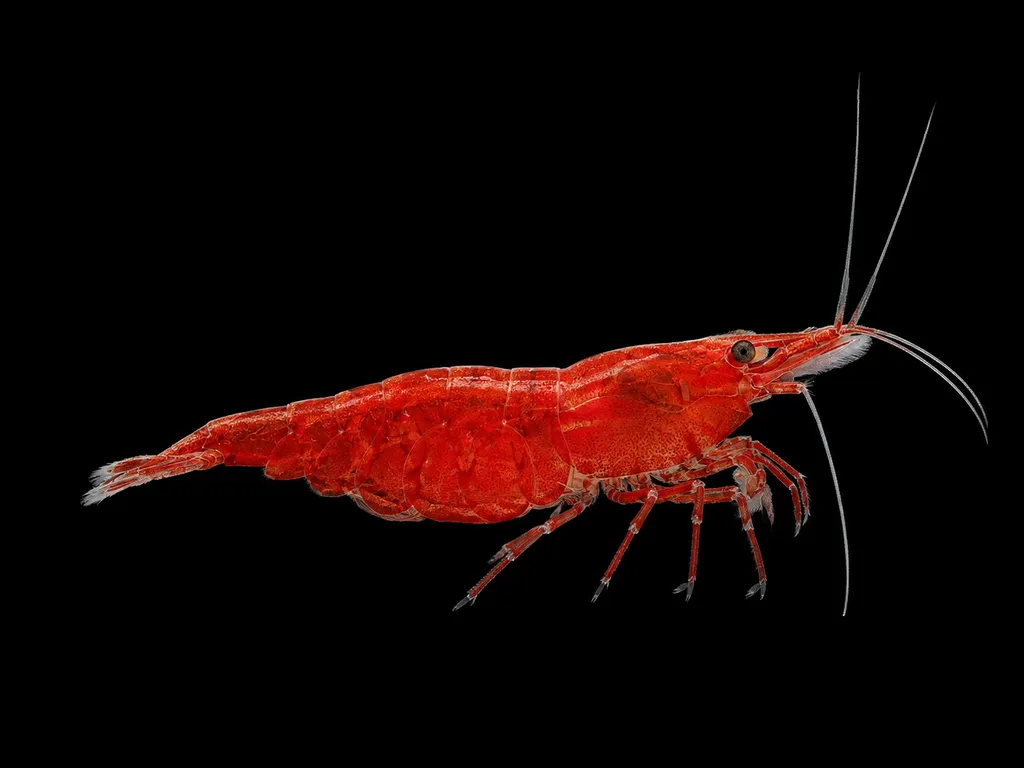
Neocaridina shrimp
Neocaridina davidi
Freshwater1.6 in (4 cm) · 5 gal (19 L)59–84°F (15–29°C)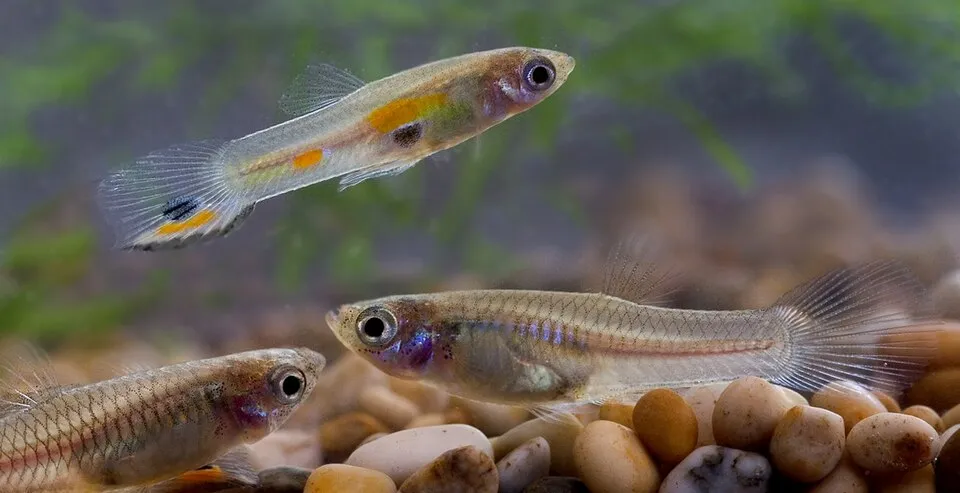
Guppy
Poecilia reticulata
FreshwaterBrackish2.4 in (6 cm) · 10 gal (38 L)64–82°F (18–28°C)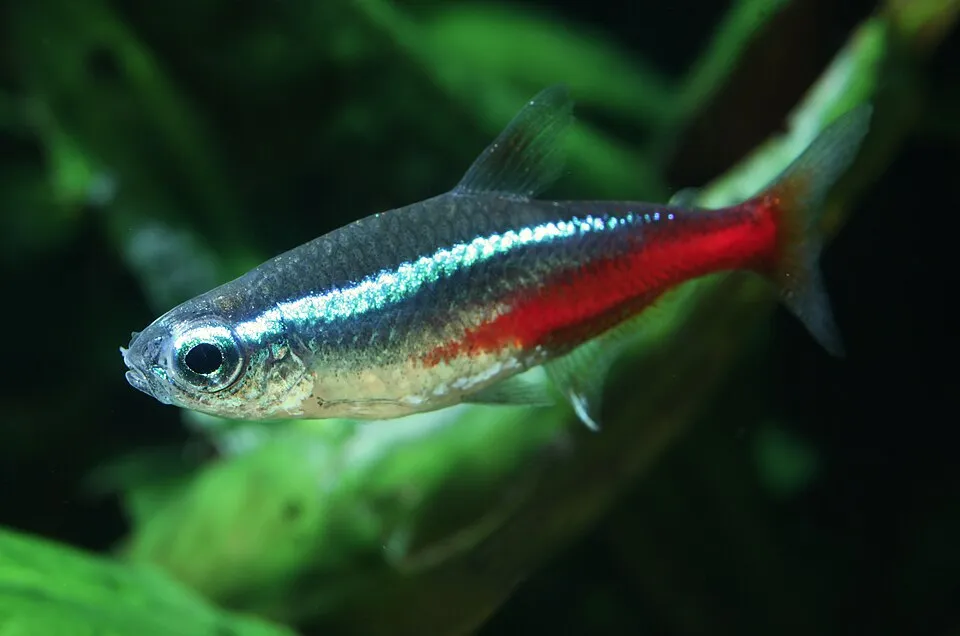
Neon tetra
Paracheirodon innesi
Freshwater1.5 in (3.8 cm) · 11 gal (40 L)70–77°F (21–25°C)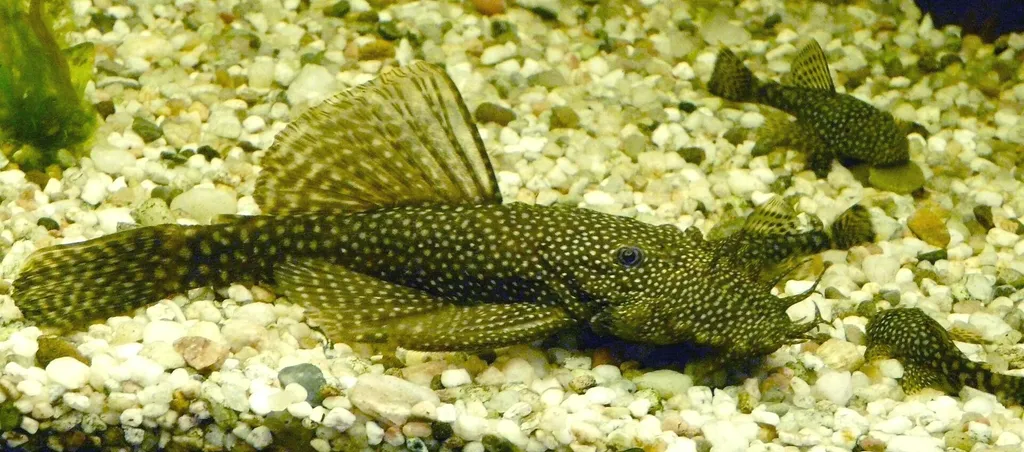
Bristlenose pleco
Ancistrus sp.
Freshwater4.9 in (12.5 cm) · 20 gal (75 L)70–79°F (21–26°C)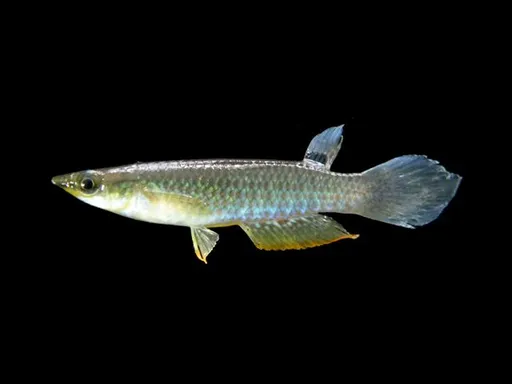
Blue panchax
Aplocheilus panchax
Freshwater3.5 in (9 cm) · 20 gal (75 L)72–82°F (22–28°C)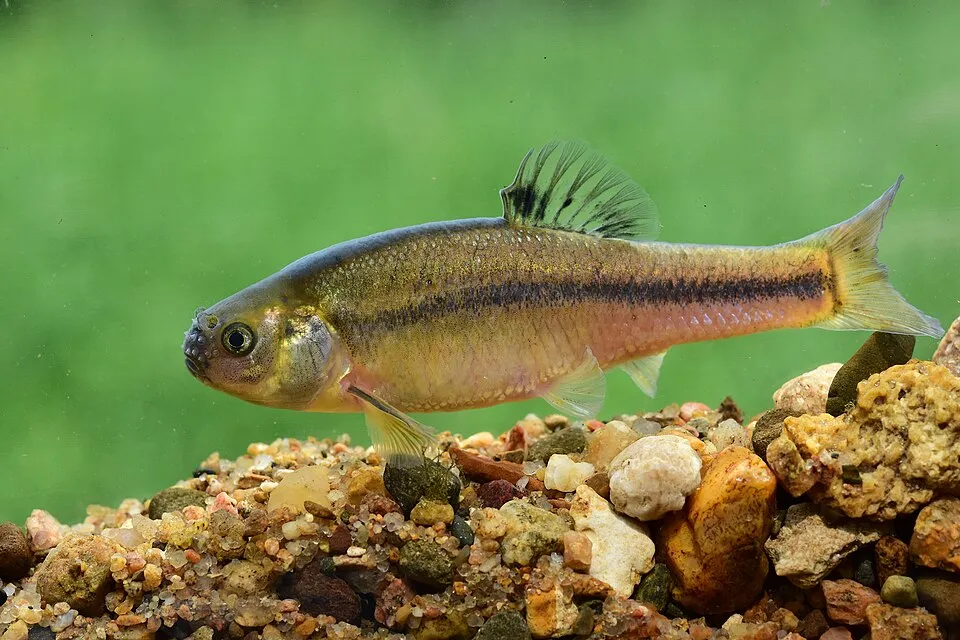
Fathead minnow
Pimephales promelas
Freshwater3 in (7.5 cm) · 20 gal (75 L)50–72°F (10–22°C)
Common questions
What size tank does a rainbow shiner need?
A rainbow shiner needs at least 20 gal (75 L). It spends most of its time in the middle.
What temperature and pH does a rainbow shiner need?
A rainbow shiner is comfortable at 50–72°F (10–22°C) with a pH of 6.0–7.5.
What does a rainbow shiner eat?
A rainbow shiner is an undemanding feeder. It takes flake and small pellets, plus frozen or live foods such as daphnia and bloodworm.
How big does a rainbow shiner get?
An adult rainbow shiner reaches about 3.1 in (8 cm).
Does a rainbow shiner need a group?
Yes. A rainbow shiner is a schooling species and should be kept in a group, not singly.
How can you tell a male rainbow shiner from a female?
Males change color in the breeding season, glowing pink, blue and violet. They also grow small white tubercles on the head.
How does a rainbow shiner breed?
Rainbow shiners scatter their eggs. Breeding them on purpose in an aquarium is difficult.
Related species
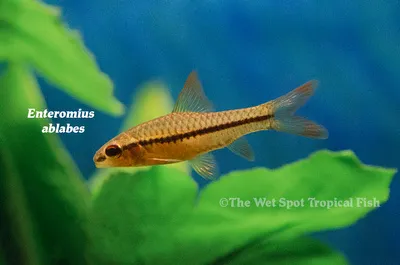 3.1 in (8 cm)24 gal (90 L)72–81°F (22–27°C)
Ablabes barb
Enteromius ablabes
3.1 in (8 cm) · 24 gal (90 L)
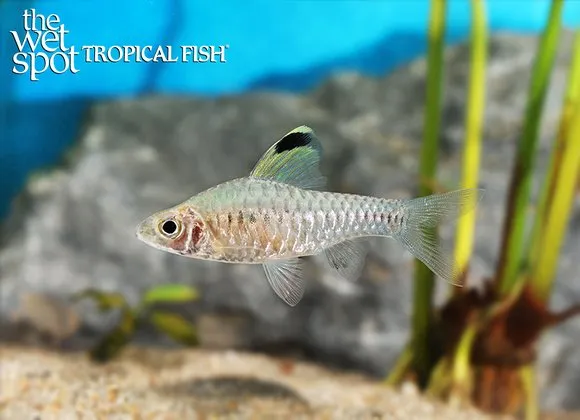 3.1 in (8 cm)20 gal (75 L)68–79°F (20–26°C)
Cosuatis barb
Oreichthys cosuatis
3.1 in (8 cm) · 20 gal (75 L)
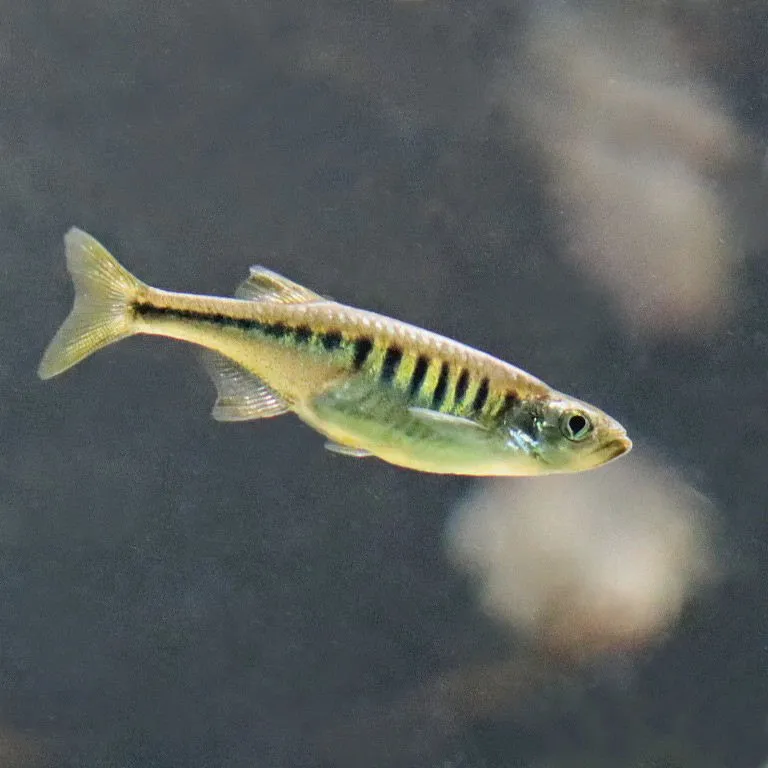 3.1 in (8 cm)24 gal (90 L)64–77°F (18–25°C)
Lake Inle danio
Devario auropurpureus
3.1 in (8 cm) · 24 gal (90 L)
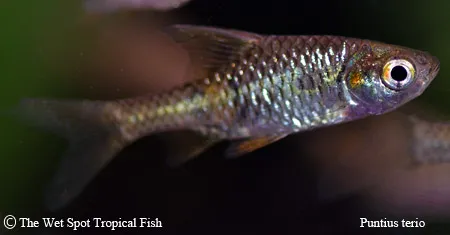 3.1 in (8 cm)20 gal (75 L)68–79°F (20–26°C)
Onespot barb
Puntius terio
3.1 in (8 cm) · 20 gal (75 L)
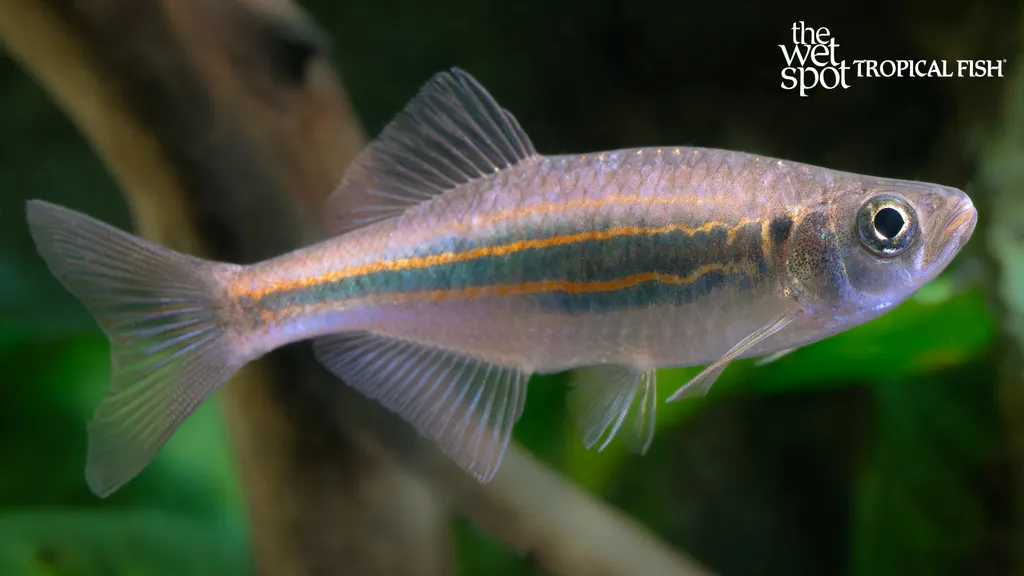 3.1 in (8 cm)30 gal (115 L)68–79°F (20–26°C)
Queen danio
Devario regina
3.1 in (8 cm) · 30 gal (115 L)
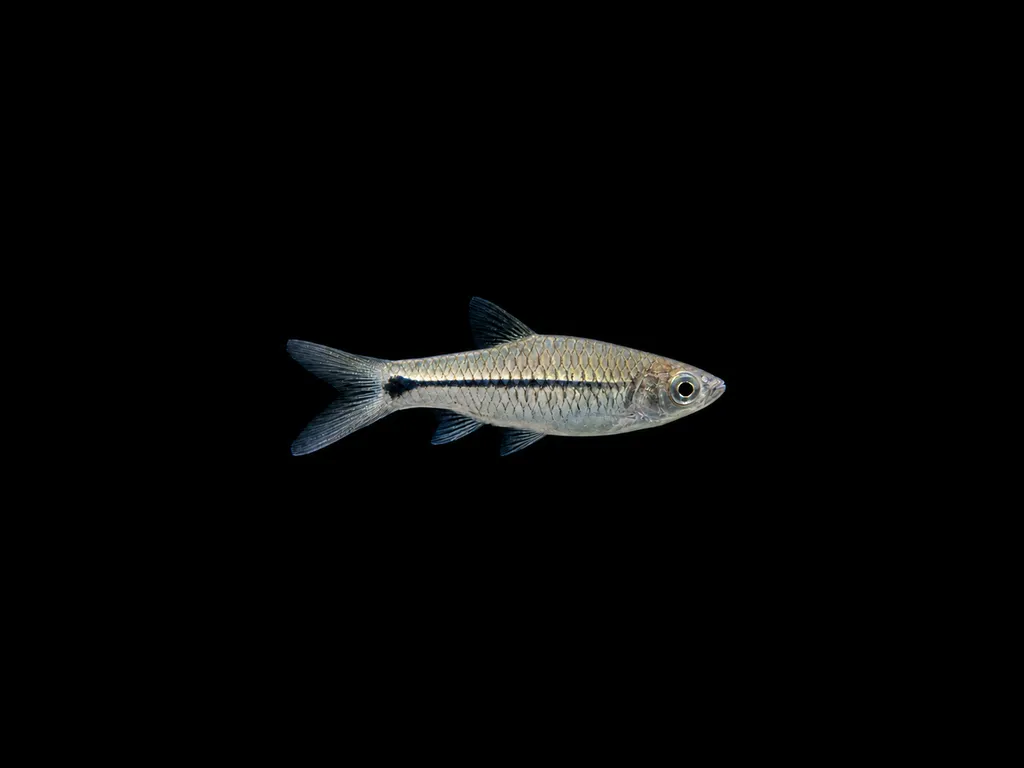 3.1 in (8 cm)32 gal (120 L)72–79°F (22–26°C)
Sidestripe rasbora
Rasbora paviana
3.1 in (8 cm) · 32 gal (120 L)