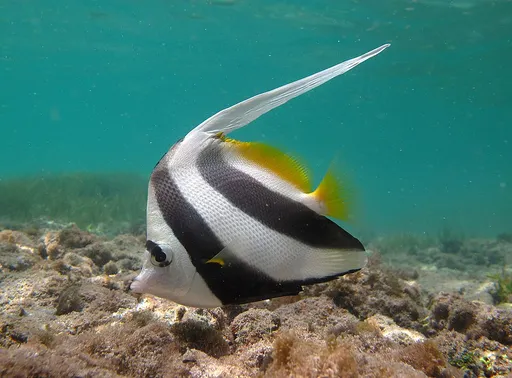
Longfin bannerfish
Heniochus acuminatus
Also known as Pennant Coralfish, Common Bannerfish, Poor Man's Moorish Idol, Feather-fin Bullfish
SaltwaterFish
Care at a glance
- Temperature
- 75–81°F
- 24–27°C
- pH
- 8.1–8.4
- Adult size
- 9.8 in
- 25 cm
- Minimum tank
- 127 gal
- 480 L
- Temperament
- Peaceful
- Social behavior
- Schooling
- Swim level
- Middle
- Difficulty
- Medium
- Breeding
- No record
- Rarity
- Common
- Reef safe
- Reef safe with caution
- Family
- Chaetodontidae
- Origin
- Indo-Pacific, from the Persian Gulf and East Africa to the western Pacific, north to Japan
Overview
A peaceful, elegant, mid-water swimmer that does well singly or in odd-numbered groups in a large tank. It adapts to aquarium foods far more readily than the Moorish idol it resembles, accepting frozen meaty foods and prepared rations. Unlike most butterflies it is relatively hardy and beginner-tolerant once eating.
In the wild
Longfin bannerfish live over deeper reefs, lagoons, and drop-offs across the Indo-Pacific, often in small groups or pairs in open water above the reef. They are plankton pickers in the wild, feeding on drifting zooplankton rather than grazing the substrate. In the aquarium they want tall open water for their trailing dorsal fin and a large tank if kept in a group.
Good to know
Heniochus acuminatus belongs to family Chaetodontidae and is often mistaken for the Moorish Idol (Zanclus cornutus) because of its long white dorsal filament and black-and-white banding, earning it the nickname poor man's Moorish idol. It is very frequently confused with its near-twin Heniochus diphreutes, the true schooling bannerfish; acuminatus has a longer snout and is more of a benthic feeder while diphreutes is the dedicated planktivore.
Did you know
It is often sold as a Moorish idol substitute because it looks strikingly similar but, unlike the notoriously unkeepable idol, actually thrives in captivity.
Weekly picks
Tank mates
Longfin bannerfish is a peaceful, schooling species that keeps to the middle. These picks share a community profile with it, are safe together in both directions, and overlap on water type, temperature and pH.
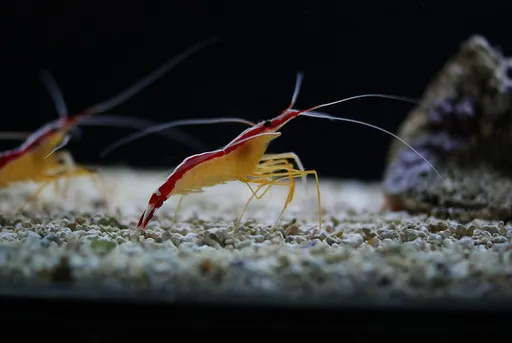
Skunk cleaner shrimp
Lysmata amboinensis
Saltwater2.4 in (6 cm) · 20 gal (75 L)73–81°F (23–27°C)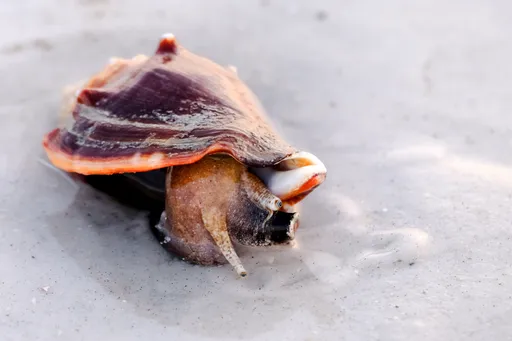
Fighting conch
Strombus alatus
Saltwater3.1 in (8 cm) · 20 gal (75 L)75–81°F (24–27°C)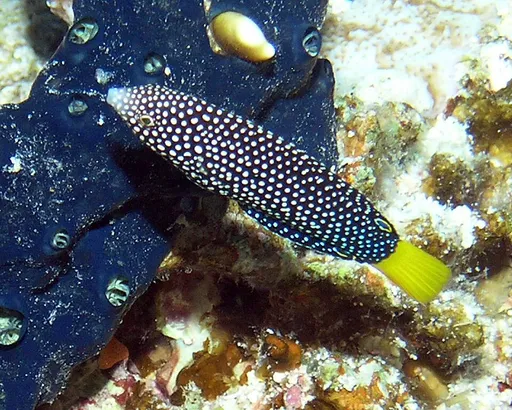
Yellowtail tamarin wrasse
Anampses meleagrides
Saltwater8.7 in (22 cm) · 90 gal (340 L)73–81°F (23–27°C)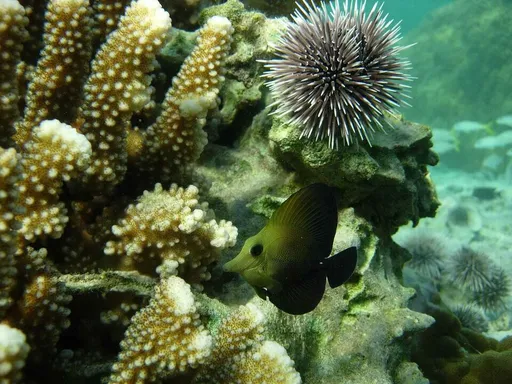
Black tang
Zebrasoma rostratum
Saltwater8.3 in (21 cm) · 119 gal (450 L)75–81°F (24–27°C)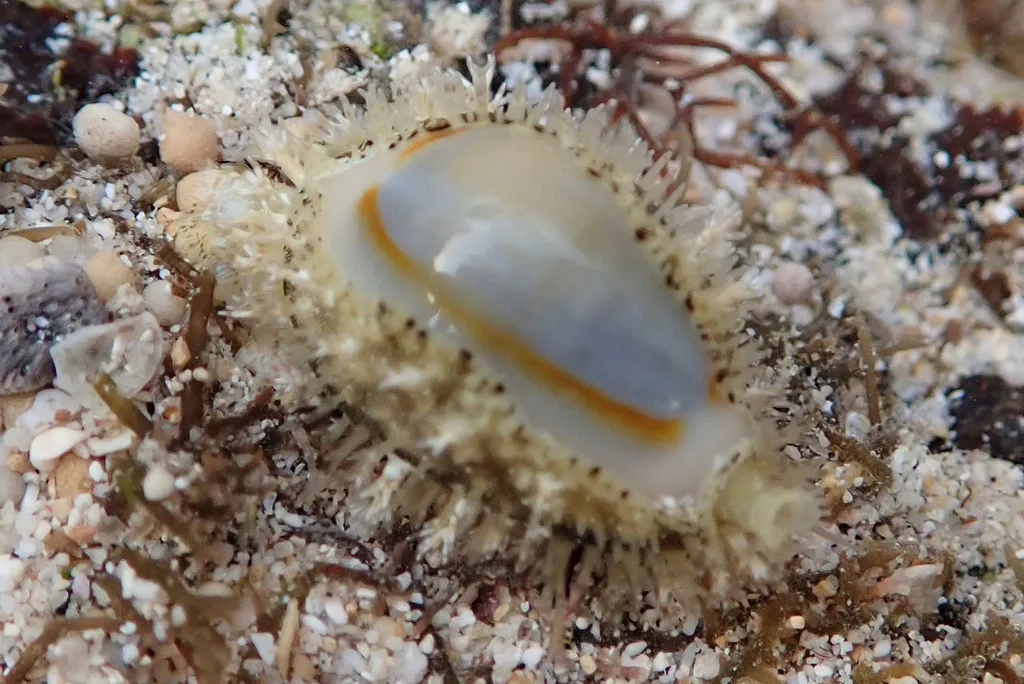
Ring cowrie
Monetaria annulus
Saltwater1.2 in (3 cm) · 20 gal (75 L)75–81°F (24–27°C)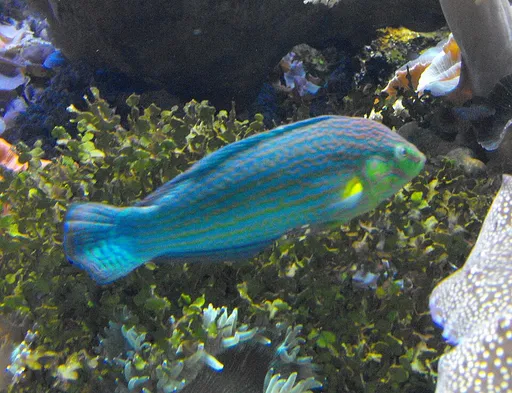
Melanurus wrasse
Halichoeres melanurus
Saltwater5.5 in (14 cm) · 100 gal (380 L)72–79°F (22–26°C)
Common questions
What size tank does a Longfin bannerfish need?
A Longfin bannerfish needs at least 127 gal (480 L). It spends most of its time in the middle.
What temperature and pH does a Longfin bannerfish need?
A Longfin bannerfish is comfortable at 75–81°F (24–27°C) with a pH of 8.1–8.4.
How big does a Longfin bannerfish get?
An adult Longfin bannerfish reaches about 9.8 in (25 cm).
Does a Longfin bannerfish need a group?
Yes. A Longfin bannerfish is a schooling species and should be kept in a group, not singly.
Related species
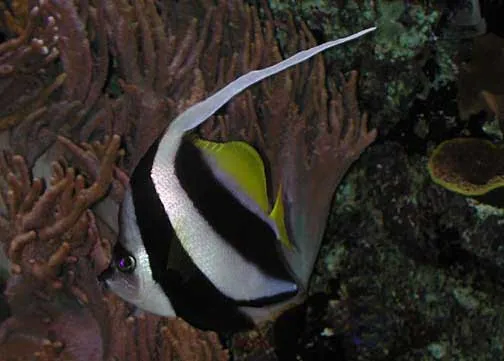 8.3 in (21 cm)124 gal (470 L)75–81°F (24–27°C)
Schooling bannerfish
Heniochus diphreutes
8.3 in (21 cm) · 124 gal (470 L)
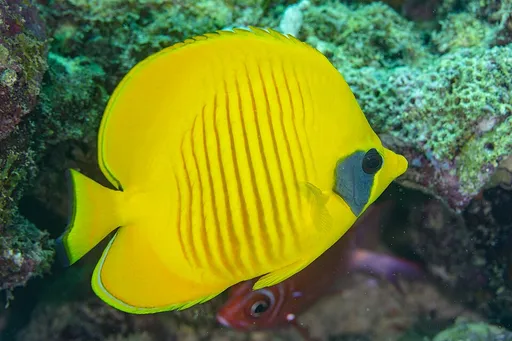 9.1 in (23 cm)151 gal (570 L)75–82°F (24–28°C)
Golden butterflyfish
Chaetodon semilarvatus
9.1 in (23 cm) · 151 gal (570 L)
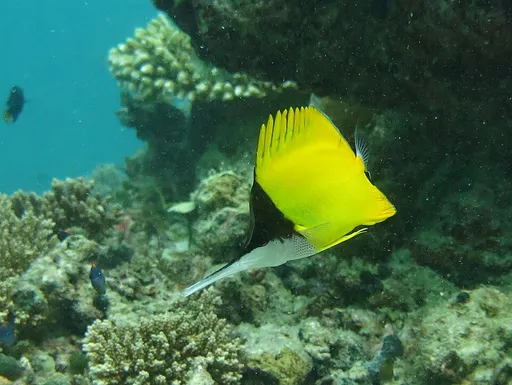 8.7 in (22 cm)100 gal (380 L)73–81°F (23–27°C)
Big longnose butterflyfish
Forcipiger longirostris
8.7 in (22 cm) · 100 gal (380 L)
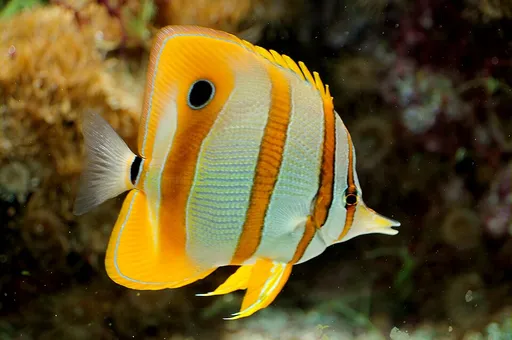 7.9 in (20 cm)79 gal (300 L)75–81°F (24–27°C)
Copperband butterflyfish
Chelmon rostratus
7.9 in (20 cm) · 79 gal (300 L)
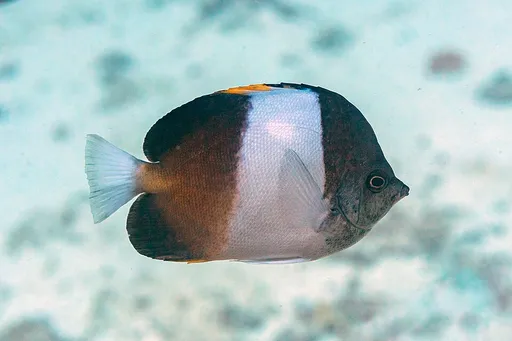 7.1 in (18 cm)106 gal (400 L)75–81°F (24–27°C)
Black pyramid butterflyfish
Hemitaurichthys zoster
7.1 in (18 cm) · 106 gal (400 L)
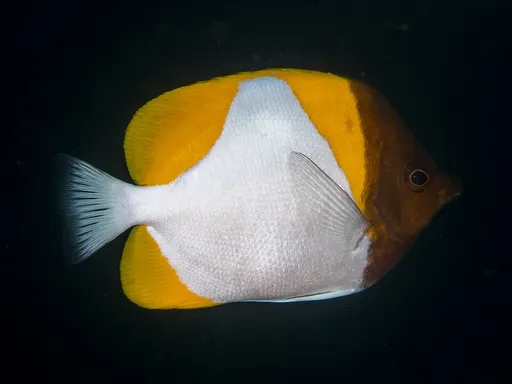 7.1 in (18 cm)124 gal (470 L)75–81°F (24–27°C)
Pyramid butterflyfish
Hemitaurichthys polylepis
7.1 in (18 cm) · 124 gal (470 L)