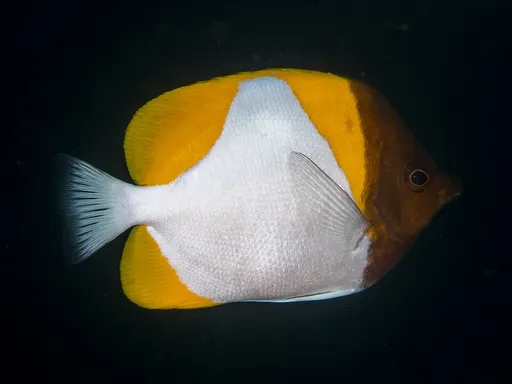
Pyramid butterflyfish
Hemitaurichthys polylepis
Also known as Yellow Pyramid Butterflyfish, Yellow Zoster Butterflyfish, Pyramid Coralfish
SaltwaterFish
Care at a glance
- Temperature
- 75–81°F
- 24–27°C
- pH
- 8.1–8.4
- Adult size
- 7.1 in
- 18 cm
- Minimum tank
- 124 gal
- 470 L
- Temperament
- Peaceful
- Social behavior
- Schooling
- Swim level
- Middle
- Difficulty
- Medium
- Breeding
- No record
- Rarity
- Common
- Reef safe
- Reef safe
- Family
- Chaetodontidae
- Origin
- Indo-Pacific reefs, from East Africa and Christmas Island to Hawaii and the Pitcairn Islands
Overview
Peaceful and genuinely reef safe, since its natural diet is drifting zooplankton rather than coral or clam mantle, though it can be shy for the first week or two after arriving. Unlike most butterflyfish, it does best kept in a small group rather than alone, shoaling together in open water instead of squabbling over territory. Feed mysis, finely chopped krill, and other small meaty foods several times a day, since a plankton feeder in the wild has an almost constant feeding rhythm and will lose condition on one meal a day.
In the wild
Common on Indo-Pacific reefs from Christmas Island and East Africa to Hawaii, the Line Islands, and Pitcairn, where it gathers in large shoals over steep outer reef slopes and drop-offs to feed on plankton swept by the current. It spends most of its time swimming well above the reef rather than grazing the bottom, so the aquarium needs a long, open water column for the group to move through along with live rock for cover at the reef's edges. A single fish needs at least 470 litres (125 US gal), and a proper school needs considerably more room.
Good to know
Named for the bold white triangular, or pyramid-shaped, patch that splits its yellow body from above, one of the most recognizable patterns among the butterflyfish. It reaches about 18 cm and has a small, brush-toothed mouth suited to picking zooplankton out of the water rather than biting coral polyps, which sets it apart from most of its coral-eating relatives in family Chaetodontidae.
Did you know
Large wild shoals of pyramid butterflyfish sometimes rise many metres above the reef to feed, forming loose clouds of yellow and white that other reef fish, including some wrasses, are occasionally seen shoaling alongside for safety in numbers.
Weekly picks
Tank mates
Pyramid butterflyfish is a peaceful, schooling species that keeps to the middle. These picks share a community profile with it, are safe together in both directions, and overlap on water type, temperature and pH.
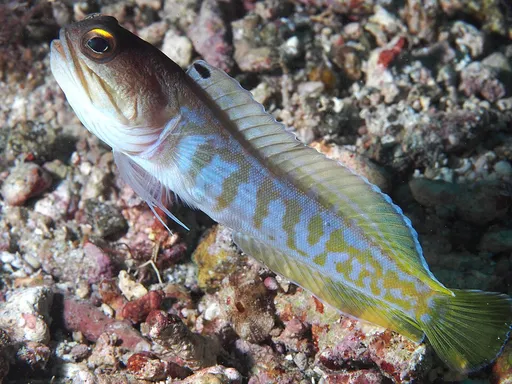
Gold-specs jawfish
Opistognathus randalli
Saltwater3.9 in (10 cm) · 30 gal (115 L)73–81°F (23–27°C)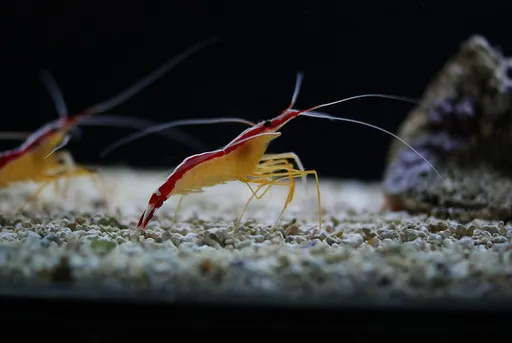
Skunk cleaner shrimp
Lysmata amboinensis
Saltwater2.4 in (6 cm) · 20 gal (75 L)73–81°F (23–27°C)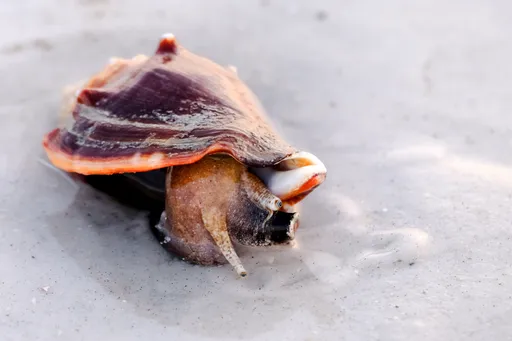
Fighting conch
Strombus alatus
Saltwater3.1 in (8 cm) · 20 gal (75 L)75–81°F (24–27°C)
Bicolor anthias
Pseudanthias bicolor
Saltwater5.1 in (13 cm) · 125 gal (475 L)72–79°F (22–26°C)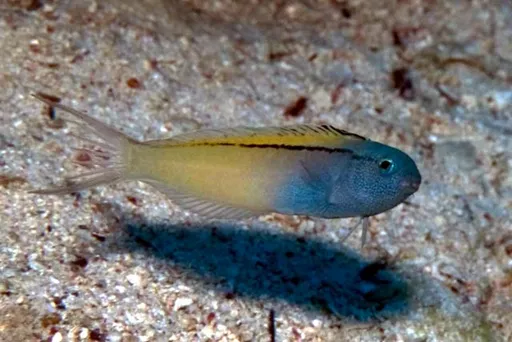
Blackline fang blenny
Meiacanthus nigrolineatus
Saltwater3.5 in (9 cm) · 20 gal (75 L)75–81°F (24–27°C)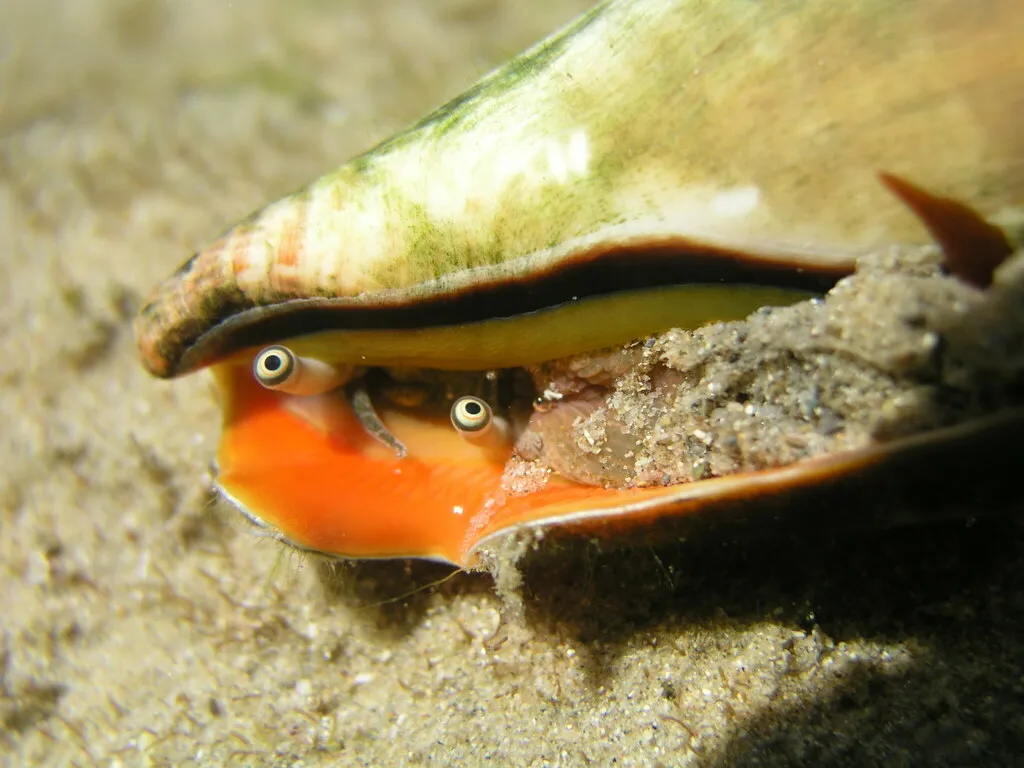
Tiger / strawberry conch
Conomurex luhuanus
Saltwater2.8 in (7 cm) · 20 gal (75 L)75–81°F (24–27°C)
Common questions
What size tank does a Pyramid butterflyfish need?
A Pyramid butterflyfish needs at least 124 gal (470 L). It spends most of its time in the middle.
What temperature and pH does a Pyramid butterflyfish need?
A Pyramid butterflyfish is comfortable at 75–81°F (24–27°C) with a pH of 8.1–8.4.
How big does a Pyramid butterflyfish get?
An adult Pyramid butterflyfish reaches about 7.1 in (18 cm).
Does a Pyramid butterflyfish need a group?
Yes. A Pyramid butterflyfish is a schooling species and should be kept in a group, not singly.
Related species
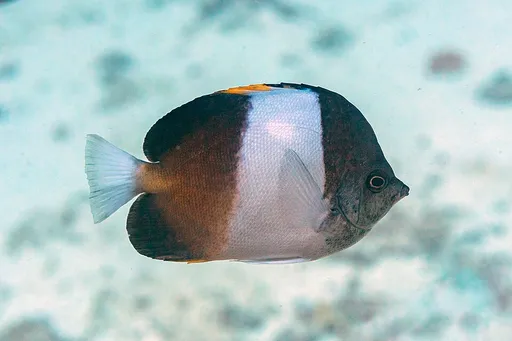 7.1 in (18 cm)106 gal (400 L)75–81°F (24–27°C)
Black pyramid butterflyfish
Hemitaurichthys zoster
7.1 in (18 cm) · 106 gal (400 L)
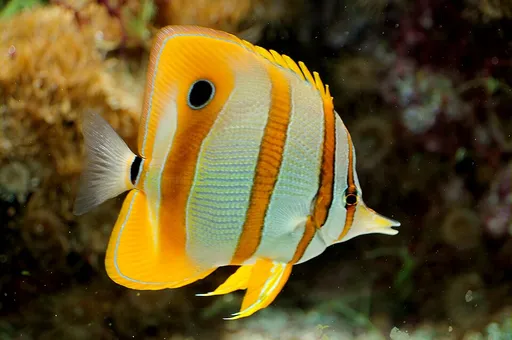 7.9 in (20 cm)79 gal (300 L)75–81°F (24–27°C)
Copperband butterflyfish
Chelmon rostratus
7.9 in (20 cm) · 79 gal (300 L)
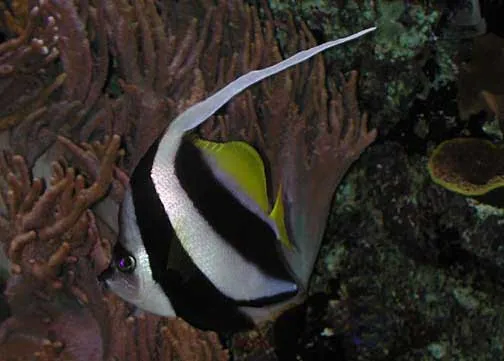 8.3 in (21 cm)124 gal (470 L)75–81°F (24–27°C)
Schooling bannerfish
Heniochus diphreutes
8.3 in (21 cm) · 124 gal (470 L)
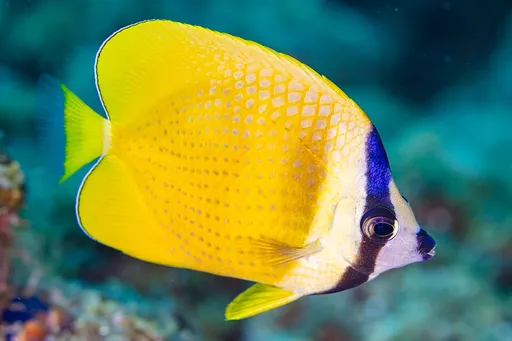 5.9 in (15 cm)79 gal (300 L)75–81°F (24–27°C)
Klein's butterflyfish
Chaetodon kleinii
5.9 in (15 cm) · 79 gal (300 L)
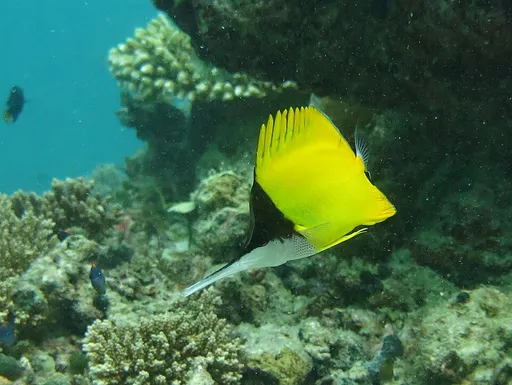 8.7 in (22 cm)100 gal (380 L)73–81°F (23–27°C)
Big longnose butterflyfish
Forcipiger longirostris
8.7 in (22 cm) · 100 gal (380 L)
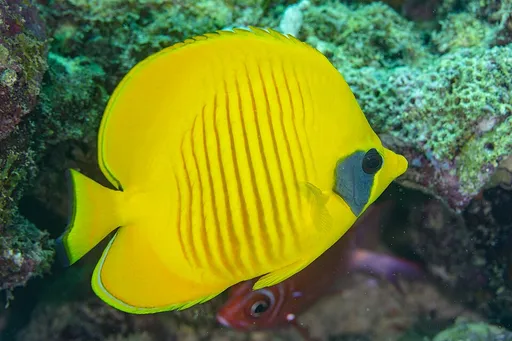 9.1 in (23 cm)151 gal (570 L)75–82°F (24–28°C)
Golden butterflyfish
Chaetodon semilarvatus
9.1 in (23 cm) · 151 gal (570 L)