Moorish idol
Zanclus cornutus
Also known as Kihikihi
SaltwaterFish
Care at a glance
- Temperature
- 72–79°F
- 22–26°C
- pH
- 8.1–8.4
- Adult size
- 9.1 in
- 23 cm
- Minimum tank
- 125 gal
- 473 L
- Temperament
- Peaceful
- Social behavior
- Social
- Tankmates
- With caution
- Swim level
- Middle
- Difficulty
- Difficult
- Breeding
- No record
- Rarity
- Common
- Reef safe
- Reef safe with caution
- Family
- Zanclidae
- Origin
- Indo-Pacific reefs, from East Africa and the Red Sea to Hawaii and Easter Island, with an isolated eastern Pacific population from the Gulf of California to Peru
Overview
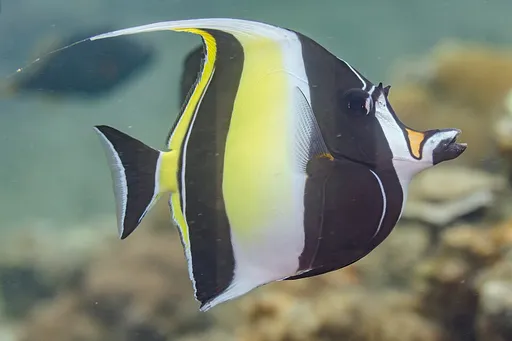
Moorish idols are peaceful, almost timid fish that rarely bother tankmates, and they're reef safe only with caution, since they'll graze on coral polyps and zoanthids along with the sponges and algae they need most. The honest problem is survival, not temperament: this is widely considered the hardest commonly sold marine fish to keep alive, with roughly 80–90 percent of imported fish dying within their first year, most within the first month, almost always because they refuse to eat in captivity. Most hobbyists, even experienced ones, are better off enjoying this fish on the reef or at a public aquarium instead of attempting it at home; anyone who does try needs an established tank loaded with natural sponge and algae growth, live rock, and a long list of foods on hand before the fish ever arrives.
In the wild
Moorish idols range across nearly the entire Indo-Pacific, from East Africa and the Red Sea to Hawaii and Easter Island, and even turn up in an isolated eastern Pacific population from the Gulf of California to Peru. They live on reef flats and seaward reefs, usually alone, in pairs, or in small groups of two or three, occasionally gathering into much larger aggregations to spawn. In the aquarium it needs a long, open tank of at least 473 litres (125 US gal) with mature live rock carrying a real growth of sponges and algae, since that natural food source matters more to this fish's survival than almost anything else in the setup.
Good to know
Zanclus cornutus is the only species in its family, Zanclidae, easily told apart from surgeonfish and butterflyfish by its long, sickle-shaped dorsal fin and small, bristly-toothed snout built for picking food out of tight crevices. In the wild, sponges make up roughly 70 percent of its diet, rounded out with algae, tunicates, and small amounts of coral polyps. Its larvae drift in the open ocean for around 70 days before settling on a reef, an unusually long pelagic stage that explains how the species ended up so widely spread across the Pacific and Indian Oceans.
Did you know
The Moorish idol's fame reaches well beyond the aquarium world; the character Gill from Finding Nemo is one, and the fish's Hawaiian name, kihikihi, translates roughly to zigzag or angular, a nod to its sharp lines and bold markings.
Common questions
What size tank does a Moorish idol need?
A Moorish idol needs at least 125 gal (473 L). It spends most of its time in the middle.
What temperature and pH does a Moorish idol need?
A Moorish idol is comfortable at 72–79°F (22–26°C) with a pH of 8.1–8.4.
How big does a Moorish idol get?
An adult Moorish idol reaches about 9.1 in (23 cm).
Related species
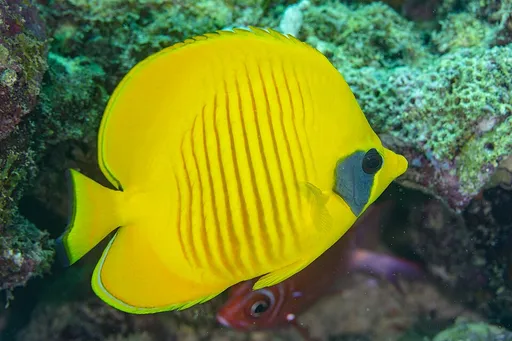 9.1 in (23 cm)151 gal (570 L)75–82°F (24–28°C)
Golden butterflyfish
Chaetodon semilarvatus
9.1 in (23 cm) · 151 gal (570 L)
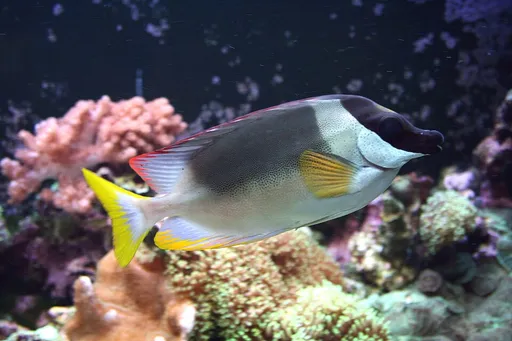 9.1 in (23 cm)124 gal (470 L)75–81°F (24–27°C)
Magnificent foxface
Siganus magnificus
9.1 in (23 cm) · 124 gal (470 L)
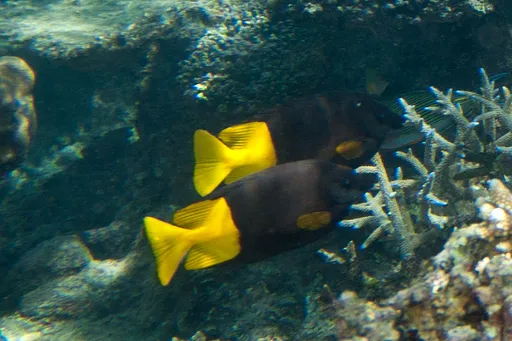 9.4 in (24 cm)124 gal (470 L)75–81°F (24–27°C)
Bicolor foxface
Siganus uspi
9.4 in (24 cm) · 124 gal (470 L)
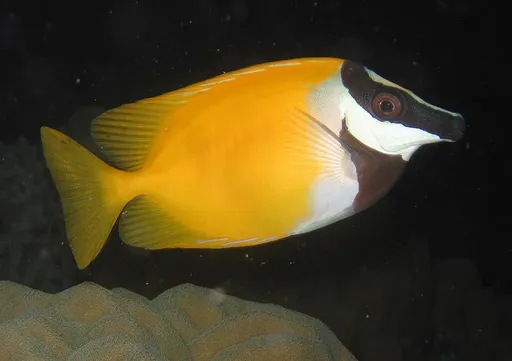 9.4 in (24 cm)75 gal (285 L)72–79°F (22–26°C)
Foxface rabbitfish
Siganus vulpinus
9.4 in (24 cm) · 75 gal (285 L)
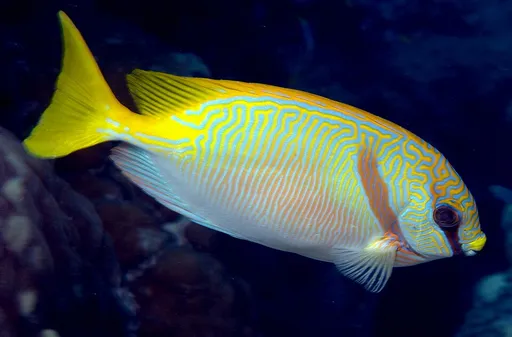 9.8 in (25 cm)106 gal (400 L)75–81°F (24–27°C)
Barred rabbitfish
Siganus doliatus
9.8 in (25 cm) · 106 gal (400 L)
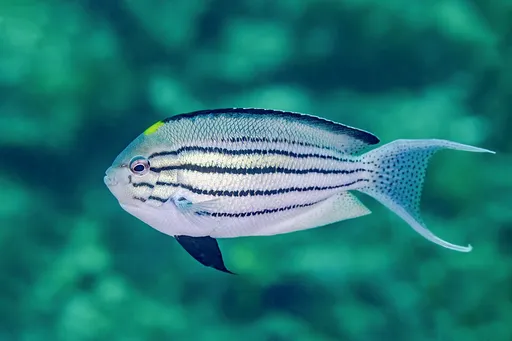 9.8 in (25 cm)124 gal (470 L)72–79°F (22–26°C)
Lamarck's angelfish
Genicanthus lamarck
9.8 in (25 cm) · 124 gal (470 L)