Barred rabbitfish
Siganus doliatus
Also known as Scribbled Rabbitfish, Barred Spinefoot, Blue-lined Rabbitfish, Pencilled Rabbitfish
SaltwaterFish
Care at a glance
- Temperature
- 75–81°F
- 24–27°C
- pH
- 8.1–8.4
- Adult size
- 9.8 in
- 25 cm
- Minimum tank
- 106 gal
- 400 L
- Temperament
- Peaceful
- Social behavior
- Solitary
- Swim level
- Middle
- Diet
- Herbivore
- Difficulty
- Easy
- Breeding
- No record
- Rarity
- Common
- Reef safe
- Reef safe with caution
- Family
- Siganidae
- Origin
- Western Pacific from Indonesia to the Great Barrier Reef and Micronesia, on lagoon and outer reefs.
Overview
The barred rabbitfish is a hardy, peaceful algae grazer for a large saltwater tank. It is easy to keep.
Did you know
The barred rabbitfish raises its venomous fin spines when threatened. Most predators, and careful aquarists, leave it well alone.
Caring for the barred rabbitfish
Give the barred rabbitfish a tank of at least 106 gal (400 L), with open swimming room and algae-covered rock. Keep the water at 75 to 81°F (24 to 27°C), with a pH of 8.1 to 8.4.
It is an efficient herbivore that helps control filamentous and turf algae, and adults are strong, active algae eaters. Feed plenty of nori, spirulina and marine algae several times a day, plus some prepared foods.
It is generally coral-safe, but a hungry fish can nip soft corals such as Xenia. Keep it well fed, and treat it as reef safe with caution. It is a peaceful, solitary fish and safe with community tank mates. Handle it carefully, since its fin spines are venomous.
Good to know
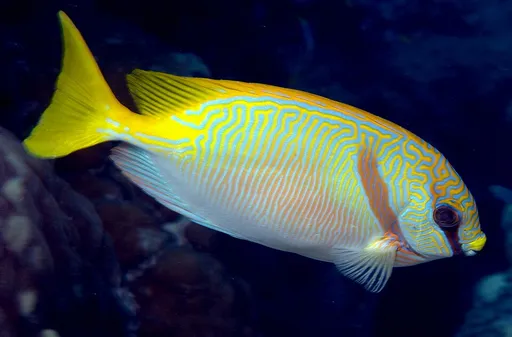
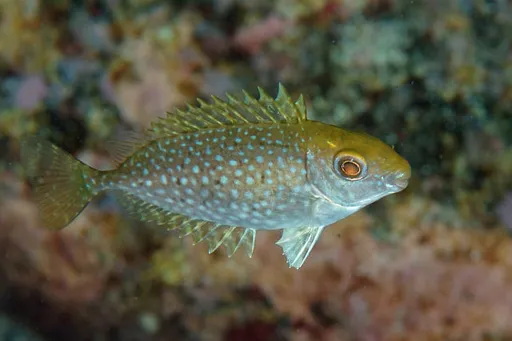
Siganus doliatus, like all rabbitfish, carries venomous spines in its dorsal, anal and pelvic fins. A jab produces a painful sting, similar to a bee sting. The fish is blue-lined and yellow-backed, and it is marked with dark bars.
In the wild
The barred rabbitfish lives on lagoon and outer reefs in the western Pacific, from Indonesia to the Great Barrier Reef and Micronesia. It is often seen in pairs, and it spends the day eating algae off the rock.
Weekly picks
Tank mates
The barred rabbitfish is a peaceful, solitary species that keeps to the middle. These picks share a community profile with it, are safe together in both directions, and overlap on water type, temperature and pH.
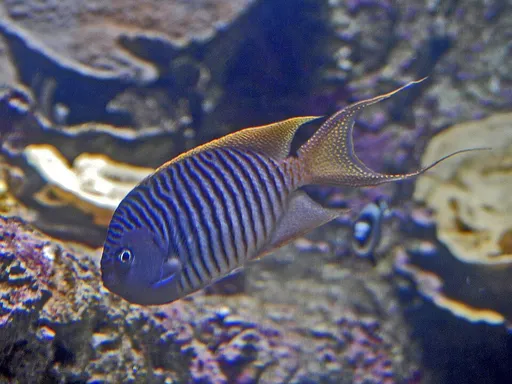
Swallowtail angelfish
Genicanthus melanospilos
Saltwater7.1 in (18 cm) · 106 gal (400 L)72–79°F (22–26°C)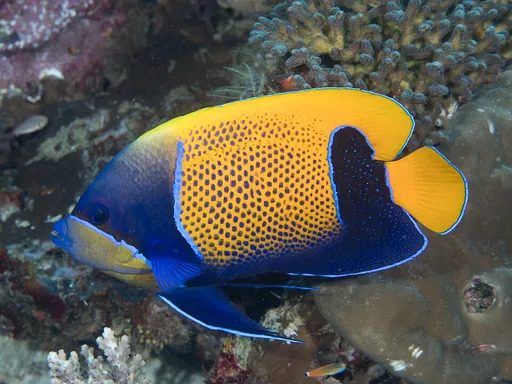
Majestic angelfish
Pomacanthus navarchus
Saltwater11.8 in (30 cm) · 145 gal (550 L)73–81°F (23–27°C)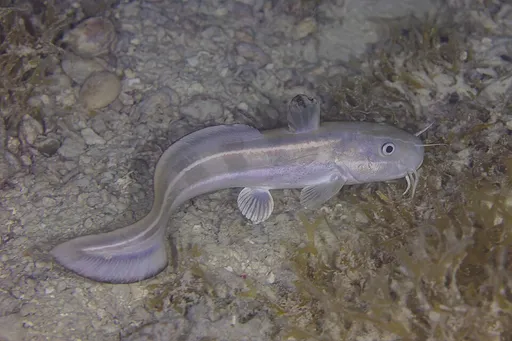
Striped eel catfish
Plotosus lineatus
Saltwater12.6 in (32 cm) · 106 gal (400 L)75–82°F (24–28°C)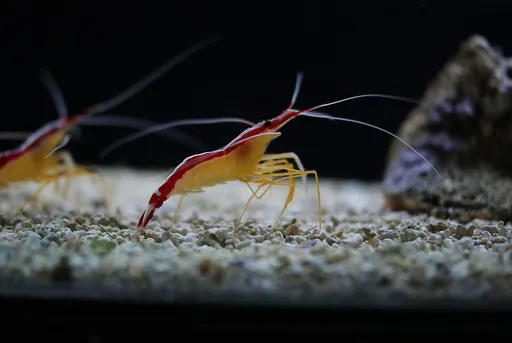
Skunk cleaner shrimp
Lysmata amboinensis
Saltwater2.4 in (6 cm) · 20 gal (75 L)73–81°F (23–27°C)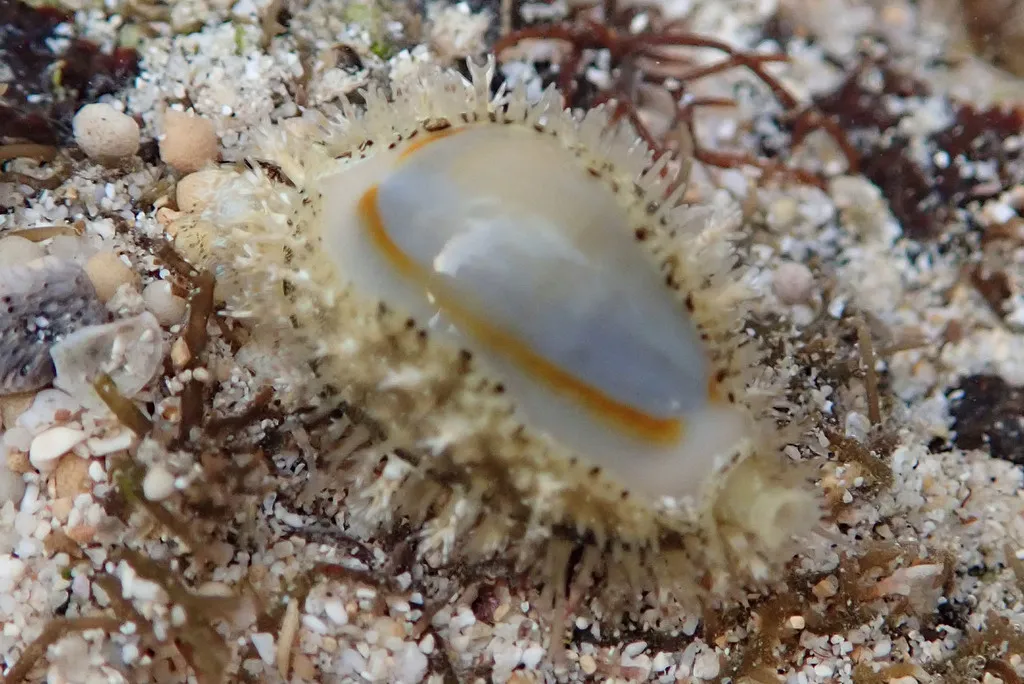
Ring cowrie
Monetaria annulus
Saltwater1.2 in (3 cm) · 20 gal (75 L)75–81°F (24–27°C)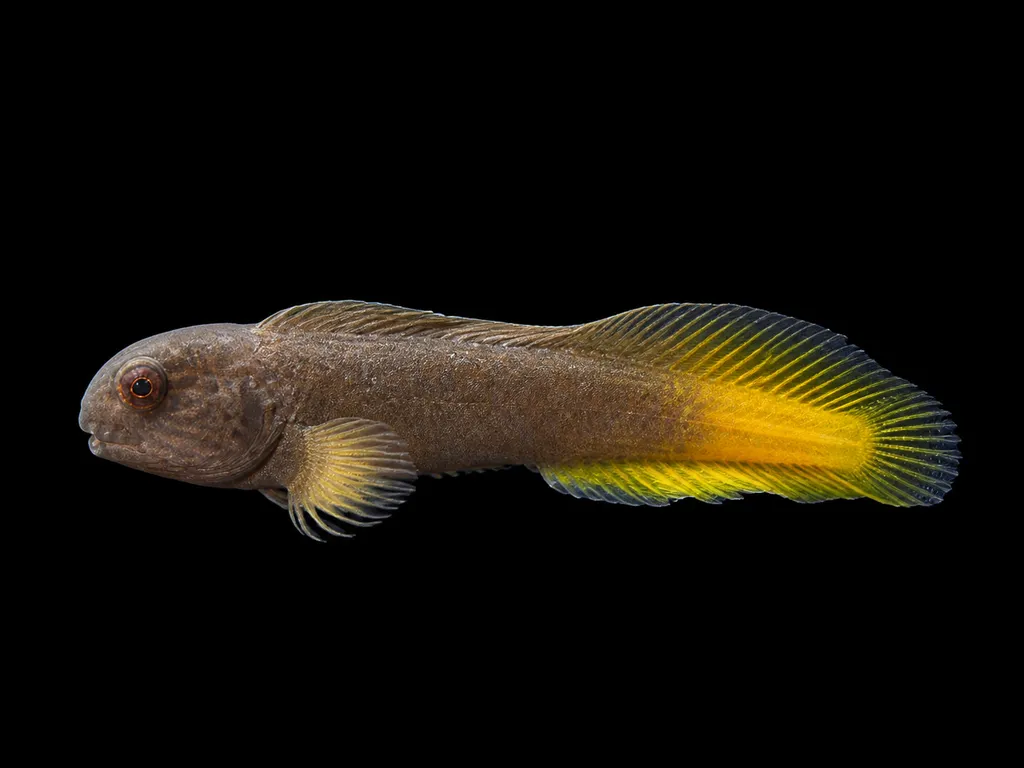
Flametail blenny
Enchelyurus flavipes
Saltwater3 in (7.5 cm) · 29 gal (110 L)72–79°F (22–26°C)
Common questions
What size tank does a barred rabbitfish need?
A barred rabbitfish needs at least 106 gal (400 L). It spends most of its time in the middle.
What temperature and pH does a barred rabbitfish need?
A barred rabbitfish is comfortable at 75–81°F (24–27°C) with a pH of 8.1–8.4.
What does a barred rabbitfish eat?
A barred rabbitfish is an efficient herbivore. Feed it plenty of nori, spirulina and marine algae several times a day, plus some prepared foods.
How big does a barred rabbitfish get?
An adult barred rabbitfish reaches about 9.8 in (25 cm).
Related species
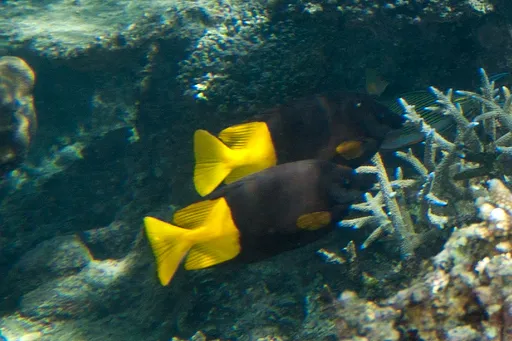 9.4 in (24 cm)124 gal (470 L)75–81°F (24–27°C)
Bicolor foxface
Siganus uspi
9.4 in (24 cm) · 124 gal (470 L)
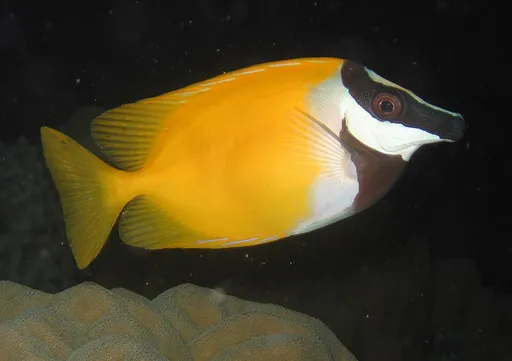 9.4 in (24 cm)124 gal (470 L)72–79°F (22–26°C)
Foxface rabbitfish
Siganus vulpinus
9.4 in (24 cm) · 124 gal (470 L)
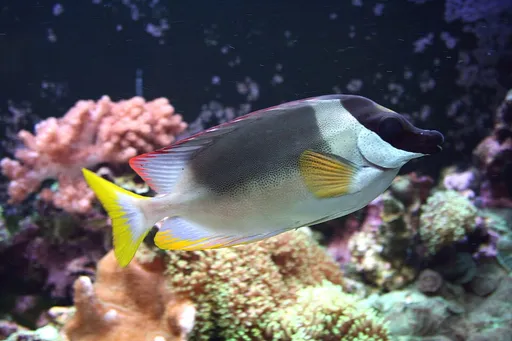 9.1 in (23 cm)124 gal (470 L)75–81°F (24–27°C)
Magnificent foxface
Siganus magnificus
9.1 in (23 cm) · 124 gal (470 L)
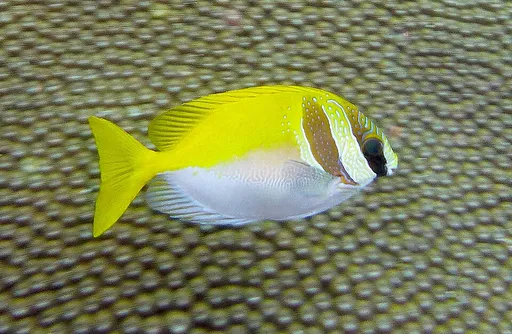 11.8 in (30 cm)119 gal (450 L)75–81°F (24–27°C)
Two-barred rabbitfish
Siganus virgatus
11.8 in (30 cm) · 119 gal (450 L)
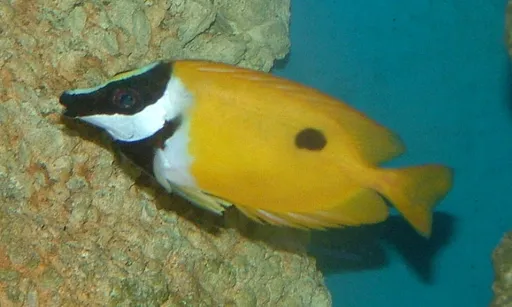 7.9 in (20 cm)70 gal (265 L)75–81°F (24–27°C)
One-spot foxface
Siganus unimaculatus
7.9 in (20 cm) · 70 gal (265 L)
 15.7 in (40 cm)120 gal (454 L)72–79°F (22–26°C)
Dusky rabbitfish
Siganus fuscescens
15.7 in (40 cm) · 120 gal (454 L)