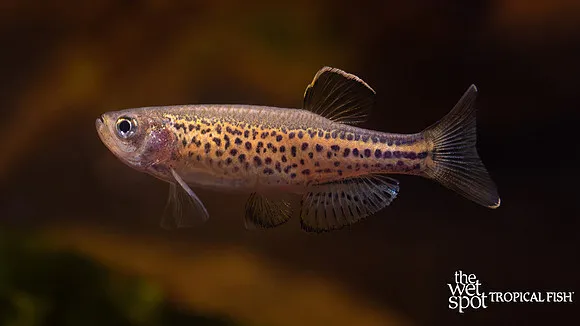
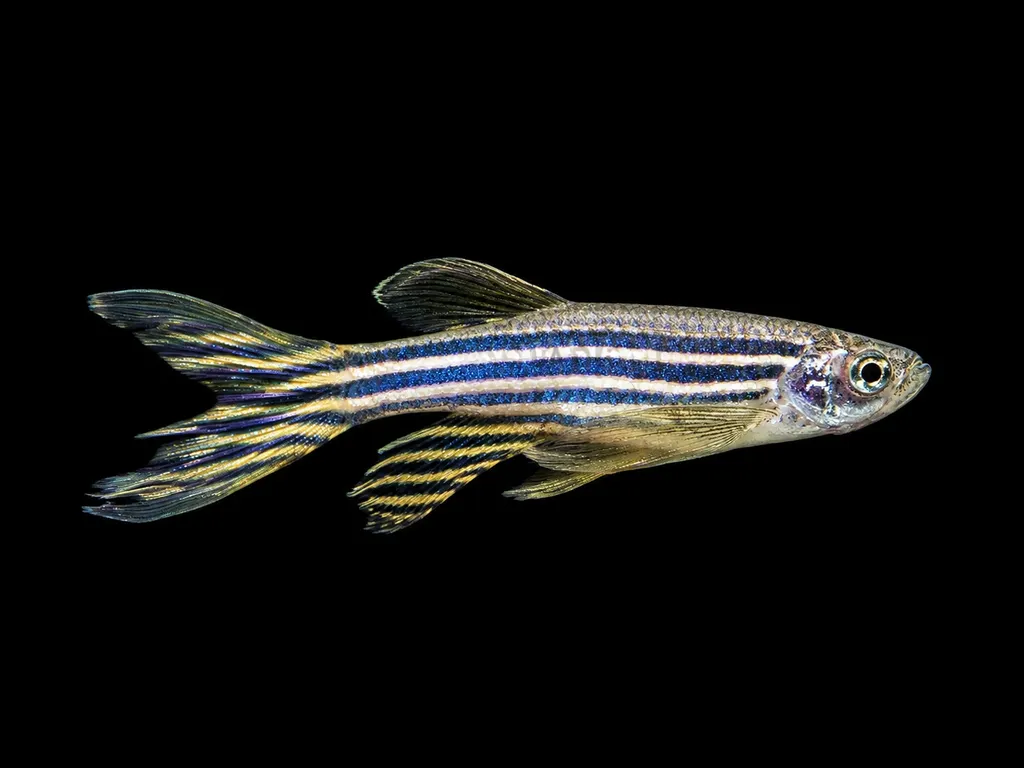
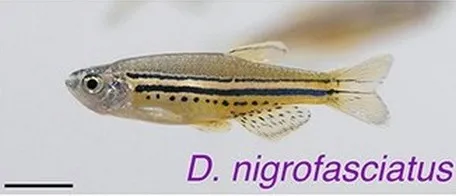
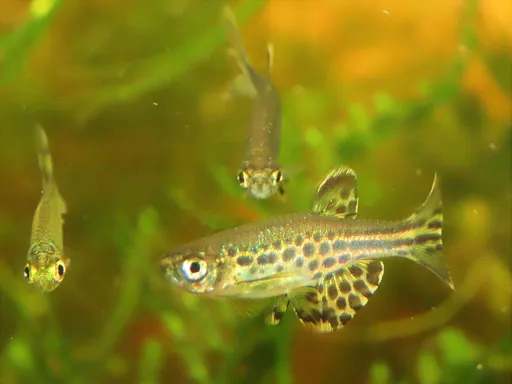
Leopard danios are the spotted version of the same fish, and many shops still tag them with the old name Brachydanio frankei. Spotting varies within a batch: some fish are cleanly spotted, others keep broken stripes along the flank. Leopards and striped fish mix without any trouble, since they are one species, and a mixed group behaves exactly like a plain one.
In the wild
The spotted form was described as its own species, Brachydanio frankei, by Meinken in 1963 and only later folded back into the zebra danio. It arose as a spontaneous mutation of the striped fish rather than through selective breeding, and the spotted pattern has since been reported from wild populations as well. Shop fish are farmed rather than collected.
Good to know
The spots trace to a mutation in connexin41.8, a gap junction protein that pigment cells use to coordinate with each other while the pattern forms. Disrupt that signaling and the stripes fail to line up, leaving spots instead. Watanabe and colleagues identified the gene in EMBO Reports in 2006, and the several known leopard alleles give somewhat different pattern phenotypes.
Did you know
The leopard danio carried a species name of its own from 1963, and for decades the accepted story was that breeders had produced it by selection. It turned out to be a single gene change that also crops up in wild fish, and the retired name still turns up on shop tags and price lists today.
Weekly picks
Tank mates
Leopard zebra danio is a mostly peaceful, schooling species that keeps to the middle. These picks share a community profile with it, are safe together in both directions, and overlap on water type, temperature and pH.
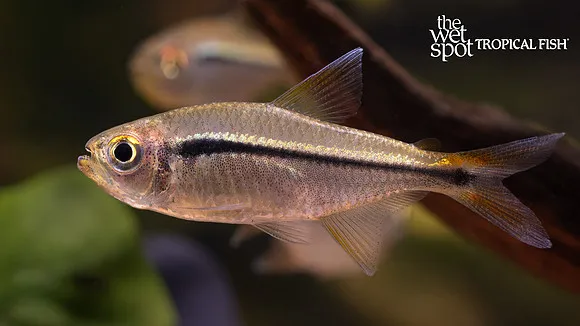
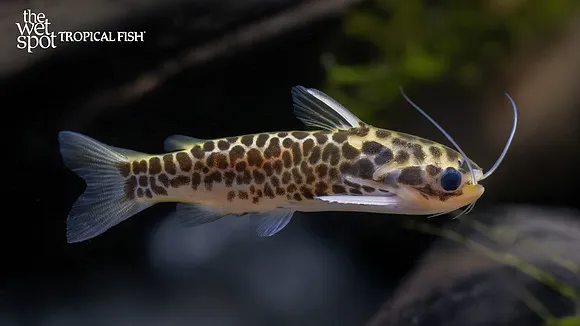
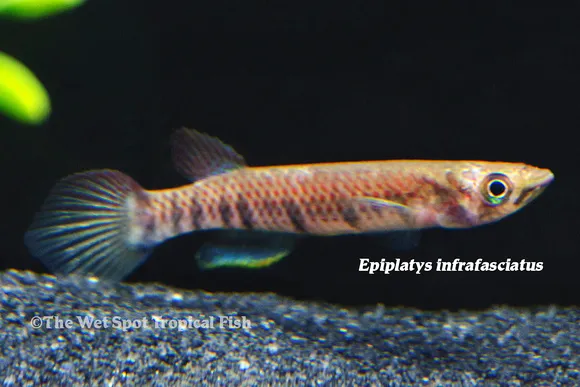
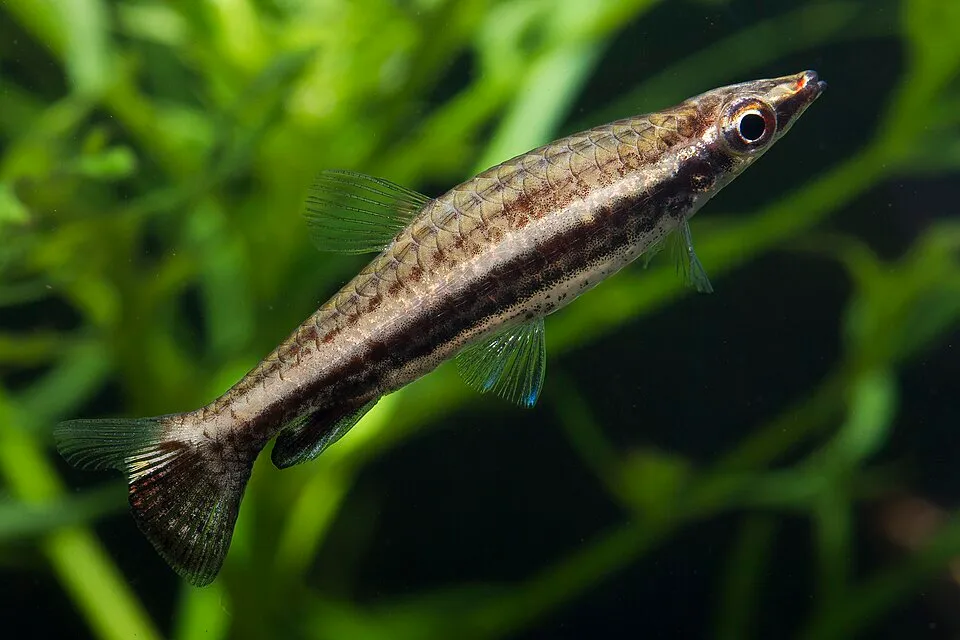
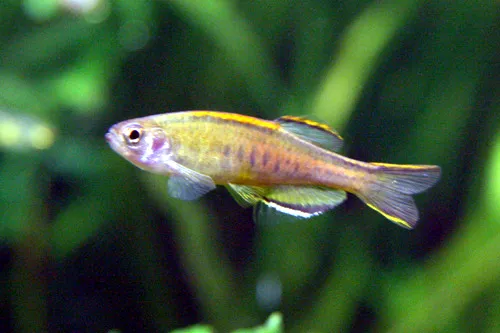 1.2 in (3 cm)20 gal (75 L)72–79°F (22–26°C)
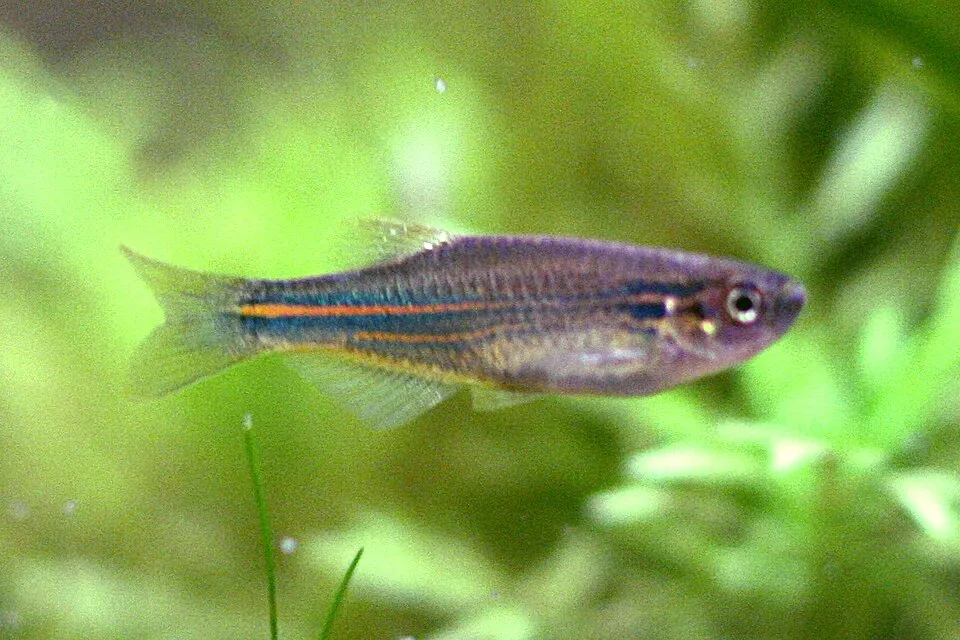 1.8 in (4.5 cm)11 gal (40 L)68–79°F (20–26°C)
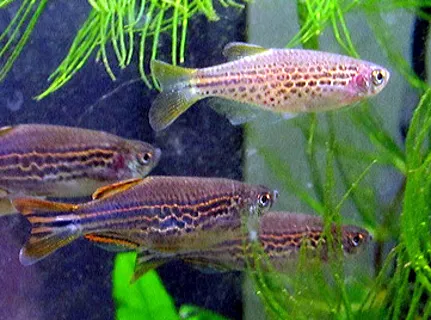 2 in (5 cm)20 gal (75 L)68–79°F (20–26°C)
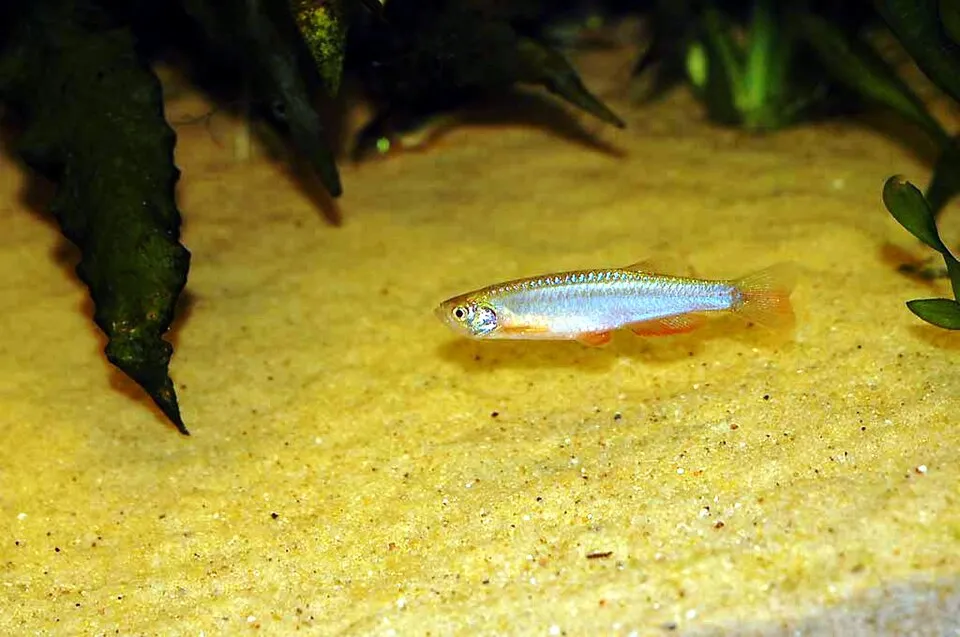 2.4 in (6 cm)18 gal (70 L)61–77°F (16–25°C)
 1.5 in (3.7 cm)11 gal (40 L)64–79°F (18–26°C)
 1.2 in (3 cm)11 gal (40 L)64–79°F (18–26°C)