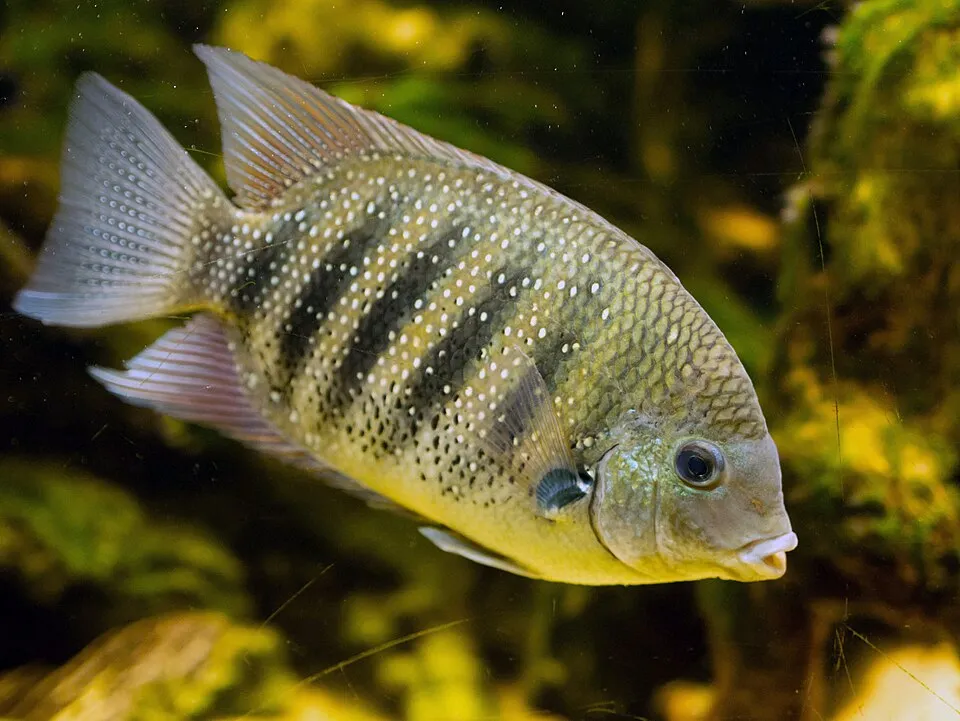
Green chromide
Etroplus suratensis
FreshwaterBrackishFish
Care at a glance
- Temperature
- 68–86°F
- 20–30°C
- pH
- 7.0–8.0
- Adult size
- 11.8 in
- 30 cm
- Minimum tank
- 145 gal
- 550 L
- Temperament
- Peaceful
- Social behavior
- Shoaling
- Swim level
- Middle
- Difficulty
- Difficult
- Breeding
- Hard
- Rarity
- Very rare
- Family
- Cichlidae
- Origin
- Sri Lanka
Overview
The green chromide is a large but peaceful cichlid that lives in groups, so plan for a shoal of six or more rather than a single pair. Despite its size it is mild mannered and can be kept with other calm brackish tolerant fish such as monos, scats, or mollies. This is a big, deep bodied fish, so it needs a spacious tank of at least 550 liters with a sand bed, rockwork, driftwood, and open room to swim. It grazes algae and plant matter in the wild along with small invertebrates, so feed a mostly vegetable based diet with algae wafers and greens, rounded out with occasional frozen foods. Careful attention to salinity and water quality makes it a project for an experienced keeper.
In the wild
Etroplus suratensis lives in the estuaries, coastal lagoons, and tidal streams of Sri Lanka and southern India, moving between fresh and brackish water. It is happiest in brackish conditions, so add marine salt to a specific gravity of around 1.005 to 1.015 rather than keeping it in pure fresh water. Hold the temperature between 20 and 30 degrees Celsius with a pH from 7 to 8 and moderately hard, alkaline water. Furnish the tank with a sandy floor, sturdy rockwork, and driftwood to mimic a brackish estuary, and leave wide open lanes for these big fish to cruise. Strong filtration keeps the water clean.
Good to know
The green chromide is a member of the cichlid family, Cichlidae, and is the largest of the chromides, reaching around 30 centimeters. It is a biparental substrate spawner. A bonded pair cleans a firm surface such as a rock or root, lays several hundred sticky eggs, and both parents guard the eggs and later shepherd the fry. Wild fish spawn seasonally with the monsoon rains. In the aquarium its size, its need for correct brackish conditions, and the space a pair demands to settle make it a challenging fish to breed.
Did you know
In South India and Sri Lanka the green chromide is an important food fish. Known as karimeen or pearl spot, it is prized in Kerala cooking and is celebrated there as the official state fish.
Weekly picks
Tank mates
Green chromide is a peaceful, shoaling species that keeps to the middle. These picks share a community profile with it, are safe together in both directions, and overlap on water type, temperature and pH.
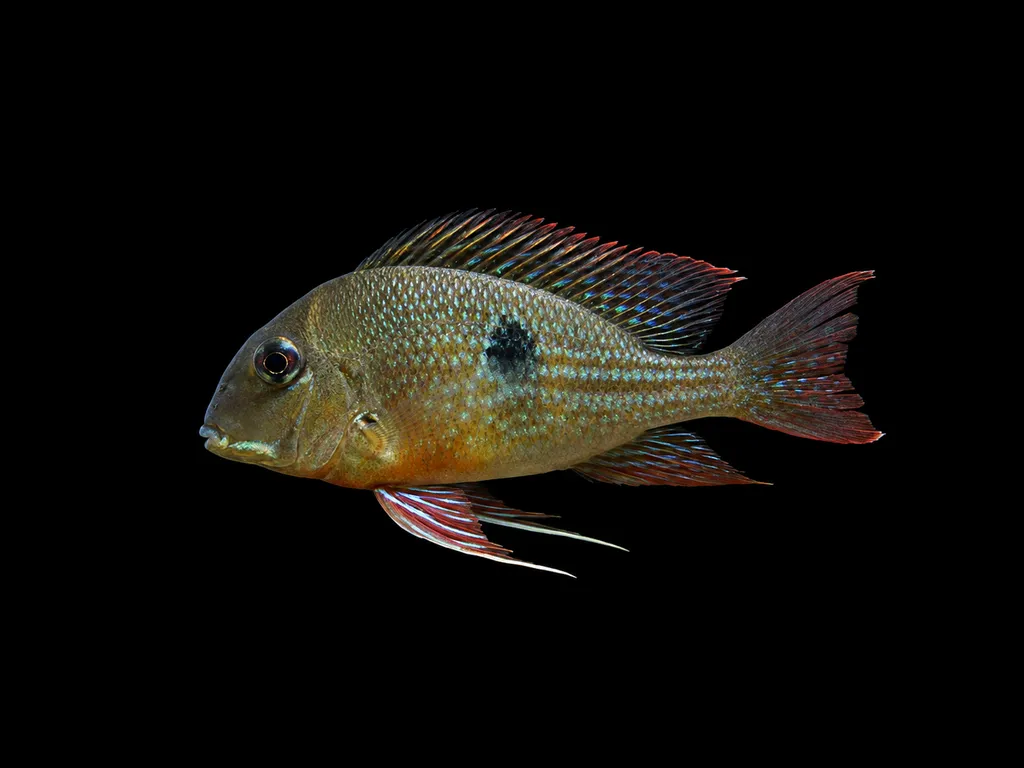
Proximus eartheater
Geophagus proximus
Freshwater11.8 in (30 cm) · 159 gal (600 L)77–84°F (25–29°C)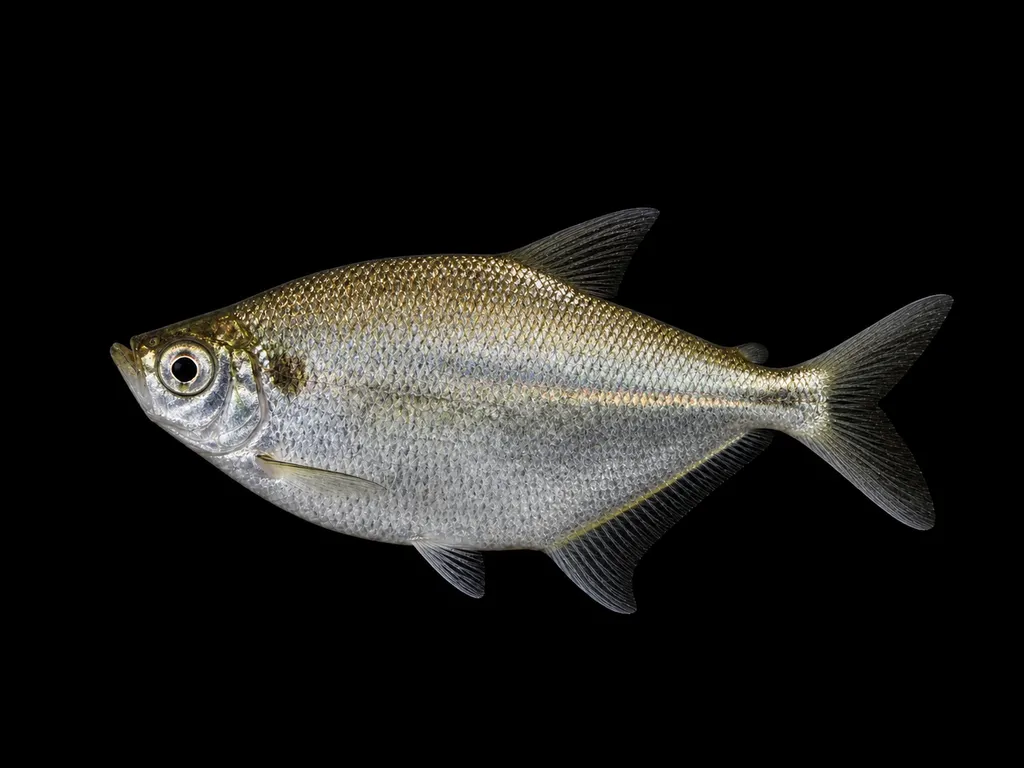
Giant river hatchetfish
Triportheus rotundatus
Freshwater9.8 in (25 cm) · 79 gal (300 L)73–82°F (23–28°C)False hemiodus
Argonectes longiceps
Freshwater11.8 in (30 cm) · 159 gal (600 L)75–84°F (24–29°C)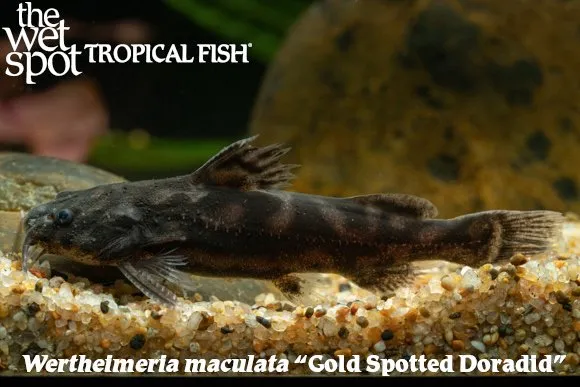
Gold-spotted doradid
Wertheimeria maculata
Freshwater11.8 in (30 cm) · 106 gal (400 L)68–79°F (20–26°C)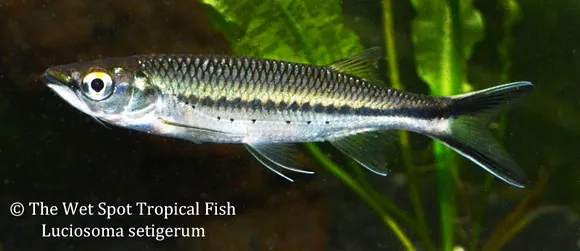
Apollo shark minnow
Luciosoma setigerum
Freshwater11.8 in (30 cm) · 106 gal (400 L)72–81°F (22–27°C)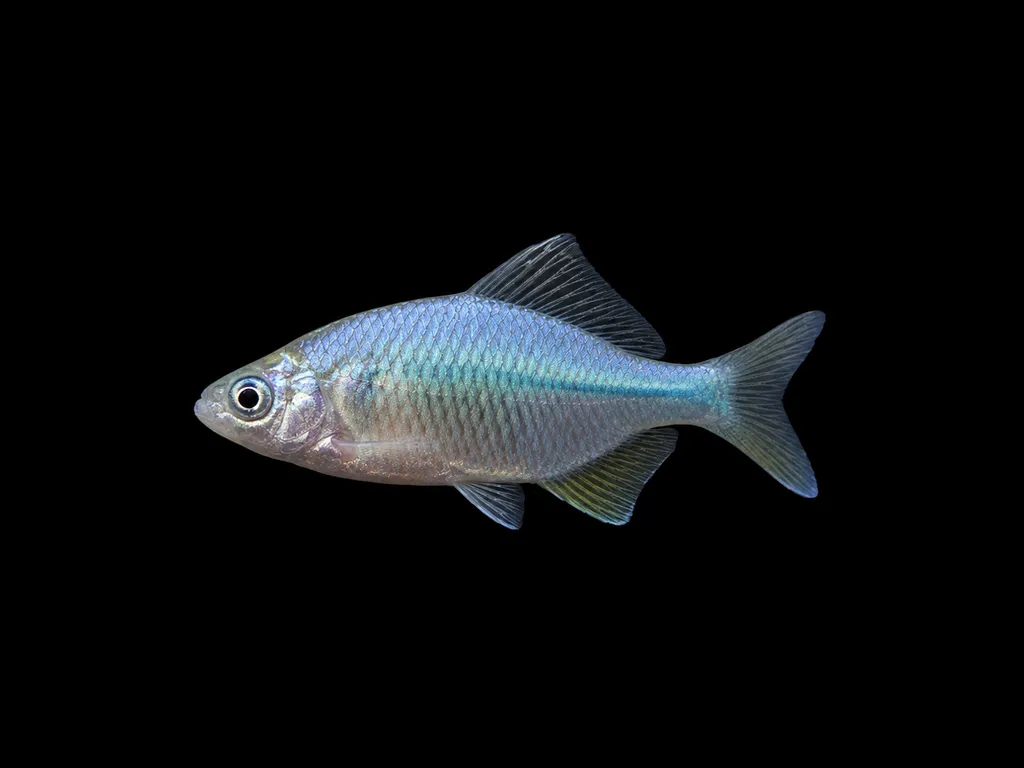
Rainbow bitterling
Acheilognathus macropterus
Freshwater10.6 in (27 cm) · 106 gal (400 L)57–79°F (14–26°C)
Common questions
What size tank does a Green chromide need?
A Green chromide needs at least 145 gal (550 L). It spends most of its time in the middle.
What temperature and pH does a Green chromide need?
A Green chromide is comfortable at 68–86°F (20–30°C) with a pH of 7.0–8.0.
How big does a Green chromide get?
An adult Green chromide reaches about 11.8 in (30 cm).
Does a Green chromide need a group?
Yes. A Green chromide is a shoaling species and should be kept in a group, not singly.
Related species
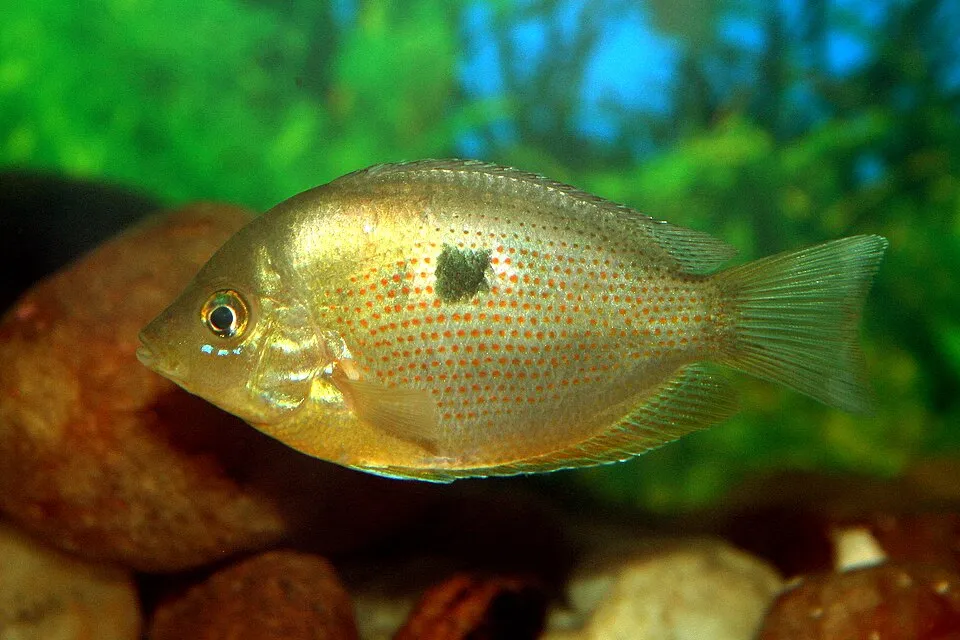 3.9 in (10 cm)55 gal (210 L)68–82°F (20–28°C)
Orange chromide
Etroplus maculatus
3.9 in (10 cm) · 55 gal (210 L)
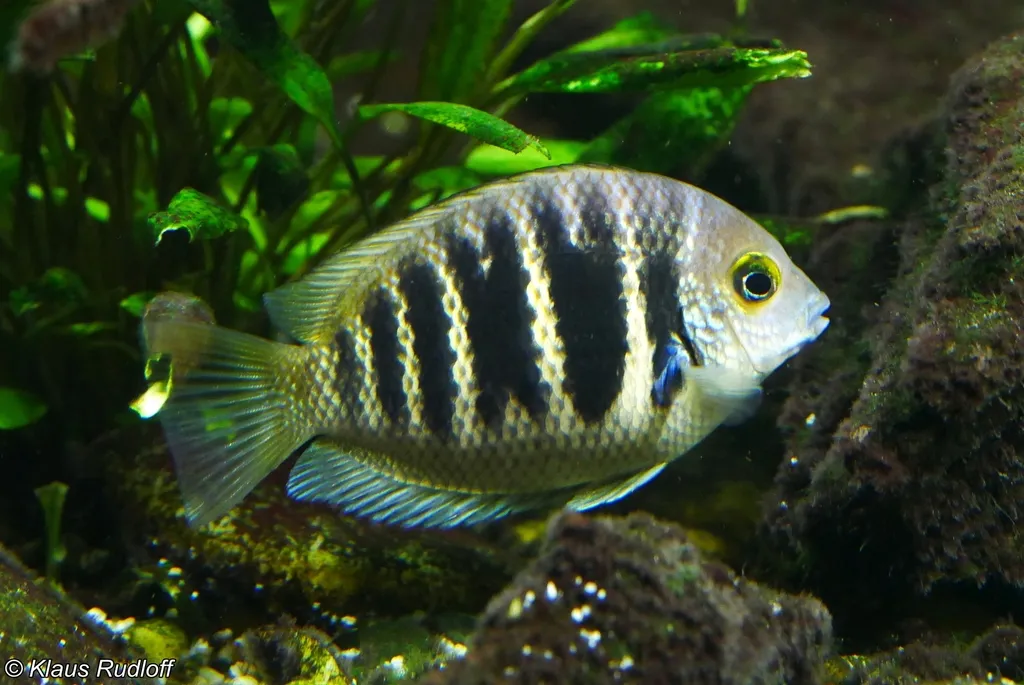 4.3 in (11 cm)55 gal (210 L)72–90°F (22–32°C)
Canara pearlspot
Etroplus canarensis
4.3 in (11 cm) · 55 gal (210 L)
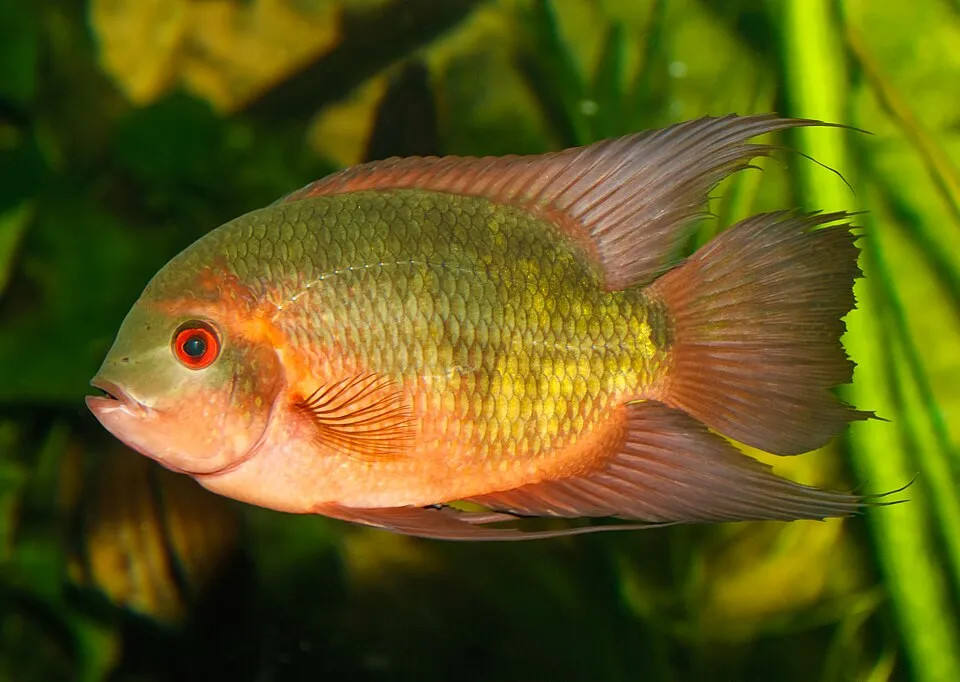 11.8 in (30 cm)65 gal (245 L)77–86°F (25–30°C)
Chocolate cichlid
Hypselecara temporalis
11.8 in (30 cm) · 65 gal (245 L)
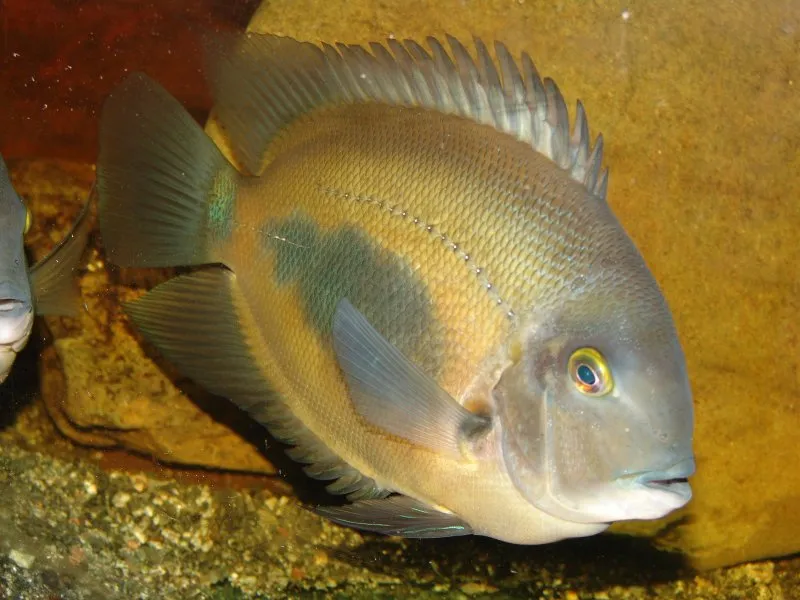 11.8 in (30 cm)65 gal (245 L)81–86°F (27–30°C)
Uaru cichlid
Uaru amphiacanthoides
11.8 in (30 cm) · 65 gal (245 L)
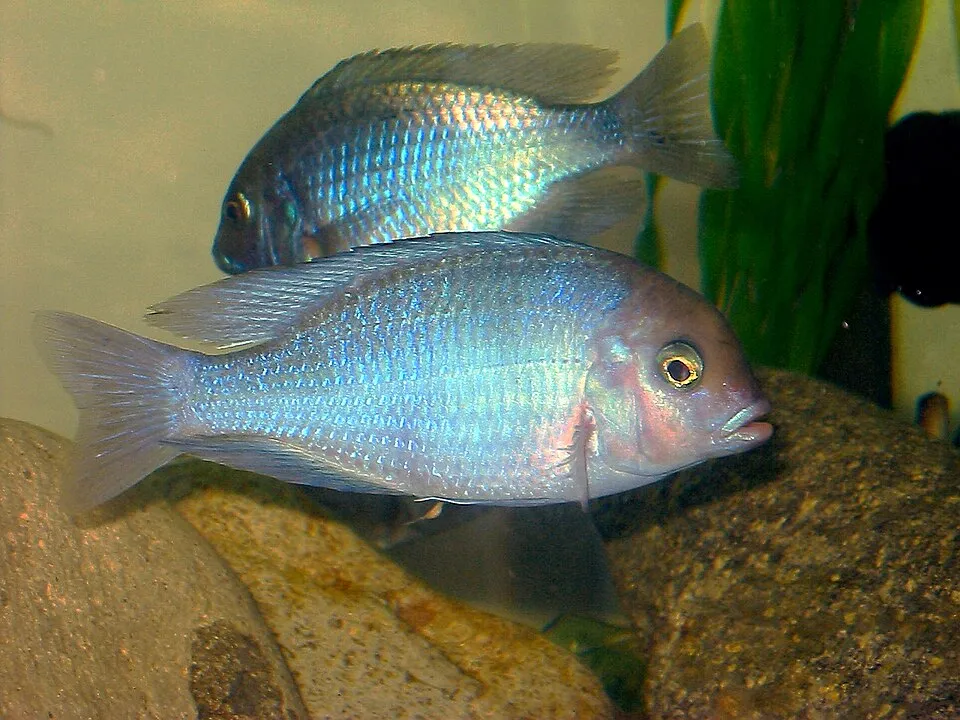 9.8 in (25 cm)66 gal (250 L)77–84°F (25–29°C)
Blue dolphin cichlid
Cyrtocara moorii
9.8 in (25 cm) · 66 gal (250 L)
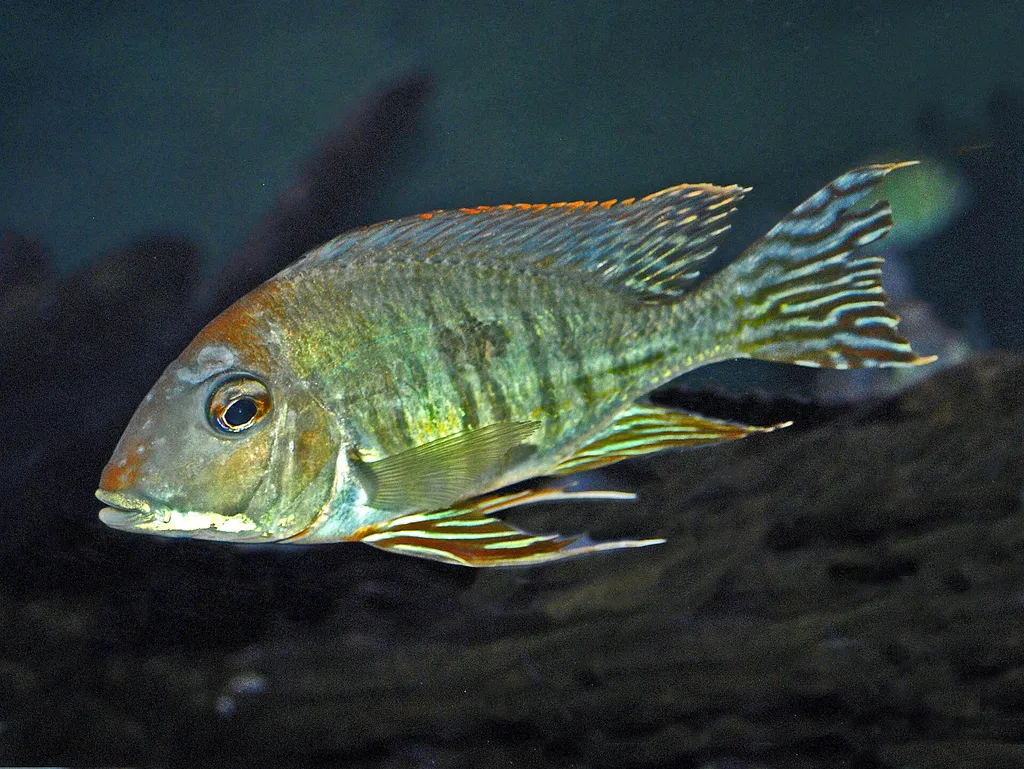 9.8 in (25 cm)115 gal (435 L)79–90°F (26–32°C)
Eartheater cichlid
Geophagus altifrons
9.8 in (25 cm) · 115 gal (435 L)