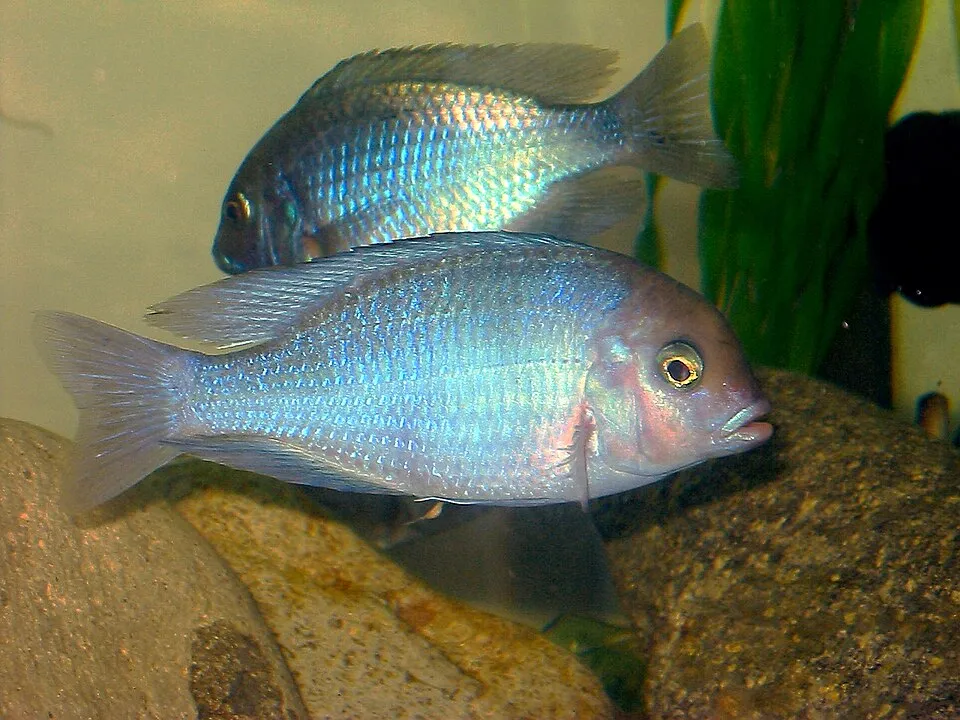
Blue dolphin cichlid
Cyrtocara moorii
Also known as lumphead cichlid
FreshwaterFish
Care at a glance
- Temperature
- 77–84°F
- 25–29°C
- pH
- 7.5–8.5
- Adult size
- 9.8 in
- 25 cm
- Minimum tank
- 66 gal
- 250 L
- Temperament
- Peaceful
- Social behavior
- Shoaling
- Swim level
- Middle
- Difficulty
- Medium
- Breeding
- Hard
- Rarity
- Rare
- Family
- Cichlidae
- Origin
- Lake Malawi
Overview
This is a big fish that needs a big tank, 250 liters or more, with open sand and room to cruise the middle of the water column. It's calm for a Malawi cichlid but gets territorial when breeding. Keep it in a group with one male to several females. Feed cichlid pellets along with frozen brine shrimp and some spirulina or other plant matter.
In the wild
The blue dolphin cichlid lives over open sand in the shallows of Lake Malawi, with rock piles scattered nearby. That tells you what it wants in the tank: a deep sand bed, lots of clear swimming space, and a few rock structures rather than a wall of stone. The lake is hard and alkaline, so match that with a pH of 7.5 to 8.5 and warm water in the mid to high 20s C.
Good to know
Cyrtocara moorii is the only species in its genus, in the family Cichlidae. Adults reach around 25 cm, and the males develop a pronounced forehead hump as they mature. It's a maternal mouthbrooder, with the female holding eggs and fry in her mouth until they can fend for themselves. The IUCN lists it as Least Concern.
Did you know
In the lake, these fish shadow sand-sifting cichlids and snap up the small invertebrates those fish kick out of the substrate. It's a free meal, so they basically follow the diggers around and let them do the work.
Weekly picks
Tank mates
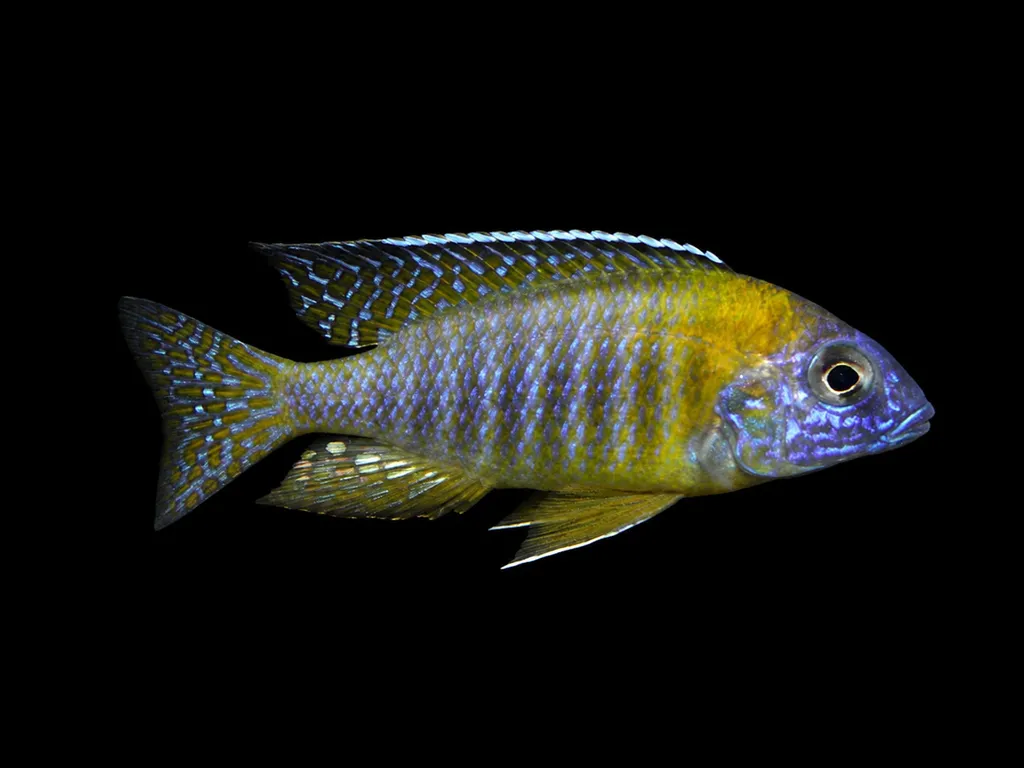
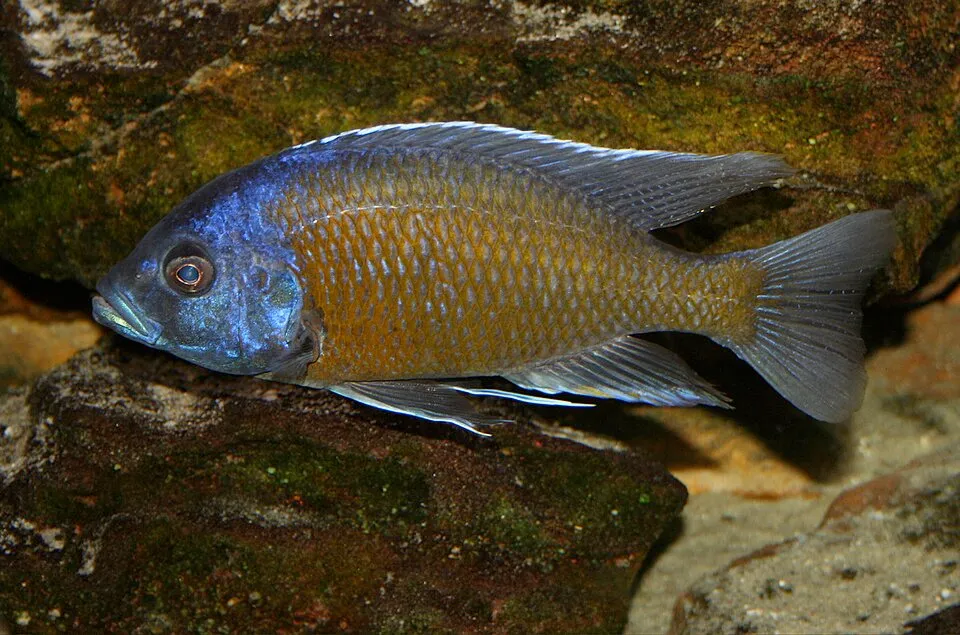
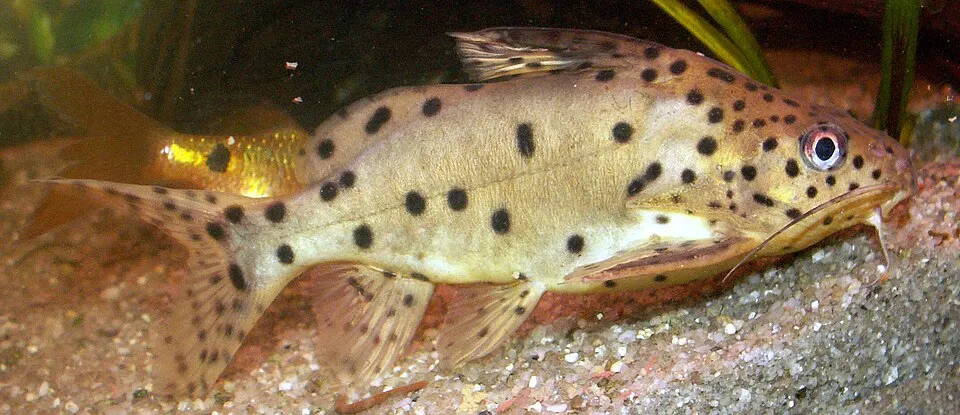
Blue dolphin cichlid is a peaceful, shoaling species that keeps to the middle. These picks share a community profile with it, are safe together in both directions, and overlap on water type, temperature and pH.
Common questions
What size tank does a Blue dolphin cichlid need?
A Blue dolphin cichlid needs at least 66 gal (250 L). It spends most of its time in the middle.
What temperature and pH does a Blue dolphin cichlid need?
A Blue dolphin cichlid is comfortable at 77–84°F (25–29°C) with a pH of 7.5–8.5.
How big does a Blue dolphin cichlid get?
An adult Blue dolphin cichlid reaches about 9.8 in (25 cm).
Does a Blue dolphin cichlid need a group?
Yes. A Blue dolphin cichlid is a shoaling species and should be kept in a group, not singly.
Related species
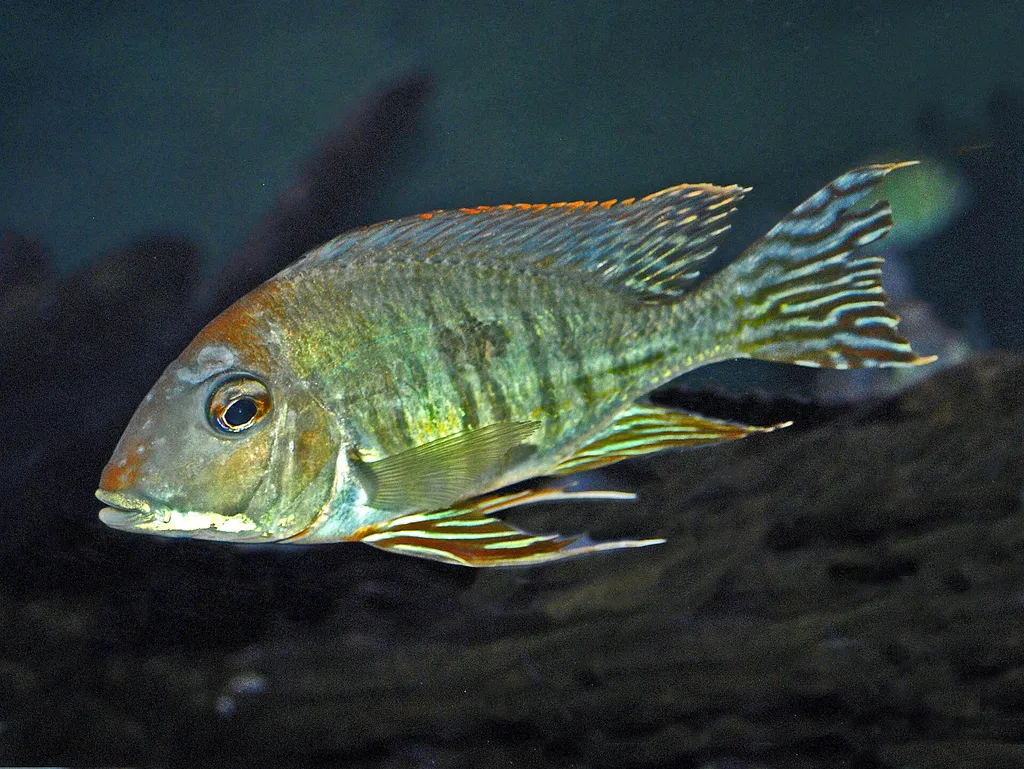 9.8 in (25 cm)115 gal (435 L)79–90°F (26–32°C)
Eartheater cichlid
Geophagus altifrons
9.8 in (25 cm) · 115 gal (435 L)
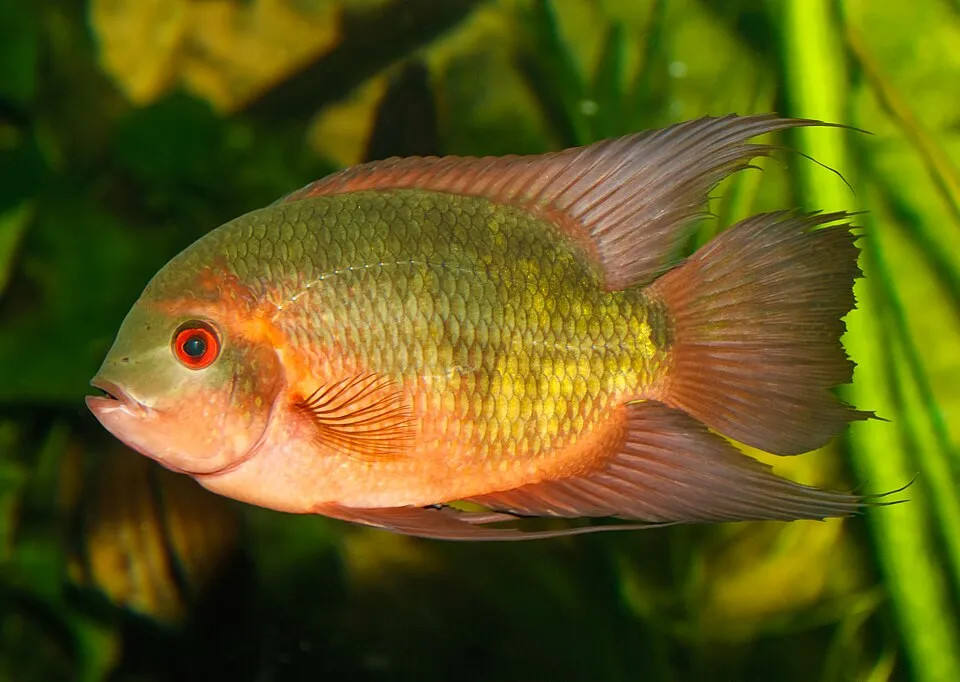 11.8 in (30 cm)65 gal (245 L)77–86°F (25–30°C)
Chocolate cichlid
Hypselecara temporalis
11.8 in (30 cm) · 65 gal (245 L)
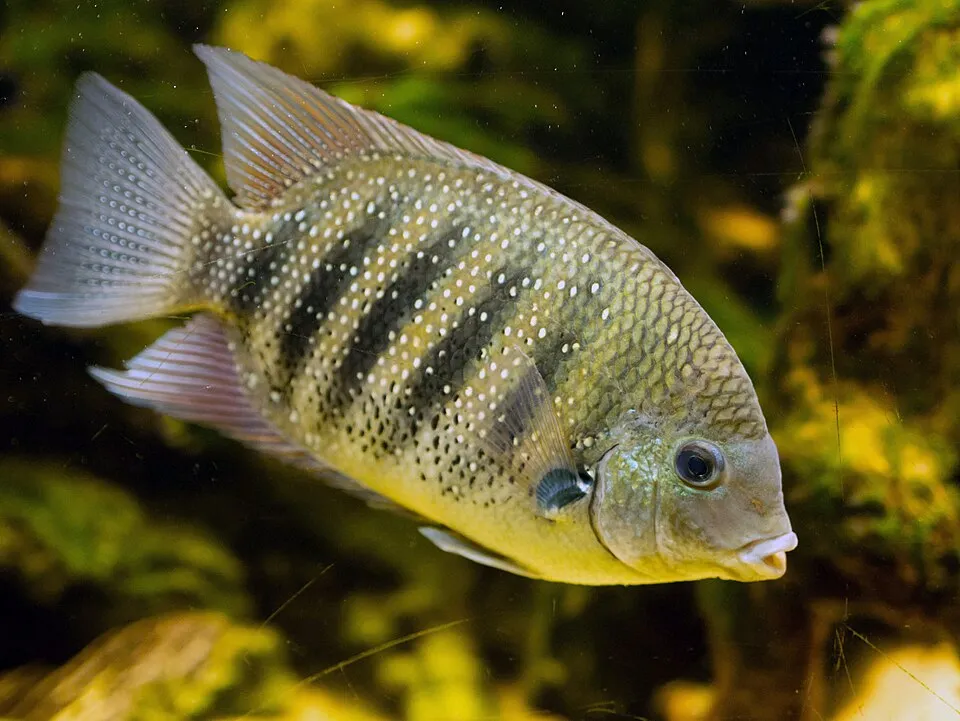 11.8 in (30 cm)145 gal (550 L)68–86°F (20–30°C)
Green chromide
Etroplus suratensis
11.8 in (30 cm) · 145 gal (550 L)
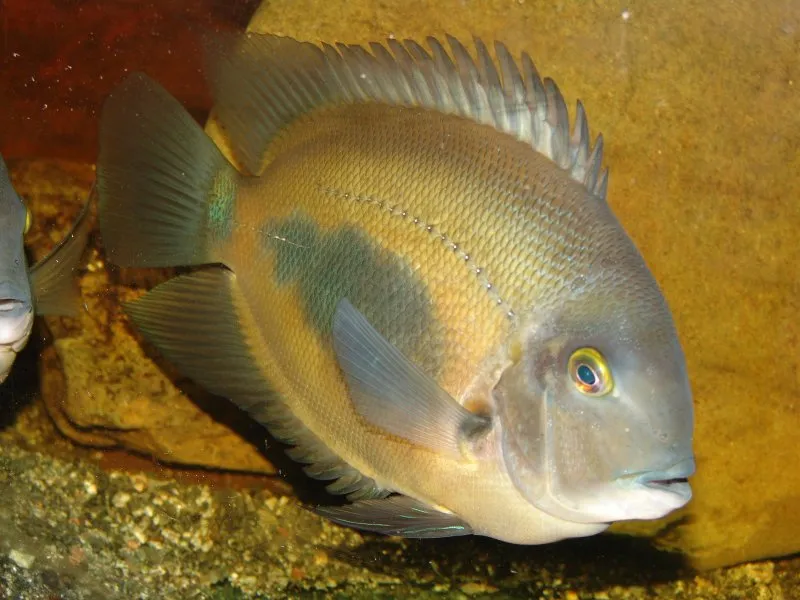 11.8 in (30 cm)65 gal (245 L)81–86°F (27–30°C)
Uaru cichlid
Uaru amphiacanthoides
11.8 in (30 cm) · 65 gal (245 L)
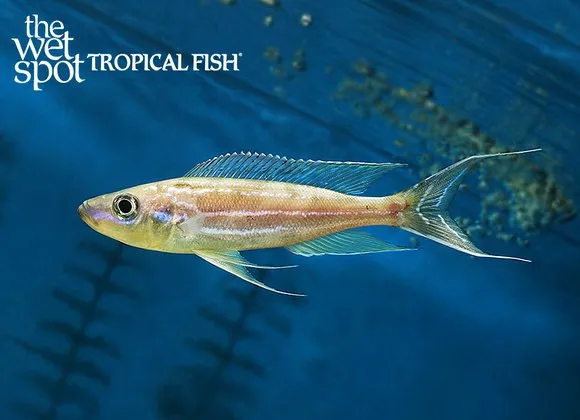 7.1 in (18 cm)159 gal (600 L)75–81°F (24–27°C)
Hori's deepwater cichlid
Benthochromis horii
7.1 in (18 cm) · 159 gal (600 L)
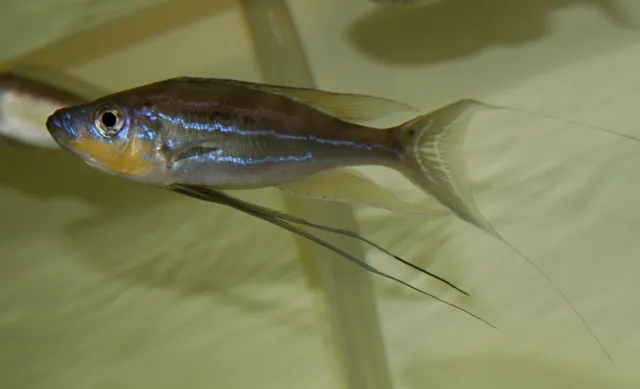 6.5 in (16.5 cm)159 gal (600 L)75–81°F (24–27°C)
Tricot's deepwater cichlid
Benthochromis tricoti
6.5 in (16.5 cm) · 159 gal (600 L)