Tricot's deepwater cichlid
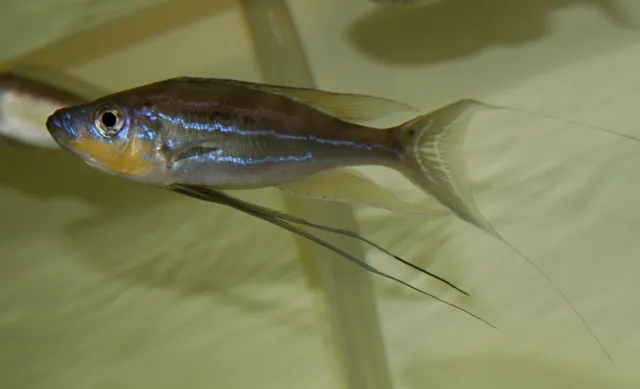
Benthochromis tricoti
Also known as Benthochromis tricotti
FreshwaterFish
Care at a glance
- Temperature
- 75–81°F
- 24–27°C
- pH
- 7.8–9.0
- Adult size
- 6.5 in
- 16.5 cm
- Minimum tank
- 159 gal
- 600 L
- Temperament
- Peaceful
- Social behavior
- Social
- Swim level
- Middle
- Diet
- Carnivore
- Difficulty
- Difficult
- Breeding
- Mouthbrooder · Hard
- Rarity
- Rare
- Family
- Cichlidae
- Origin
- Lake Tanganyika
Overview
Tricot's deepwater cichlid is a tall, peaceful Tanganyikan for a large, calm tank. It is a challenge best left to experienced keepers.
Caring for the Tricot's deepwater cichlid
Plan on a tank of at least 159 gal (600 L) for a group of Tricot's deepwater cichlids. It needs length and height, dim light and a long open swimming area over sand with some rock.
Keep its water quality stable and rock-solid. The water should be hard and very alkaline, at 75 to 81°F (24 to 27°C) and a pH of 7.8 to 9.0. Filtration should be gentle but efficient.
It feeds in open midwater, taking small mouthfuls, so offer fine frozen foods such as cyclops, small mysis and enriched brine shrimp. Feed patiently. It is easily out-competed, and boisterous, greedy fish will keep it from feeding. Its tank mates must be gentle and unhurried.
Tricot's deepwater cichlid is peaceful and social, so keep a small group. Males are larger and more colorful than females. It is a maternal mouthbrooder, but the female broods only briefly. It is also difficult to raise, so breeding it is hard.
Good to know
Tricot's deepwater cichlid, Benthochromis tricoti, is a member of the family Cichlidae, sometimes listed as Benthochromis tricotti. It uses a protrusible mouth to suck in copepods and tiny shrimp.
In the wild
Tricot's deepwater cichlid lives deep along the sloping walls of Lake Tanganyika, well below the surface. The water there is dim, cool and stable.
Weekly picks
Tank mates
The Tricot's deepwater cichlid is a peaceful, social species that keeps to the middle. These picks share a community profile with it, are safe together in both directions, and overlap on water type, temperature and pH.
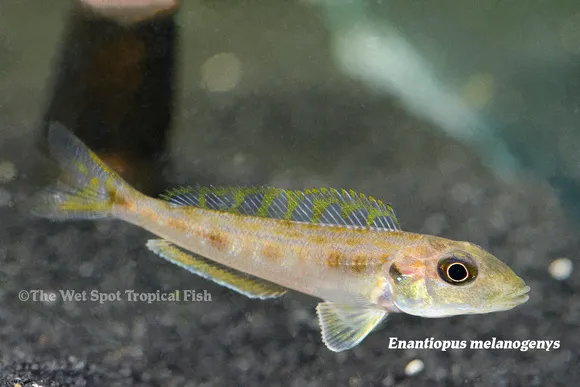
Blackchin sand diver
Xenotilapia melanogenys
Freshwater5.9 in (15 cm) · 106 gal (400 L)75–81°F (24–27°C)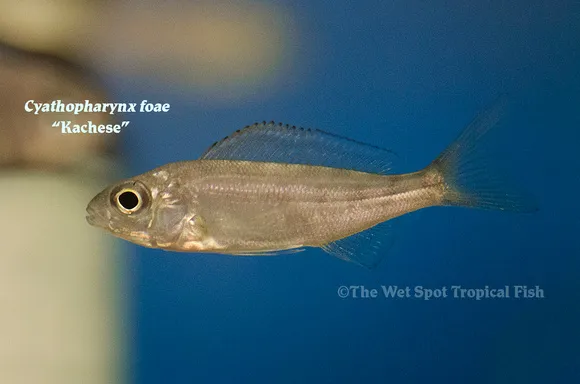
Foa's featherfin
Cyathopharynx foai
Freshwater7.9 in (20 cm) · 119 gal (450 L)75–81°F (24–27°C)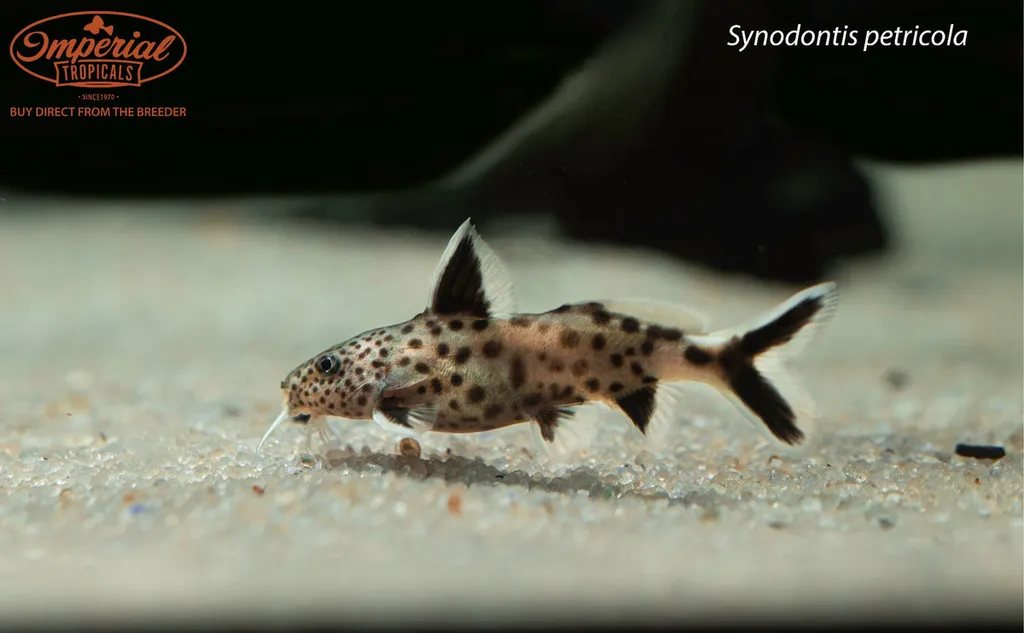
Even-Spotted squeaker
Synodontis petricola
Freshwater4.7 in (12 cm) · 21 gal (80 L)75–82°F (24–28°C)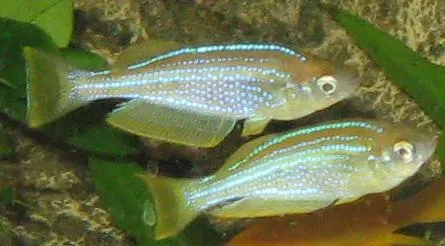
Tanganyika killifish
Lamprichthys tanganicanus
Freshwater5.5 in (14 cm) · 40 gal (150 L)73–77°F (23–25°C)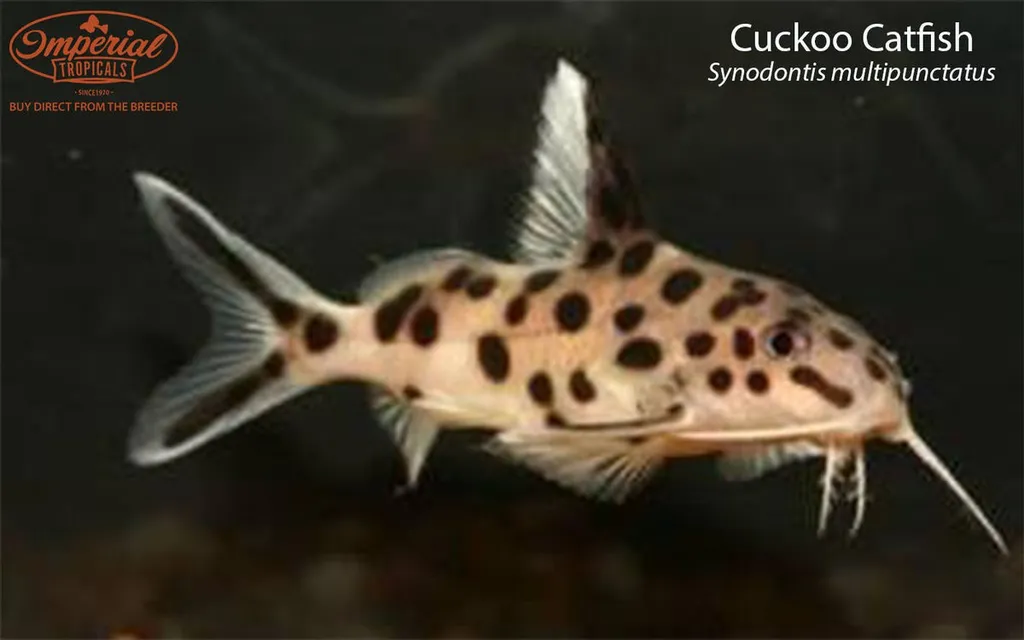
Cuckoo squeaker
Synodontis multipunctatus
Freshwater7.1 in (18 cm) · 29 gal (110 L)75–82°F (24–28°C)
Common questions
What size tank does a Tricot's deepwater cichlid need?
A Tricot's deepwater cichlid needs at least 159 gal (600 L). It spends most of its time in the middle.
What temperature and pH does a Tricot's deepwater cichlid need?
A Tricot's deepwater cichlid is comfortable at 75–81°F (24–27°C) with a pH of 7.8–9.0.
What does a Tricot's deepwater cichlid eat?
A Tricot's deepwater cichlid eats fine frozen foods such as cyclops, small mysis and enriched brine shrimp. It takes small mouthfuls in open midwater, so feed it patiently.
How big does a Tricot's deepwater cichlid get?
An adult Tricot's deepwater cichlid reaches about 6.5 in (16.5 cm).
How can you tell a male Tricot's deepwater cichlid from a female?
Males are larger and more colorful than females.
How does a Tricot's deepwater cichlid breed?
Tricot's deepwater cichlid is a maternal mouthbrooder, but the female broods only briefly. It is also difficult to raise, so breeding it is hard.
Related species
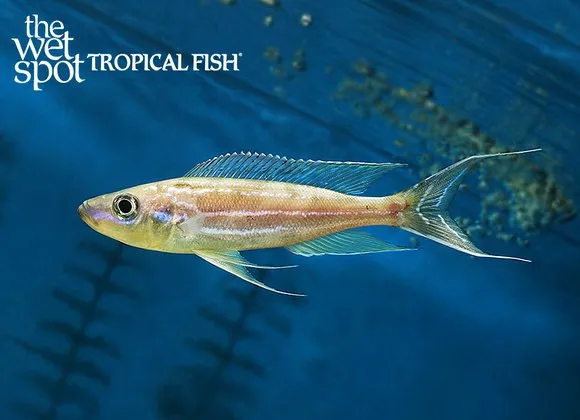 7.1 in (18 cm)159 gal (600 L)75–81°F (24–27°C)
Hori's deepwater cichlid
Benthochromis horii
7.1 in (18 cm) · 159 gal (600 L)
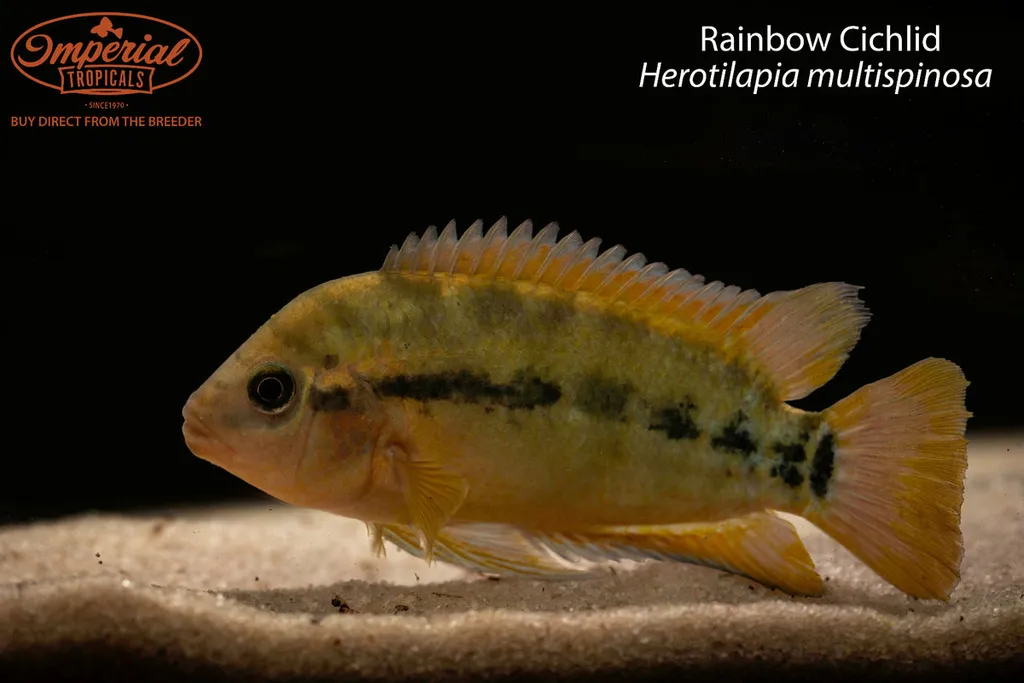 6.3 in (16 cm)26 gal (100 L)72–82°F (22–28°C)
Rainbow cichlid
Herotilapia multispinosa
6.3 in (16 cm) · 26 gal (100 L)
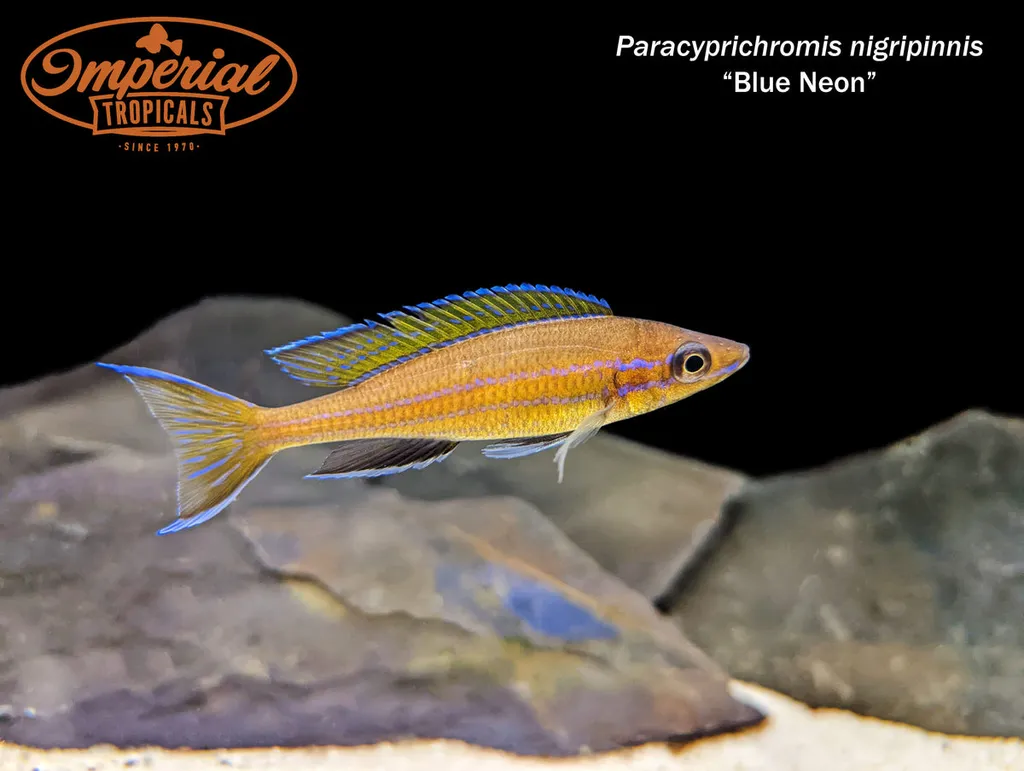 4.3 in (11 cm)48 gal (180 L)75–81°F (24–27°C)
Blue neon cichlid
Paracyprichromis nigripinnis
4.3 in (11 cm) · 48 gal (180 L)
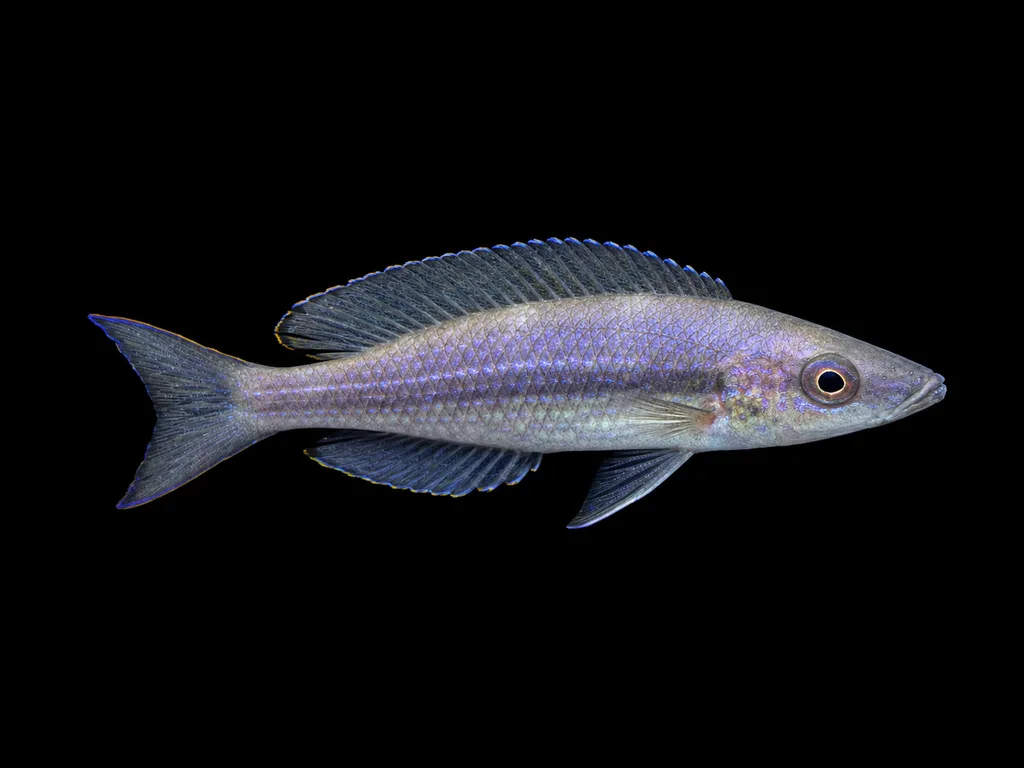 4.3 in (11 cm)66 gal (250 L)75–81°F (24–27°C)
Brien's cichlid
Paracyprichromis brieni
4.3 in (11 cm) · 66 gal (250 L)
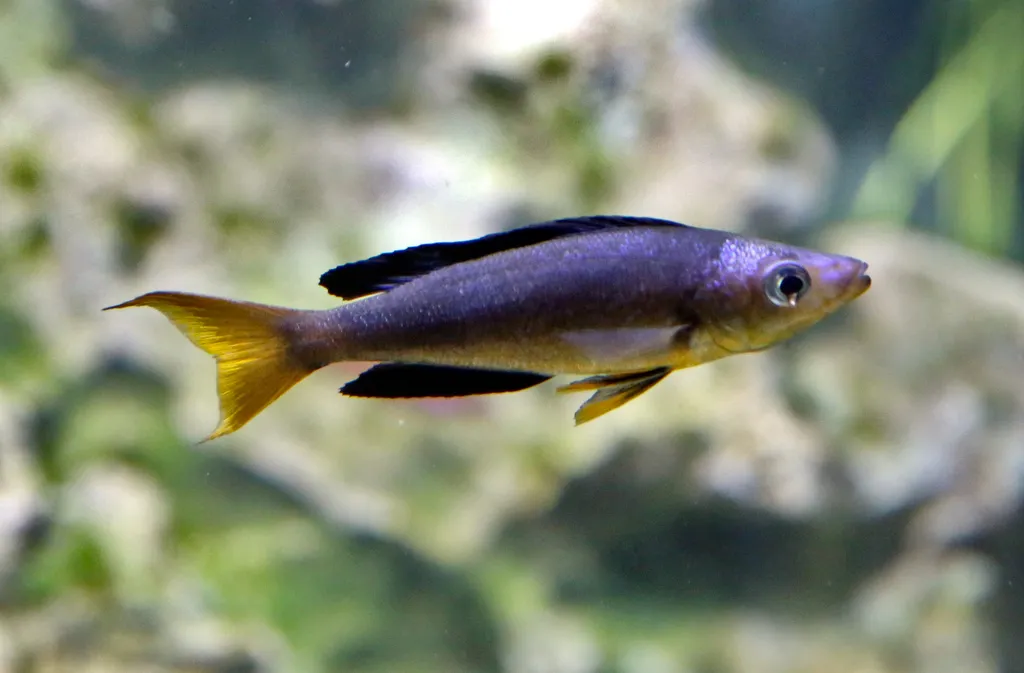 4.3 in (11 cm)79 gal (300 L)75–81°F (24–27°C)
Finescale cyprichromis
Cyprichromis microlepidotus
4.3 in (11 cm) · 79 gal (300 L)
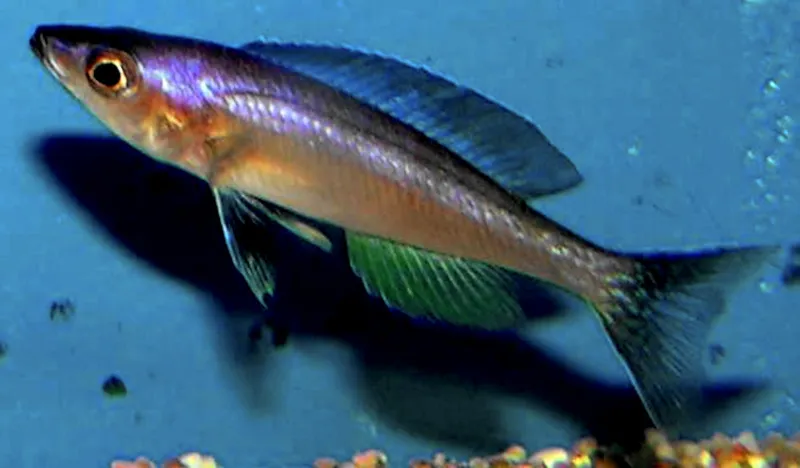 4.3 in (11 cm)63 gal (240 L)75–81°F (24–27°C)
Sardine cichlid
Cyprichromis leptosoma
4.3 in (11 cm) · 63 gal (240 L)