Blue neon cichlid
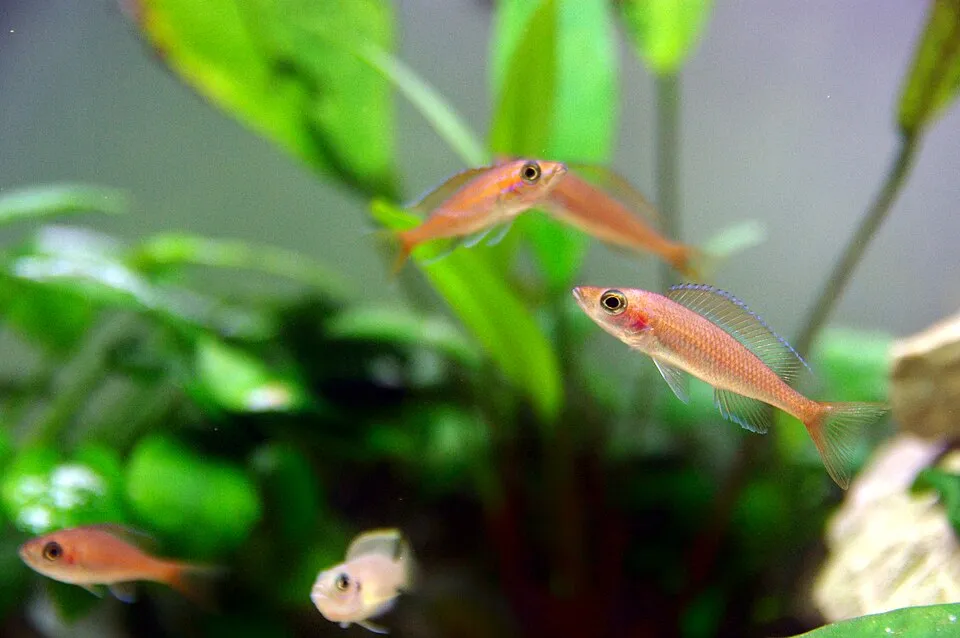
Paracyprichromis nigripinnis
Also known as Blue neon Paracyprichromis
FreshwaterFish
Care at a glance
- Temperature
- 75–81°F
- 24–27°C
- pH
- 7.5–9.0
- Adult size
- 4.3 in
- 11 cm
- Minimum tank
- 48 gal
- 180 L
- Temperament
- Peaceful
- Social behavior
- Social
- Swim level
- Middle
- Difficulty
- Medium
- Breeding
- Hard
- Rarity
- Rare
- Family
- Cichlidae
- Origin
- Lake Tanganyika
Overview
The blue neon is a gentle, schooling Tanganyikan that should always be kept in a group, ideally eight or more, so it feels secure and colors up. It is peaceful to the point of being timid, so choose calm tankmates such as small Neolamprologus, Cyprichromis, or shell dwellers, and keep it away from boisterous mbuna. These fish hang in mid-water near vertical rock and are easily unsettled, so a stable, well-filtered tank of at least 180 liters with tall rockwork and open swimming space works best. Feed small foods such as frozen cyclops, daphnia, brine shrimp, and a fine pellet or flake.
In the wild
Paracyprichromis nigripinnis lives in Lake Tanganyika, where it gathers in shoals along steep rocky cliffs and hovers close to vertical stone faces. Tanganyika is one of the hardest, most alkaline lakes in the world, so recreate that with a temperature of 24 to 27 degrees Celsius and a pH from 7.5 up to around 9, backed by high carbonate hardness. Arrange rock into tall stacks and leave shaded open water in front of them, since these fish like to shelter near vertical surfaces and dart into crevices when startled. Very clean, oxygen rich water and steady parameters keep them at their best.
Good to know
A member of the cichlid family, Cichlidae, Paracyprichromis nigripinnis is a slender, cyprichromine cichlid that reaches about 11 centimeters. It is a maternal mouthbrooder with an unusual spawning style. The pair press against a vertical or overhanging rock, often nose down or inverted, and the female takes the eggs into her mouth to brood them for several weeks. Clutches are small, typically only around ten to a dozen eggs, and the shy, easily stressed nature of the species makes it one of the harder Tanganyikans to breed and raise in the aquarium.
Did you know
Under subdued lighting a lengthwise band of iridescent blue runs down the body and appears to glow, which is where the common name blue neon comes from. Pairs spawn against vertical rock in a near upside down posture.
Weekly picks
Tank mates
Blue neon cichlid is a peaceful, social species that keeps to the middle. These picks share a community profile with it, are safe together in both directions, and overlap on water type, temperature and pH.
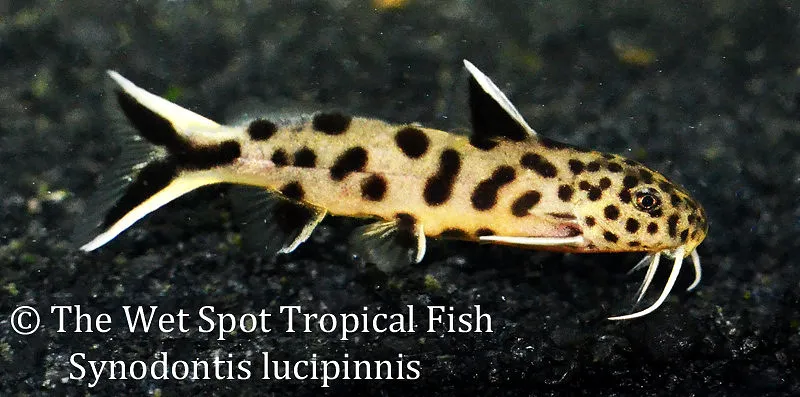
Dwarf petricola
Synodontis lucipinnis
Freshwater3.9 in (10 cm) · 30 gal (114 L)73–81°F (23–27°C)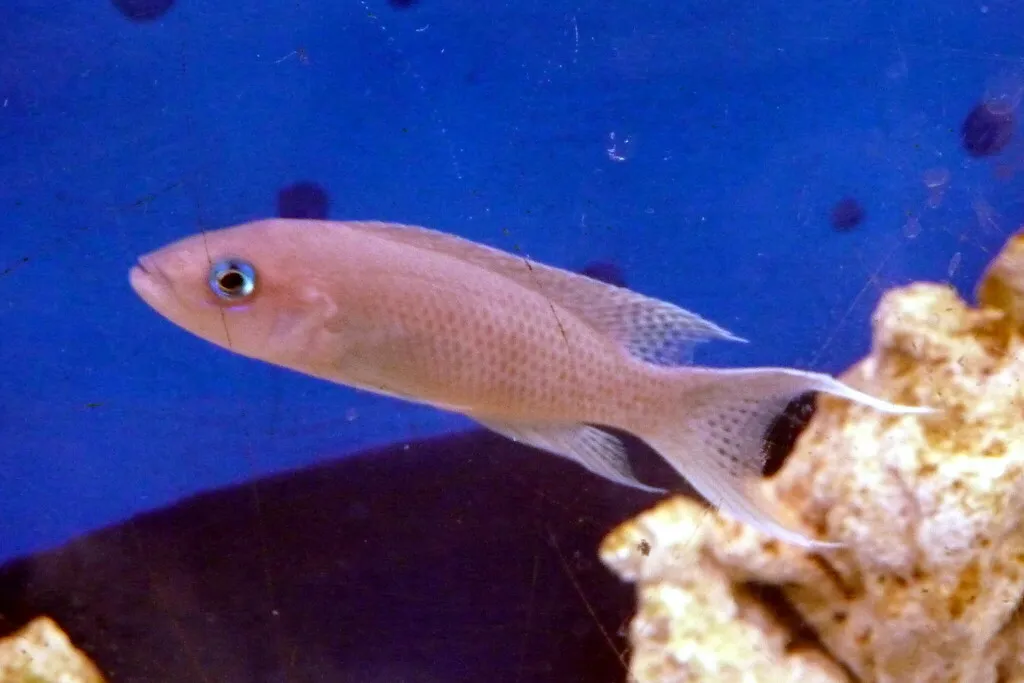
Graceful lamprologus
Neolamprologus gracilis
Freshwater3.5 in (9 cm) · 42 gal (160 L)75–81°F (24–27°C)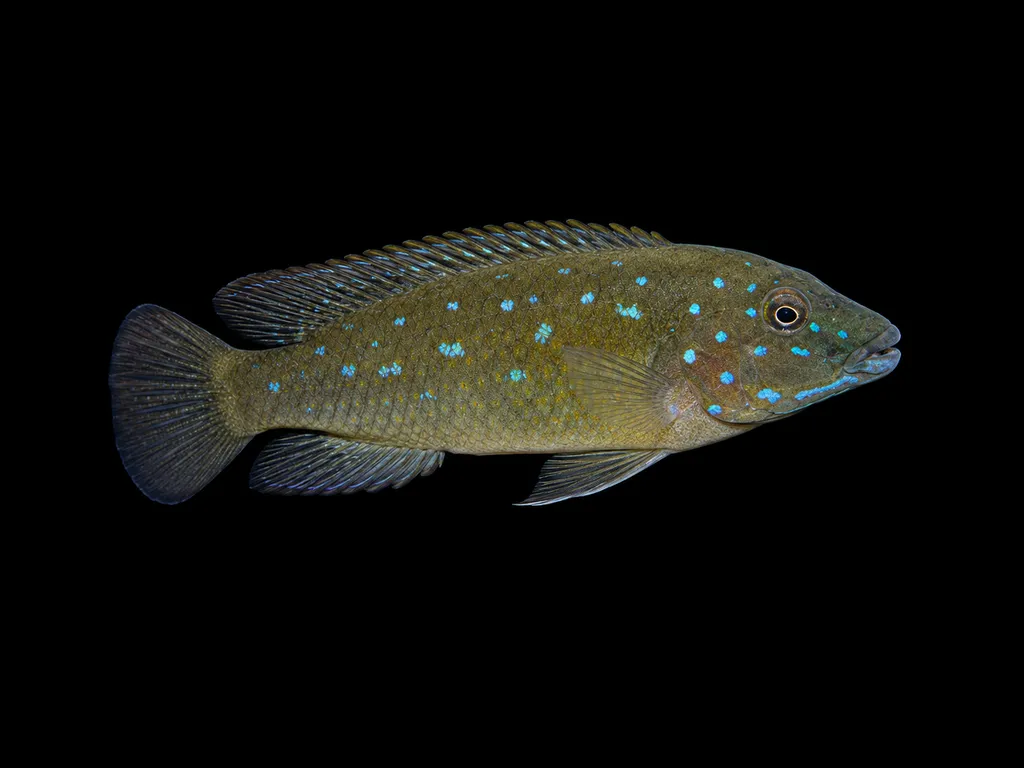
Blue-spot goby cichlid
Spathodus erythrodon
Freshwater3.3 in (8.5 cm) · 29 gal (110 L)75–81°F (24–27°C)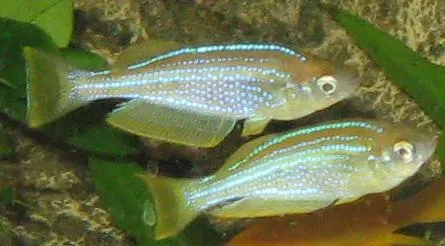
Tanganyika killifish
Lamprichthys tanganicanus
Freshwater5.5 in (14 cm) · 40 gal (150 L)73–77°F (23–25°C)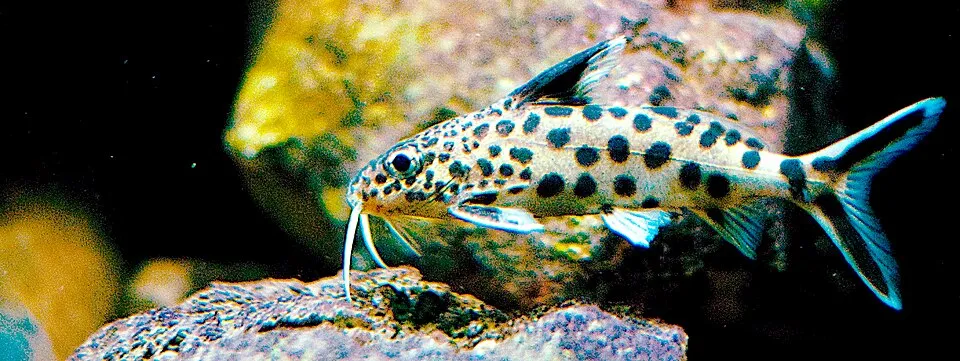
Cuckoo squeaker
Synodontis multipunctatus
Freshwater9.8 in (25 cm) · 50 gal (190 L)75–82°F (24–28°C)
Common questions
What size tank does a Blue neon cichlid need?
A Blue neon cichlid needs at least 48 gal (180 L). It spends most of its time in the middle.
What temperature and pH does a Blue neon cichlid need?
A Blue neon cichlid is comfortable at 75–81°F (24–27°C) with a pH of 7.5–9.0.
How big does a Blue neon cichlid get?
An adult Blue neon cichlid reaches about 4.3 in (11 cm).
Related species
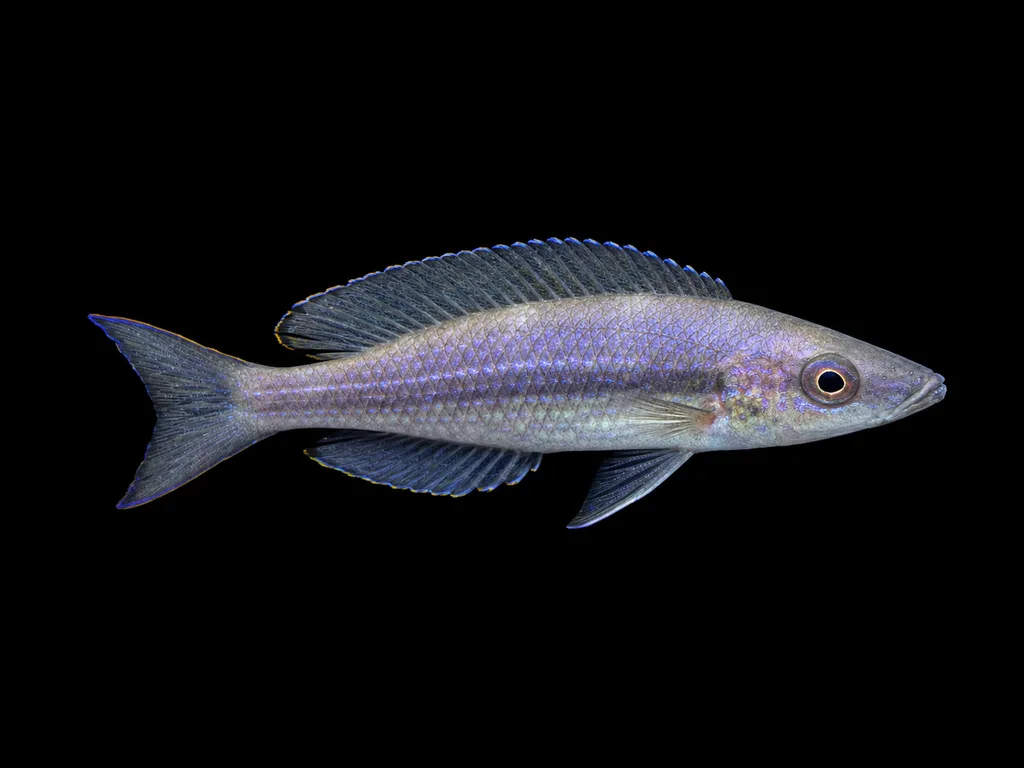 4.3 in (11 cm)66 gal (250 L)75–81°F (24–27°C)
Brien's cichlid
Paracyprichromis brieni
4.3 in (11 cm) · 66 gal (250 L)
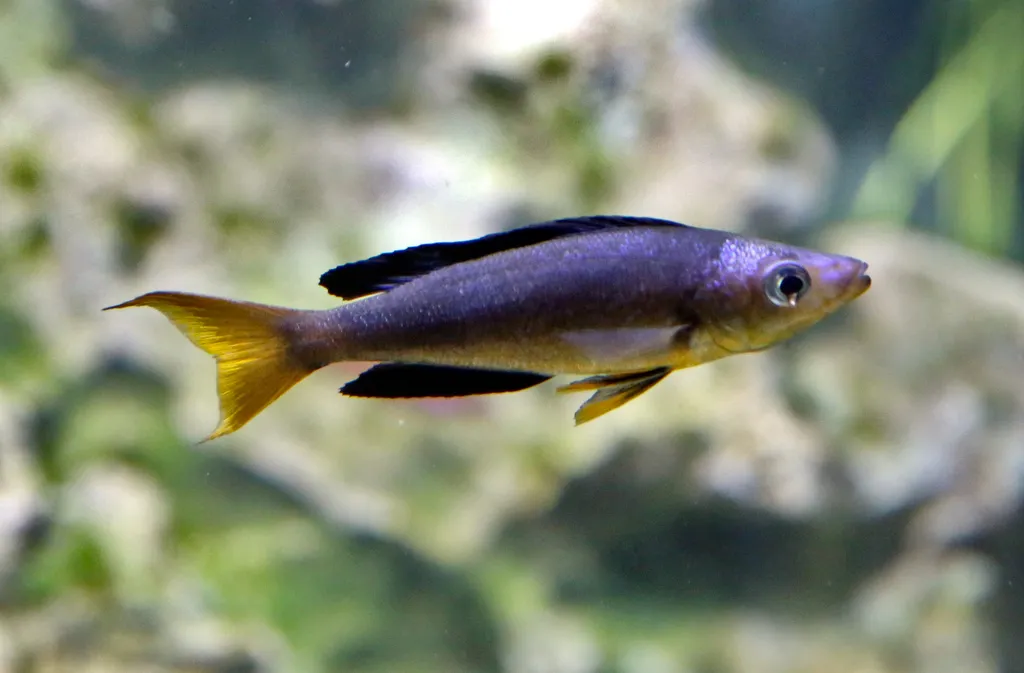 4.3 in (11 cm)79 gal (300 L)75–81°F (24–27°C)
Finescale cyprichromis
Cyprichromis microlepidotus
4.3 in (11 cm) · 79 gal (300 L)
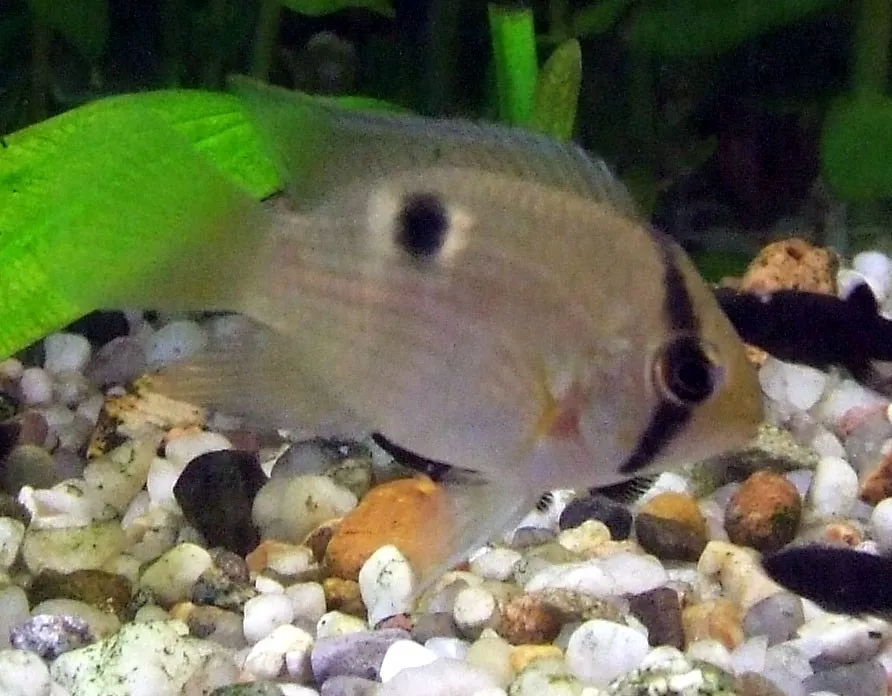 4.3 in (11 cm)25 gal (95 L)70–82°F (21–28°C)
Keyhole cichlid
Cleithracara maronii
4.3 in (11 cm) · 25 gal (95 L)
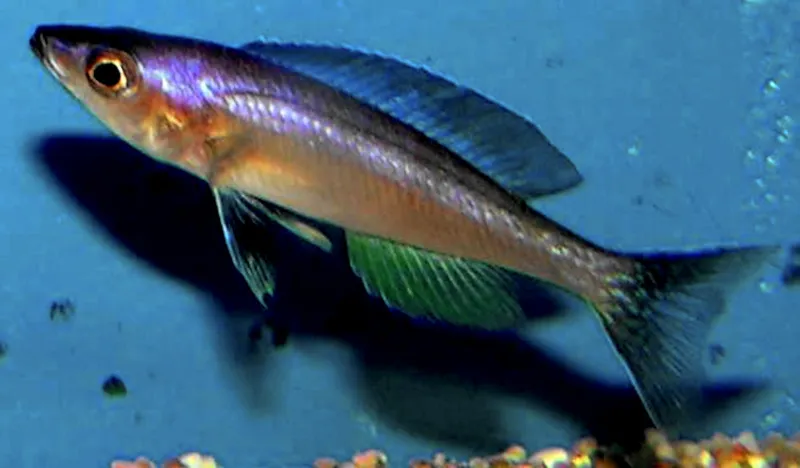 4.3 in (11 cm)45 gal (170 L)75–81°F (24–27°C)
Sardine cichlid
Cyprichromis leptosoma
4.3 in (11 cm) · 45 gal (170 L)
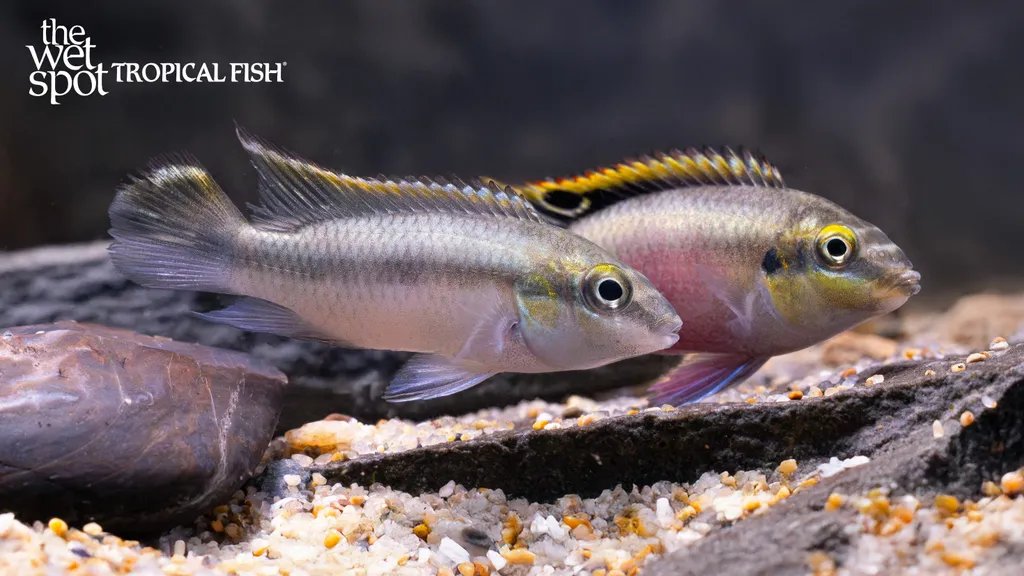 3.9 in (10 cm)20 gal (75 L)75–81°F (24–27°C)
Kribensis
Pelvicachromis pulcher
3.9 in (10 cm) · 20 gal (75 L)
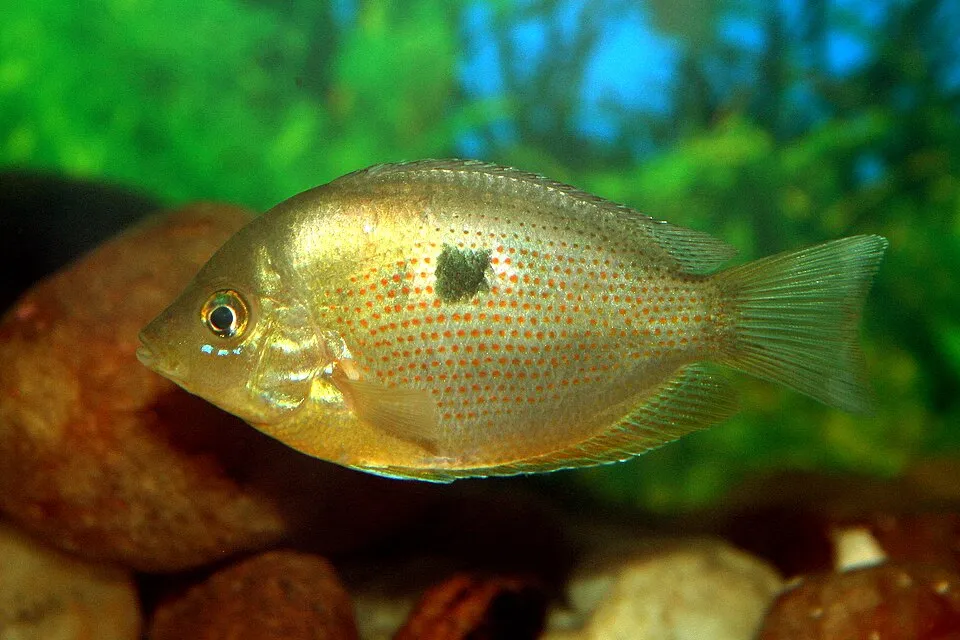 3.9 in (10 cm)55 gal (210 L)68–82°F (20–28°C)
Orange chromide
Etroplus maculatus
3.9 in (10 cm) · 55 gal (210 L)