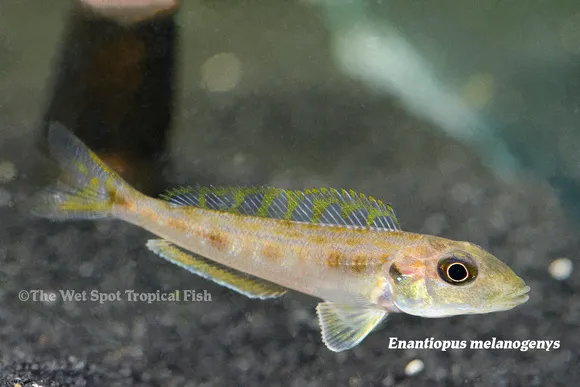
Blackchin sand diver
Xenotilapia melanogenys
Also known as Enantiopus melanogenys, Sand diver cichlid
FreshwaterFish
Care at a glance
- Temperature
- 75–81°F
- 24–27°C
- pH
- 7.8–9.0
- Adult size
- 5.9 in
- 15 cm
- Minimum tank
- 106 gal
- 400 L
- Temperament
- Peaceful
- Social behavior
- Schooling
- Swim level
- Bottom
- Difficulty
- Difficult
- Breeding
- Mouthbrooder · Hard
- Rarity
- Rare
- Family
- Cichlidae
- Origin
- Lake Tanganyika
Overview
The blackchin sand diver is a gentle Tanganyikan cichlid that spends its whole life in shoals over the open floor. It is a fish for experienced keepers.
Did you know
At spawning time, male blackchin sand divers gather in one place and display side by side. This display ground is called a lek, and the females move through it to choose a mate.
Caring for the blackchin sand diver
A proper school needs floor space, so give blackchin sand divers at least 106 gal (400 L) with a long footprint. Lay a broad, deep bed of soft, fine sand with open water and little or no rock. That lets the school move and gives the males room for their nests.
Keep the water hard, alkaline and spotlessly clean, at 75 to 81°F (24 to 27°C) and a pH of 7.8 to 9.0. Feed small foods often, such as fine sinking pellets, frozen cyclops, mysis and brine shrimp.
It is a true schooling fish, so plan on a group of at least eight to a dozen. A lone fish or a tiny group frets and does poorly. It is peaceful and easily stressed, so skip rough or boisterous tank mates altogether. A species tank is often the best choice.
Males build crater-shaped nests in the sand at spawning time, and the females are maternal mouthbrooders that carry the eggs and fry. Breeding it is hard.
Good to know
The blackchin sand diver is a member of the cichlid family. For many years it was known as Enantiopus melanogenys, before it moved to the genus Xenotilapia.
In the wild
In Lake Tanganyika, the blackchin sand diver forages over open sand, picking small invertebrates from the substrate.
Weekly picks
Tank mates
The blackchin sand diver is a peaceful, schooling species that keeps to the bottom. These picks share a community profile with it, are safe together in both directions, and overlap on water type, temperature and pH.
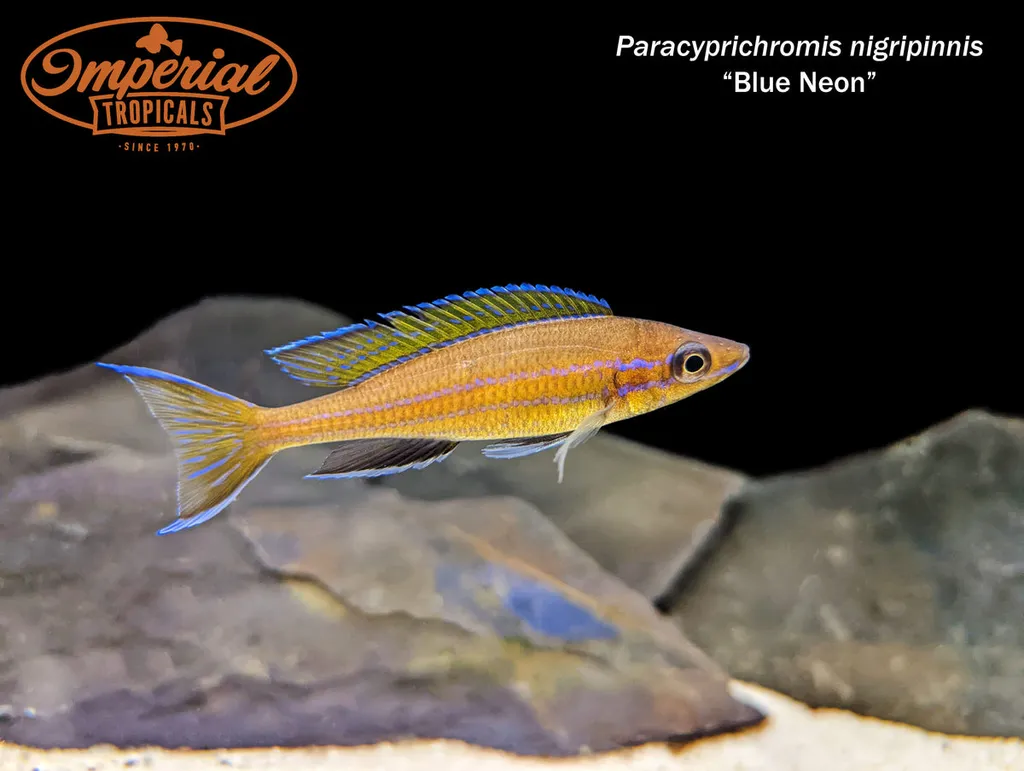
Blue neon cichlid
Paracyprichromis nigripinnis
Freshwater4.3 in (11 cm) · 48 gal (180 L)75–81°F (24–27°C)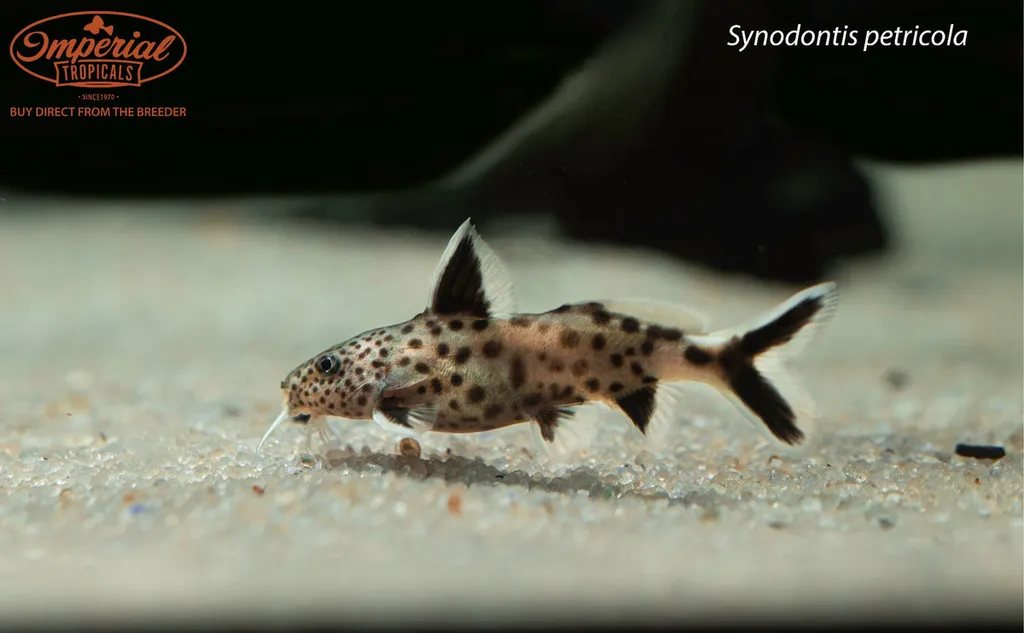
Even-Spotted squeaker
Synodontis petricola
Freshwater4.7 in (12 cm) · 21 gal (80 L)75–82°F (24–28°C)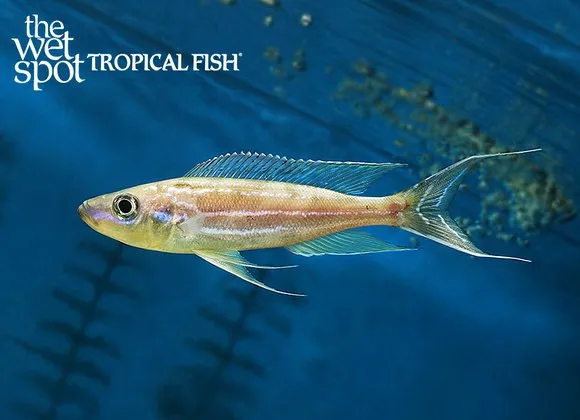
Hori's deepwater cichlid
Benthochromis horii
Freshwater7.1 in (18 cm) · 159 gal (600 L)75–81°F (24–27°C)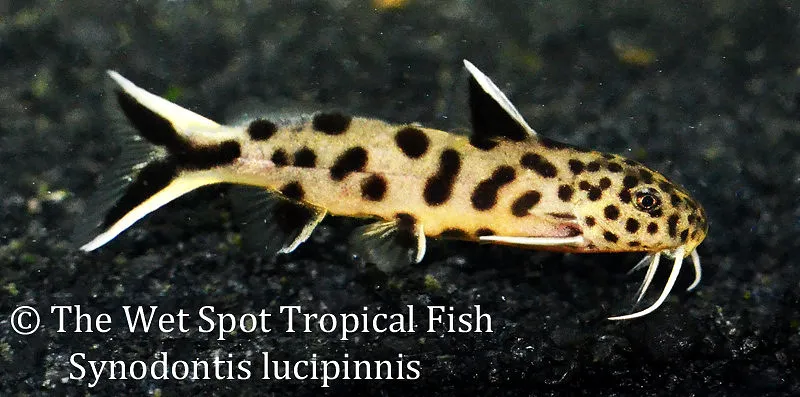
Dwarf petricola
Synodontis lucipinnis
Freshwater3.9 in (10 cm) · 30 gal (114 L)73–81°F (23–27°C)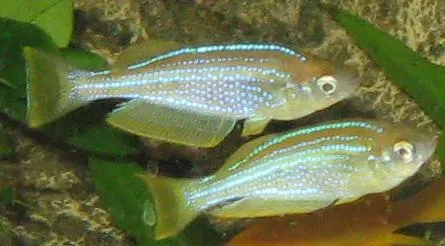
Tanganyika killifish
Lamprichthys tanganicanus
Freshwater5.5 in (14 cm) · 40 gal (150 L)73–77°F (23–25°C)
Common questions
What size tank does a blackchin sand diver need?
A blackchin sand diver needs at least 106 gal (400 L). It spends most of its time in the bottom.
What temperature and pH does a blackchin sand diver need?
A blackchin sand diver is comfortable at 75–81°F (24–27°C) with a pH of 7.8–9.0.
What does a blackchin sand diver eat?
A blackchin sand diver eats small foods offered often, such as fine sinking pellets, frozen cyclops, mysis and brine shrimp.
How big does a blackchin sand diver get?
An adult blackchin sand diver reaches about 5.9 in (15 cm).
Does a blackchin sand diver need a group?
Yes. A blackchin sand diver is a schooling species and should be kept in a group, not singly.
How does a blackchin sand diver breed?
Male blackchin sand divers build crater-shaped nests in the sand at spawning time. The females are maternal mouthbrooders that carry the eggs and fry, and breeding them is hard.
Related species
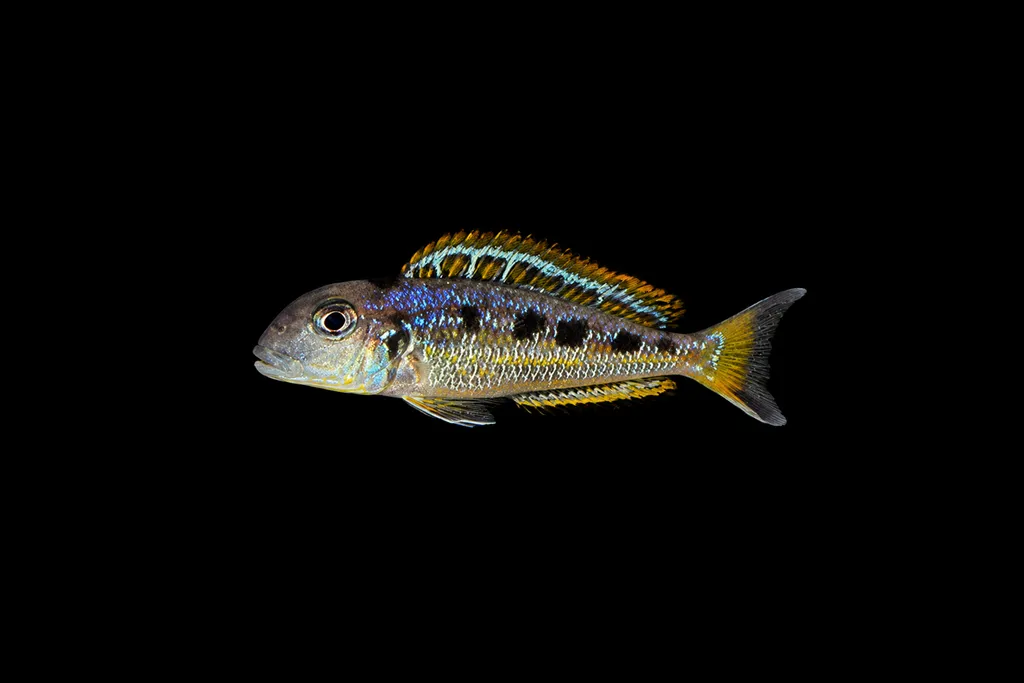 4.3 in (11 cm)79 gal (300 L)75–81°F (24–27°C)
Yellow-cheek xenotilapia
Xenotilapia ochrogenys
4.3 in (11 cm) · 79 gal (300 L)
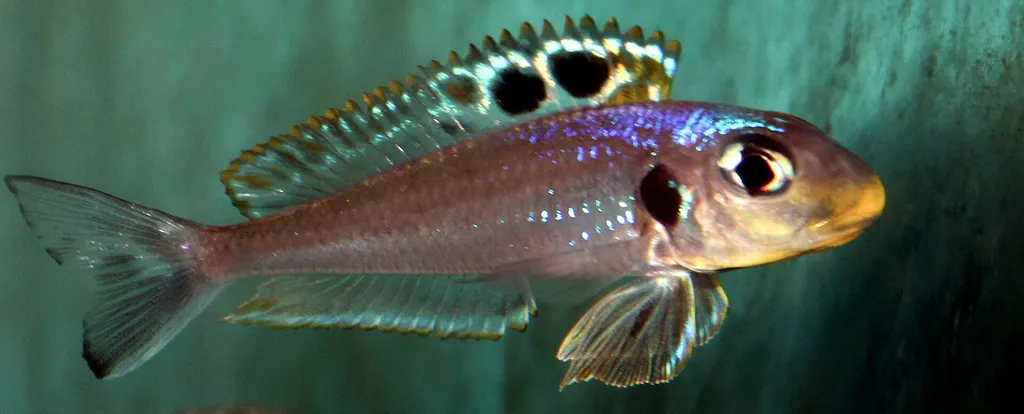 4.1 in (10.5 cm)66 gal (250 L)75–81°F (24–27°C)
Deepwater xenotilapia
Xenotilapia bathyphila
4.1 in (10.5 cm) · 66 gal (250 L)
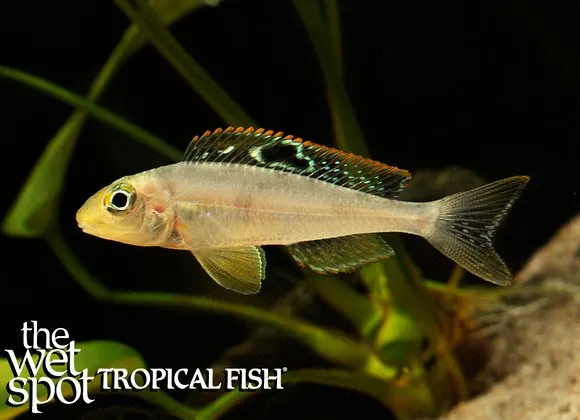 3.1 in (8 cm)53 gal (200 L)75–81°F (24–27°C)
Butterfly xenotilapia
Xenotilapia papilio
3.1 in (8 cm) · 53 gal (200 L)
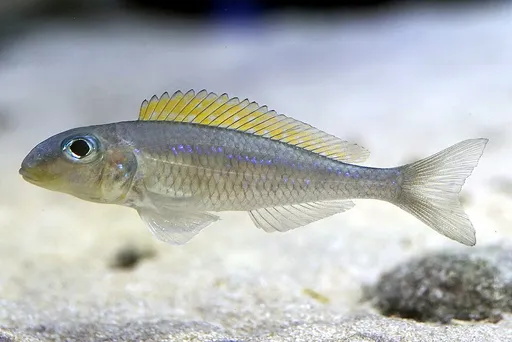 3.5 in (9 cm)53 gal (200 L)75–81°F (24–27°C)
Yellow sand cichlid
Xenotilapia flavipinnis
3.5 in (9 cm) · 53 gal (200 L)
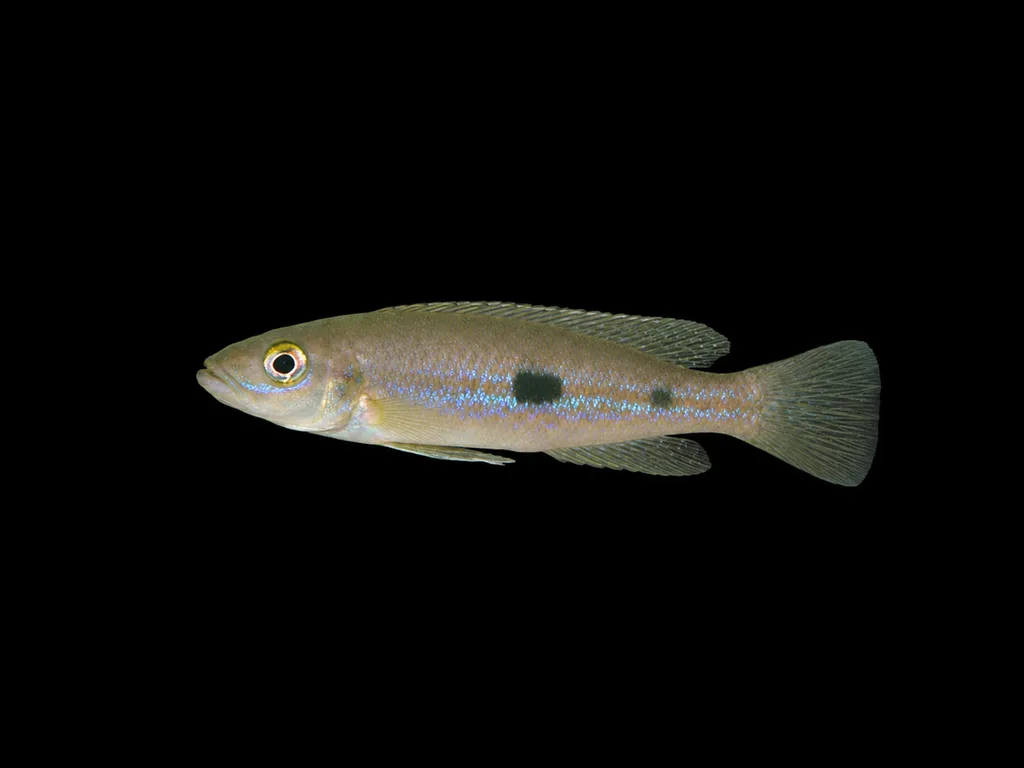 5.9 in (15 cm)66 gal (250 L)75–81°F (24–27°C)
Attenuatus cichlid
Lepidiolamprologus attenuatus
5.9 in (15 cm) · 66 gal (250 L)
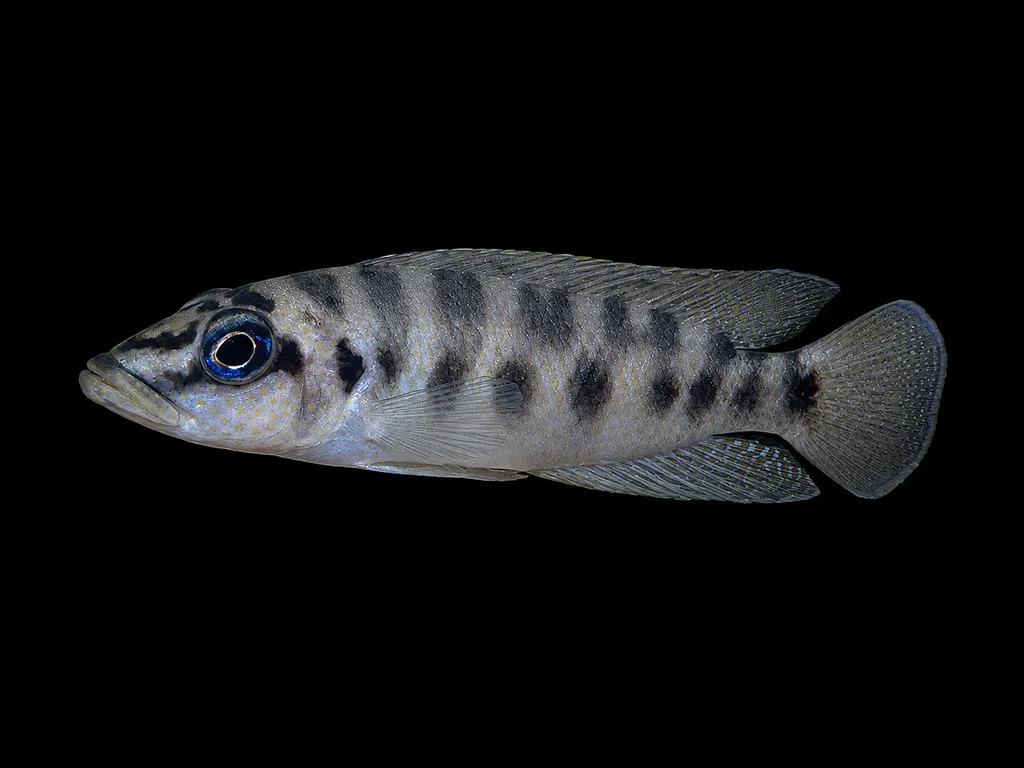 5.9 in (15 cm)66 gal (250 L)75–81°F (24–27°C)
Barred lamprologus
Neolamprologus fasciatus
5.9 in (15 cm) · 66 gal (250 L)