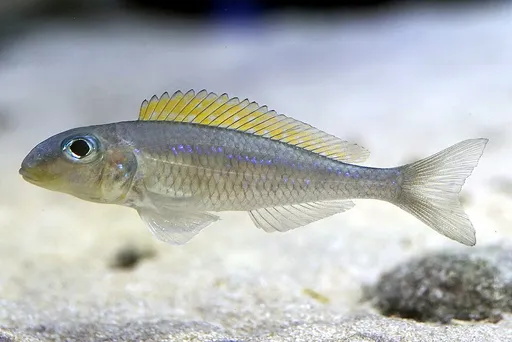
Yellow sand cichlid
Xenotilapia flavipinnis
Also known as Flavipinnis, Yellow featherfin
FreshwaterFish
Care at a glance
- Temperature
- 75–81°F
- 24–27°C
- pH
- 7.8–9.0
- Adult size
- 3.5 in
- 9 cm
- Minimum tank
- 53 gal
- 200 L
- Temperament
- Mostly peaceful
- Social behavior
- Social
- Swim level
- Bottom
- Difficulty
- Difficult
- Breeding
- Hard
- Rarity
- Rare
- Family
- Cichlidae
- Origin
- Sandy floors of Lake Tanganyika in East Africa, usually near rock edges.
Overview
Keep a group of six or more in a tank of at least 200 liters with a soft sand bottom and pristine water at 24 to 27 C, pH 7.8 to 9.0. Real sand is essential since gravel can harm this sifting feeder. It is peaceful and easily bullied, so choose gentle tankmates or keep a species tank. Feed frozen foods like cyclops and brine shrimp along with fine sinking foods.
In the wild
The yellow sand cichlid lives over open sand in Lake Tanganyika, often at the foot of rocky slopes. It takes mouthfuls of sand and sifts out tiny invertebrates. It moves in gregarious groups when not breeding.
Good to know
Xenotilapia flavipinnis is a biparental mouthbrooder, with the pair sharing the job of carrying the eggs and fry. It is very sensitive to poor water quality, more so than most rift lake cichlids. Its pale body with yellow fins helps it blend into the sunlit sand.
Did you know
The parents share the brooding, one carrying the eggs for a while before passing the whole mouthful to its partner.
Weekly picks
Tank mates
Yellow sand cichlid is a mostly peaceful, social species that keeps to the bottom. These picks share a community profile with it, are safe together in both directions, and overlap on water type, temperature and pH.
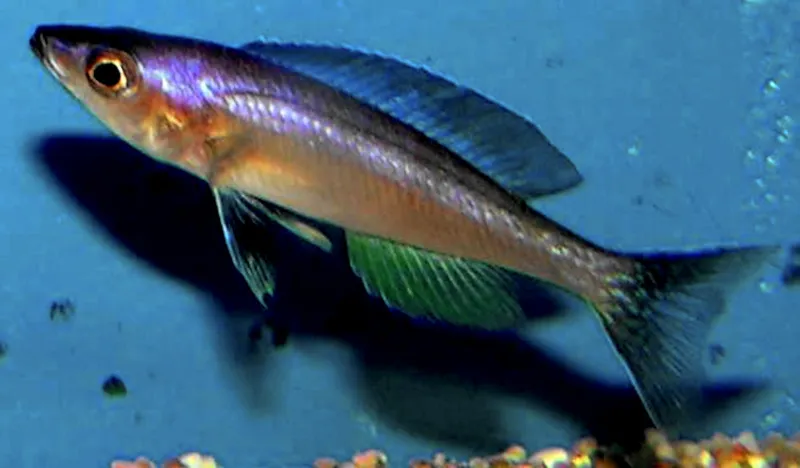
Sardine cichlid
Cyprichromis leptosoma
Freshwater4.3 in (11 cm) · 45 gal (170 L)75–81°F (24–27°C)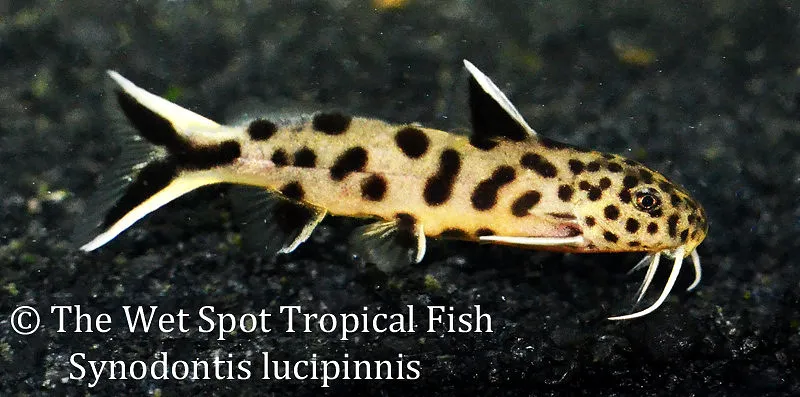
Dwarf petricola
Synodontis lucipinnis
Freshwater3.9 in (10 cm) · 30 gal (114 L)73–81°F (23–27°C)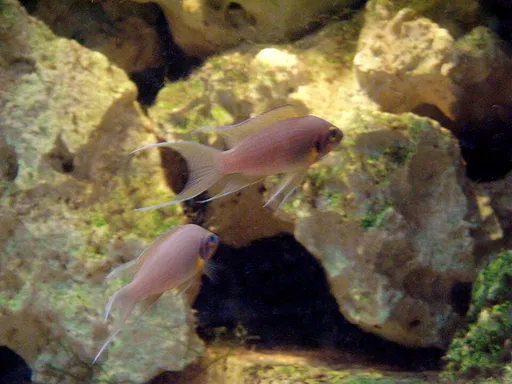
Daffodil cichlid
Neolamprologus pulcher
Freshwater5.1 in (13 cm) · 29 gal (110 L)75–81°F (24–27°C)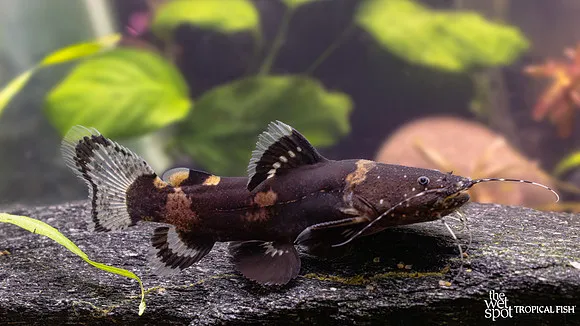
Poll's synodontis
Synodontis polli
Freshwater7.1 in (18 cm) · 50 gal (190 L)72–79°F (22–26°C)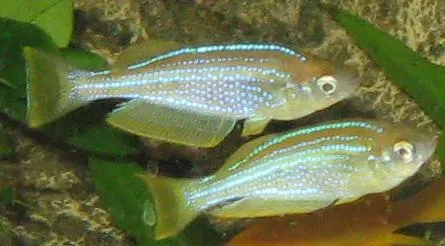
Tanganyika killifish
Lamprichthys tanganicanus
Freshwater5.5 in (14 cm) · 40 gal (150 L)73–77°F (23–25°C)
Common questions
What size tank does a Yellow sand cichlid need?
A Yellow sand cichlid needs at least 53 gal (200 L). It spends most of its time in the bottom.
What temperature and pH does a Yellow sand cichlid need?
A Yellow sand cichlid is comfortable at 75–81°F (24–27°C) with a pH of 7.8–9.0.
How big does a Yellow sand cichlid get?
An adult Yellow sand cichlid reaches about 3.5 in (9 cm).
Related species
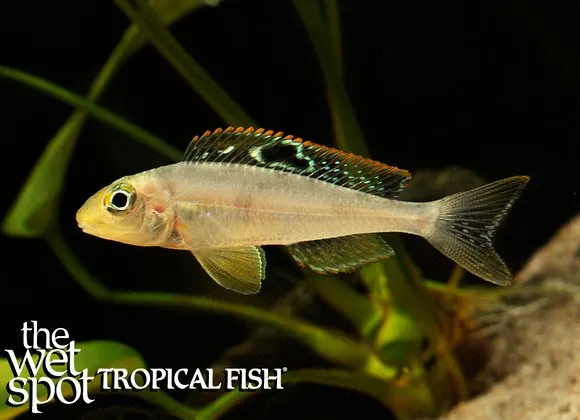 3.1 in (8 cm)53 gal (200 L)75–81°F (24–27°C)
Butterfly xenotilapia
Xenotilapia papilio
3.1 in (8 cm) · 53 gal (200 L)
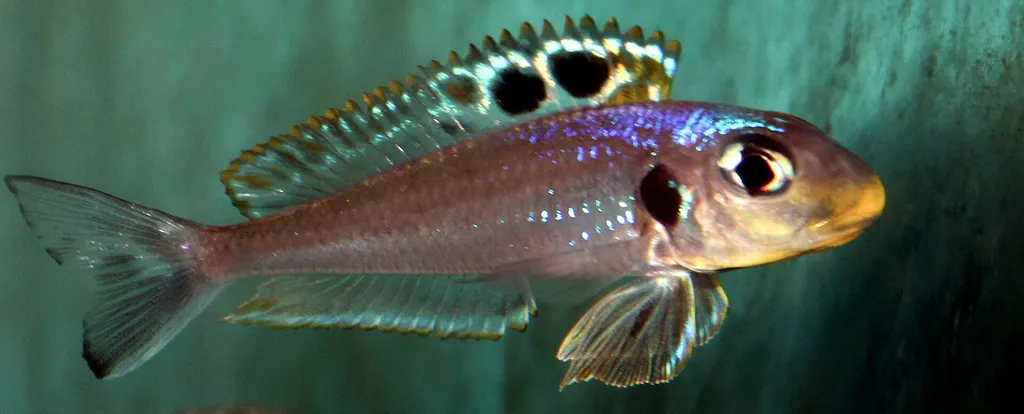 4.1 in (10.5 cm)66 gal (250 L)75–81°F (24–27°C)
Deepwater xenotilapia
Xenotilapia bathyphila
4.1 in (10.5 cm) · 66 gal (250 L)
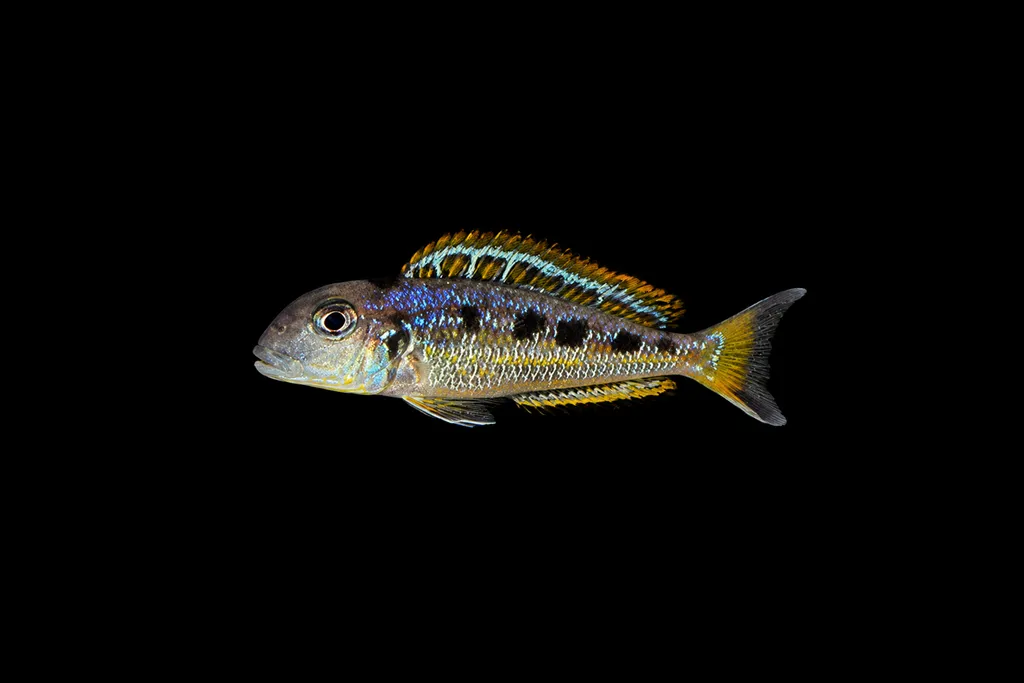 4.3 in (11 cm)79 gal (300 L)75–81°F (24–27°C)
Yellow-cheek xenotilapia
Xenotilapia ochrogenys
4.3 in (11 cm) · 79 gal (300 L)
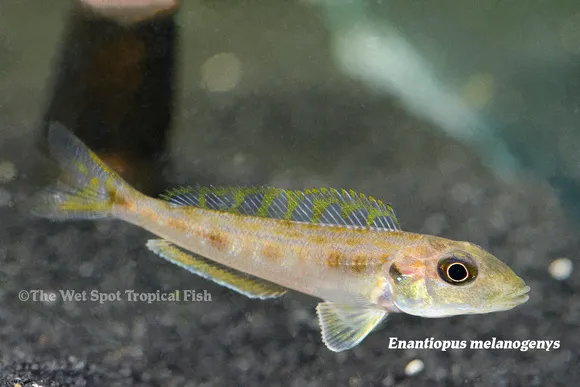 5.9 in (15 cm)106 gal (400 L)75–81°F (24–27°C)
Blackchin sand diver
Xenotilapia melanogenys
5.9 in (15 cm) · 106 gal (400 L)
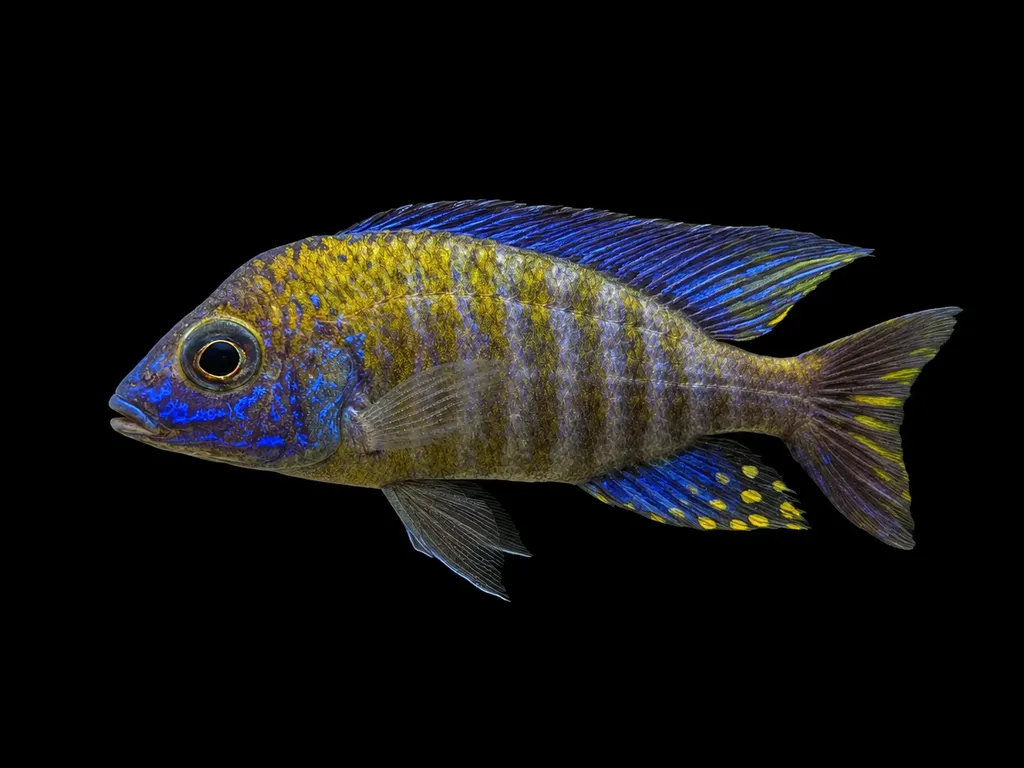 3.5 in (9 cm)63 gal (240 L)75–81°F (24–27°C)
Chitande aulonocara
Aulonocara ethelwynnae
3.5 in (9 cm) · 63 gal (240 L)
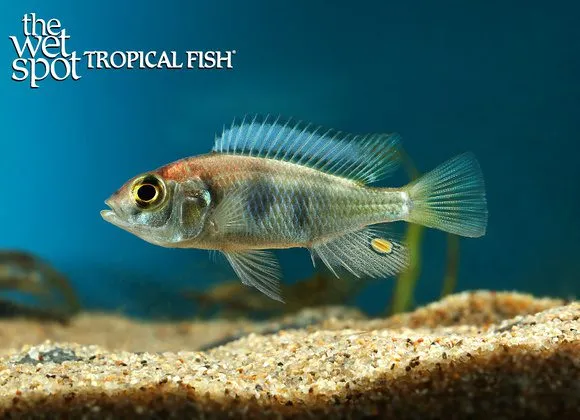 3.5 in (9 cm)42 gal (160 L)73–81°F (23–27°C)
Mwanza dung hap
Enterochromis coprologus
3.5 in (9 cm) · 42 gal (160 L)