Foa's featherfin
Cyathopharynx foai
Also known as Cyathopharynx foae, Green featherfin
FreshwaterFish
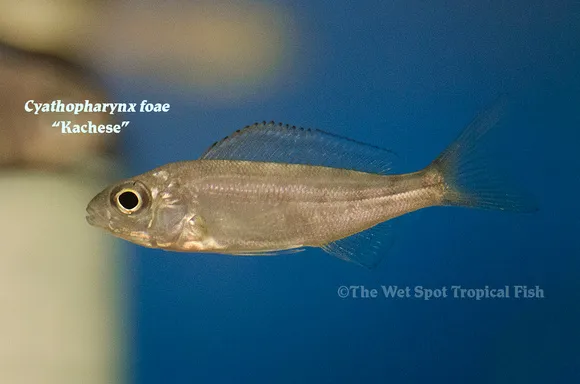
Care at a glance
- Temperature
- 75–81°F
- 24–27°C
- pH
- 8.0–9.0
- Adult size
- 7.9 in
- 20 cm
- Minimum tank
- 119 gal
- 450 L
- Temperament
- Mostly peaceful
- Social behavior
- Social
- Swim level
- Middle
- Difficulty
- Difficult
- Breeding
- Mouthbrooder · Hard
- Rarity
- Common
- Family
- Cichlidae
- Origin
- Lake Tanganyika
Overview
Foa's featherfin is a display fish for a mature, roomy Tanganyika tank. It is a fish for experienced keepers.
Did you know
Male Foa's featherfins tip their pelvic streamers with egg-yellow lures. Females chase the fake eggs and collect the real ones in mid-fuss.
Caring for the Foa's featherfin
Give Foa's featherfins at least 119 gal (450 L), with deep, fine sand and a large, uninterrupted floor. Keep the water pristine, with stable alkalinity, at 75 to 81°F (24 to 27°C) and a pH of 8.0 to 9.0.
Keep one male with three or more females. The male builds a wide crater nest and spends his day rebuilding it and displaying over it. Do not add fish that compete for the sand. House it with Cyprichromis above, and keep shell dwellers well away from the nest.
Males trail extended pelvic fins tipped with yellow spatulate lobes, which they flick through display. It is a maternal mouthbrooder. Spawning is difficult because the male will not perform without a nest, and the nest needs floor space most tanks cannot offer.
Good to know
Cyathopharynx foai was long treated as a form of C. furcifer before being recognized separately. A displaying male shifts through blues and yellows by the hour.
In the wild
Cyathopharynx foai displays over sand aprons just below the rocky shoreline of Lake Tanganyika. Males clear crater nests there that can approach a meter across. The water is hard, alkaline and unusually stable.
Weekly picks
Tank mates
The Foa's featherfin is a mostly peaceful, social species that keeps to the middle. These picks share a community profile with it, are safe together in both directions, and overlap on water type, temperature and pH.
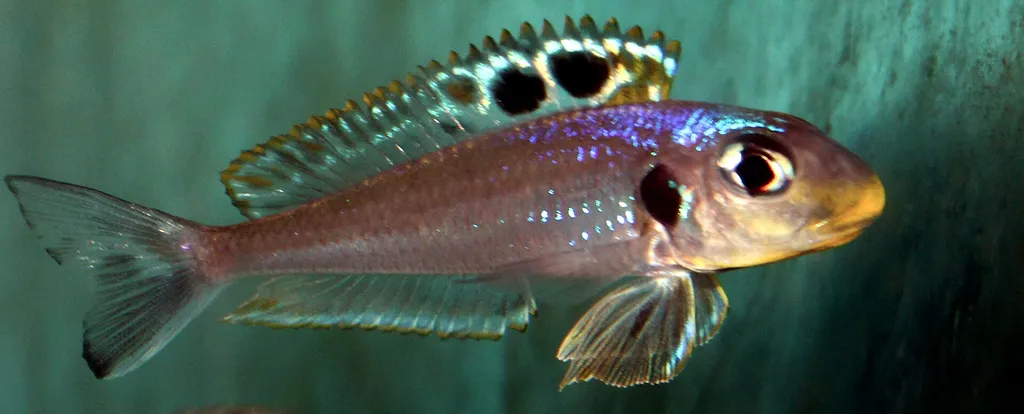
Deepwater xenotilapia
Xenotilapia bathyphila
Freshwater4.1 in (10.5 cm) · 66 gal (250 L)75–81°F (24–27°C)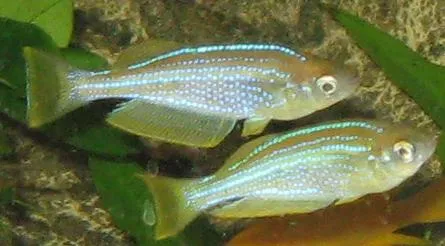
Tanganyika killifish
Lamprichthys tanganicanus
Freshwater5.5 in (14 cm) · 40 gal (150 L)73–77°F (23–25°C)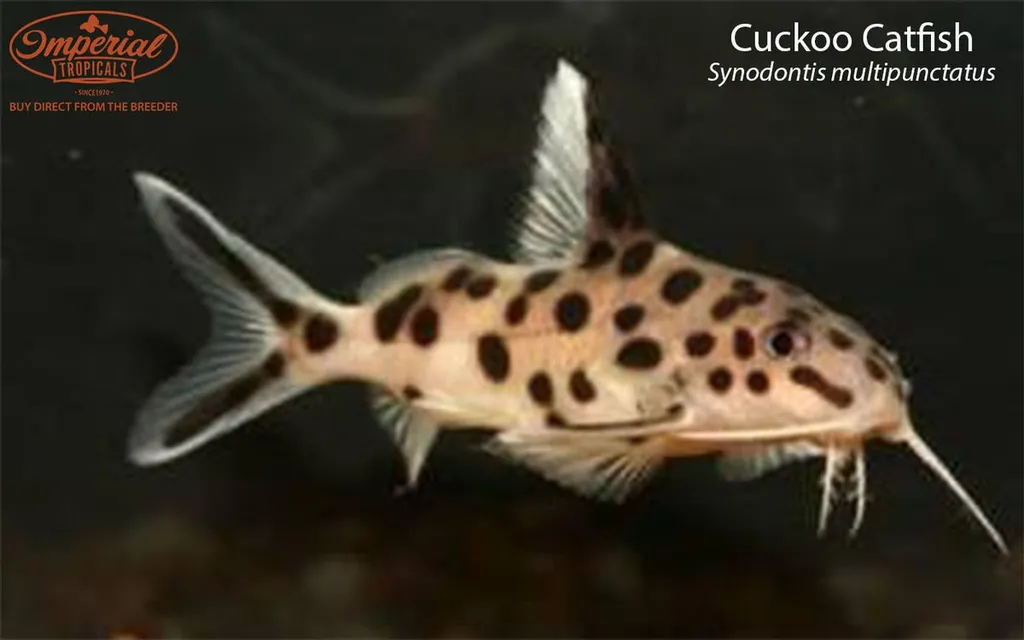
Cuckoo squeaker
Synodontis multipunctatus
Freshwater7.1 in (18 cm) · 29 gal (110 L)75–82°F (24–28°C)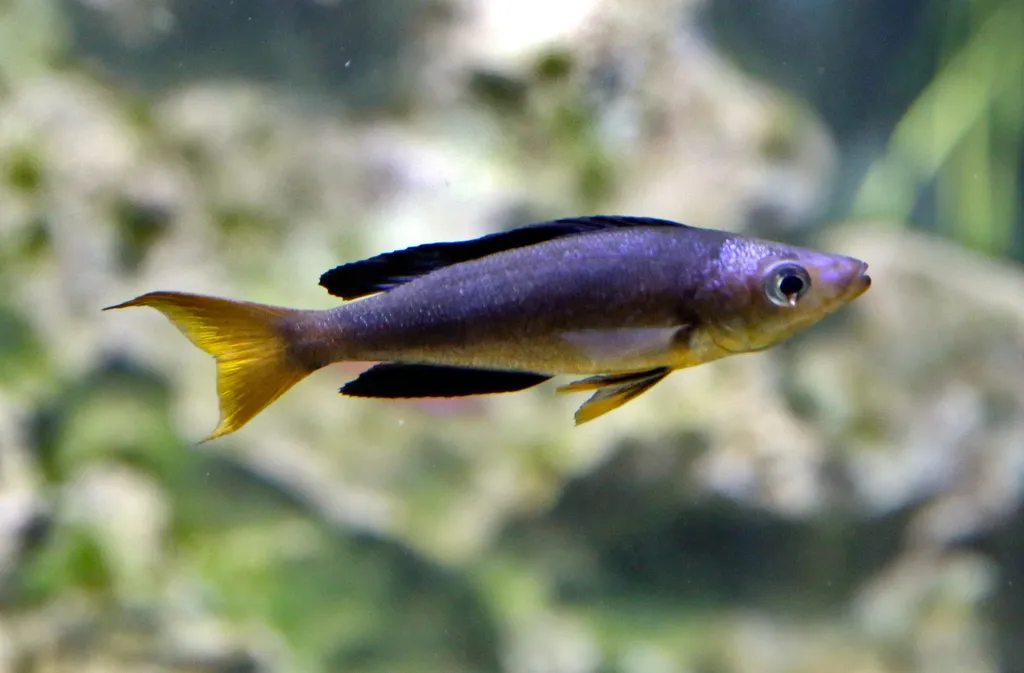
Finescale cyprichromis
Cyprichromis microlepidotus
Freshwater4.3 in (11 cm) · 79 gal (300 L)75–81°F (24–27°C)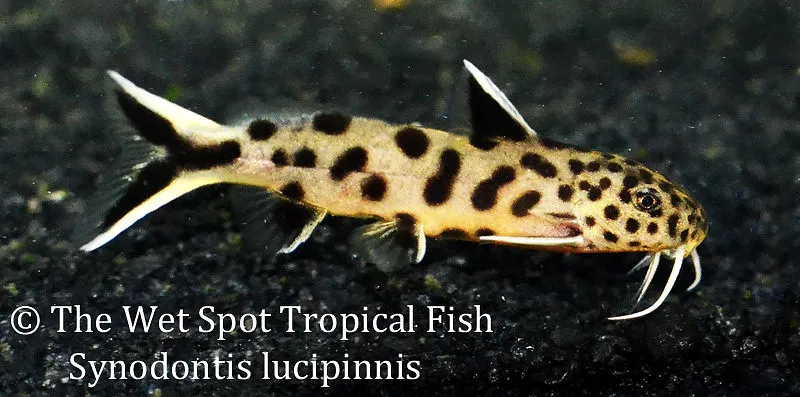
Dwarf petricola
Synodontis lucipinnis
Freshwater3.9 in (10 cm) · 30 gal (114 L)73–81°F (23–27°C)
Common questions
What size tank does a Foa's featherfin need?
A Foa's featherfin needs at least 119 gal (450 L). It spends most of its time in the middle.
What temperature and pH does a Foa's featherfin need?
A Foa's featherfin is comfortable at 75–81°F (24–27°C) with a pH of 8.0–9.0.
How big does a Foa's featherfin get?
An adult Foa's featherfin reaches about 7.9 in (20 cm).
How can you tell a male Foa's featherfin from a female?
Males trail extended pelvic fins tipped with yellow spatulate lobes. They flick them through their display.
How does a Foa's featherfin breed?
Foa's featherfin is a maternal mouthbrooder. The male will not spawn without a crater nest, and that nest needs more floor space than most tanks offer.
Related species
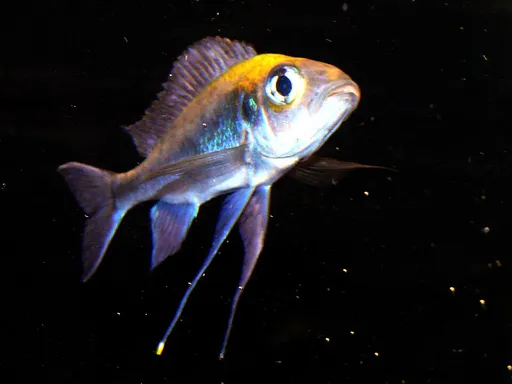 7.9 in (20 cm)119 gal (450 L)75–81°F (24–27°C)
Featherfin cichlid
Cyathopharynx furcifer
7.9 in (20 cm) · 119 gal (450 L)
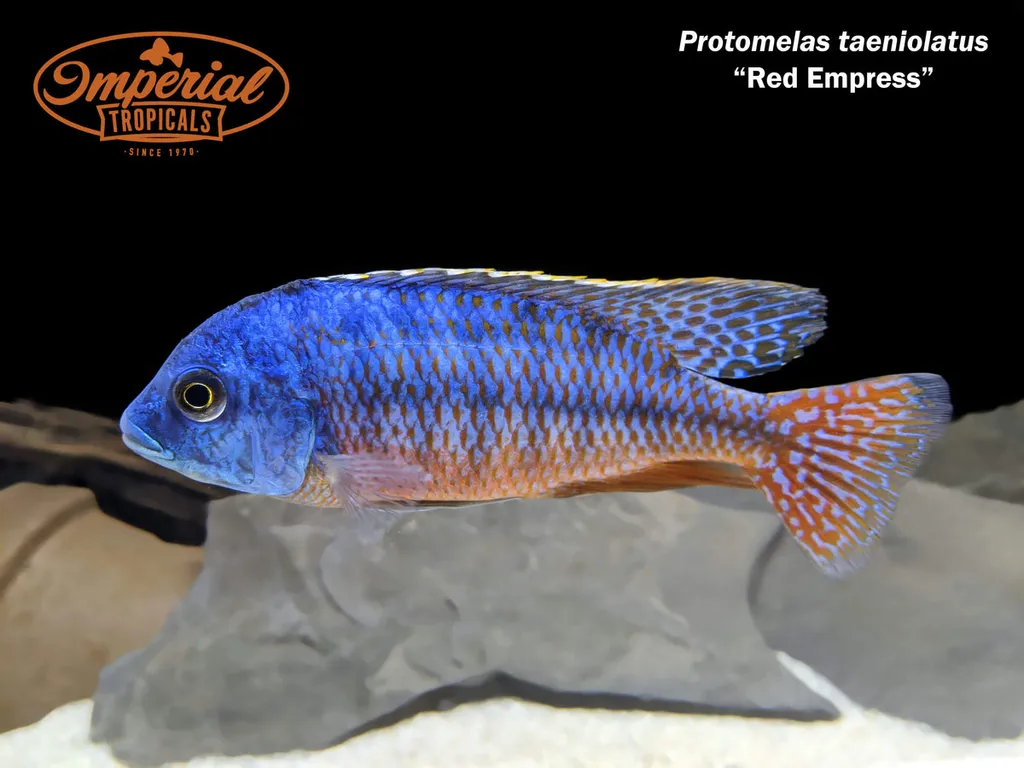 7.9 in (20 cm)53 gal (200 L)75–82°F (24–28°C)
Red empress cichlid
Protomelas taeniolatus
7.9 in (20 cm) · 53 gal (200 L)
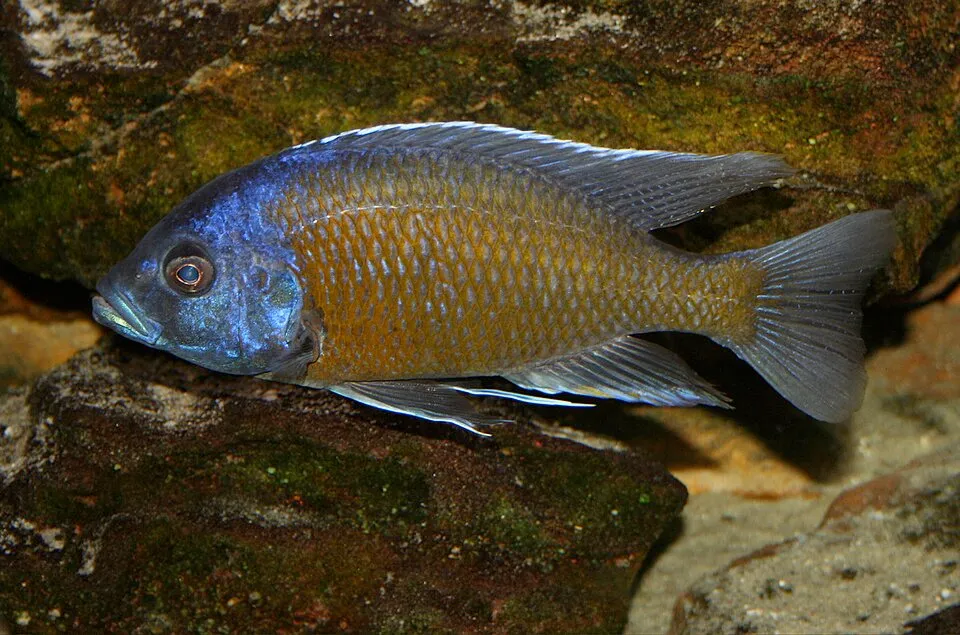 7.9 in (20 cm)79 gal (300 L)77–84°F (25–29°C)
Red fin hap
Copadichromis borleyi
7.9 in (20 cm) · 79 gal (300 L)
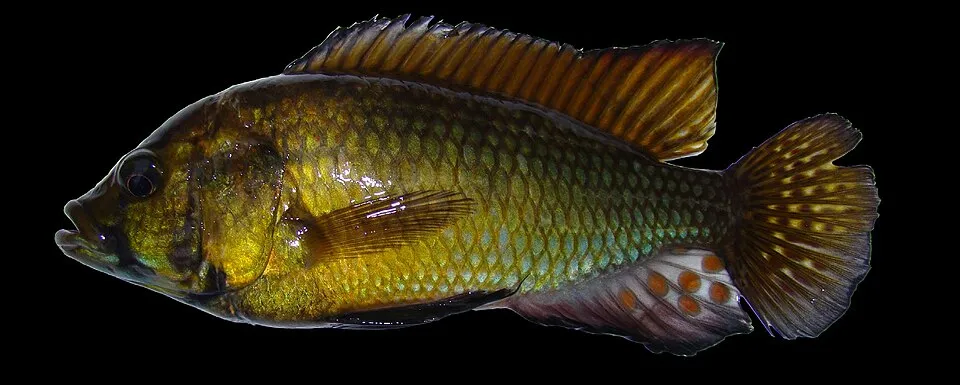 7.5 in (19 cm)55 gal (210 L)73–82°F (23–28°C)
Alluaud's haplo
Astatoreochromis alluaudi
7.5 in (19 cm) · 55 gal (210 L)
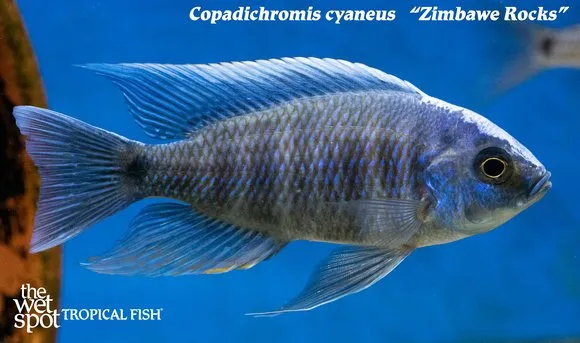 7.5 in (19 cm)79 gal (300 L)75–81°F (24–27°C)
Blue utaka
Copadichromis cyaneus
7.5 in (19 cm) · 79 gal (300 L)
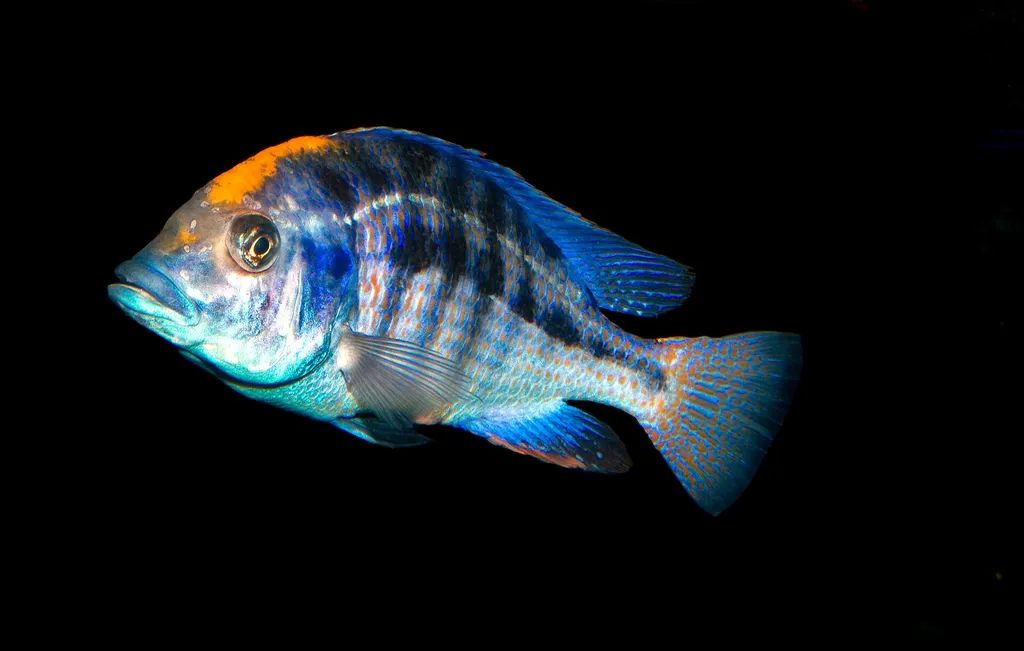 8.7 in (22 cm)119 gal (450 L)75–81°F (24–27°C)
Blue and yellow hap
Protomelas spilonotus
8.7 in (22 cm) · 119 gal (450 L)