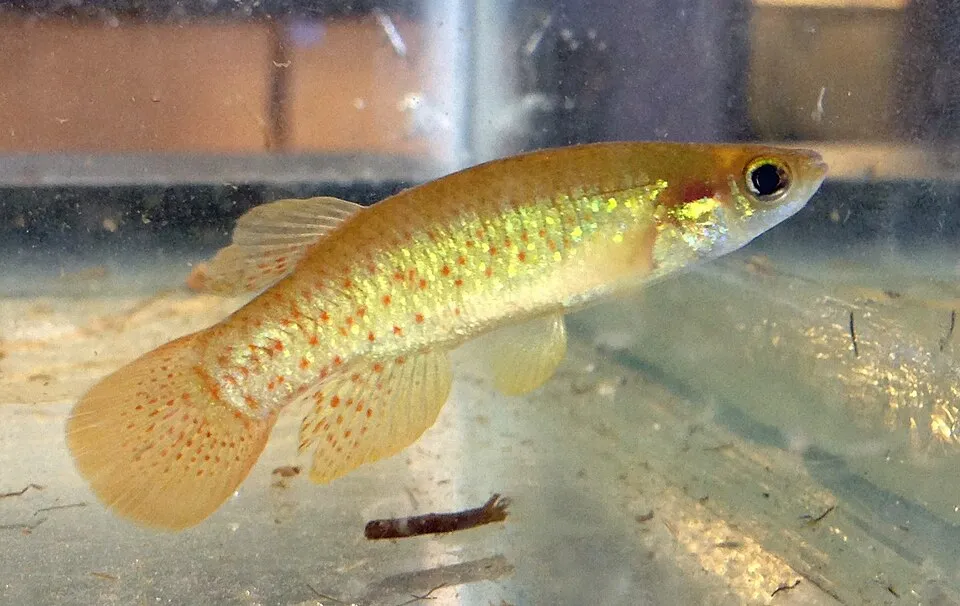
Golden topminnow
Fundulus chrysotus
FreshwaterFish
Care at a glance
- Temperature
- 59–75°F
- 15–24°C
- pH
- 6.5–8.0
- Adult size
- 3 in
- 7.5 cm
- Minimum tank
- 22 gal
- 85 L
- Temperament
- Peaceful
- Social behavior
- Shoaling
- Swim level
- Middle
- Difficulty
- Easy
- Breeding
- No record
- Rarity
- Rare
- Family
- Fundulidae
- Origin
- United States
Overview
The golden topminnow is a hardy, peaceful North American killifish that likes to be kept in a group of six or more near the surface. It stays in the upper and middle water, so a tank with floating plants and a tight lid suits it, since it will jump. Feed a mix of live and frozen foods such as mosquito larvae, daphnia, brine shrimp and bloodworms, along with some flake, matching its habit of taking insects at the surface. It handles cooler water and does not need tropical heat. A tank of 85 liters or larger gives a small shoal room to cruise.
In the wild
Golden topminnows come from the still and slow waters of the southeastern United States, including swamps, ponds, ditches and vegetated pool edges. They hang near the surface among plants, waiting for insects to fall or drift by. To match this, plant heavily, add floating cover and keep the flow gentle, with water from about 15 to 24 C so it can be run cool or unheated. A pH between roughly 6.5 and 8 suits them, and a secure lid is important because they are practiced jumpers.
Good to know
The golden topminnow is a member of the topminnow family Fundulidae and grows to around 7.5 cm, with gold flecks and, on males, scattered red spots. Its upturned mouth is built for feeding at the surface film. It is not an annual killifish: the female lays eggs a few at a time among the roots of floating plants over an extended spawning period, and the eggs hatch in around two weeks. There is little formal record of controlled breeding, but it spawns willingly in a well planted tank.
Did you know
The golden topminnow scatters its eggs a few at a time among floating plant roots over several weeks rather than in one batch, and its upturned mouth lets it pick insects straight off the surface film where it spends most of its day.
Weekly picks
Tank mates
Golden topminnow is a peaceful, shoaling species that keeps to the middle. These picks share a community profile with it, are safe together in both directions, and overlap on water type, temperature and pH.
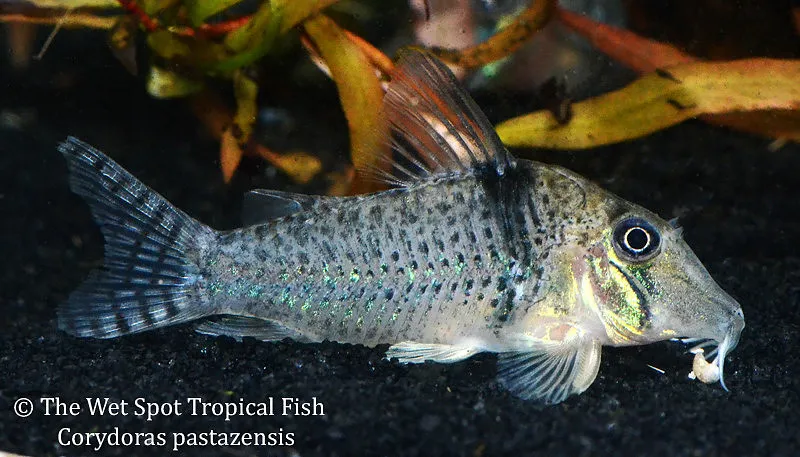
Pastaza cory
Corydoras pastazensis
Freshwater2.8 in (7 cm) · 22 gal (85 L)72–82°F (22–28°C)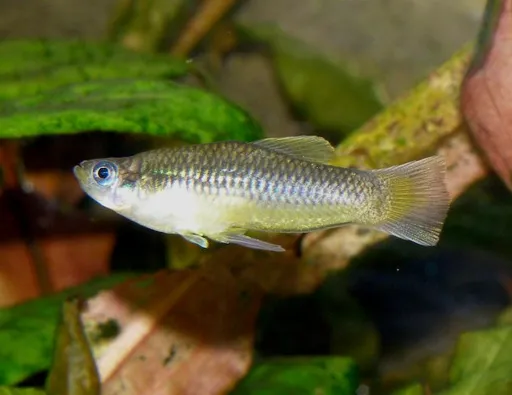
Blue-eyed livebearer
Priapella intermedia
Freshwater2.8 in (7 cm) · 24 gal (90 L)72–82°F (22–28°C)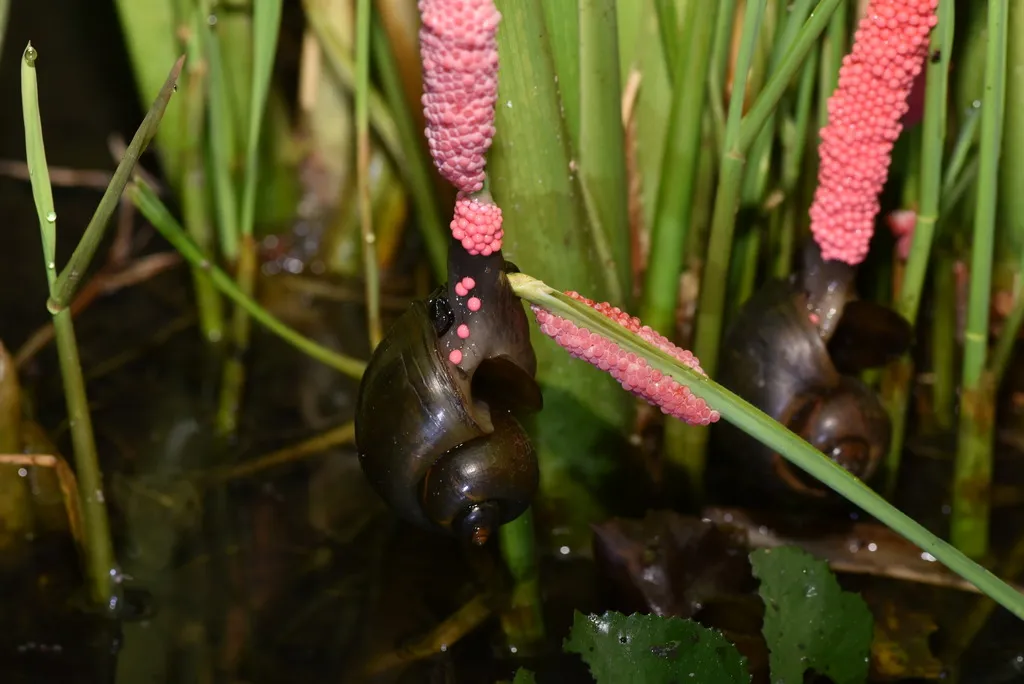
Apple snail
Pomacea canaliculata
Freshwater5.9 in (15 cm) · 21 gal (80 L)64–81°F (18–27°C)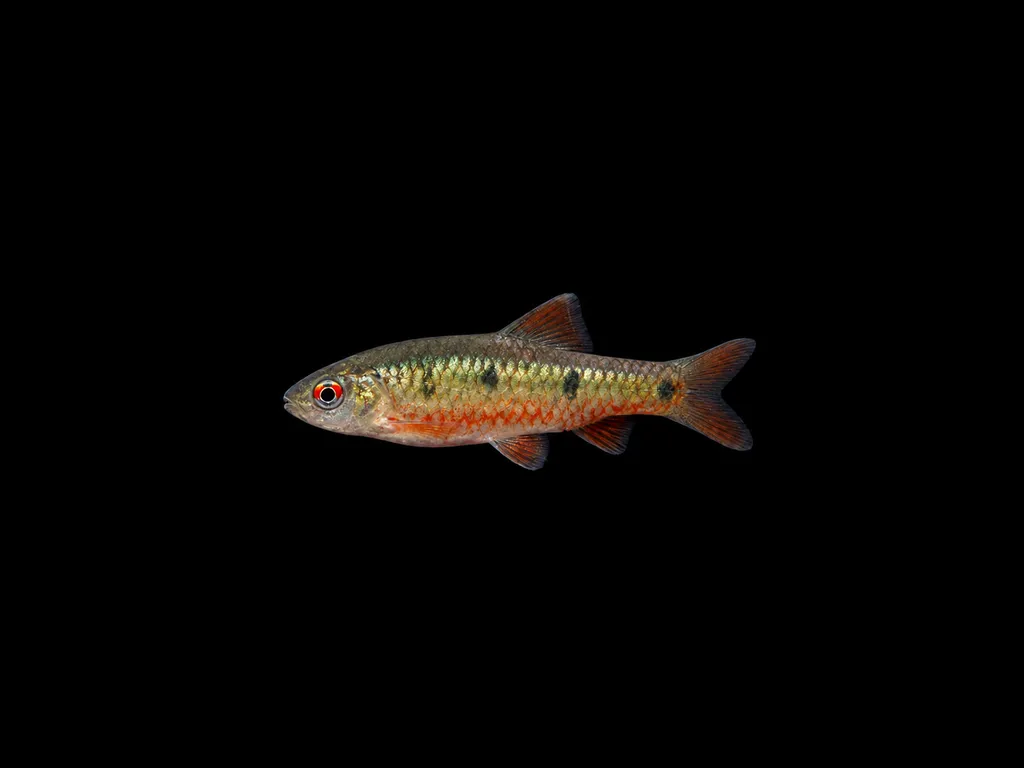
Taiwan barb
Puntius snyderi
Freshwater3.1 in (8 cm) · 24 gal (90 L)61–77°F (16–25°C)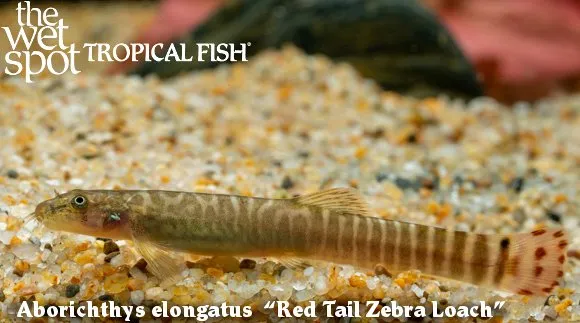
Red-tail squirrel loach
Aborichthys elongatus
Freshwater3.5 in (9 cm) · 24 gal (90 L)61–75°F (16–24°C)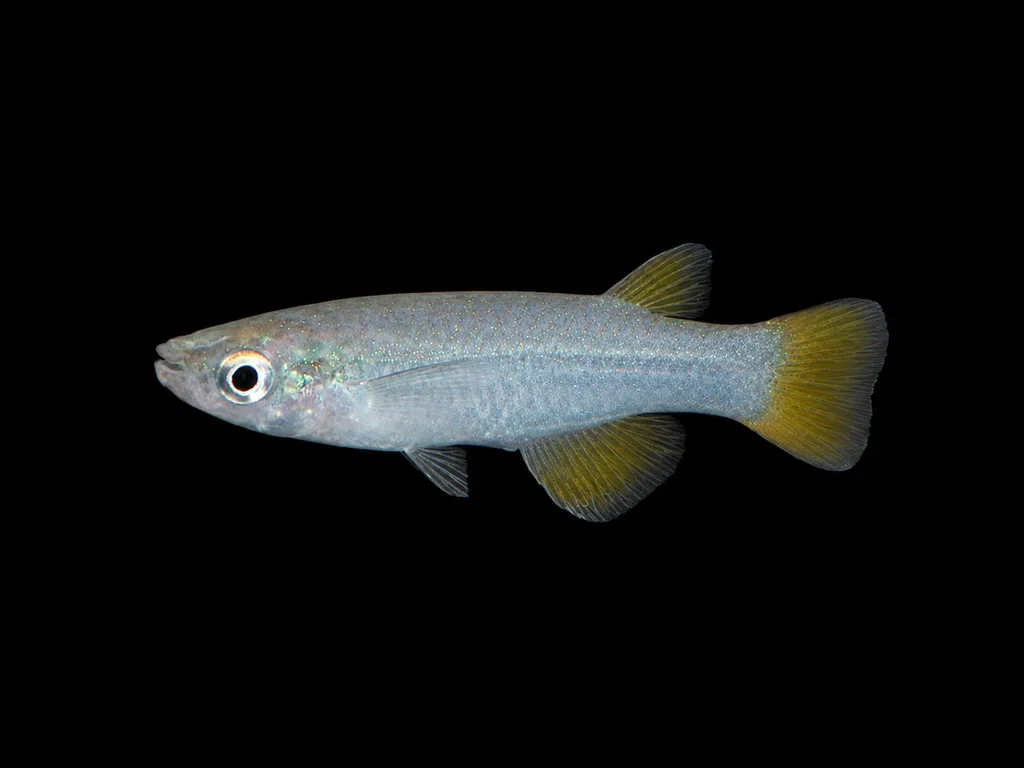
Banded lampeye
Aplocheilichthys spilauchen
FreshwaterBrackish2.8 in (7 cm) · 21 gal (80 L)73–82°F (23–28°C)
Common questions
What size tank does a Golden topminnow need?
A Golden topminnow needs at least 22 gal (85 L). It spends most of its time in the middle.
What temperature and pH does a Golden topminnow need?
A Golden topminnow is comfortable at 59–75°F (15–24°C) with a pH of 6.5–8.0.
How big does a Golden topminnow get?
An adult Golden topminnow reaches about 3 in (7.5 cm).
Does a Golden topminnow need a group?
Yes. A Golden topminnow is a shoaling species and should be kept in a group, not singly.
Related species
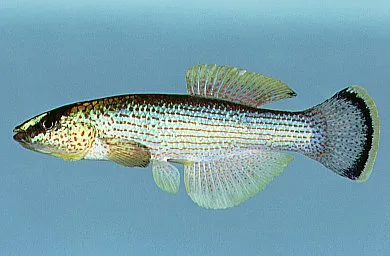 5.9 in (15 cm)37 gal (140 L)59–77°F (15–25°C)
Northern studfish
Fundulus catenatus
5.9 in (15 cm) · 37 gal (140 L)
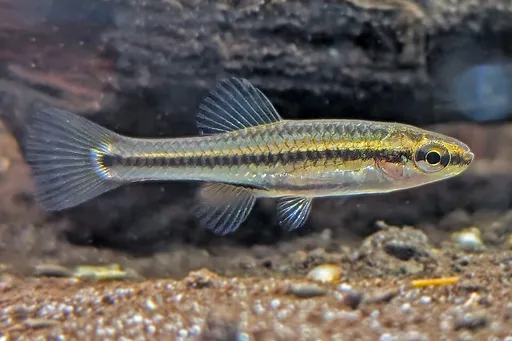 2 in (5 cm)11 gal (40 L)64–77°F (18–25°C)
Bluefin killifish
Lucania goodei
2 in (5 cm) · 11 gal (40 L)
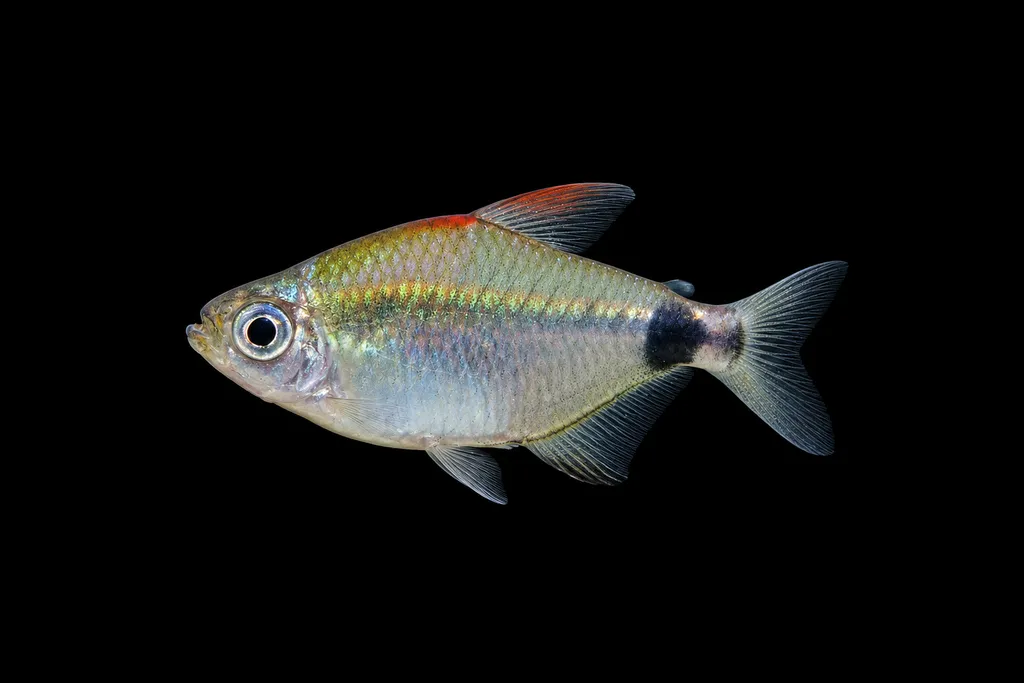 3.1 in (8 cm)22 gal (85 L)72–77°F (22–25°C)
African moon tetra
Bathyaethiops caudomaculatus
3.1 in (8 cm) · 22 gal (85 L)
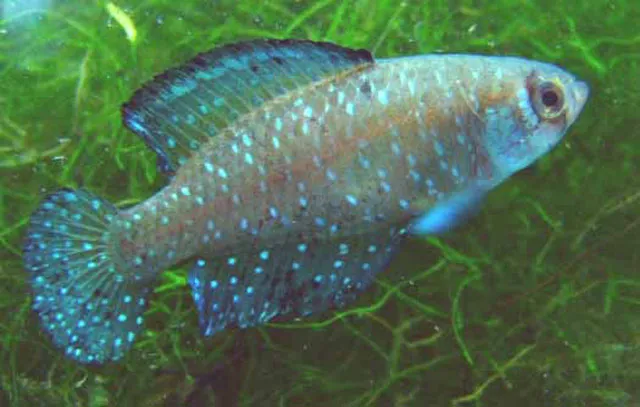 2.8 in (7 cm)18 gal (70 L)64–75°F (18–24°C)
Argentine pearl killifish
Austrolebias nigripinnis
2.8 in (7 cm) · 18 gal (70 L)
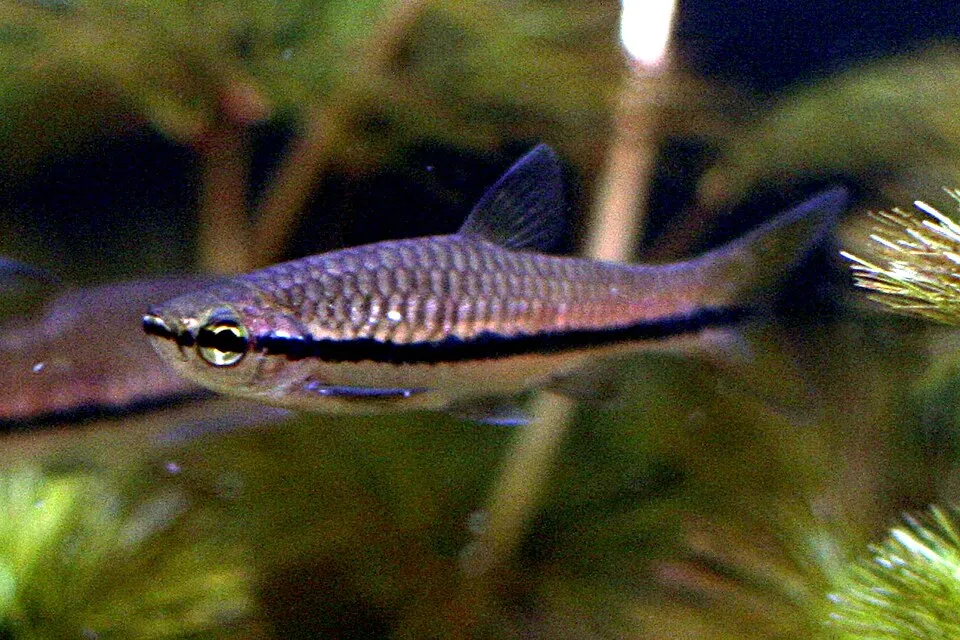 3.5 in (9 cm)29 gal (110 L)72–82°F (22–28°C)
Brilliant rasbora
Rasbora einthovenii
3.5 in (9 cm) · 29 gal (110 L)
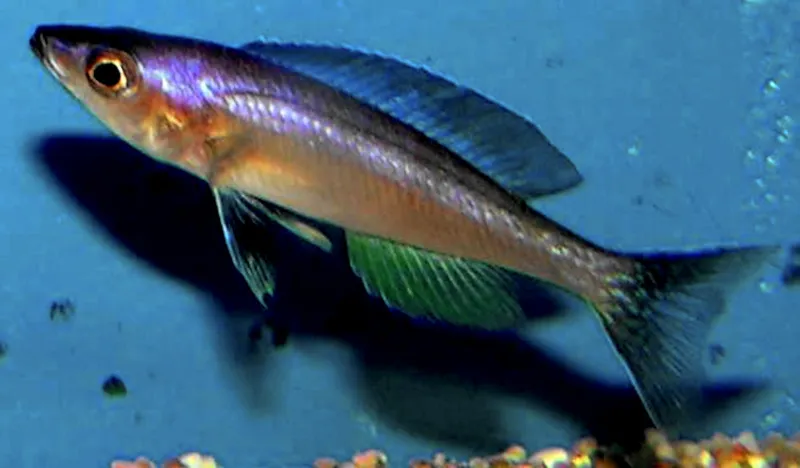 4.3 in (11 cm)63 gal (240 L)75–81°F (24–27°C)
Sardine cichlid
Cyprichromis leptosoma
4.3 in (11 cm) · 63 gal (240 L)