Bengal loach
Botia dario
Also known as Queen Loach
FreshwaterFish
Care at a glance
- Temperature
- 73–79°F
- 23–26°C
- pH
- 6.0–7.5
- Adult size
- 5.1 in
- 13 cm
- Minimum tank
- 37 gal
- 140 L
- Temperament
- Mostly peaceful
- Social behavior
- Shoaling
- Swim level
- Bottom
- Difficulty
- Medium
- Breeding
- No record
- Rarity
- Rare
- Family
- Botiidae
- Origin
- India, Bangladesh, Bhutan
Overview
The Bengal loach is a striped botiid that does best in a group of six or more, where it forms a loose pecking order and spends the day chasing and foraging together. Kept alone or in pairs it tends to turn nervous or pushy, so numbers matter. It stays near the bottom, sifting sand and rooting through plants and wood for food, and it makes short work of nuisance snails. It is mostly peaceful but lively, so choose robust, similarly active tankmates. Offer sinking pellets, frozen bloodworms, and blackworms, along with the odd blanched vegetable. A group is comfortable in a tank of about 140 liters or larger.
In the wild
Botia dario comes from the Ganges and Brahmaputra river systems of India, Bangladesh, and Bhutan, where it lives in clear, flowing stretches over sand, gravel, and stone. These waters are moderately warm at 23 to 26 C and range from slightly acidic to neutral, around pH 6 to 7.5. A good tank copies that setting with a soft substrate, water-worn rocks, tangles of driftwood, and hardy plants that create shady lanes. Brisk, well-oxygenated flow and clean water suit it, since it comes from habitats that stay fresh and moving year round.
Good to know
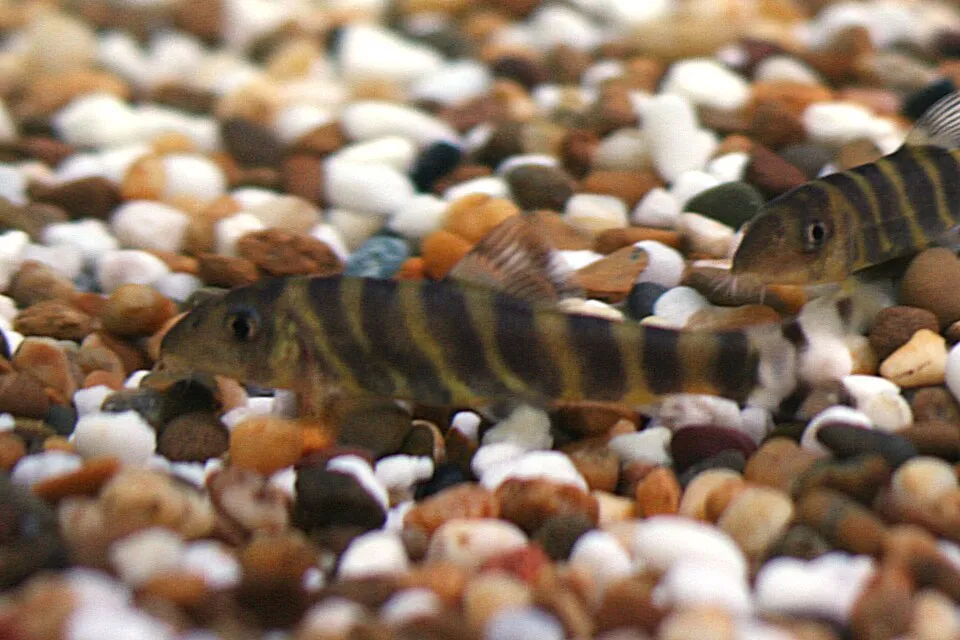
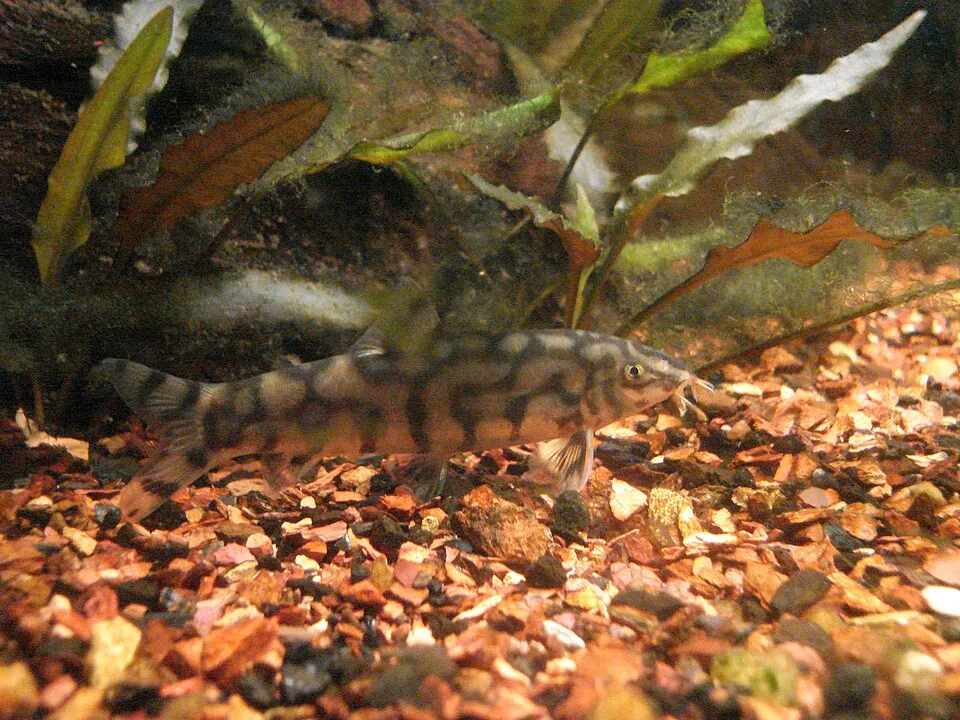
Botia dario is a member of Botiidae and reaches around 13 cm as an adult, wearing a golden-yellow body crossed by seven or more dark bands. As with all botiine loaches, it has a bifid, erectile spine tucked below each eye that it can raise as a defense, so it needs gentle handling near nets. Bengal loaches are egg-scattering fish that undertake spawning migrations in the wild, and there is no reliable record of them breeding in home aquariums, so trade stock is wild caught or farmed.
Did you know
The Bengal loach carries the older scientific name Cobitis dario, given by Hamilton in 1822 from specimens in the Ganges. Young fish show the boldest banding, which softens and gains a greenish sheen as they mature.
Weekly picks
Tank mates
Bengal loach is a mostly peaceful, shoaling species that keeps to the bottom. These picks share a community profile with it, are safe together in both directions, and overlap on water type, temperature and pH.
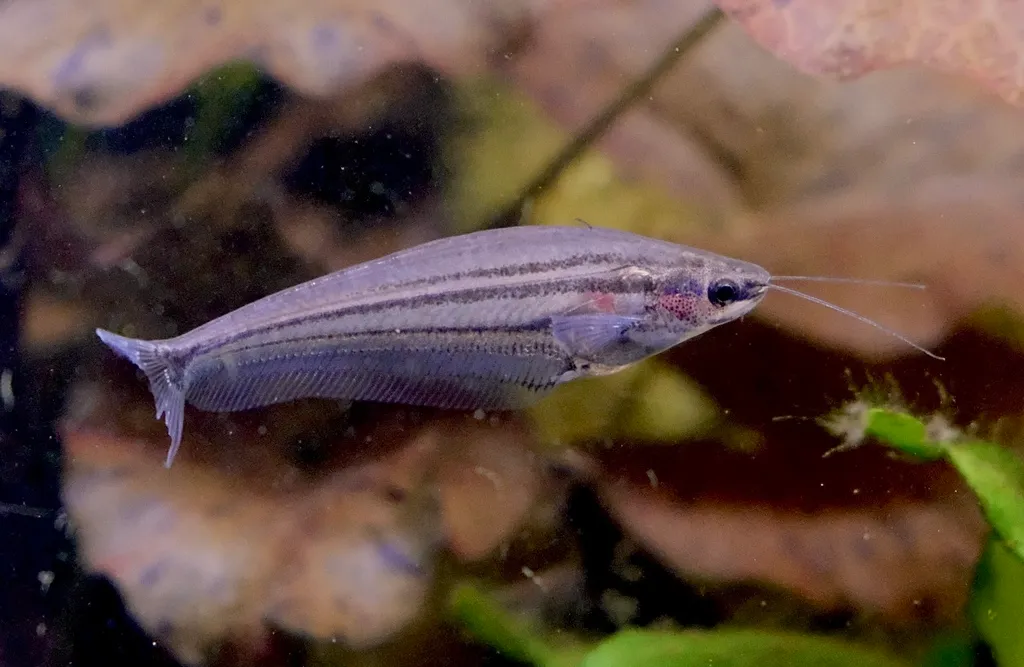
Striped glass catfish
Kryptopterus macrocephalus
Freshwater3.5 in (9 cm) · 36 gal (135 L)70–79°F (21–26°C)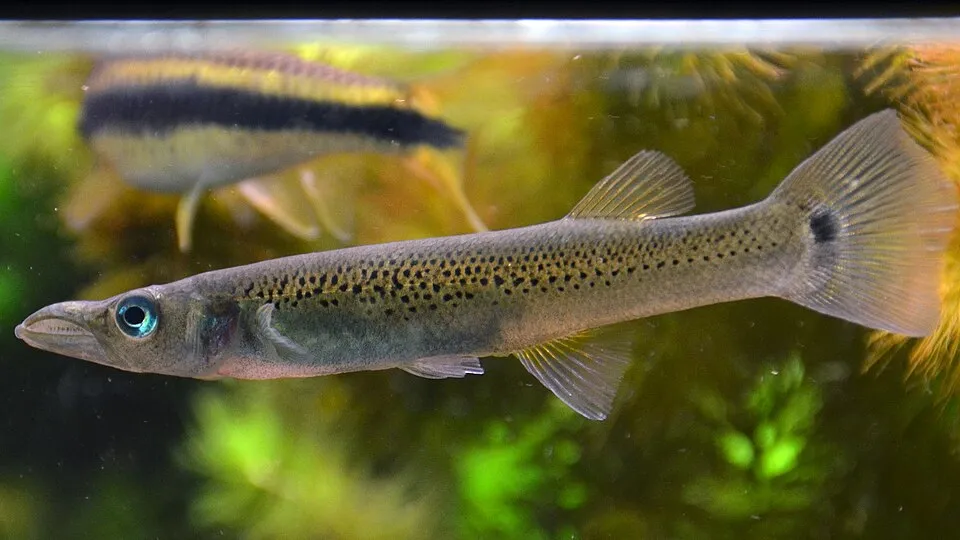
Pike topminnow
Belonesox belizanus
Freshwater7.9 in (20 cm) · 44 gal (165 L)73–82°F (23–28°C)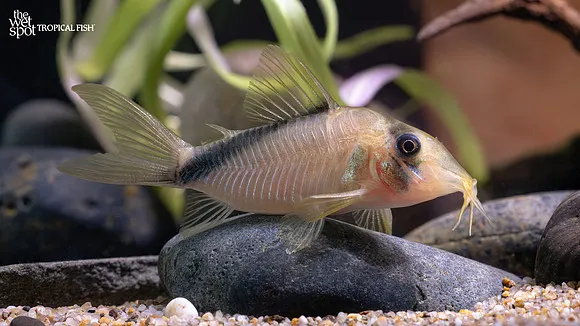
Giant brochis
Brochis britskii
Freshwater3.5 in (9 cm) · 40 gal (150 L)70–79°F (21–26°C)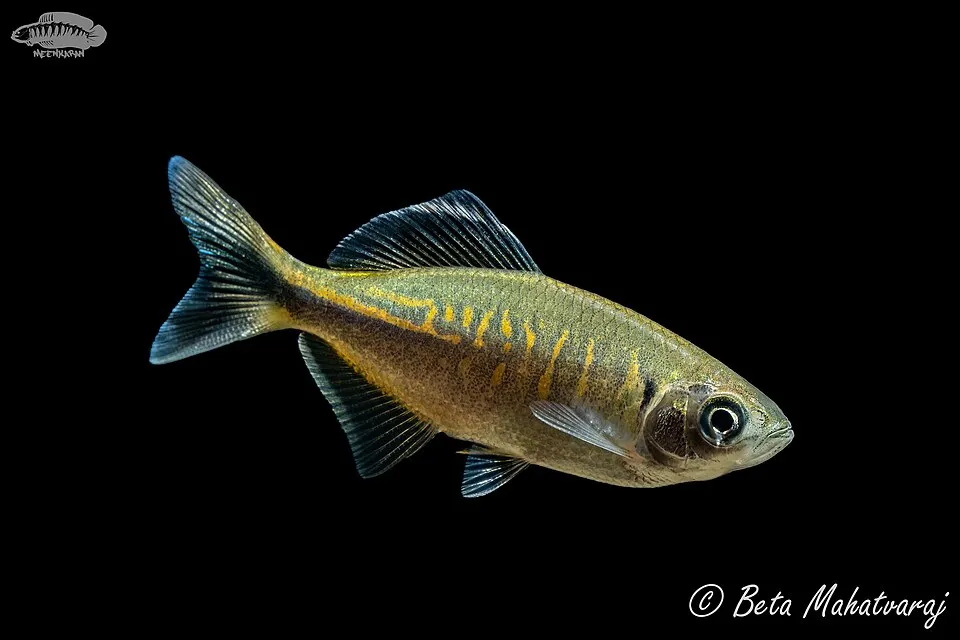
Bengal danio
Devario devario
Freshwater3.5 in (9 cm) · 34 gal (130 L)59–81°F (15–27°C)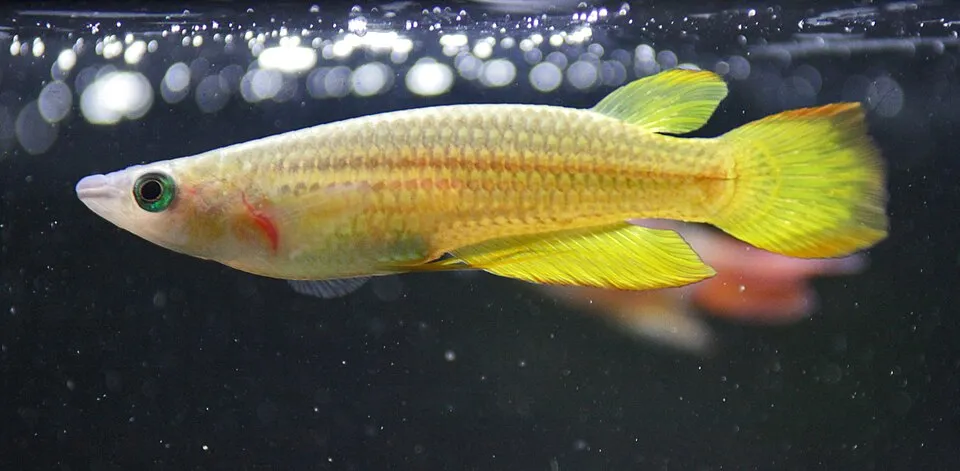
Striped panchax
Aplocheilus lineatus
Freshwater4.3 in (11 cm) · 30 gal (115 L)72–77°F (22–25°C)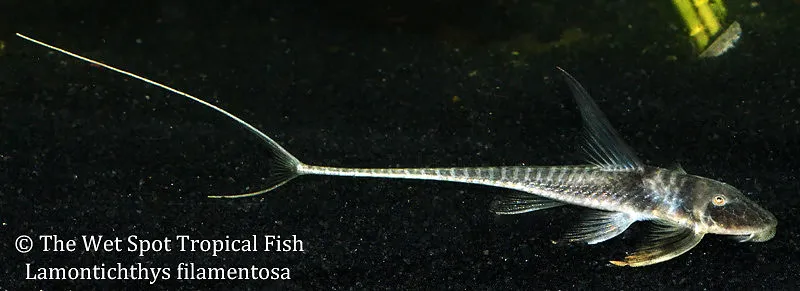
Sturgeon catfish
Lamontichthys filamentosus
Freshwater6.3 in (16 cm) · 36 gal (135 L)72–86°F (22–30°C)
Common questions
What size tank does a Bengal loach need?
A Bengal loach needs at least 37 gal (140 L). It spends most of its time in the bottom.
What temperature and pH does a Bengal loach need?
A Bengal loach is comfortable at 73–79°F (23–26°C) with a pH of 6.0–7.5.
How big does a Bengal loach get?
An adult Bengal loach reaches about 5.1 in (13 cm).
Does a Bengal loach need a group?
Yes. A Bengal loach is a shoaling species and should be kept in a group, not singly.
Related species
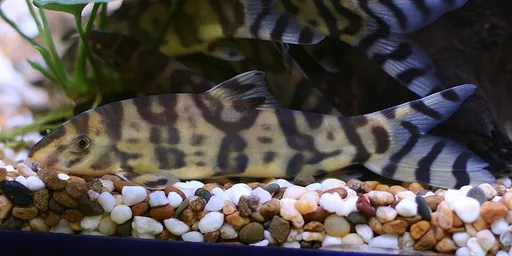 5.1 in (13 cm)53 gal (200 L)72–82°F (22–28°C)
Burmese border loach
Botia histrionica
5.1 in (13 cm) · 53 gal (200 L)
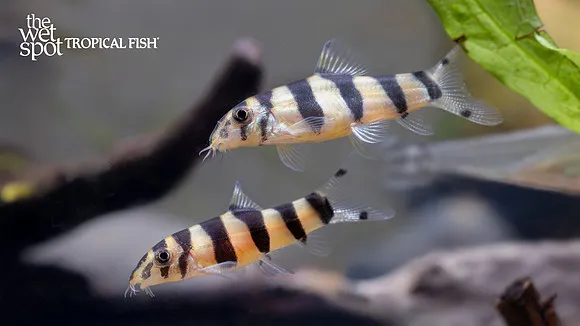 5.5 in (14 cm)42 gal (160 L)73–82°F (23–28°C)
Emperor loach
Botia udomritthiruji
5.5 in (14 cm) · 42 gal (160 L)
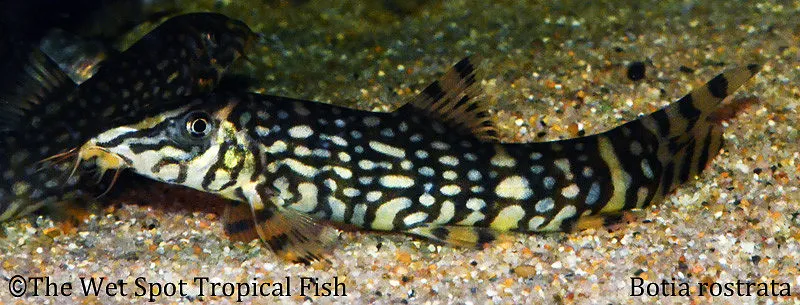 4.7 in (12 cm)42 gal (160 L)66–81°F (19–27°C)
Gangetic loach
Botia rostrata
4.7 in (12 cm) · 42 gal (160 L)
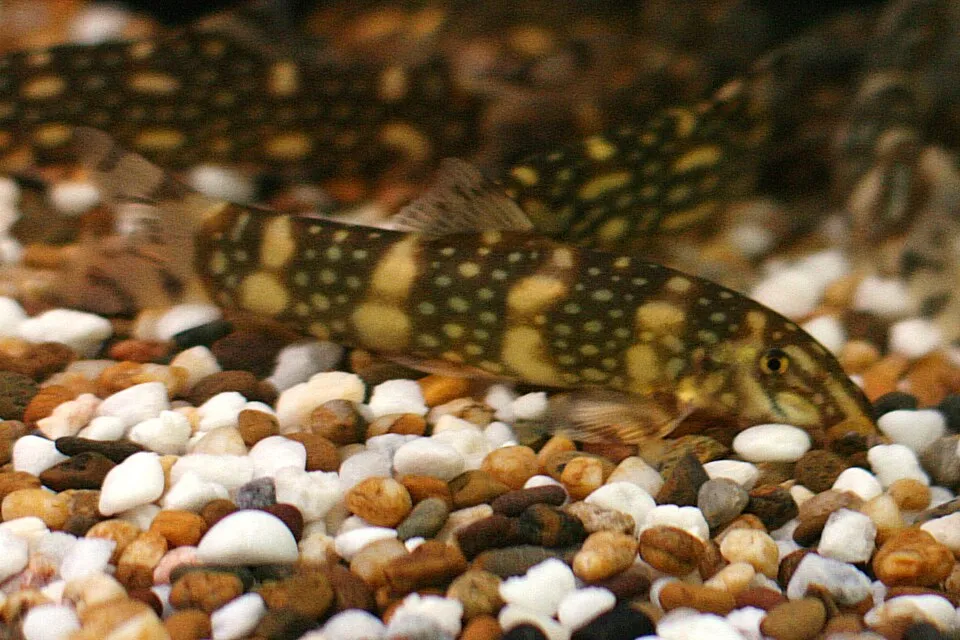 5.9 in (15 cm)42 gal (160 L)72–82°F (22–28°C)
Polka-dot loach
Botia kubotai
5.9 in (15 cm) · 42 gal (160 L)
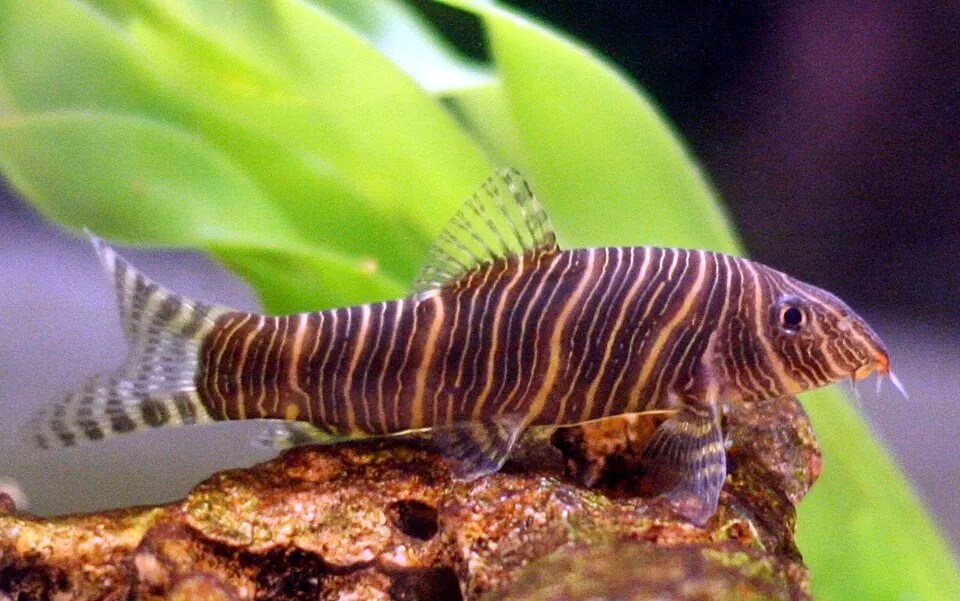 3.5 in (9 cm)37 gal (140 L)70–79°F (21–26°C)
Zebra loach
Botia striata
3.5 in (9 cm) · 37 gal (140 L)
 6.3 in (16 cm)42 gal (160 L)66–81°F (19–27°C)
Yoyo loach
Botia almorhae
6.3 in (16 cm) · 42 gal (160 L)