Twin-spot loach
Nemacheilus binotatus
Also known as Two-spot stone loach
FreshwaterFish
Care at a glance
- Temperature
- 72–81°F
- 22–27°C
- pH
- 6.5–7.5
- Adult size
- 2.8 in
- 7 cm
- Minimum tank
- 24 gal
- 90 L
- Temperament
- Mostly peaceful
- Social behavior
- Social
- Swim level
- Bottom
- Diet
- Omnivore
- Difficulty
- Medium
- Breeding
- No record
- Rarity
- Rare
- Family
- Nemacheilidae
- Origin
- Mekong basin, Thailand and Laos
Overview
The twin-spot loach is a social stone loach that patrols the floor of a warm river tank. It is best with a little experience.
Did you know
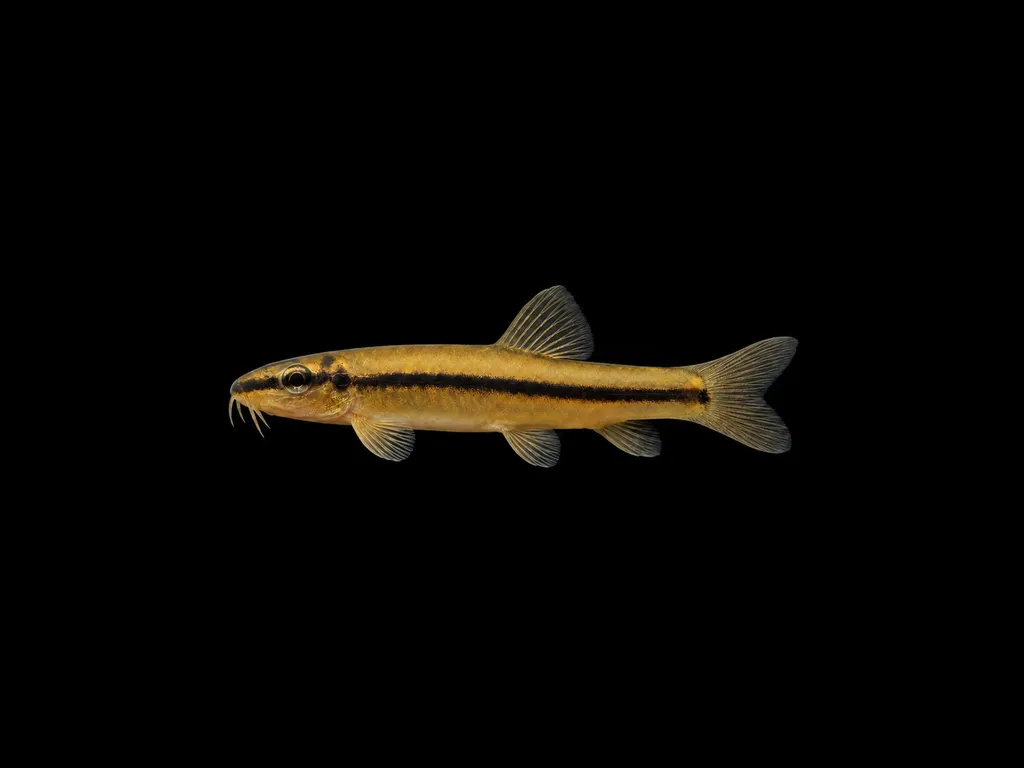
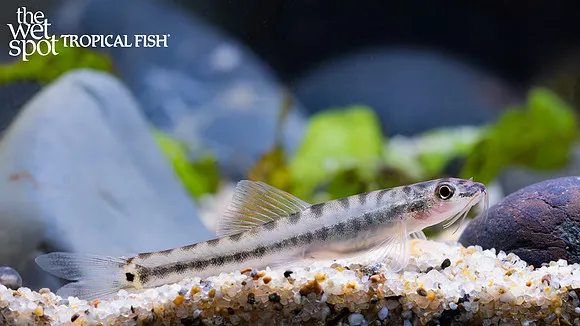
The twin-spot loach's two marks are not spots. They are a pair of dark lines, one along the back and one running through the eye to the tail. This common striping helps break up the fish against a stony streambed.
Caring for the twin-spot loach
Give a small group of twin-spot loaches a tank of 24 gal (90 L) or more. That gives each fish a stretch of floor to patrol. Lay a sand floor with water-worn rocks and roots, leaving plenty of gaps, nooks and shaded spots for shelter.
Keep the water at 72 to 81°F (22 to 27°C) with a pH of 6.5 to 7.5. Run a brisk, steady current with high oxygen. It dislikes any buildup of waste, so keep the water clean.
The twin-spot loach is an omnivore that feeds on small invertebrates in the wild. It hugs the bottom and tastes the substrate as it goes. Feed sinking granules, frozen bloodworm, brine shrimp and daphnia, which it takes readily.
It is social and mostly peaceful, and a settled group interacts steadily without serious aggression. Keep it with other calm, current-loving stream fish. Home-aquarium breeding has not been recorded.
Good to know
The twin-spot loach, Nemacheilus binotatus, is a stone loach of the family Nemacheilidae. Its species name means two-marked, after those two dark lines.
In the wild
The twin-spot loach lives in streams of the Mekong and neighboring river basins, in Thailand and nearby Laos. It keeps to shallow, flowing water over sand and stone.
Weekly picks
Tank mates
The twin-spot loach is a mostly peaceful, social species that keeps to the bottom. These picks share a community profile with it, are safe together in both directions, and overlap on water type, temperature and pH.
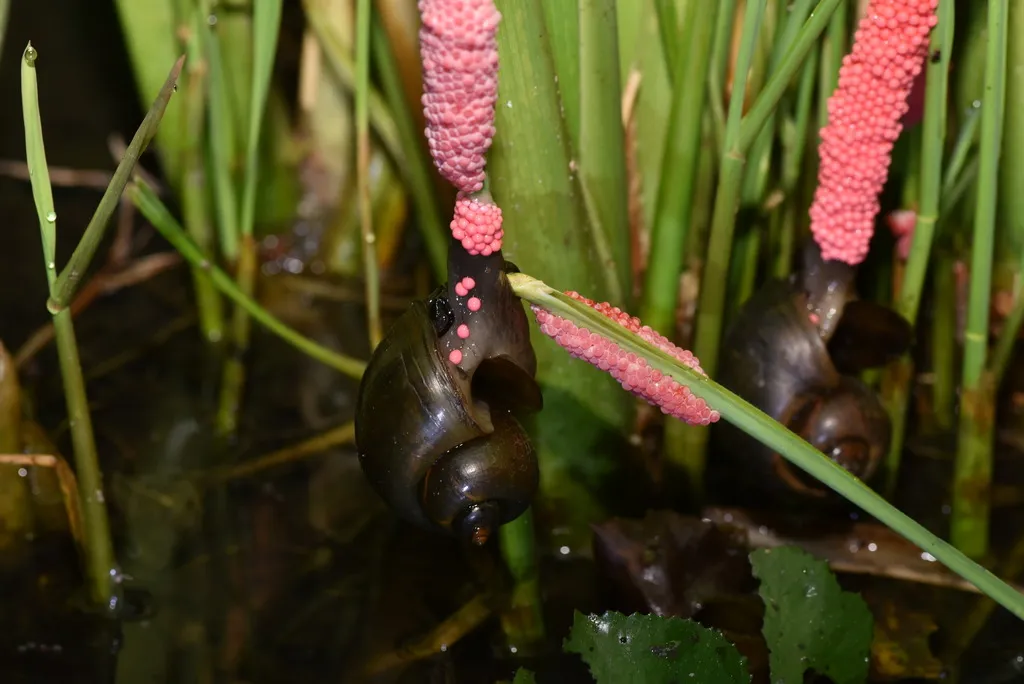
Apple snail
Pomacea canaliculata
Freshwater5.9 in (15 cm) · 21 gal (80 L)64–81°F (18–27°C)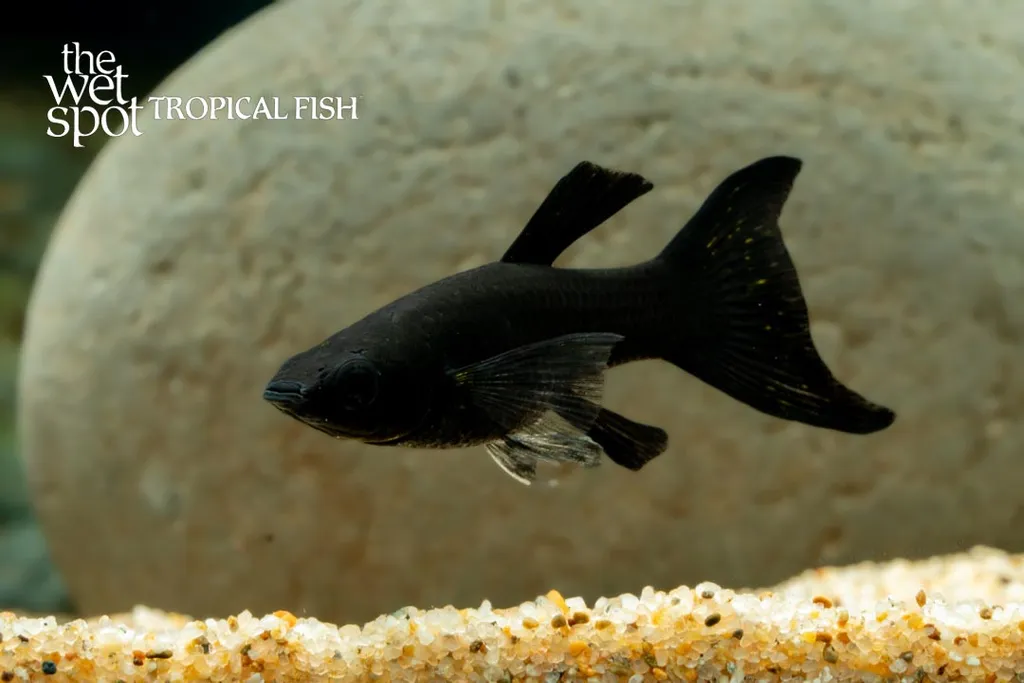
Black molly
Poecilia sphenops
FreshwaterBrackish4.7 in (12 cm) · 24 gal (90 L)70–82°F (21–28°C)
Wrestling halfbeak
Dermogenys pusilla
FreshwaterBrackish2.8 in (7 cm) · 25 gal (95 L)75–82°F (24–28°C)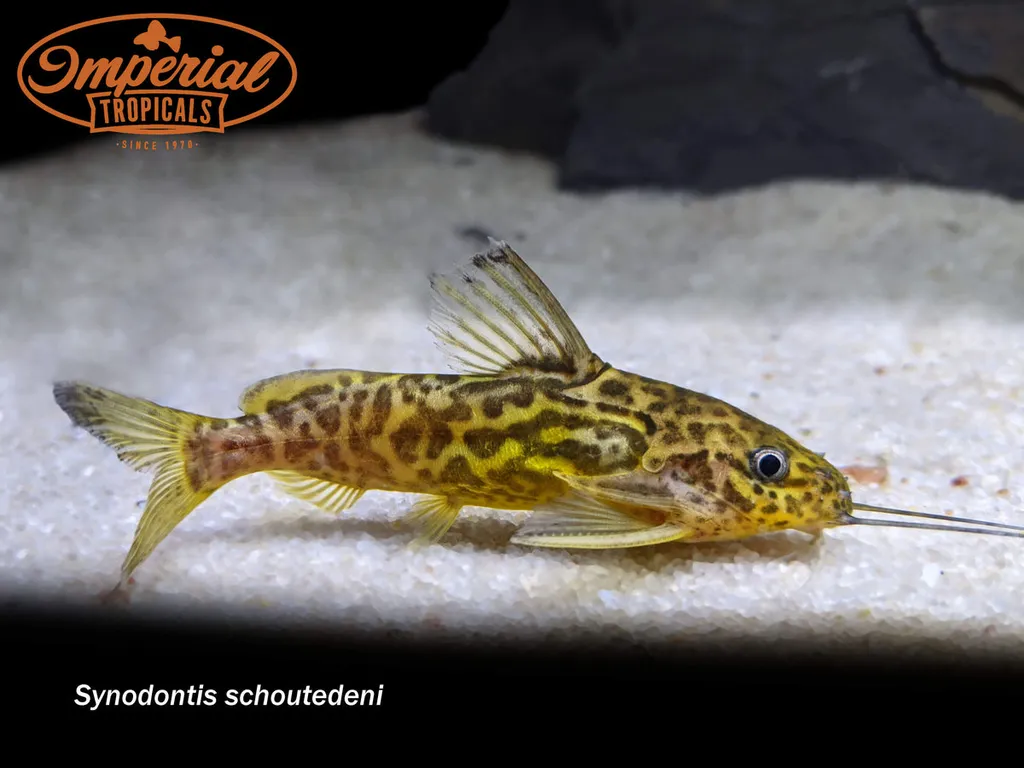
Vermiculated squeaker
Synodontis schoutedeni
Freshwater5.9 in (15 cm) · 24 gal (90 L)72–81°F (22–27°C)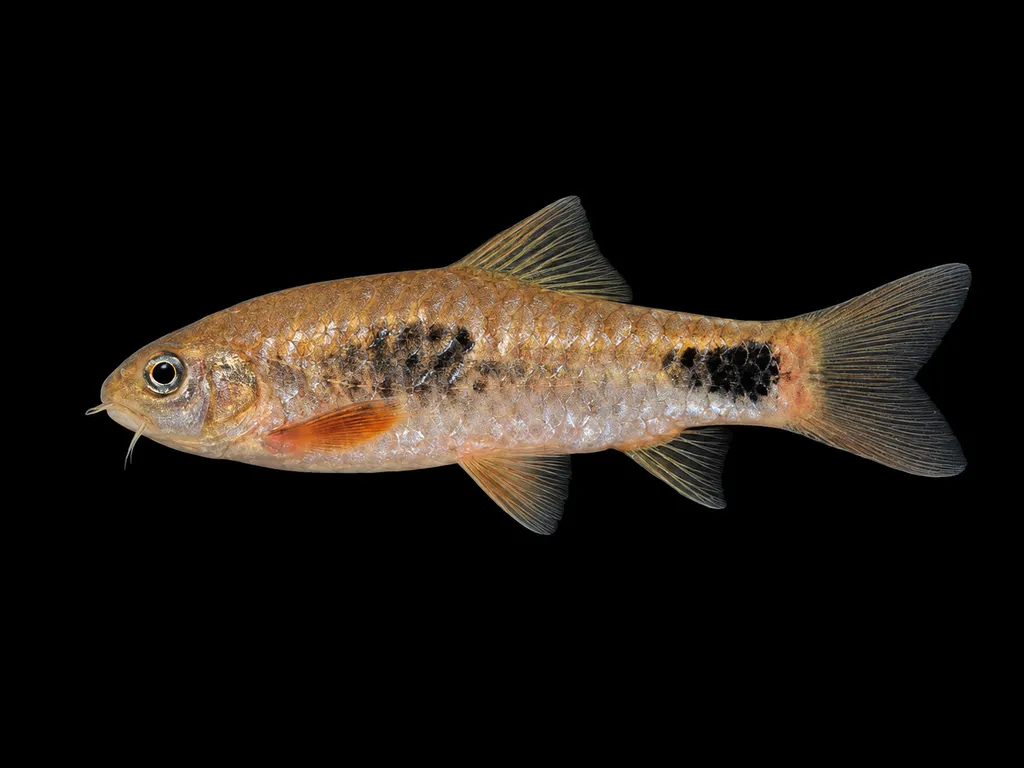
Cameroon barb
Enteromius camptacanthus
Freshwater3.9 in (10 cm) · 24 gal (90 L)72–81°F (22–27°C)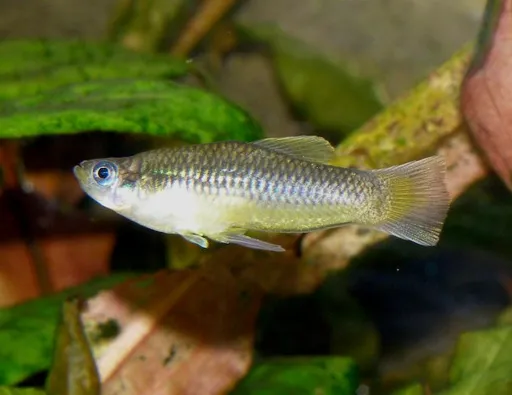
Blue-eyed livebearer
Priapella intermedia
Freshwater2.8 in (7 cm) · 24 gal (90 L)72–82°F (22–28°C)
Common questions
What size tank does a twin-spot loach need?
A twin-spot loach needs at least 24 gal (90 L). It spends most of its time in the bottom.
What temperature and pH does a twin-spot loach need?
A twin-spot loach is comfortable at 72–81°F (22–27°C) with a pH of 6.5–7.5.
What does a twin-spot loach eat?
A twin-spot loach is an omnivore that feeds on small invertebrates in the wild. In the tank it readily takes sinking granules, frozen bloodworm, brine shrimp and daphnia.
How big does a twin-spot loach get?
An adult twin-spot loach reaches about 2.8 in (7 cm).
Related species
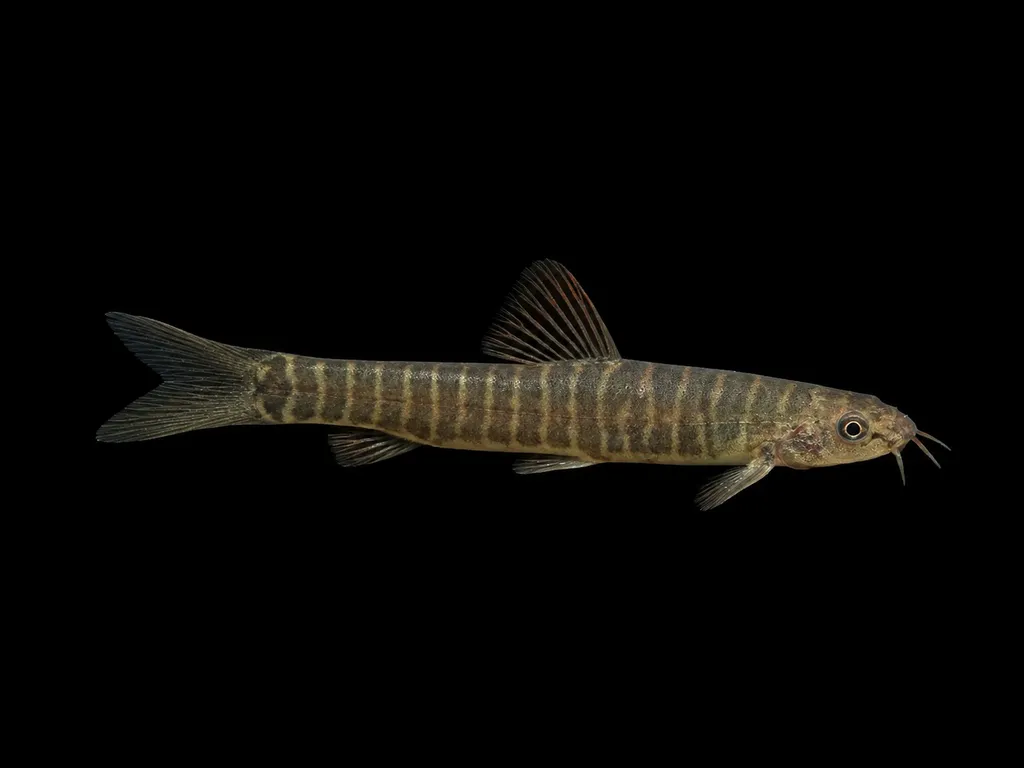 2.9 in (7.3 cm)24 gal (90 L)72–81°F (22–27°C)
Flathead loach
Nemacheilus platiceps
2.9 in (7.3 cm) · 24 gal (90 L)
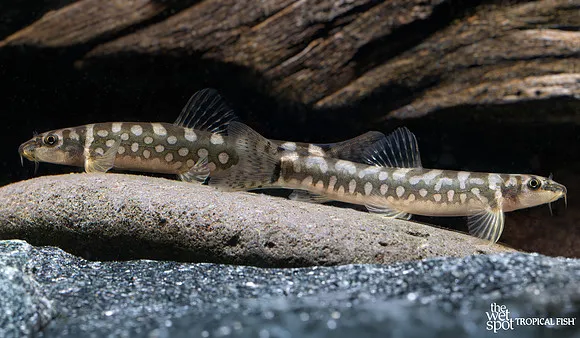 2.6 in (6.7 cm)20 gal (75 L)68–79°F (20–26°C)
Guenther's zipper loach
Nemacheilus guentheri
2.6 in (6.7 cm) · 20 gal (75 L)
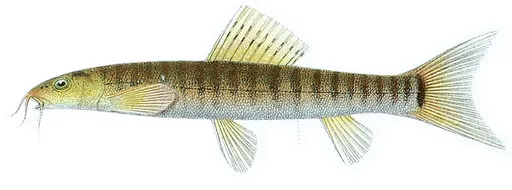 3.1 in (8 cm)24 gal (90 L)68–77°F (20–25°C)
Barred loach
Nemacheilus fasciatus
3.1 in (8 cm) · 24 gal (90 L)
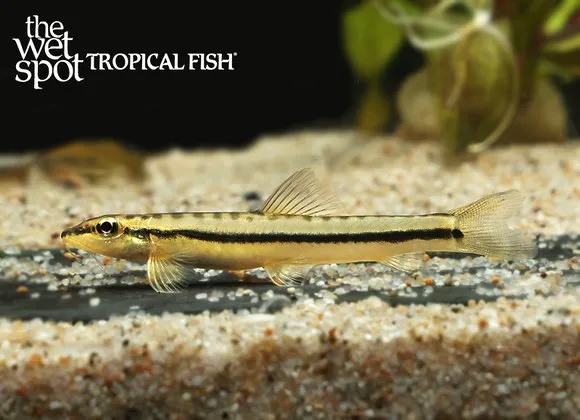 3.1 in (8 cm)24 gal (90 L)72–79°F (22–26°C)
Silverbelly loach
Nemacheilus argyrogaster
3.1 in (8 cm) · 24 gal (90 L)
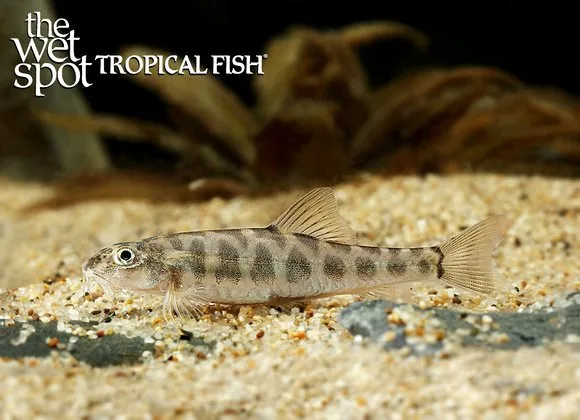 2 in (5 cm)20 gal (75 L)68–79°F (20–26°C)
Corica loach
Nemacheilus corica
2 in (5 cm) · 20 gal (75 L)
 2 in (5 cm)20 gal (75 L)72–79°F (22–26°C)
Ornate stone loach
Nemacheilus ornatus
2 in (5 cm) · 20 gal (75 L)