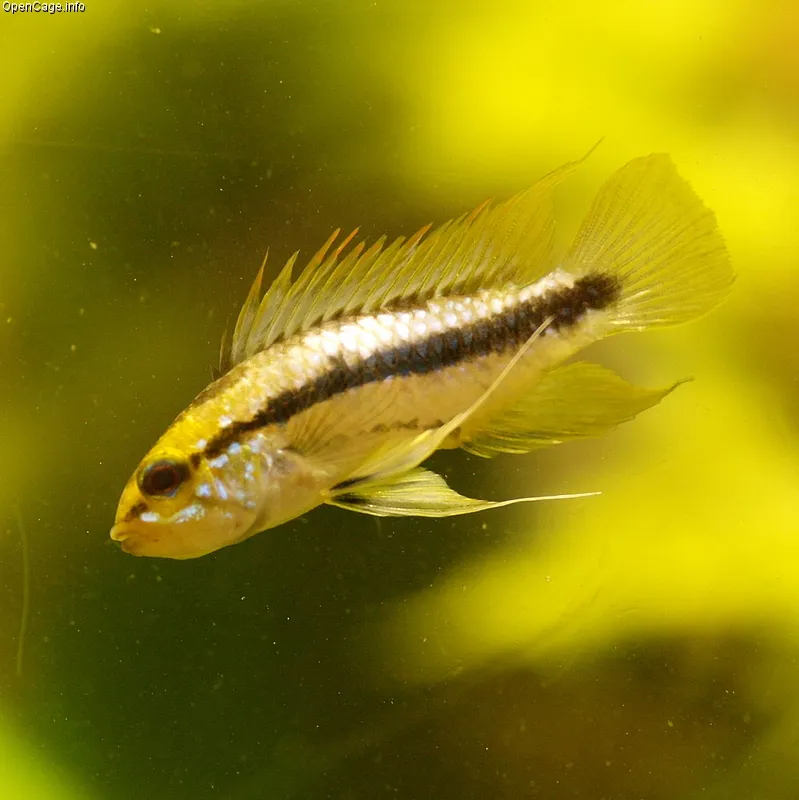
Three-stripe dwarf cichlid
Apistogramma trifasciata
Also known as Three-striped Apisto
FreshwaterFish
Care at a glance
- Temperature
- 68–77°F
- 20–25°C
- pH
- 5.5–7.0
- Adult size
- 2.2 in
- 5.5 cm
- Minimum tank
- 20 gal
- 75 L
- Temperament
- Mostly peaceful
- Social behavior
- Social
- Swim level
- Middle
- Difficulty
- Medium
- Breeding
- Hard
- Rarity
- Rare
- Family
- Cichlidae
- Origin
- Brazil, Paraguay, Argentina
Overview
The three-stripe dwarf cichlid is a tiny, mostly peaceful Apistogramma best kept as a harem of one male with two or three females, each holding her own small cave and territory. It is calm in a community for the most part, but a female guarding fry becomes fierce and will see off much larger fish near her cave. Keep it with small, peaceful upper-water dither fish such as pencilfish or small tetras, which help it feel secure and coax it into the open. Provide dense cover with caves, coconut shells, leaf litter and planting so the females can space out. Feed small live and frozen foods such as brine shrimp, daphnia and micro worm, since many refuse dry food at first. A tank of at least 75 liters suits a harem with room for separate territories.
In the wild
The three-stripe dwarf cichlid comes from the Paraguay and Parana basins across southern Brazil, Paraguay and northern Argentina. This is a subtropical range, so it experiences a cooler winter and does best at a temperature of only 20 to 25 C rather than constant heat. The water is soft to moderately soft and slightly acidic to neutral, so aim for a pH of 5.5 to 7.0. Give it a sandy floor, leaf litter, driftwood and plenty of small caves and dense planting, with subdued lighting to mimic the shaded, sheltered margins where it lives.
Good to know
Apistogramma trifasciata is a dwarf member of the cichlid family, Cichlidae, and is one of the smaller species, with males reaching around 5.5 cm and females smaller still. Males are colorful, with greatly extended, sail-like front dorsal spines and long, flowing fins. It is a cave spawner, with the female laying and guarding her eggs inside a small cave while the male holds the surrounding territory, often over a harem of several females. Breeding is challenging, needing soft, acidic water and a settled, well-structured tank.
Did you know
Male three-stripe dwarf cichlids raise the first few rays of the dorsal fin into tall, sail-like spines that they flare during display. Combined with long, trailing fins, these give a mature male a size and presence far beyond his small body.
Weekly picks
Tank mates
Three-stripe dwarf cichlid is a mostly peaceful, social species that keeps to the middle. These picks share a community profile with it, are safe together in both directions, and overlap on water type, temperature and pH.
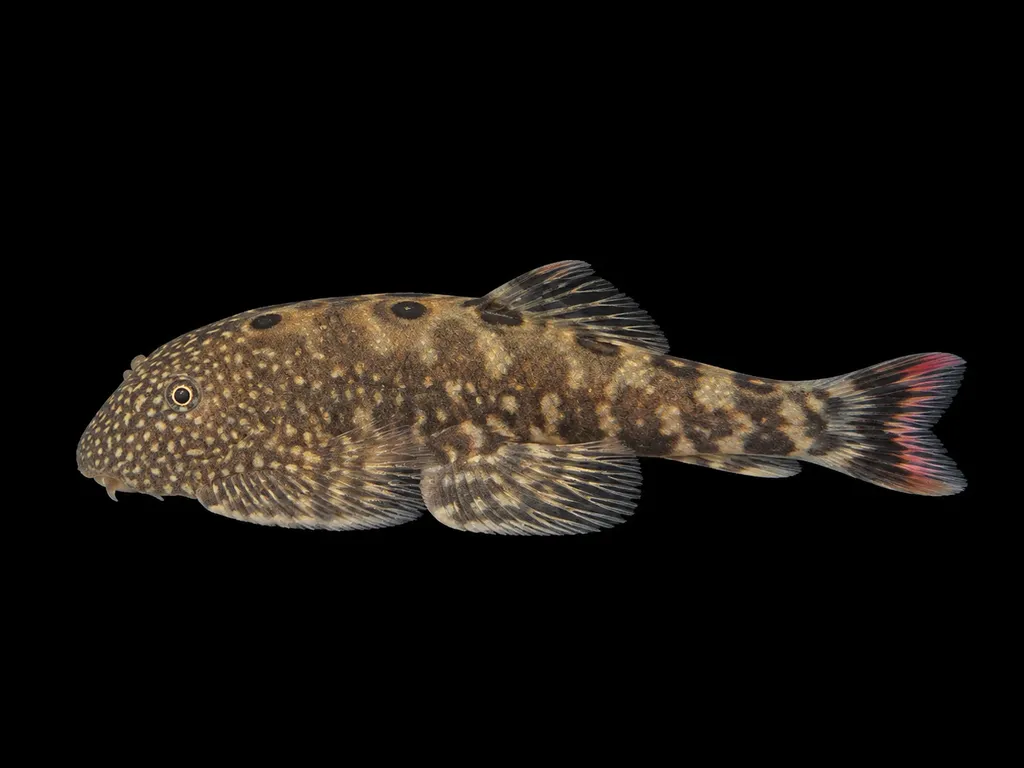
Eyespotted Borneo sucker
Gastromyzon ocellatus
Freshwater2.1 in (5.4 cm) · 20 gal (75 L)68–77°F (20–25°C)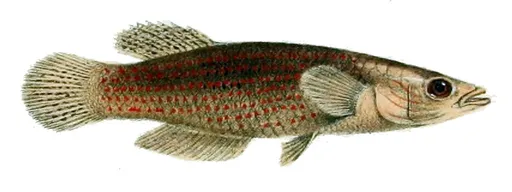
Playfair's panchax
Pachypanchax playfairii
Freshwater3.9 in (10 cm) · 20 gal (75 L)72–77°F (22–25°C)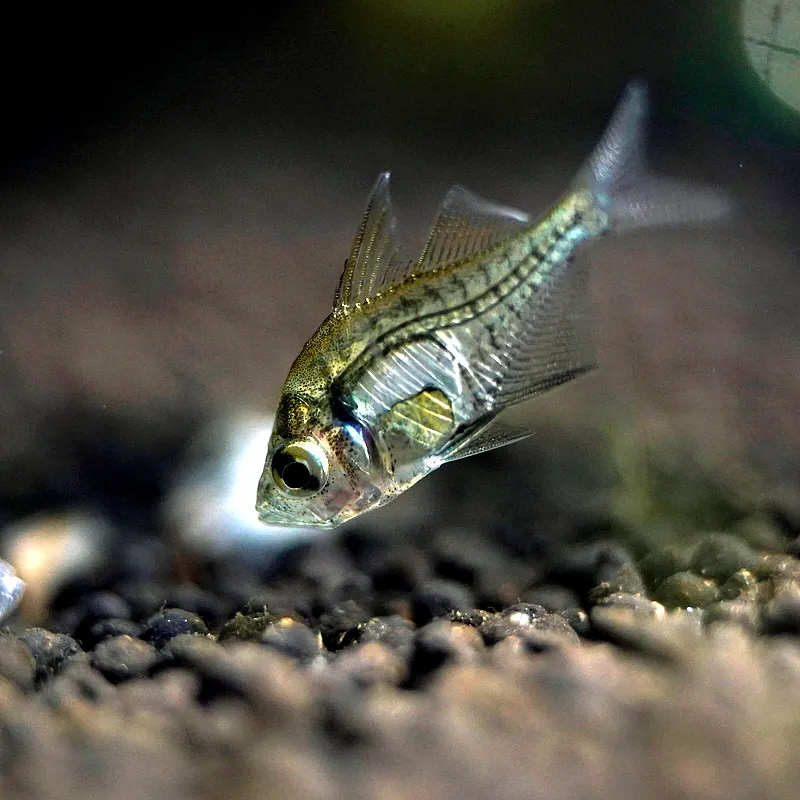
Indian glassy fish
Parambassis ranga
Freshwater3.1 in (8 cm) · 20 gal (75 L)68–86°F (20–30°C)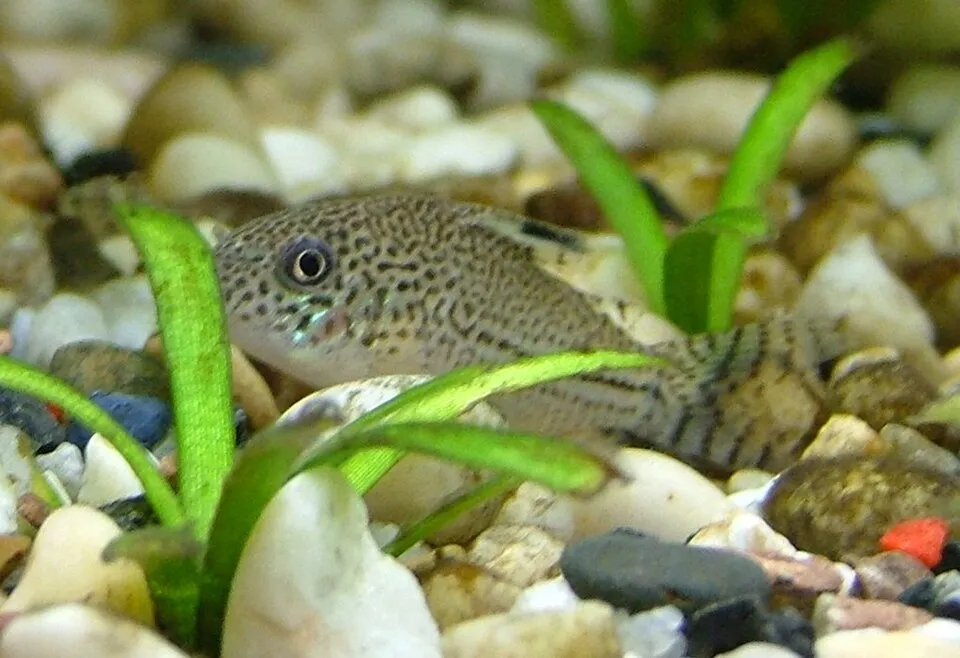
Julii cory
Hoplisoma julii
Freshwater2.2 in (5.5 cm) · 20 gal (75 L)68–79°F (20–26°C)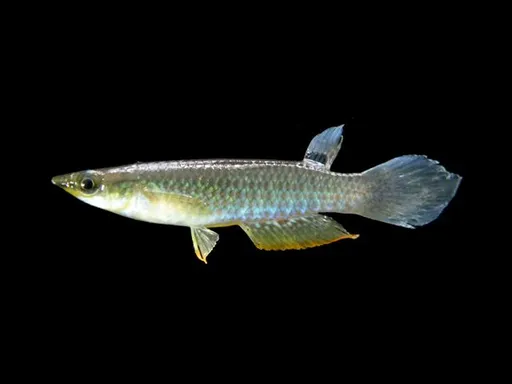
Blue panchax
Aplocheilus panchax
Freshwater3.5 in (9 cm) · 20 gal (75 L)72–82°F (22–28°C)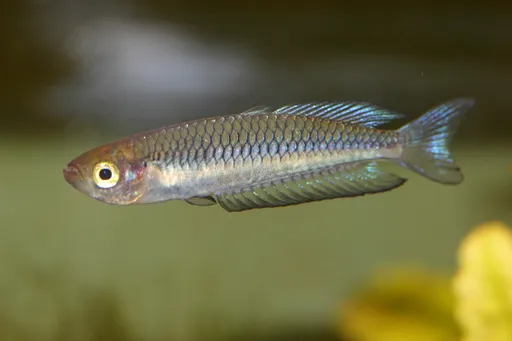
Ornate rainbowfish
Rhadinocentrus ornatus
Freshwater2.4 in (6 cm) · 20 gal (75 L)64–82°F (18–28°C)
Common questions
What size tank does a Three-stripe dwarf cichlid need?
A Three-stripe dwarf cichlid needs at least 20 gal (75 L). It spends most of its time in the middle.
What temperature and pH does a Three-stripe dwarf cichlid need?
A Three-stripe dwarf cichlid is comfortable at 68–77°F (20–25°C) with a pH of 5.5–7.0.
How big does a Three-stripe dwarf cichlid get?
An adult Three-stripe dwarf cichlid reaches about 2.2 in (5.5 cm).
Related species
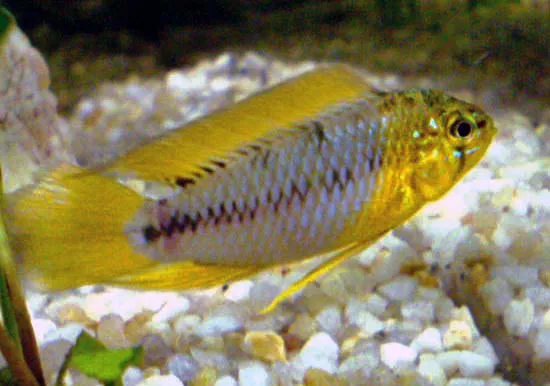 2.6 in (6.5 cm)18 gal (70 L)68–79°F (20–26°C)
Umbrella cichlid
Apistogramma borellii
2.6 in (6.5 cm) · 18 gal (70 L)
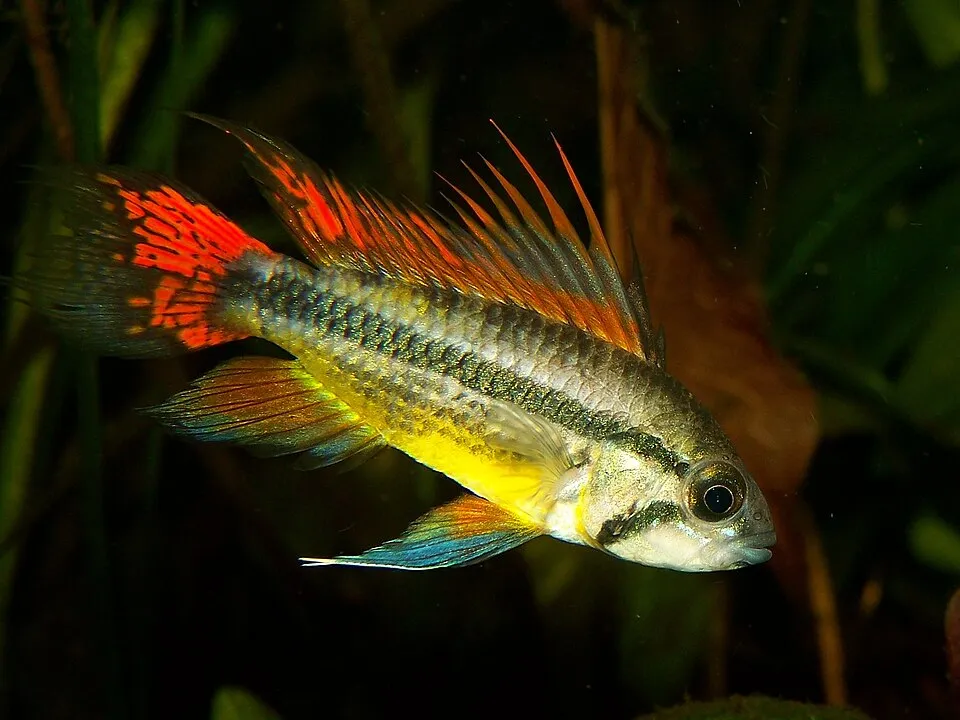 3 in (7.5 cm)18 gal (70 L)72–84°F (22–29°C)
Cockatoo cichlid
Apistogramma cacatuoides
3 in (7.5 cm) · 18 gal (70 L)
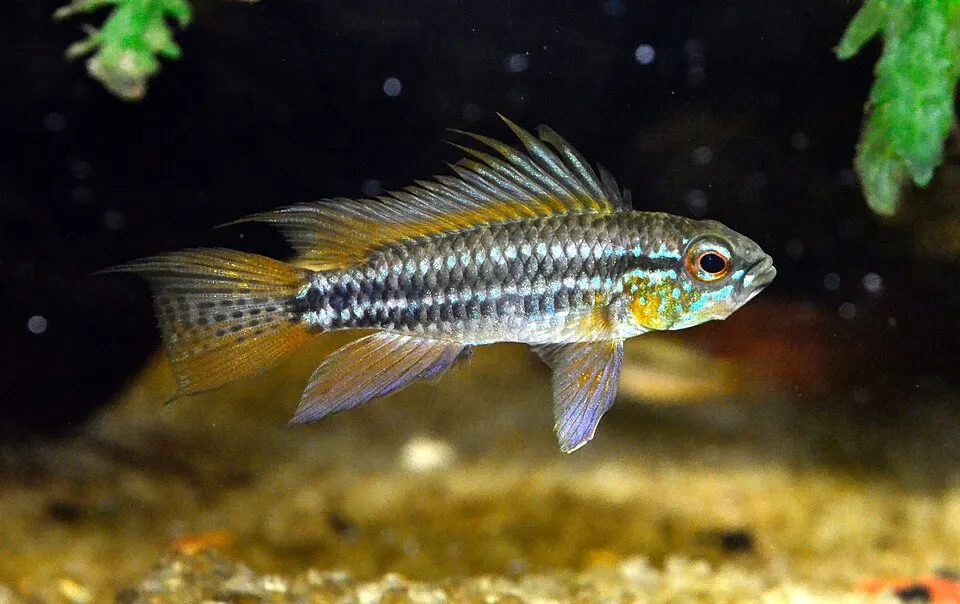 3 in (7.5 cm)20 gal (75 L)72–84°F (22–29°C)
Two-stripe dwarf cichlid
Apistogramma bitaeniata
3 in (7.5 cm) · 20 gal (75 L)
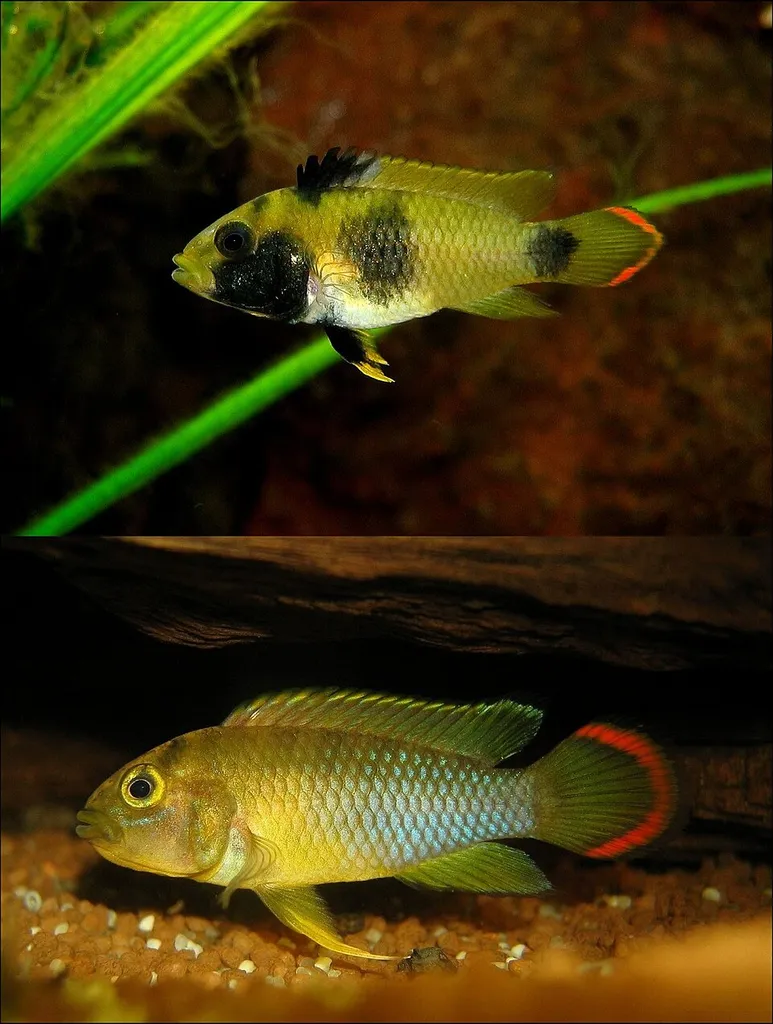 3.3 in (8.5 cm)18 gal (70 L)75–82°F (24–28°C)
Panda dwarf cichlid
Apistogramma nijsseni
3.3 in (8.5 cm) · 18 gal (70 L)
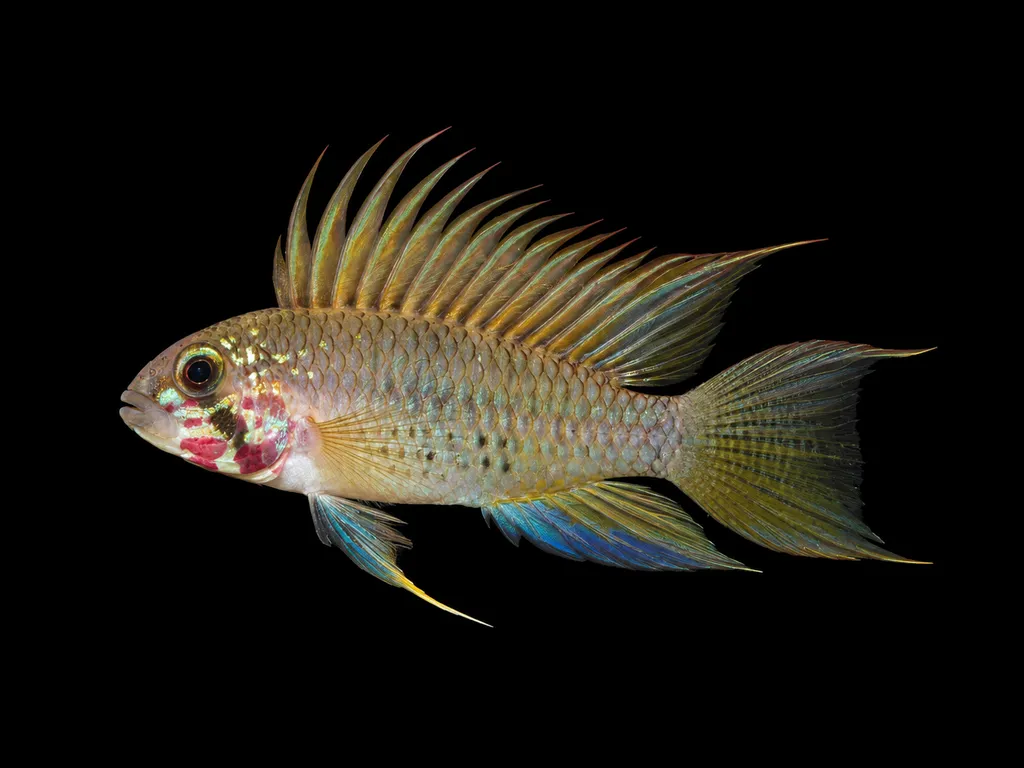 2.2 in (5.5 cm)16 gal (60 L)77–84°F (25–29°C)
Piaroa dwarf cichlid
Apistogramma piaroa
2.2 in (5.5 cm) · 16 gal (60 L)
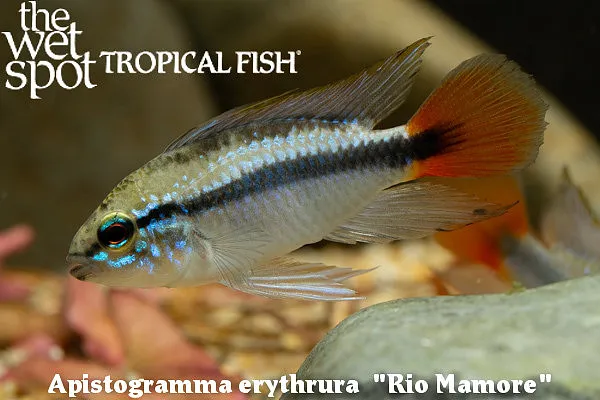 2.2 in (5.5 cm)16 gal (60 L)73–81°F (23–27°C)
Red-tail dwarf cichlid
Apistogramma erythrura
2.2 in (5.5 cm) · 16 gal (60 L)