One species · 3 varieties
Cockatoo cichlid
Apistogramma cacatuoides
FreshwaterFish
Care at a glance
- Temperature
- 72–84°F
- 22–29°C
- pH
- 6.0–7.5
- Adult size
- 3 in
- 7.5 cm
- Minimum tank
- 18 gal
- 70 L
- Temperament
- Mostly peaceful
- Social behavior
- Social
- Swim level
- Middle
- Difficulty
- Medium
- Breeding
- Hard
- Rarity
- Rare
- Family
- Cichlidae
- Origin
- Brazil, Peru
Pick a variety
One setup covers every line on this page: care is the species' care.
Overview
Keep it as a pair or as one male with two or three females, giving each female her own cave so the male can split his territory. It sits in the lower and middle levels and eats small invertebrates in the wild, so feed micro pellets and quality flake plus live or frozen daphnia and brine shrimp. Aim for soft, slightly acidic water, pH 6 to 7.5 and around 22 to 29 C, in a tank of about 70 liters. It is mostly peaceful and fine in a calm community, but gets defensive when guarding fry.
In the wild
The cockatoo cichlid comes from shallow, slow backwaters in the Amazon basin of Brazil and Peru, over sand and mud among thick plants and leaf litter. That cover is what makes it comfortable, so a planted tank with sand, driftwood, and small caves like a coconut shell or flowerpot works well. The water there is soft and acidic and warm, in the mid 20s C.
Good to know
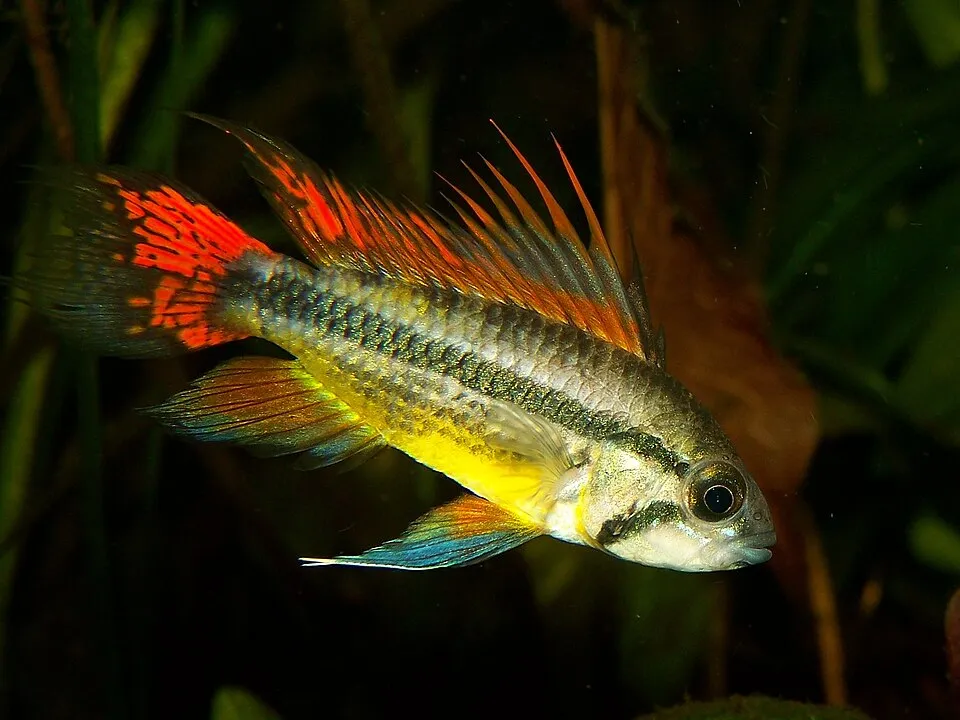
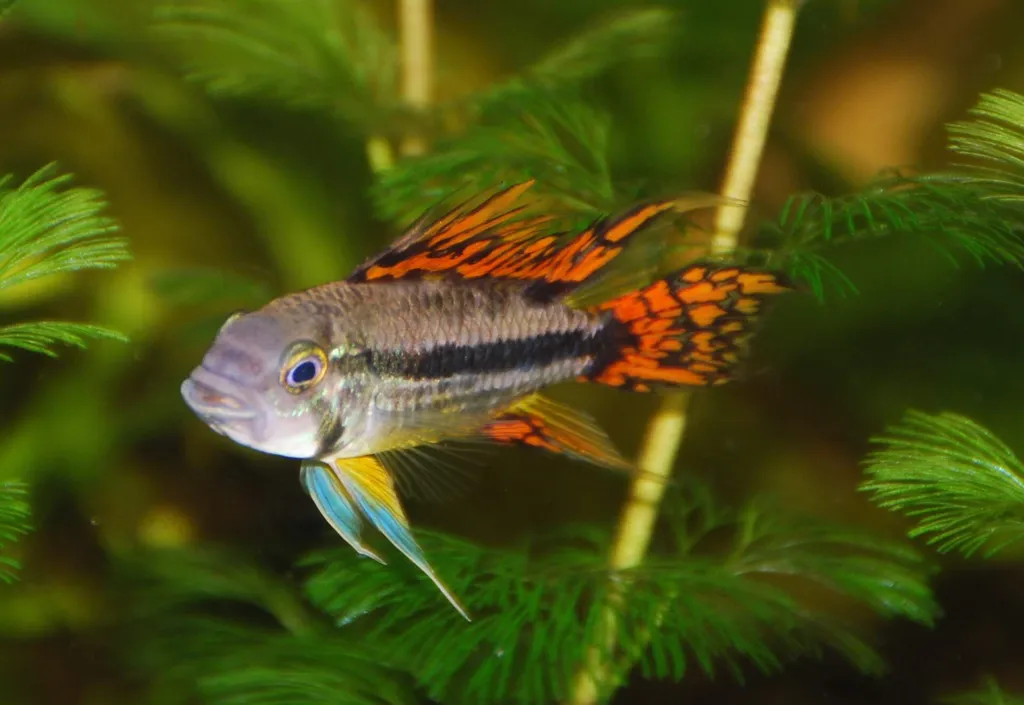
Apistogramma cacatuoides is a dwarf cichlid in the family Cichlidae. Males reach about 7.5 cm with the tall, spiky dorsal fin the species is known for, while females are noticeably smaller. It is a cave-spawning fish, and the female guards the eggs and fry inside a sheltered nook.
Did you know
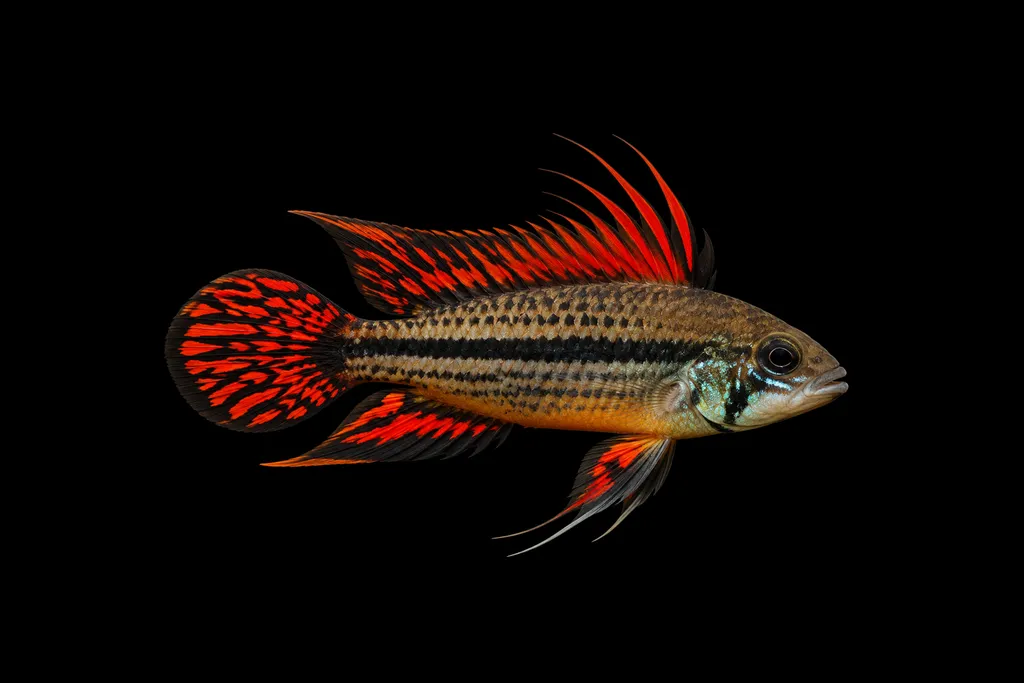
The cockatoo is one of the easier Apistogramma to breed and comes in selectively bred lines like double-red and orange-flash with even more color in the fins. Those tank-bred strains are far more colorful than the wild fish.
Other named lines
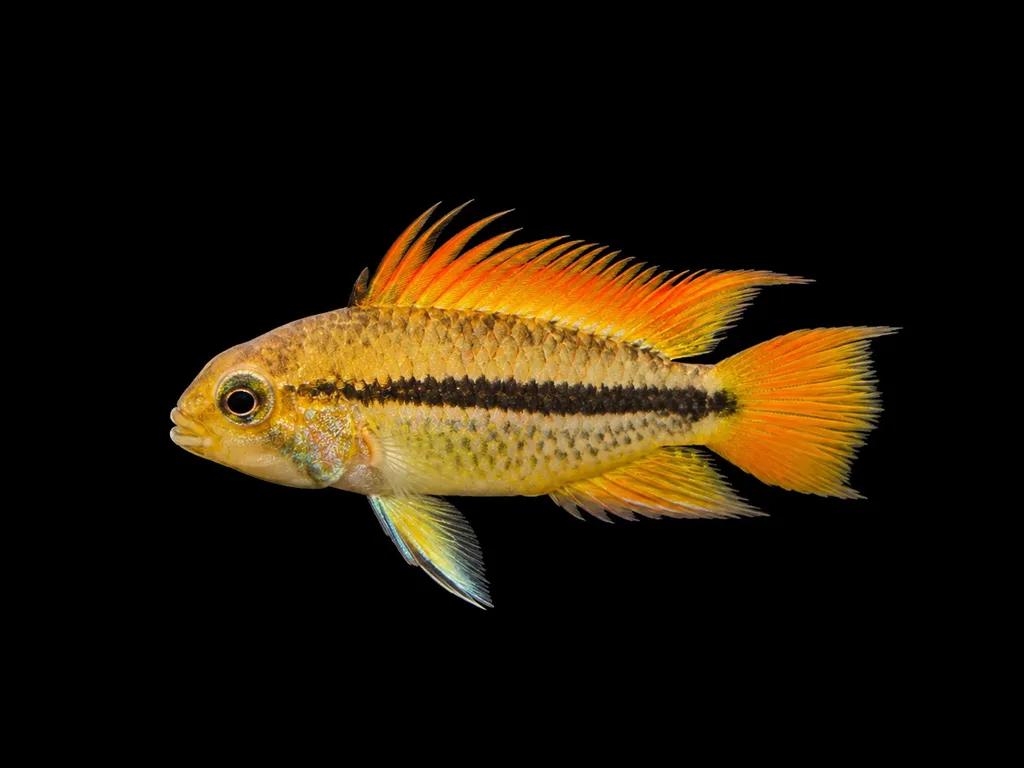
Wild cockatoo apistos are gray-yellow; the trade sells line-bred fin-color grades of the same fish.
- Triple red
- red dorsal, tail and anal fin
Weekly picks
Tank mates
Every variety on this page wants the same water, so one set of picks fits them all. These picks match on water type, temperature, pH, size and temperament.
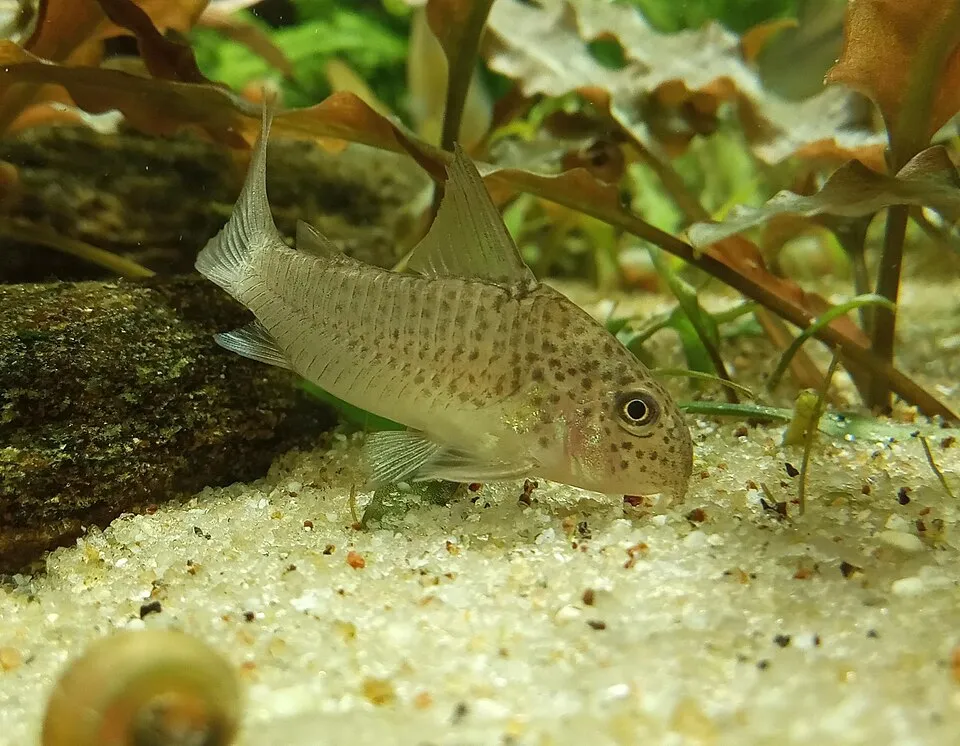
Xingu cory
Hoplisoma xinguense
Freshwater2 in (5 cm) · 18 gal (70 L)72–81°F (22–27°C)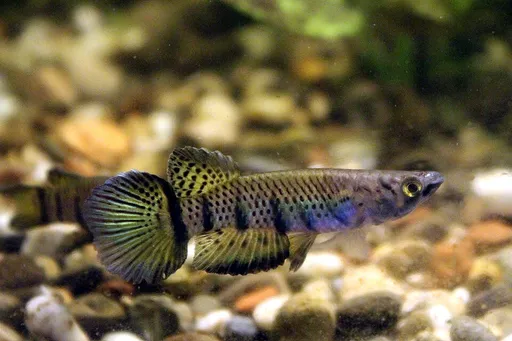
Six-barred panchax
Epiplatys sexfasciatus
Freshwater3.9 in (10 cm) · 20 gal (75 L)72–81°F (22–27°C)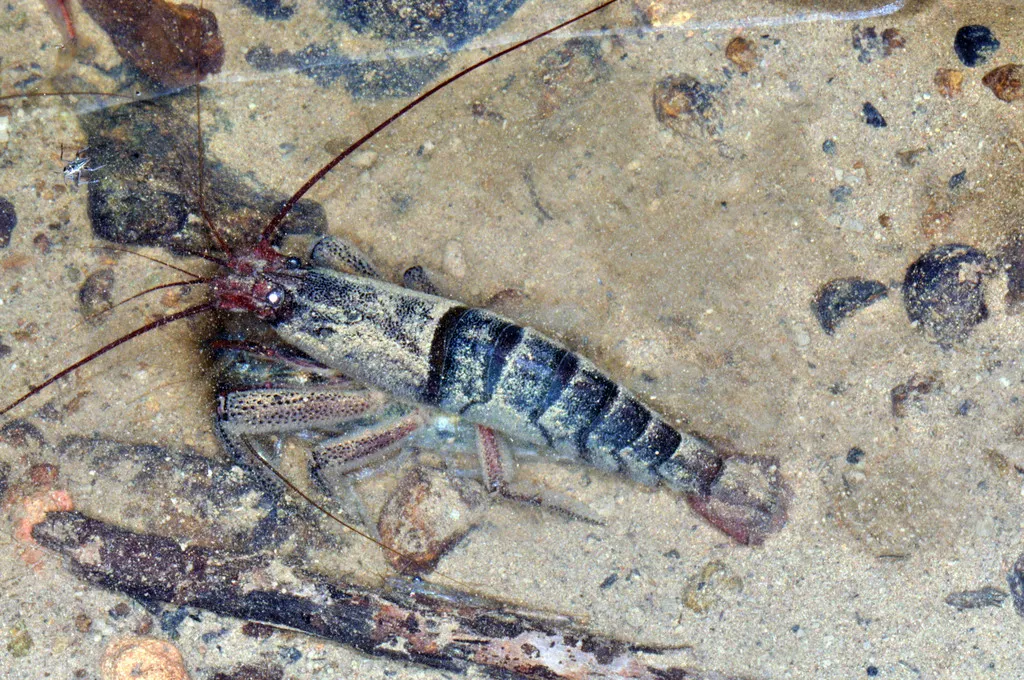
Marble wood shrimp
Atya scabra
Freshwater3.9 in (10 cm) · 20 gal (75 L)73–82°F (23–28°C)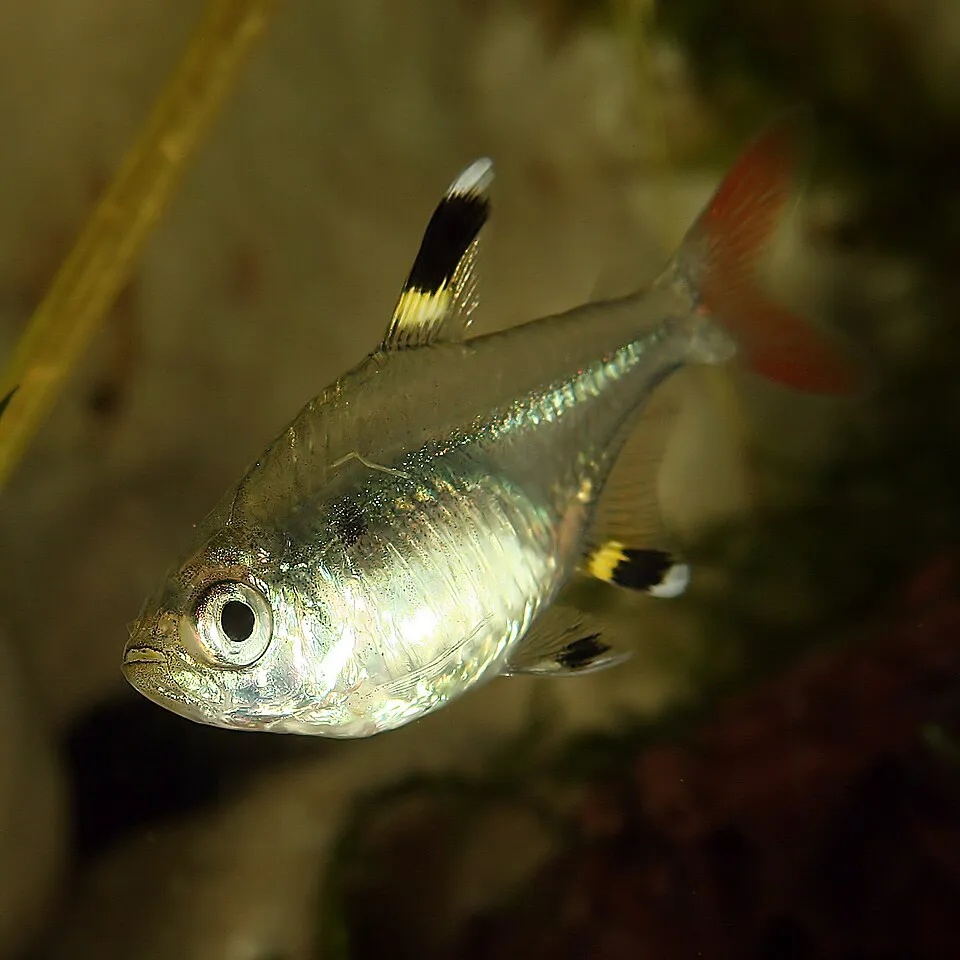
X-ray tetra
Pristella maxillaris
Freshwater1.8 in (4.5 cm) · 18 gal (70 L)72–82°F (22–28°C)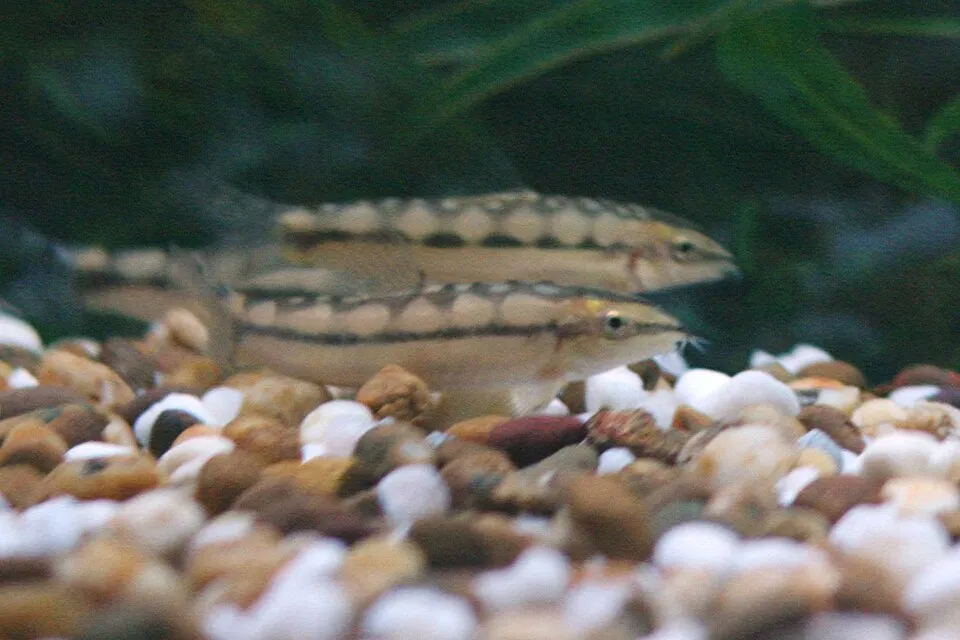
Dwarf botia
Ambastaia sidthimunki
Freshwater2.4 in (6 cm) · 20 gal (75 L)68–86°F (20–30°C)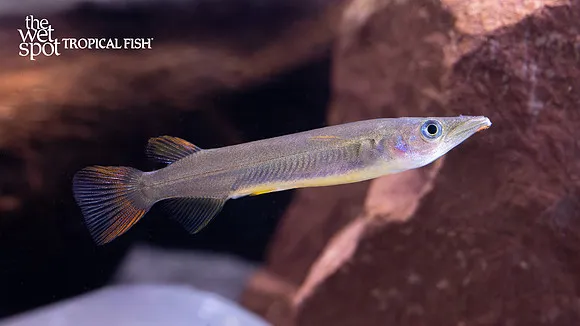
Rex halfbeak
Nomorhamphus rex
Freshwater2.2 in (5.5 cm) · 20 gal (75 L)72–79°F (22–26°C)
Common questions
What size tank does a Cockatoo cichlid need?
A Cockatoo cichlid needs at least 18 gal (70 L). It spends most of its time in the middle.
What temperature and pH does a Cockatoo cichlid need?
A Cockatoo cichlid is comfortable at 72–84°F (22–29°C) with a pH of 6.0–7.5.
How big does a Cockatoo cichlid get?
An adult Cockatoo cichlid reaches about 3 in (7.5 cm).
Related species
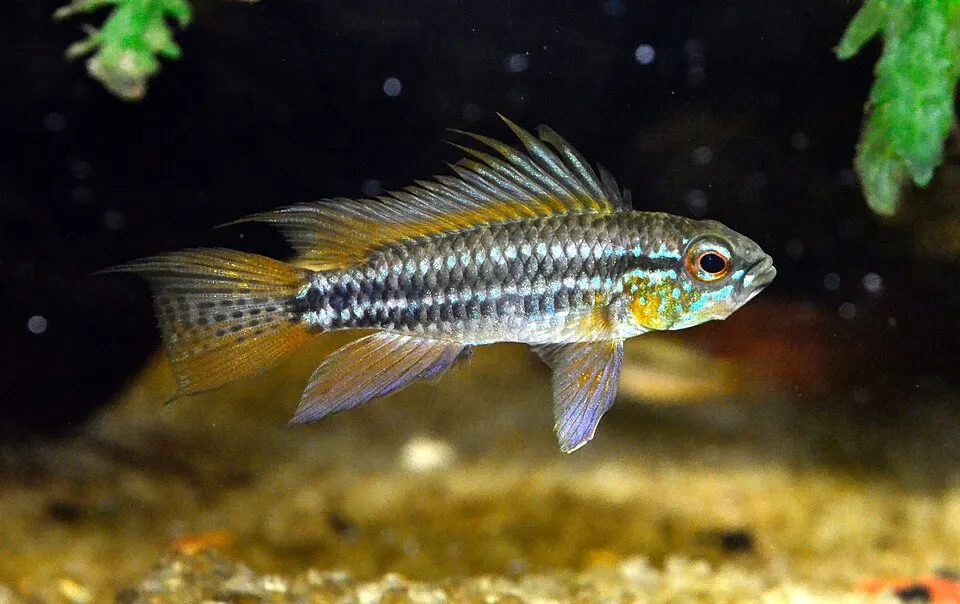 3 in (7.5 cm)20 gal (75 L)72–84°F (22–29°C)
Two-stripe dwarf cichlid
Apistogramma bitaeniata
3 in (7.5 cm) · 20 gal (75 L)
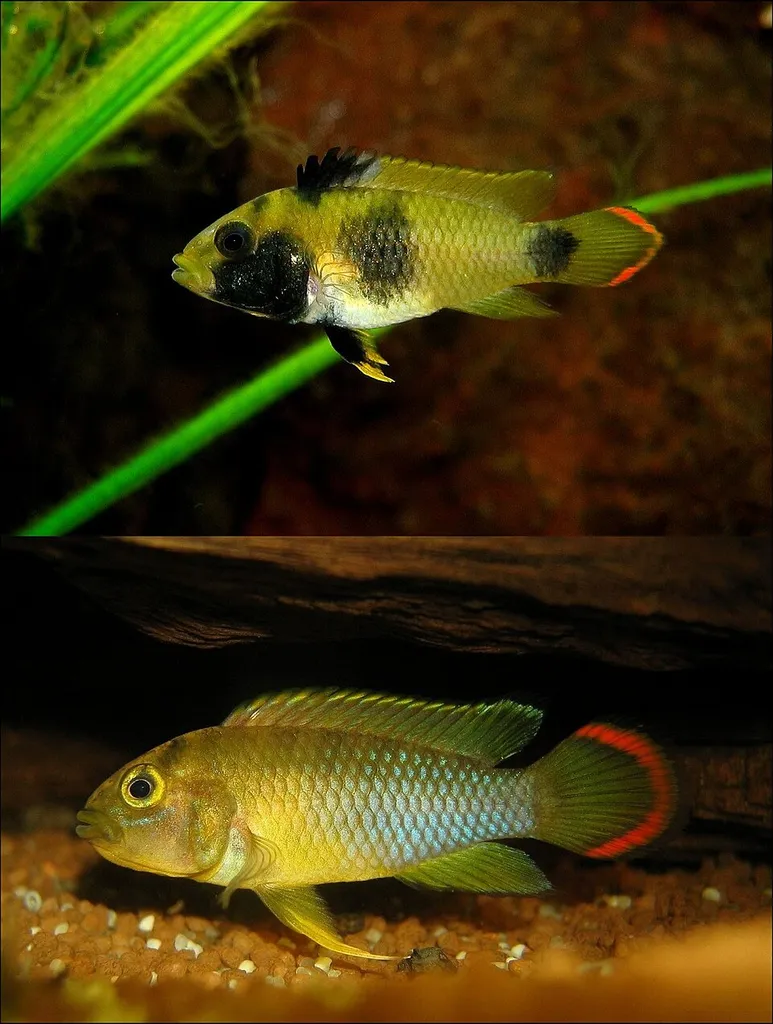 3.3 in (8.5 cm)18 gal (70 L)75–82°F (24–28°C)
Panda dwarf cichlid
Apistogramma nijsseni
3.3 in (8.5 cm) · 18 gal (70 L)
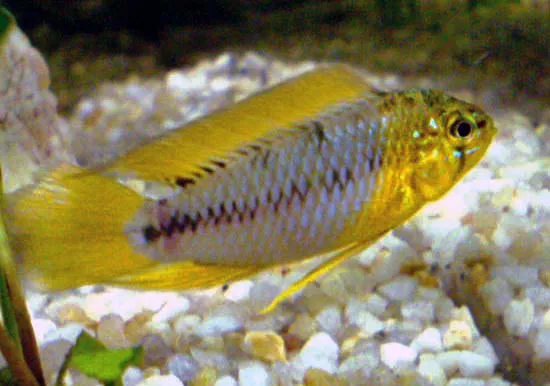 2.6 in (6.5 cm)18 gal (70 L)68–79°F (20–26°C)
Umbrella cichlid
Apistogramma borellii
2.6 in (6.5 cm) · 18 gal (70 L)
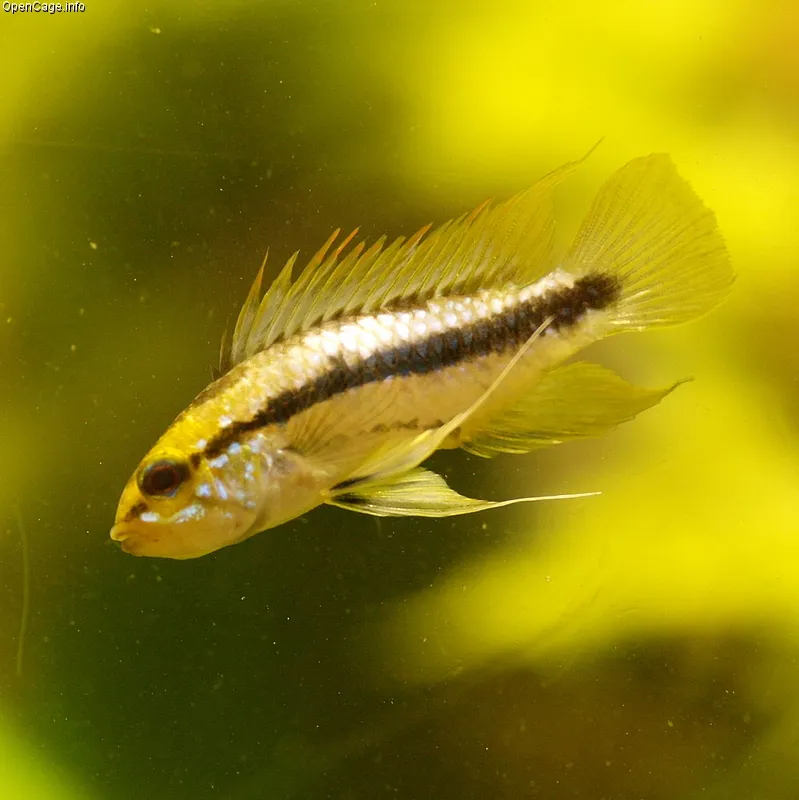 2.2 in (5.5 cm)20 gal (75 L)68–77°F (20–25°C)
Three-stripe dwarf cichlid
Apistogramma trifasciata
2.2 in (5.5 cm) · 20 gal (75 L)
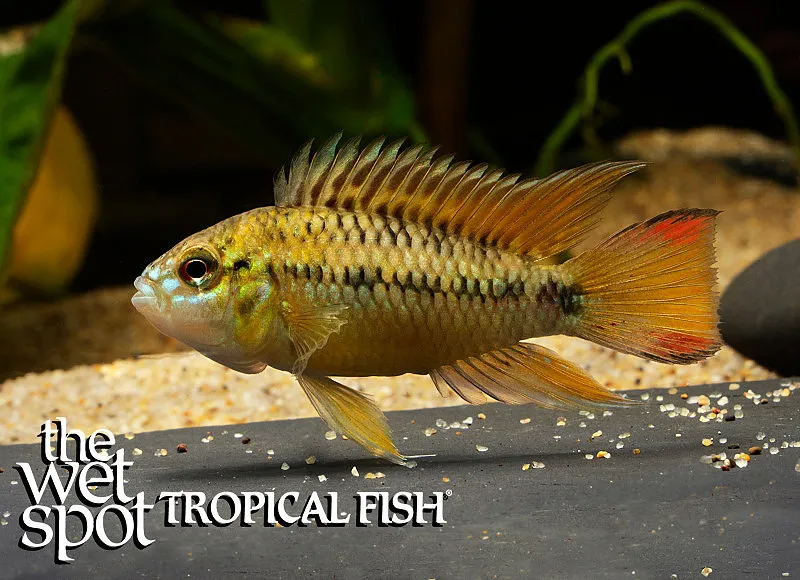 3 in (7.5 cm)20 gal (75 L)75–84°F (24–29°C)
Hoigne's dwarf cichlid
Apistogramma hoignei
3 in (7.5 cm) · 20 gal (75 L)
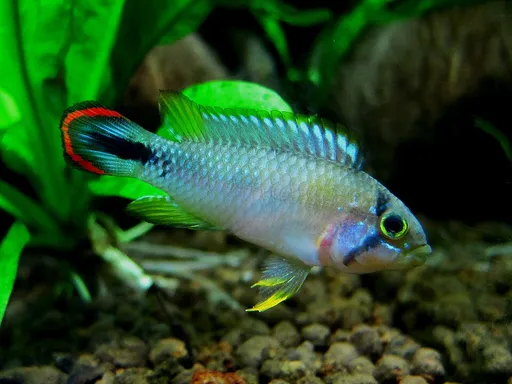 3 in (7.5 cm)20 gal (75 L)75–82°F (24–28°C)
Panduro apisto
Apistogramma panduro
3 in (7.5 cm) · 20 gal (75 L)