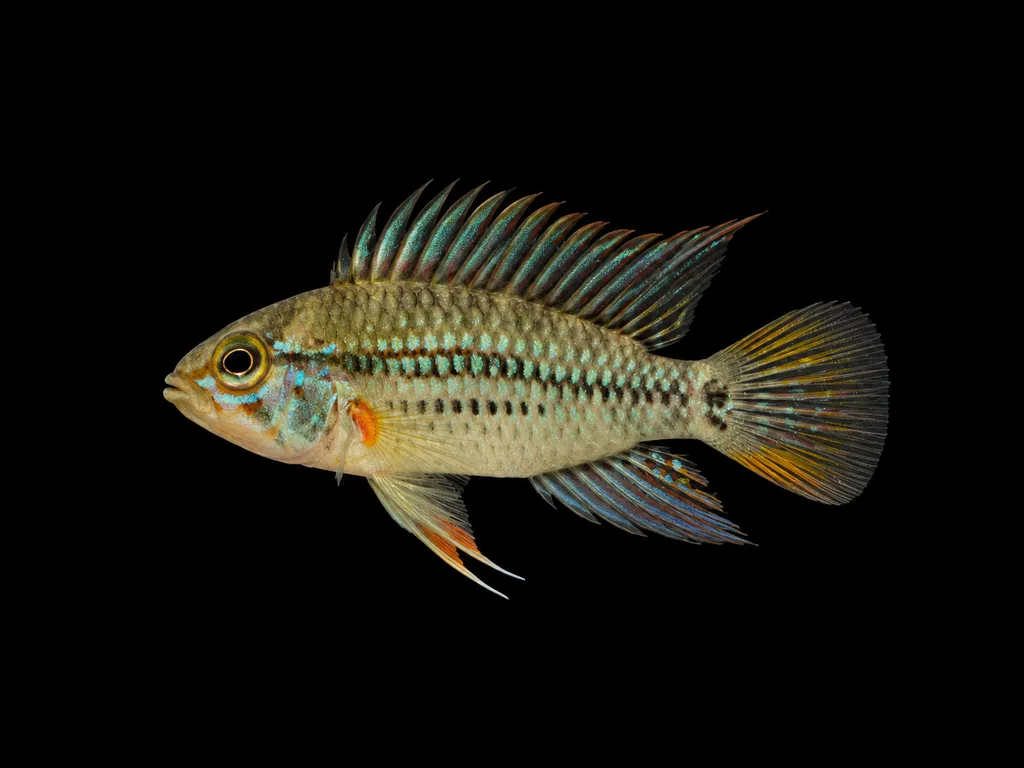
Umbrella cichlid
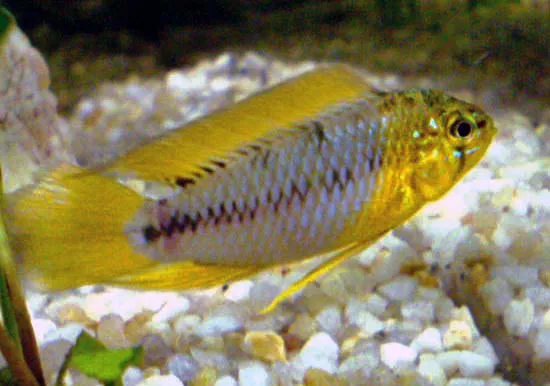
Apistogramma borellii
FreshwaterFish
Care at a glance
- Temperature
- 68–79°F
- 20–26°C
- pH
- 6.0–7.0
- Adult size
- 2.6 in
- 6.5 cm
- Minimum tank
- 18 gal
- 70 L
- Temperament
- Mostly peaceful
- Social behavior
- Social
- Swim level
- Middle
- Difficulty
- Medium
- Breeding
- Hard
- Rarity
- Rare
- Family
- Cichlidae
- Origin
- Brazil, Paraguay, Argentina
Overview
Keep it as a pair or a male with a couple of females in a planted tank of around 70 liters with sight breaks and hiding spots. It works the lower and middle water and is mostly peaceful, though it gets defensive around fry. Water should be soft and acidic, pH 6 to 7, at 20 to 26 C. Feed small live and frozen foods like daphnia and bloodworms, with quality micro-pellets and flake. Pair it with calm, small tankmates that stay out of its space at breeding time.
In the wild
The umbrella cichlid, Apistogramma borellii, comes from the Paraguay and Parana drainage across Brazil, Paraguay, and Argentina. It lives in shallow, slow creeks, ponds, and river edges with soft bottoms and thick plant growth. It also handles cooler water than most apistos, which fits its more southern range. Give it a sandy bottom, dense planting, and small caves or coconut shells, with soft, slightly acidic water in the low to mid 20s C.
Good to know
This is a dwarf cichlid in the family Cichlidae. Males reach about 6.5 cm and females a bit smaller, and males carry yellow color with blue on the face. It is a cave-spawning species: the female lays eggs inside a hidden spot and guards the fry while the male holds the wider territory. It tolerates a wider, cooler temperature range than many tropical apistos.
Did you know
It is one of the more cold-tolerant dwarf cichlids, comfortable down around 20 C where many apistos start to suffer. That makes it a good pick for an unheated or cooler room tank, and a useful tankmate for other fish that prefer the lower end of the tropical range.
Weekly picks
Tank mates
Umbrella cichlid is a mostly peaceful, social species that keeps to the middle. These picks share a community profile with it, are safe together in both directions, and overlap on water type, temperature and pH.
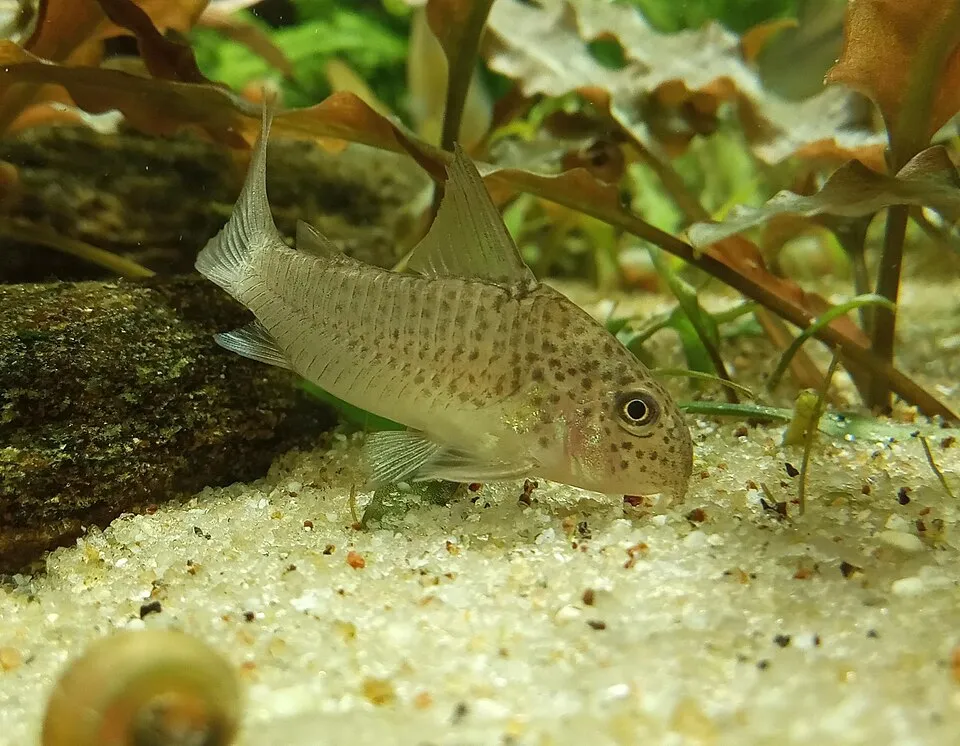
Xingu cory
Hoplisoma xinguense
Freshwater2 in (5 cm) · 18 gal (70 L)72–81°F (22–27°C)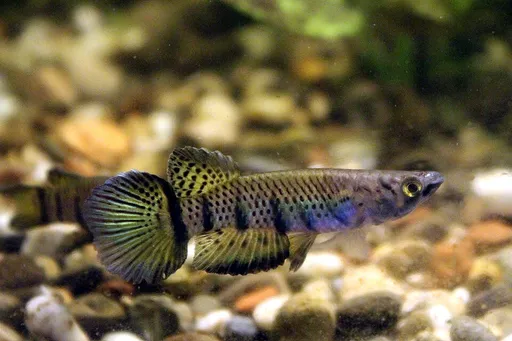
Six-barred panchax
Epiplatys sexfasciatus
Freshwater3.9 in (10 cm) · 20 gal (75 L)72–81°F (22–27°C)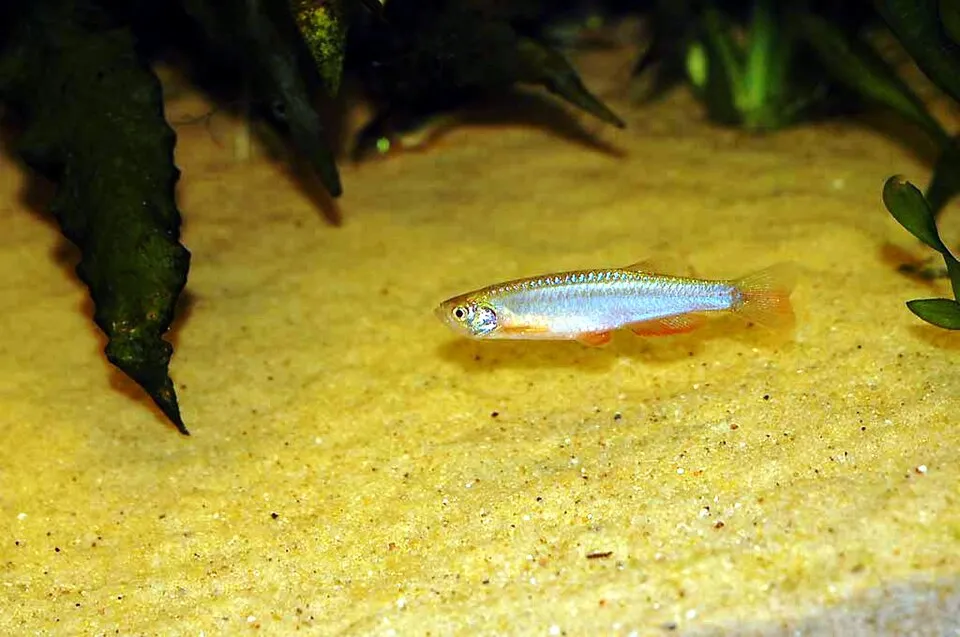
Pearl danio
Danio albolineatus
Freshwater2.4 in (6 cm) · 18 gal (70 L)61–77°F (16–25°C)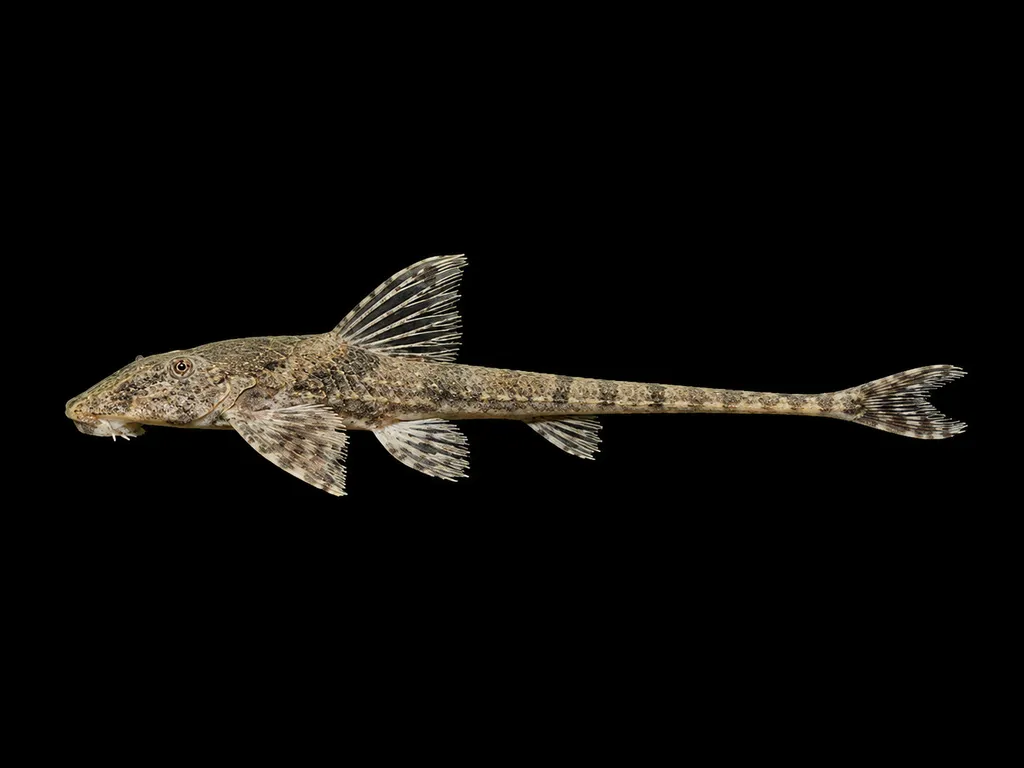
Common whiptail
Rineloricaria parva
Freshwater4.7 in (12 cm) · 20 gal (75 L)68–79°F (20–26°C)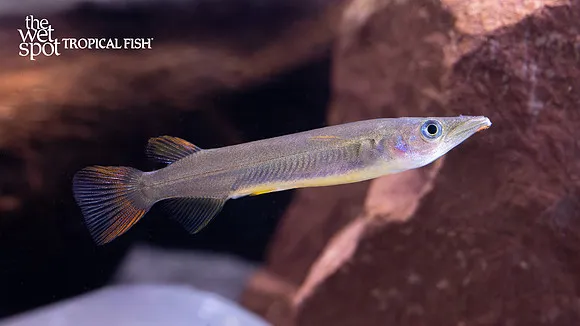
Rex halfbeak
Nomorhamphus rex
Freshwater2.2 in (5.5 cm) · 20 gal (75 L)72–79°F (22–26°C)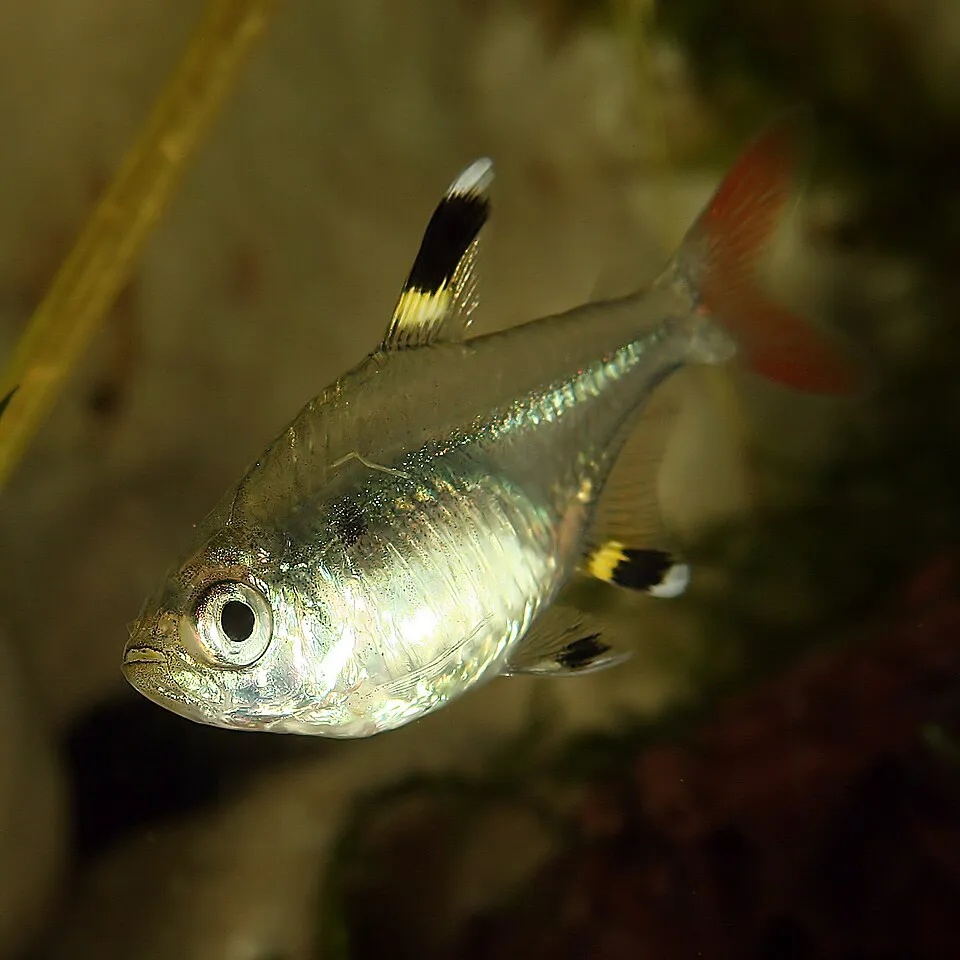
X-ray tetra
Pristella maxillaris
Freshwater1.8 in (4.5 cm) · 18 gal (70 L)72–82°F (22–28°C)
Common questions
What size tank does an Umbrella cichlid need?
An Umbrella cichlid needs at least 18 gal (70 L). It spends most of its time in the middle.
What temperature and pH does an Umbrella cichlid need?
An Umbrella cichlid is comfortable at 68–79°F (20–26°C) with a pH of 6.0–7.0.
How big does an Umbrella cichlid get?
An adult Umbrella cichlid reaches about 2.6 in (6.5 cm).
Related species
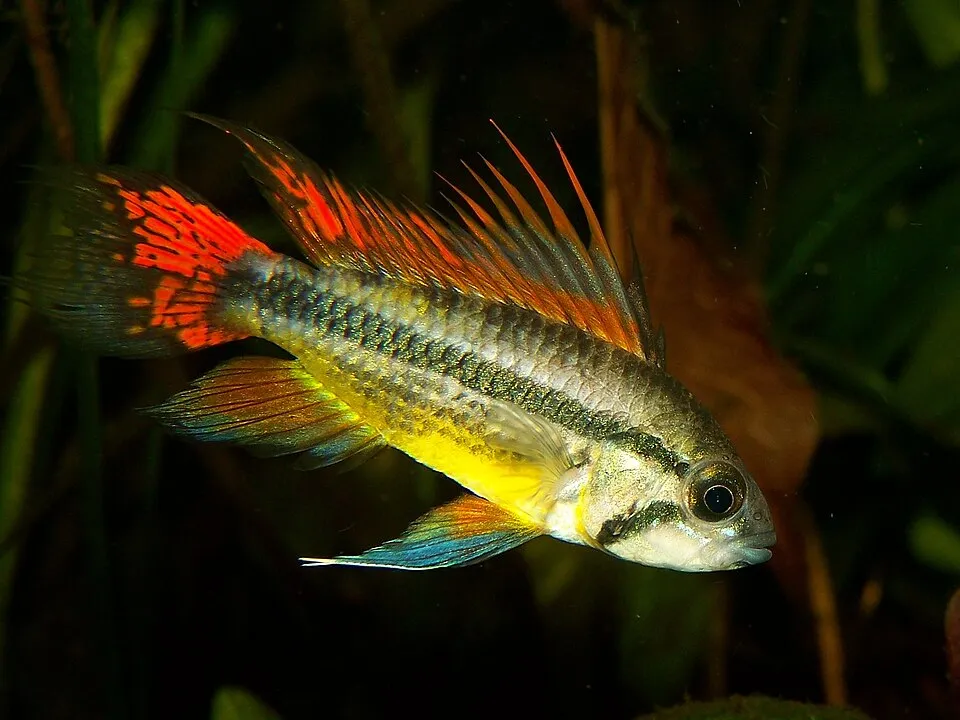 3 in (7.5 cm)18 gal (70 L)72–84°F (22–29°C)
Cockatoo cichlid
Apistogramma cacatuoides
3 in (7.5 cm) · 18 gal (70 L)
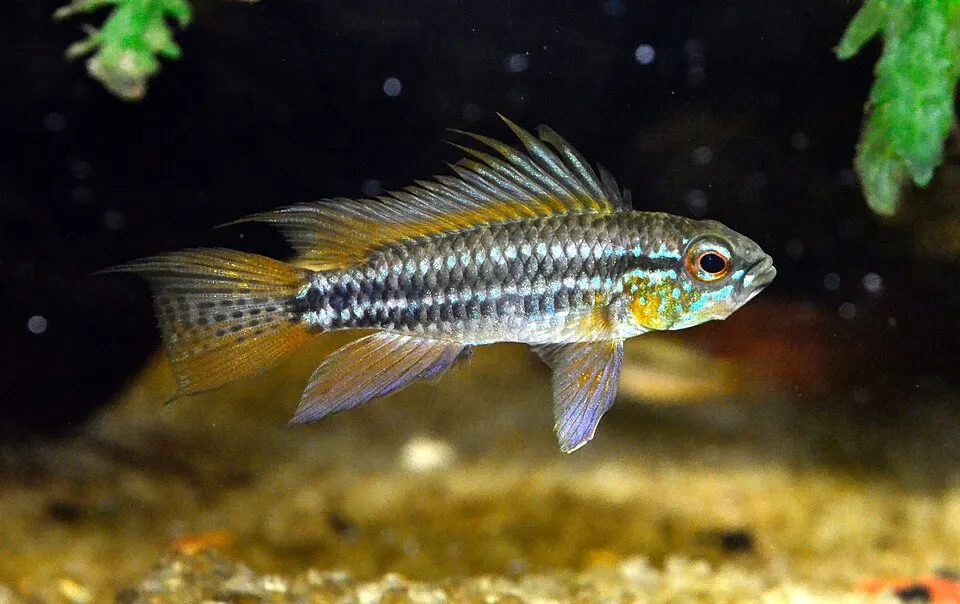 3 in (7.5 cm)20 gal (75 L)72–84°F (22–29°C)
Two-stripe dwarf cichlid
Apistogramma bitaeniata
3 in (7.5 cm) · 20 gal (75 L)
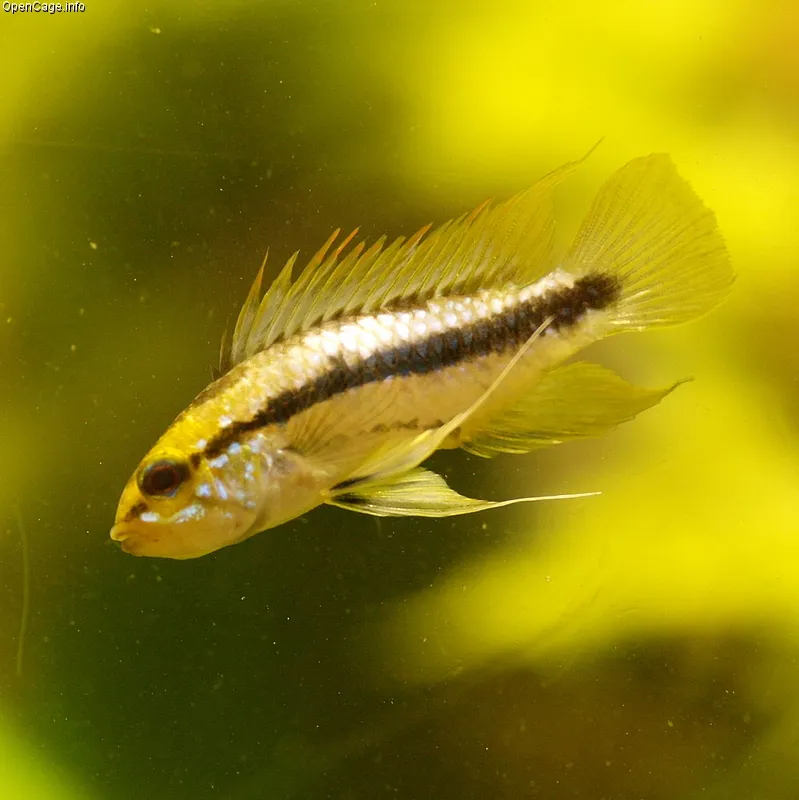 2.2 in (5.5 cm)20 gal (75 L)68–77°F (20–25°C)
Three-stripe dwarf cichlid
Apistogramma trifasciata
2.2 in (5.5 cm) · 20 gal (75 L)
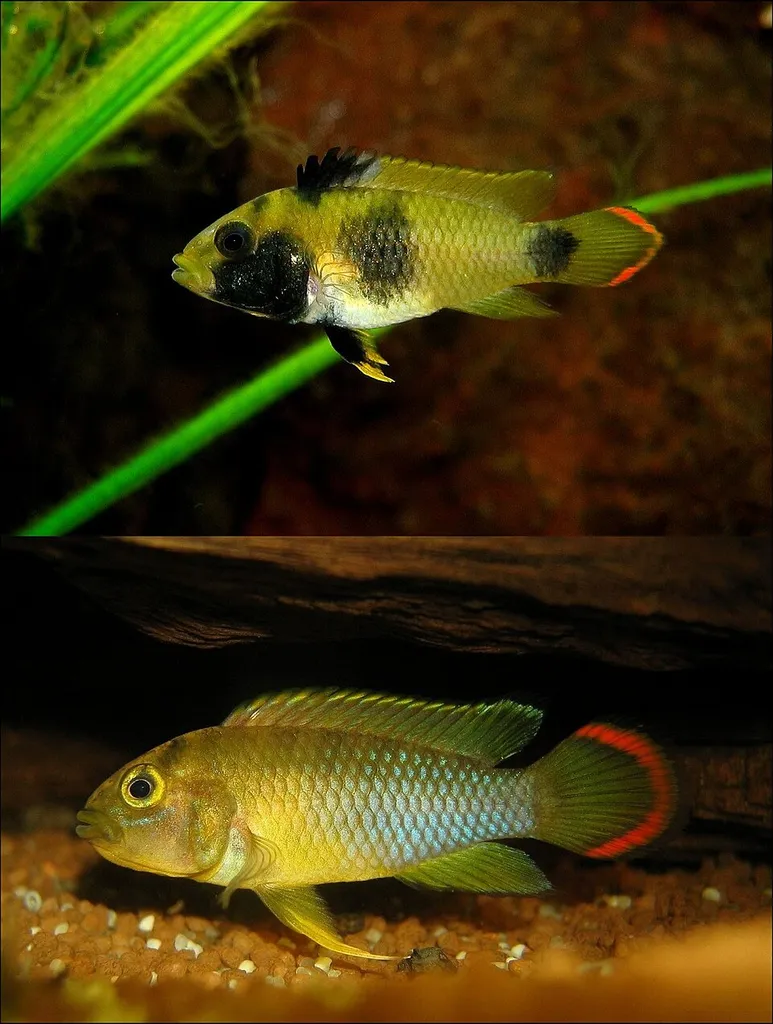 3.3 in (8.5 cm)18 gal (70 L)75–82°F (24–28°C)
Panda dwarf cichlid
Apistogramma nijsseni
3.3 in (8.5 cm) · 18 gal (70 L)
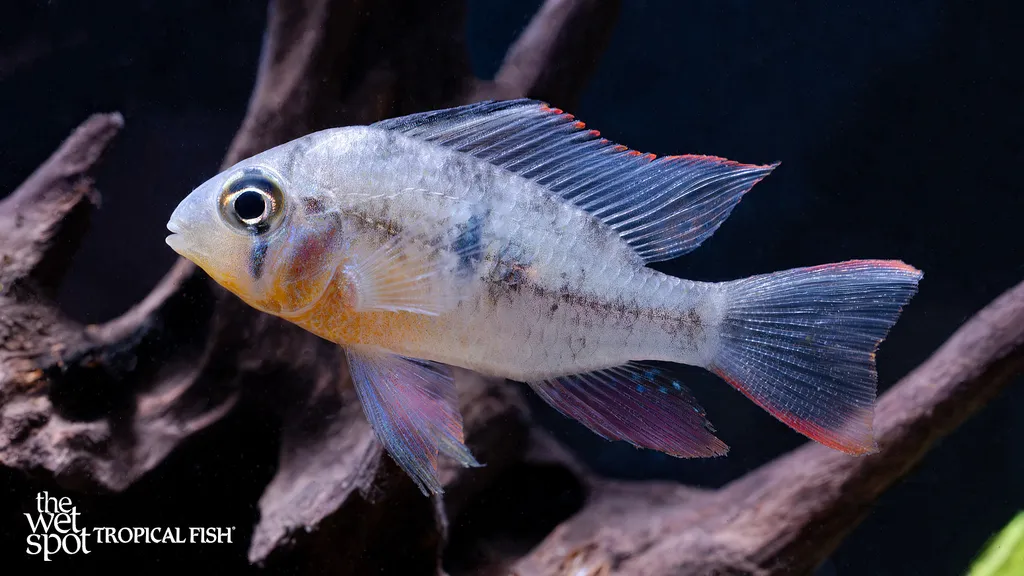 2.6 in (6.5 cm)16 gal (60 L)77–84°F (25–29°C)
Bigfin dwarf cichlid
Apistogramma megaptera
2.6 in (6.5 cm) · 16 gal (60 L)
 2.6 in (6.5 cm)20 gal (75 L)73–82°F (23–28°C)
Blue-cheek dwarf cichlid
Apistogramma eunotus
2.6 in (6.5 cm) · 20 gal (75 L)