Panda dwarf cichlid
Apistogramma nijsseni
FreshwaterFish
Care at a glance
- Temperature
- 75–82°F
- 24–28°C
- pH
- 5.0–6.5
- Adult size
- 3.3 in
- 8.5 cm
- Minimum tank
- 18 gal
- 70 L
- Temperament
- Mostly peaceful
- Social behavior
- Social
- Swim level
- Middle
- Difficulty
- Medium
- Breeding
- Hard
- Rarity
- Rare
- Family
- Cichlidae
- Origin
- Peru
Overview
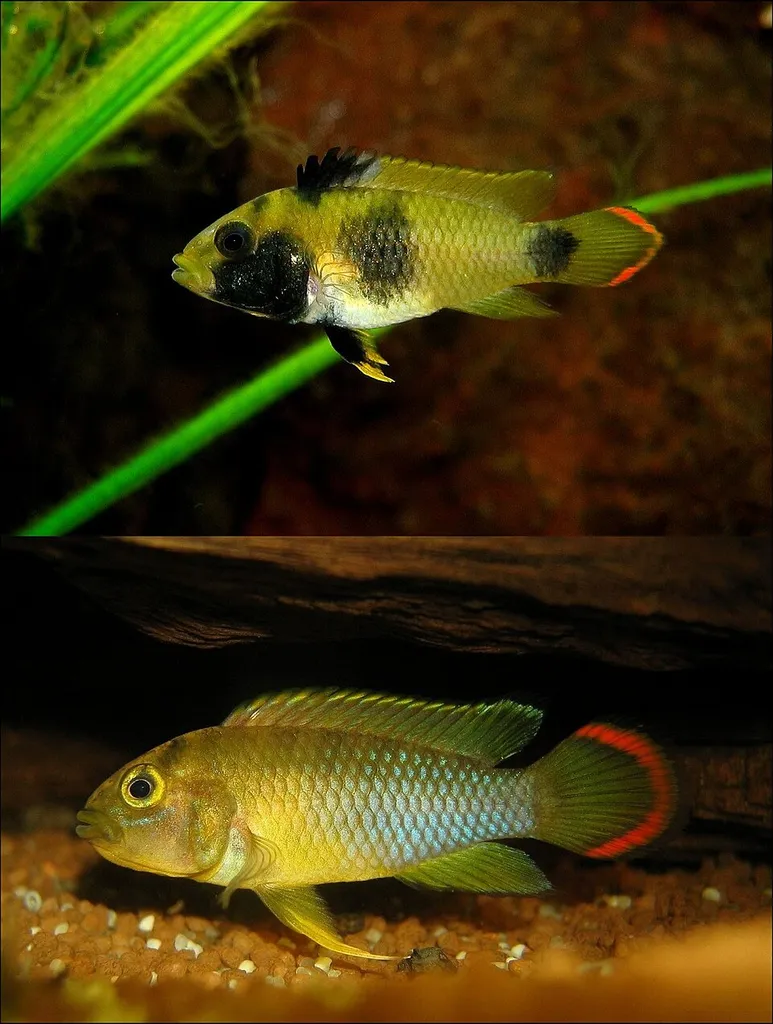
The panda dwarf cichlid is a small, mostly peaceful cichlid best kept as a harem of one male with two or three females, each of which needs her own cave and patch of territory. It is generally calm in a community, but a female guarding eggs or fry becomes very bold and will chase fish many times her size away from the nest. Keep it with small, gentle dither fish such as pencilfish or small tetras that swim in the upper water and help the cichlids feel secure. Provide plenty of low cover with caves, coconut shells, leaf litter and dense planting so each fish can hold a territory out of sight of the others. Feed small live and frozen foods such as brine shrimp, daphnia and bloodworm. A tank of at least 70 liters suits a harem.
In the wild
The panda dwarf cichlid lives in the Rio Ucayali drainage of Peru, in small, shaded forest streams and pools of warm, very soft, acidic blackwater. The water is heavily stained with tannins and holds almost no mineral content. To keep and especially to breed it, use soft water with a pH of 5.0 to 6.5 and a temperature of 24 to 28 C, adding leaf litter, botanicals and driftwood to tint and acidify the tank. Dim lighting, a sandy floor and plenty of caves and cover let this shy fish settle and show the bold black-and-orange pattern that gives it its name.
Good to know
Apistogramma nijsseni is a dwarf member of the cichlid family, Cichlidae, reaching about 8.5 cm for a large male, with females noticeably smaller. It is a cave spawner, with the female laying her eggs on the roof of a small cave and then guarding the fry alone while the male defends the wider territory. Females turn vivid yellow with bold black markings when guarding a brood. Breeding is challenging because the eggs need soft, acidic water to develop, and the sex ratio of the fry is strongly affected by water temperature and chemistry.
Did you know
In the panda dwarf cichlid the temperature during egg and fry development skews the sex ratio, with warmer water above about 26 C producing mostly males, so breeders watch the thermometer closely to raise a balanced brood.
Weekly picks
Tank mates
Panda dwarf cichlid is a mostly peaceful, social species that keeps to the middle. These picks share a community profile with it, are safe together in both directions, and overlap on water type, temperature and pH.
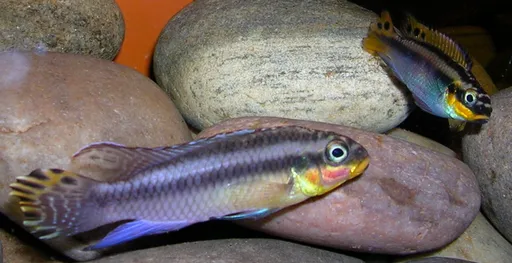
Striped kribensis
Pelvicachromis taeniatus
Freshwater3.1 in (8 cm) · 19 gal (71 L)75–79°F (24–26°C)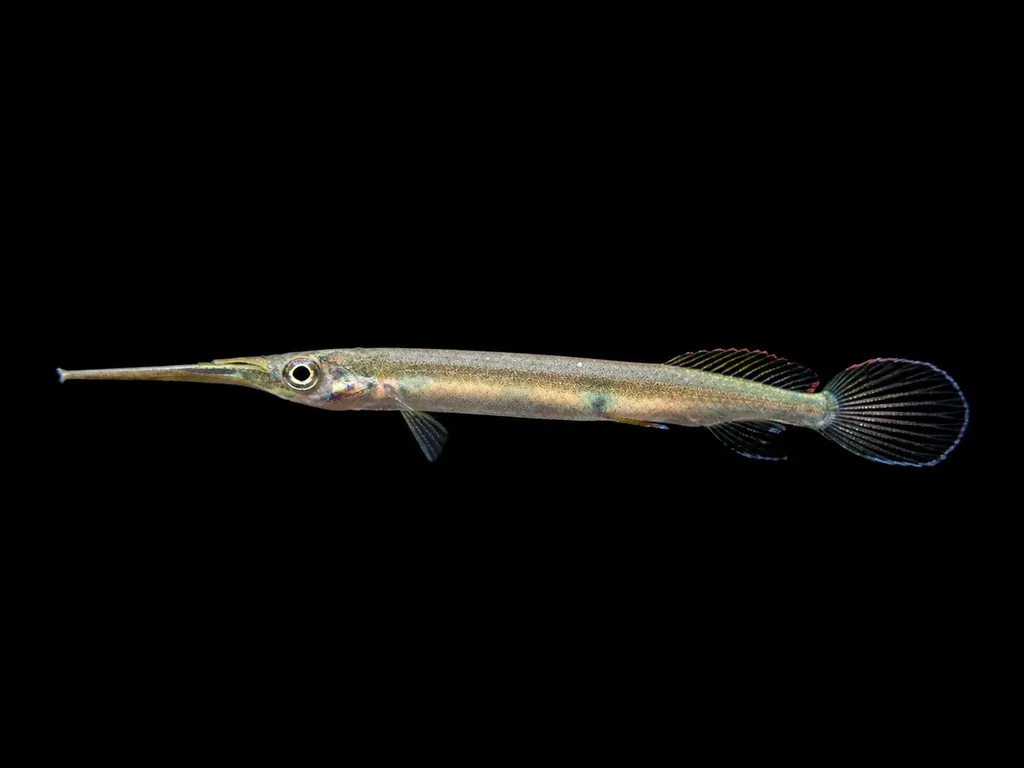
Kuekenthal's halfbeak
Hemirhamphodon kuekenthali
Freshwater3.3 in (8.5 cm) · 20 gal (75 L)73–81°F (23–27°C)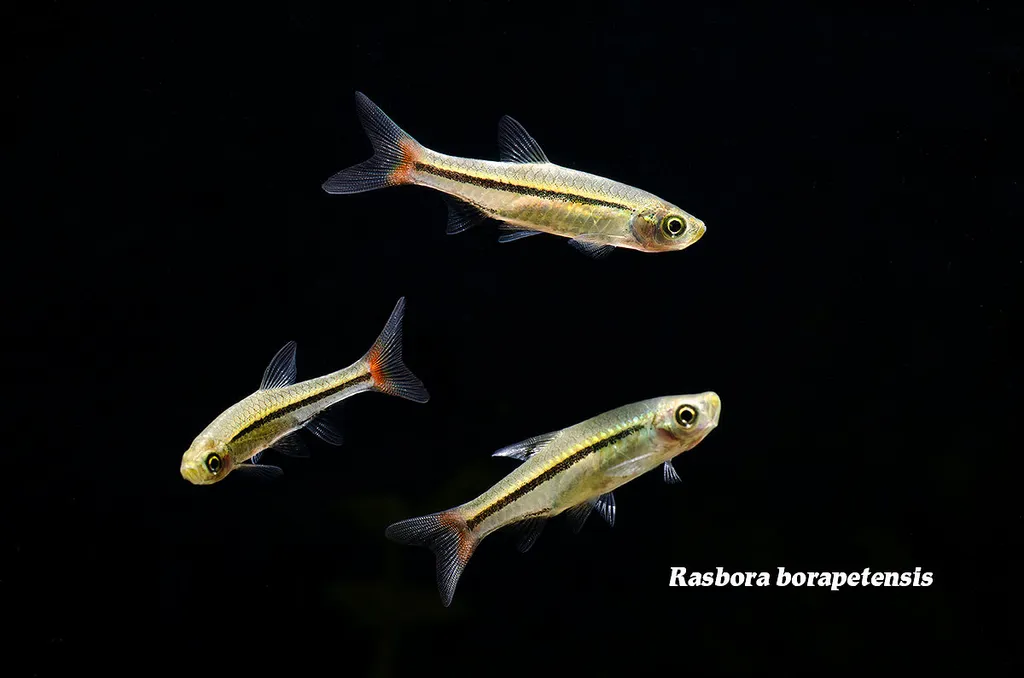
Red-tailed rasbora
Rasbora borapetensis
Freshwater2.4 in (6 cm) · 18 gal (70 L)72–79°F (22–26°C)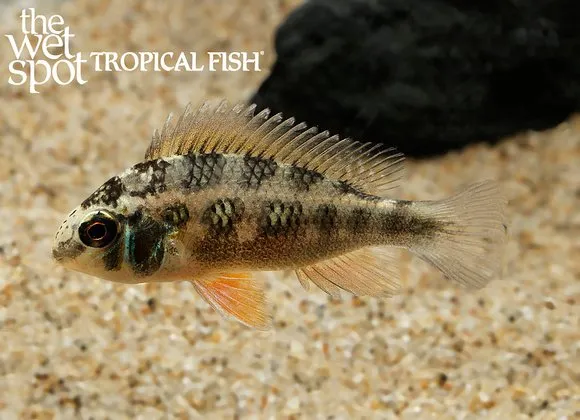
Checkerboard crenicara
Crenicara punctulata
Freshwater3.9 in (10 cm) · 20 gal (75 L)75–82°F (24–28°C)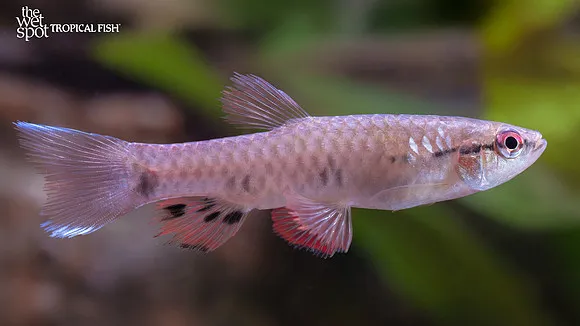
Spotted pyrrhulina
Pyrrhulina spilota
Freshwater2.8 in (7 cm) · 20 gal (75 L)73–81°F (23–27°C)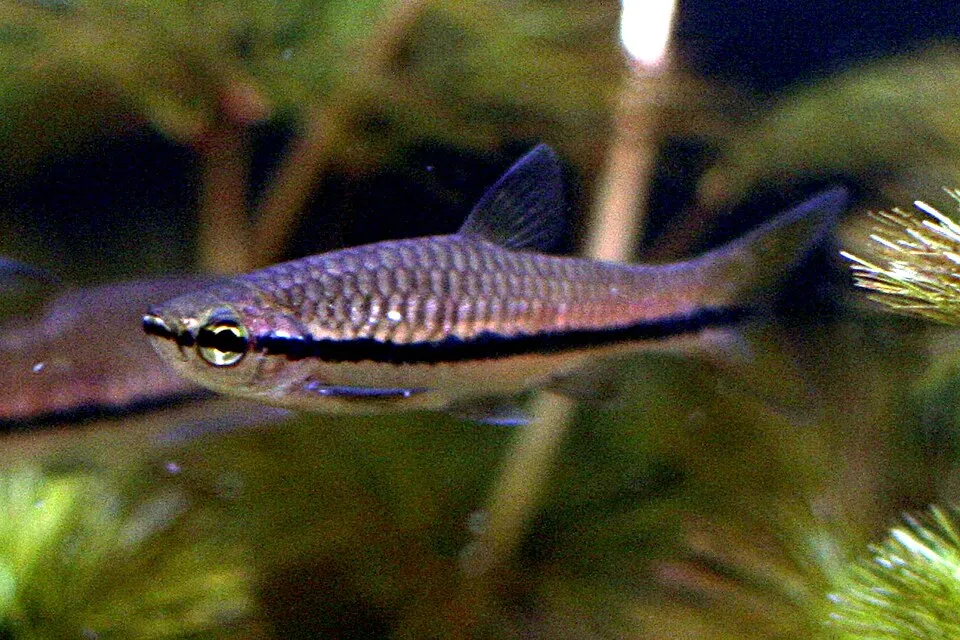
Brilliant rasbora
Rasbora einthovenii
Freshwater3.5 in (9 cm) · 20 gal (75 L)72–82°F (22–28°C)
Common questions
What size tank does a Panda dwarf cichlid need?
A Panda dwarf cichlid needs at least 18 gal (70 L). It spends most of its time in the middle.
What temperature and pH does a Panda dwarf cichlid need?
A Panda dwarf cichlid is comfortable at 75–82°F (24–28°C) with a pH of 5.0–6.5.
How big does a Panda dwarf cichlid get?
An adult Panda dwarf cichlid reaches about 3.3 in (8.5 cm).
Related species
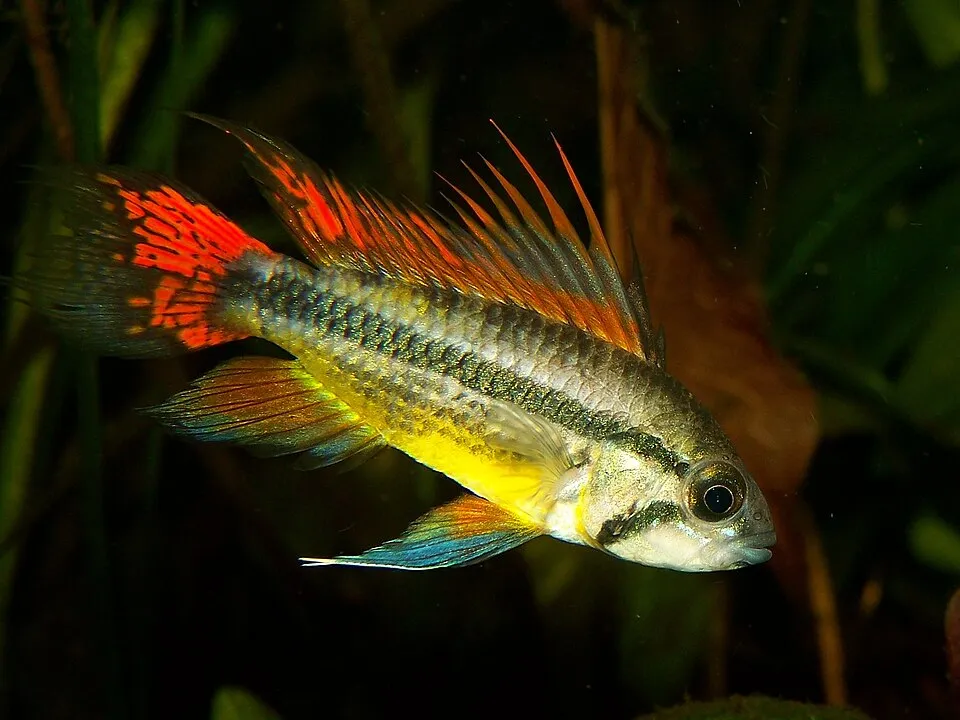 3 in (7.5 cm)18 gal (70 L)72–84°F (22–29°C)
Cockatoo cichlid
Apistogramma cacatuoides
3 in (7.5 cm) · 18 gal (70 L)
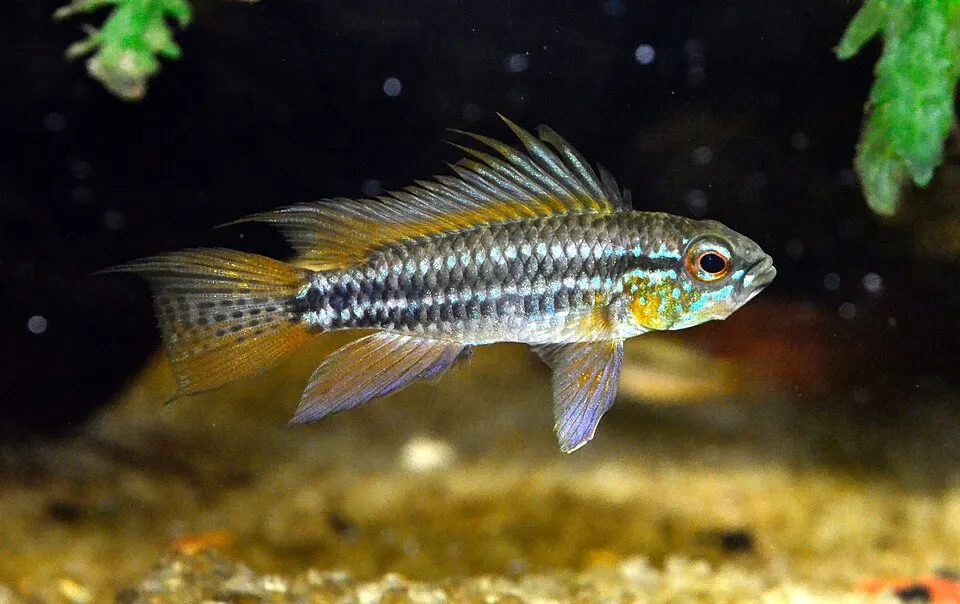 3 in (7.5 cm)20 gal (75 L)72–84°F (22–29°C)
Two-stripe dwarf cichlid
Apistogramma bitaeniata
3 in (7.5 cm) · 20 gal (75 L)
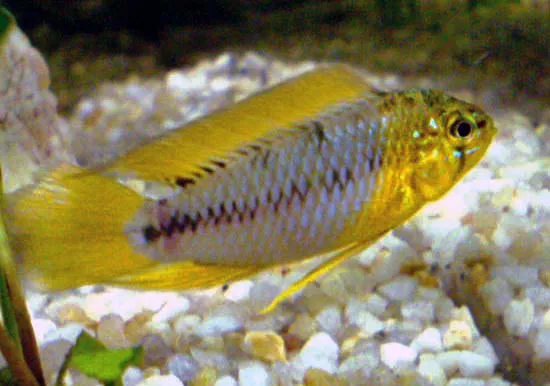 2.6 in (6.5 cm)18 gal (70 L)68–79°F (20–26°C)
Umbrella cichlid
Apistogramma borellii
2.6 in (6.5 cm) · 18 gal (70 L)
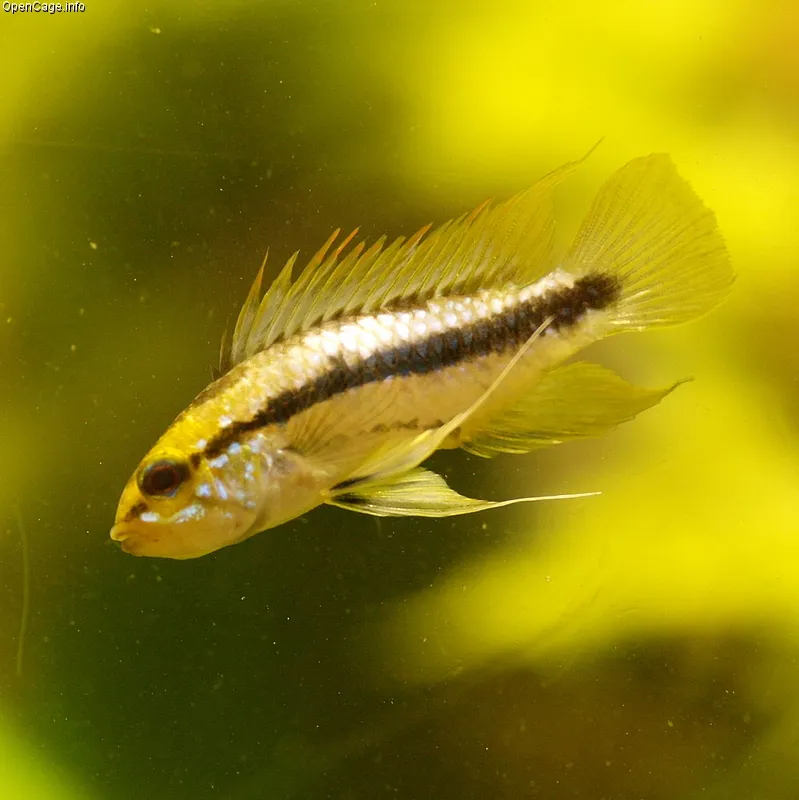 2.2 in (5.5 cm)20 gal (75 L)68–77°F (20–25°C)
Three-stripe dwarf cichlid
Apistogramma trifasciata
2.2 in (5.5 cm) · 20 gal (75 L)
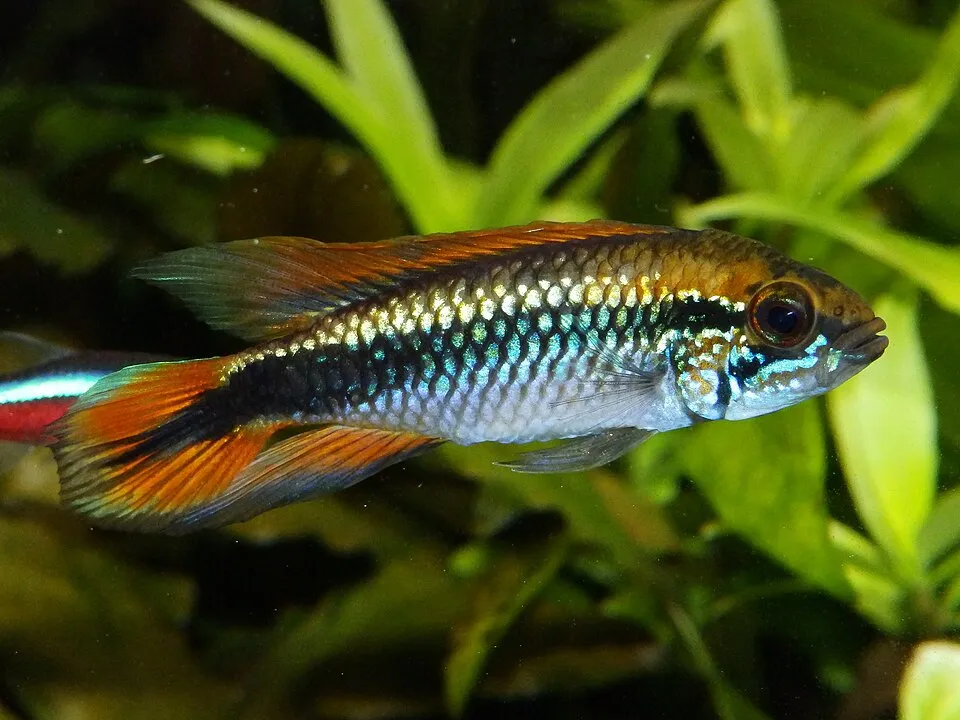 3.5 in (9 cm)20 gal (75 L)72–84°F (22–29°C)
Agassiz's dwarf cichlid
Apistogramma agassizii
3.5 in (9 cm) · 20 gal (75 L)
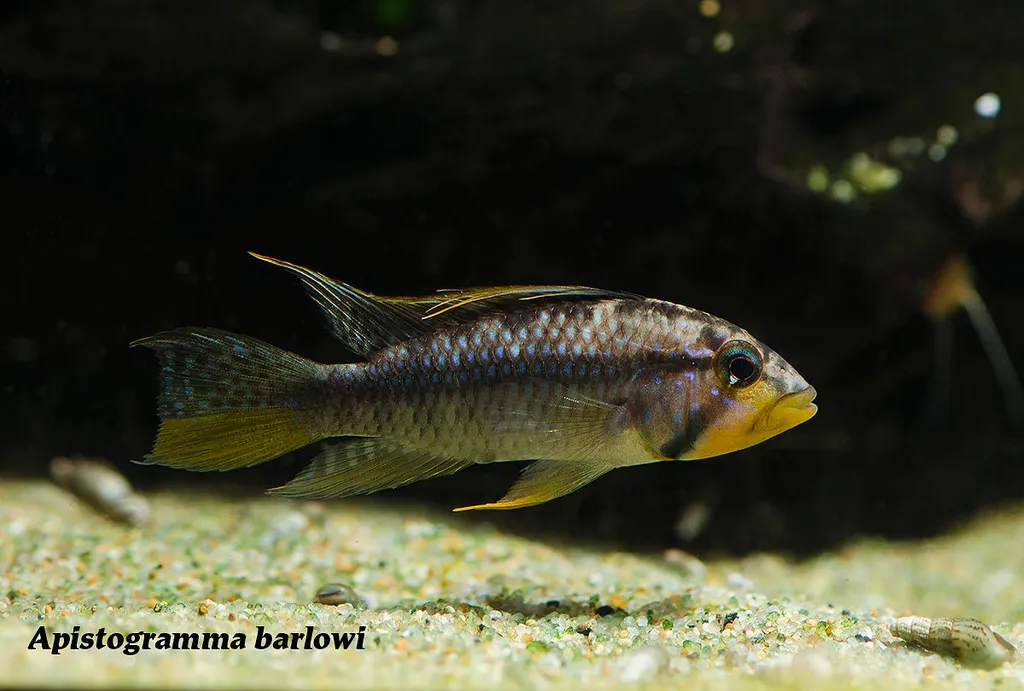 3.1 in (8 cm)20 gal (75 L)73–82°F (23–28°C)
Barlow's dwarf cichlid
Apistogramma barlowi
3.1 in (8 cm) · 20 gal (75 L)