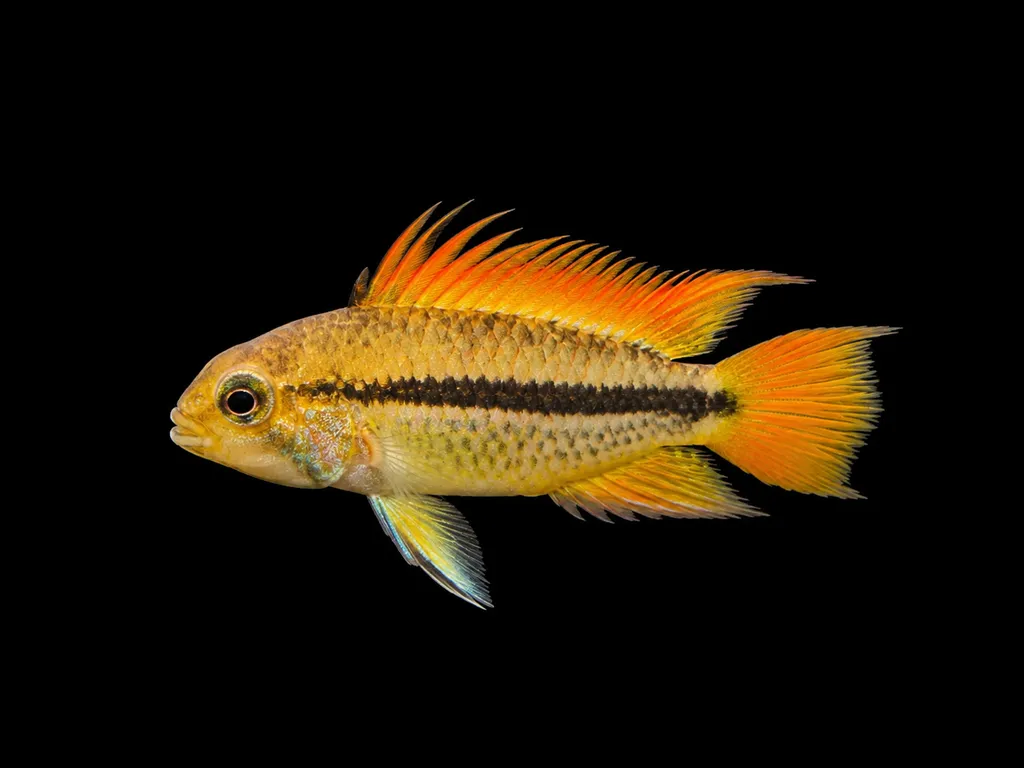
The orange flash cockatoo cichlid is a line-bred form whose fins come out flat orange. It suits a calm, planted community tank and is a step up from the easiest fish.
Did you know
The orange flash color can hide inside a red line. One keeper reported a triple red pair throwing about ten percent orange flash fry. Those fish bred one hundred percent orange flash, and breeders take that as a sign the trait can sit unseen in red stock.
Caring for the orange flash cockatoo cichlid
Give orange flash cockatoo cichlids at least 18 gal (70 L), in a planted tank with sand and driftwood. Add small caves, such as a coconut shell or flowerpot. Cover is what makes them comfortable.
Keep the water soft and slightly acidic, at 72 to 84°F (22 to 29°C) and a pH of 6.0 to 7.5. In the wild the species eats small invertebrates. Feed micro pellets and quality flake, plus live or frozen daphnia and brine shrimp.
Keep a pair, or one male with two or three females, with a cave for each female so the male can split his territory. They sit in the lower and middle levels of the tank. They are mostly peaceful and fine in a calm community, but they get defensive when guarding fry.
Males grow the tall, spiky dorsal fin the species is known for. Both sexes carry orange fins, though the female's are lighter than the male's, so an unsexed group still reads as an orange line.
The species spawns in caves, and the female guards the eggs and fry inside a sheltered nook. Breeding is hard, though the cockatoo is one of the easier Apistogramma to breed.
Good to know
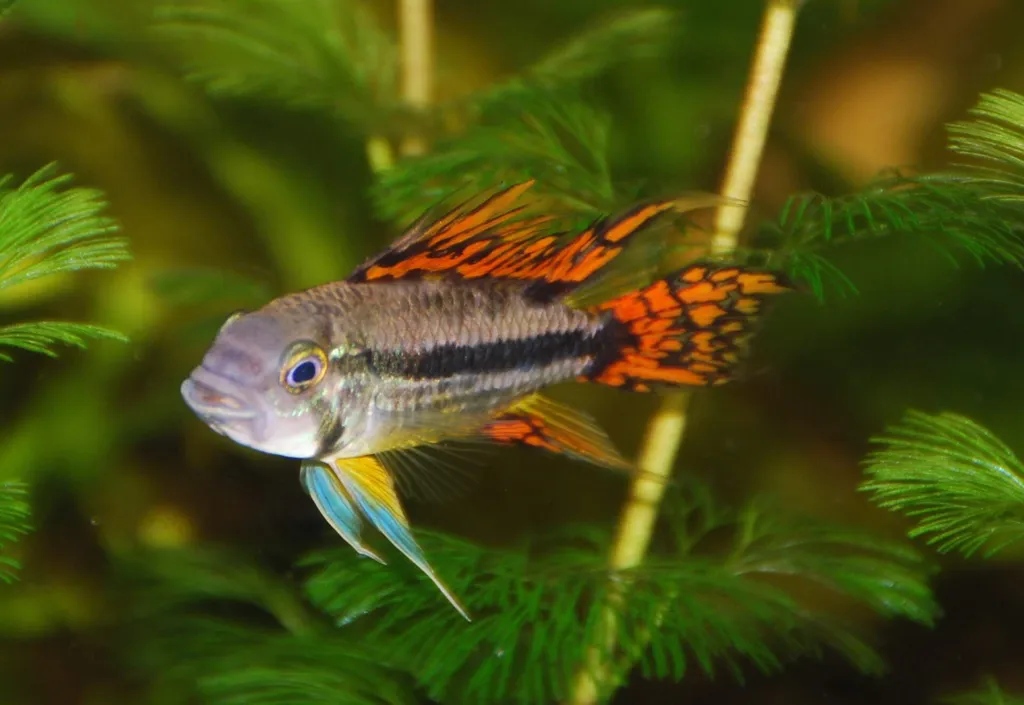
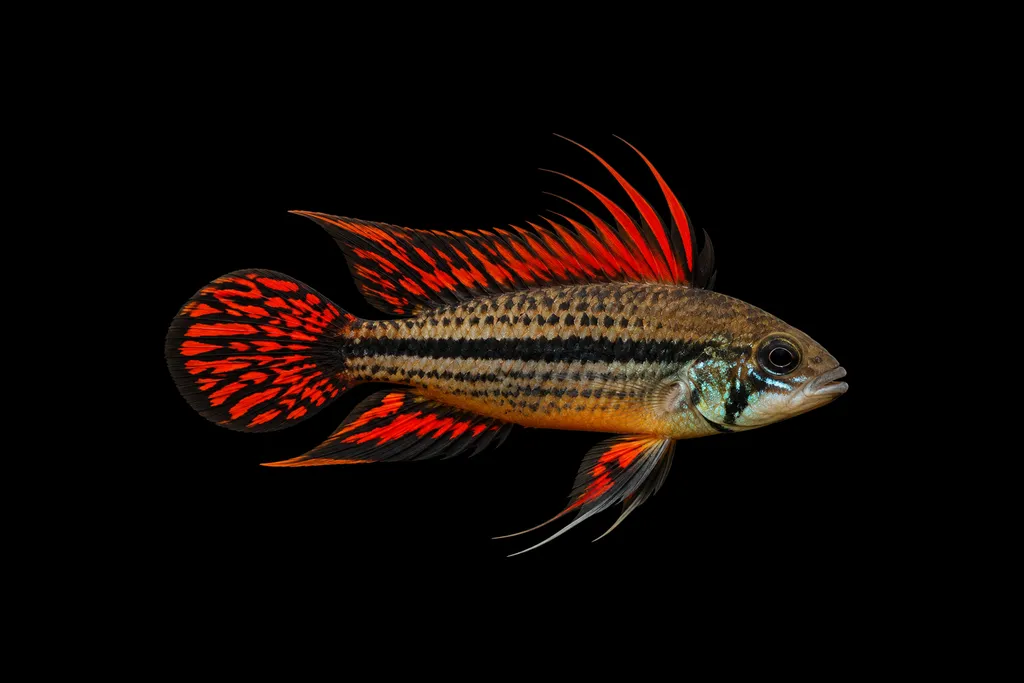
In the orange flash cockatoo cichlid, selection removed the black fin patterning that defines the red grades, leaving unbroken orange. Breeders say good orange flash stock spawns true, with orange flash fry in batch after batch. Poorer aquarium stock throws a mix of forms. It crosses freely with the red lines either way, and hobbyists trade notes on triple red by orange flash pairings. Some sellers list a platinum orange flash, which adds a pale body over the same fin color. Names are not standardized across shops, so compare photos rather than labels.
In the wild
The orange flash cockatoo cichlid is a hobby line of uncertain origin. It has been in the trade a long time, but no breeder, country or year is reliably documented. Treat origin stories about this line as unverified. Seriously Fish lists orange flash among the ornamental line-bred forms of the species, and wild cockatoo cichlids are far plainer than any of them.
Weekly picks
Tank mates
The orange flash cockatoo cichlid is a mostly peaceful, social species that keeps to the middle. These picks share a community profile with it, are safe together in both directions, and overlap on water type, temperature and pH.
Is an orange flash cockatoo cichlid a different species from the cockatoo cichlid?
No. An orange flash cockatoo cichlid is a variety of the cockatoo cichlid, Apistogramma cacatuoides, and it wants the same tank, water and food as the species.
What size tank does an orange flash cockatoo cichlid need?
An orange flash cockatoo cichlid needs at least 18 gal (70 L). It spends most of its time in the middle.
How big does an orange flash cockatoo cichlid get?
An adult orange flash cockatoo cichlid reaches about 3 in (7.5 cm).
How can you tell a male orange flash cockatoo cichlid from a female?
Males grow the tall, spiky dorsal fin the species is known for. Both sexes carry orange fins, but the female's are lighter than the male's.
How does an orange flash cockatoo cichlid breed?
An orange flash cockatoo cichlid spawns in a cave, and the female guards the eggs and fry inside a sheltered nook. Breeding is hard, though the cockatoo is one of the easier Apistogramma to breed.
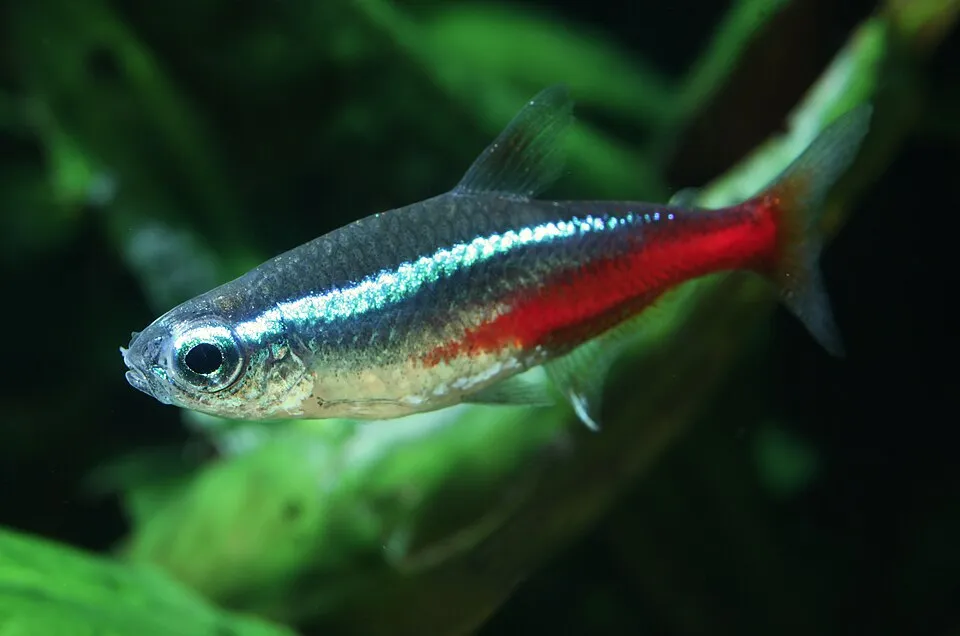
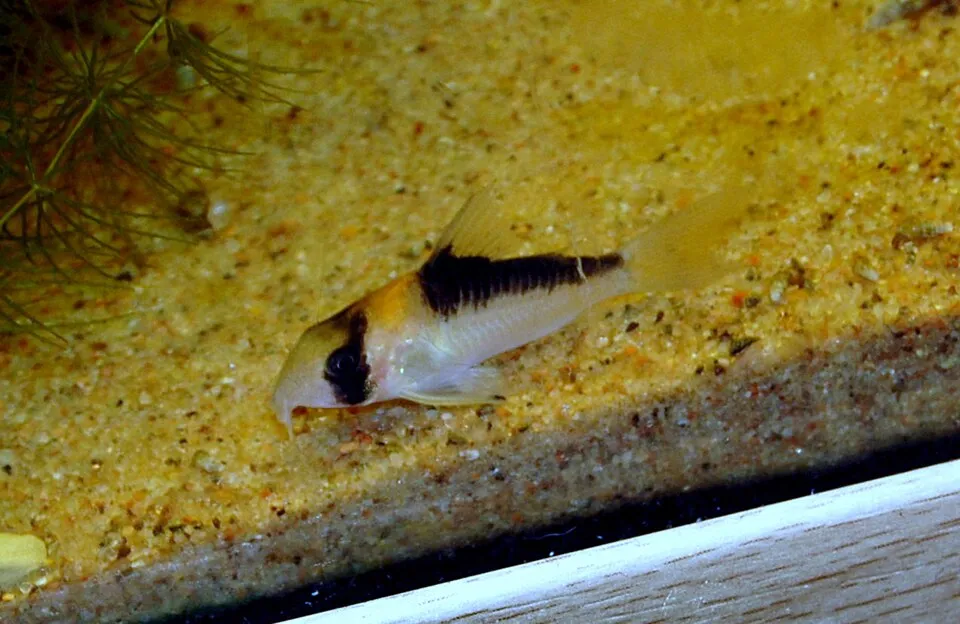
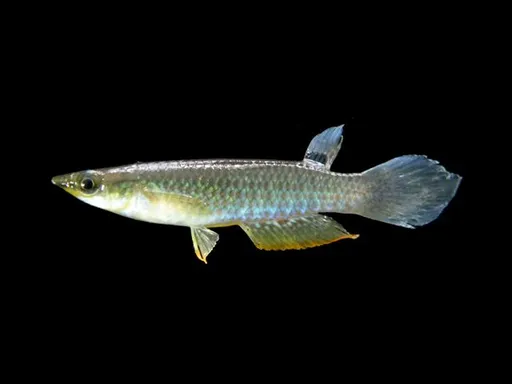
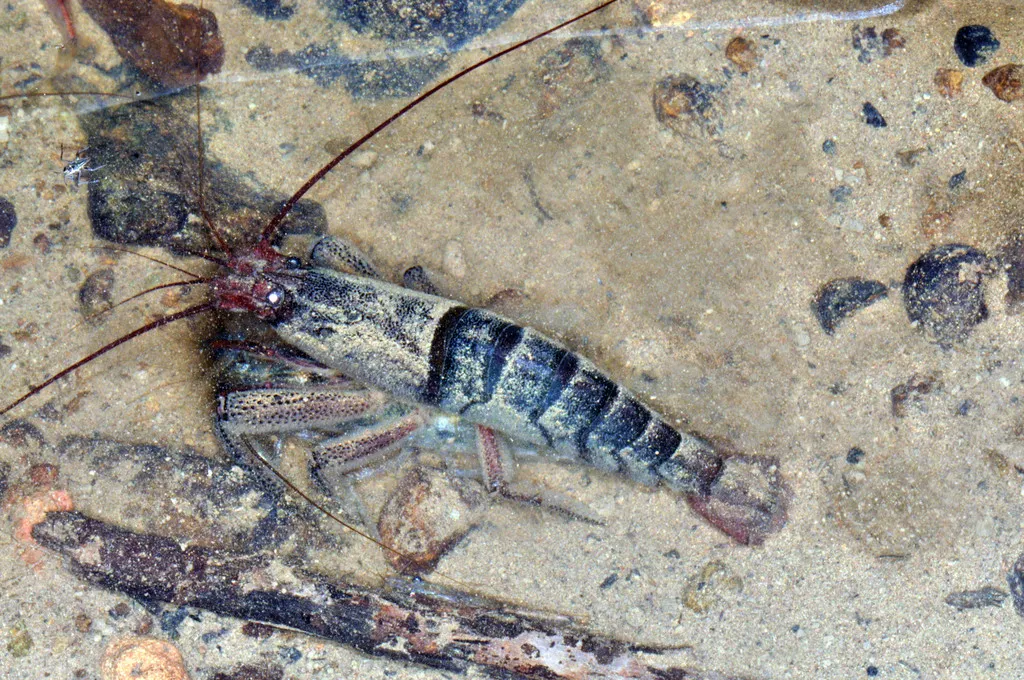
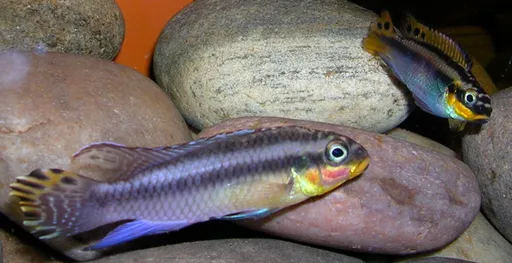
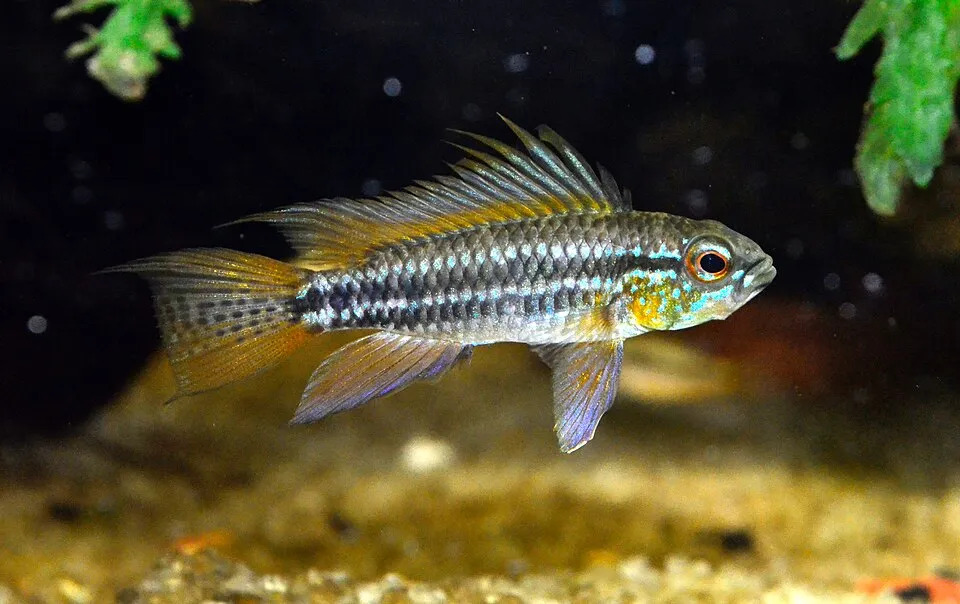 3 in (7.5 cm)20 gal (75 L)72–84°F (22–29°C)
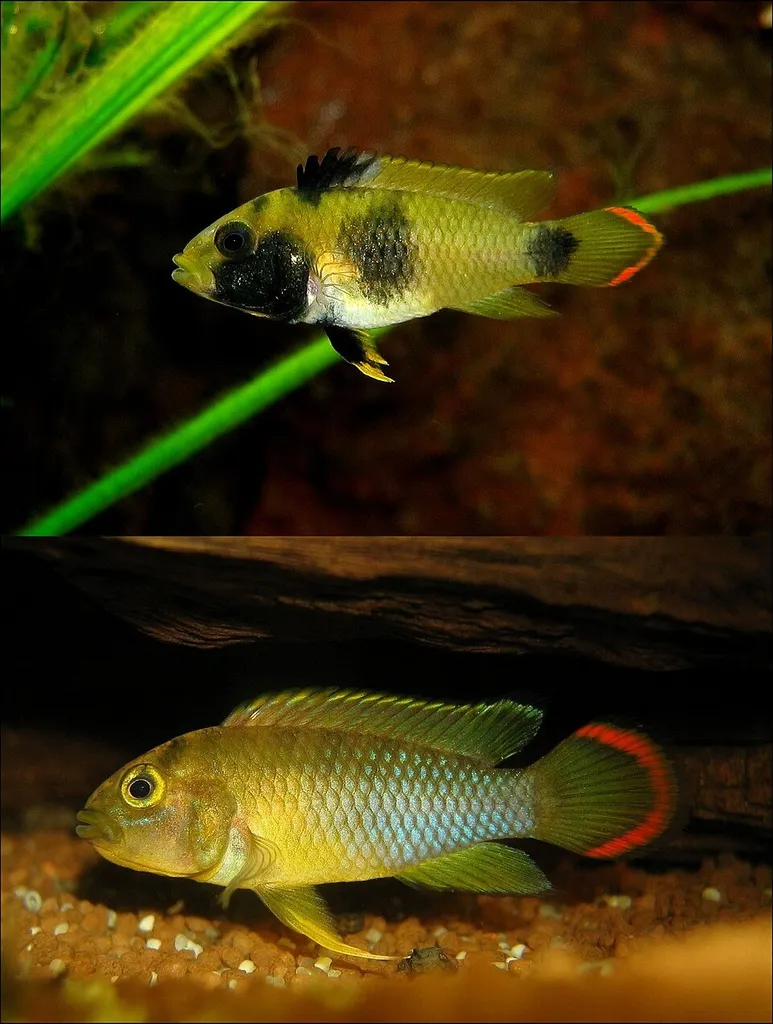 3.3 in (8.5 cm)18 gal (70 L)75–82°F (24–28°C)
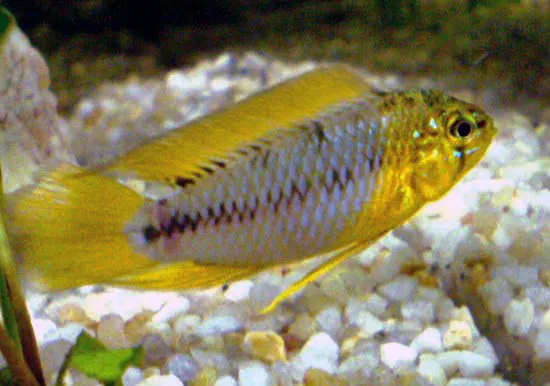 2.6 in (6.5 cm)18 gal (70 L)68–79°F (20–26°C)
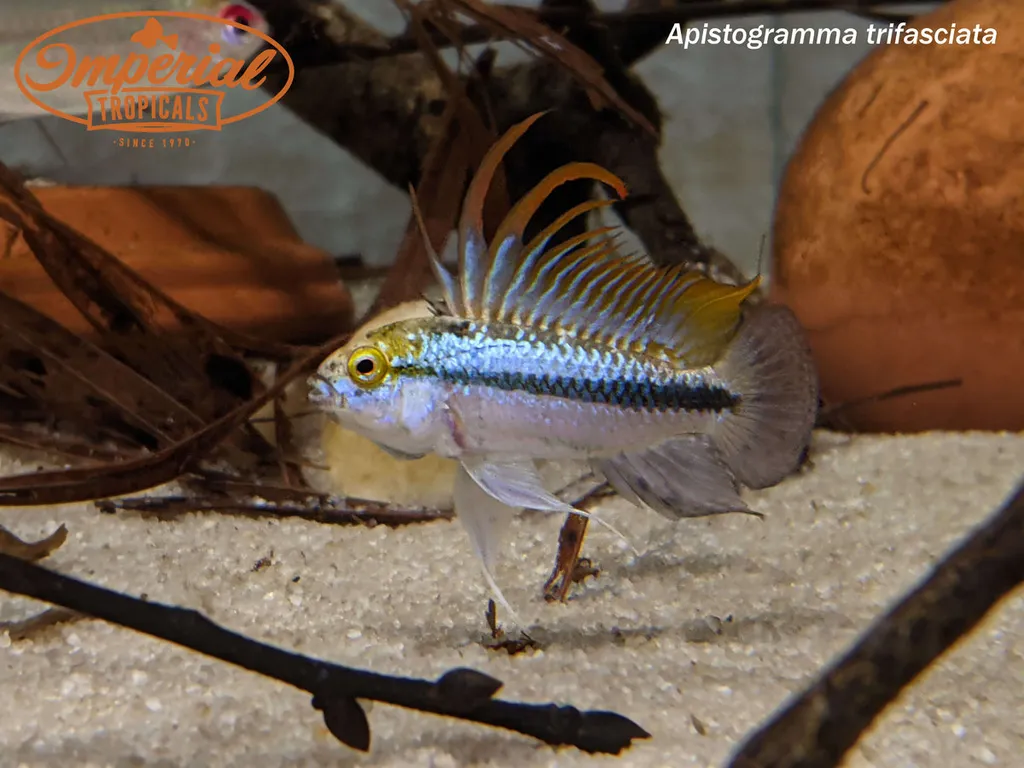 2.2 in (5.5 cm)20 gal (75 L)68–77°F (20–25°C)
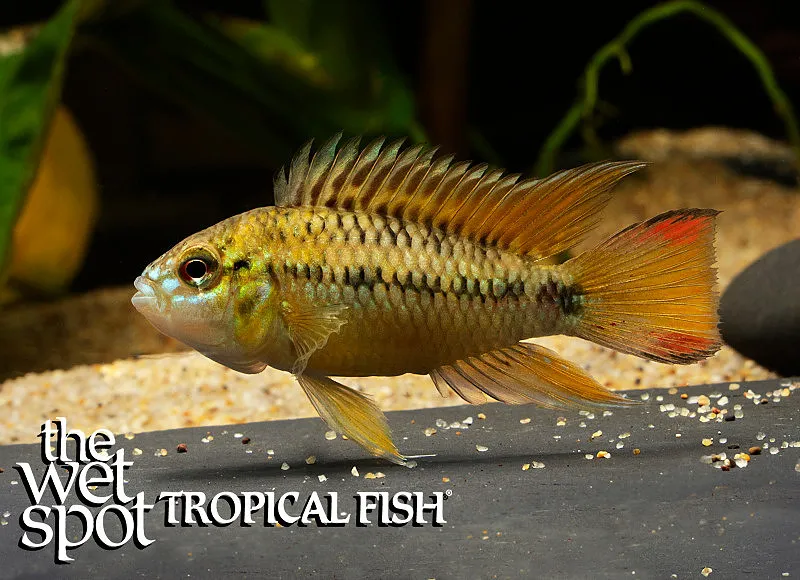 3 in (7.5 cm)20 gal (75 L)75–84°F (24–29°C)
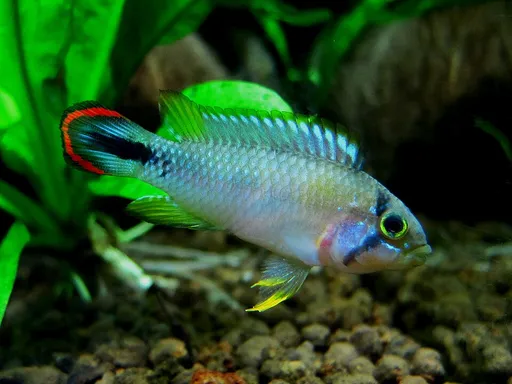 3 in (7.5 cm)20 gal (75 L)75–82°F (24–28°C)