Red-tail dwarf cichlid
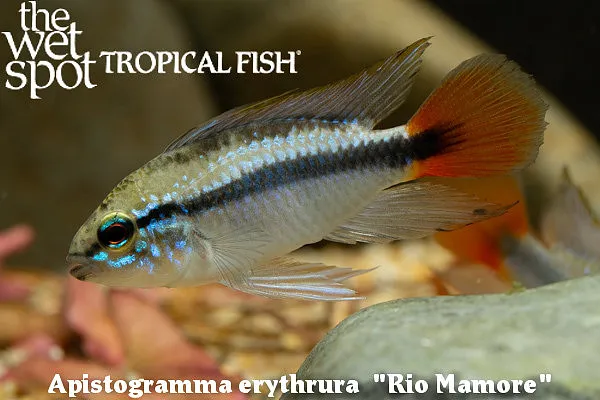
Apistogramma erythrura
Also known as Mamore apisto
FreshwaterFish
Care at a glance
- Temperature
- 73–81°F
- 23–27°C
- pH
- 5.2–6.8
- Adult size
- 2.2 in
- 5.5 cm
- Minimum tank
- 16 gal
- 60 L
- Temperament
- Mostly peaceful
- Social behavior
- Social
- Swim level
- Bottom
- Difficulty
- Medium
- Breeding
- Cave spawner · Medium
- Rarity
- Rare
- Family
- Cichlidae
- Origin
- Mamore drainage, Beni, Bolivia
Overview
The red-tail dwarf cichlid is among the easier rare apistos, and it keeps to the bottom of the tank. It suits a keeper with a little experience.
Did you know
Bolivian apistos like the red-tail are scarce in the hobby, because Bolivia rarely exports fish. Most red-tails in tanks today are captive bred from a handful of imports.
Caring for the red-tail dwarf cichlid
Keep a pair or a trio of red-tail dwarf cichlids in a tank of 16 gal (60 L) with cover. Set it up with sand, leaf litter and wood, and give each female a cave of her own. If the females lack caves of their own, the male's attention becomes a problem.
It is comfortable slightly cooler than the Amazon lowland species, at 73 to 81°F (23 to 27°C). It also tolerates a wider pH band than the blackwater specialists, and a pH of 5.2 to 6.8 suits it. Feed frozen foods and small dry foods, which it accepts quickly.
The red-tail is mostly peaceful, and small tetras from its home region make natural dither fish. It spawns in caves in the typical apisto way, with the female in charge. Breeding it is moderately tricky.
Good to know
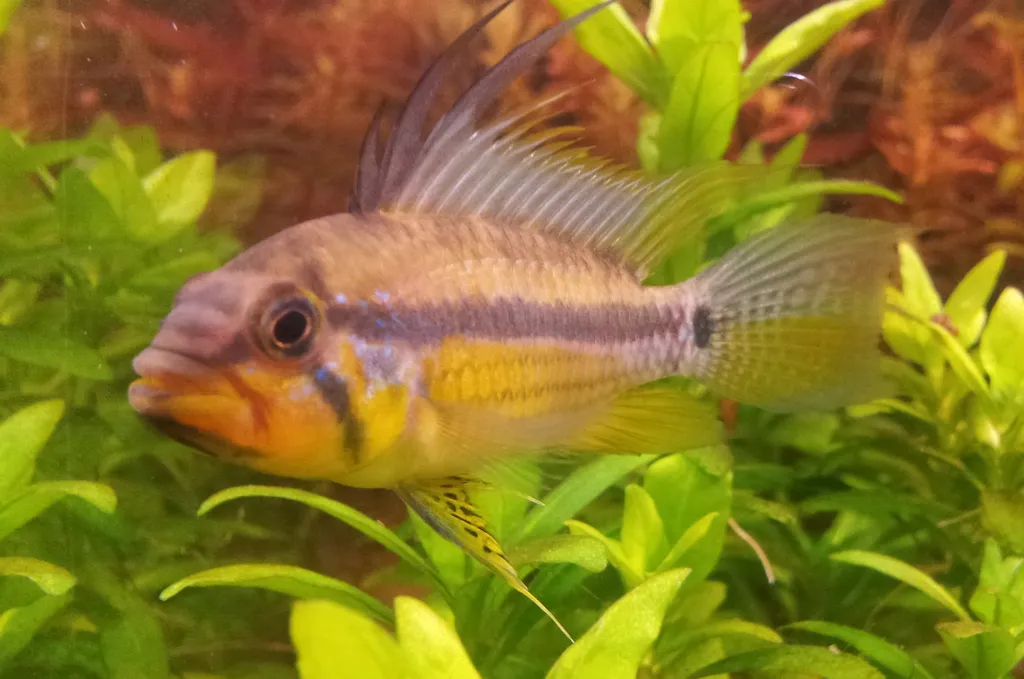
Staeck and Schindler described the red-tail dwarf cichlid in 2008. Its scientific name means red tail, and males back it up with a tail fin washed in red behind a blue-flecked body. It belongs to the trifasciata lineage and shares that group's compact build and bold lateral stripe.
In the wild
The red-tail dwarf cichlid comes from small clearwater and mixed-water streams in the Mamore system of Bolivia. It lives at the stream edge, over sand and leaf litter.
Weekly picks
Tank mates
The red-tail dwarf cichlid is a mostly peaceful, social species that keeps to the bottom. These picks share a community profile with it, are safe together in both directions, and overlap on water type, temperature and pH.
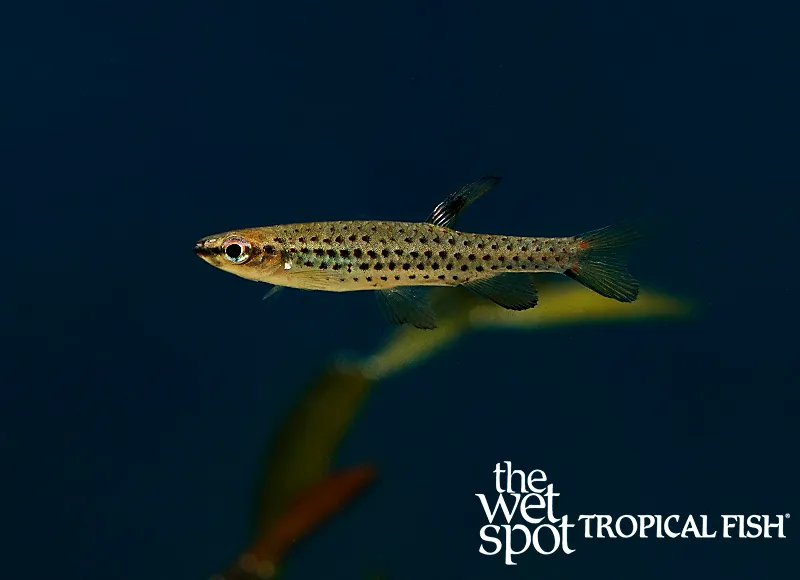
Spotted splash tetra
Copella nattereri
Freshwater2 in (5 cm) · 16 gal (60 L)75–82°F (24–28°C)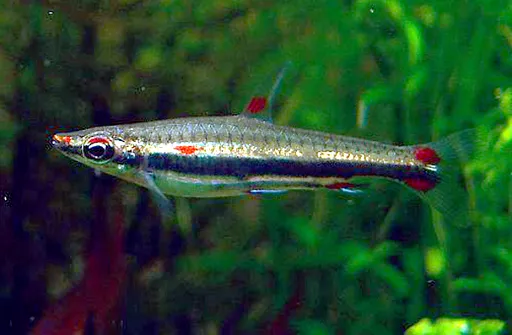
Harrison's pencilfish
Nannostomus harrisoni
Freshwater2.2 in (5.5 cm) · 16 gal (60 L)73–82°F (23–28°C)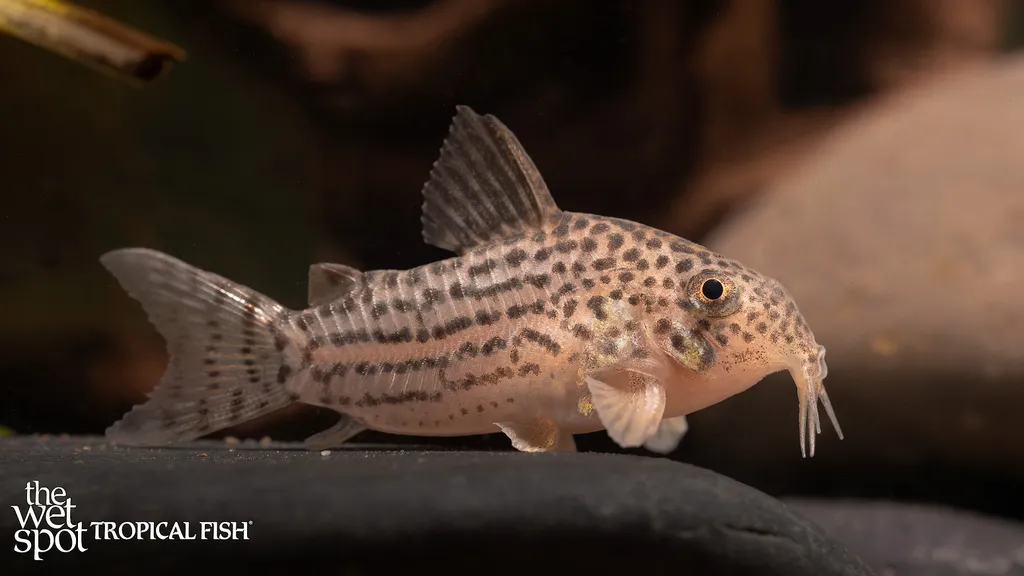
Boeseman's cory
Hoplisoma boesemani
Freshwater2.2 in (5.5 cm) · 16 gal (60 L)73–81°F (23–27°C)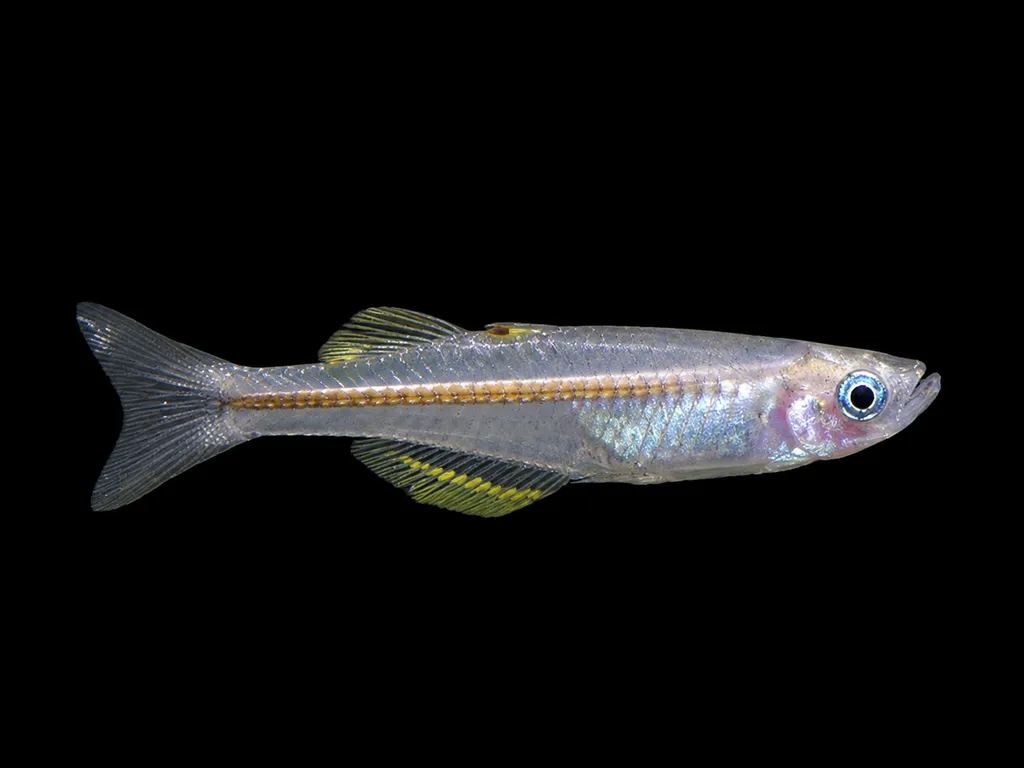
New Guinea blue-eye
Pseudomugil novaeguineae
Freshwater1.8 in (4.5 cm) · 15 gal (55 L)79–86°F (26–30°C)
Melanzona guppy
Poecilia parae
FreshwaterBrackish2 in (5 cm) · 15 gal (55 L)75–82°F (24–28°C)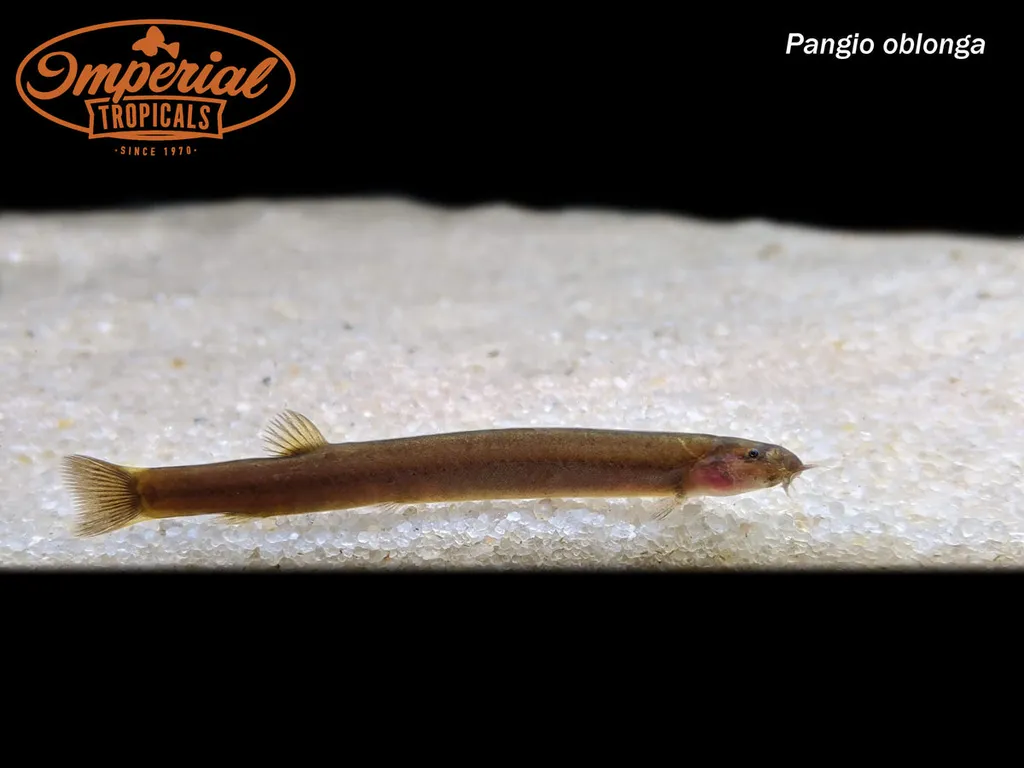
Java loach
Pangio oblonga
Freshwater3.1 in (8 cm) · 15 gal (55 L)70–79°F (21–26°C)
Common questions
What size tank does a red-tail dwarf cichlid need?
A red-tail dwarf cichlid needs at least 16 gal (60 L). It spends most of its time in the bottom.
What temperature and pH does a red-tail dwarf cichlid need?
A red-tail dwarf cichlid is comfortable at 73–81°F (23–27°C) with a pH of 5.2–6.8.
What does a red-tail dwarf cichlid eat?
A red-tail dwarf cichlid eats frozen foods and small dry foods, and it accepts them quickly.
How big does a red-tail dwarf cichlid get?
An adult red-tail dwarf cichlid reaches about 2.2 in (5.5 cm).
Related species
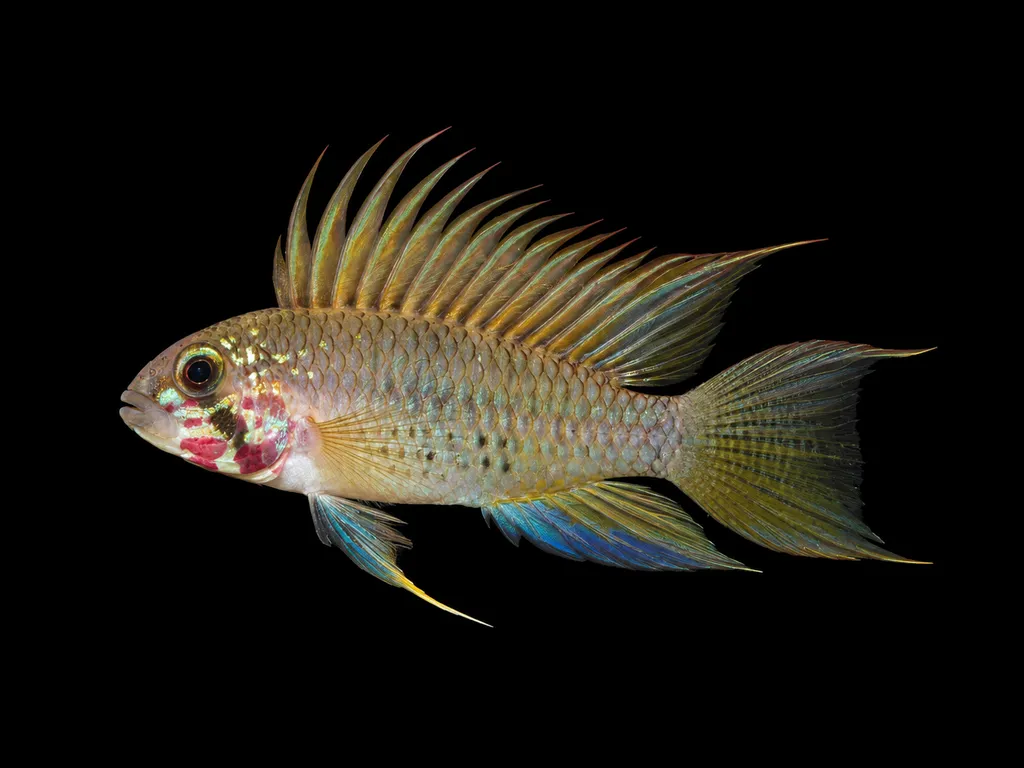 2.2 in (5.5 cm)16 gal (60 L)77–84°F (25–29°C)
Piaroa dwarf cichlid
Apistogramma piaroa
2.2 in (5.5 cm) · 16 gal (60 L)
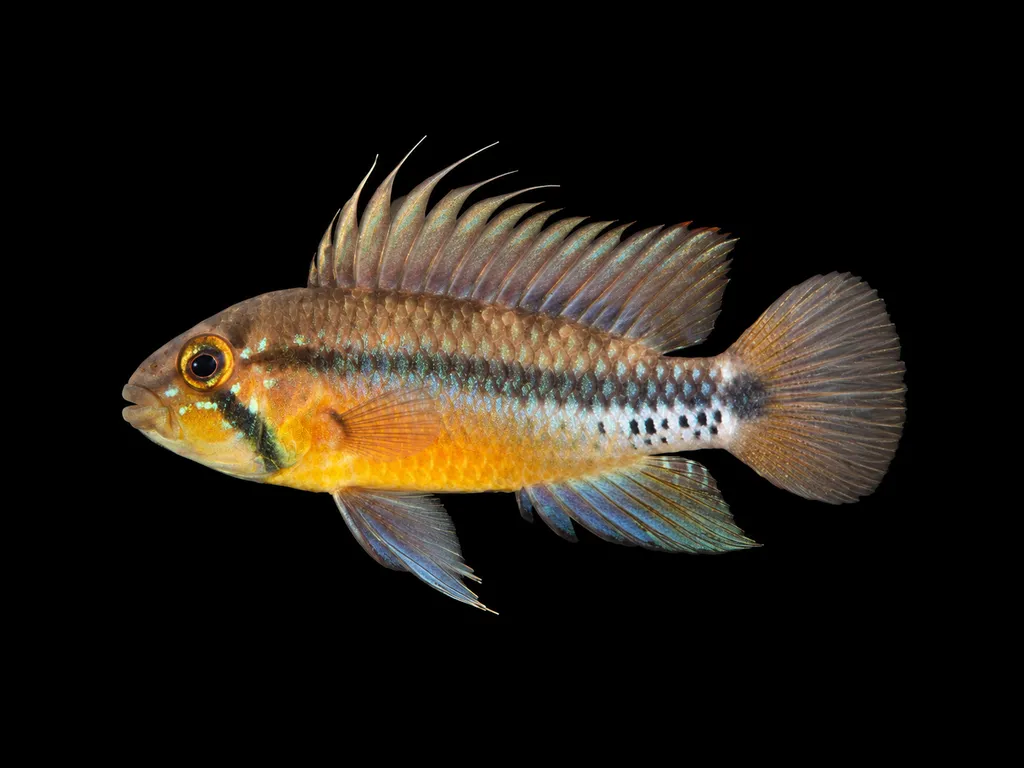 2.2 in (5.5 cm)16 gal (60 L)75–82°F (24–28°C)
Sunset dwarf cichlid
Apistogramma atahualpa
2.2 in (5.5 cm) · 16 gal (60 L)
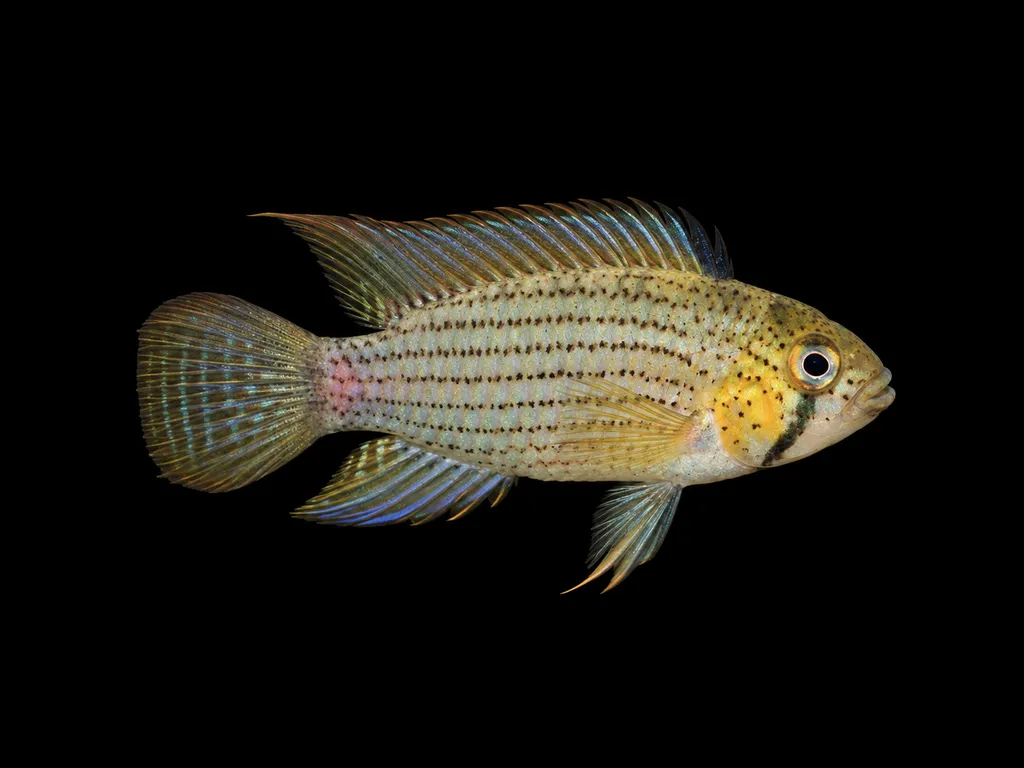 2.2 in (5.5 cm)16 gal (60 L)77–84°F (25–29°C)
Tucurui dwarf cichlid
Apistogramma tucurui
2.2 in (5.5 cm) · 16 gal (60 L)
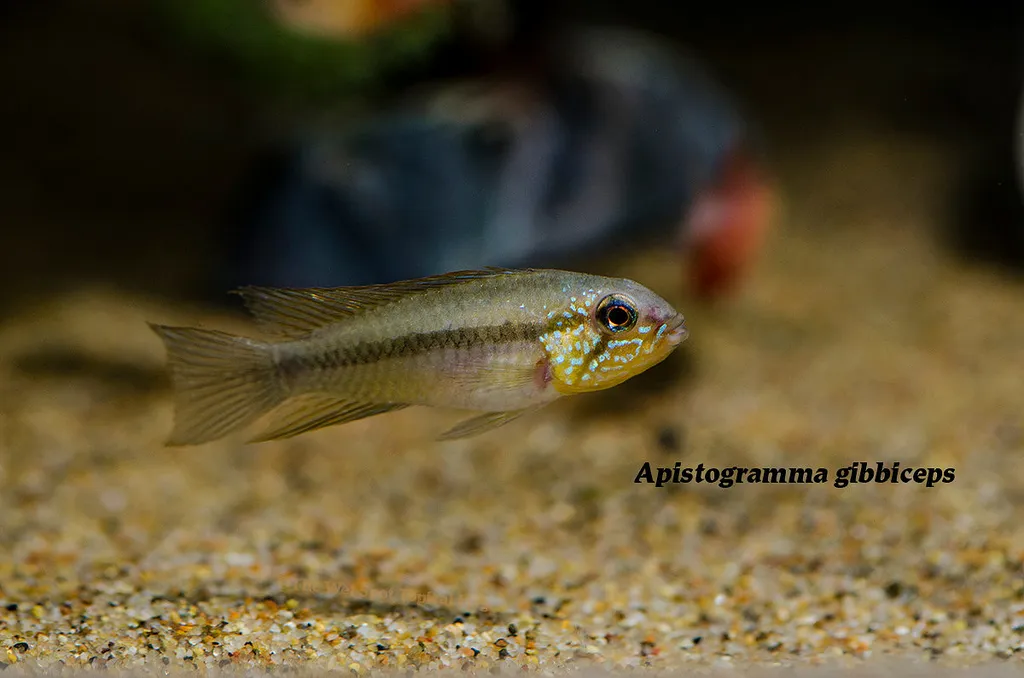 2.2 in (5.5 cm)16 gal (60 L)77–84°F (25–29°C)
Yellow-cheek dwarf cichlid
Apistogramma gibbiceps
2.2 in (5.5 cm) · 16 gal (60 L)
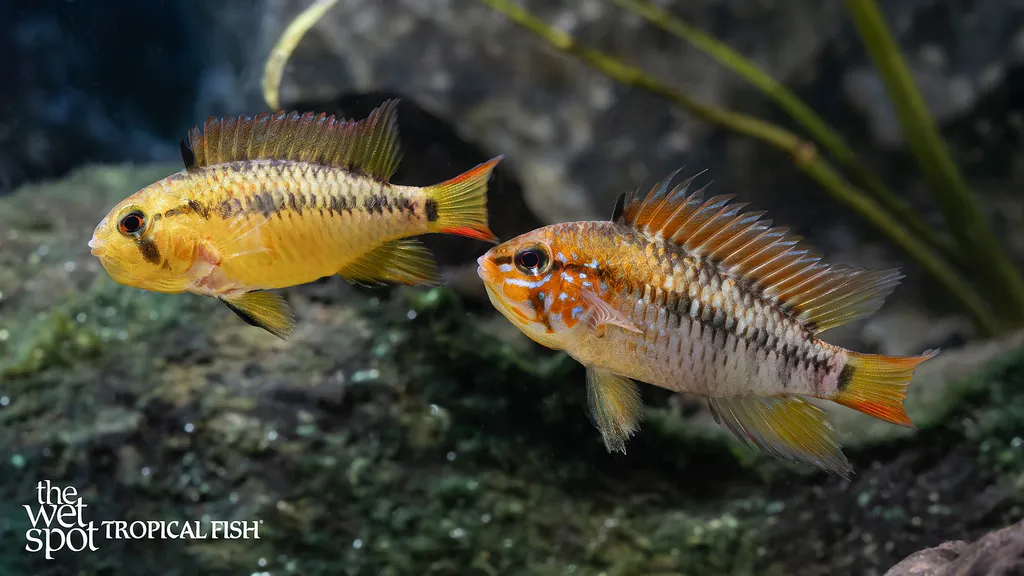 2.4 in (6 cm)20 gal (75 L)75–82°F (24–28°C)
Macmaster's dwarf cichlid
Apistogramma macmasteri
2.4 in (6 cm) · 20 gal (75 L)
 2 in (5 cm)16 gal (60 L)75–82°F (24–28°C)
Allpahuayo dwarf cichlid
Apistogramma allpahuayo
2 in (5 cm) · 16 gal (60 L)